Loading...


Theory vs Law (Amoeba Sisters)
Quiz by Carolyn Stermer
Customize this quiz to suit your class
Instantly translate to 100+ languages
Tag the questions with any skills you have. Your dashboard will track each student's mastery of each skill.
Give this quiz to my class
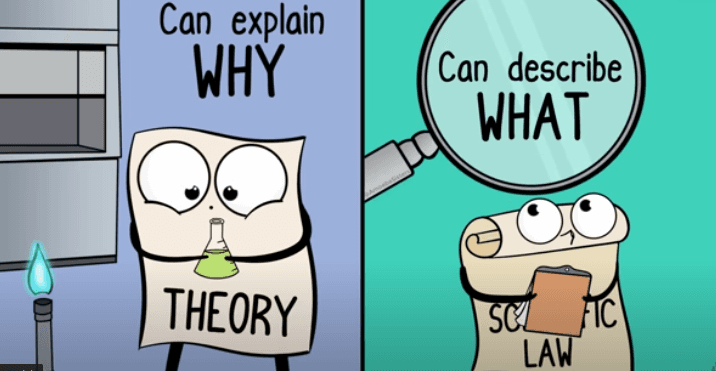
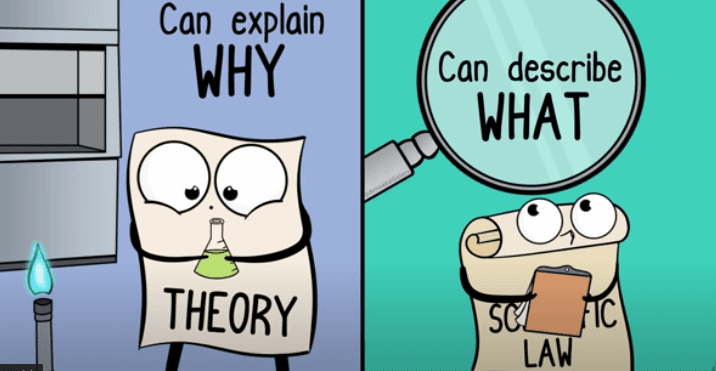 Theory vs LawVygotsky theory vs piagetCell Theory/ Prokaryotic vs Eukaryotic Cells ReviewCell Theory, Scientists, Microscope, Eukaryotes vs ProkaryotesCan you create an evaluation using this information PHONETICS VS. PHONOLOGY Whereas phonetics is the study of sounds that occur in language, phonology is the study of how these sounds are organized and how they function in language. It uses the classifications of sounds derived from phonetics to describe and analyze how sounds occur in speech. STRUCTURALIST PHONEMICS STRUCTURALIST PHONEMICS As linguists began to study sounds in fine detail, they recognized increasingly complex aspects of phonetic organization. For example, the sound /p/ appears in different varieties in English. STRUCTURALIST PHONEMICS One of the varieties of /p/ is indicated by [ph]. This sound is produced with an accompanying puff of air called aspiration, as in the words “pill,” and “peace.” Another sound, indicated by [p•], is produced when there is little or no aspiration; this sound occurs in a word like “spill.” A third major variety for the /p/ sound is the unreleased [p– ], which may occur at the end of a word like “stop.” To deal with these variations for the /p/ sound, the structuralists suggested the existence of an abstract unit which they termed a phoneme. STRUCTURALIST PHONEMICS A phoneme was defined by the structuralists as an abstract phonological unit that represents a class of real sounds, termed the allophones of a phoneme. The phoneme /p/ in English, then, is represented by the allophones [ph], [p•], and [p– ]. STRUCTURALISTS: MINIMAL PAIRS How do we know what these abstract units of sound called phonemes are? In order to find the phonemes of a language, the structuralists developed the concept of the minimal pair, defined as any two words that: a) Contain the same number of segments b) Differ in meaning c) Exhibit only one phonetic difference. STRUCTURALISTS: MINIMAL PAIRS In practical terms, phonemes distinguish meanings; and a phoneme can also be defined as the smallest meaning-distinguishing unit of sound. For instance, the words “pin” /pɪn/ and “bin” /bɪn/ mean different things, and the only one difference in these words occurs in the initial sounds. STRUCTURALISTS: MINIMAL PAIRS By using the concept of a minimal pair, we can determine that the three variations of the /p/ sound do not represent three phonemes. Certainly, it is possible to pronounce the word cap with either an aspirated [ph ] or unreleased [p– ]; however, the two forms [kæph ] and [kæp– ] are not a minimal pair, even though they involve different sounds, because they are identical in meaning. STRUCTURALISTS: FREE VARIATION The two forms [kæph ] and [kæp– ] are, therefore, said to exhibit free variation: that is, the pronunciation may vary without signifying a change in meaning. In other words, we may conclude that the unreleased [p– ] and the aspirated [ph ] are not representations of different phonemes in English; they are, in fact, allophones of one phoneme, /p/. STRUCTURALISTS: COMPLEMENTARY DISTRIBUTION When phonemes have more than one allophone in a language, the allophones are said to be in complementary distribution. Complementary distribution means that the allophones of a phoneme occur in different phonetic environments (that is, with different sounds surrounding them). TRANSFORMATIONAL- GENERATIVE PHONOLOGY TRANSFORMATIONAL-GENERATIVE PHONOLOGY Transformational-generative phonology is a relatively recent development in linguistic theory. Chomsky launched Transformational-Generative Grammar in 1957, but the earliest studies within this framework were largely concerned with syntax. A decade later, the first comprehensive transformational-generative treatment of English phonology appeared: Chomsky and Halle’s The Sound Pattern of English (1968). TRANSFORMATIONAL-GENERATIVE PHONOLOGY Transformational-generative phonologists strongly oppose the structuralists’ phonemic level. They replace this level by a series of rules that directly relate underlying representations to observed phonetic representations. The central mechanisms in transformational-generative phonology, then, are underlying representations and phonological rules. PHONOLOGICAL RULES A rule is an operational statement in which some linguistic entity is modified, resulting in a new linguistic entity. Rules may add elements, remove elements, or change elements. By using phonological rules, linguists attempt to demonstrate that there is order in linguistic phenomena and that linguistic patterns are systematic. PHONOLOGICAL DERIVATION A phonological derivation is an operation that begins with an underlying representation and, through the application of a set of specific rules, yields the actual sound the speaker produces. The representation of a phonological rule has the following general appearance. /A/ → [B] / C “A” changes to “B” under condition “C” PHONOLOGICAL RULE – EXAMPLE In most Southern dialects, the word ten is pronounced like the word tin. This is not an isolated fact, for den is pronounced like din and Ben is pronounced like bin, and so on. This very general fact can be represented by the phonological rule: /ɛ/ → [I] / ___ [n] den /dɛn/ → /dIn/ Ben /bɛn/ → /bIn/ ten /tɛn/ → /tIn/ /ɛ/ → [I] / ___ [n] - high - low - tense + front + high - tense + front + sonorant + anterior + coronal - continuant NOTATIONAL DEVICES IN PHONOLOGICAL RULES The statement of phonological rules can be complex, and linguists have developed several notational devices for writing them. Often, the following symbols will be necessary for stating the conditions under which rules apply: # indicates a word boundary + indicates an intraword boundary $ indicates a syllable boundary UNDERLYING REPRESENTATIONS AND RELATED ISSUES The transformational-generative description of phonology relates underlying representations to phonetic representations by rules. This can be represented in a simple example: In English, there are certain pairs of words like sign / signature, and malign / malignant that exhibit a regular alternation in their phonetic representations: [g] is present in the second member of the pairs but absent in the first member. UNDERLYING REPRESENTATIONS AND RELATED ISSUES To explain the relatedness of words such as sign / signature, we could claim that the underlying representation of the segment in all such pairs is /g/ and that a rule operates to delete /g/ before syllable-final nasals. Thus, the rule “/g/ is deleted before syllable-final nasal” would appear formally as: + voice - anterior →∅ ____ [+ nasal] $ - coronal UNDERLYING REPRESENTATIONS AND RELATED ISSUES On the left-hand side of the arrow, we place the features needed to uniquely specify /g/ among the consonants; that is, no other consonant has the features [+ voice], [- anterior], and [- coronal]. The symbols → mean that the sound /g/ changes to nothing or more properly “/g/ is deleted.” The horizontal line following the slash mark refers to the position of /g/ - namely, before a segment that is [+nasal]. Finally, this [+nasal] segment occurs before a syllable boundary, as indicated by $. A less formal way of writing this rule would be: /g/ → / _ [+nasal] $ Notice that this rule also helps describe such alternations as phlegm/phlegmatic and paradigm/paradigmatic. Application Activity: Think of other words in which this rule can be applied. Write the sound segments to prove /g/ is deleted. Another example is the process through which the prefix meaning “not” is added to words. This prefix alternates among the forms /Im/, /In/, and /Iŋ/, depending on the point of articulation of the initial segment of the following word. -If the segment begins in the extreme front part of the mouth (labials), the form is /Im/, as in improper. -If the segment begins in the extreme back part of the mouth (velars), the form is /Iŋ/, as in incomplete. -If the segment begins in the mid-region of the mouth (all other sounds), the form is /In/, as in indecent. *Exceptions:Words beginning with /r/ or /l/. Analyze the Word “in + complete,” for example. /n/ → [ŋ] / __ [k] - continuant - continuant - continuant + sonorant → + sonorant - sonorant + anterior - anterior - strident + coronal - coronal - coronal + tense THE VELAR SOFTENING RULE Still another example of alternation in English is found in pairs of words like “electric / electricity,” in which the segments /k/ and /s/ alternate. /k/ changes to [s] only before non- low, front vowels. THE VELAR SOFTENING RULE /k/ → [s] / __ - continuant + continuant - strident → - sonorant V - anterior + anterior - low - coronal + coronal - backA. Arundhati Roy B. Jhumpa Lahiri C. Salman Rushdie D. Anita Desai ________________________________________ 2. The Lowland was published in: A. 2001 B. 2013 C. 2010 D. 2005 ________________________________________ 3. Which earlier work earned Lahiri the Pulitzer Prize? A. The Namesake B. Unaccustomed Earth C. Interpreter of Maladies D. The Lowland ________________________________________ 4. The novel is primarily about: A. Technology and modernity B. Immigration, family, and political violence C. Business rivalry D. Mythology and folklore ________________________________________ 5. The two central brothers in the novel are: A. Rahul and Anil B. Subhash and Udayan C. Gogol and Ashoke D. Amit and Nikhil ________________________________________ 6. Where did the brothers grow up? A. Mumbai B. Dhaka C. Calcutta D. Delhi ________________________________________ 7. Udayan becomes involved in: A. Peace activism B. Cinema C. Naxalite movement D. Business ________________________________________ 8. Subhash moves to: A. London B. Rhode Island C. Toronto D. Chicago ________________________________________ 9. Udayan is killed in: A. Jail B. A riot C. The lowland near his house D. A car accident ________________________________________ 10. Why does Subhash marry Gauri? A. Love B. To protect her and her unborn child C. Financial benefit D. Family pressure ________________________________________ 11. Gauri eventually: A. Becomes a politician B. Starts a business C. Leaves her family D. Returns to India ________________________________________ 12. Subhash raises Bela: A. With Gauri B. Alone C. With help from his parents D. In India ________________________________________ 13. Bela grows up believing: A. Udayan is her father B. Subhash is her father C. She has no father D. Her father died in war ________________________________________ 14. The setting of political unrest is linked to: A. Partition B. Naxalbari uprising C. Independence movement D. Civil War ________________________________________ 15. The narrative style uses: A. Magical realism B. Non-linear structure C. Poetry D. Second-person narration ________________________________________ 16. Gauri’s character represents: A. Traditional motherhood B. Obedient wife C. Intellectual autonomy and emotional detachment D. Political activism ________________________________________ 17. Bela’s character signifies: A. Rebellion against education B. Second-generation identity struggle C. Complete assimilation D. Materialistic living ________________________________________ 18. Memory in the novel functions as: A. A simple recollection B. A haunting presence affecting identity C. A forgotten history D. A symbolic decoration ________________________________________ 19. The lowland itself symbolizes: A. Wealth B. Stability C. Transitional, unstable space D. Escape ________________________________________ 20. Lahiri’s prose style can be described as: A. Flowery and ornate B. Minimalistic and restrained C. Dramatic and verbose D. Highly poetic ________________________________________ 21. Water imagery reflects: A. Joy and happiness B. Power and victory C. Memory and emotional fluidity D. Evil ________________________________________ 22. Which theory applies strongly to this novel? A. Structuralism B. Postcolonial hybridity C. Absurdism D. Modernism ________________________________________ 23. Postcolonial hybridity is linked to: A. Complete assimilation B. Identity in-between cultures C. Traditional values D. Language fluency alone ________________________________________ 24. Which character best reflects second-generation identity conflict? A. Gauri B. Bela C. Subhash D. Udayan ________________________________________ 25. What does Subhash struggle with most? A. Career failure B. Language C. Guilt and secrecy D. Wealth ________________________________________ 26. Udayan’s ideology centers on: A. Business growth B. Armed communist revolution C. Religious reform D. Education ________________________________________ 27. The novel shows how political violence leads to: A. Personal healing B. Economic prosperity C. Emotional trauma across generations D. Cultural unity ________________________________________ 28. Betrayal appears as: A. Only political B. Only emotional C. Both political and familial D. A background idea ________________________________________ 29. The genre of the text best fits: A. Fantasy B. Realistic political family saga C. Science fiction D. Thriller ________________________________________ 30. The narrative constantly shifts between: A. Dream and reality B. India and America C. Past and future India D. Fiction and nonfiction ________________________________________ 31. Homi Bhabha’s "third space" represents: A. Physical land B. A zone of cultural in-betweenness C. A literal building D. A heavenlike vision ________________________________________ 32. Gauri symbolizes: A. Traditional widowhood B. Female agency vs social expectation C. Blind loyalty D. Economic dependence ________________________________________ 33. Bela unknowingly inherits: A. Udayan’s ideology B. Gauri’s academic passion only C. Subhash’s calmness D. Grandparents’ wealth ________________________________________ 34. Lahiri uses silence to: A. Avoid details B. Deepen psychological complexity C. Reduce story relevance D. Simplify events ________________________________________ 35. A major structural device is: A. Letters B. Non-linear flashbacks C. Mythic storytelling D. Metafiction ________________________________________ 36. Which text offers a migrant theme comparison? A. The God of Small Things B. The White Tiger C. The Namesake D. Train to Pakistan ________________________________________ 38. The Naxalite movement first emerged in: A. Mumbai B. Naxalbari village C. Delhi D. Kerala ________________________________________ 39. Which theme repeats strongly? A. Celebration of success B. Silence and secrets C. Fantasy D. Heroism ________________________________________ 40. What does Bela do as an adult? A. Becomes a doctor B. Engages in environmental activism C. Joins corporate life D. Moves into politics ________________________________________ 41. The immigrant experience in the novel is portrayed as: A. Full belonging B. Alienation and partial belonging C. Achievement D. Liberation ________________________________________ 42. Which idea does Lahiri question through Gauri? A. Heroism B. Maternal expectation C. Religious devotion D. Wealth ________________________________________ 43. Subhash represents: A. Pure rebellion B. Survival and adaptation C. Anti-immigrant sentiment D. Total withdrawal ________________________________________ 44. Lahiri’s writing expects readers to: A. Passively accept the plot B. Read emotional subtext in silences C. Ignore symbols D. Only enjoy the story ________________________________________ 45. The lowland as a metaphor mainly signifies: A. Joy B. Unstable cultural ground C. Triumph D. Isolation from family ________________________________________ 46. Why is The Lowland considered significant? A. Its fantasy themes B. Its deep engagement with politics & identity C. Its humor D. Its romantic style ________________________________________ 47. Which comparative author also writes about diaspora identity? A. Chetan Bhagat B. Amitav Ghosh C. Premchand D. Ruskin Bond ________________________________________ 48. Udayan’s death drives the plot because: A. Family hides it B. It forces new relationships & trauma C. People forget him D. It has no consequence ________________________________________ 49. The narrative ends emphasizing: A. Closure and peace B. Lasting consequences of secrets C. National identity D. Religious conflict ________________________________________ 50. Scholars study this work because it explores: A. Only Indian history B. Trauma, diaspora, gender & politics C. Folk storytelling D. ComedyTheoryTheory Intro