Loading...

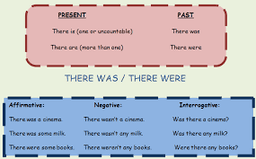
There is -There are- Is there...? Are there...? There was- There were-Was there...? Were there...?
Quiz by Isabel Castillo
Customize this quiz to suit your class
Instantly translate to 100+ languages
Tag the questions with any skills you have. Your dashboard will track each student's mastery of each skill.
Give this quiz to my class
 Comprehension Test: Superbook – Revelation Theme: Forgiveness, Salvation, and God’s Victory 🔹 Remembering (Items 1–4) What mistake did Chris make at the beginning of the episode? A. He lied to his parents B. He started a fire accidentally C. He broke a valuable item D. He skipped school Answer: B Who are the three main characters in the episode? A. Peter, Mary, and John B. Chris, Joy, and Gizmo C. David, Sarah, and Eli D. Paul, Ruth, and Micah Answer: B Where does Superbook transport the children? A. To the Garden of Eden B. To the time of Jesus’ birth C. To the end times D. To the Exodus Answer: C Who receives visions in heaven during the episode? A. Moses B. Apostle Paul C. Apostle John D. King Solomon Answer: C 🔹 Understanding (Items 5–8) Why does Chris believe his mistake is unforgivable? A. He was punished severely B. He hurt someone intentionally C. He fears the consequences are too great D. He doesn’t understand forgiveness Answer: C What does the descent of the New Jerusalem symbolize? A. The end of all prophecy B. The beginning of war C. Eternal life and God’s promise D. The destruction of the earth Answer: C What lesson does Chris learn from his father? A. That mistakes are permanent B. That forgiveness is earned C. That God’s mercy is unconditional D. That punishment is necessary Answer: C What theme is emphasized throughout the episode? A. Justice and revenge B. Power and control C. Forgiveness and salvation D. Wealth and prosperity Answer: C 🔹 Applying (Items 9–12) If a student feels guilty for a mistake, what lesson from the episode could help them? A. Avoid responsibility B. Seek revenge C. Trust in God’s forgiveness D. Hide the truth Answer: C How might Joy’s experience in heaven help her understand God’s plan? A. She sees the consequences of sin B. She learns about ancient history C. She witnesses God’s ultimate victory D. She meets famous prophets Answer: C What action could reflect the message of salvation in daily life? A. Ignoring others’ mistakes B. Offering forgiveness to someone who hurt you C. Avoiding difficult conversations D. Seeking personal gain Answer: B How could Gizmo’s role support the group’s understanding of Revelation? A. By distracting them with jokes B. By translating the visions C. By guiding them through spiritual truths D. By fixing technical problems Answer: C 🔹 Analyzing (Items 13–16) What contrast is shown between Chris’s fear and the final message of the episode? A. Fear leads to punishment; forgiveness leads to peace B. Fear is stronger than faith C. Mistakes are never forgiven D. God ignores human emotions Answer: A Why is the battle between angels and Satan significant? A. It shows the power of war B. It represents the struggle for heaven C. It symbolizes the victory of good over evil D. It predicts future disasters Answer: C What does the episode suggest about the nature of sin? A. It is always punished B. It can be forgiven through God’s mercy C. It is inherited D. It defines a person’s worth Answer: B How do Chris’s emotions evolve throughout the episode? A. From joy to anger B. From guilt to hope C. From confusion to pride D. From fear to rebellion Answer: B 🔹 Evaluating (Items 17–18) Do you agree that no sin is too great for God’s forgiveness? Why might this be important for viewers? A. Yes, it teaches hope and redemption B. No, some sins are unforgivable C. Yes, but only for believers D. No, forgiveness must be earned Answer: A How effective is the use of apocalyptic imagery in teaching moral lessons? A. It confuses young viewers B. It dramatizes the message of salvation C. It distracts from the core message D. It promotes fear Answer: B 🔹 Creating (Items 19–20) If you were to write a reflection based on this episode, what theme would you focus on? A. The importance of punishment B. The beauty of heaven C. The power of forgiveness D. The fear of judgment Answer: C What title would best capture the message of the episode? A. “The Fire Within” B. “Mercy Wins” C. “The End of Days” D. “Judgment and Justice” Answer: BLopez Family Quiz Questions Family History Who are the original ancestors of the Lopez clan? Agapito and Cemona Lopez Antonio and Carmen Lopez Alejandro and Cecilia Lopez Alfonso and Clara Lopez How many children did Agapito and Cemona Lopez have? 6 8 10 12 Which family branch is represented by the color Yellow? Jeremias Lopez Rufina Lopez-Solivio Samuel Lopez Marina Lopez-Tenizo Which family member hosted the 28th Lopez Family Reunion? Marina Lopez-Tenizo Jeremias A. Lopez Family David Lopez Rebecca Lopez-Diaz What Bible verse was featured in the 2019 reunion theme "My Family, My Home"? Luke 12:34 John 3:16 Psalm 133:1 Proverbs 22:6 Family Traditions What traditional Filipino dish is always served at Lopez family gatherings? [Insert correct dish] [Option 2] [Option 3] [Option 4] What activity traditionally closes Lopez family reunions? Group photo Prayer circle Talent show Raffle drawing Which color represents the 3rd Generation in the family's color coding system? Yellow Blue Green Pink Gold/Brown What was the theme of the 29th Lopez Grand Family Reunion? "Worthy Legacy" "My Family, My Home" "Reconnecting Roots" "Faith and Family" What traditional game is always played at Lopez reunions? [Insert correct game] [Option 2] [Option 3] [Option 4] Family Geography In which city was the 28th Lopez Family Reunion held? Tacurong City Davao City Cotabato City Pigcawayan Where was the 29th Lopez Grand Family Reunion held? Belle's Farm & Resort, Midpapan Bonboc Garden [Option 3] [Option 4] In which Philippine region did Agapito and Cemona Lopez originally settle? [Insert correct region] [Option 2] [Option 3] [Option 4] Which family branch has members living in the most countries? [Insert correct branch] [Option 2] [Option 3] [Option 4] Family Members Who is the oldest living Lopez family member? [Insert name] [Option 2] [Option 3] [Option 4] Which family member served as the speaker at the 29th reunion? Ptr. Christie Joy L. Manzinares Rev. Ronie Balboa Laud Ptr. Alma Lopez Rev. David Lopez Who gave the welcome song at the 2020 reunion? Dorce S. Divinagracia Tenizo Family Grande Siblings Dumaan Family How many Lopez family members are named after Biblical figures? [Insert correct number] [Option 2] [Option 3] [Option 4] Recent Family Events Which new family tradition was introduced at the last reunion? [Insert correct tradition] [Option 2] [Option 3] [Option 4] How many family members attended the last reunion (in person and virtually)? [Insert correct number] [Option 2] [Option 3] [Option 4] Bible Knowledge (Filipino Family Edition) Which Bible verse is the theme for the 2025 reunion? Colossians 2:5 Psalm 133:1 Proverbs 22:6 Philippians 2:1-2 In the Bible, who said "As for me and my house, we will serve the Lord"? Joshua Moses Abraham David Which biblical character is known for his wisdom and is often quoted in Filipino family gatherings? Solomon Paul Peter John Which psalm begins with "Blessed is everyone who fears the Lord, who walks in his ways"? Psalm 128 Psalm 23 Psalm 91 Psalm 119 What does Proverbs say is "the beginning of wisdom"? Fear of the Lord Knowledge Understanding Prudence *BRITISH EDUCATION SCHOOL* *Grade 9 - English Language - Literature* *Chapter 5: The Young Tulip-grower - "The Black Tulip"* * *Section A: Reading Comprehension [12 Marks]* Answer in complete sentences. 2 marks each. 1. Describe Cornelius’s feelings and exact words when he looked at the 3 bulbs. What do they show about his character? 2. Why did Cornelius choose to save the bulbs before reading Craeke’s letter? What does this tell us about his priorities? 3. Explain how Cornelius hid the bulbs from the soldiers. Why was this action risky? 4. Why was Isaac Boxtel watching Cornelius’s house? Was he happy or sad about Cornelius’s arrest? Give evidence. 5. What important information did Isaac learn from Cornelius’s notebook? How did this change his plan? 6. Compare Cornelius and Isaac. Who loves the tulips more? Give one reason for each character. *Section B: Vocabulary in Context [8 Marks]* Choose the best meaning of the underlined word. 1 mark each. 1. Cornelius was *surprised* when Craeke ran in. a) happy b) shocked c) angry d) sleepy 2. He picked up the bulbs *carefully*. a) quickly b) with attention c) loudly d) angrily 3. The judge said Cornelius had papers of a *traitor*. a) hero b) friend c) person who betrays his country d) servant 4. The house was *empty* when Isaac entered. a) full of people b) with no one inside c) very big d) very clean 5. Cornelius thanked God the bulbs were not *damaged*. a) broken b) painted c) lost d) old 6. Isaac looked through his *telescope*. a) book b) tool for seeing far c) gun d) letter 7. Cornelius was not *frightened* of the soldiers. a) afraid b) excited c) hungry d) tired 8. Isaac was *jealous* of Cornelius. a) loved him b) wanted what he had c) helped him d) ignored him *Section C: Grammar - Past Continuous vs Past Simple [6 Marks]* Fill in with correct verb form. 1 mark each. 1. While Cornelius ............at the bulbs, Craeke ran into the room. 2. The servant .........that soldiers were coming to arrest him. 3. Isaac ............Cornelius’s house with his telescope all day. 4. When the judge arrived, Cornelius ....... the bulbs in his pocket. 5. The soldiers .........into the room while Cornelius was talking. 6. Isaac .......... the notebook after he searched all the drawers.[look][say][watch][put][run][find] *D* Who Said, write the speaker 1. "Next year, these bulbs will be black tulips. I am the happiest man!" 2. "Please, read this letter immediately, sir!" 3. "You must give that package to me. It is not yours!" 4. "Good! The soldiers will take Cornelius to The Hague. Then they will kill him." 5. "I cannot wait! He has come from The Hague." 6. "None of these was a black tulip!" *E* write your own answer according to your understanding to the current chapter. 1. If you were Cornelius, would you save the bulbs or read the letter first? Give 2 reasons for your choice. [2 marks] 2. Do you think Isaac is a villain or just ambitious? Explain your opinion with evidence from the chapter. [2 marks] *F* Complete the quotes from the chapter. 1. "I must put these bulbs safely in a ........... 2. "The bulbs are not ............I thank God for that." 3. "Last January, Cornelius De Witt left a package of papers in this ............ 4. "Today I have three small tulip from one large bulb. These bulbs will have flowers in the spring .................. The expression 2 + 4 1 + 2 is equal to (A) 0 (B) 1 (C) 2 (D) 4 (E) 5 2. The ones (units) digit of 542 is 2. When 542 is multiplied by 3, the ones (units) digit of the result is (A) 9 (B) 3 (C) 5 (D) 4 (E) 6 3. Some of the 1 × 1 squares in a 3 × 3 grid are shaded, as shown. What is the perimeter of the shaded region? (A) 10 (B) 14 (C) 8 (D) 18 (E) 20 4. If 3x + 4 = x + 2, the value of x is (A) 0 (B) −4 (C) −3 (D) −1 (E) −2 5. Which of the following is equal to 110% of 500? (A) 610 (B) 510 (C) 650 (D) 505 (E) 550 6. Eugene swam on Sunday, Monday and Tuesday. On Monday, he swam for 30 minutes. On Tuesday, he swam for 45 minutes. His average swim time over the three days was 34 minutes. For how many minutes did he swim on Sunday? (A) 20 (B) 25 (C) 27 (D) 32 (E) 37.5 7. For which of the following values of x is x 3 < x2 ? (A) x = 5 3 (B) x = 3 4 (C) x = 1 (D) x = 3 2 (E) x = 2112 years, Janice will be 8 times as old as she was 2 years ago. How old is Janice now? (A) 4 (B) 8 (C) 10 (D) 2 (E) 6 10. In the diagram, pentagon T P SRQ is constructed from equilateral 4 P T Q and square P QRS. The measure of ∠ST R is equal to (A) 10◦ (B) 15◦ (C) 20◦ (D) 30◦ (E) 45◦ Q P R S T Part B: Each correct answer is worth 6. 11. In the diagram, which of the following points is at a different distance from P than the rest of the points? (A) A (B) B (C) C (D) D (E) E y A x 2 2 4 4 6 8 6 8 B C D E P 12. If x = 2 and y = x 2 − 5 and z = y 2 − 5, then z equals (A) −6 (B) −8 (C) 4 (D) 76 (E) −4 13. In the diagram, P QR is a straight line segment. If x + y = 76, what is the value of x? (A) 28 (B) 30 (C) 35 (D) 36 (E) 38 x° x° x° y° y° P Q R 14. The line with equation y = 2x − 6 is reflected in the y-axis. What is the x-intercept of the resulting line? (A) −12 (B) 6 (C) −6 (D) −3 (E) 0 15. Amy bought and then sold 15n avocados, for some positive integer n. She made a profit of $100. (Her profit is the difference between the total amount that she earned by selling the avocados and the total amount that she spent in buying the avocados.) She paid $2 for every 3 avocados. She sold every 5 avocados for $4. What is the value of n? (A) 100 (B) 20 (C) 50 (D) 30 (E) 8 16. If 3x = 5, the value of 3x+2 is (A) 10 (B) 25 (C) 2187 (D) 14 (E) 451 What is the Australian Qualifications Framework (AQF)? 2 Describe three nationally accredited training products. 3 Define CBA. How is CBA different from other types of assessment? Briefly describe how the four (4) principles of assessment impact the CBA process. 4 Briefly describe how the rules of evidence impact the collection of evidence. 5 Describe different methods of gathering evidence for CBA . Describe the three main assessment methods. Describe the two different assessment pathways. What is recognition of prior learning (RPL), and what are the benefits? 6 What are the three endorsed components of training packages? 7 Briefly describe the components of a unit of competency (UofC). 8 What is the ACSF? Identify the five core skills. 9 How do the dimensions of competency guide assessment practices? 10 What is the purpose and context of assessment? How can you contextualise an assessment while maintaining the integrity of the Unit of Competency? 11 What is the difference between assessment tools and assessment instruments? What are the essential parts of an assessment tool? 13 What is the purpose of mapping against units of competency? 14 Describe reasonable adjustment in competency-based assessment. What are the limitations? 15 What would you do if a candidate provided you with evidence that was not authentic? 16 How does the marker’s guide support you in objective assessment judgement? 17 Give an example of inclusive language when giving assessment instructions. 18 What are the key WHS instructions that are required prior to commencing assessment? 19 What do you look for when clustering units of competency for an assessment tool? 20 What are the key characteristics of a cohort of learners that need to be considered in the planning an assessment tool?The clarifying objective is: Avoid being a victim or perpetrator of sexual abuse via digital media. To address the clarifying objective, "Avoid being a victim or perpetrator of sexual abuse via digital media," students should first understand key concepts such as digital consent, which involves obtaining clear and explicit permission before sharing or requesting private information or images. They should also learn to recognize red flags, such as grooming, coercion, or exploitative behavior, and become familiar with the laws surrounding sexting, age of consent, and the consequences of sharing explicit content without permission. Students can develop skills like maintaining safe and respectful online communication, managing privacy settings on social media, and using reporting tools to address inappropriate behavior. Additionally, fostering empathy and understanding the emotional and legal impacts of sexual abuse is crucial, as is building self-respect and a respect for others' boundaries in digital spaces. Encouraging the courage to act by rejecting uncomfortable situations and seeking help is essential. Educational sessions, interactive scenarios, and resource sharing can help implement this objective effectively. Quizzes, role-play assessments, and feedback surveys can evaluate students' understanding and confidence in avoiding risky digital behaviors. These are the performance indicators: The student will define and give examples of digital disrespect, the student will clarify behavior that is respectful and legal when using digital media, and the student will avoid using digital media in ways that may harm self or others. Create this as if LaMelo Ball was teaching it.People of Southeast Asia By the late 20th century, Southeast Asia’s population (including Indonesia and the Philippines) was approaching a half billion, or about one-twelfth of the world’s total. This population, however, was unevenly distributed within the region. By far the nation with the largest population was Indonesia, with about two-fifths of the regional total; in contrast, Brunei’s population was only a tiny fraction of that. Nearly half of the regional population was accounted for by the mainland states, with Vietnam and Thailand being the most populous. Settlement patterns Southeast Asia is predominantly rural: three-fourths of the people live in nonurban areas. Moreover, population is heavily clustered in fertile river valleys and especially in delta areas, such as those of the Mekong and Irrawaddy rivers. Historical, cultural, and environmental influences also have affected the settlement patterns. Java and other core areas such as the Bangkok (Thailand), Hanoi, and Manila metropolitan areas contain high population densities. While the rate of urbanization in Southeast Asia is relatively low compared with those of other developing regions, it is increasing rapidly. Singapore is unique in that it is essentially totally urban. In addition, the Philippines has a much higher than average level of urbanization, in part because of its Spanish and American colonial history. The largest cities—Jakarta (Indonesia), Bangkok, and Manila—are among the world’s most populous. The growth of cities of all sizes is being fueled primarily by natural increase, but rural-urban migration also is a significant contributor. Rural dwellers continue to be attracted by the promise of employment and other opportunities, but for many migrants the informal (undocumented) economic sector in these large cities is the only hope for some form of employment. Settlement patterns in rural areas tend to be associated with agricultural practices. Shifting cultivation is still common in some parts of the region (notably the remote interior areas of Myanmar, Vietnam, and the island of Borneo), although the amount of land so utilized is gradually shrinking. The village is the unit of settlement and often functions collectively, and typically it is moved from time to time. By contrast, wet-rice cultivation, the dominant form of agriculture in Southeast Asia, is sedentary and results in relatively large rural agglomerations with well-developed village life and customs. Dry and upland farming often produces scattered homesteads. Population resettlement to provide agricultural employment and access to land is important in some Southeast Asian countries, notably Indonesia, Malaysia, and Vietnam. By far the largest program has been conducted in Indonesia, where more than four million people have been voluntarily resettled from Java and Bali to the less populated islands. Despite considerable success, the program has been plagued by such problems as improper site selection, environmental deterioration, migrant adjustment, land conflicts, and inadequate financing. A program in Malaysia also has been quite successful, in part because it has set much smaller resettlement targets and has been better funded. Vietnamese development policy also has utilized the resettlement of people in an effort to revitalize areas outside the major population centres.Pray also for me, that whenever I open my mouth, words may be given me so that I will fearlessly make known the mystery of the gospel, for which I am an ambassador in chains. Pray that I may declare it fearlessly, as I should. Ephesians 6:19,20 What sacrifices have you made because of your faith in Jesus Christ? Have you encountered opposition for reading or carrying your Bible? On August 5, 2008, eight high school students from a small African country were imprisoned in a metal shipping container after they objected to authorities confiscating and burning 1,500 Bibles. That same month, in a prominent Middle Eastern country, a young woman had her tongue cut out and she was then burned to death by her own father because of her con- version to Christianity. These are just a couple of countless stories from around the globe about the persecution Christians face today. While we regularly enjoy the freedom to worship God openly without fear of death or imprisonment, millions of our broth- ers and sisters through the world face unimagi- nable persecution for their faith. This type of treatment is nothing new to the followers of Jesus Christ. Jesus himself warned His followers that they would face persecution for following Him, even going so far to say that “Men will hate you because of me.” (Matthew 10:22) Throughout church history, Christians have been imprisoned, beaten, stoned, thrown to the lions, burned at the stake, and much more because of their faith in Jesus. And in the verses you read earlier, Paul referred to his chains, or imprisonment, because of the gospel. Can you recall any other individuals from the Bible or history who faced opposition because of their faith? As men of God, we have a responsibility to our fellow believers around the world who regu- larly face persecution because of their faith. We need to support them in any way possible. In Ephesians and throughout his writings, Paul asked the believers to pray for him that he would have boldness to continue to preach the gospel even while he was locked in chains. Prayer is a very powerful weapon in your arse- nal. With prayer, a man of God can literally be a part of delivering strength, speaking encour- agement, and doing battle all without leaving his room. Through prayer, you can stand beside a missionary as he preaches to the people of South America. Through prayer, you can be part of delivering peace to the Asian pastor locked in prison because of his faith. How is that possible? It’s possible because your prayers have direct access to God. The most