Loading...


Thing in the house
Quiz by KanJ JR
Customize this quiz to suit your class
Instantly translate to 100+ languages
Tag the questions with any skills you have. Your dashboard will track each student's mastery of each skill.
Give this quiz to my class
What is it?
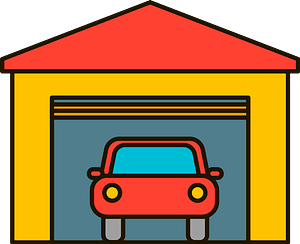
What is called?
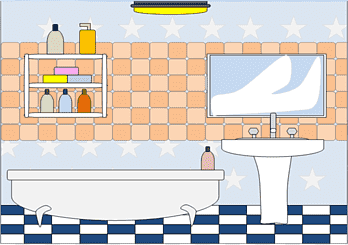
bahtroom
bahtroome
bathroom
bathroome
What is it?
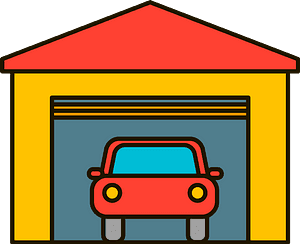
What is called?
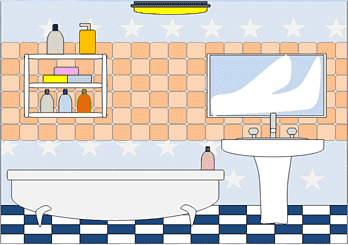
What is "rug"?
เรียงประโยคให้ถูกต้อง
There is a computer under the window.

There aren't toys on the bed.
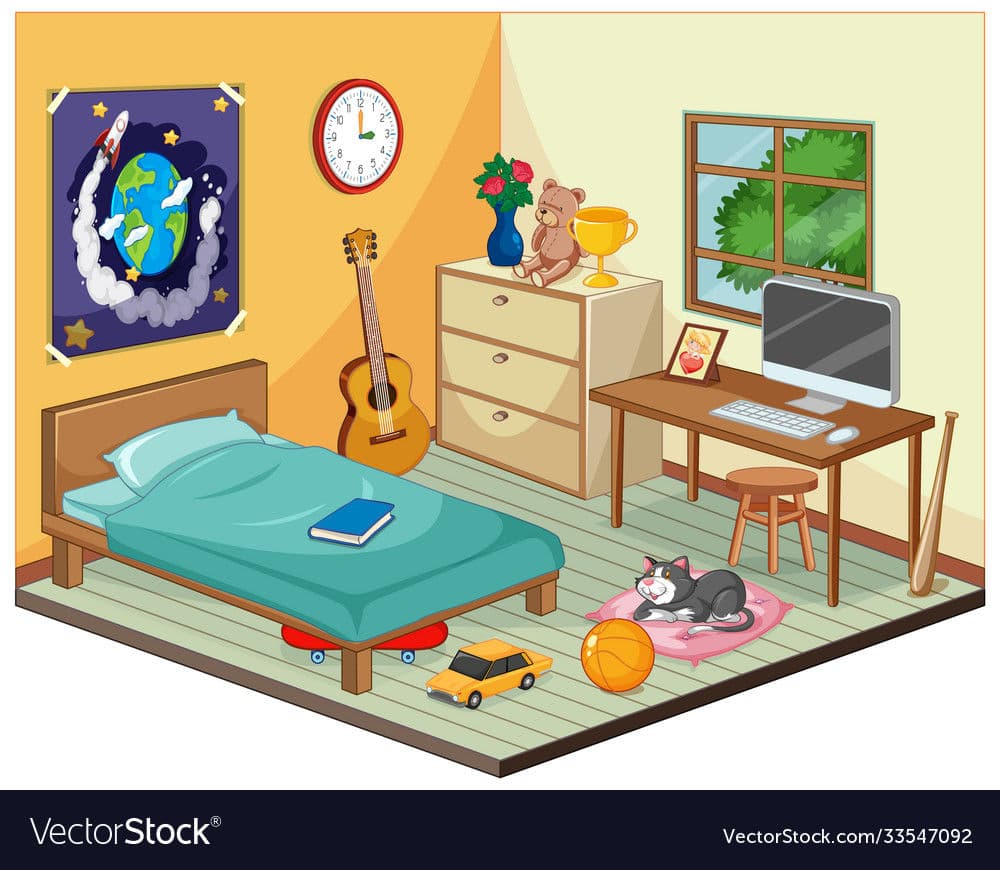
The room that have a fridge.
โทรทัศน์
We are diner at _________.
My dad likes to watch TV in the __________.
What is stove?
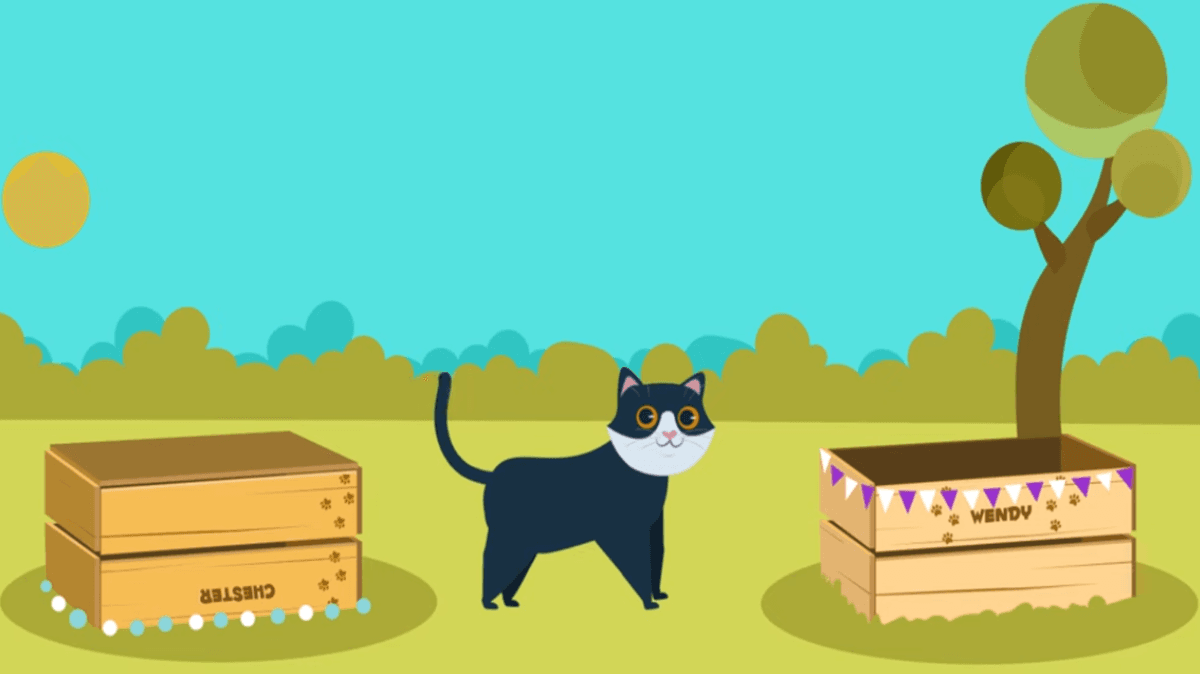
Where is the cat?

Where is the cat?
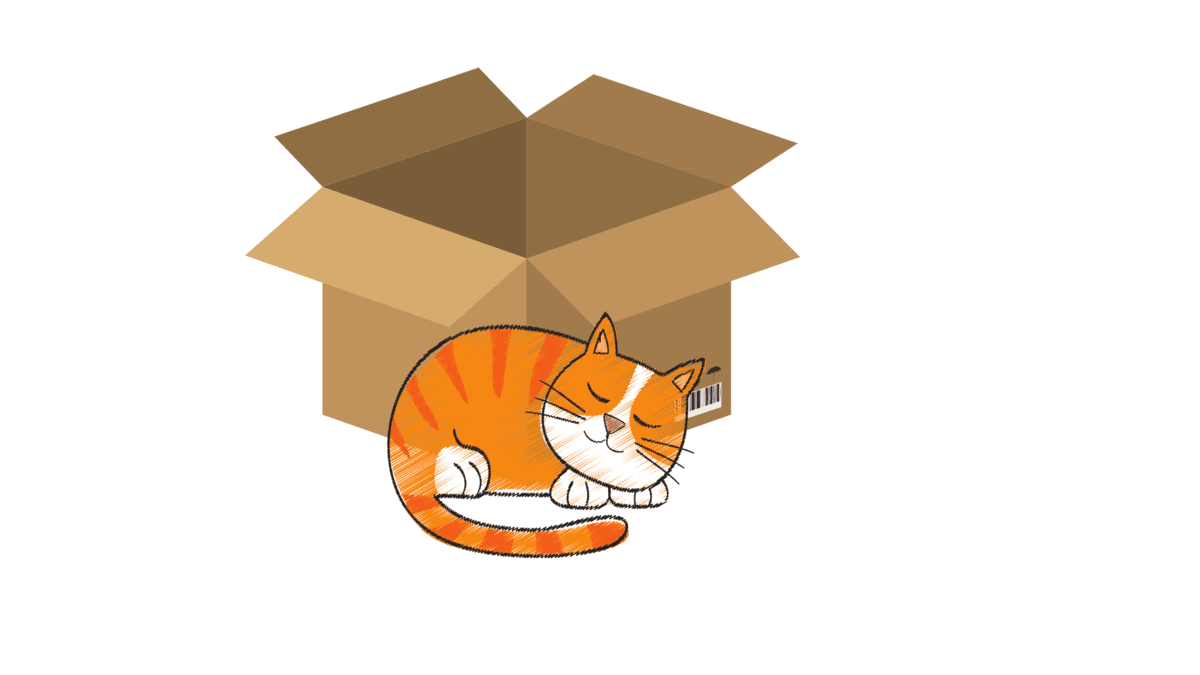
Where is the cat?
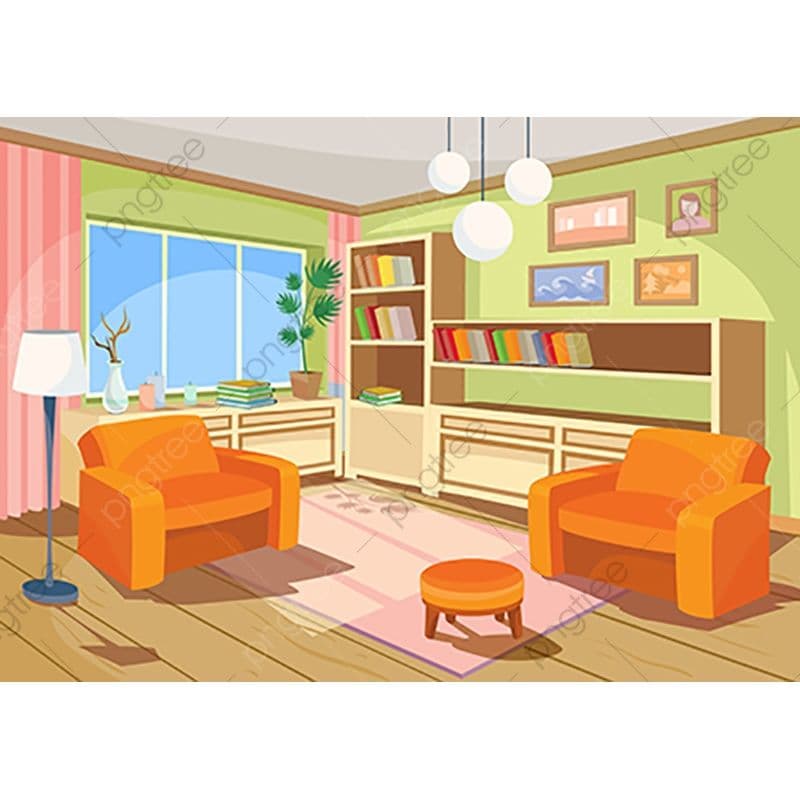
There is a sofa in the livingroom.
 A BAD CASE OF THE STRIPES By David Shannon Parts(18): Camilla Narrator 1 Narrator 2 Narrator 3 Narrator 4 Mr. Harms Mother Father Dr. Bumble Old Woman Environmental Therapist Dr. Grop Dr. Gourd Dr. Sponge Mr. Mellon Dr. Cricket Dr. Young <><><><><><><><><><><><><><><><><><><><><><><><><><><><><><><><><><><><><><><><><><><><><><><><><> Narrator 1: A BAD CASE OF THE STRIPES By David Shannon Narrator 2: Camilla Cream loved lima beans. But she never ate them. Narrator 3: All of her friends hated lima beans, and she wanted to fit in. Camilla always worried about what other people thought of her. Narrator 4: Today she was fretting even more than usual. It was the very first day of school, and she couldn't decide what to wear. There were so many people to impress! Narrator 1: She tried on forty-two outfits, but none seemed quite right. She put on a pretty red dress and looked in the mirror. Then she screamed. Narrator 2: Her mother ran into the room, and she screamed, too. Mother: "Oh my heavens! You're completely covered with stripes!" Narrator 3: she cried. This was certainly true. Camilla was striped from head to toe. She looked like a rainbow. Narrator 4: Mrs. Cream felt Camilla's forehead. Mother: "Do you feel all right?" Narrator 1: she asked. Camilla: "I feel fine, but just look at me!" Narrator 2: Camilla answered. Mother: "You get back in bed this instant. You're not going to school today." Narrator 3: her mother ordered. Camilla was relieved. She didn't want to miss the first day of school, but she was afraid of what the other kids would say. And she had no idea what to wear with those crazy stripes. Narrator 4: That afternoon, Dr. Bumble came to examine Camilla. Dr. Bumble: "Most extraordinary! I've never seen anything like it! Are you having any coughing, sneezing, runny nose, aches, pains, chills, hot flashes, dizziness, drowsiness, shortness of breath, or uncontrollable twitching?" Narrator 1: he asked. Camilla: "No, I feel fine." Narrator 2: Camilla told him. Dr. Bumble: "Well then, I don't see any reason why she shouldn't go to school tomorrow. Here's some ointment that should help clear up those stripes in a few days. If it doesn't, you know where to reach me." Narrator 3: Dr. Bumble said, turning to Mrs. Cream. And off he went. Narrator 4: The next day was a disaster. Everyone at school laughed at Camilla. They called her "Camilla Crayon" and "Night of the Living Lollipop." Narrator 1: She tried her best to act as if everything were normal, but when the class said the Pledge of Allegiance, her stripes turned red, white, and blue, and she broke out in stars! Narrator 2: The other kids thought this was great. One yelled out, Narrator 3: "Let's see some purple polka dots!" Narrator 4: Sure enough, Camilla turned all purple polka-dotty. Someone else shouted, Narrator 1: "Checkerboard!" Narrator 4: and a pattern of squares covered her skin. Soon everyone was calling out different shapes and colors, and poor Camilla was changing faster than you can change channels on a T.V. Narrator 2: That night, Mr. Harms, the school principal, called. Mr. Harms: "I'm sorry, Mrs. Cream, I'm going to have to ask you to keep Camilla home from school. She's just too much of a distraction, and I've been getting phone calls from the other parents. They're afraid those stripes may be contagious." Narrator 3: he said. Camilla was so embarrassed. She couldn't believe that two days ago everyone liked her. Now, nobody wanted to be in the same room with her. Narrator 1: Her father tried to make her feel better. Father: "Is there anything I can get you, sweetheart?" Narrator 2: he asked. Camilla: "No, thank you," Narrator 3: sighed Camilla. What she really wanted was a nice plate of lima beans, but she had been laughed at enough for one day. Dr. Bumble: "Hmm, well, yes, I see. I think I'd better bring in the Specialists. We'll be right over.” Narrator 4: said Dr. Bumble to Mr. Cream on the phone. About an hour later, Dr. Bumble arrived with four people in long white coats. He introduced them to the Creams. Dr. Bumble: "This is Dr. Grop, Dr. Sponge, Dr. Cricket, and Dr. Young." Narrator 1: Then the Specialists went to work on Camilla. They squeezed and jabbed, tapped and tested. It was very uncomfortable. Dr. Grop: "Well, it's not the mumps." Dr. Sponge: "Or the measles." Dr. Cricket:"Definitely not chicken pox." Dr. Young: "Or sunburn." Narrator 2: replied the Specialists. Specialists:"Try these. Take one of each before bed." Narrator 4: said the specialists. They each handed her a bottle filled with different colored pills. Then they filed out the front door followed by Dr. Bumble. Narrator 1: That night, Camilla took her medicine. It was awful. Narrator 2: When she woke up the next morning, she did feel different, but when she got dressed, her clothes didn't fit right. She looked in the mirror, and there, staring back at her, was a giant, multi-colored pill with a face on it. Narrator 3: Dr. Bumble rushed over as soon as Mrs. Cream called. But this time, instead of the Specialists, he brought the Experts. Narrator 4: Dr. Gourd and Mr. Mellon were the finest scientific minds in the land. Once again, Camilla was poked and prodded, looked at and listened to. Narrator 1: The Experts wrote down lots of numbers. Then they huddled together and whispered. Dr. Gourd finally spoke. Dr. Gourd: "It might be a virus," Narrator 2: he announced with authority. Suddenly, fuzzy little virus balls appeared all over Camilla. Mr. Mellon: "Or possibly some form of bacteria," Narrator 3: said Mr. Mellon. Out popped squiggly little bacteria tails. Dr. Gourd: "Or it could be a fungus," Narrator 4: added Dr. Gourd. Instantly, Camilla was covered with different colored fungus blotches. The experts looked at Camilla, then each other. Experts: "We need to go over these numbers again back at the lab. We’ll call you when we know something," Narrator 1: said the Experts. But the Experts didn't have a clue, much less a cure. Narrator 2: By now, the T.V. news had found out about Camilla. Reporters from every channel were outside her house, telling the story of "The Bizarre Case of the Incredible Changing Kid." Narrator 3: Soon a huge crowd was camped out on the front lawn. Narrator 4: The Creams were swamped with all kinds of remedies from psychologists, allergists, herbalists, nutritionists, psychics, an old medicine man, a guru, and even a veterinarian. Narrator 1: Each so-called cure only added to poor Camilla's strange appearance until it was hard to even recognize her. She sprouted roots and berries and crystals and feathers and a long furry tail. But nothing worked. Narrator 2: One day, a woman who called herself an Environmental Therapist claimed she could cure Camilla. She said, Environmental Therapist: "Close your eyes, breathe deeply, and become one with your room." Camilla: "I wish you hadn't said that," Narrator 3: Camilla groaned. Slowly, she started to melt into the walls of her room. Her bed became her mouth, her nose was a dresser, and two paintings were her eyes. The therapist screamed and ran from the house. Mother: "What are we going to do? It just keeps getting worse and worse!" Narrator 4: cried Mrs. Cream. She began to sob. Narrator 1: At that moment, Mr. Cream heard a quiet little knock at the front door. He opened it, and there stood an old woman who was just as plump and sweet as a strawberry. Old Woman: "Excuse me, but I think I can help." Narrator 2: she said brightly. Narrator 3: She went into Camilla's room and looked around. Old Woman: "My goodness, what we have here is a bad case of the stripes. One of the worst I've ever seen!" Narrator 4: she said with a shake of her head. She pulled a container of small green beans from her bag. She said, Old Woman: "Here. These might do the trick." Mother: "Are those magic beans?" Narrator 1: asked Mrs. Cream. The old woman replied, Old Woman: "Oh my, no, there's no such thing. These are just plain old lima beans. I'll bet you'd like some, wouldn't you?" Narrator 2: she asked Camilla. Camilla wanted a big, heaping plateful of lima beans more than just about anything, but she was still afraid to admit it. She said, Camilla: "Yuck! No one likes lima beans, especially me!" Old Woman: "Oh, dear, I guess I was wrong about you." Narrator 3: said the old woman sadly. She put the beans back in her bag and started toward the door. Narrator 4: Camilla watched the old woman walk away. Those beans would taste so good. And being laughed at for eating them was nothing, compared to what she'd been going through. She finally couldn't stand it. Camilla: "Wait! The truth is...I really love lima beans." Narrator 1: she cried. The old woman smiled, popping a handful of beans into Camilla's mouth, and said, Old Woman: "I thought so." Camilla: "Mmmmmmm," Narrator 2: said Camilla. Suddenly the branches, feathers, and squiggly tails began to disappear.Then the whole room swirled around. When it stopped, there stood Camilla, and everything was back to normal. Camilla: "I'm cured!" Narrator 3: she shouted. The old woman said, Old Woman: "Yes, I knew the real you was in there somewhere." Narrator 4: She patted Camilla on the head and went outside and vanished into the crowd. Narrator 1: Afterward, Camilla wasn't quite the same. Narrator 2: Some of the kids at school said she was weird, but she didn't care a bit. Narrator 3: She ate all the lima beans she wanted, and she never had even a touch of stripes again.Carlos's Family Celebration It's Mexican Independence Day! Carlos and Selena are getting ready for a big party. "We can decorate the house," says Carlos. "Let's paint a picture of our family." "Mama was born first. She is the oldest," says Carlos. "Papa was born second," Carlos says. "He is one year younger." "Next is Mateo," says Carlos. "He is Mama and Papa's first child." "After Mateo, you were born," says Selena. "That's right!" says Carlos. I am Mama and Papa's second child." "What about me?" asks Selena. "You were the last to be born," says Carlos. "You are the youngest." "There!" says Carlos. "Our family picture is done!" "Green, white, and red are the colors of the Mexican flag," says Carlos. Carlos and Selena blow up five green balloons. They blow up five white balloons and five red balloons, too. "I'm out of breath!" says Selena. "Let's see,"says Carlos. "We painted a picture first. We blew up balloons second. The third thing we can do is fill the piñata.” Carlos gets the big star piñata from the shelf. Carlos and Selena stuff the piñata with candy. When Selena thinks Carlos isn't looking, she pops a piece of candy into her mouth. Carlos gives her a hug. "You are silly," he says. Mateo hangs the piñata in the apartment's grassy yard. "We need a blindfold," says Carlos. "And a stick to break the piñata, too." Abuela finds a red-checked scarf for Carlos and a long stick for Selena. "The piñata is ready!" says Carlos. "The fourth thing to do is practice dancing, Selena!" Carlos and Selena dress in their party clothes. Then, they dance and spin. Soon, the house fills up with food, family, and music. There are cousins, aunts, uncles, new babies, and new friends. There is Papa, Mama, Mateo, Carlos and Selena, too. "There is one last thing we can do," Carlos says. "And it's the most fun!" "What is it?" asks Selena. "CELEBRATE!" says Carlos.Why the Sun and Moon Live in the Sky This play is based on an African folktale that tells how the moon and sun ended up in the sky. Characters: Narrator Sun Moon, Sun's Wife Water Narrator: Long ago, Sun, Moon, and Water lived together on Earth. (Sun and Moon are eating breakfast at home.) Sun: I will visit my good friend Water today. Moon: That sounds enjoyable, but why doesn't Water ever visit us? Do you feel ashamed or embarrassed to invite Water here? Sun: No, I am proud of our house. I will invite Water today! (Sun visits Water at the beach.) Sun: Water, why don't you ever visit us? Water: Your house can't hold me and my family. Sun: That's nonsense! Moon and I will enlarge our house, so there will be plenty of room for everyone! Water: Then I will visit you. Sun: Wonderful! Please holler loudly, so I hear you when you arrive. Now I must dash home quickly to start the work. (Sun rushes home.) Narrator: Sun and Moon raced to make their home larger. They added rooms and raised the roof higher. The new house was completely different and had no similarities to their old home. They felt it was a victory, or a win, for now their friend could visit. Water: Sun and Moon, I have arrived! Sun: Isn't this the largest home you've seen? Moon: Sun, it's not polite to brag, so please don't boast to our guest. Water, come inside. Narrator: Water splashed through the door carrying colorful fish, frogs, and crabs. As the water began to rise, Sun and Moon climbed onto furniture. Then they scrambled onto the roof. Sun: Moon, I'm not sure about the wisdom of inviting Water. Perhaps this wasn't a smart idea! Moon: No, Sun, it was the right thing to do but we must fly to safety! Narrator: Sun and Moon flew to the sky, where they remain today and still shine down on Water.“There’s No Such Thing as Sound Science” by By Christie Aschwanden was a lead science writer for FiveThirtyEight. FiveThirtyEight, Science, Dec. 6, 2017 Science is being turned against itself. For decades, its twin ideals of transparency and rigor have been weaponized by those who disagree with results produced by the scientific method. Under the Trump administration, that fight has ramped up again. In a move ostensibly meant to reduce conflicts of interest, Environmental Protection Agency Administrator Scott Pruitt has removed a number of scientists from advisory panels and replaced some of them with representatives from industries that the agency regulates. Like many in the Trump administration, Pruitt has also cast doubt on the reliability of climate science. For instance, in an interview with CNBC, Pruitt said that “measuring with precision human activity on the climate is something very challenging to do.” Similarly, Trump’s pick to head NASA, an agency that oversees a large portion the nation’s climate research, has insisted that research into human influence on climate lacks certainty, and he falsely claimed that “global temperatures stopped rising 10 years ago.” Kathleen Hartnett White, Trump’s nominee to head the White House Council on Environmental Quality, said in a Senate hearing last month that she thinks we “need to have more precise explanations of the human role and the natural role” in climate change. The same entreaties crop up again and again: We need to root out conflicts. We need more precise evidence. What makes these arguments so powerful is that they sound quite similar to the points raised by proponents of a very different call for change that’s coming from within science. This other movement strives to produce more robust, reproducible findings. Despite having dissimilar goals, the two forces espouse principles that look surprisingly alike: Science needs to be transparent. Results and methods should be openly shared so that outside researchers can independently reproduce and validate them. The methods used to collect and analyze data should be rigorous and clear, and conclusions must be supported by evidence. These are the arguments underlying an “open science” reform movement that was created, in part, as a response to a “reproducibility crisis” that has struck some fields of science.1 But they’re also used as talking points by politicians who are working to make it more difficult for the EPA and other federal agencies to use science in their regulatory decision-making, under the guise of basing policy on “sound science.” Science’s virtues are being wielded against it. What distinguishes the two calls for transparency is intent: Whereas the “open science” movement aims to make science more reliable, reproducible and robust, proponents of “sound science” have historically worked to amplify uncertainty, create doubt and undermine scientific discoveries that threaten their interests. “Our criticisms are founded in a confidence in science,” said Steven Goodman, co-director of the Meta-Research Innovation Center at Stanford and a proponent of open science. “That’s a fundamental difference — we’re critiquing science to make it better. Others are critiquing it to devalue the approach itself.” Calls to base public policy on “sound science” seem unassailable if you don’t know the term’s history. The phrase was adopted by the tobacco industry in the 1990s to counteract mounting evidence linking secondhand smoke to cancer. A 1992 Environmental Protection Agency report identified secondhand smoke as a human carcinogen, and Philip Morris responded by launching an initiative to promote what it called “sound science.” In an internal memo, Philip Morris vice president of corporate affairs Ellen Merlo wrote that the program was designed to “discredit the EPA report,” “prevent states and cities, as well as businesses from passing smoking bans” and “proactively” pass legislation to help their cause. The sound science tactic exploits a fundamental feature of the scientific process: Science does not produce absolute certainty. Contrary to how it’s sometimes represented to the public, science is not a magic wand that turns everything it touches to truth. Instead, it’s a process of uncertainty reduction, much like a game of 20 Questions. Any given study can rarely answer more than one question at a time, and each study usually raises a bunch of new questions in the process of answering old ones. “Science is a process rather than an answer,” said psychologist Alison Ledgerwood of the University of California, Davis. Every answer is provisional and subject to change in the face of new evidence. It’s not entirely correct to say that “this study proves this fact,” Ledgerwood said. “We should be talking instead about how science increases or decreases our confidence in something.” The tobacco industry’s brilliant tactic was to turn this baked-in uncertainty against the scientific enterprise itself. While insisting that they merely wanted to ensure that public policy was based on sound science, tobacco companies defined the term in a way that ensured that no science could ever be sound enough. The only sound science was certain science, which is an impossible standard to achieve. “Doubt is our product,” wrote one employee of the Brown & Williamson tobacco company in a 1969 internal memo. The note went on to say that doubt “is the best means of competing with the ‘body of fact’” and “establishing a controversy.” These strategies for undermining inconvenient science were so effective that they’ve served as a sort of playbook for industry interests ever since, said Stanford University science historian Robert Proctor. The sound science push is no longer just Philip Morris sowing doubt about the links between cigarettes and cancer. It’s also a 1998 action plan by the American Petroleum Institute, Chevron and Exxon Mobil to “install uncertainty” about the link between greenhouse gas emissions and climate change. It’s industry-funded groups’ late-1990s effort to question the science the EPA was using to set fine-particle-pollution air-quality standards that the industry didn’t want. And then there was the more recent effort by Dow Chemical to insist on more scientific certainty before banning a pesticide that the EPA’s scientists had deemed risky to children. Now comes a move by the Trump administration’s EPA to repeal a 2015 rule on wetlands protection by disregarding particular studies. (To name just a few examples.) Doubt merchants aren’t pushing for knowledge, they’re practicing what Proctor has dubbed “agnogenesis” — the intentional manufacture of ignorance. This ignorance isn’t simply the absence of knowing something; it’s a lack of comprehension deliberately created by agents who don’t want you to know, Proctor said.2 In the hands of doubt-makers, transparency becomes a rhetorical move. “It’s really difficult as a scientist or policy maker to make a stand against transparency and openness, because well, who would be against it?” said Karen Levy, researcher on information science at Cornell University. But at the same time, “you can couch everything in the language of transparency and it becomes a powerful weapon.” For instance, when the EPA was preparing to set new limits on particulate pollution in the 1990s, industry groups pushed back against the research and demanded access to primary data (including records that researchers had promised participants would remain confidential) and a reanalysis of the evidence. Their calls succeeded and a new analysis was performed. The reanalysis essentially confirmed the original conclusions, but the process of conducting it delayed the implementation of regulations and cost researchers time and money. Delay is a time-tested strategy. “Gridlock is the greatest friend a global warming skeptic has,” said Marc Morano, a prominent critic of global warming research and the executive director of ClimateDepot.com, in the documentary “Merchants of Doubt” (based on the book by the same name). Morano’s site is a project of the Committee for a Constructive Tomorrow, which has received funding from the oil and gas industry. “We’re the negative force. We’re just trying to stop stuff.” Some of these ploys are getting a fresh boost from Congress. The Data Quality Act (also known as the Information Quality Act) was reportedly written by an industry lobbyist and quietly passed as part of an appropriations bill in 2000. The rule mandates that federal agencies ensure the “quality, objectivity, utility, and integrity of information” that they disseminate, though it does little to define what these terms mean. The law also provides a mechanism for citizens and groups to challenge information that they deem inaccurate, including science that they disagree with. “It was passed in this very quiet way with no explicit debate about it — that should tell you a lot about the real goals,” Levy said. But what’s most telling about the Data Quality Act is how it’s been used, Levy said. A 2004 Washington Post analysis found that in the 20 months following its implementation, the act was repeatedly used by industry groups to push back against proposed regulations and bog down the decision-making process. Instead of deploying transparency as a fundamental principle that applies to all science, these interests have used transparency as a weapon to attack very particular findings that they would like to eradicate. Now Congress is considering another way to legislate how science is used. The Honest Act, a bill sponsored by Rep. Lamar Smith of Texas,3 is another example of what Levy calls a “Trojan horse” law that uses the language of transparency as a cover to achieve other political goals. Smith’s legislation would severely limit the kind of evidence the EPA could use for decision-making. Only studies whose raw data and computer codes were publicly available would be allowed for consideration. That might sound perfectly reasonable, and in many cases it is, Goodman said. But sometimes there are good reasons why researchers can’t conform to these rules, like when the data contains confidential or sensitive medical information.4 Critics, which include more than a dozen scientific organizations, argue that, in practice, the rules would prevent many studies from being considered in EPA reviews.5 It might seem like an easy task to sort good science from bad, but in reality it’s not so simple. “There’s a misplaced idea that we can definitively distinguish the good from the not-good science, but it’s all a matter of degree,” said Brian Nosek, executive director of the Center for Open Science. “There is no perfect study.” Requiring regulators to wait until they have (nonexistent) perfect evidence is essentially “a way of saying, ‘We don’t want to use evidence for our decision-making,’” Nosek said. Most scientific controversies aren’t about science at all, and once the sides are drawn, more data is unlikely to bring opponents into agreement. Michael Carolan, who researches the sociology of technology and scientific knowledge at Colorado State University, wrote in a 2008 paper about why objective knowledge is not enough to resolve environmental controversies. “While these controversies may appear on the surface to rest on disputed questions of fact, beneath often reside differing positions of value; values that can give shape to differing understandings of what ‘the facts’ are.” What’s needed in these cases isn’t more or better science, but mechanisms to bring those hidden values to the forefront of the discussion so that they can be debated transparently. “As long as we continue down this unabashedly naive road about what science is, and what it is capable of doing, we will continue to fail to reach any sort of meaningful consensus on these matters,” Carolan writes. The dispute over tobacco was never about the science of cigarettes’ link to cancer. It was about whether companies have the right to sell dangerous products and, if so, what obligations they have to the consumers who purchased them. Similarly, the debate over climate change isn’t about whether our planet is heating, but about how much responsibility each country and person bears for stopping it. While researching her book “Merchants of Doubt,” science historian Naomi Oreskes found that some of the same people who were defending the tobacco industry as scientific experts were also receiving industry money to deny the role of human activity in global warming. What these issues had in common, she realized, was that they all involved the need for government action. “None of this is about the science. All of this is a political debate about the role of government,” she said in the documentary. These controversies are really about values, not scientific facts, and acknowledging that would allow us to have more truthful and productive debates. What would that look like in practice? Instead of cherry-picking evidence to support a particular view (and insisting that the science points to a desired action), the various sides could lay out the values they are using to assess the evidence. For instance, in Europe, many decisions are guided by the precautionary principle — a system that values caution in the face of uncertainty and says that when the risks are unclear, it should be up to industries to show that their products and processes are not harmful, rather than requiring the government to prove that they are harmful before they can be regulated. By contrast, U.S. agencies tend to wait for strong evidence of harm before issuing regulations. Both approaches have critics, but the difference between them comes down to priorities: Is it better to exercise caution at the risk of burdening companies and perhaps the economy, or is it more important to avoid potential economic downsides even if it means that sometimes a harmful product or industrial process goes unregulated? In other words, under what circumstances do we agree to act on a risk? How certain do we need to be that the risk is real, and how many people would need to be at risk, and how costly is it to reduce that risk? Those are moral questions, not scientific ones, and openly discussing and identifying these kinds of judgment calls would lead to a more honest debate. Science matters, and we need to do it as rigorously as possible. But science can’t tell us how risky is too risky to allow products like cigarettes or potentially harmful pesticides to be sold — those are value judgements that only humans can make.To understand melody in music, think about some music you’re familiar with. If you were asked to hum it, what would that sound like? The part of the music that you’d hum is the melody. It’s the main thread of sound that your brain tracks and holds onto when you’re listening to music. In vocal music, the melody is sung by the lead singer. Other vocalists can provide harmony and instruments can add accompaniment, but the melody is the star of the show.What are the characteristics of melody in music? How do you describe a melody in music? A melody needs to have two things. The first is a sequence of notes, or pitches, which range from high to low. The second is rhythm, which is the timing and duration of each note. These two simple elements can create an incredible variety of combinations. Even though a melody only consists of one note at a time, it can convey so much energy and emotion. Melodies can be fast and sparkly, like “The Flight of the Bumblebee.” They can be slow and majestic, like “Finlandia.” They might be sweeping and graceful, like a Strauss waltz. Or they can be fun and exciting, like your favorite pop tunes that you love to sing along with. Melodies often tell you a lot about where a piece of music comes from. It’s easy to recognize and identify melodies from different folk traditions such as the Japanese folk song “Sakura” or the Irish tune “Star of the County Down.” Learn how to play your favorite melodies on piano, and more! Sign up now. What is melody in music? Here are some examples. Here is the famous melody for the song “Lean on Me” written out on a staff. Notice the way that the notes move up, down, and then repeat. What is melody in music? Example of Lean On Me notes on treble staff. A melody all by itself is great, but music can be even more fun when there’s an accompaniment. Here are a few bars of “Lean on Me” with the accompaniment written out. As you listen to this song, notice how the accompaniment has a very similar rhythm and movement to the melody. Then there’s that one note in the bass line that comes along every measure with its own rhythm, which adds some extra energy and movement to the song. What makes a good melody? When you create a melody, there are four types of movement you can use: Repeat (same note) Step (up or down) Skip (up or down) Leap (up or down) Stepping and repeating are the most common types of melodic motion, and this makes a melody easier to sing. Most “hummable” tunes use steps and repeats almost exclusively. This kind of melody is called conjunct. Beethoven’s “Ode to Joy,” one of the most famous melodies of all time.Skips and leaps are generally more sparing in melodies, but when thoughtfully placed they can have a powerful emotional impact. Tunes with a lot of leaps are called disjunct. Listen to Sarah Brightman sing All I Ask of You from The Phantom of the Opera starting at 0:39. This is a very disjunct melody, and challenging to sing. Great melodies also incorporate patterns that blend unity, repetition, and contrast. Our ears love patterns, but they also love novelty and growth. A good melody incorporates all of these elements. For example, listen to John William’s “Princess Leia Theme.” Can you hear the repeated pattern in the melody that gradually moves higher as the theme progresses? Now listen to the way it changes and develops into something that fits with what came before but sounds new at the same time. This is some great melodic writing! Can melody exist without rhythm? There is no way for a melody to exist without rhythm. Even if your melody only has one note, that note has a duration, and that’s the rhythm. If your melody has two notes, how long those notes last and how much time passes between hearing them is also a rhythm. A melody in music can often be recognized even when it’s performed with different rhythms. This frequently happens in live performances of pop, rock, and jazz, in which singers typically improvise slight rhythmic differences with each performance. No two renditions are exactly the same, and this constant reinterpretation keeps the music fresh. How to make a melody for a song on piano Creating your own melodies on the piano is easy and fun! There are so many ways you can discover a melody all your own. Here are a few ideas. Get some inspiration from the world around you. What can you hear right now? A clock ticking? A bird song? A car passing by your house? See if you can find some notes on the piano that imitate the sounds you hear. Think of a feeling you’d like to put into a melody. What are some ways you could make a string of notes sound happy, sad, angry, or maybe just thoughtful. Choose a line from a poem you like, or write your own. Read it out loud and put some feeling into it. Did your voice rise and fall in pitch as you were reading? Now go to the piano, start on any note you like, and try to imitate what happened when you read. Go up when your voice naturally went up, go down when your voice naturally went down. How did that sound? Now you have the perfect melody to go with those words. Too many keys on the piano? The truth is, most melodies use only a limited number of different notes. Try creating a melody using only the black keys. These form what’s called a pentatonic scale. It’s used in a lot of folk music traditions around the world and can be a great place to start if you want to create your own melodies. Remember, when you create your melody, keep it simple. Use repeated notes and steps, but add a few skips to keep things interesting. One tip about leaps: when you do put in a big leap, try doubling back and filling in the empty space you leaped over. This keeps the melody self-contained and easier to sing. Also, see if you can use the same patterns of notes and rhythms to give the melody unity, but also change those patterns to give it variety. There is no right or wrong way to create your own music. Keep trying combinations of notes and rhythms until you find something that you like. How many bars and notes are in a melody? Many types of music tend to have a prescribed number of bars, or measures. This will vary widely between different genres, and creates an overall sense of musical structure. If you’re writing a pop song, a verse will usually have between eight and sixteen bars. The prechorus that follows often has just four bars, and this “foreshortening” creates a sense of acceleration, driving the listener toward the chorus. The number of notes can also vary widely. A melody in music needs at least two notes, and a long and complex one can have hundreds or even thousands of notes. What is a countermelody in music? How many melodies should a song have? A counter melody is a melodic line that interacts with the primary melody as an independent but supportive voice. A great example of this is the song “We Don’t Talk about Bruno.” Each character sings their own melody during the piece, but these melodies all combine at the end as countermelodies. This produces a musical texture known as counterpoint. The same thing happens in “One Day More” from Les Miserables. The different melodies are first sung separately, but end up being combined in a splendid, complex texture that leads the music to its thrilling conclusion. The difference between a countermelody and regular harmony is that harmony usually supports the rhythms of the melody. A countermelody will move more independently, with different rhythms from those of the melody, and will often sound “melodic” when sung or played all by itself. A melodic song should have one main melody. This is the part that the lead voice sings. It’s usually in the spotlight, and will be the most memorable part of the music. Anything else is either harmony, countermelody, or accompaniment. Does all music have to have a melody? A piece of music doesn’t have to have a melody. There are many different kinds of music without melody. For example, a lot of music played on percussion instruments won’t have a melody. Listen to this example of Tahitian drumming. This is some great music, exciting and fun to listen to, but you’d have a hard time humming it. It’s music, but it doesn’t have a melody. Rap music is another style of music where there doesn’t have to be a melody. In rap, words are chanted rather than sung. The performer will raise and lower the pitch of their voice for emphasis, but it’s the rhythm of the words that creates most of the music. Music can even lack any melody, at least in some sections. Listen to the opening chords of “Duel of the Fates.” This choral passage is all about harmony, with little rhythmic variance or sense of melody. But it makes an effective contrast with the next section, which is bustling with rapid instrumental melodies. In some pieces, there are multiple melodic lines but there is no one main melody. When music is made up of equally important countermelodies, it creates a contrapuntal texture. Baroque composer J.S. Bach was one of the greatest masters of this style, such as in his Little Fugue in G minor. It starts with a single melodic line, the subject, but then a countermelody is added, and then more and more until several melodic lines are playing together. It’s fun to listen to, but once all the countermelodies are playing together it becomes hard to decide which part to hum along with! You’ll also hear a lot of counterpoint in jazz music, in which the different instruments are all playing together and improvising their own melodies that combine to create a rich, thick musical texture. Experience the wonder of melody in music! Whether you’re humming your favorite tune, or creating a new song all your own, melody is a memorable, shareable part of music. Enrich your music experience by being aware of, listening for, and enjoying the melodies all around you.Create multiple choice questions using the following information: In November, Mrs. Baker has Holling read The Tempest. Despite his preconceptions, Holling is captivated by all the "good stuff" in the play, especially the cussing, which he decides to learn by heart. He figures that Mrs. Baker could not have read the play herself; if she had, she certainly would not have let him have it. Holling is amazed when he discovers that his teacher not only has read the play, but she knows the bad parts as well. Mrs. Baker gives Holling a one-hundred-and-fifty question test on The Tempest, and assigns him to read the play again, telling him "there is a lot more to (it) than a list of colorful curses." The deadline set by Holling's classmates for him to bring them cream puffs arrives, but although Holling's father's company has won the Baker's Sporting Emporium contract, he refuses to extend an advance on his son's allowance. Desperate, Holling goes to Goldman's Best Bakery, offering to work for the money he lacks to buy the cream puffs. Coincidentally, Mr. Goldman, who is active in Long Island's Shakespeare Company, needs a boy to perform in their upcoming Extravaganza, and because of his work with Mrs. Baker, Holling fits the bill. Mr. Goldman gives Holling the required number of cream puffs in exchange, but sadly, while the students are at recess, Caliban and Sycorax, the escaped rats who inhabit the classroom walls and ceiling, come out and decimate the treats. Somehow, the disaster is blamed on Holling; he must clean up the mess, and his classmates decree that he still owes them cream puffs. The next Wednesday, Holling brings five cream puffs to school, which is all he can afford. In addition to facing his classmates' ire, he has to deal with the fact that, in the Shakespeare Company Holiday Extravaganza, he must play the part of Ariel, who is a fairy, and wear yellow tights with white feathers on an unmentionable part of his anatomy; "not a good thing for a boy from Camillo Junior High." To Holling's surprise, just when things are at their darkest, Mrs. Baker comes through for him, bringing cream puffs for the students on his behalf. That afternoon, Mrs. Baker and Holling discuss The Tempest, and whether or not Caliban, the "monster," deserves a happy ending. Holling argues that, as the antagonist, he does not, but Mrs. Baker muses whether Shakespeare might have shown, even in a monster, the capacity of humankind to use defeat to grow. Mrs. Bigio stumbles into the classroom at this point, emitting sounds of indescribable sadness; she has just learned that her husband has been killed in a futile reconnaissance mission in Vietnam. Two nights after his funeral, the Catholic Relief Agency, which houses Vietnamese refugees, including Holling's classmate Mai Thi, is the target of a hate crime. Holling reflects that Shakespeare, with his happy endings for nearly everyone in The Tempest, is wrong. He says, "sometimes, there isn't a Prospero to make everything fine...and...the quality of mercy is strained." In December, Camillo Junior High is awash in "signs of the season." Mrs. Baker, however, does not share the holiday spirit, but Holling is too absorbed with his problems with the Shakespeare Holiday Extravaganza to wonder why. As always, Holling seeks help from his family, but to no avail; his mother comments insipidly that his embarrassing costume is cute, his father tells him to wear it to please Mr. Goldman, who might one day need an architect, and his sister warns him that if news of his role gets to the high school, no one better find out they are related. The only thing that prevents December from being a total disaster is Mrs. Baker's announcement that Mickey Mantle will be signing autographs at the Baker Sporting Emporium. Unfortunately, Mrs. Baker also tells the class about Holling and the Shakespeare Extravaganza, and encourages the students to attend both events. Holling's classmates are intensely curious about his role as Ariel, whom he euphemistically describes as "a warrior." Mr. Goldman tells Mrs. Baker that Holling needs "some practice on interpretation", and she practices with him, playing the part of Prospero. Mrs. Baker is a terrific reader, and when she and Holling rehearse the part where Prospero releases Ariel from bondage, Holling is inspired, realizing what it means to be free "to create his own happy ending." On the night of the performance, Mrs. Baker, Mrs. Bigio, Danny Hupfer and his parents, Meryl Lee, and Mai Thi are in the audience to support Holling, unlike his own parents, who do not want to miss the Bing Crosby Christmas Special on television. Holling executes his part with such passion that his classmates are moved to tears, and do not even notice what he is wearing. When the show is over, Holling, finding the dressing room locked, rushes outside, still in costume, where his father is supposed to be waiting to take him to Baker's Sporting Emporium to see Mickey Mantle. Typically, his father is not there, and Holling, frantic, flags down a bus and begs the driver to take him to the Emporium. The driver takes pity on him and complies, getting him to the Emporium just in time, but when Holling approaches Mickey Mantle for an autograph, the famous player looks derisively at his costume and snaps rudely, "I don't sign baseballs for kids in yellow tights." Danny Hupfer witnesses this snub, and loyally returns his own autographed baseball to Mickey Mantle, saying, "I guess I don't need this after all." Holling and Danny leave together in silence, smarting because "when gods die, they die hard." During the days remaining until holiday break, Mrs. Bigio is especially cantankerous; her cafeteria cooking is unappetizing at best, and her comments to the students are impatient and unkind. Holling, remembering Mrs. Bigio's sadness when she received the news of her husband's death, does not complain, but he is bewildered at the sheer desolation he witnesses when Mrs. Bigio bitterly tells Mai Thi that she "shouldn't even be here...a queen in a refugee home while American boys are sitting in swamps on Christmas Day." After school on the last day before break, Mrs. Baker gives Holling, Danny Hupfer, and Doug Swieteck each a new baseball and mitt, and sends them to the gym, where, to their delight, they meet Joe Pepitone and Horace Clark in their Yankee uniforms, and receive tickets to Opening Day at the Stadium. Mrs. Baker's family knows what happened with Mickey Mantle, and wants to make it up to the boys. The next day, President Johnson declares a Christmas ceasefire in Vietnam, and the holiday season begins in earnest.Riding with Rosa Parks On the Bus. Marissa and her mother were riding the bus. They were on their way to Grandma's house. They had to sit in the back seats. Marissa didn't like the back seats. There was a law that black people had to sit at the back of the bus. Her mother said it was unfair. Some white people came on the bus. So some of the black people stood up and gave them their seats. That was another part of the law. Refusing to Stand. But one black woman didn't stand up. Her name was Rosa Parks. She didn't want to move from her seat. The driver told Rosa she had to move, but she said, "No." Then the driver called the police! The police came and arrested Rosa Parks. Marissa was very confused. Why didn't Rosa Parks get up? Everybody knew the law, even if it wasn't fair. Taking Steps. When other people heard what happened to Rosa, they got very upset. They decided to stop riding the city buses! Marissa asked her mom why they had to walk. Her mother said people stopped riding the buses to show that the law was unfair. For a long time they walked everywhere. Marissa's legs were sometimes very tired. Still, they didn't ride the bus. Making a Difference. Finally, an amazing thing happened. The law was changed! Marissa and her mom could now sit at the front of the bus. Marissa learned that one person could make a difference. She learned people could join together to change things. Today, people of all colors in the United States have the same rights. It all started with one woman saying no to something that was unfair.Make a multiple choice quiz for my year 8 science students based on the science in this transcript from a video: 3°C 0:04 It can be the difference between snow and sleet 0:08 Wearing a jacket or not 0:11 In your day-to-day life, it may not seem significant 0:15 But 3°C of global warming would be catastrophic 0:20 Heatwaves, droughts, extreme precipitation, even fire 0:25 3°C of warming is really disastrous 0:28 The scary thing is, the world is well on its way there 0:32 Since the industrial revolution, the Earth has warmed between 1.1°C and 1.3°C 0:40 This is a problem that babies you pass in the street will have to live with 0:46 Children born today... 0:47 ...are up to seven times more likely to face extreme weather than their grandparents 0:52 If global temperatures do rise by 3°C... 0:55 ...what would their world look like? Climate change is already having devastating effects 1:03 Rising sea levels 1:05 Desertification 1:07 Hollywood has always enjoyed imagining the end of the world 1:11 While blockbusters like this are clearly fiction... 1:14 ...this film will show the scenario we all face... 1:17 ...unless more drastic measures are taken to stop burning fossil fuels 1:30 In some parts of the world the effects of inaction are already clear 1:35 The slums of Bangladesh’s capital are filling up with climate migrants 1:41 Minara comes from Bhola District, an area in southern Bangladesh 1:46 There, like many other parts of the country... 1:49 ...rivers swollen by heavier rain and melting Himalayan glaciers... 1:53 ...are washing away people’s homes 1:56 Many, like her, have lost everything 2:00 Our home in Bhola had endless amounts of land 2:03 There was lots of space for farming, we had a spacious house 2:08 There were different types of fruits, vegetation and trees growing at home 2:12 We used to eat the fruit from our own trees 2:18 I can’t eat them now because they don't exist anymore 2:21 Since the river flooded for the third time, I had to flee to Dhaka 2:26 Life was much better back home 2:29 It was unbearable to live through, truly intolerable 2:33 We didn’t have the time to save anything at all 2:38 1.1°C to 1.3°C of global warming has already transformed Minara’s life 2:45 It’s one of the reasons why so many migrants like her... 2:47 ...are moving to the city each year... 2:50 ...nearly 400,000 according to the last estimate 2:53 And climate models show there could be much worse to come How climate modelling works 3:02 Climate scientist Joeri Rogelj... 3:04 ...has spent the last ten years modelling future climate scenarios... 3:08 ...for the United Nations 3:10 The models we use to carry out this exercise... 3:13 ...really represent the state of the art... 3:15 ...of our current knowledge of climate change and where we are heading 3:19 Joeri’s projections use data collected by hundreds of scientists around the world 3:26 Here this is the 3°C level... 3:28 ...and so there is at least a one-in-four chance that under current policies... 3:32 ...we would hit 3°C by the end of the century 3:36 This is just one of the scenarios Joeri looks at 3:40 Another one imagines that all policy promises are kept 3:44 The most optimistic assumes that all promises have been kept... 3:47 ...and net-zero targets are met 3:50 Where our best estimate ends up around 2°C at the end of the century... 3:54 ...there is still a one-in-20 chance that we end up with 3°C instead 3:59 One would not be entering a plane if there is a one-in-20 chance... 4:03 ...that the plane will crash Nowhere is safe from global warming 4:07 A rise of 3°C would affect everyone 4:10 Even wealthy cities in rich countries wouldn’t be immune to the consequences 4:15 European capitals like Paris and Berlin... 4:18 ...would bake under more extreme heatwaves 4:22 Frequent storm-surges in New York could turn parts of the city desolate 4:27 In many ways, cities magnify, intensify climate events 4:33 Cities are hotter than the places around them... 4:36 ...they tend to be more vulnerable to flooding 4:39 And you can get a really bad event in a city in a way that you can’t in the countryside 4:46 And because of their denser populations... 4:49 ...disasters in a city affect far more people 4:52 Some cities might be badly prepared for the changes coming 4:56 But they have the means to adapt 4:59 Cities tend to be wealthier than surrounding places 5:03 They have a lot of amenities 5:05 A city that has taken seriously the risks of a 3°C world... 5:08 …wouldn’t necessarily be a worse place to be in a 3°C world 5:12 But a city that hasn’t prepared for these sort of eventualities... 5:16 ...that might be a really nasty place The impact of prolonged droughts 5:20 So far, many developed cities have got off lightly... 5:24 ...but some rural parts of the world are suffering disproportionately 5:29 Smallholders—small-scale farmers—are particularly vulnerable to climate change 5:35 And there are over 600 million around the world 5:38 Smallholders with farms under two hectares... 5:40 ...produce around a third of the global food supply 5:46 Central America’s “Dry Corridor”... 5:48 ...supports a mix of smallholdings and medium-sized farms 5:53 Sandwiched between the Pacific Ocean and the Caribbean Sea... 5:56 ...the area is prone to droughts 6:08 Israel Ramírez Rivera is a smallholder in Guatemala 6:12 Here, climate change is making the dry seasons longer, and more severe 6:18 This is the biggest ear of maize that this plot could deliver 6:23 He depends on his crops of corn and beans 6:26 But they’re getting harder to grow 6:30 The surrounding mountains... 6:32 ...used to provide us with native food... 6:38 ...and now that isn’t an option anymore... 6:41 ...due to climate change and its effects 6:46 Nearly two-thirds of the smallholders in the Dry Corridor now live in poverty 6:52 The impact of all of this for us... 6:59 ...malnutrition among children 7:03 We’ve lost a few 7:07 For my crops especially, the midsummer heat is harder than before 7:16 The plant dries up and can’t provide us... 7:19 ...with the necessary food provision 7:24 Severe droughts in Central America... 7:26 ...are now four times more likely than they were last century 7:30 Many families from here have gone to the States 7:37 The economic despair and debts... 7:44 ...have pushed many people from this community to do this journey 7:53 Migration from Guatemala to the United States has quadrupled since 1990 7:59 Not all of this has been due to climate change 8:02 But longer droughts would force even more to move 8:05 In a 3°C world, annual rainfall in this region... 8:09 ...could drop by up to 14% 8:12 At 3°C, over a quarter of the world’s population... 8:16 ...could endure extreme droughts for at least a month of the year 8:19 Northern Africa could see droughts that last for years at a time Rising sea levels, storm surges and flooding 8:24 But for some, too much water will be the problem 8:29 10% of the world’s population lives on a coastline... 8:32 ...that’s less than 10 metres above sea level 8:35 For these coastal inhabitants, a 3°C world would spell disaster 8:40 By 2100, global sea levels could have climbed by half a metre from 2005 levels 8:46 Low-lying cities like Lagos would be especially vulnerable... 8:49 ...with up to up to a third of the population displaced 8:54 And in Fiji, rising waters are already upending lives 9:04 You can see the graveyard there, it’s all under water now... 9:08 ...due to this rising sea level and climate change 9:15 The village of Togoru in Fiji is being swallowed by the sea 9:19 Barney Dunn, the village headman, has seen over half the village disappear 9:24 Relatives’ houses have been abandoned, and family graves are now under water 9:29 We have been asked by the government to relocate... 9:32 ...but no one wants to relocate... 9:34 ...because we have our great-great-grandparents down there in the sea 9:39 This is the place we’ve been brought up in 9:41 ...it’s not easy to leave 9:44 Past attempts to build a seawall haven’t worked 9:48 But Barney sees building a new one as the village’s only hope 9:52 If they do that, maybe we can save whatever is left 9:56 But if we don’t have the seawall, then it will be keep eroding and time will come... 10:01 ...maybe in ten,15 years, Togoru will be all eroded 10:05 Rising seas also mean storms cause more floods 10:11 And many more countries could suffer 10:14 The Philippines and Myanmar are just two countries... 10:17 ...that will also see an increase in storm surges in a 3°C world 10:21 To escape, many will move… 10:24 …often, to urban areas Extreme heat and wet-bulb temperatures 10:27 Half the world’s population already lives in cities... 10:31 ...almost a third in slums 10:36 For them, a 3°C world could be deadly 10:40 Minara has moved to Dhaka to escape the impact of climate change 10:44 But life could get even worse for her 10:47 I’m struggling a lot nowadays 10:49 The heat during the day is unbearable 10:52 Even late at night it doesn’t cool down 10:57 The heat is getting more intense every day 10:59 I mean, it’s going to get much worse 11:03 I can barely survive it now, how will I live through it in the future? 11:08 Dhaka is getting hotter 11:11 In the last 20 years the average daytime temperature... 11:13 ...has crept up by nearly half a degree 11:17 Days that approach 40°C are now being reported 11:20 And high so-called wet-bulb temperatures are on the rise 11:26 A wet-bulb temperature is a measure of heat and humidity 11:30 Humans cool themselves by sweating… 11:32 But in these conditions, when relative humidity is near 100%... 11:36 ...sweat doesn’t evaporate well 11:38 So people can’t cool down… 11:41 ...even if given unlimited shade and water 11:45 At a high wet-bulb temperature, the body can’t lose heat... 11:49 ...and so it gets hotter and hotter... 11:51 ...and the body is designed to work at a given temperature 11:53 And if it gets too hot inside, you will die 11:58 The human limit for wet-bulb temperatures is 35°C... 12:02 ...around skin temperature 12:04 Dhaka will have a much higher chance... 12:05 ...of reaching dangerous wet-bulb temperatures... 12:07 ...if global warming reaches 3°C 12:12 You can’t really adapt to that 12:14 You have to get out. If the temperature is so high that you can’t work... 12:20 ...can’t do hard manual labour outside for significant parts of the year... 12:25 ...then many places will become functionally no longer part of the economy 12:33 Jacobabad in Pakistan, and Ras al Khaimah, in the United Arab Emirates... 12:37 ...have already recorded deadly wet-bulb temperatures 12:40 More of the tropics and the Persian Gulf... 12:43 ...as well as parts of Mexico and the south-eastern United States... 12:47 ...could all get to this threshold by the end of the century 12:50 Climate modelling might show us the weather Increased migration and conflict 12:52 But it doesn’t show us its other effects on society 12:56 Established migration patterns could change 12:59 Climate disasters may exacerbate reasons people cross borders 13:03 Within countries, more people will move to cities 13:07 In a 3°C world, tens of millions of people a year... 13:10 ...could be displaced by disasters made worse by climate change 13:15 When people are displaced by climate... 13:18 …they may well go to cities... 13:19 ...because cities are the places that attract people from the countryside already 13:25 A lot of people who can get to the developed world... 13:28 ...not least because the developed world tends to be less hot, will give that a go 13:35 As migration around the world increases... 13:38 ...there could be more competition for fewer resources 13:42 Water—already a highly contested resource—will be a focal point 13:47 Turkey’s new Ilisu dam has reduced the flow of water into Iraq 13:53 China lays claim to rivers vital to India and Pakistan 13:57 The prospect of a water-conflict makes people very uneasy 14:03 How national tensions would exacerbate those sorts of reactions... 14:08 ...in a 3°C world... 14:09 ...is the sort of thing that no one should really want to find out 14:14 I think you’d have to be incredibly sanguine... 14:16 ...not to think that the sort of climate extremes that we talk about... 14:19 ...in a 3°C world wouldn’t lead some places... 14:22 ...to the brink of societal collapse 14:25 Those lucky enough to escape unrest... Adaptation and mitigation are crucial 14:28 ...would still have to adapt to a radically different world 14:32 People can adapt to climate change in all sorts of ways, one of the most obvious ones... 14:37 ...is air conditioning 14:39 But other ways to adapt at a local or regional level... 14:42 ...I mean, one of the most obvious is diversifying agriculture 14:47 There are physical things you can do, like seawalls 14:52 The fact that people can adapt and that adaptation will reduce suffering... 14:57 ...doesn’t mean that it will eliminate suffering 15:00 Suffering is built into this whole process of heating up the planet 15:06 Adaptation will only get the world so far 15:09 The best way to deal with a 3°C world... 15:12 ...is not to go to a 3°C world 15:14 And that’s why increasing efforts on mitigation are important 15:17 It’s why working towards negative emissions... 15:20 ...that could bring down the temperature after it peaks are important 15:25 Once you get to a 3°C world, you are in real bad global trouble 15:33 The scale of change needed... 15:35 ...and the slow progress of governments so far... 15:38 ...means 3°C of warming is uncomfortably likely unless more is done 15:44 Despite existing pledges, greenhouse-gas emissions... 15:48 ...are still set to rise by 16% from 2010 levels by 2030 15:54 The need to act has never been clearer 15:57 There’s still time to reduce emissions, so that a 3°C world remains fiction... 16:02 ...rather than becoming fact