Loading...


Title for the listening
Quiz by Isa Reyes
Customize this quiz to suit your class
Instantly translate to 100+ languages
Tag the questions with any skills you have. Your dashboard will track each student's mastery of each skill.
Give this quiz to my class


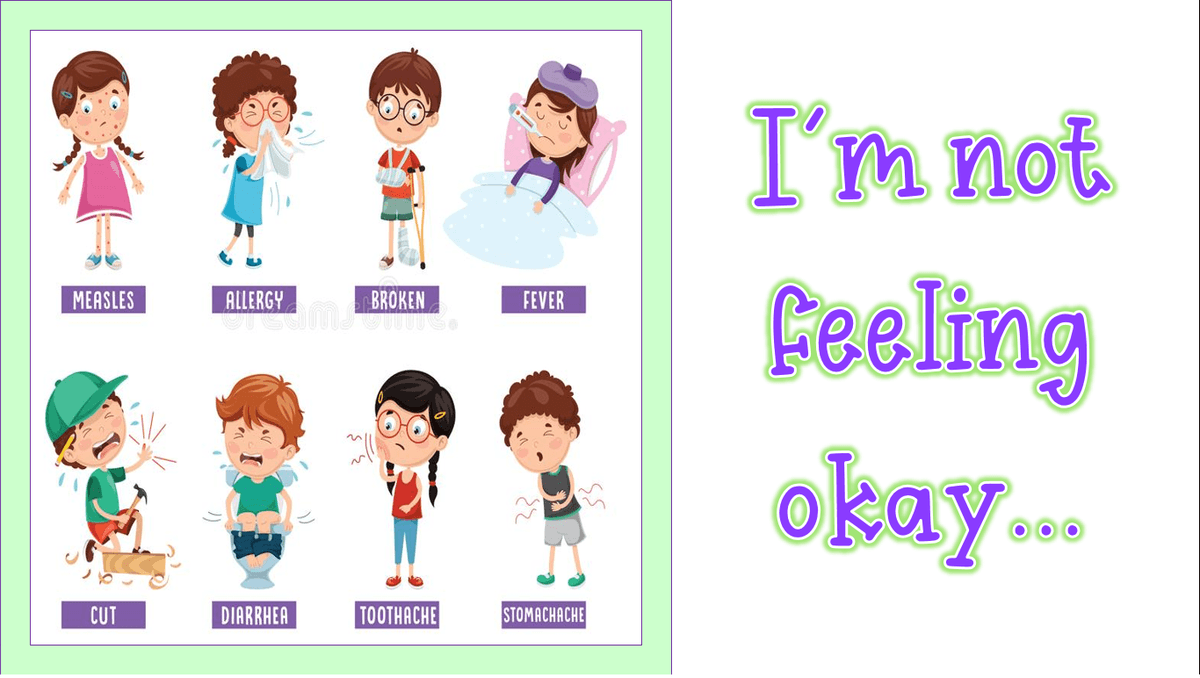

 Yaama I'm Jack Evans and you're watching BTN. Here's what's coming up. We uncover the story behind this famous photo, learn about First Nations seasons and find out the history of Book Week. What is Statehood? Reporter: Tatenda Chibika INTRO: But first, the Prime Minister Anthony Albanese has announced that Australia will join other countries in recognising Palestine as an independent state. So, what does that mean? Tatenda found out. Anthony Albanese, Prime Minister: Australia will recognise the state of Palestine. Australia will recognise the right of the Palestinian people to a state of their own. We will work with the international community to make this right a reality. Tatenda Chibika, Reporter: That's the moment our Prime Minister said Australia would recognise Palestine as an independent state at the upcoming United Nations General assembly next month. It's something other countries, including France and Canada, have said they'll be doing too. So, what does that mean exactly? To be considered an independent state under international law a place needs to have its own land or territories with defined borders, it needs to have people who permanently live there, have a working government and it has to be able to talk and make deals with other countries. Once a place meets all those rules, it can ask to be recognised by other independent states and countries. But a big step in becoming an independent state is being fully recognised by the United Nations. To do that you first need to get approval from at least nine members of the UN's Security Council. That's a group of countries responsible for maintaining international peace and security. But even then, that tick of approval can still be blocked by one of the Security Council's five permanent members Russia, China, the UK, the US and France. If the Security Council approves, the decision then goes to the UN's General Assembly where at least two thirds of the UN's 193 members have to agree to make it official. Yeah, it's a pretty complex process which is why we've only seen a handful of countries recognised by the UN in recent years like South Sudan and Montenegro. Others like Kosovo are only 'partially' recognised which means they have some recognition but not enough to become a full member state at the UN. Right now, Palestine is recognised by more than 140 countries — that's more than two thirds of the UN General Assembly. So, why hasn't it become a UN member state yet? Well, it came pretty close last year when 12 members of the Security Council voted in favour of it. VANESSA FRAZIER, AMBASSADOR OF MALTA, APRIL 2024 UNSC PRESIDENT: I shall now put the draft resolution to the vote. But the US, a close ally to Israel, used its special powers to block Palestine from becoming a member state. VANESSA FRAZIER: Those against? At the time, the U.S said Palestine and Israel needed to come to an agreement on their own first. Throughout the years, there have been attempts to figure out a way for both Palestine and Israel to exist peacefully alongside each other but that hasn't happened yet. And now Israel has said that recognising Palestine as an independent state would be rewarding Hamas the group in charge of Gaza which was responsible for the terror attacks on October 7th, 2023. But the Palestinian Authority which governs parts of the West Bank says Hamas won't have a role in any future state of Palestine which will exist peacefully alongside Israel. Australia, like the US, had previously said that it wanted Israel and Palestine to figure out things by themselves first but because of how the war has been going the Australian government is worried that if it continues to wait, there might not be a Palestinian state to recognise. ANTHONY ALBANESE, PRIME MINISTER: There has been too many lives lost, both Israeli's and Palestinians and the world is saying we need a solution to this conflict, we need to end the cycle of violence and the way to do that is to have a two-state solution. News Quiz Russia's President Vladimir Putin stepped foot on American Soil for the first time in a decade to meet with US President Donald Trump. What state did they meet in? Alabama, Alaska or Arizona?It's Alaska. The two leaders met to discuss a way to end the war in Ukraine but weren't able to make any final agreements. DONALD TRUMP, US PRESIDENT: There were many, many points that we agreed on. Most of them, I would say, a couple of big ones, that we haven't quite got there, but we've made some headway. There's no deal until there's a deal. A lot of people criticised the two world leaders for not including Ukraine's president Volodymyr Zelenskyy in the meeting. But that didn't seem to worry Mr Trump who said the meeting was a success and Mr Putin even invited the US President to meet up again in Russia. DONALD TRUMP: We'll see you again very soon. Thank you very much, Vladimir. VLADIMIR PUTIN, RUSSIAN PRESIDENT: Next time in Moscow. DONALD TRUMP: Oh, that's an interesting one. No, no, no. I'll get a little heat on that one. Last week thousands of people marked the 80th anniversary of VJ Day. What does VJ Day commemorate? The victory of Allied forces in Europe, the surrender of Japan and the end of World War II or the dropping of the first atomic bomb? VJ Day or Victory over Japan day commemorates the surrender of Japan and the end of World War II on the 15th of August 1945. Around the world, and here in Australia, people marked the anniversary with ceremonies remembering those who fought in the war. REPORTER: Who will you be remembering today? VETERAN: Oh, a lot of fellows that I knew that never made it home. Scientists in the UK have created toothpaste that includes which of these ingredients? Hair, eye lashes or fingernails? Yeah, they're all a bit random and gross but the answer is hair. According to scientists from King's College in London, hair could be the key to good oral health because it contains a protein called Keratin which they say when mixed with saliva forms a crystal-like protective coating similar to enamel. And Swifties rejoice because Taylor Swift has announced her 12th Studio album. It's called life of a show what? Is it show pony, show girl or show bag? It's Life of a Showgirl and it'll be released October 3rd. Vincent Lingiari Reporter: Joseph Baronio INTRO: Now to this very famous photograph. It was taken 50 years ago and depicts a really significant moment in Australian history. Joe found out about the story behind it. On the 16th of August 1975, this famous photo was taken. It shows the former Prime Minister Gough Whitlam pouring sand into the hand of Aboriginal leader Vincent Lingiari. A simple gesture that symbolised handing the land at Wave Hill in the Northern Territory back to the Gurindji people. But the journey to get there was far from simple. It started back in the 1960s. At the time, Wave Hill was the biggest cattle station in the world, controlled by British landowner Lord Vestey. The Gurindji people, who had lived on the land for generations, worked for Vestey, but they weren't paid fairly, and conditions were tough. NEWS REPORTER: The station's 100 aboriginal stockmen, with their 100 dependents, are camped in the dry bed of the Victoria River with little shade from 90-degree heat, dust and flies. Eventually, Gurindji leader Vincent Lingiari said it was time to act. VINCENT LINGIARI: I said, "What was it before Lord Vestey born and I was born?" It was blackfella country. So, on August 23rd, 1966, Mr Lingiari and his fellow Aboriginal workers went on strike. It became known as the Wave Hill Walk Off. They moved their camp away from the Wave Hill station to a sacred site called Daguragu on Wattie Creek. They wanted to set up their own cattle station, and said they wouldn't move until their land was returned to them. For years, petitions and negotiations went on between the Gurindji people, the NT Administration, and the Australian Government in Canberra. CLAPPERS: 31. 32. 33. DAVID QUINN, ABSCOL: Well, it's basic justice that their land is recognised. PROTESTORS: Equal rights! As the news spread across the country, thousands of Aussies joined the campaign, including the leader of the Labor Party, Gough Whitlam, who made this promise during his 1972 election campaign. GOUGH WHITLAM: We will legislate to give Aborigines land rights. Not just because their case is beyond argument, but because all of us as Australians are diminished, while the Aborigines are denied their rightful place in this nation. Later that year, Gough Whitlam became Prime Minister. (Song From Little Things Big Things Grow, Song by Kev Carmody and Paul Kelly, 1993) From little things big things grow,from little things big things grow… But it wasn't until 1975, 9 years after the Wave Hill Walk Off started, that he followed through with his promise. Eight years went by, eight long years of waiting'Til one day a tall stranger appeared in the landAnd he came with lawyers and he came with great ceremony GOUGH WHITLAM: I solemnly hand to you these deeds as proof in Australian law that these lands belong to the Gurindji people. And through Vincent's fingers poured a handful of sandFrom little things big things grow 50 years on, and The Wave Hill Walk Off is seen as a pivotal moment in Australia's history. It led to significant legal and social changes for First Nations people, which is something many agree is worth celebrating. First Nations Seasons Reporter: Saskia Mortarotti INTRO: Recently, Melbourne's Lord Mayor suggested ditching the four-season calendar that most of us are familiar with and adopting a six-season Wurundjeri calendar instead saying it gives a better description of what the weather's actually like there. Sas found out more about the different seasonal calendars used by First Nations people. SASKIA MORTAROTTI, REPORTER: Right now, in most of the country, it's pretty cold. COLD GIRL: Think of somewhere warm. What? It's 32 degrees in Darwin in the middle of winter? But ah, yeah. There are some places where it's, well, quite warm. Which makes you wonder whether the weather actually matches the seasons. You see, Australia is pretty big, and we have lots of different weather patterns. Which is something First Nations people have tracked for thousands of years with their own seasonal calendars. KARL WINDA TELFER, CULTURAL CREATIVE KANYANYAPILLA: Why have we got four seasons when you know that don't make any sense here. It doesn't relate to the country here. This is Karl Telfer. He's an artist and storyteller who produced the Kuri Kurru exhibition at the Museum of Discovery in Adelaide that explores the 6 different seasons of the Kaurna Meyunna. SASKIA MORTAROTTI: So, how do you know when you're in one of those six seasons? KARL WINDA TELFER: Well, there are stars that rise. So, you know, there are certain stars, like in Parnatti, for example. There's a star called Parna, and we know what that star is. So, that talks to us about, okay, the time now is going to be cold on the ground. First Nations calendars like the Kaurna one don't just tell us what's happening with the weather; they're also used to track when certain plants and animals are around. KARL WINDA TELFER: It teaches you about what plants you can, you know, what you can eat what you can't and all that what is ready certain times a year and fruit everything, bird shows you the right time to eat the fruit, perfect time, if you try and go get them the next week they're gone. Karl says we can also use these calendars to see how the environment has changed over time. KARL WINDA TELFER: Kudlilla is the season we're in now and Kudlilla that talks about like the rain but we're not having enough rain these days, well, these times. And this is due to climate and the climate changing. There are many different First Nations seasonal calendars around the country. Like Ngan'gi calendar from the Northern Territory which has 13 seasons that follow the life cycle of the native spear grass. Or the Wurundjeri Calendar in Victoria which has 6 seasons. And recently, Melbourne's Lord Mayor, Nicholas Reece, said Melbourne, or Naarm, would be better off adopting the Wurundjeri calendar because it's more in tune to what's happening with the weather. Something many, including Karl, think we should be doing right across the country. KARL WINDA TELFER: I'm talking about the English four seasons. So, this is totally different systems that we're talking about and weather patterns and currents and all sorts of different things, because it's the sea country too. So, my question is, well, why do we have that? If that doesn't work, you know? Quiz How many seasons are there in the Tiwi Island Calendar? 1, 2 or 3? It's 3, although they also have 13 minor seasons. Book Week Reporter: Wren Gillett INTRO: This week, kids across Australia have been dressing up as their favourite characters to celebrate Book Week. Wren finds out why Book Week began 80 years ago and why it's still important today for getting young Aussies into reading. STUDENT: I read an hour every night, maybe even two hours some nights. STUDENT: My favourite book series are the Harry Potter series and the Keeper of the Lost City series. STUDENT: Probably Bad Guys and Weirdo. STUDENT: I like the Amulet, I've been reading that. STUDENT: I love reading Dork Diaries and Exploding Endings. Whether it's Fantasy, mystery, history — whatever you're into. Book week is a time to celebrate, well, books. STUDENT: Me and my friends are dressing up as Inside Out. STUDENT: I was thinking SpongeBob. STUDENT: I'm dressing up as Winnie the Pooh and it's just a fun way to express what kind of books you like. And guess what, book week has actually been a thing for many, many years. WREN GILLETT, REPORTER: Once upon a time, in a land not so far away, literacy lovers noticed a problem. The year was 1945. The second World War had just ended, and kids were mainly reading books from overseas, in particular the UK. Because, at the time, there weren't many Aussie authors writing books for children. WREN GILLETT: So, a group of passionate teachers, librarians, booksellers, publishers, and book-loving volunteers, decided to create what we now know as The Children's Book Council of Australia. Familiar logo, right? Together, they launched book week, all in an effort to get Aussie kids' reading more. And it seemed to work. The 1960s saw a boom in Australian children's books being published. REPORTER: How many books do you read a week? STUDENT: Well, it really depends on the week. If there's exams, I might read only one or two. But if there's no exams and if I've got plenty of time, I might read up to five or six. WREN GILLETT: But today, it's a slightly different story. Studies show that less than one in five eight to 18-year-olds are reading in their free time, and that only one in three actually enjoy reading for fun. WREN GILLETT: Why do you reckon we're seeing this trend? STUDENT: People are getting sucked into screens and they're like spending hours just scrolling through TikTok and stuff, and they're getting so attached to it that they don't feel the need to pick up books and read them. Yeah, there's a lot of different things competing for our attention these days, but many think books are still worth our time. PETER HELLIER, AUSSIE COMEDIAN AND AUTHOR: Books are the exact opposite of boring. And if you think they're boring, I'm sorry, but you're wrong. This is Peter Hellier, he's a pretty famous Aussie comedian, actor, and the author behind these books. And he's just released another one called Detective Galileo, about a trail horse who dreams of solving crimes. PETER HELLIER: He joins the police force and quickly finds out that the horses don't actually solve the crimes, it's the police officers who solve the crime. So he promptly gets thrown out of the force and begins his own detective agency, which I'm reliably told is the only detective agency in the world run by a horse. Peter actually started writing books when he was a kid. PETER HELLIER: I started writing when I was six, seven, eight years old. In fact, I started my own publishing company called Better Books. And I would write these books, and then I would get a parent or one of my parents or teachers to type them up. And I would read them in front of the class. And, you see, each has the logo, the Better Books logo, there it is — the famous Better Books logo. WREN GILLETT: You weren't mucking around. PETER HELLIER: There all on all of them. There we go. There we go. Many, Including Peter, say there's plenty to get from a good book. They help us learn new words and phrases, get a better understanding of the world around us, and strengthen our imaginations. PETER HELLIER: Books can take you absolutely anywhere. They can take you to countries that you never dreamed about going. Countries that exist, countries that don't exist. Reading just makes the world a much bigger place. It's why for the past 80 years, schools around the country have been taking part in book week. STUDENT: Reading is a place where you can have your own world just to yourself. STUDENT: It's like watching a movie inside your head, but you can choose how it goes. STUDENT: Picking up a book is a good idea, maybe you should start with something that you're interested with and then you can start exploring from there. Quiz What is the title of the book that took out this year's Book of the year Award for younger readers? It's Laughter is the Best Endingby Maryam Master. Some other winners included I'm not really here by Gary Loneborough which took out book of the year for older readers and best picture book went to The Truck Cat, by Deborah Frenkel. Sport Australia's men's national basketball team — the Boomers — have won their third Asia Cup in a row, with an epically narrow victory over China. COMMENTATOR: It is Australia who are celebrating! China started strong, leading 25-17 at quarter time. But Aussie Xavier Cooks led a fierce comeback, shooting 30 points and collecting nine rebounds, earning him the title of MVP. And there seriously couldn't have been a tighter finish. Just as the final buzzer went off, China missed a shot that would have won them the game, leaving Australia with a 90-89 victory. COMMENTATOR: An unbelievable finish. The 2025 AFLW season kicked off last week, and so did a new trick. Yeah, 19-year-old Ash Centra from Collingwood, pulled out this move in the warm-up before their season-opener to Carlton, and since then, a lot of people have been trying to do it, with some success, kind of? FOOTY PLAYER: No, I'm not doing it on camera. But despite the epic warmup, Carlton did end up beating Collingwood by 24 points. Now, the moves from these athletes in China weren't quite so graceful but give 'em a break, okay, they're robots. For the first time ever, humanoid robots from all over the world, competed in their very own games, which featured, soccer, boxing, running, and ahh, lots of falling over. Lots. Luckily though, they did bring their own cheer squad. Young Rapper Reporter: Rylie INTRO: Finally, we're going to meet another winner of this year's Heywire competition — which asks young people in regional areas to share their stories. Rylie's going to tell us how music helped to transform his life. Check it out. Mum and I were homeless. We lived at a caravan park, in motels and tents around Warrnambool. It wasn't pretty. I'm First Nations, and I remember feeling like, my own country is failing me right now. So, we camped right along here. I remember pitching a tent right here and this was actually around the same time I started to get into music which was a good way for me to have something to look forward to. I was raised by the SoundCloud era, listening to a lot of trap music. When I was in school, I'd rap along to songs by Juice World, then I started to make my own. My first track was recorded on my phone. It was bad but a lot of fun to make. Some kids in my school heard it and shamed me. That put me off music for the next couple of years, until a friend of mine bought a microphone and encouraged me to give it another go. There was something about that mic and the energy of the crew around me that gave me confidence. It lit a fire in me. Over time, I was able to focus my flow. My songs are about escapism, living the life, being a success. I rap about stuff that takes me to a better place in my head. I'm manifesting my future. My stage name is Hundo Milli, it's short for hundreds of millions. Money's not really the end goal; it's more about having the freedom to dream big. Mum taught me to never stop believing. Even when times were tough, she kept pushing for us to get housing and eventually we did. We're some of the lucky ones. Today, I'm in a Melbourne studio recording my next single. I remember living in my tent dreaming about this very moment and now I'm here, doing what I love. Ain't nothing going to stop me. Closer Well, that's all we've got for you today, but we'll be back before you know it. In the meantime, you can head to our website, there's plenty to see and do. You can also catch Newsbreak every weeknight and there's BTN High for all you highschoolers out there. Have an awesome week and I'll see you next time. Bye. “On this night, we share a roof protecting us from fleets of inequity. Our unification promises a better tomorrow. Those larger than myself, sitting on their marble thrones, sipping blood from cups composed of human skin and singing songs of so-called virtue, grow weaker each moment. Their caravans are revolting. There is hope yet. There is progress! Though tonight may mark a countdown, it is still a celebration. Look at all we have done, not just for Trials but for Palatium Infra as a whole. In four years, when I’m no longer Sovereignty, the Spoiled Purity and his people will continue to strive. So drink! Smoke! Crush up those exotic plants and snort them! We will not falter, weaken, or wane. Our influence is expanding, and somebody new opens their eyes every day. Even the Silbys of Aculeus have reached alarming potentials despite their embittered minds. So long as you relish in tonight, dance, and pray to your “dead” Gods, our revolution shall rise beyond the bounds of class, and when I’m only a commoner, we shall rise again beyond our brainwashed adversaries! Cheers, my people. Cheers!” Followers raised their cups. Some clinked theirs together. Others stood still and screamed breathlessly in agreement. I smiled with courtesy, then stepped off my platform. My voice still rang across the cellar. Speeches before were grander. Those displays were supposed to be emptying, and yet this one left me bloated, swollen tight. I watched as they popped the corks of their bottles and chanted in the name of Purity. Maybe the quality of my words wasn’t what mattered to them anyway, so long as I screamed loud enough. There’s no merit in attacking your people, a voice corrected me. “That’s right,” I said aloud. “Knox, my-my Sovereign!” squealed a nearby devotee, jittering as he stuffed his face with catered pastries. He was one I’d never seen before or had failed to remember. “Look what I’ve found! It’s wine, and not the shoddy Infran kind, either. Earth-made with good fruit! I don’t know how anyone managed to get their hands on this. Maybe some space travel mischief.” He giggled and held up a small glass bottle. “How neat.” “I want you to have it, Sir.” I nodded my head. “Yes, of course. Thank you.” Backing off into the midst of rowdy disciples, I clutched the bottle. What a waste of grapes. It could have been jam instead. Earthly food had a superior taste, ripe with delicate intricacies and nostalgia, but Palatium Infra had mastered the art of alcohol. Why waste your time with a drunkenness so sad and sickening? The booze of trash. Not many more followers approached me. The barren peroration must have upset them. My hands itched to submerge into my suit pockets, and my legs stood suddenly numb, wobbling. Four more years until I’m nothing. But tonight, you are nothing. “Shut up,” I told myself. Tightly packed together in the corner of the dwelling sat the Sibyls. A mound of writhing fabric and tones of skin made up their unified silhouette. I snapped the strap of the nearest gown, balancing on my hands and knees, waving the bottle before them. In their almost rodent nature, narrow noses prodded my way. Their dresses wrinkled and fell to their ankles. Knees dropped, and eyes widened. Many grumbled at me like hungry she-beasts. Those newer ones with faded curtains for hair, sunken eyes, and dirtied nails looked, hid their face, then sobbed. I imagined them in a pack together, fighting wildly against the Spoiled Purity in their rat decorum–biting down with square teeth laced with rabies. “I’ve got you all something,” I said. “Go back off to your pedestal and yap some more. We don’t want it.” A woman rose from the pile and spat. “You don’t even know what it is yet. It's Earth hooch, or more likely a near-flawless replica. I figured you girls would also like a chance to enjoy yourselves tonight.” “Your playmates have been harassing us since the moment you hung the banners and opened the cellar door.” The youngest, with a striking cyan mop upon her head, uncoiled from the mass. What was she now? 20, 21? We celebrated a birthday recently, I thought as she spun around me. “I remember something about a promise. Multiple promises, actually. Are you trying to bribe us into just shutting up and taking it? Because if another sticky, 40-year-old, Earth-born virgin gropes my shoulder, I’m going to have an aneurysm!” the girl continued. “Why not an Infran follower? Do you like it when they touch you?” I returned her accusing tone. “I’m sorry, sweet prophets, that you feel I’ve neglected my duties. I’ll keep a better eye out. Remember, you can always just holler if somebody is bothering you. And Anwen, friend, if I’ve ever tried to bribe you with anything, it was certainly the hair dye. I mean, look at you! Such handsomeness!” I exclaimed. The other Siblys began to encircle her, uttering compliments or even announcements of their envy. Anwen disappeared in a wink with flushed cheeks back into the mound. “I’ll just leave this here.” Smiling, I set down the bottle. ** “141, 143. . .” I counted each step as I trekked the staircase. There was no doubt I lost track somewhere. The ledges kept spawning under my feet, infinitely multiplying until I wasn’t moving at all–swallowing me up in a whirlpool of stone. My tie still hung around my neck, and my blazer remained tied around my hips as a skirt. Streaks of red dribbled off from the cavity in my chest. It was a gorgeous marking, sensual to my fingertips as I traced its edges. Purity, oh, Purity. Purity and his wings of burnt skin. Purity and his many faces. Purity the spoiled. Purity the mutilated. The Silbys did not bother waiting for me. On bare feet, they stormed up the stairs to their room. A trail of red, though in paint unlike mine, streamed after them. None looked remotely near me as they squeaked and gossiped intangibly. I saved them, those Infran broads, enlightened them. As much as they liked to deny it, spit at me, and bask in the thought of their victimhood, in this home, they stood empowered. You’ve done well, my thoughts affirmed, though in the manner of an insincere commentator rather than a hype man. Teeth grace in tile violin goes laundry paper when. It dissolved into an intruding drivel. I rubbed my head and sniveled. “Do you need help, Knox?” called a Silby. Fattened by my coddling, her shadow fell upon me from the doorway steps ahead. I attempted counting again. There must’ve been at least another hundred between me and her. “I’m hallucinating some,” I said, breathing deeply to suppress a burp as I struggled to recall her name. Two syllables. Typically Latin, though sometimes English. Drops of slobber leaked from my mouth. “I’m hallucinating some, Tybal. Do you like your name, Tybal? I would have named you something better. Ty-Tyballinia. No, we’d have to eliminate the ‘ball’ aspect. It sounds too crude.” “One foot in front of the other,” she said. So I walked. Mess greeted me at the doorway. Dirtied culinary obscured the dark wooden countertops, and the sink lay running. I approached the kitchen table, sat, and set my face down upon its cool wooden surface. Assaulting my nose was the smell of neglected flowers, like soil mixed with the kind of sweet cough medicine that would have left me gagging as a child. Open windows whispered songs of the twilight hour through the vessels of busy trolleys and shooting guns. My mouth strained to vomit, but there was nothing in my stomach to regurgitate except the petals of Stulto’s bloom, which came out effortlessly in little sputters. Teetering, I stood up and brushed disgorged plant parts off the tabletop. “Love,” I said as I slogged up yet another staircase. “Are you awake?” She said she’d wait. Somebody’s gotten her. No, she always misses movie night. That sleepyhead, I assured myself. There was a stirring amidst the manor’s cloak of dusk. Portraits of myself, my wife, and my daughter turned to face me as the hallway lights flickered, escaping their quartz frames to penetrate my ears with nonsense. The taxidermied heads of Infran creatures bared their teeth. I stopped to stare at my favorite, an adabactor with daunting spiked tusks poking out from its forehead. Its nose remained black and sharp, and its eyes wide with malice. “Where is my Spes, Adaba-boy? Is she sleepy?” There’s someone in the house. The sounds of the stirring rose along with my blood pressure. Footsteps orbited around me, drawing near and far and then near again, little dancers in the dark. The carpet immersed me in its mass of purples and blues, leaving my skin stained indigo and my vision abstracted. I toiled to reach the master bedroom across the aisle as it stretched out to me with bright lights and celestial howling, like a dove struggling in a pool of oil. Never again with Stulto’s bloom. Never again on what was already a bad night. My hand brushed the doorknob, and the high abruptly faded into only a persistent hum-buzz twirling around my brain. The portraits returned to their typical depression–Spes posing with her ax, Ari’s school photo, and myself in the cap I wore when addressing the military with the Verbis emblem embroidered in its center. All lifeless shots. Who were they for when they captured not the subject’s essence but only some fragment of their identity? They used to feel personal, not advertisements of some supposed characters. Servants, babysitters, and likewise civilian guests, I reminded myself, mustn’t forget whose home they’re in. Yet my body moved independently, taking Ari’s from its hook and laying it backward against the wall to hide her distant grin and tamed posture. It was time for new pictures. Sweet ones, real ones; time was ticking. I approached my own when the stirring began again. Groans and squeals erupted from the vents as if someone had set a pen of pigs loose in my crawlspace. No, not the crawlspace, my bedroom door. I turned the ruby knob. Underneath a blanket wrestled my two squealing piglets, their skins melting together beneath the layer of duvet. Fishnet leggings and manicured nails outstretched and scraped at the sheet beneath them. One raised its head, a salmon-colored man with sweat running down his forehead. Through the crack in the door, we met eyes, his Infran Dr. Sesuss nose flaring its narrow nostrils. No mark of the Spoiled Purity existed carved onto his naked body. My chest felt tight. I stepped back. I was suffocating. Spes emerged from the linens, her hair flowing down her back and her dark skin glistening in front of the bedroom window. She giggled and held the man, the blanket falling and revealing inches of her body I had not seen in months. “Darling,” whispered the rosy-faced man, “look.” He was unfathomably ugly and grotesquely young, with beady, lifeless pupils that dilated when he faced me. The excess flesh on his face sagged while he bit down on his thin lips. My wife faced me, gasped, and strained to cover herself. Suddenly, I was a stranger. A small child who had walked into his parents having sex. I unfurled the door completely. “Get out of my house,” I said. The man stayed in place. “Get out of my house,” I repeated. “Knox,” Spes began. Tears ran down her round cheeks. “Shut up!” I turned to the man, picking up a marble trophy from on top of my dresser. “Get out of my house! I’ll kill you!” “Knox!” Spes sobbed. “God damn it! I hate you! You barely look at me. Every day, there’s less passion. God, God, God, I don’t want to fuck a dead man!” she screamed, “You get out! Get! Get!” My hands wrapped tighter around the statue. That pig of a man was attached to her at the side, his face equipped with a scowl that challenged mine. He thought I was weak; frail like a decaying dementia-ridden senior. I imagined his skull bashed in, his scowl gone, and the feist and confidence in his face beaten into numbness. A new portrait was in order of such brutality, him as a splintered slab of wood, rashed and beaten, a carcass licking my boot. The churning in my brain had come back. Every wall shook. Clock faces came to life and rang in alarm. Indescribable noises caressed my eardrum before breaking into sorrowful weeps. Was it my own? I stared at Spes in motionless frenzy, clenched my teeth, and screamed like a siren. Passionless. What a lie! An excuse, more like. One that erased all my ventures, reducing me to a nobody. But I was not a nobody. I thought of my sect, my campaigns, my endurance through the political brutality of my empty hive-mind world–even my collection of literature, maps, and artifacts. I thought of daring nights alone with Spes when we were young, ravaging each other, two sardonic eggheads suddenly overcome with desire. The veins in my neck throbbed as I gasped for air. It was all I had. I threw the figurine at the man’s head. Eye shut, I heard the thud. A million singing voices of victory flooded out of the cracks in the floorboard. Proving myself a man to the woman I loved in a display of fervent violence was passion. I strained my ears for his cries, though I did not look yet. There had to be a pause, a moment of relief, where I stood tall as a skyscraper and seemingly fought to stay contained in front of my wife and her wounded, quivering paramour. Frantic footsteps rushed off the bed and past my side. I turned and grappled against myself to seize my wife’s shoulder. “Spes!” My eyelids lifted. Escaping was the man with that same numb expression in which I had imagined him. “You’re insane,” he said. I swiveled back towards the bed. With her curly locks flowing over her breasts and her limbs bent at her sides, Spes sat limp pressed against the headboard, her forehead bludgeoned and the statue resting on her stomach. Lips pursed and sweet, my Renaissance beauty reclined there in the guise of a squashed bug. But she was not dead. The desk ornament I flung was only the size of my shoe. Spes, that dramatist, may have been slightly hurt but was far from dead. She only wanted me to think she was to observe me at my most distraught, like a leech feeding on misery. “Get up.” Staggering toward the bed, I said. “You wanted passion? I showed you passion. ‘Shoved it right into your head. Of course, we both know who that gesture was meant for. . .” I fumbled to find my wit. Cold skin met my hands as I stroked her face, unable to resist checking her pulse, even though she was not dead. “I love you, Spes,” I said. Rain pelted against a nearby window. “Spes, please. Please.” No vibration answered my plea. I lifted my hand, sitting next to her now. Tears did not come. There was not any blood on the trophy, but when I picked it up, it felt to be now only a cruel instrument. It depicted a younger me in white marble, with my glasses and collared shirt being the only things painted. Both were in pink. It was a favorable color. I scrambled from the bed to vomit pure digestive bile on the rug. My stomach heaved. I ran my nails along every piece of myself I saw, a dog chasing my tail. As I slammed myself against walls and convulsed, my own heart grew ever louder in my chest. “Dad? I heard–” Ari’s slippered feet hammered across the floor. “Mom? Mom?” I kept my eyes on the storm. Silence fell. “She-She isn’t—your—.” Gasps interrupted every syllable she spoke. “You’re a murderer. Bad. Like they said,” she breathed, “ You beat her!” The words became mush, alphabet soup. Ari ran back down the hall. “My-My mom is dead. . . .Yes. . . Manor of the Trials Sovereignty. . .Ari Sorkin. . . I’m afraid he’s going to hurt me,” she said, presumably over the phone. It was all too fast. I crawled onto the windowsill, opened the glass, and let myself plummet into the alley below. Gusts of wind howled. The lack of motion or sensation informed me I had passed and again lived. Another Palatium Infra, another strange planet in which the celestial endowed rotting men with the opportunity to inhabit. Was this it? Was it all just an impossible limbo of galactic traveling? My surroundings were overwhelmingly gray, an abyss of clouds. Perhaps I had now met the real coming world, and my family and old friends lived here, ready to rush to my sides, lift me up, and jump for joy. Spes would be there. She would be enraged, but at least she’d be there. You are a bad man. You are a bad man. My eyelashes fluttered. There was a tugging sensation in my leg. The fog was wavering along with my ascendance. “No,” I yearned, trying to grip the clouds and stick them in place. “Stay with me.” But the peace was fleeting. I felt the cement under me and the moist garments clinging to my figure. My leg burned. Carefully, I craned my neck, only to observe the promenade as my surroundings. The most underwhelming of filth and danger, individually Infran. Forever my coming world. What a fool I was, having forgotten my blessing. Those idiot Gods could not tell the difference between assassination and self-infliction; a faulty insurance plan. The urge to cry at last set over me, and so I sat and wailed hot salvia into my palm, shielding my mouth to muffle the noise. Thunder echoed my hushed howling. Raindrops turned to pebbles. Under the ambiance of the stormy night, I could have sworn I heard troops stomping, guns cocking, and the chanting of my name. They had all been waiting for this. Billboards came to life, and I could only sit and spectate as the scenery flashed red. I inhaled fear and sobriety through runny nostrils. “Trials Sovereign Vsevolod “Knox” Sorkin is currently at large for the suspected homicide of Spes Sorkin, breaking the first term of the Sovereignty Charter. We now instruct you to report any sightings of the Earth-born, caucasian, roughly 195 centimeters tall, brown-haired, and brown-eyed man to your local Guard post. One can identify the suspected convict specifically by an occult tattoo of Purity’s Coronet on his lower back. No attempted execution or elongated punishment will take place until our Guards conduct an autopsy proving his guilt, per Life’s 1238 commandment. We cannot be sure when or if the Gods will revoke his blessing. Remember, when Gods frown upon strife, opt for a peaceful life. We permit all grieving festivities until Cagidus 4th. Good year!” towering buildings sang out in broadcast, repeating that same convoluted message quicker the instant it ended. Sometimes, the announcer spoke in Latin for the Infran children, other times in Chinese, Hindi, or Spanish to cater to those of irrelevant tongues. You aren’t a bad man. You are a stupid boy. Puddles sloshed. Somebody was approaching. I didn’t dare waste any remaining energy avoiding the Guards and their prodding blades. How did that phrase go? You dug your grave. Now lie in it. And so I embraced the cement. “Knox?” said the Guard. No, her tone was too sincere, and no authority would proceed in such a manner. There wasn’t confirmation on whether or not I was armed, and it wasn’t as if she could shoot me first. She was a partygoer, having just left from the cellar’s backdoor. I shooed her away with my hand. She hovered, and I discerned her shadow hesitating over my body. A man could not rot in peace. “Come on, get up! They’re after you!” Hands reached around my torso, struggling to handle my weight as they urged me onto my feet. That leg, the burning one, my right, trembled and bent unnaturally upon impact with the ground. The partygoer slung my arm over her shoulder, balancing me. My eyes caught a glimpse of a cyan mop. “Anwen?” I rasped, “hu-who let you out?” Keys jangled in her hands–my keys. “I escaped,” she said casually, coercing me to walk beside her. “Quicken your pace. I just heard somebody on your front porch. ‘You see that compost bin down the alley? We’re gonna burrow right down into the depth of that. If they open it and uncover us, I’ll be on top, and I can hide you and act like I’m just a homeless amica trying to take a nap.” With a tightening grip, she led me like livestock to the stinking crate. “I don’t understand, Anwen,” I said. “They’re going to torture and kill you, stupid. You know they’ve been wanting to, and you just handed the opportunity to them!” “I understand that.” It was becoming increasingly challenging to hide the fragility emerging in my voice. “You said you were escaping. Why stop and help your captor?” “What else could I do? Leave you there?” Attempts to shove my wounded body inside its mass of discarded fruits and vegetables began. She yanked down upon my head and submerged me in the fertilizer sea. The evidence grows indisputable, I thought as I stared at the abruptly humane Infran girl, diving in after me, that I belong here. “Damn me to hell! I’ve killed her! My love is dead!” an uncontrollable cry leaped from my mouth. “Shut up! Soon you’ll be, too, if you don’t quiet down.” The actual noise of the Guards darted past us: disorientated marching, guns clanking against each other, cluttered belts rattling, the Latin squawking. One paused to open the bin’s lid, though only rummaged through the surface layer of peat before carrying on. “What are they talking about? I struggle with my Latin,” I whispered. “The search, mainly.” Aggression remained firey in Anwen’s clenched jaw. Though she sat on top of me, there was a monumental distance between our rain-soaked forms. I curled up into a ball, ducked my head between my knees, and dreamt of Spes, ignoring the stench of spoiled food rising from every crevice of my dwelling. The next coming world was due to adopt me again as I forced sleep. I prayed for a canyon of fluffy haze, where I waltzed with pale memories but found nothing but the petrifying stillness of my mind. Killed and ran. Violent as a Guard just to prove a point and watch it backfire. Why would any heaven want to welcome me? I clung to the picture of Spes in my head like it was the last ember of an extinguished flame. “Did you mean to kill her?” Anwen interrogated. “Someone like you would immutably believe yes.” “And who is someone like me? You can’t even treat me like a person for a moment, can you?” grating drama decorated her words. “You know my opinions. I have not seen much of your or your breed’s faces besides that of cruelty and ignorance.” I retorted. “I just saved you! Does that make me cruel and ignorant?” “It makes you an idiot, which is another word for somebody ignorant.” “And why am I an idiot?” She asked. “Because you helping me does no good. Thank you anyhow. Now, do yourself a favor and scram.” As she bent her leg in anticipation, preparing to strike me on the forehead, I sensed an invisible withdrawal widening the gap between us. “You never answered my question,” Anwen took me by the end of my tattered tie suddenly and started her game of shepherd and sheep over again, pulling me back up to the crate’s exit. It appeared as a shining light at the end of a maze of rubbish and mold. “No. Of course not. Spes was my everything,” I sniffled. “I knew it. You couldn’t even bring yourself to hit us, let alone murder your wife. The girls and I always figured you were sensitive.” My heart rate quickened. Today was one of humbling and misery–one to pray a hail spike would fall from the sky as sharp as a needle, pierce into my eyelid, and lobotomize me. I wished I could have merely died or hit my head hard enough not to have to deal with it all. No, I wished I was Anwen with her snarky, careless glow and lack of depth in her eyes. As we emerged from the compost bin together, I fantasized about strangling her until her face turned purple, her weakening spirit no longer categorizing me as “sensitive”, but the thought could only remind me of wielding that trophy and the microscopic traces of my wife’s tender skin tainting it, which turned my guts inside out. “That’s why I think you could use a little help,” Anwen said, “It seems like you can’t walk, either. Your leg is all twisted up.” She undid one of her trim pigtails and handed me the band. “Take off your tie and put up your hair. ‘Will make you less recognizable. Then swallow your pride and stick with me.”Guess the BWW speaker for the audio/book titleTitle: The Adventures of Max and the Magical Computer (Shortened Version) Once upon a time, in a small town called Techville, there lived a curious fourth-grader named Max. One day, while exploring his grandma’s attic, he found an old, dusty computer. As he cleaned it, the screen lit up, and a cheerful voice said, “Hello, Max! I’m Compy, your magical computer. Let’s learn about operating systems, files, and folders!” Max was thrilled. “A talking computer? Let’s go!” Chapter 1: The World of Windows Compy explained, “I run on Windows, the brain of the computer. It uses a Graphical User Interface (GUI), so you can interact with me using icons, menus, and buttons. Let’s start by changing my desktop background—the image on the screen.” Max chose a spaceship picture. “Cool! Can I add a screen saver too?” “Of course!” said Compy. “It’s an image that appears when I’m inactive. Try this swirling galaxy!” Max set the screen saver and giggled as it appeared. “This is fun!” Chapter 2: Organizing with Folders and Files Compy’s screen filled with random icons. “Oh no! My files are a mess. Can you help?” “Sure! What are files and folders?” asked Max. “A file is information, like a picture or document. Files have names, like ‘Homework.docx.’ The part after the dot, like .docx, is the file extension. It tells you the file type,” Compy explained. Max pointed to “Game.exe.” “So, this is a program file?” “Yes!” said Compy. “To organize, we use folders—like drawers for files. You can even put folders inside folders!” Max created a “School” folder, added his homework files, and made a “Projects” folder inside it. “Now everything’s neat!” Chapter 3: The File Explorer Adventure Compy’s screen flickered. “Some files are missing. Let’s use Windows Explorer to find them. It’s like a map for files and folders.” Max opened Windows Explorer and saw a tree-like list of folders. “This is like a tree with branches!” “Exactly!” said Compy. “Search for the missing files and move them to the right folders.” Max found the files in “Downloads” and moved them. “I feel like a computer detective!” Chapter 4: The Final Challenge Compy’s screen turned into a game board. “Time for a quiz! What’s the purpose of an operating system? How do you change the desktop background? What’s the difference between a file and a folder?” Max answered all the questions correctly, and fireworks lit up the screen. “Congratulations, Max! You’re a computer whiz!” The End Max smiled. “Thanks, Compy! I can’t wait to teach my friends!” Compy replied, “Remember, Max, learning is an adventure. Keep exploring!” As Max turned off the computer, he knew his journey into technology had just begun.Title (Slide 0): "Digging Deeper: The Truth About Tillage" Subtitle: How turning the soil affects plants, microbes, and the planet Slide 1: What Is Tillage? Tilling the soil means digging, turning, and loosening it using tools or machines. It's a common farming practice to prepare the land before planting. Slide 2: Why Do Farmers Till? Tillage is usually done before planting to: • Soften and aerate the soil • Mix in nutrients • Remove weeds • Bury crop residues for decomposition and fertility Slide 3: Tools Used for Tillage Farmers use tools like: • Ploughs: Cut deep into the soil • Harrows: Break up clumps and smooth the surface Slide 4: Ploughs vs. Harrows • Ploughs: Used first, go deep, lift and flip soil • Harrows: Used after ploughs, work on the surface to break clumps and level the soil Slide 5: Types of Tillage Systems From most to least soil disturbance: • Conventional Tillage: Deep ploughing • Minimum Tillage: Light disturbance • Conservation Tillage: Only disturb seed zone, keep residues on top • Zero Tillage (No-Till): Plant directly into undisturbed soil Slide 6: Problem 1 – Soil Erosion Tillage removes protective cover, exposing soil to wind and rain. Result: topsoil—the most fertile layer—is easily washed or blown away. Slide 7: Problem 2 – Disruption of Soil Life Soil is a living ecosystem! • Worms, fungi, and bacteria help aerate soil and release nutrients • Tillage destroys their habitat, reducing fertility and soil health Slide 8: Problem 3 – Loss of Soil Structure Healthy soil has pores for air, water, and roots. Tillage breaks the sponge-like structure, and soil compacts over time—like flattening it into a pancake. Hard soil = poor plant growth. Slide 9: Problem 4 – Decreased Organic Matter Microbes "eat" organic matter through aerobic respiration (using O₂ and releasing CO₂). Tillage adds oxygen, microbes speed up, and burn through the soil’s “pantry” of organic matter—leaving it empty and poor. Slide 10: Problem 5 – Greenhouse Gas Emissions Faster decomposition = more CO₂ released. Tillage boosts microbial activity, which increases carbon dioxide emissions—contributing to climate change. ✅ Conclusion (Slide 11): 🌱 Tillage: A Double-Edged Tool Tillage can help prepare the soil and control weeds—but it comes at a cost. Over time, repeated tilling can strip away organic matter, destroy soil life, and release greenhouse gases. It's like spending all your savings for quick results—and being left with nothing for the future. The smarter path? Use reduced or no-till methods that protect soil health, keep carbon in the ground, and support long-term farming success.Stages in the Sale of a Property Stage 1 – Getting to Instruction • Initial contact with the vendor: need to check the following: type of property, contact details of vendor, address of property/Eircode and purpose of the contact - sale or valuation? If a sale, does the vendor need a quick sale? Qualify the lead i.e. is the vendor buying another property? If an investment property, is the tenant in situ? Check if there is a folio number available and confirm the ownership of the property. Schedule the viewing. • Pre-viewing: Set up a file & record all info from initial contact on CRM system. Check the Property Price Register to help get a general idea of property valuation (subject to viewing, helps to display knowledge of area/market and set expectations for the vendor). Nature of property may affect pricing e.g. starter home vs. larger property with vendor seeking to downsize. Consideration for comparables may include similar/same location, size and condition of property, availability and type of parking, layout of property, plot size, orientation of garden, extensions undertaken etc. Nature of market conditions, state of wider economy, cost of capital and availability of credit may also be factors. • Appraisal/viewing: Bring an advertising pack/sales & marketing brochures. Walk through property with client, note nice features/selling points for the brochure, let the client talk about upgrades/specific features of the property. It is very important to listen to the vendor and build rapport. Confirm property details e.g. condition and layout, plot size, orientation of garden. Check for certificates of compliance for any extensions, planning permissions for conversions, right of way if applicable etc. Check if a BER available/provide details for approved assessors. Demonstrate your/the practice’s professional expertise, justify why you should get the instruction, discuss recent local sales and give your potential valuation. Discuss the sales fee, marketing fee and any additional charges e.g. professional photography, drone footage, virtual tours (walkthrough video, Matterport etc.) Ask how the vendor heard about you/your practice and why are they considering you for the sale. Where appropriate offer advice to help vendor increase potential sales price. (If possible, leave with signed Property Services Agreement/Letter of Engagement.) Thank you, send/email market appraisal, any queries/questions do get in touch and let the vendor know that we’ll be in touch in coming days. • Post appraisal – letter sent that pm/next morning with market appraisal; diary note to follow up. Check that market appraisal letter received and check for questions. If did not get sale, find out why not/debrief. If get the sale, email confirmation of instruction. Once PSRA sent and LOE returned signed = stage 2. Other details required – ID, proof of address, proof of ownership/title, solicitor details, BER certificate (refer to assessor if not available). All these should be uploaded to CRM. Stage 2 – Getting to ‘Sale Agreed’ Set up appointment to measure & photograph, note any special features e.g., upgraded kitchen, south-facing garden. Provide ideas for improving sales potential (declutter, painting, tidy garden etc. Check if has vendor potential buyers in mind already e.g., relations, friends, other parties interested. Seek vendor approval for photos/text of brochure. Check for access (tenants in situ/working from home etc) and confirm viewing times. If given a key for viewings – tag it! Check alarm codes & whether a sign is allowed on the property. Bring to market – upload to all websites e.g., daft/my home, in house websites and create window display. Match the property against your internal database of potential purchasers /CRM system. Set up appointments for viewings on CRM or arrange for open viewings. Confirm viewings with vendor & purchaser. Turn on lights, open windows, secure valuables, leave out brochures & business cards, bring viewings sheets to keep record of attendees. Introduce yourself and get attendee details. Let people view the property and address any questions. Point out key features. Record questions to be answered and any feedback from viewers. Ask are they selling property? Let viewers know of offers already received. Lock up/alarm property/close windows. Provide vendor with feedback on viewings - number of viewers / questions raised/overall reaction to property. Offers should be confirmed in writing & upload to on CRM/ offers will be input by bidders onto online bidding platforms ‘Proof of funds’ required for offers in some practices. Successful bidder will be chosen by vendor, who might want quick sale/no chain or prefer the highest bidder. Booking deposit will be sought from successful bidder. The amount varies by practice but must cover fees. Sales Advice Notice/letter should be sent to both solicitors (and may be cc’d to vendor/buyer or notify both that SAN have gone out). Booking deposit receipt should be issued. The BER certificate and report should go to the solicitor. Send requests for docs/info to successful bidder including steps they need to take to progress sale e.g., organise the bank valuation and/or schedule the survey. Once the deposit is paid the property is Sale Agreed, inform other bidders, and update all websites/sales board etc. Stage 3 – Getting to closing Access should be organised for the bank valuation/survey. Stay in touch with both solicitors ‘contract-chasing’ i.e., check when contracts are issued, signed and queries answered. Legal searches undertaken by the solicitors may include checking boundaries, land registry, title, rights of way, compliance certs etc. When contracts are signed 10% purchase price/booking deposit should be sent to the vendor’s solicitor. Once all queries satisfied = drawdown of mortgage/funding, house/life insurance in place. Title deeds will be requested once contract is signed. Decide final closing date. Check that the property taxes have been paid. Check that vendor has vacated the property. When vacant, conduct the final walkthrough and take final readings (MPRNs ). Check with solicitor if the drawn down funds h, and once received the solicitor gives authorisation to the estate agent to release the keys. The agent will do up invoice, send the balance of funds to solicitor and provide gift to purchaser. Finally remove sign, mark as sold on CRM, seek testimonials, upload to social media and close a/c on CRM Contact with the Americas In 1001, Viking sailors led by Leif Erikson reached the eastern tip of North America. Archaeologists have found evidence of the Viking settlement of Vinland in present-day Newfoundland, Canada. The Vikings did not stay in Vinland long and no one is sure why they left. However, Viking stories describe fierce battles with Skraelings, the Viking name for the Inuit. Evidence suggests that Asians continued to cross the Bering Sea into North America after the last ice age ended. Some scholars believe that ancient seafarers from Polynesia may have traveled to the Americas using their knowledge of the stars and winds. Modern Polynesians have sailed canoes thousands of miles in this way. Still others think that fishing boats from China and Japan blew off course and landed on the western coast of North or South America. Perhaps such voyages occurred. If so, they were long forgotten. Before 1492, the peoples of Asia and Europe had no knowledge of the Americas and their remarkable civilizations. The Voyages of Columbus Portuguese sailors had pioneered new routes around Africa toward Asia in the late 1400s. Spain, too, wanted a share of the riches. King Ferdinand and Queen Isabella hoped to keep their rival, Portugal, from controlling trade with India, China, and Japan. They agreed to finance a voyage of exploration by Christopher Columbus. Columbus, an Italian sea captain, planned to reach the East Indies by sailing west across the Atlantic. Finding a sea route straight to Asia would give the Spanish direct access to the silks, spices, and precious metals of Asia. The spice trade was a major cause for European exploration and a reason the Spanish rulers supported Columbus’s voyage. They also wanted wealth from any source. “Get gold,” King Ferdinand said to Columbus. “Humanely if possible, but at all hazards—get gold.” Crossing the Atlantic In August 1492, Columbus set out with three ships and about 90 sailors. As captain, he commanded the largest vessel, the Santa María. The other ships were the Niña and the Pinta. After a brief stop at the Canary Islands, the little fleet continued west into unknown seas. Fair winds sped them along, but a month passed without the sight of land. Some sailors began to grumble. They had never been away from land for so long and feared being lost at sea. Still, Columbus sailed on. On October 7, sailors saw flocks of birds flying southwest. Columbus changed course to follow the birds. A few days later, crew members spotted tree branches and flowers floating in the water. At 2 a.m. on October 12, the lookout on the Pinta spotted white cliffs shining in the moonlight. “Tierra! Tierra!” he shouted. “Land! Land!” At dawn, Columbus rowed ashore and planted the banner of Spain. He was convinced that he had reached the East Indies in Asia. He called the people he found there “Indians.” In fact, he had reached islands off the coasts of North America and South America in the Caribbean Sea. These islands later became known as the West Indies. For three months, Columbus explored the West Indies. To his delight, he found signs of gold on the islands. Eager to report his success, he returned to Spain. Columbus Claims Lands for Spain In Spain, Columbus presented Queen Isabella and King Ferdinand with gifts of pink pearls and brilliantly colored parrots. Columbus brought with him many things that Europeans had never seen before: tobacco, pineapples, and hammocks used for sleeping. Columbus also described the “Indians” he had met, the Taino (ty noh). The Taino, he promised, could easily be converted to Christianity and could also be used as slaves. The Spanish monarchs were impressed. They gave Columbus the title Admiral of the Ocean Sea. They also agreed to finance future voyages. The promise of great wealth, and the chance to spread Christianity, gave them a reason to explore further. Columbus made three more voyages across the Atlantic. In 1493, he founded the first Spanish colony in the Americas, Santo Domingo, on an island he called Hispaniola (present-day Haiti and the Dominican Republic). A colony is an area settled and ruled by the government of a distant land. Columbus also explored present-day Cuba and Jamaica. He sailed along the coasts of Central America and northern South America. He claimed all of these lands for Queen Isabella of Spain. Columbus proved to be a better explorer than governor. During his third expedition, settlers on Hispaniola complained of his harsh rule. Queen Isabella appointed an investigator, who sent Columbus back to Spain in chains. In the end, the queen pardoned Columbus, but he never regained the honors he had won earlier. He died in 1506, still convinced that he had reached Asia. The Impact of Columbus’s Voyages Columbus has long been honored as the bold sea captain who “discovered America.” Today, we recognize that American Indians had discovered and settled these lands long before 1492. We also recognize that Columbus and the Europeans who followed him treated the ancient inhabitants of the Americas brutally. Still, Columbus’s voyages did change history. They marked the beginning of lasting contact among the peoples of Europe, Africa, and the Americas. For a great many American Indians, contact had tragic results. Columbus and those who followed were convinced that European culture was superior to that of the Indians. The Spanish claimed Taino lands and forced the Taino to work in gold mines, on ranches, or in Spanish households. Many Taino died from harsh conditions or European diseases. The Taino population was wiped out. Still, the voyages of Columbus signaled a turning point for the Americas. A turning point is a moment in history that marks a decisive change. Curious Europeans saw the new lands as a place where they could settle, trade, and grow rich. Spanish Exploration Continues After the voyages of Columbus, the Spanish explored and settled other Caribbean islands that Columbus had found. They sought gold, land for crops, people to enslave, and converts to Christianity for the Spanish crown. By 1511, they had conquered Puerto Rico, Jamaica, and Cuba. They also explored the eastern coasts of North America and South America in search of a western route to Asia. In 1513, Vasco Núñez de Balboa (bal boh uh) crossed the Isthmus of Panama. American Indians had told him that a large body of water lay to the west. With a party of Spanish soldiers and Indians, Balboa reached the Pacific Ocean and claimed the ocean for Spain. The Spanish had no idea how wide the Pacific was until a sea captain named Ferdinand Magellan (muh jel un) sailed across it. The expedition—made up of five ships and about 250 crew members—left Spain in 1519. Fifteen months later, it cut through the stormy southern tip of South America by way of what is now known as the Strait of Magellan and entered the Pacific Ocean. Crossing the vast Pacific, the sailors ran out of food: Primary Source “We remained 3 months and 20 days without taking in provisions or other refreshments and ate only old biscuit reduced to powder, full of grubs and stinking from the dirt which rats had made on it. We drank water that was yellow and stinking.” —Antonio Pigafetta, The Diary of Antonio Pigafetta Magellan himself was killed in a battle with the local people of the Philippine Islands off the coast of Asia. In 1522, only one ship and 18 sailors returned to Spain. They were the first people to circumnavigate, or sail completely around, the world. In doing so, they had found an all-water western route to Asia. Europeans became aware of the true size of the Earth. How Did the Columbian Exchange Affect the Rest of the World? The encounter between the peoples of the Eastern and Western Hemispheres sparked a global exchange of goods and ideas. Because it started with the voyages of Columbus, this transfer is known as the Columbian Exchange. The Columbian Exchange refers to a biological and cultural exchange of animals, plants, human populations, diseases, food, government, technology, the arts, and languages. The exchange went in both directions. Europeans learned much from American Indians. At the same time, Europeans contributed in many ways to the culture of the Americas. This exchange also brought about many modifications, or changes, to the physical environment of the Americas, with both positive and negative results. Changing Environments Europeans introduced domestic animals such as chickens from Europe and Africa. European pigs, cattle, and horses often escaped into the wild and multiplied rapidly. Forests and grasslands were converted to pastures. As horses spread through what would become the United States, Indians learned to ride them and used them to carry heavy loads. Plants from Europe and Africa changed the way American Indians lived. The first bananas came from the Canary Islands. By 1520, one Spaniard reported that banana trees had spread “so greatly that it is marvelous to see the great abundance of them.” Oranges, lemons, and figs were also new to the Americas. In North America, explorers also brought such plants as bluegrass, the daisy, and the dandelion. These plants spread quickly in American soil and modified American grasslands. Tragically, Europeans also brought new diseases, such as smallpox and influenza. American Indians had no resistance to these diseases. Historians estimate that within 75 years, diseases from Europe had killed almost 90 percent of the people in the Caribbean Islands and in Mexico. American Indian Influences on Europe, Africa and Asia American Indians introduced Europeans to valuable food crops such as corn, potatoes, sweet potatoes, beans, tomatoes, manioc, squash, peanuts, pineapples, and blueberries. Today, almost half the world’s food crops come from plants that were first grown in the Americas. Europeans carried the new foods with them as they sailed around the world. Everywhere, people’s diets changed and populations increased. In South Asia, people used American hot peppers and chilies to spice stews. Chinese peasants began growing corn and sweet potatoes. Italians made sauces from tomatoes. People in West Africa grew manioc and corn. European settlers often adopted American Indian skills. In the North, Indians showed Europeans how to use snowshoes and trap beavers and other fur-bearing animals. European explorers learned how to paddle Indian canoes. Some leaders studied American Indian political structures. In the 1700s, Benjamin Franklin admired the Iroquois League and urged American colonists to unite in a similar way. Positive and Negative Consequences Through the Columbian Exchange, Europeans and American Indians modified their environments and gained new resources and skills. At the same time, warfare and disease killed many on both sides. Europeans viewed expansion positively. They gained great wealth, explored trade routes, and spread Christianity. Yet their farming, mining, and diseases took a toll on the physical environment and left many American Indians dead. Despite these negatives, the Columbian Exchange shaped the modern world, including what would become the United States.The Revolt of the Northern Earls (1569) Most people in the North remained loyal to the Catholic noble families who controlled the north and their Catholic faith. When Elizabeth came to power, she promoted ‘new men’ (Protestants) from the gentry and the powerful Catholic nobles lost their power and influence. This led them to organise the most serious rebellion of Elizabeth’s reign in 1569. Why did the Northern Earl’s revolt? The Earls had lost their power when Elizabeth became Queen (and wanted it back). They wanted Catholicism restored in England (and felt that ordinary Catholics would support it). Elizabeth was refusing to marry or to name an heir, causing uncertainty about England’s future. Mary Queen of Scots (if freed from prison) could replace Elizabeth and solve all these problems Who were the key players in the Revolt? Earl of Northumberland • A Catholic who had held an important position under Mary I. • He lost a lot of influence under Elizabeth (as she favoured Protestant gentry) • Elizabeth also took the rights to a valuable copper mine found on his lands Earl of Westmorland • From a rich Catholic family in the north Also the Duke of Norfolk’s brother in law Duke of Norfolk • England’s most senior Protestant noble, but he had very close links to old northern Catholic families, & was sympathetic to them & greedy for power. • He hated William Cecil & Robert Dudley, Earl of Leicester (Elizabeth’s favourite) who were Protestant and from the gentry • He planned to marry Mary QS, but later backed down and urged the earls to call off the rebellion. Mary also supported the plan to marry him What role did religion play? (7/10 – but only because it was linked to power) • Most northerners held onto their Catholic beliefs & although Elizabeth didn’t persecute them, they knew that she wanted their religion to gradually die out, so they supported the revolt. • In 1561 Elizabeth hired a strict Protestant as archbishop of Durham to promote Protestantism in the north, but he was unpopular & turned many northerners against the Protestant religion. What role did politics/power play? (9/10 – this was the most important cause of the revolt) • The Northern Earls lost a lot of their power/influence (even jobs/money under Elizabeth) • Northumberland was jealous of new Protestant families being given top jobs in the North • William Cecil & Robert Dudley were not from ancient noble families, but were very close to the Queen, so the northern Earls resented them getting top jobs in her Government • Elizabeth also confiscated large areas of land & the profits from their copper mines • It is possible, that had Elizabeth allowed the Catholic Northern Earls to keep their jobs, money and influence at court, they may have ‘tolerated’ her as a Protestant Queen (greedy/selfish). What role did Mary Queen of Scots and the Succession play? • Elizabeth was refusing to name an heir and it was becoming clear that she would not marry • If Mary Queen of Scots married the Duke of Norfolk, England would have an heir and England would be Catholic again. The country would be stable without people competing for power. • However, some of Elizabeth’s courtiers got worried that it might not work and that it might lead to charges of treason (punishable by death) • So by September 1569, Robert Dudley (Earl of Leicester) decided to tell Elizabeth about the plot. By this time it was much more serious than simply marrying Norfolk to Mary. • Mary QS had secretly asked Spain to send troops to help the rebellion & overthrow Elizabeth Plan for the Revolt of the Northern Earls (1569) • The Earls of Northumberland & Westmorland will raise rebel troops from their lands in the north and take control of Durham. • The rebels will then march south towards London to join with the Duke of Norfolk • 1000s of Spanish troops will land in England to support the rebel forces • The Duke of Norfolk & rebel forces will seize control of Government & overthrow Elizabeth • Mary Queen of Scots is to be freed, ready to marry the Duke of Norfolk Key Events of the Revolt • Once Elizabeth knew of the plot, Norfolk was arrested and sent to the Tower of London • The Northern Earls were worried they would be executed for their involvement and in a desperate attempt to avoid punishment, pushed ahead with the revolt • They raised an army of ordinary Catholics and took control of Durham cathedral • Catholic mass was celebrated across the north for 2 weeks. • They then headed south, to try and free Mary • Mary QSs was moved south to Coventry on the orders of Elizabeth, so she couldn’t escape • The rebellion failed as Spanish troops never arrived • Elizabeth’s friend (Earl of Sussex) had raised an army of 7,000 men to defend her throne. Results: • The rebellion was a serious threat to Elizabeth • She executed 450 rebels in the north • Northumberland was executed in 1572 & his head was put on a spike on the city gate • The Privy Council called for the Duke of Norfolk’s execution too, but Elizabeth released him. • Mary Queen of Scots was kept in prison for the next 14 years. • The failed plot also led the Pope to take action against Elizabeth • In 1570 he excommunicated Elizabeth from the Catholic Church • He also issued a Papal Bull (order) calling on all loyal Catholics to overthrow her hoping it would encourage another rebellion. • In 1571 Elizabeth called parliament to pass an Act making it treason to claim that she was not the rightful Queen and to bring in/print papal bulls in England. The Significance of the Revolt of the Northern Earls • It was the first and most serious rebellion by English Catholics against Elizabeth • Treason laws were made much harsher • It ended the influence of the powerful Catholic Earls in the North • It led to harsher treatment of Catholics, e.g. 1572 Elizabeth sent the Earl of Huntingdon (strict Protestant) to the north to carry out laws against Catholics (and suppress Catholicism). • Although Elizabeth’s brutal revenge on the rebels show how serious a threat it was, most Catholics in the north stayed loyal, but the Pope’s Papal Bull now put their loyalty in doubt There was little support for the revolt among the rest of the Catholic nobility and ordinary people. When faced with a choice between Elizabeth and their religion, most Catholics chose to support the Queen. 1569, was the last time English Catholics tried to remove Elizabeth by force. The future plots against her were always uncovered by Cecil & Walsingham, before they had a chance to get any public support. Despite this, the Northern Revolt & Papal Bull changed Elizabeth’s attitude towards Catholics who were now seen as potential traitors. From 1570, Elizabeth became less tolerant of recusants (people refusing to attend her church) & took increasingly tough measures against Catholics. The Ridolfi, Throckmorton & Babington plots • In the 1870s-80s, there were 3 Catholic plots to assassinate Elizabeth & replace her with Mary. • The plots were supported by France, Spain, the Pope and some Catholic nobles. • They reinforced the form Mary & from Catholics at home and abroad. Also the threat from Spain. The Ridolfi Plot (1571) • Ridolfi was an Italian banker living in England and a spy for the Pope. • He organised a plot to murder Eliz, marry Mary QS to the Duke of Norfolk & make her Queen. • The Pope & King Philip supported the plot & Philip told the Duke of Alba in the Netherlands to prepare 10,000 troops (but to only invade AFTER the English had overthrown Elizabeth). • The plot failed because Sir William Cecil intercepted coded letters & Norfolk was executed. • Mary was kept under closer watch. • Ridolfi was abroad when the plot was discovered and never returned to England. 1574: Catholic Priests and Priest Holes • From 1574 Catholic priests were smuggled into England to keep the religion alive. • They stayed with rich Catholic families, so Catholic families were kept under surveillance. • Catholic homes were raided – to find ‘priest holes’ where Catholic priests were hiding. • Catholic priests who were found could be hung, drawn and quartered (although not all were) • In 1581, Parliament also passed 2 new tougher laws against Catholics: • Recusants would be fined £20 (which would bankrupt most families) • Trying to convert people to Catholicism was now treason (punishable by death) The Throckmorton Plot (1583) • It aimed to assassinate Elizabeth and replace her with Mary. The French Duke of Guise (Mary’s cousin) would invade England with an army, funded by King Philip (Pope also supported it). • An Englishman, Throckmorton carried messages between Mary & Catholic plotters abroad. • Sir Walsingham (Secretary of State) uncovered the plot after his agents found the plans for the plot in Throckmorton’s house. Throckmorton confessed under torture and was executed. Significance: • The plots showed that Mary’s presence in England posed a serious threat • It also showed that France & Spain were a serious threat (& could invade) • Throckmorton’s papers showed a list of Catholic supporters in England, so the threat from English Catholics was also real • 1,000s of Catholics were imprisoned or kept under surveillance/house arrest • In 1585 another Act was passed to make helping Catholic priests punishable by death. • The Bond of Association was signed by the English nobles & gentry & forced them to promise to execute anyone who tried to overthrow the Queen. Weaknesses of the Plots The plots lacked public support & were uncovered by informers & spies before they had the chance to work King Philip was reluctant to destroy his alliance with Elizabeth (France was still a bigger rival) so is support for the plots was half-hearted, he rarely followed through on his promises to help the plotters or send an army The Babington Plot (1586) In 1586, Walsingham used his spy network to PROVE that Mary supported the Babington plot. His evidence persuaded Elizabeth to put Mary on trial & execute her for treason. • This was a plot to murder Elizabeth and put Mary on the throne • France would invade England with 60,000 men and Spain would also send an army • Babington was passing coded letters between Mary & her supporters in England & Europe. • But all of her letters were being intercepted and read by Walsingham. • Walsingham used his spies to follow every stage of the plot & had the letters decoded • One of Mary’s letters approved plans to murder the Queen and free Mary from prison • They also contained the names of 6 Catholics who planned to kill Elizabeth • They were arrested, hung, drawn and quartered for treason. • Mary had been implicated in plots before, but Elizabeth was always reluctant to execute her • But the proof found by Walsingham finally persuaded her to put Mary on trial • In October 1586, Mary was found guilty & was sentenced to death • But Elizabeth still hesitated, and did not sign the death warrant until February 1587. Significance 1) This plot was very significant because by 1585 England was effectively at war with Spain since Elizabeth had sent her army to help the Dutch Protestants fight the Spanish 2) This meant that Elizabeth’ situation was more dangerous than during previous plots. 3) Elizabeth’s government also became more determined to crush Catholicism 4) 1000s of recusants were arrested & 31 priests were executed 5) Mary’s execution removed the Catholic threat at home 6) English Catholics had no one to rally around, & lost hope of overthrowing Elizabeth 7) But Mary’s death increased the threat of a foreign invasion as England was at war with Spain and King Philip had been preparing an attack on England since 1585 8) Mary’s death made Philip even more determined to invade, Mary had left her claim to the English throne to King Philip upon her death Why was Mary Queen of Scots finally executed? 1 • A new Act in 1585 stated that in the event of Elizabeth’s assassination, Mary could be executed as long as she had been proved guilty & Walsingham had provided hard proof. 2 • Another reason was that by 1587, it was clear that Philip was planning to invade England • There were rumours that Spanish ships had landed in Wales & that Mary had escaped. This convinced Elizabeth that Mary had to be executed if she wanted to keep her throne. Walsingham’s Spy Network: • Walsingham (Secretary of State from 1573) had a network of spies all over England & abroad. He had spies in every English town, some were normal people paid to spy on neighbours. • He also had agents and spies in Spain, France, Germany and Italy • He hired mathematicians to crack written codes and people to open/seal letters secretly • He also pressured captured Catholic priests to spy on others for him in return for a pardon. • He used double agents to infiltrate Catholic networks - to help him discover traitors • But he only used torture against Catholic priests caught in England in the most serious cases • But 130 priests and 60 of their supporters were still executed during Elizabeth’s reign. Why did Relations with Spain get worse (1569-1588) • England had tried to stay on good terms with Spain, because Eliz wanted to avoid an expensive war that could lead to her being overthrown (English Catholics could support it) • But by the 1570s, Elizabeth wanted to have an empire of her own. • She also needed to make more money to defend her country and throne (by improving trade) • This religious, political and economic rivalry led to growing tensions between England & Spain Political and Religious Rivalry 1) Land abroad, gave countries wealth/power. By the 1580s, Eliz wanted an empire to rival Spain’s (especially as Spain had supported the Catholic plots against Eliz – even if it was half-hearted) 2) Religion was another cause of conflict. Philip opposed Elizabeth’s religious settlement 1559 3) Luckily for Elizabeth, in the 1550s Spain & France were competing to be the greatest European power and both wanted England as an ally against the other. 4) But from 1567, Spanish ships were sailing to the Netherlands with money for the Alba’s army 5) This alarmed English Protestants and Elizabeth’s Privy Council who put more and more pressure on her to send an army to help the Dutch Protestant rebels (in the Netherlands). Economic (commercial) Rivalry: The New World, privateers and Sir Francis Drake • Under Elizabeth, English merchants wanted to make big profits in the New World (Americas). • However, trading in the New World was difficult because of Spain’s power 1) Spain controlled most of the New World where there were huge profits to be made and anyone who wanted to trade there needed a licence from Spain (which it would not give): 2) But the Americas had valuable crops like tobacco, sugar, and also silver and gold 3) Elizabeth secretly encouraged privateers to trade illegally & raid Spanish ports & ships 4) At first Elizabeth denied responsibility for their actions, which delaye war with Spain Sir Francis Drake: Elizabeth sends Drake to rob Spanish colonies and ships (which infuriates Spain) 1) Spain’s support for the Ridolfi plot (1571) made her more willing to support Drake • In 1572 Eliz hired Drake to sail to the New World & steal £40,000 of Spanish silver • In 1577 she sent Drake back again with a secret mission to rob Spain’s colonies/ships • Drake brought back £400,000 of Spanish treasure & claimed an area of California in Elizabeth’s name (New Albion). He gave a lot of this money to Elizabeth • He boosted England’s finances at a time of growing concern over Spain’s threat • He became famous as the first Englishman to circumnavigate the globe. • Eliz knighted Drake as a reward, which infuriated Philip (as he saw Drake as a pirate) • Drake’s actions & his claim to California made it clear that England did not accept Spain’s domination of the New World. Elizabeth’s Support for the Dutch Rebels led to War with Spain (1585-88) • By the 1580s, tension between England & Spain had reached boiling point • At first, Eliz refused to send her army to help the Dutch rebels, because she wanted to avoid a war with Spain. So she tried to get the Spanish to leave the Netherlands in other INDIRECT ways: 1) By allowing Drake (& other English privateers) to attack and rob Spanish ships and colonies 2) By encouraging others (the French heir/mercenaries) to fight the Spanish in the Netherlands • In the 1570s, Elizabeth promised to marry the heir to the French throne (the Duke of Alencon) so that he would take an army to fight the Spanish in the Netherlands The Spanish Fury (1576) and the Pacification of Ghent (1576) • By 1576, the Spanish Govt in the Netherlands was bankrupt (the war was expensive) • After months without pay, Spain’s soldiers violently robbed Dutch towns in the “Spanish Fury” Spanish troops rebelling and robbing cities in the Netherlands in 1576. This united the Dutch Protestants & Catholics against Spain. They drew up the ‘Pacification of Ghent’ (demanding that): • Spanish troops leave the Netherlands • Spain allows the Dutch to rule themselves • The persecution of Dutch Protestants stops What did Elizabeth do? • Elizabeth sent £100,000 to help the Dutch rebels • In 1577 King Philip’s brother, Don Juan agreed to the rebels demands (but this was a trick) as just 6 months later Philip sent an even bigger army to attack the Dutch. • Elizabeth then hired a mercenary army of 6000 English & Scottish volunteers to help the Dutch. • But her plan backfired because the mercenaries destroyed Dutch Catholic churches, which caused the Catholics to make peace with Spain. • In 1578, her Privy Council urged Eliz to send her official army to help the Dutch, but she refused. The Dutch were disappointed & turned to France for help. The French Duke of Alencon arrived with an army to fight the Spanish, but by 1579 Spain had taken control again. • In 1580 Spain got even stronger after Philip won control of Portugal & its empire. • So Elizabeth gave the Duke of Alencon £70,000 to help him fight the Spanish • In 1582, Alencon took his army the Netherlands but failed to defeat Spain. • Elizabeth’s foreign policy in the Netherlands had failed & she had only managed to annoy Spain 1585: Why did Eliz finally decide to send her army to the Netherlands? (she lost her 2 main allies) • 1584 the Duke of Alencon died (so he could no longer fight the Spanish in the Netherlands) • 1 month later, William of Orange, the leader of the Dutch Protestant rebels was assassinated. • In 1585, Spain signed the Treaty of Joinville with France, agreeing to stamp out Protestantism in France/Europe meaning France & Spain were now allies against Protestantism • Elizabeth now felt she had no choice but to send her official army to the Netherlands • She signed the Treaty of Nonsuch with the Dutch rebels which promised them military help 1585: Robert Dudley’s campaign in the Netherlands was unsuccessful She sent 7,400 man army to the Netherlands led by Dudley. But he accepted the title of ‘Governor General’. Eliz was angry as it suggested that she had deposed King Philip so she told Dudley to resign this position. His army was defeated by the bigger Spanish Army as Eliz had not provided him with enough money to win. In 1587 Dudley resigned and returned to England. At the same time, Eliz had sent Drake to raid Spanish colonies in the New World to disrupt King Philip’s flow of money. Philip was furious and told the Pope he planned to invade England at the end of 1585. Drake singes the King of Spain’s beard 1587 • In 1587 Elizabeth ordered Drake to attack Spain’s most important port Cadiz • He destroyed 30 ships in 3 days – known as the ‘Singeing of the King of Spain’s Beard’ • He also stole lots of wood, meaning the Armada did not have quality barrels for food/water • Drake’s disruption delayed the Armada by a year (& meant that its food rotted in 1588). • This bought England more time to prepare for war. The Spanish Armada (1588) The Plan • By 1588, the Spanish Armada was ready to invade England • It had 130 ships with 8000 sailors & 18,000 soldiers • The Duke of Medina Sidonia would lead the Armada, but he had little experience at sea and didn’t want the job • The Armada would collect Parma’s army from France & sail to England under the protection of the Armada’s warships • Parma would march to London to depose Elizabeth & impose a Catholic government in England. 1) The Armada reached the English Channel The Armada set out in May 1588, but was delayed for a few weeks by bad weather In July the Armada was near England & signal fires were lit to warn Elizabeth English ships set sail to meet the Armada The Armada sailed up the channel in a crescent (half moon) formation, to use the large armed galleons to protect the weaker supply and army ships The English navy carried out a few minor raids, but did not inflict much damage Only 2 Spanish ships were lost (by accident) 2) The English attack the Spanish at Calais (with fire ships) and at Gravelines The Armada sailed up the English channel & anchored at Calais to wait for Parma’s army But Parma’s men didn't reach the coast in time (news had reached them too late) At midnight, the English sent 8 fireships into the Spanish ships causing panic They cut their anchors, broke formation & headed for the open sea (without Parma) The Spanish ships sailed to Gravelines, but bad weather stopped them returning to Calais The English attacked and the battle lasted many hours (5 Spanish ships were sunk) The rest were forced to sail away from France towards Scotland The English ships followed them to make sure they didn’t come back to collect Parma’s army 3) The Armada’s Journey back to Spain around Ireland was a disaster The Spanish called off the attack and returned to Spain around Scotland & Ireland Bad storms sank many ships and wrecked more on the Irish coast Many sailors died from starvation & disease – less than half the men made it back to Spain How did England defeat the Spanish Armada? !) Faster Ships • Years before the battle, England had started building smaller, faster ships (galleons) that could fire canon balls quicker & further than Spanish ships • Spanish ships were huge and slow to change direction. 2) Bad Planning & Communication (Spanish) • Philip’s plan to join with the Duke of Parma’s army in France was risky. • Parma had lots of small ships which took 48 hours to load, man and set sail. • It took too long (a week) for word to reach Parma that Medina was in the English Channel, by which time Medina had set sail to Calais. • Parma was not ready to set sail & the English were already ready to attack (leaving Medina with very little back up when anchored in France). 2) English Tactics were more effective • Spanish ships aimed to come alongside the English ones, jump on board & fight the enemy. But the English ships were faster & kept a safe distance. • They chased the Armada down the Channel, with heavy cannon fire, which forced the Spanish to arrive in France before Parma’s army was ready • As the Armada was waiting, the English sent fireships into the Spanish fleet. • This caused the Armada to panic, cut their anchors & sail away to the north • When the Spanish ships regrouped, the English attacked them in the Battle of Gravelines & the Armada was forced to sail north, chased by faster ships. 5) Bad Weather • Strong winds made it impossible for the Armada to return & pick up Parma’s army and storms wrecked or sunk Spanish ships as they tried to return home along the Scottish-Irish coasts. 2) Spanish Supplies • The Armada was not well supplied with food/weapons. Drake’s attack on Cadiz port in 1587 had destroyed food barrels. Delays in setting sail meant that by the time the English attacked the Armada it had been at sea for 10 weeks and had rotting food. 1000s died from starvation/disease. The consequences of the English victory? • Victory over the Spanish Armada gave Elizabeth a great propaganda victory • A new portrait was made, and a medal was made to commemorate her victory, it said “God blew and they were scattered”. • Elizabeth claimed that God was on the side of Protestantism • This led to a feeling of English pride and encouraged the Dutch rebels to renew their fight against the Spanish • The defeat of the Armada showed the strength of the English navy and gave England the confidence to trade and explore more widely at sea • Although Philip did not give up and continued the war for the rest of Elizabeth’s reign, the defeat had cost Spain dearly, both financially and in terms of its power • The Armada marked the start of a long decline in Spain’s power and fortunes. • English ships were sent on voyages of discovery and set up valuable new trade routes • By the end of Elizabeth’s reign, the navy was also trying to set up a new colony in Virginia • The English victory boosted Elizabeth’s popularity & strengthened the Protestant cause