Identify some changes in genetic traits that have occurred over several generations through natural selection and selective breeding such as the Galapagos Medium Ground Finch (Geospiza fortis) or domestic animals and hybrid plants.
Differentiate between structure and function in plant and animal cell organelles, including cell membrane, cell wall, nucleus, cytoplasm, mitochondrion, chloroplast, and vacuole;
Identify the main functions of the systems of the human organism, including the circulatory, respiratory, skeletal, muscular, digestive, excretory, reproductive, integumentary, nervous, and endocrine systems;
Track each student's skills and progress in your Mastery dashboards
Give this quiz to my class
Q 1/24
Score 0
Some dairy farmers want to increase the amount of milk produced by their cows. How can the farmers use selective breeding to increase milk production?
60
By choosing cows that are high milk producers
By choosing cows that can produce milk after eating the most food
By limiting the number of offspring per cow
By increasing the age of the cows that are bred
Q 2/24
Score 0
Certain species of whiptail lizards have only female individuals and no males. These lizards reproduce asexually. What is one disadvantage of asexual reproduction for these lizards?
60
A new population can be established by a single individual in a relatively short period of time.
They are more likely to develop a variety of tail lengths.
All the members of a population are genetically very similar and less able to survive environmental changes.
They are smaller than lizards that reproduce sexually.
24 questions
Q.
Some dairy farmers want to increase the amount of milk produced by their cows. How can the farmers use selective breeding to increase milk production?
1
60 sec
7.11c
Q.
Certain species of whiptail lizards have only female individuals and no males. These lizards reproduce asexually. What is one disadvantage of asexual reproduction for these lizards?
2
60 sec
7.14b
Q.
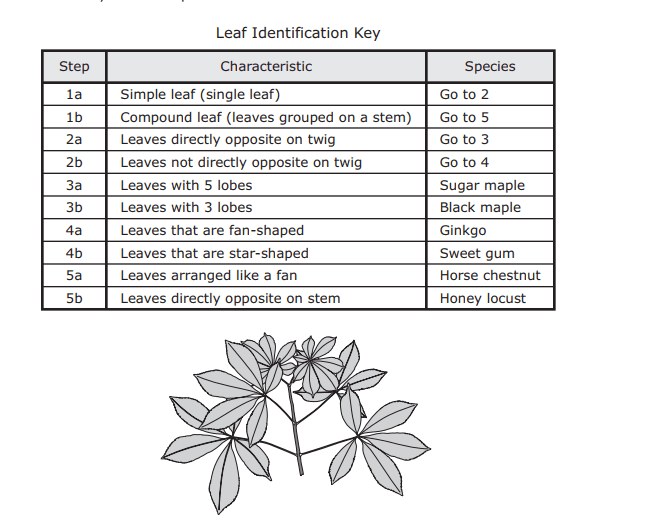
Some students collected leaf samples. The students used the leaf identification key shown below to identify a leaf sample. Based on the identification key, which type of tree is this sample from?
3
60 sec
7.11a
Q.
Some students take care of a vegetable garden. When it is time to plant in the spring, the students leave part of the garden empty in order to observe ecological succession. Which of these will most likely occur first?
4
60 sec
7.10c
Q.
Plants use energy from sunlight, water, and carbon dioxide to produce sugar. Which structure is found only in plant cells and helps plants capture energy from sunlight?
5
60 sec
7.12d
Q.
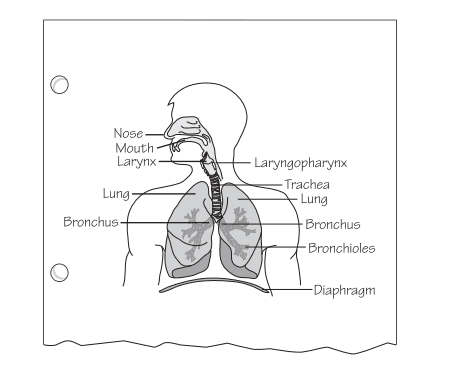
A student drew the picture of a human body system shown below. The student labeled some of the organs of the system. The main function of this human body system is to —
6
60 sec
7.12b
Q.
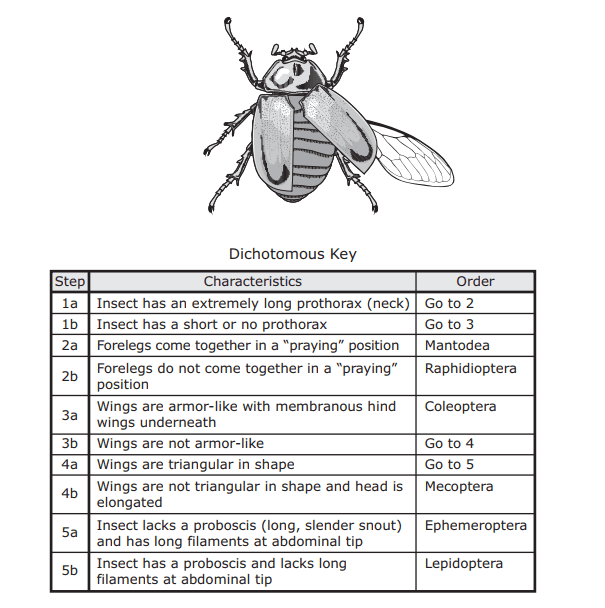
A student examines the winged insect shown below. Based on the dichotomous key, in what order should this insect be classified?
7
60 sec
7.11a
Q.
Tropical rain forests have the greatest biodiversity of any type of land ecosystem. How does biodiversity contribute to the sustainability of an ecosystem?
8
60 sec
7.10b
Q.
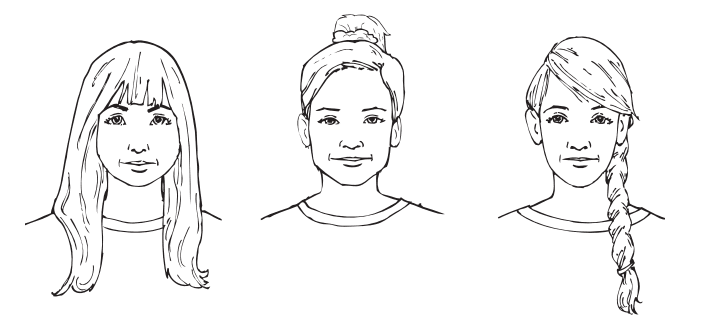
Three cousins have a similar appearance but different face shapes. Which of these cell components are most involved in determining the basic shape of each girl’s face?
9
60 sec
7.14c
Q.
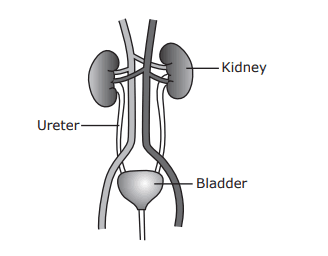
Part of a human body system is pictured. The main function of this system is to —
10
60 sec
7.12b
Q.
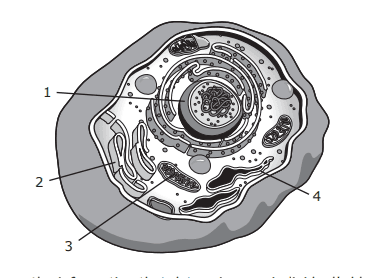
The diagram below shows parts of a cell. Which organelle stores the information that determines an individual’s blood type?
11
60 sec
7.14c
Q.
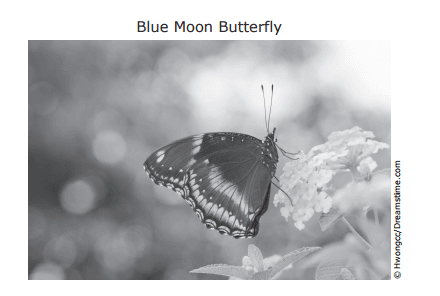
A few years ago the population of male blue moon butterflies on the island of Samoa declined. One hypothesis for the decline of the male butterflies is that a parasite infected the cells of female butterflies. The parasite was passed to offspring through the females’ eggs and killed the male butterfly embryos. At one point during the decline, nearly all the butterflies in the population were females, but after five years the number of males in the population increased significantly. Which explanation most likely accounts for the increase in the number of male butterflies in the five years after the initial parasite problem?
12
60 sec
7.11c
Q.
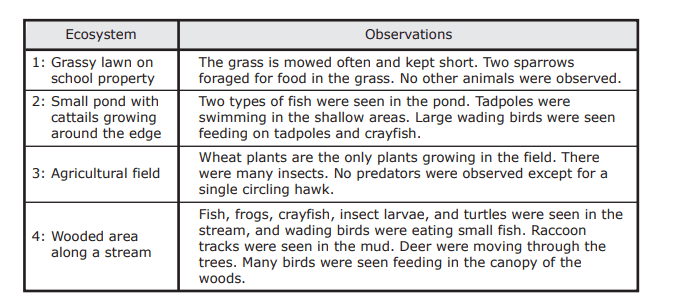
Students in a science class visited four local ecosystems. The students observed the species present in each ecosystem and recorded their observations in the table. Based on these observations, which ecosystem is likely to be the least sustainable?
13
60 sec
7.10b
Q.
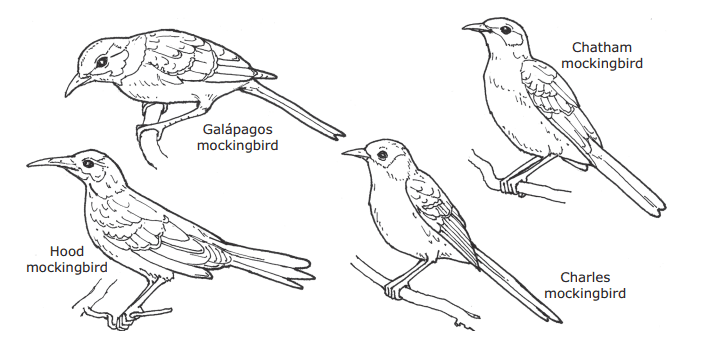
When Charles Darwin visited the Galápagos Islands in the 1800s, he observed many types of organisms that were similar but lived on different islands. The four species of mockingbirds found on the Galápagos Islands are shown below. Each species lives on a different island. These species are very similar, but the Hood mockingbird has a longer beak than the other three species. Which of the following best explains this difference?
14
60 sec
7.11c
Q.
When people run long distances, their muscles require increased amounts of oxygen. Which system is responsible for carrying this oxygen to the muscles?
15
60 sec
7.12b
Q.
In 1838 botanist Matthias Schleiden determined that all plants are composed of cells. In 1839 anatomist Theodor Schwann proposed that all animals are composed of cells. In 1855 biologist Rudolph Virchow added to Schleiden’s and Schwann’s observations and proposed that all living things are composed of cells. Which statement is also part of Virchow’s cell theory?
16
60 sec
7.12f
Q.
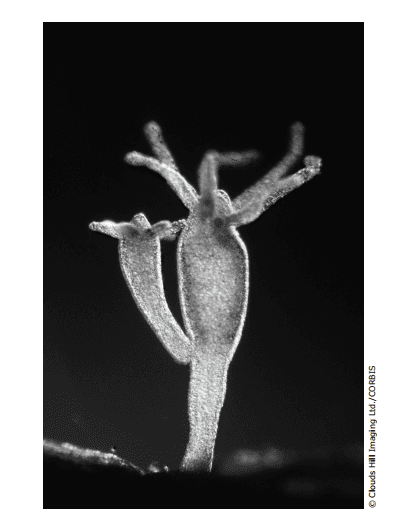
The hydra is a very small, simple animal that lives in water. Hydras reproduce asexually by budding, a process in which a bud breaks off an adult hydra and floats away. Which of the following best describes a hydra bud?
17
60 sec
7.14b
Q.
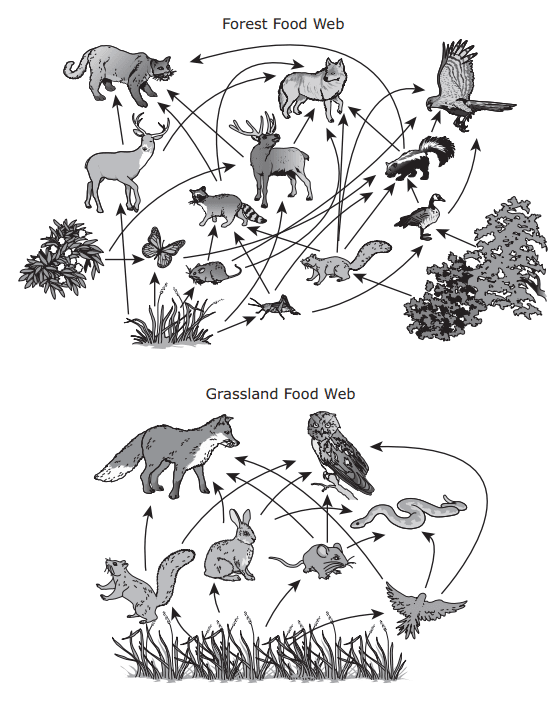
The food webs below model relationships among the organisms in two ecosystems. Which ecosystem would be more likely to survive if a disease killed the grasses?
18
60 sec
7.10b
Q.
Both primary and secondary succession begin with pioneer species that —
19
60 sec
7.10c
Q.
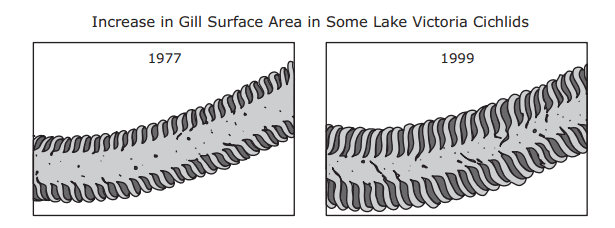
Lake Victoria in East Africa is home to many species of fish called cichlids. In 1954 the predatory Nile perch was introduced to Lake Victoria. The Nile perch became the dominant fish species in the lake by the mid-1980s. The number of cichlid species in the lake decreased as the Nile perch population increased. The perch preyed heavily on cichlid species that fed on algae and debris on the bottom of the lake. Algae in the lake increased, and oxygen levels decreased. The surface area of the gills of some cichlid species has increased in just over 20 years. Which statement explains the increase in gill surface area seen in some of Lake Victoria’s cichlids?
20
60 sec
7.11c
Q.
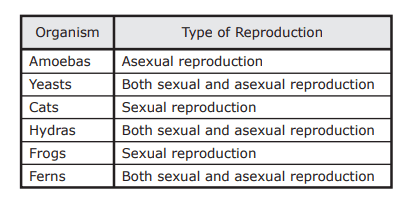
A group of students prepared a table listing the types of reproduction that occur in several organisms. Based on this information, which of the organisms can produce offspring that are genetically identical to the parent organism?
21
60 sec
7.14b
Q.
Which table best shows some functions of the circulatory, respiratory, digestive, and endocrine systems?
22
60 sec
7.12b
Q.
Which table correctly describes the functions of the cell structures listed?
23
60 sec
7.12d
Q.
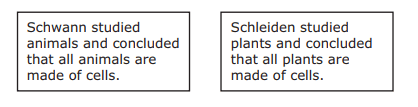
In the 1800s two scientists, Theodor Schwann and Matthias Schleiden, studied different types of organisms. After many years of studying a great variety of organisms, they drew similar but independent conclusions about their observations. What statement was developed most directly from these conclusions and is part of the modern cell theory?