Loading...


touristic places and activities
Quiz by Franklin Carrasco
Customize this quiz to suit your class
Instantly translate to 100+ languages
Tag the questions with any skills you have. Your dashboard will track each student's mastery of each skill.
Give this quiz to my class

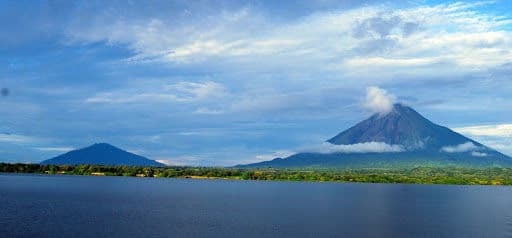
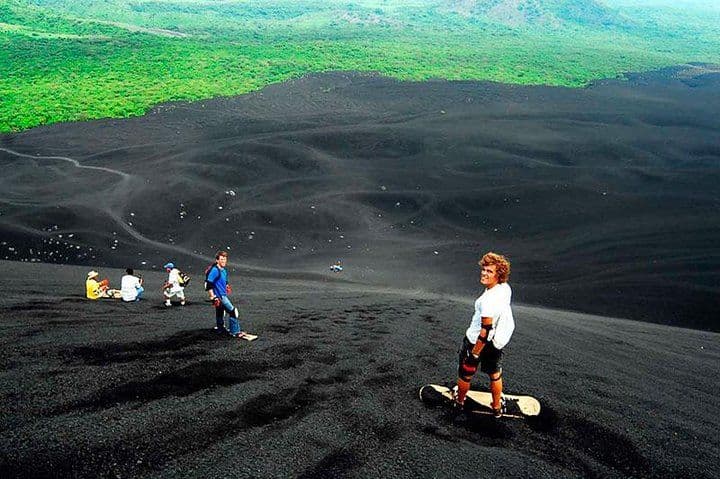 The outdoor recreation industry represents a new economy. The leaders of this economy will need to have a deep understanding of our local natural resources and integrate the components of innovation, health, and wellness into a vision for what comes next. Everyone wins when you do the right things for the environment, the community, and the venture. We want to offer the young generation a chance to be part of the foundation we are building for adventure tourism in the emirates and the region. Adventure Tourism Is the Fastest-Growing Global Niche. What does this mean? It means that there’s plenty of room for young experts to enter the field. It’s not just the "guides" that the adventure tourism industry needs. It’s everything that goes with it, from adventure tourism accommodations to trip planners, event managers, marketing and finance directors, advertising, public relations, and communications. We want to highlight that adventure tourism requires more than just guides, and various careers within adventure tourism play a big role in attracting high-value customers, supporting local economies, and encouraging sustainable practices. The continued growth of this sector creates net positive impacts not only for tourism, but also for destination economies, their people, and their environment. 1) Understanding Tourism Tourism is one of the world’s fastest-growing industries and a major foreign exchange and employment generation for many countries. It is one of the most remarkable economic and social phenomena. 2) Understanding Adventure Tourism Adventure tourism is defined as the movement of the people from one to another place outside their comfort zone for exploration or travel to remote areas, exotic and possibly hostile areas. Adventure tourism is a type of tourism in which tourists engage in adventure activities such as trekking, climbing, rafting, scuba diving, or the likes. Adventure tourism gains much of its excitement by allowing the tourist to step outside their comfort zone. This may be from experiencing culture shock or through the performance of acts that required some degree of risk whether real or perceived. It is also about connecting with a new culture or a new landscape and being physically active at the same time. It is not only about being risky or pushing your boundaries. In fact, it is especially important to know and respect your limits while you are in an unfamiliar area. Adventure travel is a leisure activity that takes place in an unusual, exotic, remote, or wilderness destination. It tends to be associated with high levels of activity by the participant, most of it outdoors. Adventure tourists expect to experience various levels of risk, excitement, and tranquillity and be personally tested. In particular, they are explorers of unspoiled, exotic parts of the planet and also seek personal challenges. The main factor distinguishing adventure tourism from all other forms of tourism is the planning and preparation involved. 3) Definitions of Adventure Tourism Adventure tourism is a new concept in the tourism industry. The tourism industry adopted adventure tourism, but there is not any specific definition of adventure tourism. Most commentators concur that adventure tourism is a niche sector of the tourism industry, but there are many other niche sectors in tourism that have the same characteristics that overlap with adventure tourism such as ecotourism, activity tourism, or adventure travel. One of them can confuse. Adventure tourism is a complicated and ambiguous topic. Some important definitions of adventure tourism are as following: A) According to the Adventure Travel Trade Association (ATTA): “adventure tourism is a tourist activity that includes physical activity, cultural exchange, or activities in nature.” B) According to Muller and Cleaver: “Adventure tourism is characterized by its ability to provide the tourist with relatively high levels of sensory stimulation, usually achieved by including physically challenging experiential components with the tourist experience.” C) The Canadian Tourism Commission in 1995 defines adventure tourism as: “an outdoor leisure activity that takes place in an unusual, exotic, remote or wilderness destination, involves some form of unconventional means of transportation, and tends to be associated with low or high levels of activity.” D) According to Sung et al: “adventure tourism is the sum of the phenomena and relationships arising from the interactions of adventure touristic activities with the natural environment away from the participant’s usual place of residence area and containing elements of risk in which the outcome is influenced by the participation, setting, and the organizer of the tourist’s experience.” E) According to UNWTO: ” adventure tourism can be domestic or international, and like all travel, it must include an overnight stay, but not last longer than one year.” 4) Types of Adventure Tourism Adventure tourism has grown exponentially all over the world in recent years with tourists visiting destinations previously undiscovered. This allows for new destinations to market themselves as truly unique, appealing to those travellers looking for a rare, incomparable experience. Adventure tourism includes various activities like caving, hiking, sailing, trekking, etc. Adventure tourism is categorized into two categories: • Hard Adventure • Soft Adventure Hard Adventure Hard adventure refers to activities with high levels of risk, requiring intense commitment and advanced skills. Hard tourism includes the activities like climbing mountains/rock/ice, trekking, caving, etc. Hard adventure activities are highly risked in nature. Professional guides and advanced levels of skills are required to perform these activities. Many tourists died during climbing mountains, caving every day. Soft Adventure Soft adventure refers to activities with a perceived risk but low levels of risk, requiring minimal commitment and beginner skills; experienced guides lead most of these activities. Soft tourism includes the activities like backpacking, camping, hiking, kayaking, etc. Soft adventure activities are low-risk in nature. Professional guides lead these activities. Soft adventure is a popular category in adventure tourism as it caters to a wider audience. 5) Adventure Tourism Activities Adventure travellers are early adopters by nature, meaning they are generally more willing to try new destinations, activities, and travel products. Popular activities change rapidly, and it seems there is a new twist on an existing sport every year. Some activities have low risk and some have high. Adventure tourism activities are classified into two types: • Hard Adventure Activities • Soft Adventure Activities Hard Adventure Activities Hard adventure activities are highly risky and dangerous in nature. These activities are as the following: • Caving • Mountain Climbing • Rock Climbing • Ice Climbing • Trekking • Sky Diving Soft Adventure Activities These activities are less dangerous and risk as compared to hard adventure activities. These activities are mostly lead by professional guides. An example of these activities are: • Backpacking • Bird watching • Camping • Canoeing • Eco-tourism • Fishing • Hiking • Horseback riding • Hunting • Kayaking/sea/whitewater • Orienteering • Safaris • Scuba Diving • Snorkeling • Skiing • Snowboarding • Surfing Adventure tourism activities sit well with the environment because the natural world provides us with the resources for many of the activities that provide risk, challenge, sensory stimulus, novelty, discovery, and so on. 6) Characteristics and Features of Adventure Tourism The threefold combination of activity, nature, and culture marks adventure travel as an all-around challenge. Some unique characteristics and features of adventure tourism are as the following: • Physical activity, like involving physical exertion or psychomotor skills • Contact with nature, activities bringing contact with the natural world in general, or with specific wildlife • Contact with different cultures, i.e. people, faith, lifestyles • Journeys for example vehicle, animal, or human power • Uncertain outcomes • Danger and risk • Challenges • Anticipated rewards • Novelty • Stimulation and excitement • Exploration and discovery • Contrasting emotions 7) Adventure Tourism Supplier A tourism supply chain is the system of people, products, activities, and materials that get a product or service from its raw state through production and distribution to the consumer. As with any sector, volume discounts drive the mass price point, so major retailers primarily market select trips that sell in high volume. The supply chain for these mass tourism products is often very simple, comprising only transportation and accommodation elements. The adventure tourism supply chain is more complex. Niche products often require specializes in knowledge and operations. Adventure tourism’s supply chain linkages go very deep, and this is one of the key reasons that adventure tourism delivers greater benefits at the local level. Supply chains vary from destination to destination. Without a proper supply chain, the tourism sector cannot survive. Tourism suppliers are the backbone of the tourism industry. Adventure tourism suppliers work at a different, different level like as domestic as well international level. 8) Adventure Tourism Importance and Benefits Adventure tourism is one of the fastest-growing sectors of the tourism sector, attracting high-value customers, supporting local economies, and encouraging sustainable practices. The continued growth of this sector creates net positive impacts not only for tourism, but also for destination economies, their people, and their environment. Some importance and benefits of adventure tourism are: A) Employment Generation Adventure tourism generates jobs. Adventure tourism generates directs jobs to accommodation, transportation sector, and travel agencies or tour operators. Adventure tourism also provides indirect jobs to tourism suppliers. Adventure tourism plays an important role in the generation of employment in the economy. B) Foreign Exchange Adventure tourism attracts foreign tourists on a large scale, as a result, it helps in foreign exchange generation. When tourists travel to another country, they spend a large amount of money on accommodation, transportation, and shopping. Adventure tourism generates foreign exchange and supports the economy of the host country. C) Economy Development Adventure tourism helps in the development of the host country’s economy. Adventure tourism activities directly support the economy in various forms. The more tourists, the more economic growth. D) Support Local Communities Adventure tourism helps in the development of infrastructure and supports local communities. Adventure tourism activities directly contributed to the local economy of the communities and increase local people's living standards. E) Conservation of Natural Resources Adventure tourism activities are nature-based activities. Leaders in the adventure tourism industry are dedicated to making this tourism segment as sustainable as possible. They help in the conservation of natural resources as well as culture. F) Creating Business Opportunities Adventure tourism activities create new business opportunities. Several companies specialize in helping emerging adventure tourism operators market their products. Each new adventure tourism activity creates a new business opportunity. G) Local and Foreign Investment Adventure tourism creates business opportunities; as a result, it attracts local as well as international investors. Investors invest their money in accommodation, transportation, and travel trade organization. Adventure tourism plays an important role in the economy of the host country.La Isla de Pascua This 64-square mile island off Chile’s west coast goes by many names. Its English name is Easter Island, marking the day in 1722 when it was discovered by a European. In Spanish, it is called Isla de Pascua. The Rapa Nui, its first inhabitants, called it “The Navel of the World.” Experts do not agree on the history of Easter Island. It is unclear where the first people came from or when they arrived. Many people believe they came from neighboring Polynesia around AD 300. This culture built 900 enormous stone statues for which the island is famous. The statues are known as moai. Most of the moai are made of volcanic tuff. Tuff is a soft rock made from the ash that is forced out during a volcanic eruption. It is easier to carve than hard stones like marble, but it is not ideal for carving small details. The moai are considered megaliths (large stones that form prehistoric monuments). They stand up to 33 feet high when on their ceremonial platform (the average height is about 13 feet), and they weigh up to 82 tons. They usually have a trunk (body), inset arms, and an exaggerated head with angular edges. The head of each moai takes up about one-third of the total figure. It all shows that the people who created them could engineer monumental structures. Many moai stand with their backs to the sea. They watch the island like protective markers. Some low-relief carvings of religious deities were added to the backs of the moai at a later date. Experts are still trying to understand how they were carved and moved, and what they might mean. Chile took control of the island in 1888. At that time, its population was less than 200. The government used it for grazing livestock. Today, the mystery of Easter Island makes it a popular tourist spot. Valparaíso Valparaíso is a colorful blend of old and new traditions in Chile. This port city is an interesting example of daily life in Chile. Before the Panama Canal was opened in 1914, all ships traveling east to west had to pass all the way around South America. Valparaíso was ideally positioned as a stopping point in the Southern Pacific. Valparaíso has a long history of playing host to a large array of cultures and ideas. The city was known around the world as a place that embraced learning and new ideas. Pablo Neruda had a home in Valparaíso in the 1920s. After the Panama Canal was completed, shipping traffic declined significantly. Valparaíso was forgotten and fell upon hard times. In the 1990s, the government of Chile made an effort to revitalize the colorful port. Today it is a UNESCO (United Nations Educational, Scientific and Cultural Organization) World Heritage site. True to its history of embracing learning, it is also home to four universities. Tourists can visit the first stock exchange in Latin America. Valparaíso also has Chile’s first public library. Visitors stroll through cobblestone streets in the historic district. Here they can also view the city’s iconic colorful buildings. At night, music and street performers liven the experience. Try It Yourself Two Spanish words comprise the name of this city. Val means valley. Paraiso means paradise. The name Valparaíso means Paradise Valley. Can you recognize descriptive Spanish words in other Spanish place names? Start with names of places around you. Las Comidas Tradicionales To Chileans, nothing says home like pastel de choclo, a type of casserole made of beef and corn. The body of the casserole is flavorful. It contains beef, onions, raisins, and roasted chicken. It is topped off with a layer of creamed corn and then baked. Baking it brings out the sweetness in the corn, adding a contrast to the savory meat. The preferred type of corn is called choclo. This variety is grown in rugged conditions in the Andes. The kernels are large and hearty compared to other varieties. Another favorite dish in Chile is a type of meat stew called cazuela. Originally a native dish, it is now known as comfort food in Chile. Pork, beef, lamb, or chicken still on the bone is boiled in a traditional clay pot. To that, corn, potatoes, and other local vegetables are added. It is seasoned with onion and garlic. Pablo Rogat/Shutterstock When Chileans think about dessert, manjar is the first ingredient on their minds. It is a caramel sauce made from cooking milk, sugar, and vanilla. It is found in many desserts. It is used as filling in cakes, pies, and cookies. It is refrigerated to make puddings and custards. People even use it to sweeten their coffee.1. How are mountains formed? A) Only by wind and water B) As a result of tree growth C) Due to the movement of tectonic plates D) By ocean currents Correct answer: C 2. Which of the following is a volcanic mountain? A) Altai B) Himalayas C) Mount Fuji D) Ural Mountains Correct answer: C 3. What is a main part of a volcano? A) Solar radiation B) Crater C) Atmospheric layer D) Basin Correct answer: B 4. Which volcano is considered active? A) Kokshetau B) Mount Etna C) Edinburgh rock D) Carpathians Correct answer: B 5. Which is NOT a benefit of mountains? A) Source of water B) Flat land for agriculture C) Tourist attraction D) Home to biodiversity Correct answer: BTouristic placesTURISTIC PLACESTOURISTIC DESTINATIONSMake 15 questions about expressions to use in touristic routesTOURISTICA 2019 YURT DISI PROGRAMLARI