Loading...


Trade Finance
Quiz by Miranda Odedra
Customize this quiz to suit your class
Instantly translate to 100+ languages
Tag the questions with any skills you have. Your dashboard will track each student's mastery of each skill.
Give this quiz to my class
What does trade finance refer to?
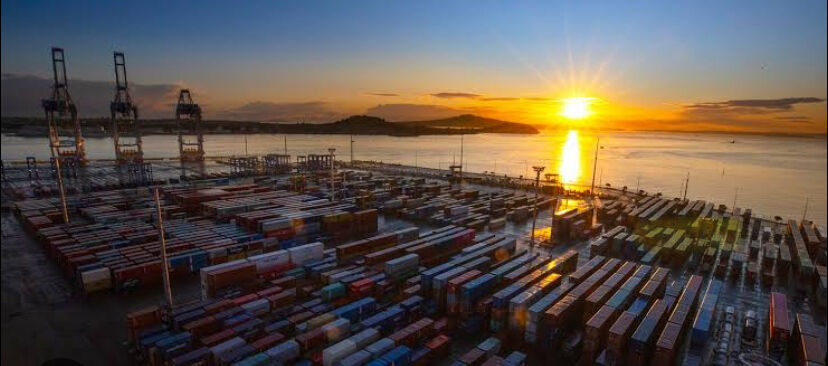
Financial instruments for international trade transactions
Financial aid for small businesses
Financial transactions within a country
Trade credit insurance protects exporters against the risk of:
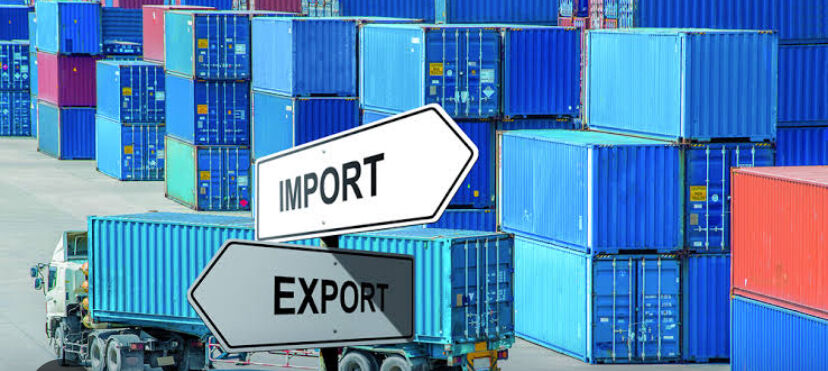
Non-payment by their buyers
Stock market volatility
Trade sanctions
What does trade finance refer to?

Trade credit insurance protects exporters against the risk of:
How many reindeer are there including Rudolph?

Who is the CEO of BNZ

Which central European country started the tradition of putting up a Christmas tree?

Which financial instrument ensures a specified payment or performance will be made if the seller fails to meet contractual obligations?

Which Christmas movie sequel features Donald Trump?

In trade finance, what role does the importer’s bank play in a documentary collection?
What is BNZ's Matapono

What does UCP stands for?

How much time does a Christmas tree need to reach average height?

Which organization regulates and standardizes international trade practices, including trade finance instruments like letters of credit?

What is the term used for a trade finance arrangement in which a third-party financial institution confirms the creditworthiness of the importer and takes responsibility for payment if the importer defaults?

What does Lisa do to unwind herself from a long day at work

In trade finance, what does the term “protest” refer to?
When were Christmas crackers introduced?

What is the term used for the risk associated with a change in government policies, regulations, or political stability that may impact international trade transactions?

What is the BNZ establishment fee for an Assignment of Proceed in an Export LC?

What is Stephen's favorite film

By when should Christmas decorations come down, according to UK traditions?
 Trade Finance ConceptsIslamic Credit Cards & Islamic Trade Finance. Dr. Ahmad AsadISLAMIC CREDIT CARDS AND ISLAMIC TRADE FINANCEC. Dr. Ahmad AsadMSQ FOR ISLAMIC CREDIT CARDS AND ISLAMIC TRADE FINANCEC. Dr. Ahmad AsadMSQ FOR ISLAMIC CREDIT CARDS AND ISLAMIC TRADE FINANCEC (credit cards). Dr. Ahmad AsadCrossFi" generally refers to the intersection of Cross-Chain Finance and DeFi (Decentralized Finance), enabling seamless financial interactions across multiple blockchain networks. It allows users to move assets, trade, lend, and borrow across different chains without relying on centralized intermediaries. Key Features of CrossFi: Cross-Chain Asset Transfers – Users can transfer assets between different blockchains using interoperability protocols like bridges and wrapped tokens. Liquidity Aggregation – Combines liquidity from multiple chains to enhance trading efficiency and reduce slippage. Interoperability Solutions – Uses technologies like Polkadot, Cosmos IBC, LayerZero, and ThorChain to facilitate blockchain communication. Multi-Chain Yield Farming & Staking – Allows users to stake and earn rewards across various chains. Security & Decentralization – Many CrossFi solutions use decentralized oracles, multi-party computation (MPC), and ZK-rollups to enhance security. Popular CrossFi Projects: ThorChain (RUNE): A cross-chain liquidity network that allows native asset swaps. Synapse Protocol: Provides cross-chain bridging and interoperability solutions. LayerZero: A cross-chain messaging protocol enabling omnichain applications. Cosmos (ATOM): Uses the Inter-Blockchain Communication (IBC) protocol for seamless transactions. Why CrossFi Matters? Eliminates blockchain silos and enhances DeFi adoption. Reduces reliance on centralized exchanges for cross-chain trading. Enhances user experience by allowing smooth movement of assets across chains. include blockchain technology questions Question 1 Category: Current Events Question: What was the primary demand of the Kenyan Gen Z protesters featured in the BBC documentary Unmasked: The Truth Behind the Gen Z Protests? Options: A) Free education B) Repeal of the Finance Bill 2024 C) Climate change action D) New elections Correct Answer: B) Repeal of the Finance Bill 2024 Explanation: The BBC documentary highlights that Kenyan youth protested to demand the repeal of the Finance Bill 2024, which proposed tax hikes raising $2.7 billion. Question 2 Category: Science Question: Which gas, discovered on the sun before Earth, is the second most abundant element in the universe? Options: A) Hydrogen B) Oxygen C) Helium D) Nitrogen Correct Answer: C) Helium Explanation: Helium was first detected in the sun’s spectrum in 1868 and is the second most abundant element after hydrogen in the universe. Question 3 Category: Current Events Question: Which Kenyan city was the epicenter of the Gen Z protests covered in the BBC documentary Unmasked: The Truth Behind the Gen Z Protests? Options: A) Mombasa B) Nairobi C) Kisumu D) Eldoret Correct Answer: B) Nairobi Explanation: Nairobi, Kenya’s capital, was the main hub for the #OccupyParliament protests, with significant events like the Parliament breach occurring there, as shown in the documentary. Question 4 Category: History Question: Which empire, known for its vast trade networks, was centered in modern-day Turkey and lasted until the early 20th century? Options: A) Roman Empire B) Ottoman Empire C) Mongol Empire D) Byzantine Empire Correct Answer: B) Ottoman Empire Explanation: The Ottoman Empire, spanning over 600 years until 1922, was a major trade and cultural power centered in modern-day Turkey. Question 5 Category: Current Events Question: According to the BBC documentary, what technology helped document evidence of police brutality during the Kenyan Gen Z protests? Options: A) Drones B) Smartphone videos C) Facial recognition software D) Satellite tracking Correct Answer: B) Smartphone videos Explanation: The documentary used smartphone videos from protesters and bystanders, analyzed via open-source data, to document police brutality during the 2024 protests. Question 6 Category: Geography Question: What is the smallest country in the world by land area? Options: A) Monaco B) Vatican City C) San Marino D) Liechtenstein Correct Answer: B) Vatican City Explanation: Vatican City, with an area of about 44 hectares, is the smallest sovereign state in the world by land area. Question 7 Category: Current Events Question: What hashtag became synonymous with the Kenyan Gen Z protests, as featured in the BBC documentary Unmasked: The Truth Behind the Gen Z Protests? Options: A) #KenyaRising B) #OccupyParliament C) #TaxRevolt D) #GenZFight Correct Answer: B) #OccupyParliament Explanation: The #OccupyParliament hashtag was widely used by protesters to rally against the Finance Bill 2024, as documented by the BBC. Question 8 Category: Entertainment Question: Which actor starred as the lead in the 2023 film Barbie and also played a role in La La Land? Options: A) Emma Stone B) Margot Robbie C) Zendaya D) Saoirse Ronan Correct Answer: B) Margot Robbie Explanation: Margot Robbie starred as Barbie in the 2023 film and played a supporting role in La La Land (2016). Question 9 Category: Sports Question: Which sport is played at the Wimbledon Championships? Options: A) Cricket B) Rugby C) Tennis D) Golf Correct Answer: C) Tennis Explanation: Wimbledon, held annually in London, is the oldest and one of the most prestigious tennis tournaments in the world. Question 10 Category: Technology Question: In web development, what does the acronym “CSS” stand for? Options: A) Computer Style System B) Cascading Style Sheets C) Creative Script Syntax D) Centralized Style Standard Correct Answer: B) Cascading Style Sheets Explanation: CSS (Cascading Style Sheets) is used to style and format the appearance of web pages written in HTML.The outdoor recreation industry represents a new economy. The leaders of this economy will need to have a deep understanding of our local natural resources and integrate the components of innovation, health, and wellness into a vision for what comes next. Everyone wins when you do the right things for the environment, the community, and the venture. We want to offer the young generation a chance to be part of the foundation we are building for adventure tourism in the emirates and the region. Adventure Tourism Is the Fastest-Growing Global Niche. What does this mean? It means that there’s plenty of room for young experts to enter the field. It’s not just the "guides" that the adventure tourism industry needs. It’s everything that goes with it, from adventure tourism accommodations to trip planners, event managers, marketing and finance directors, advertising, public relations, and communications. We want to highlight that adventure tourism requires more than just guides, and various careers within adventure tourism play a big role in attracting high-value customers, supporting local economies, and encouraging sustainable practices. The continued growth of this sector creates net positive impacts not only for tourism, but also for destination economies, their people, and their environment. 1) Understanding Tourism Tourism is one of the world’s fastest-growing industries and a major foreign exchange and employment generation for many countries. It is one of the most remarkable economic and social phenomena. 2) Understanding Adventure Tourism Adventure tourism is defined as the movement of the people from one to another place outside their comfort zone for exploration or travel to remote areas, exotic and possibly hostile areas. Adventure tourism is a type of tourism in which tourists engage in adventure activities such as trekking, climbing, rafting, scuba diving, or the likes. Adventure tourism gains much of its excitement by allowing the tourist to step outside their comfort zone. This may be from experiencing culture shock or through the performance of acts that required some degree of risk whether real or perceived. It is also about connecting with a new culture or a new landscape and being physically active at the same time. It is not only about being risky or pushing your boundaries. In fact, it is especially important to know and respect your limits while you are in an unfamiliar area. Adventure travel is a leisure activity that takes place in an unusual, exotic, remote, or wilderness destination. It tends to be associated with high levels of activity by the participant, most of it outdoors. Adventure tourists expect to experience various levels of risk, excitement, and tranquillity and be personally tested. In particular, they are explorers of unspoiled, exotic parts of the planet and also seek personal challenges. The main factor distinguishing adventure tourism from all other forms of tourism is the planning and preparation involved. 3) Definitions of Adventure Tourism Adventure tourism is a new concept in the tourism industry. The tourism industry adopted adventure tourism, but there is not any specific definition of adventure tourism. Most commentators concur that adventure tourism is a niche sector of the tourism industry, but there are many other niche sectors in tourism that have the same characteristics that overlap with adventure tourism such as ecotourism, activity tourism, or adventure travel. One of them can confuse. Adventure tourism is a complicated and ambiguous topic. Some important definitions of adventure tourism are as following: A) According to the Adventure Travel Trade Association (ATTA): “adventure tourism is a tourist activity that includes physical activity, cultural exchange, or activities in nature.” B) According to Muller and Cleaver: “Adventure tourism is characterized by its ability to provide the tourist with relatively high levels of sensory stimulation, usually achieved by including physically challenging experiential components with the tourist experience.” C) The Canadian Tourism Commission in 1995 defines adventure tourism as: “an outdoor leisure activity that takes place in an unusual, exotic, remote or wilderness destination, involves some form of unconventional means of transportation, and tends to be associated with low or high levels of activity.” D) According to Sung et al: “adventure tourism is the sum of the phenomena and relationships arising from the interactions of adventure touristic activities with the natural environment away from the participant’s usual place of residence area and containing elements of risk in which the outcome is influenced by the participation, setting, and the organizer of the tourist’s experience.” E) According to UNWTO: ” adventure tourism can be domestic or international, and like all travel, it must include an overnight stay, but not last longer than one year.” 4) Types of Adventure Tourism Adventure tourism has grown exponentially all over the world in recent years with tourists visiting destinations previously undiscovered. This allows for new destinations to market themselves as truly unique, appealing to those travellers looking for a rare, incomparable experience. Adventure tourism includes various activities like caving, hiking, sailing, trekking, etc. Adventure tourism is categorized into two categories: • Hard Adventure • Soft Adventure Hard Adventure Hard adventure refers to activities with high levels of risk, requiring intense commitment and advanced skills. Hard tourism includes the activities like climbing mountains/rock/ice, trekking, caving, etc. Hard adventure activities are highly risked in nature. Professional guides and advanced levels of skills are required to perform these activities. Many tourists died during climbing mountains, caving every day. Soft Adventure Soft adventure refers to activities with a perceived risk but low levels of risk, requiring minimal commitment and beginner skills; experienced guides lead most of these activities. Soft tourism includes the activities like backpacking, camping, hiking, kayaking, etc. Soft adventure activities are low-risk in nature. Professional guides lead these activities. Soft adventure is a popular category in adventure tourism as it caters to a wider audience. 5) Adventure Tourism Activities Adventure travellers are early adopters by nature, meaning they are generally more willing to try new destinations, activities, and travel products. Popular activities change rapidly, and it seems there is a new twist on an existing sport every year. Some activities have low risk and some have high. Adventure tourism activities are classified into two types: • Hard Adventure Activities • Soft Adventure Activities Hard Adventure Activities Hard adventure activities are highly risky and dangerous in nature. These activities are as the following: • Caving • Mountain Climbing • Rock Climbing • Ice Climbing • Trekking • Sky Diving Soft Adventure Activities These activities are less dangerous and risk as compared to hard adventure activities. These activities are mostly lead by professional guides. An example of these activities are: • Backpacking • Bird watching • Camping • Canoeing • Eco-tourism • Fishing • Hiking • Horseback riding • Hunting • Kayaking/sea/whitewater • Orienteering • Safaris • Scuba Diving • Snorkeling • Skiing • Snowboarding • Surfing Adventure tourism activities sit well with the environment because the natural world provides us with the resources for many of the activities that provide risk, challenge, sensory stimulus, novelty, discovery, and so on. 6) Characteristics and Features of Adventure Tourism The threefold combination of activity, nature, and culture marks adventure travel as an all-around challenge. Some unique characteristics and features of adventure tourism are as the following: • Physical activity, like involving physical exertion or psychomotor skills • Contact with nature, activities bringing contact with the natural world in general, or with specific wildlife • Contact with different cultures, i.e. people, faith, lifestyles • Journeys for example vehicle, animal, or human power • Uncertain outcomes • Danger and risk • Challenges • Anticipated rewards • Novelty • Stimulation and excitement • Exploration and discovery • Contrasting emotions 7) Adventure Tourism Supplier A tourism supply chain is the system of people, products, activities, and materials that get a product or service from its raw state through production and distribution to the consumer. As with any sector, volume discounts drive the mass price point, so major retailers primarily market select trips that sell in high volume. The supply chain for these mass tourism products is often very simple, comprising only transportation and accommodation elements. The adventure tourism supply chain is more complex. Niche products often require specializes in knowledge and operations. Adventure tourism’s supply chain linkages go very deep, and this is one of the key reasons that adventure tourism delivers greater benefits at the local level. Supply chains vary from destination to destination. Without a proper supply chain, the tourism sector cannot survive. Tourism suppliers are the backbone of the tourism industry. Adventure tourism suppliers work at a different, different level like as domestic as well international level. 8) Adventure Tourism Importance and Benefits Adventure tourism is one of the fastest-growing sectors of the tourism sector, attracting high-value customers, supporting local economies, and encouraging sustainable practices. The continued growth of this sector creates net positive impacts not only for tourism, but also for destination economies, their people, and their environment. Some importance and benefits of adventure tourism are: A) Employment Generation Adventure tourism generates jobs. Adventure tourism generates directs jobs to accommodation, transportation sector, and travel agencies or tour operators. Adventure tourism also provides indirect jobs to tourism suppliers. Adventure tourism plays an important role in the generation of employment in the economy. B) Foreign Exchange Adventure tourism attracts foreign tourists on a large scale, as a result, it helps in foreign exchange generation. When tourists travel to another country, they spend a large amount of money on accommodation, transportation, and shopping. Adventure tourism generates foreign exchange and supports the economy of the host country. C) Economy Development Adventure tourism helps in the development of the host country’s economy. Adventure tourism activities directly support the economy in various forms. The more tourists, the more economic growth. D) Support Local Communities Adventure tourism helps in the development of infrastructure and supports local communities. Adventure tourism activities directly contributed to the local economy of the communities and increase local people's living standards. E) Conservation of Natural Resources Adventure tourism activities are nature-based activities. Leaders in the adventure tourism industry are dedicated to making this tourism segment as sustainable as possible. They help in the conservation of natural resources as well as culture. F) Creating Business Opportunities Adventure tourism activities create new business opportunities. Several companies specialize in helping emerging adventure tourism operators market their products. Each new adventure tourism activity creates a new business opportunity. G) Local and Foreign Investment Adventure tourism creates business opportunities; as a result, it attracts local as well as international investors. Investors invest their money in accommodation, transportation, and travel trade organization. Adventure tourism plays an important role in the economy of the host country.