Loading...

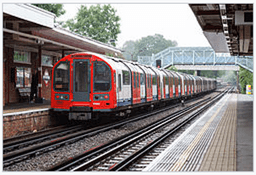
Transit & Passenger Scavenger Hunt
Quiz by Jill Moreland
Customize this quiz to suit your class
Instantly translate to 100+ languages
Tag the questions with any skills you have. Your dashboard will track each student's mastery of each skill.
Give this quiz to my class
As of 2021, this country has the largest number of rapid transit systems in the world - 40 in number, running on over 2800 miles of track.
Russia
China
Europe
USA
This partially underground steam locomotive which opened in 1863 was the world's first rapid transit system.
Metropolitan Railway
Moscow Metro
Shanghai Metro
New York Subway
As of 2021, this country has the largest number of rapid transit systems in the world - 40 in number, running on over 2800 miles of track.
This partially underground steam locomotive which opened in 1863 was the world's first rapid transit system.
This term is the most commonly used term for underground rapid transit systems by non-native English speakers
A system of railways usually powered by overhead electrical wires and used for medium-capacity local transportation in metropolitan areas
The stations typically have high platforms, without steps inside the trains, requiring custom-made trains in order to minimize gaps between train and platform.
Amtrak is a company whose original corporate name is:
Brightline (BLFX) is the only privately owned and operated intercity passenger railroad in the US.
 Transit of VenusTransit Education Quiz 1Go Transit5-lecie KNT TransitHistory of policing Pre-confederation Mostly informal policing by community residents First police officers Quebec city, mid 17th century Upper Canada, early 19th century Mandate Police conflicts between ethinc groups and employes/labours Maintain moral standards (drunkenness, alcoholism) Apprehend criminals Provincal Police Force Response to disorder resulting form gold strikes in 19th century Replaced by RCMP during 20th century Currently, Ontario,Quebec and parts of Newfoundland have their own provincal police force History of RCMP North-Wesr Mounted Police Founded in 1873 Maintain law and order Ensure orderly settlement in prairies Many problems: desertion, resignation and improper conduct Replaced by Royal Canadain Mounted Police Police Today About 70,000 police officers across Canada 199 police officers per 100,000 population Lower than Scotland (337), England(244), U.S (238) NUmber increased over past decade NUmber of female officers increased 1 out of 5 officers is a women Contemporary Policing Structure of policing Four levels Federal, Provincial, municipal, and First nations Also public transportation police (railway, airport, and transit) Some municipalities have own forces E.g, Peel, Toronoto Others use provincial force detachments or RCMP detachments Royal Candanin Mounted Police Governed by Royal Canadian Mounted Pollcei Act (1985) Broad Range of policing activities, including federal policing and international peacekeppiong Contract Policing Provincial, territorial and municipal level Concerns about local oversight and accountability In but not of communities-difficult to ensure that RCMp detachments are responsive to communities Provincial Police Three forces Ontario Provincial Police Surete du Quebec (SQ) Royal Newfoundland Constabulary (RNC) Other provinces contractually use the RCMP Responsibilities Police rural areas and areas outside municipalities Enforce provincial laws and Criminal Code Regional Police Amalgamated Forces E.g Peel region police and Halton Regional Police Force Provide Police Services to over Half of Ontarians Advantages Cheaper, more servies Disadvantages To centralized, not in touch with community Municipal Police Responsibilites Enforce Criminal Code, Provincal Statues, municipal by laws, some federal statues (e.g drugs) Largest number of officers of any level My be contracted to RCMP or Provincal force Costs are paid by the municipality First Nations Type of policing is negotiated by First Nations Commnity Autonomous reserve based First Nations Officers from RCMP or OPP Responsibilites Enforce Criminal Code, federal and provicanl statues, band bylaws Accountability Reserve based police commission or band council Private Security Services Two main types 1. Private Security Firms 2. Company based, in house security officers No more legal authority than ordinary citizens But can arrest and detain people who commit crimes on private property In Canada, Private security officers outnumber police officer by four to one Parapolice Extension of activities Lack of systems of oversight like transitional police Police Work POlicing The activities of any indivual or organization acting legally on behalf of public or private organizations or persons to maintain security or social order Pluralization of Policing The sharing between public and private security Legislative Framework Carry out tasks within a number of legislative frameworks, define role, powers/responsibilites Canadian charter of rights and freedoms- most impactful on power/actvites of police Provincial and municipal legislation - Status such as motor vehicle administration acts, highway traffic acts, liquor acts and provincial/musincpal police acts Democracy Governance Categories of Policing Recruitment and Training of police officers Police recruitment Recruiting Visible Minorites and Aboriginal People Special initvates and programs for youth, women and visible minorities PEACE (Police Ethnic and Cultureal Exchange) OPPBound (particpate in variety of activate with officer) Toronto POlice recruitment of Somali Officers Edmonton police uniforms that include a hijab Police Training Residential/non-residential academies, centralized and decentralized Physical and academic instruction, socilization into the police occupation Operational field traiing Hands-on application of principles learned in the academy Mentoship form senior officer Working Personality of Police officers Challenges of Police Work Work Enviroment Long hours and shift work Exposure to stressors, especially in high demand environments PTSD and burnout Work Organiztion Harassment of female officers Cumbersome of system of internal redress Summary A number of misconceptions arounds police work, including th emotion that most police work involves crime control A variety of influences on the roles and activities of the police Four levels of policing: federal, provincial, mnicipal and First Nations, each with different responsibilities President Xi Jinping, who is also general secretary of the Communist Party of China Central Committee and chairman of the Central Military Commission, visits Luoyang Bearing Group Co on Monday afternoon during his inspection of Luoyang, Henan province. During the visit, Xi called for continuous efforts to make the manufacturing industry even stronger to advance Chinese modernization. YAN YAN/XINHUA President Xi Jinping has stressed the importance of keeping businesses, employment, the market and expectations stable in the face of a complex international environment, saying that China will respond to various uncertainties with the certainty of its high-quality development. Xi, who is also general secretary of the Communist Party of China Central Committee and chairman of the Central Military Commission, made the remarks on Tuesday as he wrapped up a two-day fact-finding trip to Central China's Henan province. Speaking to provincial Party and government officials at a work briefing on Tuesday in Zhengzhou, the provincial capital, Xi said that high-quality development is essential to Chinese modernization. Faced with the complex external environment, it is necessary to firm up confidence, unwaveringly manage China's own affairs well, and steadfastly expand high-level opening-up, he said. He also urged Henan, one of the country's economic powerhouses, to further consolidate the foundation of its real economy, and promote the development of new quality productive forces suited to local conditions and led by technological innovation, in order to enhance the capacity of its modern industrial system to support high-quality development. When visiting Luoyang Bearing Group Co in the city of Luoyang on Monday, Xi said: "China has always adhered to the path of developing the real economy. From the past reliance on imported matches, soap and iron, to now becoming the world's largest manufacturing country with the most complete industrial categories, we have taken the right path." As a traditional manufacturing enterprise specializing in bearings, Luoyang Bearing Group's products are widely used in fields such as aerospace, construction machinery, wind power generation, rail transit, port machinery and ships. After learning about the company's efforts to accelerate the development of advanced manufacturing, Xi said that China must continue to strengthen the manufacturing sector, adhere to the principles of building self-reliance and strength, and master core technologies in key fields. "The hope is placed on you," he told the on-site workers. He also called for efforts to strengthen collaboration between industries, universities and research institutes, and cultivate a large number of high-quality talent. Despite internal challenges and increasing external shocks, China's manufacturing industry has withstood pressure and maintained stable growth. In April, the manufacturing sector saw its value-added output climb 6.6 percent year-on-year, with that of equipment manufacturing and high-tech manufacturing up 9.8 percent and 10 percent, respectively, according to data released by the National Bureau of Statistics on Monday. Advanced manufacturing is the high ground in global industrial competition and the main battlefield for technological innovation. Xi has repeatedly emphasized the need to upgrade the country's modernized industrial system, supported by advanced manufacturing. In a resolution adopted at the third plenary session of the 20th CPC Central Committee in July last year, it was clearly stated that China will move faster to advance new industrialization, promote the growth and expansion of advanced manufacturing clusters, and make the manufacturing sector higher-end, smarter and more eco-friendly. On Monday, Xi also visited the White Horse Temple, the first Buddhist temple in China, and the Longmen Grottoes, a UNESCO World Heritage site. Contact the writers at mojingxi@chinadaily.com.cnENGLISH GROUP PROJECT: THE GLOBAL VENTURE (Thailand) Comprehensive Presentation Script & Role Outline (5-Person Distribution) 1. Strategic Role & Workload Distribution Matrix Role / Name Core Domain / Responsibility Presentation Delivery Scope Member 1Member 1 Tan Finance & Housing (Rent, cost of living, deposits, urban/rural margins)Finance & Housing (Rent, cost of living, deposits, urban/rural margins) Slide 3: Finance Lead, Slide 8: Data VisualizerSlide 3: Finance Lead, Slide 8: Data Visualizer Member 2Member 2 Huy Work Culture & Professional Etiquette (Hierarchy, industry growth, networking)Work Culture & Professional Etiquette (Hierarchy, industry growth, networking) Slide 3: Culture Lead, Slide 9: Adaptation ExpertSlide 3: Culture Lead, Slide 9: Adaptation Expert Member 3Member 3 Minh Legal, Immigration & Visa Pathways (Non-Immigrant B visas, extensions, 90-day rules)Legal, Immigration & Visa Pathways (Non-Immigrant B visas, extensions, 90-day rules) Slide 3: Legal Anchor, Slide 4: Legal FrameworkSlide 3: Legal Anchor, Slide 4: Legal Framework Member 4Member 4 THanh Healthcare Ecosystem & Public Safety (Insurance, emergency networks, local hazards)Healthcare Ecosystem & Public Safety (Insurance, emergency networks, local hazards) Slide 3: Safety Anchor, Slide 10: Matrix PresenterSlide 3: Safety Anchor, Slide 10: Matrix Presenter Member 5Member 5 Sơn(project manager),Kiên Logistics, Climate & Project Manager (Transit, weather, group synthesis)Logistics, Climate & Project Manager (Transit, weather, group synthesis) Slide 1-2: Opener, Slide 6: Email Lead, Slide 11-12: CloserSlide 1-2: Opener, Slide 6: Email Lead, Slide 11-12: Closer 3. Complete Presentation Script (Slide-by-Slide) Execution Note: During delivery, presenters should display the corresponding slide from the HTML presentation tool. Speak clearly, maintaining eye contact with the grading panel. 12-Slide Presentation Guide: Secondments in Thailand Slide 1: Title Slide Purpose: Introduce the topic clearly. Content guide: Include the presentation title, group members’ names, course/module name, and date. Speaker guide: Briefly say that the presentation explains what employees and companies should consider before sending someone on secondment to Thailand. Slide 2: Agenda / Overview Welcome everyone. Our presentation is about secondments in Thailand. We will cover the main areas that a company and employee should prepare for before relocation. These include finance and housing, work culture, legal and visa requirements, healthcare and safety, and daily logistics such as transport and climate. By the end of the presentation, we hope to show that a successful secondment depends not only on the job itself, but also on good planning before and after arrival in Thailand. Slide 3: What Is a Secondment? A secondment is a temporary work assignment where an employee is transferred to another country, branch, client site, or partner organization while usually remaining connected to the original employer. Secondments require coordination between the employee, home employer, host organization, and local authorities. Slide 4: Finance & Housing — Cost of Living Finance and housing are one of the first things a secondee should plan before moving to Thailand. The cost of living can vary a lot depending on whether the employee is based in Bangkok, another major city, or a regional area. Urban areas usually have higher rent, but they also offer better access to transport, hospitals, offices, and international services. In smaller cities or rural areas, rent may be lower, but transport and convenience can become bigger concerns. So, the key point is that secondees should not only compare prices, but also consider location, commute, and what support the employer provides. Slide 6: Work Culture — Hierarchy & Etiquette Purpose: Help secondees understand workplace expectations. Content guide: Cover respect for seniority, polite communication, indirect feedback, saving face, punctuality, proper greetings, and professional dress. Speaker guide: Explain that foreign employees should avoid being too blunt in meetings and should observe how local colleagues communicate with managers or senior staff. Suggested visual: “Do and Don’t” etiquette list. Slide 7: Work Culture — Industry Growth & Networking Purpose: Connect secondments to career and business opportunities. Content guide: Mention sectors where Thailand often attracts foreign professionals, such as manufacturing, tourism, logistics, finance, technology, and regional business operations. Discuss relationship-building and networking. Speaker guide: Emphasize that trust and long-term relationships are important in Thai professional settings. Networking can happen through industry events, chambers of commerce, company introductions, and informal business meals. Suggested visual: Thailand industry opportunity map or sector icons. Slide 8: Legal & Immigration — Visa Pathways Purpose: Explain the main legal entry pathway for work-related secondments. Content guide: Introduce the Non-Immigrant B visa as a common work/business visa category. Mention that supporting documents may include passport, application forms, employment or company letters, and other evidence requested by Thai authorities. Speaker guide: Make clear that a visa alone may not be enough to legally work; seconded employees normally need the correct visa and work authorization. The exact process depends on the employer, role, nationality, and assignment structure. Suggested visual: Simple flowchart: Home employer → Host company → Visa application → Arrival → Work permit/compliance. Slide 9: Legal & Immigration — Compliance Rules Purpose: Explain ongoing responsibilities after arrival. Content guide: Cover visa extensions, work permit validity, re-entry permits, address reporting, and 90-day reporting for eligible long-stay foreigners. Speaker guide: Stress that compliance is not a one-time task. Employees and HR teams should track deadlines carefully because missing reporting or renewal dates can cause fines, delays, or legal issues. Suggested visual: Compliance checklist or timeline. Slide 10: Healthcare & Public Safety Purpose: Explain how secondees should prepare for health and safety risks. Content guide: Cover international health insurance, access to private hospitals, emergency numbers, vaccinations or health checks if required, and common local hazards such as road safety, flooding, heat, food hygiene, and mosquito-borne illnesses. Speaker guide: Explain that Thailand has strong healthcare options in major cities, but employees should confirm insurance coverage before arrival. They should also know what to do in an emergency and save important contact numbers. Suggested visual: Emergency preparation checklist. Slide 11: Logistics & Climate Purpose: Explain practical relocation and daily-life planning. Content guide: Cover public transit, taxis, ride-hailing, domestic travel, airport access, SIM cards, banking, weather, rainy season, heat, and packing needs. Speaker guide: Mention that weather affects commuting, clothing, housing choice, and travel planning. Employees should plan around heat, rain, and possible flooding, especially during the rainy season. Suggested visual: Seasonal calendar showing hot, rainy, and cool periods. Slide 12: Project Manager / Group Synthesis Purpose: Bring the presentation together and end with key recommendations. Content guide: Summarize the main risks and preparation steps: budget early, secure compliant visa/work permit arrangements, understand workplace culture, arrange insurance, and prepare for climate/logistics. Speaker guide: Conclude by saying that a successful secondment in Thailand depends on both professional readiness and personal relocation planning. End with 3–5 recommendations for companies and employees. Suggested visual: Final checklist: “Before departure,” “Upon arrival,” and “During secondment.” A simple way to divide the work is: Member 1: Slides 1–3 introduction. Member 2: Slides 4–5 finance and housing. Member 3: Slides 6–7 work culture. Member 4: Slides 8–9 legal and immigration. Member 5: Slides 10–12 healthcare, logistics, and conclusion. Transito y Transporte