Loading...


Transportation 10 7
Quiz by Jennifer Engel
Customize this quiz to suit your class
Instantly translate to 100+ languages
Tag the questions with any skills you have. Your dashboard will track each student's mastery of each skill.
Give this quiz to my class
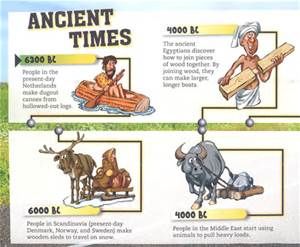


 Chapter 8: The Worlds of North and South Geography Geography refers to the seasons, climate, soil, and physical features of a region (mountains, rivers, etc.) The differences in geography b/t the N and S is one of the major reasons slavery b/c entrenched in the S while it died out in the N. Geography of the North The N has diverse geography and experiences four distinct seasons including long, harsh winters. The Great Plains region has some of the best farmland in the country. New England has rocky, hilly wilderness, not well suited for farming. It has hundreds of bays and harbors along its coastline. States farther S had rich soil and coastal access through rivers. The N also experienced mass deforestation b/c of the need for lumber and to make room for farms. Geography of the South Climate: the S had mild winters, and a long, hot, humid growing season. It has fertile lowlands, marshes and swamps. It's ideal for growing tobacco, sugar, rice, indigo, and cotton (cash crops). B/c of the geography of the S, their whole way of life was based on agriculture and geography is one of the major reasons why slavery took off in the S. Economies Economy basically refers to the way people make and spend money. The Northern economy was far more diversified than the Southern. Economy of the North The North experienced the Industrial Revolution—the shift from handmade goods to machine-made goods. This resulted in new jobs, increased production, and improved efficiency in agriculture. IOW, you can make things faster, easier, and cheaper. More ppl get more stuff. Factories were almost always located next to rivers. The Reaper The Indust. Rev. changed northern agriculture with Cyrus McCormick’s reaper. It could cut 28xs more grain than a single man. The Sewing Machine Elias Howe's sewing machine; At 250 stitches a minute, Howe's lockstitch mechanism out-stitched the output of five hand seamstresses with a reputation for speed, completing in one hour what took the sewers 14.5 hours. The Textile Mill Francis Cabot Lowell's textile mill: essentially the first factory in the US, Lowell set the model for all future factories. Interchangeable Parts Eli Whitney's interchangeable parts; considered the "dawning of a new age" of machinery. This concept was applied to pretty much all manufacturing. Economy of the South The South's economy was based on AGRICULTURE. Most southerners were agrarians. Most had small farms, some owned plantations. Slavery beginning to decline in late 1700s; prices went down (tobacco, indigo) and cotton was difficult. King Cotton Cotton was South’s most important crop. Earned more money than all other exports combined. The S would go on to supply 75% of the world's cotton demand. Cotton Gin Eli Whitney invented the cotton gin in 1794 and forever changed the US. The gin made cotton incredibly profitable. We start to see the effects of the cotton gin around 1820. Slavery and Cotton Southerners put all their money into slaves and land, and almost none into building factories. With the spread of cotton, demand for slaves increased. 1790 to 1850, number of slaves rose 600%. Transportation Again, the N was far more inventive in their approach to transportation than the S. Transportation in the North National Road National Road stretched from the East (the Potomac), over the Appalachians, to the West (Illinois), over 620 miles. Steamboat In 1807, Robert Fulton invented the steamboat. It traveled 150 miles UP the Hudson River at a speed of 5 mph. Erie Canal Built b/t 1817 and 1825, the canal spanned 363 miles and connected Lake Erie to the Hudson River. This connected farms in the W to cities in the E and the Atlantic Ocean. Clipper Ship Clippers were narrow w massive sails that were built for speed. They cut the time it took to cross the Atlantic in half. Locomotive The fastest and cheapest way to move goods was by steam-powered trains. The first RR was the B&O which was built in 1827. Transportation in the South Most people and goods in the South traveled by rivers in steamboats. The South had trains, but less than half the amount of railroad track than the North had. Society (The People) The people who made up the N and S could not have been more different. The S was primarily agrarian while the N was b/c urbanized. The S was holding on to the past, while the N was embracing change. Society in the South Society was organized into 3 distinct classes of people: rich plantation owners at the top; then white farmers and workers; slaves on the bottom. This rigid social class system was the result of a slave-based agricultural system. Power Structure Only 1 in 4 whites owned a slave. Plantation owners, who owned more than 20 slaves, dominated politics and the economy. Society in the North 7 of 10 Northerners still lived on farms by the 1840s (6 of 10 by 1860), but urbanization was growing fast in the N. The N relied on wage labor as opposed to slave labor, so most blacks in the N were free. N blacks were not treated equally and the N was about as racist as the S. Immigration Compared to the S, the N population was exploding, in large part bc of immigration. Between 1845 and 1860, 4 million immigrants came to the North. Most were German and Irish. Irish--a potato famine; German--a failed revolution. Ethnic neighborhoods developed as a result.Transportation 交通工具 7/8th Grade Quiz 01/10/2023Certainly, let's expand on each section in detail so you can learn more from the provided text: # Summary This text aims to explain various aspects related to technology, particularly focusing on a concept known as "Tech Disruption." It explores how technology affects different sectors, outlines the conditions for tech disruption, discusses the industrial revolutions, introduces the laws of disruption, and mentions factors influencing technology choices. ## Concept of Technology **Technology** encompasses a range of elements within organizations. It includes **expertise, equipment, and procedures** used to convert inputs, such as resources or raw materials, into outputs, which can be products or services. This involves various aspects, such as **product design, production techniques, quality assurance measures, human resource development, and management systems**. In essence, technology represents the tools and knowledge used to create and deliver goods or services effectively. ## What is Tech Disruption **Tech Disruption** refers to a phenomenon where smaller companies with limited resources successfully challenge well-established incumbent businesses. This disruption is primarily driven by **technology**, which acts as the catalyst, enabler, or even the sole reason behind the change. The significance of this concept lies in the fact that entrepreneurs must make careful and thoughtful decisions when it comes to adopting and investing in technology. **Why it's Important?** These decisions are crucial because they involve significant investments and will have a substantial impact on a company's ability to create, innovate, and operate its services in a sustainable and cost-effective manner. ## Four Main Impact **Tech Disruption** has four main impacts on businesses and industries: 1. **Shifting Customer Expectations**: As technology evolves, customer expectations change. Companies must adapt to meet these evolving demands to remain competitive. 2. **Enhanced Products Through Data**: Data-driven insights improve the productivity and efficiency of assets, leading to better products and services. 3. **New Partnerships and Collaboration**: Tech disruption encourages companies to form new partnerships and collaborations, recognizing the importance of working together to stay relevant. 4. **Transformation of Operating Models**: Traditional operating models are being transformed into digital models, where technology plays a central role in how businesses operate and deliver value. ## The 11 Macro Sources of Distribution The **11 Macro Sources of Distribution** represent various factors that influence the distribution of resources and opportunities in society. These factors include: 1. **Wealth Distribution**: How wealth is distributed among individuals and entities. 2. **Education**: The availability and quality of education opportunities. 3. **Infrastructure**: The state of infrastructure, such as transportation and communication networks. 4. **Government**: Government policies and regulations that impact resource distribution. 5. **Geopolitics**: Geopolitical factors, such as international relations and conflicts. 6. **Economy**: Economic conditions and trends, including markets and financial systems. 7. **Public Health**: The state of healthcare and public health systems. 8. **Demographics**: Characteristics of the population, such as age and gender. 9. **Environment**: Environmental factors and sustainability concerns. 10. **Media and Telecommunications**: The role of media and communication technologies. 11. **Technology**: Technological advancements and their impact on society. ## When Does Tech Disruption Happen? **Tech Disruption** occurs when specific conditions are met: ### Technology Is Mature Enough - **Technology Accessibility**: Technology must be accessible to a wide range of people and organizations. - **Critical Mass**: It should have reached a critical mass where it can create significant impact. - **Affordability**: Technology must be affordable for businesses to adopt. ### Sector Is Ready For Change - **Tech Infrastructure**: The sector should have the necessary technological infrastructure in place. - **Policy Framework**: A conducive policy framework is essential to support and regulate the use of technology. - **Lack of Disruption**: If the sector is stagnant or facing issues, it becomes ripe for tech disruption. ### Sector + Technology + Timing + Product - **Mature Technology with an Unready Sector**: If technology is mature but the sector is not ready, it can lead to building the wrong product based on incorrect assumptions. - **Unmatured Technology with a Ready Sector**: Conversely, if technology is not matured but the sector is ready, it may take longer to develop the product. ## Ready for Industri 5.0? This section briefly outlines the five industrial revolutions: 1. **Industri 1.0 (1784)**: Marked by mass production assembly lines using electrical power. 2. **Industri 2.0 (1870)**: Introduced mechanization, steam, and water power. 3. **Industri 3.0 (1969)**: Characterized by automated production, computers, IT systems, and robotics. 4. **Industri 4.0 (Present)**: Involves smart factories, autonomous systems, IoT (Internet of Things), and machine learning. 5. **Industri 5.0 (Future)**: Envisions mass customization and cyber-physical cognitive systems. ## Three Laws of Disruption These laws explain the nature of disruption: 1. **Disruption Comes to All**: Disruption is a universal phenomenon; it affects all industries and businesses sooner or later. 2. **Product-Market Fit**: Disruption occurs due to changes in Product-Market Fit, which means aligning a product with its target market effectively. 3. **Methods to Change Product-Market Fit**: To address disruption, a company can change the product, the target market, or influence people's preferences regarding the product. ## The 40% Rule This rule provides a framework for evaluating the fit between a product and its market: - **Value Proposition**: The product should solve customers' problems effectively. - **Channels**: The product should be able to reach customers cost-effectively. - **Monetization**: Customers should be willing to pay for the product. ## PMF Framework: 5 Steps to Product/Market Fit The **PMF (Product/Market Fit) Framework** consists of five steps: 1. **Business Modeling**: Developing a business model that aligns with the market. 2. **Market Validation**: Confirming that there is demand for the product in the market. 3. **Customer Interviews**: Gaining insights from potential customers. 4. **Product Development and Customer Acquisition**: Creating the product and acquiring customers. 5. **Product Analytics**: Using data to determine if the product has achieved Product/Market Fit. ## Factors Determining the Choice of Technology Several factors influence the choice of technology: 1. **Government Policy**: Government regulations and policies can encourage or restrict the adoption of specific technologies. 2. **Available Resources**: The resources, both financial and human, impact the adoption of technology. 3. **Technological Capability**: The organization's technological capabilities influence the choice of technology. 4. **Existing Technological Level**: The current technological state of the industry or organization plays a role. 5. **Institutional Arrangement**: Organizational structures and arrangements affect technology choices. ## Conclusion In conclusion, the text emphasizes the critical role of technology in driving change and disruption in various industries. It highlights the need for informed decision-making when it comes to technology investments, as well as the conditions necessary for tech disruption to occur. Understanding the historical context of industrial revolutions, the laws of disruption, and the factors influencing technology choices is essential in today's fast-paced and tech-driven business environment. Embracing technology disruption is crucial for transforming business models and adapting to evolving market dynamics.Vocabulary List 1. Avocation Definition: A hobby or activity someone enjoys doing in addition to their main work. Example: Drawing cartoons was his favorite avocation after school. 2. Supercolossal Definition: Extremely large; even bigger than enormous. Example: They ordered a supercolossal pizza to share. 3. Repress Definition: To hold back or keep feelings or thoughts hidden. Example: She tried to repress her anger during the argument. 4. Subliminally Definition: In a way that affects the mind without someone realizing it. Example: The music subliminally made the store feel calmer. 5. Thrombosis Definition: A medical condition where a blood clot forms inside a blood vessel. Example: The doctor warned that lack of exercise can increase the risk of thrombosis. 6. Sclerosis Definition: A hardening of body tissue, especially arteries or organs. Example: The patient was diagnosed with sclerosis that affected his mobility. 7. Distortion Definition: A change that makes something appear different from what it really is. Example: The funhouse mirror caused a distortion of her reflection. 8. Philanthropy Definition: The act of giving money or help to improve the lives of others. Example: His philanthropy helped build a new library for the town. 9. Prevarications Definition: Lies or evasive statements used to avoid telling the truth. Example: The teacher grew tired of the student’s prevarications about missing homework. 10. Syndrome Definition: A group of symptoms or behaviors that occur together. Example: The doctor studied the syndrome to better understand the illness. 11. Schizophrenic Definition: Relating to a mental disorder where a person may have difficulty distinguishing reality from imagination. Example: The character in the story showed schizophrenic behavior. 12. Subsidize Definition: To support financially, usually with money from the government or an organization. Example: The city decided to subsidize public transportation. 13. Phenomenal Definition: Very remarkable or impressive. Example: The athlete gave a phenomenal performance in the race. 14. Demented Definition: Showing disturbed or irrational behavior. Example: The villain in the movie had a demented laugh. 15. Patron Definition: A person who supports or regularly visits a business, artist, or organization. Example: She was a loyal patron of the local bookstore. 16. Cultural Lag Definition: When ideas and beliefs take longer to change than technology or society. Example: Cultural lag can make it hard for laws to keep up with new technology. 17. Omens Definition: Signs believed to predict something that will happen in the future. Example: Some people think black cats are omens of bad luck. 18. Antagonistic Definition: Showing hostility or opposition. Example: The rival teams were antagonistic toward each other. 19. Voluptuous Definition: Curvy and attractive in a full, rich way. Example: The sculpture showed a voluptuous figure. 20. Oscilloscope Definition: A device used to view and measure electrical signals. Example: The scientist used an oscilloscope to study the sound waves. 21. Putrid Definition: Rotting and giving off a very bad smell. Example: The garbage smelled putrid after sitting in the sun. 22. Fixated Definition: Focused or obsessed with something. Example: He became fixated on winning the competition. 23. Mundane Definition: Ordinary, dull, or routine. Example: She was tired of the mundane chores she had to do every day. 24. Ghouls Definition: Evil or ghost-like creatures that feed on the dead in stories or legends. Example: The haunted house story was filled with ghouls and monsters. 25. Maladjusted Definition: Unable to cope well with the demands of life or society. Example: The counselor helped the maladjusted student deal with stress. 26. Incongruous Definition: Not fitting in; out of place. Example: The fancy chandelier looked incongruous in the small cabin. 27. Tribute Definition: Something done or given to show respect or admiration. Example: The concert was a tribute to the famous musician. 28. Audibly Definition: In a way that can be heard clearly. Example: He audibly sighed when the test ended. 29. Proficiency Definition: Skill or competence in doing something. Example: Her proficiency in math helped her tutor other students.To the Lakota, and other indigenous people on North America's Great Plains, the bison was an essential part of their culture ( expressed in the quote on the previous page). The bison provided meat for nutrition, a hide for clothing and shelter, bones for tools, and fat for soap. The bison was also central to their religious beliefs. So, when European settlers hunted the bison nearly to extinction, Lakota culture suffered. Culture is central to a society and the identity of its people, as well as its continued existence. Therefore, geographers study culture as a way to understand similarities and differences among societies across the world, and in some cases, to help preserve these societies. Analyzing Culture All of a group's learned behaviors, actions, beliefs, and objects are a part of culture. It is a visible force seen in a group's actions, possessions, and influence on the landscape. For example, in a large city you can see people working in offices, factories, and stores, and living in high-rise apartments or suburban homes. You might observe them attending movies, concerts, or sporting events. Culture is also an invisible force guiding people through shared belief systems, customs, and traditions. Culture is learned, in that it develops through experiences, and not merely transmitted through genetics. For example, many people in the United States have developed a strong sense of competitiveness in school and business, and believe that hard work is a key to success. These types of elements, visible and invisible, are cultural traits. A series of interrelated traits make up a cultural complex, such as the process of steps and acceptable behaviors related to greeting a person in different cultures. A single cultural artifact, such as an automobile, may represent many different values, beliefs, behaviors and traditions and be representative of a cultural complex. Since culture is learned there are many ways that one generation passes its culture to the next. Children and adults learn traits three ways: • imitation, as when learning a language by repeating sounds or behaviors from a person or television • informal instruction, as when a parent reminds a child to say "please" • formal instruction, as when students learn history in school 132 HUMAN GEOGRAPHY: AP" EDITION CULTURAL COMPLEX OF THE AUTOMOBILE The automobile provides much more than just transportation, as it reflects many values that are central to American culture. Origins of Culture The area in which a unique culture or a specific trait develops is a culture hearth. Classical Greece was a culture hearth for democracy more than 2,000 years ago. New York City was a culture hearth for rap music in the 1970s. Geographers study how cultures develop in hearths and diffuse-or spread-to other places. Geographers also study taboos, behaviors heavily discouraged by a culture. For example, many cultures have taboos against eating certain foods, such as pork or insects. What is considered taboo changes over time. In the United States, marriages between Protestants and Catholics were once taboo, but they are not widely opposed now. Traditional, Folk, and Indigenous Cultures With the beginning of the Industrial Revolution in the late 18th century, modern transportation and communication connected people as never before and led to extensive cultural mixing, especially as cities have grown. The world prior to this time was very different; however, remnants of the past are still evident in our modern cultures. Traditional, folk, and indigenous cultures share some important characteristics and are often grouped together, but they do have some subtle differences. Traditional Culture Recently, the meanings of traditional, folk, and indigenous culture have begun to merge, causing geographers to debate when each should be used. Increasingly, the term traditional culture is used to encompass all three cultural designations. All three types share the function of passing down long-held beliefs, values, and practices and are generally resistant to rapid changes in their culture. Folk Culture The beliefs and practices of small, homogenous groups of people, often living in rural areas that are relatively isolated and slow to change, are known as folk cultures. Like all cultures, they demonstrate the diverse ways that people have adapted to a physical environment. For example, people around the world learned to make shelters out of available resources, whether 3.1: INTRODUCTION TO CULTURE 133 it was snow or mud bricks or wood. However, people used similar resources such as wood differently. In Scandinavia, people used trees to build cabins. In the American Midwest, people processed trees into boards, built a frame, and attached the boards to it. Many traits of folk culture continue today. Corn was first grown in Mexico around 10,000 years ago, and it is still grown there today. While many elements of folk culture exist side by side with modern culture, there are people whose societies have changed little, if at all, from long ago. These people practice traditional cultures, those which have not been affected by modern technology or influences. They often live in remote regions, such as some small tribes in the Amazon rainforest, and have scant knowledge of the outside world. As the lines continue blurring between cultural designations, the Amish of Pennsylvania are often referenced as both folk and traditional culture. Indigenous Culture When members of an ethnic group reside in their ancestral lands, and typically possess unique cultural traits, such as speaking their own exclusive language, they are considered an indigenous culture. Some indigenous peoples have been displaced from their native lands, but still practice their indigenous culture. Native Americans in the United States, such as the Navajo, have kept indigenous cultural practices. First Nations of Canada, such as the Inuit, have also retained their indigenous culture. Globalization and Popular Culture As a result of the Industrial Revolution, improvements in transportation and communication have shortened the time required for movement, trade, or other forms of interaction between two places. This development, known as space-time compression (see Topics 1.4 and 3.6), has accelerated culture change around the world. In 1817, a freight shipment from Cincinnati needed 52 days to reach New York City. By 1850, because of canals and railroads, it took half that long. And by 1852, it took only 7 days. Today, an airplane flight takes only a few hours, and digital information takes seconds or less. Similar change has occurred on the global scale. People travel freely across the world in a matter of hours, and communication has advanced to a point where people share information instantaneously across the globe. The increased global interaction has had a profound impact on cultures, from spreading English across the world to instant sharing of news, events and music. Globalization specifically refers to the increased integration of the world economy since the 1970s. The process of intensified interaction among peoples, governments, and companies of different countries around the globe has had profound impacts on culture. The culture of the United States is intertwined with globalization. Through the influence of its corporations, Hollywood movies, and government, the United States exerts widespread influence in other countries. But other countries also shape American culture. For example, in 2019, the National Basketball Association included players from 38 countries or territories. When cultural traits- such as clothing, music, movies, and types of 134 HUMAN GEOGRAPHY: AP. EDITION businesses-spread quickly over a large area and are adopted by various groups, they become part of popular culture. Elements of popular culture often begin in urban areas and diffuse quickly through globalization processes such as the media and Internet. These elements can quickly be adopted worldwide, making them part of global culture. People around the world follow European soccer, Indian Bollywood movies, and Japanese animation known as anime. With people in many nations wearing similar clothes, listening to similar music, and eating similar food, popular cultural traits often promote uniformity in beliefs, values, and the cultural landscape across many places The cultural landscape, also known as the built environment (see Topic 3.2), is the modification of the environment by a group and is a visible reflection of that group's cultural beliefs and values. Traditional Culture to Popular Culture Popular culture emphasizes trying what is new rather than preserving what is traditional. Many people, especially older generations or those who follow a folk culture, openly resist the adoption of popular cultural traits. They do this by preserving traditional languages, religions, values, and foods. While older generations often resist the adoption of popular culture, they seldom are successful in keeping their traditional cultures from changing, especially among the young people of their society. One clash between popular and traditional culture is occurring in Brazil. As the population expands to the interior of the rain forest, many indigenous cultures, like the Yanamamo tribe, have more contact with outside groups. Remaining isolated by the forest is becoming increasingly difficult as many young people from the indigenous cultures become exposed to popular culture and begin to integrate into the larger Brazilian society. As the young people leave their communities, they are more likely to accept popular culture at the expense of their indigenous cultural heritage, which threatens the very existence of their folk culture. Traditional culture typically exhibits horizontal diversity, meaning each traditional culture has its own customs and language that makes it distinct from other culture groups. Yet, people people within each group are usually homogeneous, or very similar to each other. By contrast, popular culture typically exhibits vertical diversity, meaning that modern urban societies are usually heterogeneous, or exhibiting differences, within the society and usually contain numerous multiethnic neighborhoods. However, on a global scale popular cultures are relatively similar with the same type of malls, shops, fast food, and clothing. Urban global culture centers are not identical, yet, global cities often do not have as much horizontal diversity across space as folk cultures. 3.1: INTRODUCTION TO CULTURE 135 COMPARING TRADITIONAL AND POPULAR CULTURE Trait Traditional Culture Popular or Global Culture Society • Rural and isolated location • Urban and connected location • Homogeneous and • Diverse and multiethnic indigenous population population • Most people speak an • Many people speak a global indigenous or ethnic local language such as English or language Arabic • Horizontal diversity • Vertical diversity Social • Emphasis on community and • Emphasis on individualism and Structure conformity making choices • Families live close to each • Dispersed families other • Weakly defined gender roles • Well-defined gender roles Diffusion • Relatively slow and limited • Relatively rapid and extensive • Primarily through relocation • Often hierarchical • Oral traditions and stories • Social media and mass media Buildings and • Materials produced locally, • Materials produced in distant Housing such as stone or grass factories, such as steel or glass • Built by community or owner • Built by a business • Similar style for community • Variety of architectural styles • Different between cultures • Similar between cities • Traditional architecture • Postmodern / contemporary architecture Food • Locally produced • Often imported • Choices limited by tradition • Wide range of choice • Prepared by the family or • Purchased in restaurants community Spatial Focus • Local and regional • National and global Artifacts, Mentifacts, and Sociofacts Whether a cultural attribute is considered traditional, folk, indigenous, or popular in nature, it is valuable to differentiate between elements of culture that can be seen and those that can not. There are artifacts that comprise the material culture, which consists of tangible things, or those that can be experienced by the senses. Art, clothing, food, music, sports, and housing types are all tangible elements of culture. Another element of the study of artifacts is understanding the techniques to use or build a specific artifact. Artifacts can be unique to a particular culture, or can be shared. For example, people of all cultures need to communicate through language, yet there are many groups that possess languages unique to their culture. The ability to read, write and understand the English language is an artifact of importance for much of popular global culture. 136 HUMAN GEOGRAPHY: AP" EDITION Mentifacts comprise a group's nonmaterial culture and consist ofintangible concepts, or those not having a physical presence. Beliefs, values, practices, and aesthetics (pleasing in appearance) determine what a cultural group views as acceptable and desirable. Mentifacts can also be unique or shared. People of many cultures possess an belief in one or many deities, and often the deities are unique to that culture. The belief in a god is a mentifact-the religious building or symbols are artifacts. Cultural groups also possess sociofacts, which are the ways people organize their society and relate to one another. Taken altogether, people tend to see the whole of their culture as greater than the sum of its individual parts. Sociofacts are embodied through families, governments, sports teams, religious organizations, education systems, and other social constructs. As with artifacts and mentifacts, sociofacts may also be unique or similar to other societies. Families are the foundations of most societies, yet what constitutes the structure of a family may vary widely between cultural groups. For example, Western cultures tend to view the nuclear family, consisting of the parents and their children as the basic family unit. By contrast, in many Western African cultures the norm is the extended family, consisting of several generations and other family members such as cousins living under one roof.Health 11/12 Review for Final Exam Core Concepts - Mental and Emotional Health, Substance Abuse Prevention, Safety and Violence Prevention, Family Life and Human Sexuality, Disease Prevention and Control, Healthy Eating Health Education Skills - goal setting, decision making, accessing information/resources, analyzing influences, communication, self-management, advocacy DIMENSIONS of Wellness - social, spiritual, emotional/mental, environmental, financial, intellectual, multicultural, occupational, physical, sexual RISK factors - anything that increases the risk of disease, injury, or illness. PROTECTIVE factors - anything that decreases the risk of disease, injury, or illness. INTERNAL health factors - health factors that can be either hereditary and genetic or acquired elements -- include smoking and personal diet or eating habits. Example – a genetic predisposition to an illness. EXTERNAL health factors - health factors that are part of the direct outer environment, the geographical location, micro-organisms, socio-economic elements that could affect an individual's health. Example – being unable to afford mental health services. Unit 1- Managing Personal and Community Wellness Explain Maslow’s Hierarchy of Needs in your own words using the image provided. Explain how each Social Determinant of Health may impact a person’s health. Levels of Disease Prevention • PRIMARY The goal is to avoid conditions altogether. • SECONDARY The goal is early detection. • TERTIARY The goal is to minimize the damage (manage). Define the following terms. Fads/Trends Sleep hygiene Driver safety Unit 2- Investigating Social Ecological Factors on Well-Being Socio-Ecological Model – The SEM examines how health behaviors form based on characteristics of individuals, communities, nations and levels in between. Each level overlaps with other levels signifying how the best public health strategies are those that encompass and target a wide range of perspectives. Interpersonal (personal) health vs. intrapersonal (relationship) health Health INEQUITY - systemic, ingrained and unjust barriers that prevent segments of the population from having the opportunity of health leading to health disparity. IMPLICIT BIAS - a form of bias that occurs automatically and unintentionally, that nevertheless affects judgments, decisions, and behaviors. Research has shown implicit bias can contribute to unequal access to quality healthcare, negative patient-provider relationships and interactions; and create mistrust in the healthcare system and practitioners among patients. This can contribute to health disparities. Health DISPARITY - represents a difference in health between populations. It is often used to describe disease burden and other negative health outcomes socially disadvantaged groups may face. Health EQUITY - The opposite of health inequity. It describes a system that supports a high standard of health and healthcare for all people. Racism - Beliefs, attitudes, institutional arrangements, and acts that tend to denigrate individuals or groups because of phenotypic characteristics or ethnic group affiliation. DISCRIMINATION - An unjust differential treatment of a person or a group. PRIVILEGE- The unearned access to resources and social power that are only available to some because of their membership within certain social groups. OPPRESSION is the act of taking away choices from others and can be defined as a system that maintains advantage and disadvantage based on social identities and that acts on multiple levels from interpersonal to institutional and societal. (internalized, interpersonal, institutional, structural) Systematic Oppression - Intentional disadvantage of groups of people based on their identity while advantaging members of dominant group (race, gender, sexual orientation, language, size, ability, etc.). Intersectionality - The complex, cumulative way in which the effects of multiple forms of discrimination (such as racism, sexism, and classism) combine, overlap, or intersect especially in the experiences of marginalized individuals or groups Unit 3- Accessing Resources and Communicating to Support Mental and Emotional Health What is anger? What is anxiety? What is stress? STRESSORS are the things that cause stress. Stressors can be internal and external. A stressor may be a one-time or short-term occurrence, or it can happen repeatedly over a long time. INTERNAL Stressors - are made by your belief system and the way you evaluate yourself. Examples include pessimistic attitude, negative self-talk, deep need to be perfect, low self-esteem or body image, unhealthy standards for self. EXTERNAL Stressors - are stressful things that happen in your surroundings and/or in your environment. Examples include busy schedules, work problems, family issues, financial trouble, social problems, injury, unforeseen circumstances. Socio-economic issues are also a part of external stressors such as poverty, violence, and racism. Define the following mental health conditions. Depression Eating disorders NSSI Non-suicidal self-injury Grief/Loss Suicide prevention A.C.T. • ACKNOWLEDGE- Tell them in a caring way that you recognize that they are having a problem • CARE- You can show you care by actively listening - put away anything else you are doing, make eye contact, sit down, ask questions. • TELL-(call 988 for additional help and support) - Tell them it is important that they speak with a trusted adult. Help them figure out who this may be and offer to go with your friend. A social norm is an unwritten, informal rule meant to guide behavior among the of society. It distinguishes between acceptable and unacceptable, good and bad, and so on. Social norms can influence a person with emotional or mental health disorders, access to care and stigmatize their situation. STIGMA- a mark of disgrace associated with a particular circumstance, quality, or person. • Self-stigma - This describes the internalized stigma that people with mental health conditions feel about themselves. • Public stigma - This refers to the negative attitudes around mental health from people in society. • Institutional stigma - This is a type of systemic stigma that arises from corporations, governments, and other institutions. Unit 4- Evaluating Risks of Substance Use and Abuse Harm Reduction - a set of practical strategies and ideas aimed at reducing negative consequences associated with drug use. Explain how each level of the Social Ecological Model is impacted by addiction. Individual Relationship Community Society SEM Level Contributing/Risk Factors to substance use Preventative/Protective Factors for substance use Individual Interpersonal/Relationship Community Society Unit 5- Analyzing Influences to Examine Ways to Increase Safety and Reduce Violence HATE CRIME - a crime, usually violent, motivated by prejudice or intolerance toward an individual’s national origin, ethnicity, color, religion, gender, gender identity, sexual orientation, or disability. Explain how the media influences violence in society. The Pyramid of Hate Explain the escalation of hate using the Pyramid of Hate visual. List several hate crime motivators. Example: age HEALTHY Relationship Signs - comfortable pace, trust, honesty, independence, respect, equality, kindness, taking responsibility, healthy conflict, fun UNHEALTHY Relationship Signs - intensity, possessiveness, manipulation, isolation, sabotage, belittling, guilting, volatility, deflecting responsibility, betrayal Sexual Assault is a sexual behavior WITHOUT consent. Human trafficking - the recruitment, harboring, transportation, provision, or obtaining of a person for labor or services, using force, fraud, or coercion for the purpose of subjection to involuntary servitude, peonage, debt bondage, or slavery. Sex trafficking - commercial sex act induced by force, fraud, or coercion, or in which the person induced to perform such an act has not attained 18 years of age. Trafficking happens using… • Force - using violence to control someone. • Fraud - using lies to control someone. • Coercion - using threats to control someone. Unit 6- Family Life and Human Sexuality Agency - A belief about yourself and the extent to which you can act on that belief. • The ability to choose freely one’s own narrative. • To embrace the idea that I am the cause (or agent) of my own thoughts and actions. • Personal agency is a personal responsibility for who we are, what we experience, what we do about that experience, and how we shape our world to give us more of the experiences we want. SEXUAL Agency • The ability to choose your own interests and desires vs. what we see in the media or others’ perceptions • The ability to identify, communicate, and negotiate one’s sexual needs • The ability to initiate behaviors that allow for the satisfaction of those needs Sexually Explicit Material - photographs, videos, films, magazines, and books whose primary themes, topics, or depictions involve sexuality that may cause sexual arousal. Sexual scripts - thoughts, patterns, or behavior that a person has about themselves in a romantic or sexual context. It is how people picture themselves or want to project themselves in front of others. Reproductive Rights of Teens - In Maryland, teens have the right to an abortion, keep their child, obtain and use birth control, paternity tests, adoption, give up custody of their child within 10 days of birth (Safe Haven Law). • REPRODUCTIVE RIGHTS- legal rights and the freedom of the individual to control decisions regarding contraception, abortion, sterilization and childbirth. • SAFE HAVEN LAW- a distressed parent who is unable or unwilling to care for their infant can safely give up custody of their baby, no questions asked. CONSENT is an agreement between participants to engage in sexual activity. • It is clearly and freely communicated, verbal, and affirmative. Consent CANNOT be given if… • A person is underage, one or both partners is intoxicated or incapacitated by drugs or alcohol, one partner is asleep or unconscious, one partner feels pressured, threatened or intimidated, or one partner holds a position of power or authority over the other. Unit 7- Advocating for Enhanced Nutrition, Food Systems, and Health Outcomes Dietary Guidelines for Americans Guideline 1: Follow a Healthy Dietary Pattern at Every Life Stage Guideline 2: Customize and Enjoy Food and Beverage Choices to Reflect Personal Preferences, Cultural Traditions, and Budgetary Considerations Guideline 3: Focus on Meeting Food Group Needs with Nutrient-Dense Foods and Beverages, and Stay Within Calorie Limits Guideline 4: Limit Foods and Beverages Higher in Added Sugars, Saturated Fat, and Sodium, and Limit Alcoholic Beverages FOOD DESERT- a neighborhood where there is little or limited access to healthy and affordable food such as fruits, vegetables, whole grains, low-fat milk and other foods that make up the full range of a healthy diet. FOOD INSEQURITY lack of access to a sufficient amount of food because of limited funds. More than 49 million American households are considered food insecure and are vulnerable to poor health as a result. PROCCESED FOODS- any raw agricultural commodities that have been washed, cleaned, milled, cut, chopped, heated, pasteurized, blanched, cooked, canned, frozen, dried, dehydrated, mixed or packaged — anything done to them that alters their natural state.THE BATTLE OF THE PHILIPPINE SEA Occured in the Philippine Sea and Marinas The battle engaged the bulk of thepagan American forces, and prevented the Japanese from reinforcing, their fleet in the •Marianas. •A month after, the Japanese LOST THEIR 4 best aircraft carriers in the Battle of Midway, an island northwest of Pearl "Harbor. 1. The Batle of the Philipine Sea lasted just one day June 19- June 20 1944 3. is also called the "Marianas Turkey Shoot” The Battle of the Coral Sea The Coral Sea is Between New Guinea and Australia The Japanese Were Trying to Attack Australia! The U.S. Navy and the Japanese Navy Fought! Nobody Won! U.S. Was Able to STOP the Attack on Australia! (Victory!) The American fleet defeated the Japanese. American planes bombarded Japanese installation in Manila from the air. Air strikes were also carried out in the Visayas. Battle of Okinawa: Battle Details The attack on Okinawa took heavy toll on both sides of the fighting... The Americans lost 7,373 men killed and 32,056 wounded on land. At sea, the Americans lost 5,000 killed and 4,600 wounded. The Japanese lost 107,000 killed and 7,400 men taken prisoner. The Japanese may have lost another 20,000 dead as a result of American tactics whereby Japanese troops were incinerated where they fought. The Americans also lost 36 ships. 368 ships were also damaged. 763 aircraft were destroyed. The Japanese lost 16 ships sunk and over 4,000 aircraft were lost. battle facts -the japanese launched fierce kamikaze attacks l-arge amouunts of civillian deaths -japanese soldiers using civilians as human shields Americans ended with more triumphs in the battles like in: General MacArthur and the Allies next turned to the Island of Iwo Jima The island was critical to the Allies as a base for an attack on Japan It was called the most heavily defended spot on earth Allied and Japanese forces suffered heavy casualties IWO JIMA American soldiers plant the flag ol the Island of Iwo Jima after their victory Battle of Leyte Gulf "Second Battle of the Philippine Sea". Time: October 23 - 26, 1944 during WW. Location: Leyte Gulf in Philippines (East coast), Philippine islands of Leyte, Samar, and Luzon. Largest naval battle in WWII. Leyte was secured and was liberated from the hands of the Japanese Americans decided to launch their attack in Leyte since the weak side of the Japanese fleet was in Visayas. Heavy bombing at the Leyte beaches cleared the way for the landing in Palo, Leyte. Leading the American troops were General Douglas MacArthur and President Osmeña, who took over after the death of President Quezon in Saranak Lake in New York. the battle for the liberation of manila The commonwealth government capital was transferred from tacloban to Manila. Manila once again became the seat of the national leadership. ON july 4, 1945, general macarthur announced the total liberation of the Philippines • The Commonwealth government capital was transferred from Tacloban to Manila. Manila once again became the seat of the national leadership. On July 4, 1945, General MacArthur announced the total liberation of the Philippines. Americans surprised the Japanese with the landing of troops in Lingayen Gulf in Pangasinan. • The Filipino guerillas had already cleared the area and neutralized many of the Japanese forces. The first target was the UST, which was used by the Japanese as a camp for civilian prisoners of war, and they were able to free them. • More than 1000 POWs from Bataan and Corregidor were also freed from the Bilibid Prisons. • The battle of Manila was recorded as the fiercest urban fighting in the entire Pacific War. WATERLOO DAILY COURIER-NEWSPAPER “PEACE! WAR ENDS; JAPANESE ACCEPT ALLIED TERMS. ON EMPEROR" On August 6, due to persistent refusal of Japan to yield, another atomic bomb was dropped in the shipbuilding city of Nagasaki. On August 15, V-J Day (Victory in Japan), Emperor Hirohito finally admitted defeat and on September 3, 1945 the document of surrender was signed on board of the U.S. battleship Missouri in Tokyo Bay. With the liberation of the Philippines, the Americar troops moved on to finally end the war in Asia. The Japanese cities of Tokyo, Osaka, Nagoya and Kure were bombed. In July 26, the allies demanded surrender but the Japanese continued to hold on to their belief that surrender is a dishonor. Atomic bomb was dropped on the populous city of Hiroshima, 60% of the city was destroyed. It was estimated that there were more than 80 000 people died on the spot and more than 37 000 suffered severe injuries. Today, the HIROSHIMA SHRINE serves as a reminder of th horrors of war and the need to preserve PEACE in the world. THE POSTWAR PHILIPPINE COMMONWEALTH-• Philippine Commonwealth resumed. Osmeña was confronted with a war - ravaged country with no financial resources for PROBLEMS • Poverty • Destruction of Properties • Unemployment • Price Increase • Hoarding • Graft and Corruption HINDRANCES -Rehabilitation of INDUSTRIES COULD NOT BE DONE BECAUSE OF LACK OF FUND -RAILWAYS WERE DESTROYED THAT LED TO SLOW PRODUCTION AND TRANSPORTATION SOLUTION -PCAU (Philippine Civil Affairs Unit) was established by MacArthur to provide emergency relief in areas liberated by the Americans. - It organized food distribution centers. CHALLENGES TO INDEPENDENCE • On April 30, 1946, the Philippine the US President. BIASED AGREEMENTS: Rehabilitation or the Tydings Act of 1946, passed by the US Congress, was approved by Commission • This Act created the US Philippine War Damage The Act also provided for the transfer of $100,000,000 surplus property of the United States to the Philippines. The Philippine Armed Forces received large quantities of valuable military equipment and supplies. BIASED AGREEMENTS: • The United States Congress offered $800 million for post World War Il rebuilding funds if the Bell Trade Act was ratified by the Philippine Congress Parity rights granting U.S. citizens and corporations rights to Philippine natural resources equal to (in parity with) those of Philippine citizens The Philippines used to celebrate its Independence Day on July 4, and not June 12, by virtue of the Truman Proclamation in 1946. In the early 1960s, however, the Philippine Historical Association lobbied to bring back June 12 as our Independence Day. In 1962, President Diosdado Macapagal issued a proclamation to make the change official. DECLARATION OF PHILIPPINE INDEPENDENCE • On July 4, 1946, the Americans granted independence to the Philippines.Here’Transformation,Ratio,Proportion, Fractions and Algebraic Expressions,Transformation 1. Translation 2. Reflection 3. Rotation 4. Enlargement 5. Transformation 6. Congruence 7. Similarity 8. Scale Factor 9. Image 10. Pre-image 11. Symmetry 12. Isometry 13. Ratio 14. Proportion 15. Equivalent Ratios 16. Simplify 17. Unit Ratio 18. Scale 19. Part-to-Part 20. Part-to-Whole 21. Rate 22. Comparison 23. Proportional Relationship 24. Cross Multiplication 25. Direct Proportion 26. Inverse Proportion 27. Constant of Proportionality 28. Golden Ratio 29. Linear Relationship 30. Equal Proportions 31. Proportional Constant 32. Scale Drawing 33. Word Problems 34. Unitary Method 35. Percentage 36. Double Number Line 37. Fraction 38. Numerator 39. Denominator 40. Improper Fraction 41. Proper Fraction 42. Mixed Number 43. Simplified Fraction 44. Reciprocal 45. Least Common Denominator (LCD) 46. Greatest Common Factor (GCF) 47. Equivalent Fractions 48. Decimal 49. Variable 50. Coefficient 51. Constant 52. Algebraic Term 53. Polynomial 54. Monomial 55. Binomial 56. Expression 57. Equation 58. Like Terms 59. Simplify 60. Substitution -