Loading...


U4.5 Review (Bonding Theories)
Quiz by Aaron Holley
Tag the questions with any skills you have. Your dashboard will track each student's mastery of each skill.
A model that accounts for the geometric arrangements of shared and unshared electron pairs around a central atom in terms of repulsions between electron pairs is called ___.
What is the best arrangement for all pairs of electrons (bonding and lone pairs) in a molecule, according the VSEPR theory?
According to VSEPR theory, the three-dimensional arrangement of the atoms around a central atom (excluding lone pairs) in a molecule is called the ____.
According to VSEPR theory, the three-dimensional arrangement of all electron domains (both bonding and lone pair) around a central atom is called the ____.
What is the name for the shape shown below?
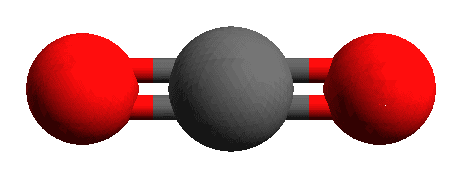
What is the name for the shape shown below?

What is the name for the shape shown below?

What is the name for the shape shown below?

What is the name for the shape shown below?

What is the name for the shape shown below?
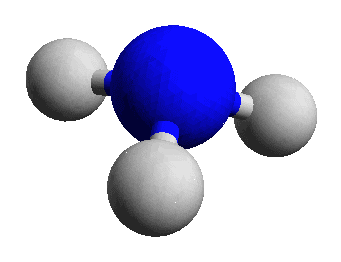
What is the name for the shape shown below?
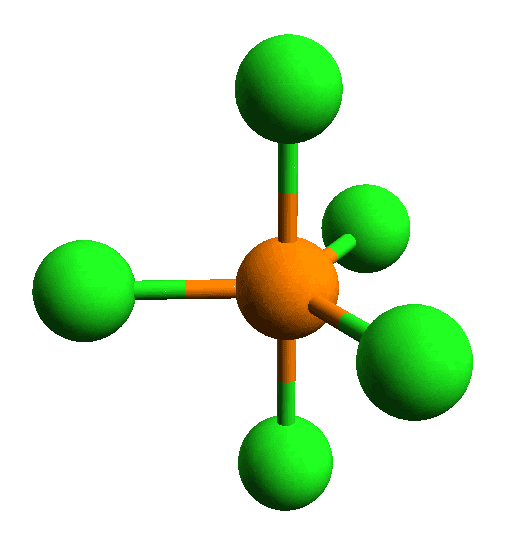
What is the name for the shape shown below?

What is the name for the shape shown below?

What is the name for the shape shown below?

What is the name for the shape shown below?

Hybrid orbitals form only when atoms are covalently bonded to each other.
The overlap of atomic orbitals from different atoms when they bond form ________.
All hybrid orbitals on an atom have the same energy and shape.
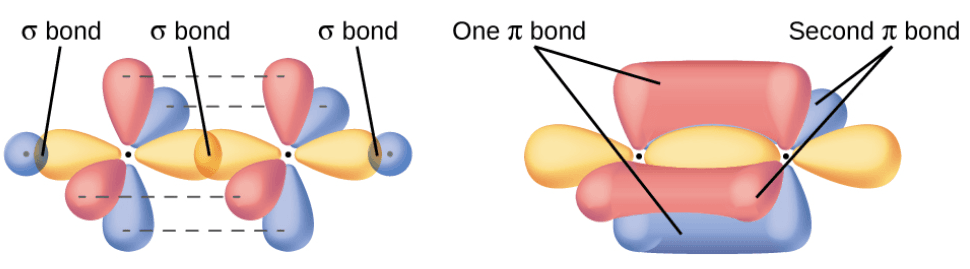
Bonds that form from the overlap of orbitals along the axis of the chemical bond are called ____.
Bonds that form from the overlap of orbitals perpendicular to the axis of the chemical bond are called ____.
The hybridization of one s orbital and one p orbital on an atom is called ________.
The hybridization of one s orbital and two p orbitals on an atom is called ________.
The hybridization of one s orbital and three p orbitals on an atom is called ________.
The overlap of one σ bond and one π bond results in the formation of ____.
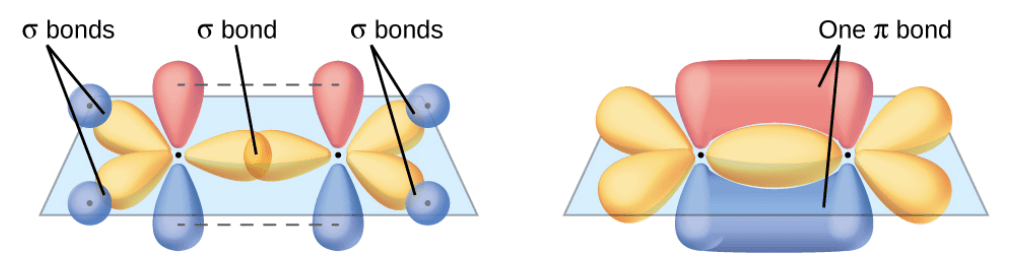
The overlap of one σ bond and two π bonds results in the formation of ____.
For the following description of a molecule, choose the correct electron geometry and molecular geometry: four electron domains, two lone pairs.
For the following description of a molecule, choose the correct electron geometry and molecular geometry: five electron domains, one lone pair.
For the following description of a molecule, choose the correct electron geometry and molecular geometry: six electron domains, one lone pair.
For the following description of a molecule, choose the correct electron geometry and molecular geometry: four electron domains, zero lone pairs.