Understand that more than one algorithm can be used to solve the same problem. Compare the efficiency of algorithms explaining how some algorithms are more efficient than others in solving the same problem.
Track each student's skills and progress in your Mastery dashboards
Give this quiz to my class
Q 1/12
Score 0
Which of these can help determine the efficiency of an algorithm?
45
That it uses a lot of iteration
The time it takes to complete
The amount of comments
That it uses less selection
Q 2/12
Score 0
What impact does the efficiency of an algorithm have on the CPU?
45
The CPU can be confused by simple algorithms
More efficient algorithms requires more processing time
More efficient algorithms require less processing time
The CPU can not process inefficient algorithms
12 questions
Q.
Which of these can help determine the efficiency of an algorithm?
1
45 sec
3.1.3.a
Q.
What impact does the efficiency of an algorithm have on the CPU?
2
45 sec
3.1.3.a
Q.
What does the concept of time efficiency mean?
3
45 sec
3.1.3.a
Q.
Which algorithm is the most effective for searching large data sets?
4
45 sec
3.1.3.a
Q.
Which algorithm in the least effective for searching large sorted data sets?
5
45 sec
3.1.3.a
Q.
Why is using subroutines (functions and methods) an efficient way of writing code?
6
45 sec
3.1.3.a
Q.
What can you do to avoid writing repeated lines of code?
7
45 sec
3.1.3.a
Q.
What does the acronym DRY stand for?
8
45 sec
3.1.3.a
Q.
Why should you try and avoid using unnecessary variables?
9
45 sec
3.1.3.a
Q.
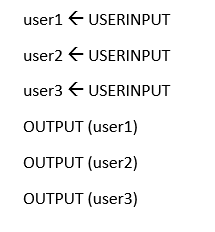
How could this algorithm be made more efficient?
10
45 sec
3.1.3.a
Q.
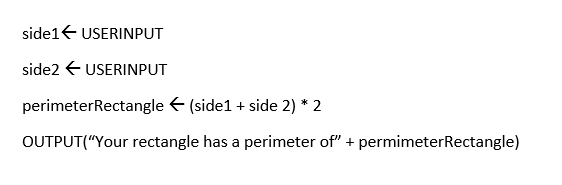
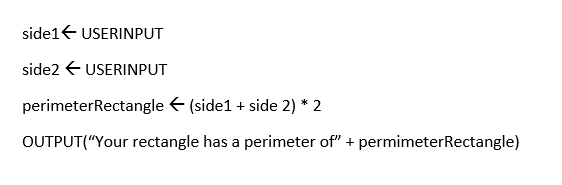
How could this algorithm be made more efficient if you wanted to work out different shape angles repeatedly?
11
45 sec
3.1.3.a
Q.
Why would this line of code be more efficient: OUTPUT("Your rectangle has a perimeter of", ( side1 + side 2) * 2)