Loading...

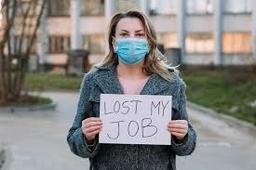
UNEMPLOYMENT DURING COVID-19
Quiz by Rasyid Ramlan
Customize this quiz to suit your class
Instantly translate to 100+ languages
Tag the questions with any skills you have. Your dashboard will track each student's mastery of each skill.
Give this quiz to my class
 Economy of Southeast Asia Even prior to the penetration of European interests, Southeast Asia was a critical part of the world trading system. A wide range of commodities originated in the region, but especially important were such spices as pepper, ginger, cloves, and nutmeg. The spice trade initially was developed by Indian and Arab merchants, but it also brought Europeans to the region. First the Portuguese, then the Dutch, and finally the British and French became involved in this enterprise in various countries. The penetration of European commercial interests gradually evolved into annexation of territories, as traders lobbied for an extension of control to protect and expand their activities. As a result, the Dutch moved into Indonesia, the British into Malaya, and the French into Indochina. Europe’s interest and activity in the region was further enhanced by the opening of the Suez Canal, the development of telegraphic communications, the adoption of steam shipping, and the prospects for trade with China. In the case of Malaya, the gradual diffusion of British administration provided systems of law and order and of taxation and allowed for the gradual development of infrastructure, principally reliable transport systems. This environment attracted Chinese immigrants, and the growth of the tin mining industry soon followed. Later rubber plantations were established, which brought about still further immigration. Similar developments took place in Burma (Myanmar), Vietnam, and Indonesia. In Siam (Thailand) during the second half of the 19th century, a rapid expansion of Western enterprise occurred, though not by colonization. Both British and American firms began trading in the region. The impact of the Western activity was essentially to remove trade from what had been a Chinese monopoly and to emphasize the export of a single commodity, rice. Established indigenous textile and sugar-processing industries were replaced by imports, and the economy slowly became dependent on rice exports. The Philippines gradually developed a plantation farming system under Spanish and later American influence, although rice, sugar, and tobacco continued to be produced by small-scale growers and processed by Chinese enterprises until the mid-19th century. The incorporation of Southeast Asia into the world economy had a major impact on the distribution of the region’s economic development, and it created more uneven patterns of population growth and economic activity. It also brought about a stronger sense of class distinction and resulted in a larger discrepancy between the wealthy and poor. The worldwide economic depression of the 1930s severely affected the commercialized areas most dependent on the world economy. Unemployment rose, and the period produced the seeds of political change and activism that culminated in the independence of most of the region’s countries after World War II. Since the 1950s the economic development strategies of virtually all the capitalist Southeast Asian states have emphasized urban industrialization, while agricultural development generally has been viewed as subsidiary to industrial growth. These strategies have met with mixed success. Indeed, the trading pattern of the region by and large has continued to be one of producing and exporting raw materials and importing manufactured goods. Only Singapore has reached an advanced level of industrialization, in the process becoming one of the world’s great centers of industry and commerce. There is great disparity in development rates within the region, especially between the member and nonmember countries of the Association of Southeast Asian Nations (ASEAN). Those belonging to this grouping—Brunei, Indonesia, Malaysia, the Philippines, Singapore, and Thailand—generally have experienced significant economic development since the mid-1960s; the exception has been the Philippines, the economy of which has grown at a much slower rate. Development has been extremely slow or nonexistent in the non-ASEAN countries of Cambodia, Laos, Myanmar, and Vietnam, and these are among the poorest nations in the world.Use this to make a quiz: Excellent! Using an online game is a fantastic way to boost engagement. Here is a list of scenarios you can use. I've designed them to be clear and concise for a game format. I've also added a few "challenge" scenarios at the end that could fit more than one theory to really get your students thinking critically. You can copy and paste these right into platforms like Kahoot!, Blooket, or Gimkit. --- ### **Scenarios for Your Online Game** **Instructions for Students:** Read the scenario and choose the theory that BEST explains why the crime was committed. 1. **Scenario:** An accountant has been secretly stealing small amounts of money from his clients' accounts for years. He has a system that he believes is foolproof, and he has calculated that the potential reward is worth the small risk of being caught. * **Best Fit:** Choice Theory 2. **Scenario:** A high school student who lives in a neighborhood with high unemployment and rundown buildings begins to vandalize property with a group of friends who feel ignored by the city. * **Best Fit:** Social Disorganization Theory 3. **Scenario:** A young woman desperately wants the new smartphone and designer clothes she sees all over social media, but she has no way to afford them. She decides to start stealing packages from front porches to get what she wants. * **Best Fit:** Strain Theory 4. **Scenario:** A man is arrested for assault after getting into a fight at a restaurant. His family tells the police that he has always had a "short fuse" and has struggled with anger and aggression since he was a child, a trait that his father also had. * **Best Fit:** Biological/Psychological Theory 5. **Scenario:** The youngest child in a family of well-known burglars is caught breaking into a house. When questioned, he says he learned everything he knows from watching and helping his older siblings. * **Best Fit:** Learning Theory 6. **Scenario:** A corporate executive is caught illegally dumping toxic waste to save his company money. He decided that the cost of proper disposal was too high and the chance of being caught was low. * **Best Fit:** Choice Theory 7. **Scenario:** After her parents' messy divorce, a teenager starts skipping school and shoplifting. A counselor suggests her actions stem from untreated anxiety and depression. * **Best Fit:** Biological/Psychological Theory 8. **Scenario:** In a community where the local factory closed down and police presence is low, a group of residents forms a vigilante group to "patrol" the streets, often resorting to violence and intimidation. * **Best Fit:** Social Disorganization Theory --- ### **Challenge Scenarios (Could fit multiple theories)** 9. **Scenario:** A college student starts selling forged concert tickets to pay for their tuition. They learned how to make the fake tickets from a video online and felt it was the only way to stay in school. * **Possible Answers:** Strain Theory (can't afford tuition), Learning Theory (learned online), Choice Theory (weighed the risks). 10. **Scenario:** A person living on the streets with no job prospects is arrested for stealing a warm coat from a department store during a blizzard. * **Possible Answers:** Strain Theory (no means to achieve the goal of being warm), Choice Theory (made a rational decision to steal to survive). These scenarios should give you great content for your game. Have fun with it, and let me know if you need any more!THE BATTLE OF THE PHILIPPINE SEA Occured in the Philippine Sea and Marinas The battle engaged the bulk of thepagan American forces, and prevented the Japanese from reinforcing, their fleet in the •Marianas. •A month after, the Japanese LOST THEIR 4 best aircraft carriers in the Battle of Midway, an island northwest of Pearl "Harbor. 1. The Batle of the Philipine Sea lasted just one day June 19- June 20 1944 3. is also called the "Marianas Turkey Shoot” The Battle of the Coral Sea The Coral Sea is Between New Guinea and Australia The Japanese Were Trying to Attack Australia! The U.S. Navy and the Japanese Navy Fought! Nobody Won! U.S. Was Able to STOP the Attack on Australia! (Victory!) The American fleet defeated the Japanese. American planes bombarded Japanese installation in Manila from the air. Air strikes were also carried out in the Visayas. Battle of Okinawa: Battle Details The attack on Okinawa took heavy toll on both sides of the fighting... The Americans lost 7,373 men killed and 32,056 wounded on land. At sea, the Americans lost 5,000 killed and 4,600 wounded. The Japanese lost 107,000 killed and 7,400 men taken prisoner. The Japanese may have lost another 20,000 dead as a result of American tactics whereby Japanese troops were incinerated where they fought. The Americans also lost 36 ships. 368 ships were also damaged. 763 aircraft were destroyed. The Japanese lost 16 ships sunk and over 4,000 aircraft were lost. battle facts -the japanese launched fierce kamikaze attacks l-arge amouunts of civillian deaths -japanese soldiers using civilians as human shields Americans ended with more triumphs in the battles like in: General MacArthur and the Allies next turned to the Island of Iwo Jima The island was critical to the Allies as a base for an attack on Japan It was called the most heavily defended spot on earth Allied and Japanese forces suffered heavy casualties IWO JIMA American soldiers plant the flag ol the Island of Iwo Jima after their victory Battle of Leyte Gulf "Second Battle of the Philippine Sea". Time: October 23 - 26, 1944 during WW. Location: Leyte Gulf in Philippines (East coast), Philippine islands of Leyte, Samar, and Luzon. Largest naval battle in WWII. Leyte was secured and was liberated from the hands of the Japanese Americans decided to launch their attack in Leyte since the weak side of the Japanese fleet was in Visayas. Heavy bombing at the Leyte beaches cleared the way for the landing in Palo, Leyte. Leading the American troops were General Douglas MacArthur and President Osmeña, who took over after the death of President Quezon in Saranak Lake in New York. the battle for the liberation of manila The commonwealth government capital was transferred from tacloban to Manila. Manila once again became the seat of the national leadership. ON july 4, 1945, general macarthur announced the total liberation of the Philippines • The Commonwealth government capital was transferred from Tacloban to Manila. Manila once again became the seat of the national leadership. On July 4, 1945, General MacArthur announced the total liberation of the Philippines. Americans surprised the Japanese with the landing of troops in Lingayen Gulf in Pangasinan. • The Filipino guerillas had already cleared the area and neutralized many of the Japanese forces. The first target was the UST, which was used by the Japanese as a camp for civilian prisoners of war, and they were able to free them. • More than 1000 POWs from Bataan and Corregidor were also freed from the Bilibid Prisons. • The battle of Manila was recorded as the fiercest urban fighting in the entire Pacific War. WATERLOO DAILY COURIER-NEWSPAPER “PEACE! WAR ENDS; JAPANESE ACCEPT ALLIED TERMS. ON EMPEROR" On August 6, due to persistent refusal of Japan to yield, another atomic bomb was dropped in the shipbuilding city of Nagasaki. On August 15, V-J Day (Victory in Japan), Emperor Hirohito finally admitted defeat and on September 3, 1945 the document of surrender was signed on board of the U.S. battleship Missouri in Tokyo Bay. With the liberation of the Philippines, the Americar troops moved on to finally end the war in Asia. The Japanese cities of Tokyo, Osaka, Nagoya and Kure were bombed. In July 26, the allies demanded surrender but the Japanese continued to hold on to their belief that surrender is a dishonor. Atomic bomb was dropped on the populous city of Hiroshima, 60% of the city was destroyed. It was estimated that there were more than 80 000 people died on the spot and more than 37 000 suffered severe injuries. Today, the HIROSHIMA SHRINE serves as a reminder of th horrors of war and the need to preserve PEACE in the world. THE POSTWAR PHILIPPINE COMMONWEALTH-• Philippine Commonwealth resumed. Osmeña was confronted with a war - ravaged country with no financial resources for PROBLEMS • Poverty • Destruction of Properties • Unemployment • Price Increase • Hoarding • Graft and Corruption HINDRANCES -Rehabilitation of INDUSTRIES COULD NOT BE DONE BECAUSE OF LACK OF FUND -RAILWAYS WERE DESTROYED THAT LED TO SLOW PRODUCTION AND TRANSPORTATION SOLUTION -PCAU (Philippine Civil Affairs Unit) was established by MacArthur to provide emergency relief in areas liberated by the Americans. - It organized food distribution centers. CHALLENGES TO INDEPENDENCE • On April 30, 1946, the Philippine the US President. BIASED AGREEMENTS: Rehabilitation or the Tydings Act of 1946, passed by the US Congress, was approved by Commission • This Act created the US Philippine War Damage The Act also provided for the transfer of $100,000,000 surplus property of the United States to the Philippines. The Philippine Armed Forces received large quantities of valuable military equipment and supplies. BIASED AGREEMENTS: • The United States Congress offered $800 million for post World War Il rebuilding funds if the Bell Trade Act was ratified by the Philippine Congress Parity rights granting U.S. citizens and corporations rights to Philippine natural resources equal to (in parity with) those of Philippine citizens The Philippines used to celebrate its Independence Day on July 4, and not June 12, by virtue of the Truman Proclamation in 1946. In the early 1960s, however, the Philippine Historical Association lobbied to bring back June 12 as our Independence Day. In 1962, President Diosdado Macapagal issued a proclamation to make the change official. DECLARATION OF PHILIPPINE INDEPENDENCE • On July 4, 1946, the Americans granted independence to the Philippines.UnemploymentUnemployment and the Labour MarketUnemployment Chap 13 Lesson 3unemployment and education Unemployment Practice Quiz