Loading...


unemployment in different countries
Quiz by Евсеева Юлия Игоревна
Customize this quiz to suit your class
Instantly translate to 100+ languages
Tag the questions with any skills you have. Your dashboard will track each student's mastery of each skill.
Give this quiz to my class
which country has the highest unemployment
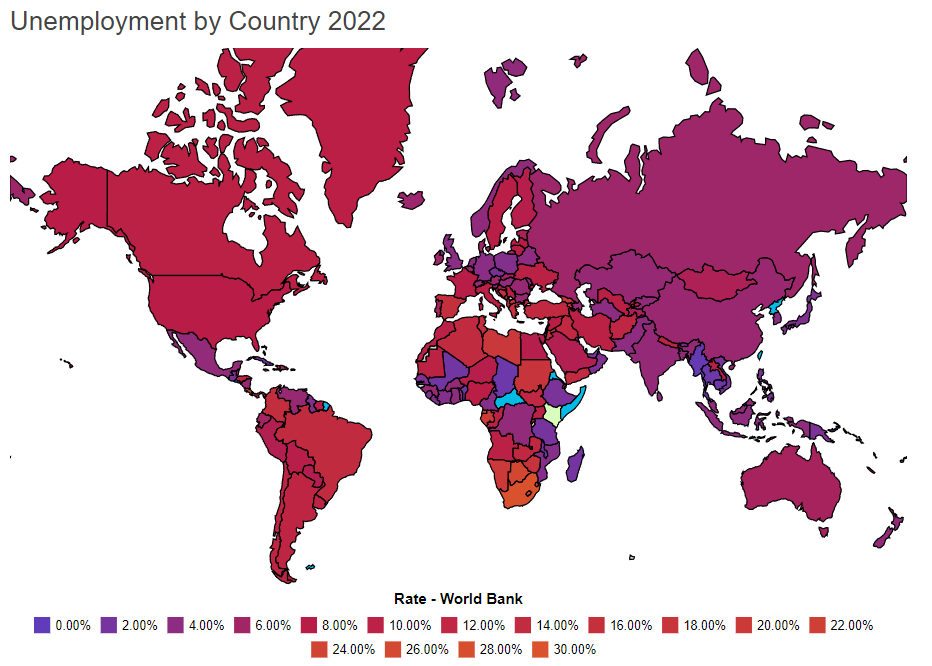
South Korea
Kosovo
South Africa
Botswana
In the United States, the Bureau of Labor Statistics uses 7 different methods to calculate the unemployment rate.
which country has the highest unemployment
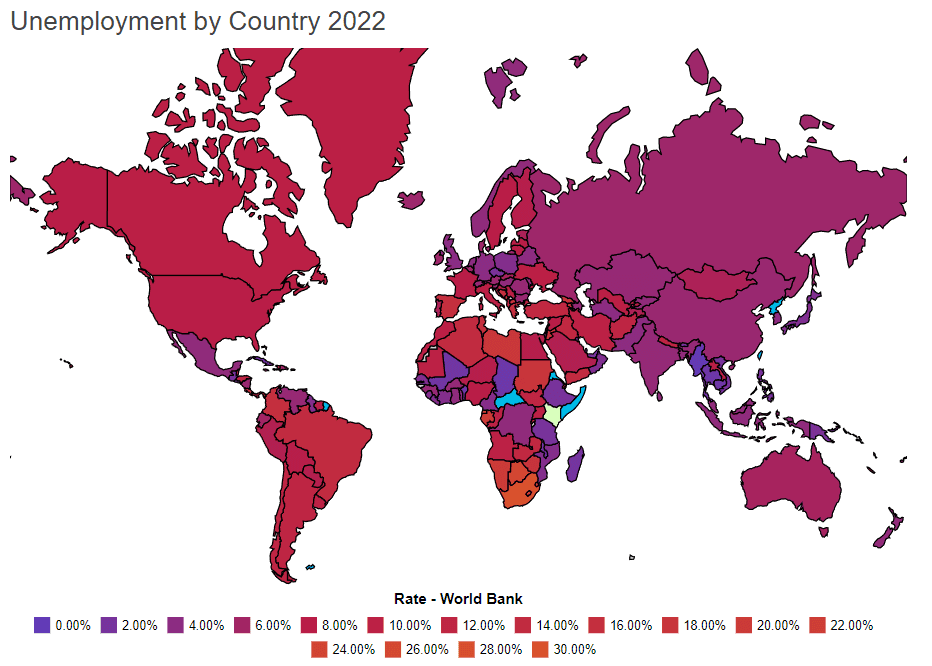
In the United States, the Bureau of Labor Statistics uses 7 different methods to calculate the unemployment rate.
Unemployment has many positive consequences
The adverse effects of unemployment do not include
A low unemployment rate does not necessarily indicate that a country's people are living in favorable, sustainable conditions.

depending on the methodology, the unemployment rate is the same
Kahoot! was it better?
Create me a multiple choice test questions with 4 options on the following topic:Consumer Education for Different Audience 1. Children and Youth: - Focus: Building foundational knowledge about basic consumer concepts, making safe choices, understanding money and value, and recognizing scams and unsafe situations. 2. Teens and Young Adults: - Focus: Building financial literacy, responsible debt management, understanding contracts and agreements, responsible technology use, online safety, and consumer rights. 3. Working Adults and Families: - Focus: Managing budgets, making informed purchasing decisions, understanding credit and debt, finding consumer protection resources, and navigating complex financial products (mortgages, insurance, investments). 4. Seniors: - Focus: Protecting themselves from scams and fraud, understanding common consumer issues like telemarketing, identity theft, and online scams, managing medications and healthcare costs, and accessing community resources. 5. Special Populations: - Focus: Adapting consumer education programs to the specific needs of people with disabilities, immigrants, refugees, and other marginalized communities. 6. Business and Industry:- Focus: Understanding ethical marketing practices, complying with consumer protection laws, and providing clear and accurate information to consumers. 7. Policymakers and Regulators: - Focus: Understanding consumer needs, developing effective consumer protection laws, enforcing regulations, and ensuring a fair and competitive marketplace. Adapting consumer education programs for children, teens, and seniors requires tailoring content and delivery methods to their unique needs and learning styles. Children (Ages 5-12): - Understanding the concept of money: Teaching children about saving, spending, and the value of money. - Developing basic budgeting skills: Helping children learn to make choices about how to spend their allowance or pocket money. EFFECTIVE STRATEGIES •Focus on basic concepts: Introduce core concepts like saving, spending, and budgeting in a fun and engaging way. Use simple language and relatable examples. •Real-life scenarios: Use age-appropriate scenarios to illustrate financial concepts, like buying toys or snacks. •Parental involvement: Encourage parent participation and provide resources to help them reinforce lessons at home. Teens (Ages 13-18): - Building budgeting and financial planning skills: Teaching teens how to manage their money, set financial goals, and plan for the future. - Navigating the digital marketplace: Equipping teens with the knowledge and skills to make safe and informed online purchases, understand digital marketing, and protect themselves from scams. EFFECTIVE STRATEGIES • Practical skills: Focus on skills relevant to teens, like managing money for social activities, saving for college, and understanding credit cards. • Digital literacy: Address the growing influence of online shopping, social media advertising, and financial scams. • Real-world applications: Connect financial concepts to real-life decisions teens make, like choosing a part-time job or making purchases online. Seniors (Ages 65+) - Managing retirement savings and healthcare costs: Providing information and resources on retirement planning, Medicare and Medicaid, and other healthcare options. - Navigating the digital world: Offering technology training and resources to help seniors access online services and information safely and securely. EFFECTIVE STRATEGIES • Addressing specific concerns: Focus on topics relevant to senior citizens, like retirement planning, managing healthcare expenses, and avoiding scams. • Clear and concise communication: Use simple language and visual aids to ensure easy understanding. • Social interaction: Create opportunities for seniors to share experiences and learn from each other. Teaching Financial Literacy in school and Communities In Schools: Curriculum Integration: Financial literacy concepts can be seamlessly integrated into existing subjects, making learning more relevant and engaging. - Math: Budgeting exercises, calculating interest rates, analyzing financial data, and understanding compound interest are all natural applications of math skills. - Social Studies: Exploring the history of money, financial institutions, economic systems, and the impact of financial decisions on society provide valuable context. - Economics: Discussions about supply and demand, inflation, investment, and the role of consumers in the economy enhance financial literacy. Dedicated Courses: Offering elective courses or workshops specifically focused on personal finance provides deeper dives into crucial topics. - Personal Finance: Cover budgeting, saving, investing, credit, debt management, and insurance. - Entrepreneurship: Introduce concepts like business planning, marketing, financial forecasting, and managing cash flow. In Communities: Community Centers and Libraries: Workshops, seminars, and classes tailored to adults and families provide accessible learning opportunities. - Financial Planning: Cover budgeting, retirement planning, debt management, and estate planning. - Homeownership: Provide guidance on buying, selling, and maintaining a home. - Consumer Protection: Educate individuals about their rights and how to avoid scams. Partnerships with Financial Institutions: Collaborations with banks, credit unions, and financial advisors offer valuable resources, workshops, and financial literacy programs. Consumer Education for Low-Income and Vulnerable Populations Low-income refers to individuals or households with limited financial resources, typically below a certain threshold. Low-income individuals may face challenges like: 1. Limited education and job opportunities 2. Poor living conditions and housing 3. Food insecurity and malnutrition Causes of low income: 1. Unemployment or underemployment 2. Low-paying jobs or minimum wage 3. Limited education or skills 4. Single parenthood or large family size Vulnerable population'' is a term that is used to describe a group of people who possess some sort of disadvantage. elderly people, people with low incomes, homeless people, people in prison, migrant workers, pregnant women, Family Consumer Education: Managing Household Finances and Resources Financial literacy is the ability to understand and manage personal finances effectively. 1. Debt Debt is money you spend that isn’t yours. If you borrow money from the bank, use a credit card, or take out a short-term loan, or a payday loan, you are accumulating debt. Good debt is considered money borrowed for things that are absolutely necessary for making a life e.g. a house and for advancing your money-making potential e.g. an education. Bad debt is considered borrowing money or using a credit card to pay for things you don’t need, such as expensive clothes, hi-tech electronics, eating out at restaurants, going on holidays, etc. 2. Saving Saving is an essential part of financial wellness, a secure present, and a happy future. 3. Budgeting Budgeting is the life skill of planning and managing your money. By understanding exactly where your money goes every month, you are empowered to create an actionable plan by which you can spend less, by curtailing those unnecessary expenses and saving more for the things you need and want. 4. Investing Investing is all about creating and growing the wealth you need to enjoy a financially secure and happy future. It’s about putting your money into something that will make you a profit over time, such as property, retirement funds, and unit trusts Integrating Consumer Education into the Home Economics Curriculum. Integrating consumer education into the home economics curriculum can provide students with essential skills for making informed choices about their personal finances, food, clothing, and overall well-being. Here are some strategies and ideas for effectively incorporating consumer education: Financial Literacy Budgeting: Teach students how to create and manage a personal budget, including setting financial goals, tracking expenses, and understanding savings. Saving and Investment: Cover the basics of saving, including different saving accounts, and introduce concepts related to investing. Food and Nutrition Food Label Literacy: Engage students in learning how to read and interpret food labels, including nutrition facts and ingredient lists. Grocery Shopping Skills: Teach students how to compare product costs, understand unit pricing, and make healthy, budget-friendly choices while shopping. Clothing and Textile Education Consumer Choices in Clothing:Discuss factors influencing clothing purchases, such as quality, price, and sustainability. Fashion and Trends: Analyze the impact of marketing and advertising on consumer behavior regarding clothing. Sustainable Purchasing Eco-Friendly Choices: Raise awareness about environmentally friendly products and the importance of sustainability in consumer choices. Project-Based Learning - Assign real-life projects where students must apply their knowledge, such as creating a meal plan within a budget, planning a shopping list based on nutrient needs, or evaluating the cost-effectiveness of different products. Technology Integration - Use technology to teach students about online shopping, price comparison websites, and apps that aid budgeting and financial planning. Collaborative Learning Opportunities - Organize team projects where students work together to solve consumer-related problems, emphasizing teamwork and communication skills. Assessment and Reflection - Incorporate assessments that allow students to reflect on what they have learned about consumer education and how they can apply these skills in their daily lives. Problem of unemployment in indiaDATE: Wednesday 8th May, 2024 CLASS: Year 4 SUBJECT: Social Studies TOPIC: Employment Meaning of employment It means having a job or work to do to earn a living. An employed person can take care of himself and provide for his family. Self-employed means working for yourself or doing your personal work. Unemployment means a situation in which a person does not have a job or earn a living. CONSEQUENCES OF UNEMPLOYMENT IN OUR SOCIETY ARE: 1. It brings about hardship. 2. It leads to bad social habit like hard drugs, armed robbery etc. 3. It makes a society to become poorer. 4. It causes insecurity in the society. 5. An unemployed person is a burden to his or her family and the larger society. WAYS OF REDUCING UNEMPLOYMENT Unemployment can be reduced in several ways, some of which are: 1. Setting up more factories, industries and offices where people can get jobs. 2. Encouraging people to be self- employed, rather than looking for government jobs. 3. Encouraging young people to go into farming. 4. Government should create more job opportunities. 5. Government should help small business owners with loans that will help their businesses to grow. 6. Government should provide electricity for businesses. Considerations in the Study of Criminal Justice Inequilty in Canada A key feature of Can Society is inequity, particularly income inequity Top 1% earns 39.1% of income One million children live in low-income households Gender inequality in the workplace costs Canada $150 billion/year Women working full-time earn 74.2 cents for every dollar that full-time male workers make Racism, Prejudice and Discrimination Prejudice: unsubtitled, negative prejudgment of individuals/groups based on ethnicity, religion or race Discrimination: action/decision treats a person/group negatively Racism: prejudice, discrimination or antagonism based on belief that one’s race is superior Racial Profiling: action that relies on stereotypes about race, colour, ethnicity, ancestry, religion, place of origin rather than on reasonable suspicion Racial Profiling Experiences of Women Women- UNiqu experiences within CJS Higher education than ever before Self-report violent victimization is higher among women (85% per 100,000 women versus 67% per 100,000 for men) Experiences of Indigenous Persons Disproportionately represented as both victims and offenders at all stages of the criminal justice system Violent victimization is more than double that of non-indigenous persons (160 vs. 74/1,000) 27% homicide victims in 2009 were indigenous The Legacy of Colonization Many indigenous people live on the margins of Canadian society Pervasive poverty High rates of unemployment Low levels of formal education High death rates (accidents/violence) Often much worse off than non-indigenous persons Residential school system operated by federal government -1880s-1990 150,000 Indigenous children sent to residential schools “60s schoop” Intergenerational impact - residential schools - Truth and Reconciliation Commission Additional Considerations Escalating Costs of the CJS CJS expenditures have increased despite the overall decline in crime rates across the country Rise of the Surveillance Society Life in early 21st century- the pervasiveness of technology, surveillance technology Most citizens do not realize that every day their activities are recorded by video camera while shopping, when standing at a bus stop, even while driving Needs of Crime Victims Physically, Psychologically, emotionally, financially and social Victims can feel worse because of re-victimization Re-victimization: the negative impact on victims of crimes casued by the decisions and actions of criminal justice personnel Canadian Victims Bills of Rights, 2015. Summary Inequality, racism, prejudice and discriantion were intriduced as features of Canadian Society These are often manifested in racial profliing and the racialization of gropus and individuals Addtional consideration in the study of teh criminal juscitce system are The escalating costs of criminal jusicte The question as to whether the Canadian public is getting the “value of money,” The changing boundaries of criminal justice agencies as reflected in the development of multi agency partnerships Additional Consideration in the study of the criminal Justice system are The challenges posed by teh rise of teh surveillance society due to the pervasiveness of technology The challenges faced by crime victims Concerns for the health and wellness of offenders criminal justice professionals and The lack of diversity among criminaTHE BATTLE OF THE PHILIPPINE SEA Occured in the Philippine Sea and Marinas The battle engaged the bulk of thepagan American forces, and prevented the Japanese from reinforcing, their fleet in the •Marianas. •A month after, the Japanese LOST THEIR 4 best aircraft carriers in the Battle of Midway, an island northwest of Pearl "Harbor. 1. The Batle of the Philipine Sea lasted just one day June 19- June 20 1944 3. is also called the "Marianas Turkey Shoot” The Battle of the Coral Sea The Coral Sea is Between New Guinea and Australia The Japanese Were Trying to Attack Australia! The U.S. Navy and the Japanese Navy Fought! Nobody Won! U.S. Was Able to STOP the Attack on Australia! (Victory!) The American fleet defeated the Japanese. American planes bombarded Japanese installation in Manila from the air. Air strikes were also carried out in the Visayas. Battle of Okinawa: Battle Details The attack on Okinawa took heavy toll on both sides of the fighting... The Americans lost 7,373 men killed and 32,056 wounded on land. At sea, the Americans lost 5,000 killed and 4,600 wounded. The Japanese lost 107,000 killed and 7,400 men taken prisoner. The Japanese may have lost another 20,000 dead as a result of American tactics whereby Japanese troops were incinerated where they fought. The Americans also lost 36 ships. 368 ships were also damaged. 763 aircraft were destroyed. The Japanese lost 16 ships sunk and over 4,000 aircraft were lost. battle facts -the japanese launched fierce kamikaze attacks l-arge amouunts of civillian deaths -japanese soldiers using civilians as human shields Americans ended with more triumphs in the battles like in: General MacArthur and the Allies next turned to the Island of Iwo Jima The island was critical to the Allies as a base for an attack on Japan It was called the most heavily defended spot on earth Allied and Japanese forces suffered heavy casualties IWO JIMA American soldiers plant the flag ol the Island of Iwo Jima after their victory Battle of Leyte Gulf "Second Battle of the Philippine Sea". Time: October 23 - 26, 1944 during WW. Location: Leyte Gulf in Philippines (East coast), Philippine islands of Leyte, Samar, and Luzon. Largest naval battle in WWII. Leyte was secured and was liberated from the hands of the Japanese Americans decided to launch their attack in Leyte since the weak side of the Japanese fleet was in Visayas. Heavy bombing at the Leyte beaches cleared the way for the landing in Palo, Leyte. Leading the American troops were General Douglas MacArthur and President Osmeña, who took over after the death of President Quezon in Saranak Lake in New York. the battle for the liberation of manila The commonwealth government capital was transferred from tacloban to Manila. Manila once again became the seat of the national leadership. ON july 4, 1945, general macarthur announced the total liberation of the Philippines • The Commonwealth government capital was transferred from Tacloban to Manila. Manila once again became the seat of the national leadership. On July 4, 1945, General MacArthur announced the total liberation of the Philippines. Americans surprised the Japanese with the landing of troops in Lingayen Gulf in Pangasinan. • The Filipino guerillas had already cleared the area and neutralized many of the Japanese forces. The first target was the UST, which was used by the Japanese as a camp for civilian prisoners of war, and they were able to free them. • More than 1000 POWs from Bataan and Corregidor were also freed from the Bilibid Prisons. • The battle of Manila was recorded as the fiercest urban fighting in the entire Pacific War. WATERLOO DAILY COURIER-NEWSPAPER “PEACE! WAR ENDS; JAPANESE ACCEPT ALLIED TERMS. ON EMPEROR" On August 6, due to persistent refusal of Japan to yield, another atomic bomb was dropped in the shipbuilding city of Nagasaki. On August 15, V-J Day (Victory in Japan), Emperor Hirohito finally admitted defeat and on September 3, 1945 the document of surrender was signed on board of the U.S. battleship Missouri in Tokyo Bay. With the liberation of the Philippines, the Americar troops moved on to finally end the war in Asia. The Japanese cities of Tokyo, Osaka, Nagoya and Kure were bombed. In July 26, the allies demanded surrender but the Japanese continued to hold on to their belief that surrender is a dishonor. Atomic bomb was dropped on the populous city of Hiroshima, 60% of the city was destroyed. It was estimated that there were more than 80 000 people died on the spot and more than 37 000 suffered severe injuries. Today, the HIROSHIMA SHRINE serves as a reminder of th horrors of war and the need to preserve PEACE in the world. THE POSTWAR PHILIPPINE COMMONWEALTH-• Philippine Commonwealth resumed. Osmeña was confronted with a war - ravaged country with no financial resources for PROBLEMS • Poverty • Destruction of Properties • Unemployment • Price Increase • Hoarding • Graft and Corruption HINDRANCES -Rehabilitation of INDUSTRIES COULD NOT BE DONE BECAUSE OF LACK OF FUND -RAILWAYS WERE DESTROYED THAT LED TO SLOW PRODUCTION AND TRANSPORTATION SOLUTION -PCAU (Philippine Civil Affairs Unit) was established by MacArthur to provide emergency relief in areas liberated by the Americans. - It organized food distribution centers. CHALLENGES TO INDEPENDENCE • On April 30, 1946, the Philippine the US President. BIASED AGREEMENTS: Rehabilitation or the Tydings Act of 1946, passed by the US Congress, was approved by Commission • This Act created the US Philippine War Damage The Act also provided for the transfer of $100,000,000 surplus property of the United States to the Philippines. The Philippine Armed Forces received large quantities of valuable military equipment and supplies. BIASED AGREEMENTS: • The United States Congress offered $800 million for post World War Il rebuilding funds if the Bell Trade Act was ratified by the Philippine Congress Parity rights granting U.S. citizens and corporations rights to Philippine natural resources equal to (in parity with) those of Philippine citizens The Philippines used to celebrate its Independence Day on July 4, and not June 12, by virtue of the Truman Proclamation in 1946. In the early 1960s, however, the Philippine Historical Association lobbied to bring back June 12 as our Independence Day. In 1962, President Diosdado Macapagal issued a proclamation to make the change official. DECLARATION OF PHILIPPINE INDEPENDENCE • On July 4, 1946, the Americans granted independence to the Philippines.back up broadband chip device Appliance Application download driverless drone gadget Portable high-tech upload wirelessly afford affordable unaffordable develop developer development developing enable Able to Unable to invent inventor invention inventive perform performance reality real realistic Unreal Unrealistic user-friendly versatile wearable Updated Practical Available Feature Function Plug in Store Screen Addiction Addicted Fake Efficient Autonomous system Accurate Unnatural Pattern Simulate Unemployment Content creator Artistic sector Lose creativity Become less competent Capacity to improvise Surf the net Check Draft Brainstorm ideas Save timeMake three questions based on the passage:"The International Labor Organization says the number of people without jobs is increasing. In its latest update on global employment trends, the agency says projections of the number of unemployed people this year range from 210 million to nearly 240 million people. The report warns that 200 million poor workers are at risk of joining the ranks of people living on less than 2 dollars per day in the past three years. The director general of the International Labor Organization Juan Somavia notes that some countries have taken measures to address the effects of the global crisis. However, he points out that many countries have not done so. And based on past experiences, it takes four to five years after economic recovery for unemployment to return to pre-crisis levels. Mr. Somavia says the International Labor Organization is proposing a global jobs' agreement to deal with unemployment. “Its key objective is to place the center of recovery efforts—measures that would generate high levels of employment and provide basic social protection for the most vulnerable."The International Labor Organization says the number of people without jobs is increasing. In its latest update on global employment trends, the agency says projections of the number of unemployed people this year range from 210 million to nearly 240 million people. The report warns that 200 million poor workers are at risk of joining the ranks of people living on less than 2 dollars per day in the past three years. The director general of the International Labor Organization Juan Somavia notes that some countries have taken measures to address the effects of the global crisis. However, he points out that many countries have not done so. And based on past experiences, it takes four to five years after economic recovery for unemployment to return to pre-crisis levels. Mr. Somavia says the International Labor Organization is proposing a global jobs' agreement to deal with unemployment. “Its key objective is to place the center of recovery efforts—measures that would generate high levels of employment and provide basic social protection for the most vulnerable."Economy of Southeast Asia Even prior to the penetration of European interests, Southeast Asia was a critical part of the world trading system. A wide range of commodities originated in the region, but especially important were such spices as pepper, ginger, cloves, and nutmeg. The spice trade initially was developed by Indian and Arab merchants, but it also brought Europeans to the region. First the Portuguese, then the Dutch, and finally the British and French became involved in this enterprise in various countries. The penetration of European commercial interests gradually evolved into annexation of territories, as traders lobbied for an extension of control to protect and expand their activities. As a result, the Dutch moved into Indonesia, the British into Malaya, and the French into Indochina. Europe’s interest and activity in the region was further enhanced by the opening of the Suez Canal, the development of telegraphic communications, the adoption of steam shipping, and the prospects for trade with China. In the case of Malaya, the gradual diffusion of British administration provided systems of law and order and of taxation and allowed for the gradual development of infrastructure, principally reliable transport systems. This environment attracted Chinese immigrants, and the growth of the tin mining industry soon followed. Later rubber plantations were established, which brought about still further immigration. Similar developments took place in Burma (Myanmar), Vietnam, and Indonesia. In Siam (Thailand) during the second half of the 19th century, a rapid expansion of Western enterprise occurred, though not by colonization. Both British and American firms began trading in the region. The impact of the Western activity was essentially to remove trade from what had been a Chinese monopoly and to emphasize the export of a single commodity, rice. Established indigenous textile and sugar-processing industries were replaced by imports, and the economy slowly became dependent on rice exports. The Philippines gradually developed a plantation farming system under Spanish and later American influence, although rice, sugar, and tobacco continued to be produced by small-scale growers and processed by Chinese enterprises until the mid-19th century. The incorporation of Southeast Asia into the world economy had a major impact on the distribution of the region’s economic development, and it created more uneven patterns of population growth and economic activity. It also brought about a stronger sense of class distinction and resulted in a larger discrepancy between the wealthy and poor. The worldwide economic depression of the 1930s severely affected the commercialized areas most dependent on the world economy. Unemployment rose, and the period produced the seeds of political change and activism that culminated in the independence of most of the region’s countries after World War II. Since the 1950s the economic development strategies of virtually all the capitalist Southeast Asian states have emphasized urban industrialization, while agricultural development generally has been viewed as subsidiary to industrial growth. These strategies have met with mixed success. Indeed, the trading pattern of the region by and large has continued to be one of producing and exporting raw materials and importing manufactured goods. Only Singapore has reached an advanced level of industrialization, in the process becoming one of the world’s great centers of industry and commerce. There is great disparity in development rates within the region, especially between the member and nonmember countries of the Association of Southeast Asian Nations (ASEAN). Those belonging to this grouping—Brunei, Indonesia, Malaysia, the Philippines, Singapore, and Thailand—generally have experienced significant economic development since the mid-1960s; the exception has been the Philippines, the economy of which has grown at a much slower rate. Development has been extremely slow or nonexistent in the non-ASEAN countries of Cambodia, Laos, Myanmar, and Vietnam, and these are among the poorest nations in the world.