Loading...


Unit 3_Places and Locations
Quiz by Nozha department
Customize this quiz to suit your class
Instantly translate to 100+ languages
Tag the questions with any skills you have. Your dashboard will track each student's mastery of each skill.
Give this quiz to my class
Where is the mouse?

It's between the boxes.
It's in front of the box.
It's behind the box.
Where is the chair?
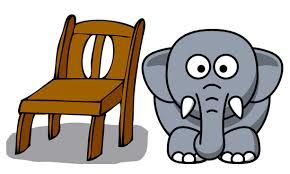
It's behind the elephant.
It's near to the elephant.
It's next to the elephant.
Where is the mouse?

Where is the chair?
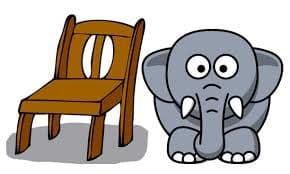
It's on the ....

Where is the black man?
Where is the school?

The ball is ......... the cat and the dog.

Where is the hospital?

Where is the elephant?
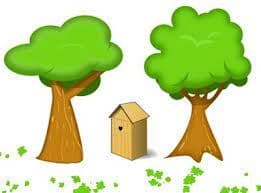
The house is .............. the trees.
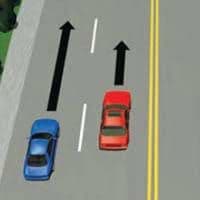
The blue car is .........
The newsstand is .............of the shop.
Mehrabad Airport is ........... Ekbatan.
Mellat park is ...................... from Safavieh mall.
Where is the cinema?
It's ........ the corner.
Where is the cat?

 To the Lakota, and other indigenous people on North America's Great Plains, the bison was an essential part of their culture ( expressed in the quote on the previous page). The bison provided meat for nutrition, a hide for clothing and shelter, bones for tools, and fat for soap. The bison was also central to their religious beliefs. So, when European settlers hunted the bison nearly to extinction, Lakota culture suffered. Culture is central to a society and the identity of its people, as well as its continued existence. Therefore, geographers study culture as a way to understand similarities and differences among societies across the world, and in some cases, to help preserve these societies. Analyzing Culture All of a group's learned behaviors, actions, beliefs, and objects are a part of culture. It is a visible force seen in a group's actions, possessions, and influence on the landscape. For example, in a large city you can see people working in offices, factories, and stores, and living in high-rise apartments or suburban homes. You might observe them attending movies, concerts, or sporting events. Culture is also an invisible force guiding people through shared belief systems, customs, and traditions. Culture is learned, in that it develops through experiences, and not merely transmitted through genetics. For example, many people in the United States have developed a strong sense of competitiveness in school and business, and believe that hard work is a key to success. These types of elements, visible and invisible, are cultural traits. A series of interrelated traits make up a cultural complex, such as the process of steps and acceptable behaviors related to greeting a person in different cultures. A single cultural artifact, such as an automobile, may represent many different values, beliefs, behaviors and traditions and be representative of a cultural complex. Since culture is learned there are many ways that one generation passes its culture to the next. Children and adults learn traits three ways: • imitation, as when learning a language by repeating sounds or behaviors from a person or television • informal instruction, as when a parent reminds a child to say "please" • formal instruction, as when students learn history in school 132 HUMAN GEOGRAPHY: AP" EDITION CULTURAL COMPLEX OF THE AUTOMOBILE The automobile provides much more than just transportation, as it reflects many values that are central to American culture. Origins of Culture The area in which a unique culture or a specific trait develops is a culture hearth. Classical Greece was a culture hearth for democracy more than 2,000 years ago. New York City was a culture hearth for rap music in the 1970s. Geographers study how cultures develop in hearths and diffuse-or spread-to other places. Geographers also study taboos, behaviors heavily discouraged by a culture. For example, many cultures have taboos against eating certain foods, such as pork or insects. What is considered taboo changes over time. In the United States, marriages between Protestants and Catholics were once taboo, but they are not widely opposed now. Traditional, Folk, and Indigenous Cultures With the beginning of the Industrial Revolution in the late 18th century, modern transportation and communication connected people as never before and led to extensive cultural mixing, especially as cities have grown. The world prior to this time was very different; however, remnants of the past are still evident in our modern cultures. Traditional, folk, and indigenous cultures share some important characteristics and are often grouped together, but they do have some subtle differences. Traditional Culture Recently, the meanings of traditional, folk, and indigenous culture have begun to merge, causing geographers to debate when each should be used. Increasingly, the term traditional culture is used to encompass all three cultural designations. All three types share the function of passing down long-held beliefs, values, and practices and are generally resistant to rapid changes in their culture. Folk Culture The beliefs and practices of small, homogenous groups of people, often living in rural areas that are relatively isolated and slow to change, are known as folk cultures. Like all cultures, they demonstrate the diverse ways that people have adapted to a physical environment. For example, people around the world learned to make shelters out of available resources, whether 3.1: INTRODUCTION TO CULTURE 133 it was snow or mud bricks or wood. However, people used similar resources such as wood differently. In Scandinavia, people used trees to build cabins. In the American Midwest, people processed trees into boards, built a frame, and attached the boards to it. Many traits of folk culture continue today. Corn was first grown in Mexico around 10,000 years ago, and it is still grown there today. While many elements of folk culture exist side by side with modern culture, there are people whose societies have changed little, if at all, from long ago. These people practice traditional cultures, those which have not been affected by modern technology or influences. They often live in remote regions, such as some small tribes in the Amazon rainforest, and have scant knowledge of the outside world. As the lines continue blurring between cultural designations, the Amish of Pennsylvania are often referenced as both folk and traditional culture. Indigenous Culture When members of an ethnic group reside in their ancestral lands, and typically possess unique cultural traits, such as speaking their own exclusive language, they are considered an indigenous culture. Some indigenous peoples have been displaced from their native lands, but still practice their indigenous culture. Native Americans in the United States, such as the Navajo, have kept indigenous cultural practices. First Nations of Canada, such as the Inuit, have also retained their indigenous culture. Globalization and Popular Culture As a result of the Industrial Revolution, improvements in transportation and communication have shortened the time required for movement, trade, or other forms of interaction between two places. This development, known as space-time compression (see Topics 1.4 and 3.6), has accelerated culture change around the world. In 1817, a freight shipment from Cincinnati needed 52 days to reach New York City. By 1850, because of canals and railroads, it took half that long. And by 1852, it took only 7 days. Today, an airplane flight takes only a few hours, and digital information takes seconds or less. Similar change has occurred on the global scale. People travel freely across the world in a matter of hours, and communication has advanced to a point where people share information instantaneously across the globe. The increased global interaction has had a profound impact on cultures, from spreading English across the world to instant sharing of news, events and music. Globalization specifically refers to the increased integration of the world economy since the 1970s. The process of intensified interaction among peoples, governments, and companies of different countries around the globe has had profound impacts on culture. The culture of the United States is intertwined with globalization. Through the influence of its corporations, Hollywood movies, and government, the United States exerts widespread influence in other countries. But other countries also shape American culture. For example, in 2019, the National Basketball Association included players from 38 countries or territories. When cultural traits- such as clothing, music, movies, and types of 134 HUMAN GEOGRAPHY: AP. EDITION businesses-spread quickly over a large area and are adopted by various groups, they become part of popular culture. Elements of popular culture often begin in urban areas and diffuse quickly through globalization processes such as the media and Internet. These elements can quickly be adopted worldwide, making them part of global culture. People around the world follow European soccer, Indian Bollywood movies, and Japanese animation known as anime. With people in many nations wearing similar clothes, listening to similar music, and eating similar food, popular cultural traits often promote uniformity in beliefs, values, and the cultural landscape across many places The cultural landscape, also known as the built environment (see Topic 3.2), is the modification of the environment by a group and is a visible reflection of that group's cultural beliefs and values. Traditional Culture to Popular Culture Popular culture emphasizes trying what is new rather than preserving what is traditional. Many people, especially older generations or those who follow a folk culture, openly resist the adoption of popular cultural traits. They do this by preserving traditional languages, religions, values, and foods. While older generations often resist the adoption of popular culture, they seldom are successful in keeping their traditional cultures from changing, especially among the young people of their society. One clash between popular and traditional culture is occurring in Brazil. As the population expands to the interior of the rain forest, many indigenous cultures, like the Yanamamo tribe, have more contact with outside groups. Remaining isolated by the forest is becoming increasingly difficult as many young people from the indigenous cultures become exposed to popular culture and begin to integrate into the larger Brazilian society. As the young people leave their communities, they are more likely to accept popular culture at the expense of their indigenous cultural heritage, which threatens the very existence of their folk culture. Traditional culture typically exhibits horizontal diversity, meaning each traditional culture has its own customs and language that makes it distinct from other culture groups. Yet, people people within each group are usually homogeneous, or very similar to each other. By contrast, popular culture typically exhibits vertical diversity, meaning that modern urban societies are usually heterogeneous, or exhibiting differences, within the society and usually contain numerous multiethnic neighborhoods. However, on a global scale popular cultures are relatively similar with the same type of malls, shops, fast food, and clothing. Urban global culture centers are not identical, yet, global cities often do not have as much horizontal diversity across space as folk cultures. 3.1: INTRODUCTION TO CULTURE 135 COMPARING TRADITIONAL AND POPULAR CULTURE Trait Traditional Culture Popular or Global Culture Society • Rural and isolated location • Urban and connected location • Homogeneous and • Diverse and multiethnic indigenous population population • Most people speak an • Many people speak a global indigenous or ethnic local language such as English or language Arabic • Horizontal diversity • Vertical diversity Social • Emphasis on community and • Emphasis on individualism and Structure conformity making choices • Families live close to each • Dispersed families other • Weakly defined gender roles • Well-defined gender roles Diffusion • Relatively slow and limited • Relatively rapid and extensive • Primarily through relocation • Often hierarchical • Oral traditions and stories • Social media and mass media Buildings and • Materials produced locally, • Materials produced in distant Housing such as stone or grass factories, such as steel or glass • Built by community or owner • Built by a business • Similar style for community • Variety of architectural styles • Different between cultures • Similar between cities • Traditional architecture • Postmodern / contemporary architecture Food • Locally produced • Often imported • Choices limited by tradition • Wide range of choice • Prepared by the family or • Purchased in restaurants community Spatial Focus • Local and regional • National and global Artifacts, Mentifacts, and Sociofacts Whether a cultural attribute is considered traditional, folk, indigenous, or popular in nature, it is valuable to differentiate between elements of culture that can be seen and those that can not. There are artifacts that comprise the material culture, which consists of tangible things, or those that can be experienced by the senses. Art, clothing, food, music, sports, and housing types are all tangible elements of culture. Another element of the study of artifacts is understanding the techniques to use or build a specific artifact. Artifacts can be unique to a particular culture, or can be shared. For example, people of all cultures need to communicate through language, yet there are many groups that possess languages unique to their culture. The ability to read, write and understand the English language is an artifact of importance for much of popular global culture. 136 HUMAN GEOGRAPHY: AP" EDITION Mentifacts comprise a group's nonmaterial culture and consist ofintangible concepts, or those not having a physical presence. Beliefs, values, practices, and aesthetics (pleasing in appearance) determine what a cultural group views as acceptable and desirable. Mentifacts can also be unique or shared. People of many cultures possess an belief in one or many deities, and often the deities are unique to that culture. The belief in a god is a mentifact-the religious building or symbols are artifacts. Cultural groups also possess sociofacts, which are the ways people organize their society and relate to one another. Taken altogether, people tend to see the whole of their culture as greater than the sum of its individual parts. Sociofacts are embodied through families, governments, sports teams, religious organizations, education systems, and other social constructs. As with artifacts and mentifacts, sociofacts may also be unique or similar to other societies. Families are the foundations of most societies, yet what constitutes the structure of a family may vary widely between cultural groups. For example, Western cultures tend to view the nuclear family, consisting of the parents and their children as the basic family unit. By contrast, in many Western African cultures the norm is the extended family, consisting of several generations and other family members such as cousins living under one roof.Make mcq quiz with 4 option in which one is correct -'10 Basis of Material Science • .....;;;";;;"~~;;,,;;,,,,;.;.,,;;,,,;,,;.;,.,------------ 6. Temporary materials: Some materials are meant to be placed in the oral cavity for a short period of time for different reasons. • Temporary crowns: While a permanent crown is prepared in the dental laboratory, the patient must wait for few days before it can be fabricated and cemented into place. Does patient experience any problems during this time period? If the tooth is vital (the pulp is alive), the patient is likely to experience pain and sensitivity while eating and drinking, also it looks unesthetic. What can be done to solve this problem? A temporary crown is placed before the patient leaves the clinic. It is constructed and luted in the same appointment in which the crown preparation is done. Temporary crowns are not very strong or esthetic but they serve adequately till the permanent crown is ready to be cemented. • Temporary restorations: Sometimes it is difficult to decide immediately the best line of treatment for a particular tooth. The exact condition of the pulp may not be obvious to the dentist from the patient's symptoms. A dentist removes all or part of the decay and then places a temporary restoration to have time to observe the behaviour of the pulp or to give the pilip time to heal before deciding the further treatment required. Classification based on Location of Fabrication 4,9 Materials can be classified based on the location of fabrication into: • Direct restorative materials. • Indirect restorative materials Direct restorative materials: They include those materials which are used to restore cavity preparations directly in the oral cavity (Box 1.5). Box 1.5: Examples of direct restorative materials Amalgam, composites, glass ionomer and other materials, which set by chemical reactions in the mouth. Indirect restorative materials: It includes those restorations which must be fabricated outside the mouth, indirectly on a cast/ model/ die, because their processing condition would harm oral tissues. Materials used in the construction of such prosthesis are called indirect restorative materials (Box 1.6). Box 1.6: Examples of indirect restorative materials Gold inlays, crowns of metal, ceramic and polymers, which are processed at elevated temperatures. Some indirect composite restorations can be processed under specific wavelength of light, e.g. Ceramage. Classification based on Longevity of Use 1. Permanent restorations: These restorations are not planned to be replaced for a particular time period. Though they are referred to as permanent, actually they are not, e.g. fillings, crowns, bridges and dentures do not last forever (Fig. 1.5). 2. Temporary restorations: These restorations are planned to be replaced in a short period of time, such as few days to weeks. For ~ Permanent C/) c c -.2 0 c- :;::; Cll co Interim ~ Q; 0 .8ll::1iJ C/) o~ Cll a:: c:=:J Temporary Time period Fig. 1.5: Diagram depicting the time period of use of a restoration. (Arrow in permanent restoration depicts that such restorations are not planned to be replaced for a long period of time.) Introducton to Dental Materials Dental materials Box 1.7: Characteristics of metals 1. High thermal and electrical conductivity 2. Ductility (pure metals are very soft and they can be bent without breaking) 3. Opacity (they do not transmit light) 4. Luster (they have a surface that strongly reflects light and appears bright and shiny) 5. They tend to dissolve to some extent in water or other aqueous solutions, producing cations. 6. All metals are white (actually gray) except for gold, which is yellow, and copper, which is reddish. 7. All metals are solid at room temperature except mercury, which is liquid at room temperature and is used with silver alloys as amalgam. 8. All metals have high melting temperatures because of high strength of the metallic bond that holds the atoms together. 3. Polymers 4. Composites Composites are mixtures of two or more of the first three classes in which the different components remain distinct from one another in the final structure. A common example is composite resin. Fig. 1.7a: Three-dimensional structure of iron (metal) Metals Metals are the oldest of the three classes of materials that have been used as dental materials. Metals are characterized by metallic bonds (Box 1.7) which will be discussed in the next chapter. Metals solidify with their atoms in a regular or crystalline arrangement (see Chapter 2), often in the form of a cube (Fig. 1.7a). example, temporary fillings done in a tooth during root canal treatment, which have to be replaced within 2-4 days during subsequent visits. They are used to protect the tooth and provide function till the final restoration is done. 3. Interim restoration: At times, dental treatment requires "long-term" definite temporary restorations or "interim" restorations. For examle, a 7-year-old child, met with trauma and fractured one of his central incisors. A large composite build- up may serve his immediate requirement until the root formation is completed and a permanent crown is placed. 5 Classification based on the Chemical Nature of the Material These are the atoms that make up a material and the way they are bonded together determine the properties of that materiaLS Weak bonds make for weak materials and vice versa (Table 1.4). Materials can be classified into different categories based on their primary atomic bonds (Fig. 1.6): 1. Metals 2. Ceramics Fig. 1.6: Classification of dental materials based on chemical nature 12 Basis of Material Science Box 1.9: Benefits of ceramics in dentistry 1. Many ceramic oxides are used as pigmenting agents. These oxides produce good range of colors. Due to this characteristic, we are able to match almost any tooth color with good esthetic results. 2. They are inert, i.e. not chemically reactive. This quality provides ceramics with good bio- compatibility. 3. Ceramic materials are translucent, like natural teeth. This translucency gives the ceramic crown a more natural appearance than any other dental material. Fig. 1.7b: Internal arrangement of tetrahedral structure of ceramic (silica) four large oxygen atoms surround smaller silicon atom Ceramics A ceramic is a compound formed by the union of a metallic and a non-metallic element (Box 1.8). Most of these materials are oxides, formed by the union of oxygen with metals such as silicon, aluminum, calcium and magnesium (Fig.1.7b). Ceramics may be simple or complex. Examples of simple ceramics are alumina and silica. Examples of complex ceramics are feldspar (potassium aluminum silicate) and kaolin (hydrated aluminum silicate). Ceramics may be crystalline or non- crystalline (i.e. amorphous). Porcelain is a specific type of ceramic used extensively in dentistry (Box 1.9). Box 1.8: Characteristics of ceramics 1. High melting points. 2. Brittleness, which means they cannot be bent or deformed (no sliding) to any extent without actually cracking and breaking. 3. They are poor conductor of heat and electricity. 4. They are chemically inert. 5. They have excellent esthetic result in terms of matching natural teeth. Fig. 1.8: Stucture of synthetic polymer Polymers They are the latest addition (early to mid- 1900s) to dental materials. Most of the polymers are nowadays synthesized by humans. Polymers are giant, long-chain organic molecules (Fig. 1.8). Polymers are characterized by covalent bonds within each molecule, giving them tremendous strength in a single direction. Try to break a nylon rope by pulling it! They are poor conductors of heat and electri- city. Most polymers have a structure containing thousands of carbon atoms linked together like beads on a string. Others, such as silicone polymers are formed with silicon-oxygen bonds. Introducton to Dental Materials Table 1.4: Characteristics of different materials 13 Characteristics Bond Properties Crystal structure Metals Metallic bonding High strength and hardness, high electrical and thermal conductivity BCC, FCC, or HCP unit cells Ceramics Ionic or covalent bonding, or both High hardness and stiffness, electrically insulating, refractory, and chemically inert Crystalline or amorphous Polymers Covalent bonding Low sensitivity, high electrical resistivity, and low thermal conductivity, strength and stiffness vary widely Amorphous and crystalline Composites Composites are combinations of any of the basic ceramic, metallic and polymeric materials (Box 1.10). Each material that makes up composites is called a phase. Their properties tend to be somewhere between those of their basic constituents and are used to enhance their performance, longevity and handling chracterstics. Box 1.10: Types of composites in dentistry 1. Ceramic - metallic composite: Tungsten carbide bur. 2. Metal - polymer composite: Die materials in dental laboratory. 3. Ceramic - polymer composite: Enamel, dentin, bone and restorative composites. A composite is a kind of "combination" of materials, which compliment each other. The properties lacking in one material are compensated by those of the other material. For example, restorative composite has two phases, namely resin and fillers. Teeth and bones are examples of natural composites. Enamel is a composite of hydroxyapatite (which is a ceramic material) and protein (which is a polymer). EVALUATION OF DENTAL MATERIALS Most manufacturers of dental materials maintain a quality assurance programme (As per international standard like ADA specifications) and materials are thoroughly tested before being released into the market for dental practitioner (Fig. 1.9). Laboratory Evaluations Most ADA/ ANSI specifications involve laboratory tests. The tests performed as per these specifications are useful but they all are performed in vitro, (carried out in the laboratory away from the clinical conditions) which have a lot of limitations in clinical practice.lO Clinical Notes 1. For example, most of the direct restorative materials are tested for their compressive strength but ultimately the material is subjected to a combination of compressive, tensile and shear stresses, which may decide the final success or failure of the material under masticatory load. 2. Similarly upper dentures mostly fracture along the midline because of bending. Hence a bending or transverse strength ~B-a-s-is-o-f-M-a-t-e-ria-I-S~c-ie-n-c-e-------------- ---------. test is far more meaningful for denture base materials than a compression test. Clinical Trials The majority of new materials are subjected to extensive clinical trials normally in co-operation with a dental college or hospital departments prior to their release. CONCLUSION As the number of available materials is going up, it is important that the dentist remains more aware about new products so that their judgement about the selection of material remains successful. Materials which have not been thoroughly evaluated should be avoided, specially with clinical dentistry falling under Consumer Protection Act (CPA). I Research and development I iI Manufacturer/analysis Ideal requirements for clinical use: Thermal, optical, mechanical, chemical, biological Available materials and their properties are evaluated Launch of new I product Choice and selection of material by the dentist Critical assessment based on clinical performance I I H feedback to IFigure 18-11 represents the amount of energy stored as organic material in each trophic level in an ecosystem. The pyramid shape of the diagram indicates the low percentage of energy transfer from one level to the next. On average, 10 percent of the total energy consumed in one trophic level is incor- porated into the organisms in the next. Why is the percentage of energy transfer so low? One reason is that some of the organisms in a trophic level escape being eaten. They eventually die and become food for decomposers, but the energy contained in their bodies does not pass to a higher trophic level. Even when an organism is eaten, some of the molecules in its body will be in a form that the consumer cannot break down and use. For example, a cougar cannot extract energy from the antlers, hooves, and hair of a deer. Also, the energy used by prey for cellu- lar respiration cannot be used by predators to synthesize new bio- mass. Finally, no transformation or transfer of energy is 100 percent efficient. Every time energy is transformed, such as during the reactions of metabolism, some energy is lost as heat. Limitations of Trophic Levels The low rate of energy transfer between trophic levels explains why ecosystems rarely contain more than a few trophic levels. Because only about 10 percent of the energy available at one trophic level is transferred to the next trophic level, there is not enough energy in the top trophic level to support more levels. Organisms at the lowest trophic level are usually much more abundant than organisms at the highest level. In Africa, for exam- ple, you will see about 1,000 zebras, gazelles, and other herbivores for every lion or leopard you see, and there are far more grasses and shrubs than there are herbivores. Higher trophic levels con- tain less energy, so, they can support fewer individuals.A population is a group of organisms that belong to the same species and live in a particular place at the same time. All of the bass living in a pond during a certain period of time make up a pop- ulation because they are isolated in the pond and do not interact with bass living in other ponds. The boundaries of a population may be imposed by a feature of the environment, such as a lake shore, or they can be arbitrarily chosen to simplify a study of the population. The humans shown in Figure 19-1 are part of the pop- ulation of a city. The properties of populations differ from those of individuals. An individual may be born, it may reproduce, or it may die. A population study focuses on a population as a whole—how many individuals are born, how many die, and so on. Population Size A population’s size is the number of individuals that the population contains. Size is a fundamental and important population property but can be difficult to measure directly. If a population is small and composed of immobile organisms, such as plants, its size can be determined simply by counting individuals. Often, though, individ- uals are too abundant, too widespread, or too mobile to be counted easily, and scientists must estimate the number of individuals in the population. Suppose that a scientist wants to know how many oak trees live in a 10 km2 patch of forest. Instead of searching the entire patch of forest and counting all the oak trees, the scientist could count the trees in a smaller section of the forest, such as a 1 km2 area. The scientist could then use this value to estimate the population of the larger area. SECTION 1 OBJECTIVES ● Describe the main properties that scientists measure when they study populations. ● Compare the three general patterns of population dispersion. ● Identify the measurements used to describe changing populations. ● Compare the three general types of survivorship curves. VOCABULARY population population density dispersion birth rate death rate life expectancy age structure survivorship curve FIGURE 19-1 A population can be widely distributed, as Earth’s human population is, or confined to a small area, as species of fish in a lake are. Copyright © by Holt, Rinehart and Winston. All rights reserved. 382 CHAPTER 19 If the small patch contains 25 oaks, an area 10 times larger would likely contain 10 times as many oak trees. A similar kind of sampling technique might be used to estimate the size of the pop- ulation shown in Figure 19-2. To use this kind of estimate, the sci- entist must assume that the distribution of individuals in the entire population is the same as that in the sampled group. Estimates of population size are based on many such assumptions, so all esti- mates have the potential for error. Population Density Population density measures how crowded a population is. This measurement is always expressed as the number of individuals per unit of area or volume. For example, the population density of humans in the United States is about 30 people per square kilome- ter. Table 19-1 shows the population sizes and densities of humans in several countries in 2003. These estimates are calculated for the total land area. Some areas of a country may be sparsely popu- lated, while other areas are very densely populated. Dispersion A third population property is dispersion (di-SPUHR-zhuhn). Dispersion is the spatial distribution of individuals within the popu- lation. In a clumped distribution, individuals are clustered together. In a uniform distribution, individuals are separated by a fairly con- sistent distance. In a random distribution, each individual’s location is independent of the locations of other individuals in the popula- tion. Figure 19-3 illustrates the three possible patterns of dispersion. Clumped distributions often occur when resources such as food or living space are clumped. Clumped distributions may also occur because of a species’ social behavior, such as when animals gather into herds or flocks. Uniform distributions may result from social behavior in which individuals within the same habitat stay as far away from each other as possible. For example, a bird may locate its nest so as to maximize the distance from the nests of other birds. These migrating wildebeests in East Africa are too numerous and mobile to be counted. Scientists must use sampling methods at several locations to monitor changes in the population size of the animals. FIGURE 19-2 TABLE 19-1 Population Size and Density of Some Countries Population size Population density Country (in millions) (in individuals/km2) China 1,289 135 India 1,069 325 United States 292 30 Russia 146 8 Japan 128 337 Mexico 105 54 Kenya 32 54 Australia 20 3 dispersion from the Latin dis-, meaning “out,” and spargere, meaning “to scatter” Word Roots and Origins Copyright © by Holt, Rinehart and Winston. All rights reserved. POPULATIONS 383 The social interactions of birds called gannets, which are shown in Figure 19-3b, result in a uniform distribution. Each gannet chooses a small nesting area on the coast and defends it from other gannets. In this way, each gannet tries to maximize its distance from all of its neighbors, which causes a uniform distribution of individuals. Few populations are truly randomly dispersed. Rather, they show degrees of clumping or uniformity. The dispersion pattern of a population sometimes depends on the scale at which the popu- lation is observed. The gannets shown in Figure 19-3b are uni- formly distributed on a scale of a few meters. However, if the entire island on which the gannets live is observed, the distribution appears clumped because the birds live only near the shore. POPULATION DYNAMICS All populations are dynamic—they change in size and composition over time. To understand these changes, scientists must know more than the population’s size, density, and dispersion. One important measure is the birth rate, the number of births occur- ring in a period of time. In the United States, for example, there are about 4 million births per year. A second important measure is the death rate, or mortality rate, which is the number of deaths in aMarine and Coastal Processes.What are the hazards that usually occur along marine and coastal areas? Coastal processes, such as waves, tides, sea level changes, crustal movement, and storm surges will result to coastal erosion, submersion, and saltwater intrusion. Coastal Erosion. Coastal erosion is the wearing down of the coastlines by the movement of wind and water. It is not a constant process; instead, the rate of erosion depends on other events such as cyclones. When cyclones occur along coastal areas, the winds and waves carry the sediment away from the shoreline. Shorelines play an important role to society. They are used in transportation, fishing, and tourism. Therefore, preventing coastal erosion is of utmost priority. There are three main classifications of stabilizing the shoreline: hard stabilization, soft stabilization, and retreat. 1. Hard stabilization is done by building structures that will slow down the erosion on areas that are prone to erosion. Examples of hard stabilization structures are jetties, sea walls, and breakwaters. Though they may slow down the erosion in one area, it may hasten the erosion in other areas. 2. Soft stabilization includes the process of beach nourishment, wherein sand from an offshore location is brought to an area with a receding shoreline. It does not make use of structures like the ones used in hard stabilization. 3. Retreat is the option taken by residents near areas where coastal erosion is already severe. At this point, the authorities no longer attempt to save the shoreline but rather limit the amount of human interference in the area. Submersion. Coastal erosion happens because of the interaction of the winds and waves on the shoreline. Submersion, on the other hand, happens because of the changes in the sea level, specifically, when it rises dangerously above the normal level. This is all due to the increase in the global temperature, which, in turn, melts the glacial deposits and increases the overall sea level. Another factor that may cause submersion is the vertical movement of the plates. Landmasses can be uplifted, which can also cause changes in the sea level. It can also be caused by tsunamis and storm surges. Submersion will most likely occur in reclaimed lands. These are the areas that were originally part of oceans, riverbeds, or lakebeds. They are low-lying flatlands, so even a small rise in sea level can cause great damage on the land. To prevent this from happening not only in reclaimed lands but also in coastal areas, a hard stabilization technique is used. Sea walls are built along the coastline to protect the land from being easily flooded. Aside from sea walls, dikes can also help prevent flooding. The government can also upgrade the infrastructures built in coastal areas, regenerate mangroves, or relocate the people. There are also other proposed strategies to mitigate coastal submersion, such as imposing of setback policies and construction regulations and creating adaptive plans for coastal management. Saltwater Intrusion. In coastal areas where there is an interaction between saltwater and fresh water, saltwater intrusion is one of the hazards that are evident in that area. Saltwater intrusion is the movement of saltwater into the freshwater aquifer. The natural flow is that the fresh water, which is less dense, moves towards the denser saltwater. But if the fresh water is being withdrawn faster than it is being replenished, then there will be a change in pressure and saltwater intrusion will occur.There are a few ways of preventing saltwater intrusion. One is to stop using the well where fresh water has been depleted and let the groundwater replenish naturally via the water cycle. The other method is to build two wells: a pumping well-built farther inland and an injection well-built closer to the coast. Using the injection well, fresh water is pumped into the aquifer to prevent the saltwater from intruding. The different marine and coastal hazards often occur in the Philippines, being an archipelago with the longest coastline. Manila Bay is one of the coastal areas of the Philippines that is facing various threats from both natural and anthropological causes. Saltwater intrusion occurs due to uncontrolled withdrawal of groundwater to be used by residential, commercial, and industrial areas built around the bay. It is also frequently flooded due to poor drainage systems and improper disposal of waste. Since Manila Bay is shared by four coastal provinces, four noncoastal provinces, and the National Capital Region, each local government unit and national agencies need to collaborate in planning, developing, and managing its marine and coastal resources. And it is not only Manila Bay but other parts as well, for as long as they are in coastal areas, hazards will mostly likely occur if not immediately addressed.THE BATTLE OF THE PHILIPPINE SEA Occured in the Philippine Sea and Marinas The battle engaged the bulk of thepagan American forces, and prevented the Japanese from reinforcing, their fleet in the •Marianas. •A month after, the Japanese LOST THEIR 4 best aircraft carriers in the Battle of Midway, an island northwest of Pearl "Harbor. 1. The Batle of the Philipine Sea lasted just one day June 19- June 20 1944 3. is also called the "Marianas Turkey Shoot” The Battle of the Coral Sea The Coral Sea is Between New Guinea and Australia The Japanese Were Trying to Attack Australia! The U.S. Navy and the Japanese Navy Fought! Nobody Won! U.S. Was Able to STOP the Attack on Australia! (Victory!) The American fleet defeated the Japanese. American planes bombarded Japanese installation in Manila from the air. Air strikes were also carried out in the Visayas. Battle of Okinawa: Battle Details The attack on Okinawa took heavy toll on both sides of the fighting... The Americans lost 7,373 men killed and 32,056 wounded on land. At sea, the Americans lost 5,000 killed and 4,600 wounded. The Japanese lost 107,000 killed and 7,400 men taken prisoner. The Japanese may have lost another 20,000 dead as a result of American tactics whereby Japanese troops were incinerated where they fought. The Americans also lost 36 ships. 368 ships were also damaged. 763 aircraft were destroyed. The Japanese lost 16 ships sunk and over 4,000 aircraft were lost. battle facts -the japanese launched fierce kamikaze attacks l-arge amouunts of civillian deaths -japanese soldiers using civilians as human shields Americans ended with more triumphs in the battles like in: General MacArthur and the Allies next turned to the Island of Iwo Jima The island was critical to the Allies as a base for an attack on Japan It was called the most heavily defended spot on earth Allied and Japanese forces suffered heavy casualties IWO JIMA American soldiers plant the flag ol the Island of Iwo Jima after their victory Battle of Leyte Gulf "Second Battle of the Philippine Sea". Time: October 23 - 26, 1944 during WW. Location: Leyte Gulf in Philippines (East coast), Philippine islands of Leyte, Samar, and Luzon. Largest naval battle in WWII. Leyte was secured and was liberated from the hands of the Japanese Americans decided to launch their attack in Leyte since the weak side of the Japanese fleet was in Visayas. Heavy bombing at the Leyte beaches cleared the way for the landing in Palo, Leyte. Leading the American troops were General Douglas MacArthur and President Osmeña, who took over after the death of President Quezon in Saranak Lake in New York. the battle for the liberation of manila The commonwealth government capital was transferred from tacloban to Manila. Manila once again became the seat of the national leadership. ON july 4, 1945, general macarthur announced the total liberation of the Philippines • The Commonwealth government capital was transferred from Tacloban to Manila. Manila once again became the seat of the national leadership. On July 4, 1945, General MacArthur announced the total liberation of the Philippines. Americans surprised the Japanese with the landing of troops in Lingayen Gulf in Pangasinan. • The Filipino guerillas had already cleared the area and neutralized many of the Japanese forces. The first target was the UST, which was used by the Japanese as a camp for civilian prisoners of war, and they were able to free them. • More than 1000 POWs from Bataan and Corregidor were also freed from the Bilibid Prisons. • The battle of Manila was recorded as the fiercest urban fighting in the entire Pacific War. WATERLOO DAILY COURIER-NEWSPAPER “PEACE! WAR ENDS; JAPANESE ACCEPT ALLIED TERMS. ON EMPEROR" On August 6, due to persistent refusal of Japan to yield, another atomic bomb was dropped in the shipbuilding city of Nagasaki. On August 15, V-J Day (Victory in Japan), Emperor Hirohito finally admitted defeat and on September 3, 1945 the document of surrender was signed on board of the U.S. battleship Missouri in Tokyo Bay. With the liberation of the Philippines, the Americar troops moved on to finally end the war in Asia. The Japanese cities of Tokyo, Osaka, Nagoya and Kure were bombed. In July 26, the allies demanded surrender but the Japanese continued to hold on to their belief that surrender is a dishonor. Atomic bomb was dropped on the populous city of Hiroshima, 60% of the city was destroyed. It was estimated that there were more than 80 000 people died on the spot and more than 37 000 suffered severe injuries. Today, the HIROSHIMA SHRINE serves as a reminder of th horrors of war and the need to preserve PEACE in the world. THE POSTWAR PHILIPPINE COMMONWEALTH-• Philippine Commonwealth resumed. Osmeña was confronted with a war - ravaged country with no financial resources for PROBLEMS • Poverty • Destruction of Properties • Unemployment • Price Increase • Hoarding • Graft and Corruption HINDRANCES -Rehabilitation of INDUSTRIES COULD NOT BE DONE BECAUSE OF LACK OF FUND -RAILWAYS WERE DESTROYED THAT LED TO SLOW PRODUCTION AND TRANSPORTATION SOLUTION -PCAU (Philippine Civil Affairs Unit) was established by MacArthur to provide emergency relief in areas liberated by the Americans. - It organized food distribution centers. CHALLENGES TO INDEPENDENCE • On April 30, 1946, the Philippine the US President. BIASED AGREEMENTS: Rehabilitation or the Tydings Act of 1946, passed by the US Congress, was approved by Commission • This Act created the US Philippine War Damage The Act also provided for the transfer of $100,000,000 surplus property of the United States to the Philippines. The Philippine Armed Forces received large quantities of valuable military equipment and supplies. BIASED AGREEMENTS: • The United States Congress offered $800 million for post World War Il rebuilding funds if the Bell Trade Act was ratified by the Philippine Congress Parity rights granting U.S. citizens and corporations rights to Philippine natural resources equal to (in parity with) those of Philippine citizens The Philippines used to celebrate its Independence Day on July 4, and not June 12, by virtue of the Truman Proclamation in 1946. In the early 1960s, however, the Philippine Historical Association lobbied to bring back June 12 as our Independence Day. In 1962, President Diosdado Macapagal issued a proclamation to make the change official. DECLARATION OF PHILIPPINE INDEPENDENCE • On July 4, 1946, the Americans granted independence to the Philippines.Unit 3 Places and VehicleiWonder Junior B Unit 3 Jobs and PlacesOwls, such as the young snowy owls on the previous page, have for centuries been symbols of both wisdom and mystery. To many cultures their piercing eyes have conveyed a look of intelligence. Their silent flight through darkened landscapes in search of prey has projected an air of power or wonder. For this chapter and this book, owls are an engaging example of a living organism from the world of biology—the study of life. BIOLOGY AND YOU Living in a small town, in the country, or at the edge of the suburbs, one may be lucky enough to hear an owl's hooting. This experience can lead to questions about where the bird lives, what it hunts, and how it finds its prey on dark, moonless nights. Biology, or the study of life, offers an organized and scientific framework for posing and answering such questions about the natural world. Biologists study questions about how living things work, how they interact with the environment, and how they change over time. Biologists study many different kinds of living things ranging from tiny organisms, such as bacteria, to very large organisms, such as elephants. Each day, biologists investigate subjects that affect you and the way you live. For example, biologists determine which foods are healthy. As shown in Figure 1-1, everyone is affected by this impor- tant topic. Biologists also study how much a person should exer- cise and how one can avoid getting sick. Biologists also study what CHARACTERISTICS OF LIFE The world is filled with familiar objects, such as tables, rocks, plants, pets, and automobiles. Which of these objects are living or were once living? What are the criteria for assigning something to the living world or the nonliving world? Biologists have established that living things share seven characteristics of life. These characteristics are organization and the presence of one or more cells, response to a stimulus (plural, stimuli), homeostasis, metabolism, growth and development, reproduction, and change through time. Organization and Cells Organization is the high degree of order within an organism’s internal and external parts and in its interactions with the living world. For example, compare an owl to a rock. The rock has a spe- cific shape, but that shape is usually irregular. Furthermore, differ- ent rocks, even rocks of the same type, are likely to have different shapes and sizes. In contrast, the owl is an amazingly organized individual, as shown in Figure 1-2. Owls of the same species have the same body parts arranged in nearly the same way and interact with the environment in the same way. Copyright © by Holt, Rinehart and Winston. All rights reserved. ORGANISM (Barn Owl) ORGAN (Owl’s Ear) TISSUE (Nervous Tissue Within the Ear) CELL (Nerve Cell) your air, land, and fAll living organisms, whether made up of one cell or many cells, have some degree of organization. A cell is the smallest unit that can perform all life’s processes. Some organisms, such as bacteria, are made up of one cell and are called unicellular (YOON-uh-SEL-yoo-luhr) organisms. Other organisms, such as humans or trees, are made up of multiple cells and are called multicellular (MUHL-ti-SEL-yoo-luhr) organisms. Complex multicellular organisms have the level of orga- nization shown in Figure 1-2. In the highest level, the organism is made up of organ systems, or groups of specialized parts that carry out a certain function in the organism. For example, an owl’s ner- vous system is made up of a brain, sense organs, nerve cells, and other parts that sense and respond to the owl’s surroundings. Organ systems are made up of organs. Organs are structures that carry out specialized jobs within an organ system. An owl’s ear is an organ that allows the owl to hear. All organs are made up of tissues. Tissues are groups of cells that have similar abilities and that allow the organ to function. For example, nervous tissue in the ear allows the ear to detect sound. Tissues are made up of cells. A cell must be covered by a membrane, contain all genetic information necessary for replication, and be able to carry out all cell functions. Within each cell are organelles. Organelles are tiny structures that carry out functions necessary for the cell to stay alive. Organelles contain biological molecules, the chemical compounds that provide physical structure and that bring about movement, energy use, and other cellular functions. All biological molecules are made up of atoms. Atoms are the simplest particle of an ele- ment that retains all the properties of a certain element. Response to Stimuli Another characteristic of life is that an organism can respond to a stimulus—a physical or chemical change in the internal or external environment. For example, an owl dilates its pupils to keep the level of light entering the eye constant. Organisms must be able to respond and react to changes in their environment to stay alive. ORGANELLE (Mitochondrion) BIOLOGICAL MOLECULE (Phospholipid) ATOM (Oxygen) cell from the Latin, cella meaning “small room,” or “hut” Word Roots and Origins www.scilinks.org Topic: Characteristics of Life Keyword: HM60257 mb06se_bios01.qxd 5/18/07 10:37 AM Page 7 8 CHAPTER 1 Homeostasis All living things, from single cells to entire organisms, have mecha- nisms that allow them to maintain stable internal conditions. Without these mechanisms, organisms can die. For example, a cell’s water content is closely controlled by the taking in or releas- ing of water. A cell that takes in too much water will rupture and die. A cell that doesn’t get enough water will also shrivel and die. Homeostasis (HOH-mee-OH-STAY-sis) is the maintenance of a stable level of internal conditions even though environmental conditions are constantly changing. Organisms have regulatory systems that maintain internal conditions, such as temperature, water content, and uptake of nutrients by the cell. In fact, multi- cellular organisms usually have more than one way of maintain- ing important aspects of their internal environment. For example, an owl’s temperature is maintained at about 40°C (104°F). To keep a constant temperature, an owl’s cells burn fuel to produce body heat. In addition, an owl’s feathers can fluff up in cold weather. In this way, they trap an insulating layer of air next to the bird’s body to maintain its body temperature. Metabolism Living organisms use energy to power all the life processes, such as repair, movement, and growth. This energy use depends on metabolism (muh-TAB-uh-LIZ-uhm). Metabolism is the sum of all the chemical reactions that take in and transform energy and materials from the environment. For example, plants, algae, and some bacteria use the sun’s energy to generate sugar molecules during a process called photosynthesis. Some organisms depend on obtaining food energy from other organisms. For instance, an owl’s metabolism allows the owl to extract and modify the chemi- cals trapped in its nightly prey and use them as energy to fuel activities and growth. Growth and Development All living things grow and increase in size. Some nonliving things, such as crystals or icicles, grow by accumulating more of the same material of which they are made. In contrast, the growth of living things results from the division and enlargement of cells. Cell division is the formation of two new cells from an existing cell, as shown in Figure 1-3. In unicellular organisms, the primary change that occurs following cell division is cell enlargement. In multi- cellular life, however, organisms mature through cell division, cell enlargement, and development. Development is the process by which an organism becomes a mature adult. Development involves cell division and cell differen- tiation, or specialization. As a result of development, an adult organism is composed of many cells specialized for different func- tions, such as carrying oxygen in the blood or hearing. In fact, the human body is composed of trillions of specialized cells, all of which originated from a single cell, the fertilized egg. This unicellular organism, Escherichia coli, inhabits the human intestines. E. coli reproduces by means of cell division, during which the original cell splits into two identical offspring cells. FIGURE 1-3 Observing Homeostasis Materials 500 mL beakers (3), wax pen, tap water, thermometer, ice, hot water, goldfish, small dip net, watch or clock with a second hand Procedure 1. Use a wax pen to label three 500 mL beakers as follows: 27°C (80°F), 20°C (68°F), 10°C (50°F). Put 250 mL of tap water in each beaker. Use hot water or ice to adjust the tem- perature of the water in each beaker to match the temperature on the label. 2. Put the goldfish in the beaker of 27°C water. Record the number of times the gills move in 1 minute. 3. Move the goldfish to the beaker of 20°C water. Repeat observations. Move the goldfish to the beaker of 10°C. Repeat observations. Analysis What happens to the rate at which gills move when the temp- erature changes? Why? How do gills help fish maintain homeostasis? Quick Lab mb06se_bios01.qxd 5/18/07 10:37 AM Page 8 THE SCIENCE OF LIFE 9 Reproduction All organisms produce new organisms like themselves in a process called reproduction. Reproduction, unlike other characteristics, is not essential to the survival of an individual organism. However, because no organism lives forever, reproduction is essential for the continuation of a species. Glass frogs, as shown in Figure 1-4, lay many eggs in their lifetime. However, only a few of the frogs’ off- spring reach adulthood and successfully reproduce. During reproduction, organisms transmit hereditary informa- tion to their offspring. Hereditary information is encoded in a large molecule called deoxyribonucleic acid, or DNA. A short segment of DNA that contains the instructions for a single trait of an organism is called a gene. DNA is like a large library. It contains all the books—genes—that the cell will ever need for making all the struc- tures and chemicals necessary for life. Hereditary information is transferred to offspring during two kinds of reproduction. In sexual reproduction, hereditary information recombines from two organisms of the same species. The resulting offspring are similar but not identical to their parents. For example, a male frog’s sperm can fertilize a female’s egg and form a single fer- tilized egg cell. The fertilized egg then develops into a new frog. In asexual reproduction, hereditary information from different organisms is not combined; thus the original organism and the new organism are genetically the same. A bacterium, for example, reproduces asexually when it splits into two identical cells. Change Through Time Although individual organisms experience many changes during their lifetime, their basic genetic characteristics do not change. However, populations of living organisms evolve or change through time. The ability of populations of organisms to change over time is important for survival in a changing world. This factor is also impor- tant in explaining the diversity of life-forms we see on Earth today. 1. How does biology affect a person’s daily life? 2. How does biology affect society? 3. Name the characteristics shared by living things. 4. Summarize the hierarchy of organization found in complex multicellular organisms. 5. What are the different functions of homeostasis and metabolism in living organisms? 6. How does the growth among living and nonliv- ing things differ? 7. Why is reproduction an important characteristic of life? CRITICAL THINKING 8. Applying Information Crystals of salt grow and are highly organized. Why don’t biologists con- sider them to be alive? 9. Analyzing Models When a scientist designs a space probe to detect life on a distant planet, what kinds of things should it measure? 10. Making Comparisons Both cells and organisms share the characteristics of life. How are cells and organismsood supply will be like in the near future.EVOLUTION OF LIFE Individual organisms change during their lifetime, but their basic genetic characteristics do not change. However, populations of liv- ing organisms do change through time, or evolve. Evolution, or descent with modification, is the process in which the inherited characteristics within populations change over generations, such that genetically distinct populations and new species can develop. Evolution as a theme in biology helps us understand how the various branches of the “tree of life” came into existence and have changed over time. It also explains how organisms alive today are related to those that lived in the past. Finally, it helps us understand the mechanisms that underlie the way organisms look and behave. Natural Selection The ability of populations of organisms to change over time is important for survival in a changing world. According to the theory of evolution by natural selection, organisms that have certain favorable traits are better able to survive and reproduce success- fully than organisms that lack these traits. One product of natural selection is the adaptation of organisms to their environment. Adaptations are traits that improve an indi- vidual’s ability to survive and reproduce. For example, rabbits with white fur and short ears in a snowy place, such as the one in Figure 1-7a, may avoid predators and frostbitten ears more often than those with dark fur and long ears. Thus, the next generation of rabbits will have a greater percentage of animals carrying the genes for white fur and short ears. In contrast, the brown, long- eared rabbit, as shown in Figure 1-7b, would survive and reproduce more successfully in a hot desert environment. The survival and reproductive success of organisms with favor- able traits cause a change in populations of organisms over gener- ations. This descent with modification is an important factor in explaining the diversity of organisms we see on Earth today. 1. Name three unifying themes found in biology. 2. How is the unity and diversity in the living world represented? 3. Identify the three domains and the kingdoms found in each domain. 4. How are organisms interdependent? 5. Describe why evolution is important in explain- ing the diversity of life. 6. Distinguish between evolution and natural selection. CRITICAL THINKING 7. Applying Information Assign the various top- pings you put on pizza to the appropriate domains and kingdoms of life. 8. Analyzing Graphics According to the “tree” in Figure 1-5, which of these pairs are more closely related: Archaea:Bacteria or Archaea:Eukarya? 9. Making Hypotheses Fossil evidence shows that bats descended from shrewlike organisms that could not fly. Write a hypothesis for how natural selection might have led to flying bats. SECTION 2 REVIEW (a) This short-eared arctic hare, Lepus arcticus, is hidden from predators and protected from frostbite in a snowy environment. (b) The mottled brown coats of desert rabbits blend in with the dirt and dry grasses, and their long ears help them radiate excess heat and thus avoid overheating. FIGURE 1-7 (a) (b) Copyright © by Holt, Rinehart and Winston. All rights reserved. THE SCIENCE OF LIFE 13 TH E STUDY OF BIOLOGY Curiosity leads us to ask questions about life. Science provides a way of answering such questions about the natural world. Science is a systematic method that involves forming and testing hypotheses. More importantly, science relies on evidence, not beliefs, for drawing conclusions. SCIENCE AS A PROCESS Science is characterized by an organized approach, called the scientific method, to learn how the natural world works. The methods of science are based on two important principles. The first principle is that events in the natural world have natural causes. For example, the ancient Greeks believed that lightning and thunder occurred because a supernatural god Zeus hurled thunderbolts from the heavens. By contrast, a scientist considers lightning and thunder to result from electric charges in the atmos- phere. When trying to solve a puzzle from nature, all scientists, such as the one in Figure 1-8, accept that there is a natural cause to solve that puzzle. A second principle of science is uniformity. Uniformity is the idea that the fundamental laws of nature operate the same way at all places and at all times. For example, scientists assume that the law of gravity works the same way on Mars as it does on Earth. Steps of the Scientific Method Although there is no single method for doing science, scientific studies involve a series of common steps. 1. The process of science begins with an observation. An observation is the act of perceiving a natural occurrence that causes someone to pose a question. 2. One tries to answer the question by forming hypotheses (singular, hypothesis). A hypothesis is a proposed explanation for the way a particular aspect of the natural world functions. 3. A prediction is a statement that forecasts what would happen in a test situation if the hypothesis were true. A prediction is recorded for each hypothesis. 4. An experiment is used to test a hypothesis and its predictions. 5. Once the experiment has been concluded, the data are analyzed and used to draw conclusions. 6. After the data have been analyzed, the data and conclusions are communicated to scientific peers and to the public. This way oth- ers can verify, reject, or modify the researcher’s conclusions. SECTION 3 OBJECTIVES ● Outline the main steps in the scientific method. ● Summarize how observations are used to form hypotheses. ● List the elements of a controlled experiment. ● Describe how scientists use data to draw conclusions. ● Compare a scientific hypothesis and a scientific theory. ● State how communication in science helps prevent dishonesty and bias. VOCABULARY scientific method observation hypothesis prediction experiment control group experimental group independent variable dependent variable theory peer review All researchers, such as the one releasing an owl above, use the scientific method to answer the questions they have about nature. FIGURE 1-8 Copyright © by Holt, Rinehart and Winston. All rights reserved. 14 CHAPTER 1 OBSERVING AND ASKING QUESTIONS The scientific method generally begins with an unexplained observa- tion about nature. For example, people have noticed for thousands of years that owls can catch prey in near total darkness. As shown in steps and of Figure 1-9, an observation may then raise ques- tions. The owl observation raises the question: How does an owl detect prey in the dark? FORMING A HYPOTHESIS After stating a question, a biologist lists possible answers to a sci- entific question—hypotheses. Good hypotheses answer a question and are testable in the natural world. For example, as shown in step Figure 1-9, there are several possible hypotheses for the question of how owls hunt at night: (a) owls hunt by keen vision in the dark; (b) owls hunt by superb hearing; or (c) owls hunt by detecting the prey’s body heat. Predicting To test a hypothesis, scientists make a prediction that logically fol- lows from the hypothesis. A prediction is what is expected to hap- pen if each hypothesis were true. For example, if hypothesis (a) is true, (owls hunt by keen night vision) then one can predict that the owl will pounce only on the mouse in either a light or a dark room. If hypothesis (b) is true (owls hunt by hearing), then one can pre- dict that in a lighted room, the owl will pounce closer to the mouse’s head. But, in a dark room, the owl should pounce closer to a rustling leaf attached to the mouse. Finally, if hypothesis (c) is true (owls hunt by sensing body heat), then an owl would strike only the prey no matter the room conditions, because owls hunt by detecting the prey’s body heat. 3 1 2 Copyright © by Holt, Rinehart and Winston. All rights reserved. A scientific study includes observations, questions, hypotheses, predictions, experiments, data analysis, and conclu- sions. A biologist can use the scientific method to set up an experiment to learn how an owl captures prey at night. FIGURE 1-9 1 OBSERVATION Owls capture prey on dark nights. 2 QUESTION How do owls detect prey on dark nights? 3 HYPOTHESES a) Owls hunt in the dark by vision. b) Owls hunt in the dark by hearing. c) Owls hunt in the dark by sensing body heat. THE SCIENCE OF LIFE 15 Notice that these predictions make it difficult to distinguish be- tween the vision and body heat hypotheses. The reason is that both hypotheses predict that the owl could grab the mouse in a dark room. Also, these three hypotheses do not eliminate all other factors that could influence how the owl finds its prey. However, testing predictions can allow one to begin rejecting hypotheses and thus to get closer to determining the answer(s) to a question. DESIGNING AN EXPERIMENT Biologists often test hypotheses by setting up an experiment. Step in Figure 1-9 outlines an experiment to test the hypotheses about how an owl hunts at night. First, experimenters set up a room with an owl perch high on one side and a small trap door on the other side for releasing mice. Then, they tied a leaf to each mouse’s tail with a string and released each mouse into the room. Next, each mouse ran silently across the room, but the leaf trailed behind, making a rustling noise. During half of the trials, the lights were on. During the other half, the room was dark. Technicians videotaped all the action in the chamber with an infrared light, which owls cannot see. The researchers then viewed the videos and measured the position of the owl’s strike relative to each mouse’s head. Performing the Experiment Many scientists use a controlled experiment to test their hypotheses. A controlled experiment compares an experimental group and a control group and only has one variable. The control group pro- vides a normal standard against which the biologist can compare results of the experimental group. The experimental group is iden- tical to the control group except for one factor, the independent variable. The experimenter manipulates the independent variable, sometimes called the manipulated variable. 4 4 EXPERIMENT 5 DATA COLLECTION AND ANALYSIS Measure and compare the distance from the owl’s strike to the mouse and to the leaf in light and dark. 6 CONCLUSION Data supported the hearing hypothesis: Owls hunt in the dark by hearing. prey Test predictions of the three hypotheses. Control: In the light Experimental: In the dark 1 2 3 4 5 6 7 8 9 10 11 Predicting Results Materials 2 Petri dishes with agar, cellophane tape, wax pen Procedure 1. Open one of the Petri dishes, and streak your finger across the surface of the agar. 2. Replace the lid, and seal it with the tape. Label this Petri dish with your name and a number 1. 3. Seal the second Petri dish with- out removing the lid. Label this Petri dish with your name and the number 2. 4. Write a prediction about what will happen in each dish. Store your dishes as your teacher directs. Record your observations. Follow your teacher’s directions for disposal of your dishes. Analysis Was your prediction accurate? What evidence can you cite to support your prediction? If you did not obtain the results you predicted, would you change your testing method or your prediction? Explain. Evaluate the importance of obtaining a result that does not support your prediction. Quick Lab mb06se_bios03.qxd 5/18/07 10:40 AM Page 15 16 CHAPTER 1 The independent variable in the owl experiment is the presence or absence of light. In the owl experiment, the control group hunts in the light, and the experimental group hunts in the dark. In addi- tion to varying the independent variable, a scientist observes or measures another factor called the dependent variable, or respond- ing variable, because it is affected by the independent variable. In the owl experiment, the dependent variable is distance from the owl’s strike to the mouse’s head. Testing the Experiment Some controlled experiments are conducted “blind.” In other words, the biologist who scores the results is unaware of whether a given subject is part of the experimental or control group. This factor helps eliminate experimenter bias. Experiments should also be repeated, because living systems are variable. Moreover, scien- tists must collect enough data to find meaningful results. COLLECTING AND ANALYZING DATA Most experiments measure a variable—the dependent variable. This measurement provides quantitative data, data measured in numbers. For example, in the experiment above, scientists mea- sured the distance of an owl’s strike from the prey’s head in cen- timeters, as shown in step of Figure 1-9. An event’s duration in milliseconds is also an example of quantitative data. Biologists usually score the results of an experiment by using one of their senses. They might see or hear the results of an experiment. Scientists also extend their senses with a micro- scope for tiny objects or a microphone for soft sounds. In the owl experiment, biologists extended their vision with infrared cameras. Analyzing and Comparing Data After collecting data from a field study or an experiment and then organizing it, biologists then analyze the data. In analyzing data, the goal is to determine whether the data are reliable, and whether they support or fail to support the predictions of the hypothesis. To do so, scientists may use statistics to help determine relation- ships between the variables involved. They can then compare their data with other data that were obtained in other similar studies. It is also important at this time to determine possible sources of error in the experiment just per- formed. Scientists usually display their data in tables or graphs when analyzing it. For the owl study, biologists could have made a bar graph such as the one in Figure 1-10, which shows the average distance from the owl’s strike relative to the mouse’s head or the leaf in the light and in the dark. 5 5 0 10 15 20 25 In the light In the dark Average distance from strike (cm) Distance Between Owl Strike and a Mouse or From a Leaf Attached to Mouse 30 Mouse Leaf Mouse Leaf The data below are hypothetical results that might occur from the described owl experiment.The independent variable is the darkness of the room, and the dependent variable is how far the owl struck from the mouse’s head.The data show that the owl strikes more accurately at the mouse in the light but strikes more accurately at the leaf in the dark. FIGURE 1-10 Copyright © by Holt, Rinehart and Winston. All rights reserved. THE SCIENCE OF LIFE 17 DRAWING CONCLUSIONS Biologists analyze their tables, graphs, and charts to draw conclu- sions about whether or not a hypothesis is supported, as shown in step of Figure 1-9. The hypothetical owl data show that in the light, owls struck with greater accuracy at the mouse than at the leaf, but in the dark, owls struck with greater accuracy at the leaf than the mouse. Thus, the findings support the hearing hypothe- sis, but not the vision hypothesis. An experiment can only disprove, not prove, a hypothesis. For example, one cannot conclude from the results that the hearing hypothesis is proven to be true. Perhaps the owl uses an unknown smell to strike at the mouse. One can only reject the vision hypothe- sis because it did not predict the results of the experiment correctly. Acceptance of a hypothesis is always tentative in science. The scientific community revises its understanding of phenomena, based on new data. Having ruled out one hypothesis, a biologist will devise more tests to try to rule out any remaining hypotheses. Making Inferences Scientists often draw inferences from data gathered during a field study or experiment. An inference (IN-fuhr-uhns) is a conclusion made on the basis of facts and previous knowledge rather than on direct observations. Unlike a hypothesis, an inference is not directly testable. In the owl study, it is inferred that the owl detects prey from a distance rather than by direct touch. Applying Results and Building Models As shown in Figure 1-11, scientists often apply their findings to solve practical problems. They also build models to represent or describe things. For example in 1953, James Watson and Francis Crick used cardboard balls and wire bars to build physical models of atoms in an attempt to understand the structure of DNA. Mathematical models are sets of equations that describe how dif- ferent measurable items interact in a system. The experimenter can adjust variables to better model the real-world data. CONSTRUCTING A THEORY When a set of related hypotheses is confirmed to be true many times, and it can explain a great amount of data, scientists often reclassify it as a theory. Some examples include the quantum the- ory, the cell theory, or the theory of evolution. People commonly use the word “theory” in a different way than scientists use the word. People may say “It’s just a theory” suggesting that an idea is untested, but scientists view a theory as a highly tested, generally accepted principle that explains a vast number of observations and experimental data. 6 Copyright © by Holt, Rinehart and Winston. All rights reserved. Biologists often apply their knowledge of the natural world to practical problems. Studies on the owl’s keen ability to locate sounds in space despite background noise are helping biotechnologists and bioengineers develop better solutions for people with impaired hearing, such as the people shown in this picture. FIGURE 1-11 18 CHAPTER 1 COMMUNICATING IDEAS An essential aspect of scientific research is scientists working together. Scientists often work together in research teams or sim- ply share research results with other scientists. This is done by publishing findings in scientific journals or presenting them at sci- entific meetings, as shown in Figure 1-12. Sharing information allows others working independently to verify findings or to con- tinue work on established results. For example, Roger Payne pub- lished the results of his owl experiments in a journal in 1971. Then, other biologists could repeat it for verification or use it to study the mechanisms introduced by the paper. With the growing impor- tance of science in solving societal issues, it is becoming increas- ingly vital for scientists to be able to communicate with the public at large. Publishing a Paper Scientists submit research papers to scientific journals for publica- tion. A typical research paper has four sections. First, the Introduction poses the problem and hypotheses to be investigated. Next, the Materials and Methods describe how researchers proceeded with the experiment. Third, the Results state the findings the experiment presented, and finally, the Discussion gives the significance of the experiment and future directions the scientists will take. Job Description Forensic biolo- gists are scientists who study biological materials to investigate potential crimes and other legal issues against humans and animals. Forensic scientists have knowledge in areas of biology, such as DNA and blood pattern analysis, and work in private sector and public laboratories. Focus On a Forensic Biologist As a law enforcement forensic specialist for the Texas Parks and Wildlife Department, Beverly Villarreal assists the game warden in investigations of fish and wildlife violations, such as illegal hunting and fishing. Villarreal analyzes blood and tissue samples to identify species of animals such as fish, birds, and reptiles. Her work helps game wardens as they enforce state laws regarding hunting and fishing. Most people think of forensic scientists as the glamorous crime investigators on TV, but according to Villarreal real forensic scientists “spend a great deal of time at a lab bench running analysis after analysis.” Many of the methods used in animal forensics, such as DNA sequenc- ing, are also used in human forensics. Education and Skills • High school—three years of science courses and four years of math courses. • College—bachelor of science in biol- ogy, including course work in zoology and genetics, plus experience in per- forming DNA analyses. • Skills—patience, attention to detail, and ability to use fine tools. Careers in BIOLOGY Forensic Biologist For more about careers, visit go.hrw.com and type in the keyword HM6 Careers. www.scilinks.org Topic: Scientific Investigations Keyword: HM61358 mb06se_bios03.qxd 5/18/07 10:40 AM Page 18 THE SCIENCE OF LIFE 19 1. What two principles make the scientific method a unique process? 2. Define the roles of observations and hypotheses in science. 3. Summarize the parts of a controlled experiment. 4. Summarize how we make conclusions about the results of an experiment. 5. Why is the phrase, “it’s just a theory” misleading? 6. Give another example of a conflict of interest. CRITICAL THINKING 7. Making Hypotheses On a nocturnal owl’s skull, one ear points up, and the other ear points down. Suggest a hypothesis for this observation. 8. Designing Experiments Design an experiment to establish if owls hunt by keen sight or hunt by heat seeking. 9. Calculating Information What was the average distance between the owl’s strike and the mouse if the recorded differences in this experiment were 25, 22, 19, 19, and 15? SECTION 3 REVIEW After scientists submit their papers to a scientific journal, the editors of that journal will send the paper out for peer review. In a peer review, scientists who are experts in the field anonymously read and critique that research paper. They determine if a paper pro- vides enough information so that the experiment can be duplicated and if the author used good experimental controls and reached an accurate conclusion. They also check if the paper is written clearly enough for broad understanding. Careful analysis of each other’s research by fellow scientists is essential to making scientific progress and preventing scientific dishonesty. HONESTY AND BIAS The scientific community depends on both honesty and good sci- ence. While designing new studies, experimenters must be very careful to prevent previous ideas and biases from tainting both the experimental process and the conclusions. Scientists have to keep in mind that they are always trying to disprove their favorite ideas. Scientists repeat experiments to verify previous findings. This allows for science to have a method for self-correction and it also keeps researchers honest and credible to their peers in the field. Conflict of Interest For most scientists, maintaining a good reputation for collecting and presenting valid data is more important than temporary prestige or income. So, scientists try to avoid any potential conflicts of interest. For example, a scientist who owns a biotechnology company and manufactures a drug would not be the best researcher to critically test that drug’s safety and effectiveness. To avoid this potential con- flict of interest, the scientist allows an unaffected party, such as a research group, to test the drug’s effectiveness. The threat of a potential scandal based on misleading data or conclusions is a pow- erful force in science that helps keep scientists honest and fair. Scientists present their experiments in various forms. The scientists above are presenting their work in the form of a poster at a scientific meeting. FIGURE 1-12 Copyright © by Holt, Rinehart and Winston. All rights reserved. The Internet can provide a wealth of scientific information for a report, but the information may not always be credible or accurate. You can use the methods above to check the accuracy and credibility of your sources. SCIENCE TECHNOLOGY SOCIETY SCIENCE ON THE INTERNET: A New Information Age I n the past, students research- ing a science topic would typ- ically begin their research by visiting a library to use printed reference materials, such as encyclopedias. Today, most stu- dents research topics by using a computer and searching for information on the Internet. The Internet can provide students with a wealth of infor- mation. But which Web sites have accurate information, and which Web sites do not? Checking Web Addresses Students should use the Web address, or URL, to establish the Web site’s credibility. Usually, the domain name can suggest who has published the Web site. Web sites can be pub- lished by governmental agen- cies (ends in “dot gov” or .gov), by educational institutions (ends in “dot edu” or .edu), by organizations (ends in “dot org” or .org), or by commercial businesses (ends in “dot com” or .com). Government Web sites are usually reliable. Examples of credible governmental Web sites are the National Institutes of Health (NIH) and the Food and Drug Administration (FDA). University and medical school sites are also reliable sources of information. Many organiza- tions that research and teach the public about specific diseases and conditions can also provide reliable information. Examples of such organizations are the American Cancer Society and the American Heart Association. Evaluating Web Sites The credibility of the author of the Web site should also be checked. Make sure the author is not trying to sell anything and is established in his or her field. For example, a health Web site’s author should be a med- ical professional. It is also important to check the date that the information was posted on the Web to ensure that the information is current. Also, the Web site should provide ref- erences from valid sources, such as scientific journals or govern- ment publications. Finally, the student should always double-check informa- tion between several reliable Web sites. If two or three reliable sites provide the same informa- tion, the student can feel confi- dent in using that information. Web Sites for Students The Internet Connect boxes in this textbook have all been reviewed by professionals at the National Science Teachers Association (NSTA). Students can trust that these sites are reliable sources for science- or health-related topics. REVIEW 1. Which types of Web addresses are the most reliable? 2. List four important features to evaluate when using a Web site for research. 3. Supporting Reasoned Opinions Why do you think a Web site that is advertising a product may not offer accurate information? REVIEW 20 www.scilinks.org Topic: Using the Internet Keyword: HM61589 mb06se_biosts.qxd 5/18/07 10:42 AM Page 20 TOOLS AND TECHNIQUES With proper equipment and good methods, biologists can see, manipulate, and understand the natural world in new ways. Microscopes are one of many useful tools used to unlock nature’s biological secrets. MICROSCOPES AS TOOLS Tools are objects used to improve the performance of a task. Microscopes are tools that extend human vision by making enlarged images of objects. Biologists use microscopes to study organisms, cells, cell parts, and molecules. Microscopes reveal details that otherwise might be difficult or impossible to see. Light Microscopes To see small organisms and cells, biologists typically use a light microscope, such as the one shown in Figure 1-13. A compound light microscope is a microscope that shines light through a spec- imen and has two lenses to magnify an image. To use this micro- scope, one first mounts the specimen to be viewed on a glass slide. The specimen must be thin enough for light to pass through it. For tiny pond organisms, such as the single-celled paramecium, light passing through the organism is not a problem. For thick objects, such as plant stems, biologists must cut thin slices for viewing. There are four major parts of a compound light microscope. For further description of the parts of a micro- scope, see the Appendix. 1. Eyepiece The eyepiece (ocular (AHK-yoo-luhr) lens) magnifies the image, usually 10 times. 2. Objective Lens Light passes through the specimen and then through the objective lens, which is located directly above the specimen. The objective lens enlarges the image of the specimen. Scientists sometimes use stains to make the image easier to see. 3. Stage The stage is a platform that supports a slide holding the specimen. The slide is placed over the opening in the stage of the microscope. 4. Light Source The light source is a light bulb that provides light for viewing the image. It can be either light reflected with a mirror or an incandescent light from a small lamp. SECTION 4 OBJECTIVES ● List the function of each of the major parts of a compound light microscope. ● Compare two kinds of electron microscopes. ● Describe the importance of having the SI system of measurement. ● State some examples of good laboratory practice. VOCABULARY compound light microscope eyepiece (ocular lens) objective lens stage light source magnification nosepiece resolution scanning electron microscope transmission electron microscope metric system base unit Compound light microscopes open the human eye to an interesting world including tiny pond organisms, healthy and diseased cells, and the functioning of cell parts. FIGURE 1-13 Objective lens Eyepiece (ocular lens) Stage Light THE SCIENCE OF LIFE 21 Copyright © by Holt, Rinehart and Winston. All rights reserved. 22 CHAPTER 1 Magnification and Resolution Microscopes vary in powers of magnification and resolution. Magnification is the increase of an object’s apparent size. Revolving the nosepiece, the structure that holds the set of objective lens, rotates these lenses into place above the specimen. In a typical com- pound light microscope, the most powerful objective lens produces an image up to 100 times (100) the specimen’s actual size. The degree of enlargement is called the power of magnification of the lens. The standard ocular lens magnifies a specimen 10 times (10). To compute the power of magnification of a microscope, the power of magnification of the strongest objective lens (in this case, 100) is multiplied by the power of magnification of the ocular lens (10). The result is a total power of magnification of 1000. Resolution (REZ-uh-LOO-shuhn) is the power to show details clearly in an image. The physical properties of light limit the ability of light microscopes to resolve images, as shown in Figure 1-14a. At pow- ers of magnification beyond about 2,000, the image of the speci- men becomes fuzzy. For this reason, scientists use other microscopes to view very small cells