Tag the questions with any skills you have. Your dashboard will track each student's mastery of each skill.
Give this quiz to my class
Q 1/42
Score 0
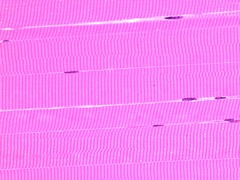
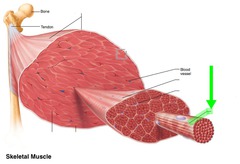
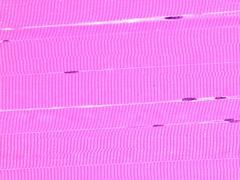
One of the three types of muscles. Muscles move voluntarily and are attached by tendons to bones. They are long, multinucleate (have multiple nucleus), appear striated (due to arrangement of actin and myacin), and are surrounded and bundled by connective tissue. (which supplies nutrients)
30
Skeletal Muscle
Q 2/42
Score 0
A connective tissue wrapping which wraps itself around a single muscle cell/fiber.
30
Endomysium
42 questions
Q.
One of the three types of muscles. Muscles move voluntarily and are attached by tendons to bones. They are long, multinucleate (have multiple nucleus), appear striated (due to arrangement of actin and myacin), and are surrounded and bundled by connective tissue. (which supplies nutrients)
1
30 sec
Q.
A connective tissue wrapping which wraps itself around a single muscle cell/fiber.
2
30 sec
Q.
A connective tissue wrapping which wraps itself around a fascicle (bundle) of cells/fibers.
3
30 sec
Q.
A connective tissue wrapping which covers the entire skeletal muscle.
4
30 sec
Q.
Is a cord like structure which connects muscles to bones. It is formed by epimysium blending into connective tissue attachments.
5
30 sec
Q.
One of the three different types of muscle tissue. This muscle has no striations and is formed from spindle shaped cells, they possess a single nucleus, move involuntarily, and are found mainly in the walls of hollow organs.
6
30 sec
Q.
One of the three types of muscle tissues. These have striations, usually a single nucleus, are joined together by another muscle cell by an intercalated disc, function involuntarily, and are found only in the heart.
7
30 sec
Q.
The cell plasma membrane of a striated muscle cell.
8
30 sec
Q.
The contractile unit of a myofibril consisting of Z-discs, A-bands, and I-bands.
9
30 sec
Q.
A unit of stored energy which muscles use initially for contraction. Only 4-6 seconds of ATP energy is stored by muscles. The bonds within ATP are broken in order to release the energy.
10
30 sec
Q.
A metabolic process requiring oxygen and taking place in the mitochondria. Glucose and fat are broken down to carbon dioxide and water in order to release energy.
11
30 sec
Q.
A metabolic process that doesn't require oxygen. Glucose is broken down to pyruvic acid to produce some ATP. Pyruvic acid is then converted to lactic acid.
12
30 sec
Q.
Movement in the saggital plane that decreases the angle of the joint and brings two bones closer together.
13
30 sec
Q.
Opposite of flexion; movement in the saggital plane that increases the angle of the joint or distance between two bones or parts of the body.
14
30 sec
Q.
Movement of a bone around its longitudinal axis.
15
30 sec
Q.
moving a limb away in the frontal plane from the median plane of the body, spreading the fingers apart
16
30 sec
Q.
Opposite of abduction; movement of a limb toward the body midline
17
30 sec
Q.
A combination of all the movements, commonly seen in ball and socket joints where the proximal end of the limb is stationary while the distal end moves in a circle
18
30 sec
Q.
Thin myofilaments that are anchored to the Z disc
19
30 sec
Q.
Thick myofilaments that include small projections (heads)
20
30 sec
Q.
the gap between the axon terminal of a motor neuron and the sarcolemma of a skeletal muscle cell.
21
30 sec
Q.
the region where a motor neuron comes into close contact with a skeletal muscle cell.
22
30 sec
Q.
a motor neuron and all the muscle cells it supplies
23
30 sec
Q.
released by stimulation of a nerve impulse by the axon terminals of the motor neuron
24
30 sec
Q.
produce contractions in which movement does not occur (same measurement)
25
30 sec
Q.
produce contractions in which movement occurs (same tone)
26
30 sec
Q.
covers angle of lower jaw; closes the jaw
27
30 sec
Q.
covers the front of the neck; pulls down the corners of the mouth (sad clown face)
28
30 sec
Q.
connect neck to sternum and clavicle; bend head forward (prayer muscle) and rotates head.
29
30 sec
Q.
covers upper part of chest; adducts the upper arm
30
30 sec
Q.
straplike muscles of the abdomen; flexes vertebral column
31
30 sec
Q.
lateral walls of abdomen; flexes and rotates vertebral column
32
30 sec
Q.
covers the back of the neck and the back of the upper trunk; raises, retracts and rotates the scapula
33
30 sec
Q.
flat muscles that cover the lower back; extends and adducts humerus (upper arm).
34
30 sec
Q.
3 deep muscle columns that span the vertebral column; extends and laterally flexes the spine
35
30 sec
Q.
triangle shaped muscles of the shoulder; abducts arm
36
30 sec
Q.
muscle in upper arm that bulges when flexed; moves forearm towards the body
37
30 sec
Q.
located on posterior humerus; extends arm - antagonist of biceps brachii
38
30 sec
Q.
muscle of the buttock; extends hip when power is needed.
39
30 sec
Q.
biceps femoris, semimembranosus, and semitendinosus; located on posterior thigh; extend thigh and flex knee
40
30 sec
Q.
rectus femoris and vastus muscles; located on anterior thigh; extends knee powerfully as when kicking a football
41
30 sec
Q.
forms calf of posterior leg; prime mover for plantar flexion of foot (toe dancer's muscle)