Loading...


Unit 8: On the farm (Forming Sentences) 5-3-2026
Quiz by Reem Rajab
Customize this quiz to suit your class
Instantly translate to 100+ languages
Tag the questions with any skills you have. Your dashboard will track each student's mastery of each skill.
Give this quiz to my class
Re-order the sentence:
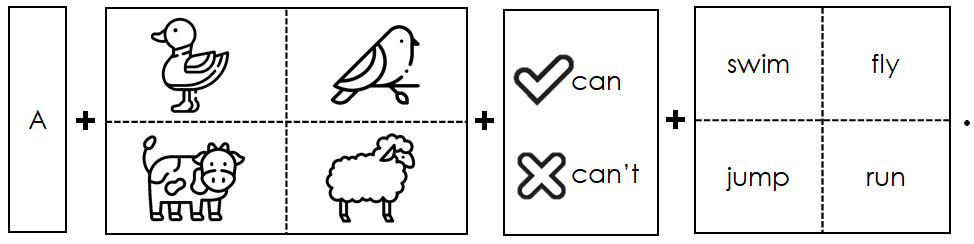
Re-order the sentence:
Re-order the sentence:

Re-order the sentence:
Re-order the sentence:
Re-order the sentence:
Re-order the sentence:
 Here’s a **quiz on Lesson 1: Introduction to Analog Communication (Unit 8)** based on your file 👇 --- # 🧠 **Quiz – Lesson 1 (Analog Communication)** **Marks:** 20 --- ## ✍️ **Part 1: Choose the correct answer (8 marks)** 1. A signal is: a) A device b) A physical quantity that carries information c) A type of wire d) A computer 2. A continuous signal is defined over: a) Discrete values b) Infinite real values c) Only integers d) Binary values 3. Digital signals have: a) Infinite values b) Two values (0 and 1) c) Random values d) Analog values 4. Sampling is used to: a) Increase noise b) Convert analog to digital c) Amplify signals d) Reduce bandwidth 5. A deterministic signal: a) Cannot be predicted b) Has known values c) Is always random d) Has no pattern 6. Even signal satisfies: a) x(t) = -x(-t) b) x(t) = x(-t) c) x(t) = 0 d) x(t) ≠ x(-t) 7. Periodic signal repeats after: a) Time T b) Infinite time c) No time d) Random time 8. A system is: a) A signal only b) Input only c) Takes input and gives output d) A wire --- ## ✍️ **Part 2: Complete (6 marks)** 1. A signal can be represented as __________. 2. Continuous signals are defined over __________ values. 3. Digital signals take values like __________ and __________. 4. A random signal cannot be __________ easily. 5. Odd signal satisfies __________. 6. A periodic signal repeats every __________. --- ## ✍️ **Part 3: True or False (6 marks)** 1. Analog signals are continuous. ( ) 2. Digital signals can take infinite values. ( ) 3. Sampling converts analog to digital signal. ( ) 4. Deterministic signals are predictable. ( ) 5. Odd signals pass through origin. ( ) 6. Aperiodic signals repeat over time. ( ) --- ## 🎯 **Bonus Question (Optional)** Give one example of: * Analog signal * Digital signal -In this video we take a look at the 0:02 fetch to code 0:03 execute cycle including its effect on 0:06 the various registers we've previously 0:12 [Music] 0:14 discussed a computer is defined Definition 0:17 as an electronic device that takes an 0:20 input 0:22 processes data 0:25 and delivers output 0:29 in this simple example you can see we're 0:31 taking the input 5 0:35 we're multiplying it by 2 that's our 0:37 process 0:39 and we're outputting 10. 0:44 but this could be way more complex for 0:46 example of a game console 0:48 the input could be the buttons you press 0:50 on a controller 0:53 the processes would then be carried out 0:55 by the console itself 0:59 and the output would be some form of 1:01 update to a monitor 1:02 and sound out for a speaker possibly 1:04 vibration feedback through the 1:06 controller 1:10 to process data a computer follows a set 1:13 of instructions 1:14 known as a computer program 1:18 if we take the lid off a typical desktop 1:20 computer we can identify 1:22 two critical components the memory 1:26 that stores the program and the central 1:29 processing unit or processor 1:31 which is under this large fan and 1:33 carries out the instructions 1:37 a computer carries out its function by 1:40 fetching 1:41 instructions decoding them and then 1:43 executing them 1:44 in a continuous repetitive cycle 1:46 billions of times a second 1:48 let's look at each of these stages in a 1:50 little more detail Fetch 1:53 so let's start with the fetch stage the 1:55 very first thing that happens 1:57 is the program counter is checked as it 2:00 holds the address 2:01 of the next instruction to be executed 2:07 the address stored is then copied into 2:09 the memory address register 2:14 the address is then sent along the 2:16 address bus to main memory 2:18 where it waits to receive a signal from 2:21 the control 2:22 bus so it knows what to do 2:27 as we want to read the data that's 2:29 stored in memory address 2:30 0 0 0 0 the control unit sends 2:34 a read signal along the control bus to 2:36 main memory 2:41 now main memory knows the data needs to 2:44 be read 2:45 the content stored in memory address 000 2:49 can be sent along the data bus to the 2:51 memory data register 2:56 now as we're currently in the process of 2:58 fetching an instruction 3:00 the data received by the memory data 3:03 register gets copied 3:04 into the current instruction register 3:11 the instruction effectively has now been 3:14 fetched from memory 3:16 just before we proceed to the decode 3:18 phase we now 3:19 increment the program counter so that 3:22 the address it contains 3:24 points to the address of the next 3:26 instruction which will need to be 3:30 executed 3:32 the instruction now being held in the 3:33 current instruction register 3:35 is ready to be decoded 3:39 now as we mentioned in the previous 3:41 video the instruction is made up of two 3:43 parts 3:44 we have the op code that's what it is we 3:47 need to do 3:50 and we have the operand what are we 3:53 going to do it to 3:55 now the operand could contain the actual 3:57 data 3:58 or indeed it could contain an address of 4:01 where the data is to be found 4:06 by decoding this instruction we can see 4:08 the operation we need 4:10 is a load operation so we need to load 4:14 the contents of memory location0101 4:18 into the cpus accumulator 4:25 in the exam a simple model will be used 4:27 to describe the 4:29 structure of any given instruction 4:32 you're not going to be expected to 4:34 define how an opcode is made up 4:36 but simply to interpret opcodes in the 4:39 given context of an exam 4:40 question in the example here 4:44 you can see there's a total of 16 4:46 different opcodes available 4:48 and this is because we're using four 4:50 bits for our representation 4:56 so now we've fetched the instruction and 4:59 we've decoded it so we know what we need 5:00 to do 5:01 we're finally ready to execute it 5:05 so we now send address 0101 5:08 to the memory dress register 5:13 now we're in the memory address register 5:15 we can finally send the address 5:18 down the address bus to main memory 5:24 this time we want to read the data 5:26 that's stored in memory 5:28 and so the control unit again sends a 5:30 read signal along the control bus 5:36 so main memories now receive an address 5:38 and a read signal 5:40 so the content stored at memory location 5:43 0101 5:44 can now be sent along the data bus back 5:46 to the cpu 5:47 and into the memory data register 5:54 finally the contents of the memory data 5:56 register are copied to the accumulator 5:59 and this is one of a number of general 6:00 purpose registers found in the cpu 6:04 this first instruction is now complete Branching 6:11 so what does this program actually do 6:14 you should be able to work it through 6:16 carefully and figure it out 6:19 we're now pointing instructions zero 6:21 zero zero one in the program counter 6:23 and we're ready to fetch the second 6:25 instruction 6:27 at the end of this video we're gonna 6:29 provide you with the answer 6:34 so let's talk a second about programs 6:37 that branch 6:40 on the left here we have a very simple 6:42 piece of pseudo code 6:44 line zero says first execute this line 6:46 of code 6:47 line 1 now execute this line and then 6:50 line 2 says 6:52 if the age is greater than 18 then 6:56 we're going to execute lines 3 and 4 6:58 otherwise 6:59 we're going to execute lines six and 7:02 seven 7:03 so this program doesn't necessarily 7:05 follow strictly in sequence from line 7:07 zero through to seven there's a chance 7:10 here the program may branch and jump 7:14 around 7:16 so we're going to pretend that this 7:17 program has been loaded into memory 7:20 each line of code on the left here has 7:23 ended up 7:24 as a location in memory now this is not 7:27 strictly how this would happen in this 7:28 one-to-one way 7:29 but for the purpose of example it's 7:31 absolutely fine 7:35 so the program counter starts by 7:37 pointing to memory address zero 7:39 and we fetch the first instruction 7:41 decode it and execute it 7:44 it then updates and tells us the next 7:47 instruction 7:48 is zero zero zero one because remember 7:50 the program counter is being incremented 7:52 so we fetch it decode it and we execute 7:55 line one of our program 7:59 we then fetch line two which in binary 8:01 is one 8:02 zero 8:06 now at this point depending on what 8:10 happens during the execution 8:11 of line two the program may be required 8:15 to fetch line three from memory or 8:18 line five from memory 8:25 so let's look at how this actually works 8:27 because we've said the program counter 8:28 simply gets incremented 8:31 well in the current instruction register 8:33 we have an instruction with the op code 8:36 0 1 1 0. 8:41 now when we look this up in the decode 8:43 unit we discover that this 8:45 code means branch always 8:51 this replaces the value held in the 8:54 program counter 8:56 with the contents of the operand that's 8:58 the second part of the instruction 9:01 from the current instruction register so 9:03 this case 9:04 one zero zero one 9:09 now when the next fetch cycle begins the 9:12 program counter is obviously checked 9:14 and as its contents have been previously 9:16 updated to a new memory location 9:19 and not simply incremented the program 9:22 effectively is able to jump 9:24 around memory 9:28 so having watched this video you should 9:30 be able to answer the following key 9:32 question 9:33 how does a cpu work 9:39 okay so let's um answer the question we 9:41 posed 9:42 earlier what did that program actually 9:48 do 9:50 so this is the first fetch to code 9:53 execute cycle 9:55 and this is the one that we ran through 9:57 in detail earlier 9:58 it effectively loaded the contents of 10:01 the memory 10:02 stored at location location0101 10:05 into the accumulator in other words 10:08 the dna number 3 is moved 10:11 from memory into the cpu 10:18 we then proceed onto the second fetch 10:20 decode execute cycle 10:23 now this one adds the contents of memory 10:27 located at 0 1 1 0 10:30 to the current contents of the 10:32 accumulator 10:34 so in other words the dna number one 10:38 because that's what's stored at address 10:40 zero one one zero 10:43 is added to the number three that was in 10:45 the accumulator 10:46 the results are stored back over the 10:48 accumulator 10:49 so effectively we've done three plus one 10:53 equals four 10:58 the third fetch to code execute cycle 11:00 stores the contents which are in the 11:02 accumulator 11:03 into memory location zero one one one 11:07 and that's because the op code the first 11:09 part of this current instruction 11:10 zero zero one one is the command to 11:13 store when we look it up in the decoder 11:15 unit 11:16 so in other words the result of the 11:17 previous calculation three plus one 11:19 equals four 11:20 is now written back into main memory 11:28 the fourth fetch decode execute cycle 11:30 outputs the contents of the accumulator 11:33 remember they were copied into main 11:34 memory but they're still held in the 11:35 accumulator 11:37 so in this simple abstraction the number 11:40 four is now 11:41 output to the user so they can see the 11:43 result of the calculation 11:49 the fifth and final fetch code execute 11:51 cycle 11:52 brings a halt to the current program 11:58 so this very simple program which has 12:01 five 12:02 fetch decode execute cycles has 12:04 performed the calculation 12:06 three plus one is then stored the result 12:09 in main memory 12:10 and displayed the result four to the 12:12 user 12:13 and in a high-level language this may 12:15 look something very similar to the 12:17 following two lines of code 12:20 sum variable equals num1 plus num2 12:24 print sum to the user 12:27 so you can start to get an appreciation 12:29 here of how the high level code you 12:32 write actually ends up being fetched 12:34 decoded 12:35 and executed inside a processor 12:38 of course your processor is doing 12:40 billions and billions of these 12:42 operations a second 12:43 which when you think about it is really 12:45 very impressive 12:52 [Music] 13:03 you. make 10 questions for a standerd of a levelCrack the code B2: Unit 8 keep a close watch on-minorityCrack the code B2: Unit 8 (keep a close watch on-get on)A ______________ is the smallest military unit, typically consisting of 3-5 soldiers and working closely within a tactical operation. A ______________ consists of 8-12 soldiers and is led by a squad leader. A ______________, typically consisting of 30-50 soldiers, is commanded by a lieutenant and subdivided into smaller squads. The ______________ is a company-level unit of about 100-200 soldiers, typically commanded by a captain. A ______________ is made up of several companies, usually commanded by a lieutenant colonel, and consists of 300-1,000 soldiers. A ______________ typically consists of 3-5 battalions, is commanded by a colonel, and can operate independently in large-scale operations. A ______________ is made up of several brigades and is commanded by a major general, usually numbering 10,000-20,000 soldiers. A ______________ is a larger military formation made up of multiple divisions, commanded by a lieutenant general. The term ______________ refers to units designed for direct engagement with enemy forces, such as infantry, armor, and artillery. ______________ is a branch specializing in close-combat tactics and foot soldiers, serving as the backbone of ground forces. ______________ units provide long-range firepower to support ground forces, using cannons, howitzers, and rocket systems. ______________ are specialized units equipped with tanks and other armored vehicles for breakthrough and exploitation missions. The ______________ is responsible for building infrastructure like bridges, roads, and fortifications in combat and non-combat settings. The ______________ provides protection against nuclear, biological, and chemical weapons on the battlefield. ______________ are elite units trained for unconventional warfare, counter-terrorism, and specialized missions. ______________ are responsible for maintaining law and order within military ranks and ensuring security in both combat zones and bases. ______________ provide medical care to soldiers, ensuring health and emergency treatment in battlefield conditions.Sc.8.p.8.5 Students will be able to: • Recognize that there are a finite number of elements and that their atoms combine in a multitude of ways to produce compounds that make up all the living and nonliving things that we encounter. • Distinguish among mixtures (including solutions) and pure substances. • Recognize that elements are grouped in the periodic table according to similarities of their properties • Recognize that atoms are the smallest unit of an element and they are composed of sub-atomic particles (electrons surrounding a nucleus containing protons and neutrons) • Explain why theories may be modified but are rarely discarded Advanced Benchmarks: • Write chemical formulas for simple covalent (HCl, SO2, CO2, and CH4) and ionic (Na+ + Cl- + NaCl) and molecular (O2, H2O ) compounds. Predict the formulas of ionic compounds based on the number of valence electrons and the charges on the ions (912.P.8.7) • Use the periodic table and electron configuration to determine an element’s number of valence electrons and its chemical and physical properties. Explain how chemical properties depend almost entirely on the configuration of the outer electron shell (912.P.8.5) • Explain that electrons, protons, and neutrons are parts of the atoms and the nuclei of atoms are composed of protons and neutrons, which experience forces of attraction and repulsion consistent with their charges and masses (912.P.8.4)Land warfare is a complex domain that involves the application of military power on the ground to achieve political and strategic objectives. Modern military doctrine, such as that used by the U.S. Army and the Indian Army, categorizes these elements into Combat Power and the Principles of War. 1. The 8 Elements of Combat Power Combat power is the total means of destructive, constructive, and information capabilities that a military unit can apply. It is typically broken down into eight key elements: ElementDescriptionLeadershipThe "multiplier" of all other elements. It provides purpose, direction, and motivation to soldiers.InformationEnables commanders to make informed decisions and creates opportunities to achieve results.Mission CommandThe system used to integrate the other elements. It focuses on decentralized execution based on the commander's intent.Movement & ManeuverThe movement of forces to gain a positional advantage over the enemy to deliver lethal or non-lethal effects.IntelligenceThe understanding of the enemy, terrain, weather, and civil considerations.FiresThe use of weapon systems (artillery, mortars, air support) to create specific lethal or non-lethal effects.SustainmentThe logistics required to maintain operations, including ammunition, fuel, food, and medical support.ProtectionThe preservation of the force so that the commander can apply maximum combat power.2. The Principles of War These are the enduring "rules of thumb" that guide how land forces are employed strategically and tactically: Objective: Direct every operation toward a clearly defined and attainable goal. Offensive: Seize, retain, and exploit the initiative. You cannot win by defending alone. Mass: Concentrate the effects of combat power at the most advantageous place and time. Economy of Force: Allocate the minimum essential combat power to secondary efforts so you can "mass" elsewhere. Maneuver: Place the enemy in a position of disadvantage through flexible movement. Unity of Command: Ensure all forces operate under a single responsible commander toward a common objective. Security: Prevent the enemy from gaining an unexpected advantage. Surprise: Strike the enemy at a time, place, or in a manner for which they are unprepared. Simplicity: Prepare clear, uncomplicated plans to minimize confusion in the "fog of war." 3. The Modern Legal Framework Land warfare is also governed by the Law of Land Warfare (International Humanitarian Law), which rests on four pillars: Military Necessity: Actions must be necessary to achieve a legitimate military goal. Distinction: Forces must distinguish between combatants and non-combatants (civilians). Proportionality: The anticipated harm to civilians must not be excessive in relation to the concrete military advantage gained. Unnecessary Suffering: Weapons and methods must not cause gratuitous or superfluous injury. Note: Contemporary land warfare is increasingly "Multi-Domain," meaning land forces must now integrate with cyber, space, and electronic warfare to be effective. , While land warfare uses many tools, the two primary "philosophies" of how to win a war are Attrition and Maneuver. Most modern conflicts are a spectrum of both, but understanding the pure form of each helps explain military strategy. 1. Attrition Warfare: The "Sledgehammer" Attrition warfare is a strategy where one side attempts to win by wearing down the enemy to the point of collapse through continuous losses in personnel, equipment, and supplies. Core Logic: "I have more than you." It assumes that if you can destroy the enemy’s resources faster than they can replace them, you will eventually win. Focus: Firepower and mass. Success is measured by "body counts," equipment destroyed, and the steady seizing of terrain. Command Style: Usually centralized and methodical. It requires strict synchronization of massive resources (artillery, logistics, manpower). Historical Example: The Battle of Verdun (WWI). German Chief of Staff Erich von Falkenhayn famously stated his goal was to "bleed France white" by forcing them to defend a position they could not afford to lose, regardless of the cost in lives. 2. Maneuver Warfare: The "Scalpel" Maneuver warfare seeks to shatter the enemy’s moral and physical cohesion—their ability to act as a unified force—rather than simply destroying every soldier. Core Logic: "I am faster and more unpredictable than you." It aims to create a state of chaos where the enemy's leadership can no longer make effective decisions. Focus: Speed, surprise, and dislocation (forcing the enemy to be in the wrong place at the wrong time). The OODA Loop: Developed by Col. John Boyd, this is the heart of maneuver theory. It stands for Observe, Orient, Decide, Act. The goal is to cycle through these steps faster than the enemy, essentially "getting inside" their decision-making process until they collapse from confusion. Historical Example: The 1940 Invasion of France (Blitzkrieg). Instead of fighting a line-by-line battle of attrition, German forces used speed and concentrated armor to bypass strongpoints, cut communication lines, and cause a total systemic collapse of the French military in weeks. 3. Key Differences at a Glance FeatureAttrition WarfareManeuver WarfareObjectivePhysical destruction of the enemy army.Functional/Psychological collapse of the enemy.TargetThe enemy's strength (mass).The enemy's weakness (vulnerability).Primary ToolMassed Firepower.Movement and Tempo.Command"Command Push" (Top-down, rigid)."Recon Pull" (Decentralized, flexible).Success MetricExchange ratios (Kill counts).Disruption and loss of enemy control.4. The Modern Synthesis: "Schwerpunkt" In practice, no army is purely "maneuver" or "attrition." To maneuver successfully, you often need a period of attrition to punch a hole in the enemy's line. A critical concept here is the Schwerpunkt (Center of Gravity/Focus of Effort). A commander identifies the single most important place to strike and concentrates all available "elements of power" there. While the rest of the front might look like attrition, the Schwerpunkt is where the maneuver happens to achieve a breakthrough. Modern Reality: In high-intensity conflicts today (like the war in Ukraine), we see a "return to attrition" because modern sensors (drones, satellites) make it very difficult to achieve the surprise needed for pure maneuver warfare. When you can see everything, it's hard to be "unexpected." The advantage of direct method is that the teacher can control the class and fit in a lot of activity into a short class period. This leaves plenty of opportunities for the students to hone their skills, especially new ones. On the other hand, because the class is centered around the teacher, some students may not receive proper feedback, and creativity is limited. Also, the lesser talented athletes often tend to get lost in the shuffle while the great athletes shine. However, there are now a multitude of various teaching strategies that can be employed in addition to that method. Ex: Announcements, Module/Unit introductions, Descriptions/modeling of assignments and learning activities, Written or video lectures, Demonstration videos, Presentations, Discussions moderated by instructors, Interactive tutorials. Indirect Method The Indirect Teaching Style allows students to be involved in their own learning through experience and other peer’s knowledge. Students can use critical thinking to expand their learning capabilities by seeing what others may be doing correct and adjusting this to their own knowledge. The Indirect approach is the opposite of what the direct style suggests, but they are both strictly related, meaning you can’t have one without the other. Direct teaching: The instructor stands in front of the class or group and lectures or advises. Indirect teaching: The instructor assumes a more passive role and guides the student interactions. Movement exploration: Incorporates the use of equipment that involves movement. Movement Exploration The movement exploration class is founded on developing a strong, positive association to physical activity. Classes are aimed at developing movement skills and foundational strength through fun and engaging activities. The activities are age appropriate and include games, challenges, and exploration that positively challenge children’s competency while improving their physical capabilities. Skills such as the ability to climb, hold animal shapes, gymnastic style activities, and the introduction to athletic motor skill competencies are the foundations to youth training. This class provides the introduction to strength training to give children the opportunity to learn the skills required to safely and confidently engage in resistance training. Cooperative Skills Cooperative activities teach students to work together for their group's common good. By participating in these activities, students can learn the skills of listening, discussing, thinking as a group, group decision making, and sacrificing individual wants for the common good. There are two primary objectives guiding the teaching of cooperative activities. First, cooperative activities allow students to apply a variety of fundamental motor skills in a unique setting. Students are typically asked to perform motor skills in a specific way, such as “skip in general space” or “balance on one foot and one elbow.” Cooperative activities ask students to perform different activities such as skip with their hands on the shoulders of someone in front of them, walk with big steps while placing their feet on small spots, or walk across an area blindfolded while someone directs their moves. Due to the uniqueness of such experiences, students often find cooperative activities exciting and motivating. Second, cooperative activities are a wonderful medium for teaching social and emotional learning (SEL). SEL offers students an opportunity to understand and manage their emotions. In addition, such activities offer an opportunity to show empathy for others and develop positive relationships. Cooperative activities demand that all students play a role in completing the task or solving the movement problem. Every student, regardless of ability level, is important and contributes to group goals. 9 traits a PE teacher often needs Here are nine essential traits of an effective PE teacher: 1. Athletic ability Athletic ability is an essential trait for a PE teacher because they're often showing kids how to perform exercises. To demonstrate proper form and encourage the kids to continue their fitness education, it's important they can perform the exercises themselves. Having experience with fitness training can enhance a PE teacher's lesson planning because they're familiar with how each exercise affects a person's body. Athletic ability can also refer to an aptitude for sports and games. PE teachers can instruct students on how to play these games or lead after-school activities involving them, like soccer or basketball. An aptitude for sports and games can help a PE teacher encourage students to participate in the activities during class. If the PE teacher enjoys physical activity, they may make the lessons more enjoyable for the student. 2. Teaching ability A PE teacher is a member of a school faculty, so it's essential they have the teaching ability that allows them to communicate lessons to students. There are various skills involved in teaching, including the technical capabilities associated with each professional's particular field. Learning these skills can help PE teacher plan their lessons effectively and connect with their students, meaning they can encourage students to practice fitness skills in optimal ways for their health. Here are some important teaching skills for PE teachers: Having an engaging classroom presence Real-world learning Project building Lesson planning Technology 3. Interpersonal skills PE coaches are part of faculty teams, so working alongside other teachers is an essential part of their job. They often collaborate with a student's general education teacher to address any behavioral issues that arise. They can also team up with other classes to plan activities for students, like field days and special field trips. Communicating with peers can ensure these interactions remain productive and create opportunities for more fulfilling lessons. Teachers can also model emotional skills for their students by displaying positive social interactions. Interpersonal skills can also help PE teachers interact with students and their families. If a student can make a student feel comfortable expressing their needs and preferences, they can often perform physical exercises or play games to the best of their individual capacities. Understanding how to soothe nerves and support students' emotional needs are important examples of interpersonal skills. When interacting with family members, you may use some of these same techniques to communicate effectively and best uplift students. 4. Written and verbal communication Both verbal and written communication is important for PE teachers because they often communicate with students, families and various personnel on a day-to-day basis. For example, a PE teacher uses their communication skills in a lesson plan to describe any student assignments or expectations accurately. They may also write instructions in a document, then explain them in a classroom lecture. They also use communication skills to share their lesson plans with other PE teachers during conferences or classroom development exercises. Many teachers continue to learn their trade even after working as a teacher for many years. They may share tips with each other or special lessons they've developed if they feel another teacher may benefit from it. Creating a community can help PE teachers continue to expand their teaching methodology and receive feedback on their lessons. 5. Patience and adaptability Working with children can require patience and adaptability because they're encountering many new concepts at the same time and learning how to regulate their emotions. As a result, it's important to treat them with patience and care while they're in your class so they can feel comfortable and feel motivated to complete assignments. As children become teenagers, they may require patience and adaptability to account for their changing bodies and attention spans. Like any job where you perform tasks in real-time, certain circumstances may occur that require you to adapt lesson plans. For example, if the weather turns from sunshine to rain on a day you planned for students to run a mile outside, you may need to adapt the lesson plan so they can practice endurance sports inside a gymnasium instead. 6. Organization PE teachers can use organization skills to improve their lesson planning sessions. For example, they can keep their plans in one place, and determine which parts of a semester or quarter to introduce new concepts. Throughout the year, these objectives may change because of unforeseen setbacks, but organizational skills can help PE teachers control the trajectory of their class curriculum. PE teachers can also use organizational skills to maintain their classroom space. Physical education frequently requires balls, equipment and tools to play games that may be on a lesson plan. They also organize equipment and decide where to store it within their classroom or storage space. 7. Creativity Creativity can help a PE teacher develop fun ways to introduce new material to their students or reinforce previous lessons. They can teach new games or devise interesting ideas to change the rules of a game to help keep students engaged. To find inspiration for their lesson plans, they can turn to personal hobbies or media aspects they enjoy, like movie scenes, songs or dances. A varied lesson plan can foster more engagement among students who prefer action- based learning activities, rather than lectures. 8. Focus Focus is an essential trait of a PE teacher because students often require their full attention during class, especially if they're learning a complicated physical task. You can focus your lesson plans around specific elements of physical education you believe are essential for students of a certain age group or skill level. If students require mentorship, you can also focus on each student's needs to supply them with a steady support system. Focusing on your students can help guide your career purpose. It can give you a core value system that informs your lesson plans and mentorship activities. This passion for your student's well-being can also help you become an advocate for each student in your class. You can also help organize funding for different field trips or establish after-school activities to support their interests. 9. Enthusiasm for teaching sports and fitness Enthusiasm is essential for a PE teacher. Many physical education activities require high energy and may suit someone who enjoys teaching them to others. Being an effective PE teacher also requires an enthusiasm for working with kids and making a positive impact on their lives.