Tag the questions with any skills you have. Your dashboard will track each student's mastery of each skill.
Give this quiz to my class
Q 1/119
Score 0
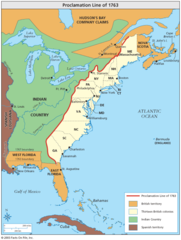
Stated that no colonists could settle in lands to the west of the Appalachian mountains-- made the colonists very upset
30
Proclamation Line of 1763
Q 2/119
Score 0
* Document adopted on July 4, 1776. * Established the 13 American colonies as independent states, free from rule by Great Britain. * Thomas Jefferson wrote most of it* Explained to the world why we wanted our freedom.* Explained to the world why we wanted our freedom. * Influenced by Enlightenment thinkers (John Locke, Rousseau)
30
Declaration of Independence
119 questions
Q.
Stated that no colonists could settle in lands to the west of the Appalachian mountains-- made the colonists very upset
1
30 sec
Q.
* Document adopted on July 4, 1776. * Established the 13 American colonies as independent states, free from rule by Great Britain. * Thomas Jefferson wrote most of it* Explained to the world why we wanted our freedom.* Explained to the world why we wanted our freedom. * Influenced by Enlightenment thinkers (John Locke, Rousseau)
2
30 sec
Q.
Farming
3
30 sec
Q.
1st Constitution of the U.S. 1781-1788 (weaknesses-no executive, no judicial, no power to tax, no power to regulate trade, no federal currency, no power to raise an army) Example: Shay's Rebellion
4
30 sec
Q.
a person opposed to the ratification of the US constitution, and wanted a bill of rights to be added because they wanted to make sure the government couldn't take individuals rights (Speech, religion, press, assembly).
5
30 sec
Q.
supporters of the constitution during the debate over its ratification; favored a strong national government
6
30 sec
Q.
a change to the Constitution
7
30 sec
Q.
The first ten amendments of the U.S. Constitution, containing a list of individual rights and liberties, such as freedom of speech, religion, and the press.
8
30 sec
Q.
The document which established the present federal government of the United States and outlined its powers. It can be changed through amendments. Supreme law of the land.
9
30 sec
Q.
a legislature consisting of two "houses"
10
30 sec
Q.
people that advise the president and help set policy for the nation--an example of the unwritten Constitution
11
30 sec
Q.
customs, traditions, practices not written in constitution that are part of our system of government--ie. the cabinet and two term limit.
12
30 sec
Q.
population count every 10 years, to determine the number of representatives in Congress for each of the states.
13
30 sec
Q.
The power of the legislative, executive, and judicial branches of government to block some acts by the other two branches--ie. the veto, declaring a law unconstitutional, or impeaching a president.
14
30 sec
Q.
the body of electors who formally elect the United States president and vice-president
15
30 sec
Q.
it abolished the slave trade in the District of Columbia, admitted California as a free state and opened much of the Mexican Cession to popular sovereignty
16
30 sec
Q.
Europeans should not interfere with affairs in Western Hemisphere, Americans to stay out of foreign affairs; supported Washington's goal for US neutrality in Americas
17
30 sec
Q.
A system in which power is divided between the national and state governments
18
30 sec
Q.
Series of essays that defended the Constitution and tried to reassure Americans that the states would not be overpowered by the federal government.
19
30 sec
Q.
One of the two parts of Congress, considered the "lower house." Representatives are elected directly by the people, with the number of representatives for each state determined by the state's population--has the power to impeach
20
30 sec
Q.
Formal accusation against a president or other public official, the first step in removal from office.
21
30 sec
Q.
the power of the courts to declare laws unconstitutional (Marbury vs Madison)
22
30 sec
Q.
the belief that the United States was destined to stretch across the continent from the Atlantic Ocean to the Pacific Ocean
23
30 sec
Q.
As president he opposed the Bank of US, did not allow individual states to nullify federal laws, was responsible for the Indian Removal Act, the "Trail of Tears". Created Spoils System
24
30 sec
Q.
practice of rewarding supporters with government jobs
25
30 sec
Q.
the movement to end slavery
26
30 sec
Q.
A black slave, had lived with his master for 5 years in Illinois and Wisconsin Territory. Backed by interested abolitionists, he sued for freedom on the basis of his long residence on free soil. The ruling on the case was that He was a black slave and not a citizen, so he had no rights. SLAVES = PROPERTY
27
30 sec
Q.
Laws that separated people of different races in public places in the south
28
30 sec
Q.
a period after the civil war when the US worked to bring the country back together and the southern states were subject to a federal military presence
29
30 sec
Q.
The three amendments to the Constitution that resulted from the Civil War and abolished slavery, guaranteed civil rights, and guaranteed blacks the right to vote
30
30 sec
Q.
vast grassland between the mississippi river and the rocky mountains
31
30 sec
Q.
Immigrants who came to the United States during and after the 1880s; most were from southern and eastern Europe.
32
30 sec
Q.
immigrants who had come to the US before the 1880s from Britain, Germany, Ireland, and Scandenavia, or Northern Europe
33
30 sec
Q.
a flowering of African American culture in the 1920s; instilled interest in African American culture and pride in being an African American--ie. Langston Hughes, Duke Ellington
34
30 sec
Q.
a Harlem Renaissance poet. The phrase "Harlem Renaissance" refers to African American achievements in art, literature and music in the 1920s
35
30 sec
Q.
movement of over 300,000 African American from the rural south into Northern cities between 1914 and 1920
36
30 sec
Q.
The idea that all countries should have the right to open trade with China-this was directed toward other imperialist countries. U.S. wanted to prevent countries from setting up separate spheres of influence within China, thereby blocking potential U.S. trade opportunities.
37
30 sec
Q.
Period of reform from 1890s-1920s. Opposed waste and corruption, for social justice, general equality, and public safety: Sherman Anti-trust Act, President Theodore Roosevelt, Upton Sinclair's "The Jungle", Pure Food and Drug Act and Meat Inspection Act of 1906.`
38
30 sec
Q.
A group of investigative reporters who pointed out the abuses of big business and the corruption of urban politics; included Frank Norris (The Octopus), Ida Tarbell (A history of the standard oil company), Lincoln Steffens (the shame of the cities), and Upton Sinclair (The Jungle)
39
30 sec
Q.
amendment: a total ban on the manufacture, sale, and transportation of liquor throughout the United States. 1919-1933 -- ends with 21st amendment
40
30 sec
Q.
Dorothea Dix, Jane Addams, and Jacob Riis --tried to improve lives of poor, underserved in society
41
30 sec
Q.
the right of women to vote W/ 19th amendment in 1920
42
30 sec
Q.
Took place in Upstate New York in 1848. Women of all ages and even some men went to discuss the rights and conditions of women. There, they wrote the Declaration of Sentiments, tried to get women rights for women, especially the right to vote.
43
30 sec
Q.
1925, the trial that pitted the teaching of Darwin's theory of evolution against teaching Bible creationism
44
30 sec
Q.
War fought because Germany was interfering with American freedom of the seas.
45
30 sec
Q.
became president in 1928, just before the onset of the Great Depression; blamed for the market crash; actions taken were criticized as too little too late
46
30 sec
Q.
the economic crisis beginning with the stock market crash in 1929 and continuing through the 1930s.
47
30 sec
Q.
Works Progress Administration-provided employment for 8.5 million persons. They built roads, bridges, schools, etc., but the also funded projects for thespians, artists, writers, and young people.
48
30 sec
Q.
an engineer and his wife who were accused, tried, and executed in the early 1950s for running an espionage ring in New York City that gave atomic secrets to the soviet union; long considered unjustly accused victims of the Red Scare, recent evidence suggests that Julius was indeed a soviet agent
49
30 sec
Q.
Italian radicals who became symbols of the Red Scare of the 1920s; arrested (1920), tried and executed (1927) for a robbery/murder, they were believed by many to have been innocent but convicted because of their immigrant status and radical political beliefs.
50
30 sec
Q.
Event that brought the United States completely out of the Great Depression, we entered because of Japanese bombing at Pearl Harbor
51
30 sec
Q.
The name given to the program of "Relief, Recovery, Reform" begun by President Franklin D. Roosevelt in 1933 to bring the United States out of the Great Depression.
52
30 sec
Q.
an economic system in which the central government directs all major economic decisions. Its spread was our biggest fear after WW2!
53
30 sec
Q.
The 33rd U.S. president, who succeeded Franklin D. Roosevelt upon Roosevelt's death in April 1945. Led the country through the last few months of World War II, is best known for making the controversial decision to use two atomic bombs against Japan in August 1945. After the war, Truman was crucial in the implementation of the Marshall Plan, which greatly accelerated Western Europe's economic recovery.
54
30 sec
Q.
a main highway that crosses the entire country, either from east to west or south to north--sponsored by D. Eisenhower
55
30 sec
Q.
35th President of the United States 35th President of the United States; only president to have won a Pulitzer Prize; events during his administration include the Bay of Pigs Invasion, the Cuban Missile Crisis, the building of the Berlin Wall, the Space Race, the African American Civil Rights Movement and early events of the Vietnam War; assassinated in Dallas, TX in 1963
56
30 sec
Q.
President who escalated Vietnam War, signed the Civil Rights Act of 1964 into law and the Voting Rights Act of 1965. Great Society - War on Poverty, medicare and Medicaid.
57
30 sec
Q.
President Johnson called his version of the Democratic reform program. In 1965, Congress passed many measures, including Medicare, civil rights legislation, and federal aid to education.
58
30 sec
Q.
relaxation of tensions between the United States and its two major Communist rivals, the Soviet Union and China
59
30 sec
Q.
The events and scandal surrounding a break-in at the Democratic National Committee headquarters in 1972 and the subsequent cover-up of White House involvement, leading to the eventual resignation of President Nixon under the threat of impeachment.
60
30 sec
Q.
this case establishes the Supreme Court's power of judicial review
61
30 sec
Q.
This supreme court case followed the movement of 100,000 Japanese Americans moved to internment camps; the case upheld the US govt's internment policy as justified in wartime.
62
30 sec
Q.
1919; conviction of a socialist who had urged young men to resist the draft during WW1. Justice Holmes declared that gov't can limit speech if the speech provokes a "clear and present danger" of substantive evils.
63
30 sec
Q.
1954 - The Supreme Court overruled Plessy v. Ferguson, declared that racially segregated facilities are inherently unequal and ordered all public schools desegregated.
64
30 sec
Q.
Supreme Court case (1896) Legalized segregation under the Constitution with the concept of "separate but equal."
65
30 sec
Q.
The 1961 Supreme Court decision ruling that the Fourth Amendment's protection against "unreasonable searches and seizures" must be extended to the states as well as to the federal government
66
30 sec
Q.
1966 ruling that upon arrest, a suspect has the "right to remain silent" and the right to consult with a lawyer.
67
30 sec
Q.
TLO caught smoking in non-designated area, and drug paraphernalia found in possession. The school search is CONSTITUTIONAL as schools only need "reasonable suspicion." *UNREASONABLE SEARCH/SEIZURE CLAIM DENIED
68
30 sec
Q.
is a legislative chamber in the bicameral legislature of the United States, and together with the House of Representatives makes up the U.S. Congress. (100 members- 2 from each state)
69
30 sec
Q.
a plan, unsuccessfully proposed at the Constitutional Convention, providing for a single legislative house with equal representation for each state.
70
30 sec
Q.
Wanted representation in the federal government to be based on population
71
30 sec
Q.
took both the Virginia Plan and New Jersey Plan and combined them. It is what became the House of Representatives and the Senate
72
30 sec
Q.
The legislative branch is the part of the United States government that creates laws. (Congress- Bicameral that is made up of two houses- House of Representatives and the Senate
73
30 sec
Q.
The executive branch of the government is responsible for carrying out, or executing, the laws. The key member of the executive branch of the United States government is the President. Also includes the Vice President and the Cabinet
74
30 sec
Q.
The judicial branch is the part of the U.S. government that interprets the law and administers justice. ( The Supreme Court and the lower court systems)
75
30 sec
Q.
programs intended to make up for past discrimination by helping minority groups and women gain access to jobs and opportunities
76
30 sec
Q.
in 1948 that supplied food and fuel to citizens of west Berlin when the Russians closed off land access to Berlin
77
30 sec
Q.
nation that works with another nation for a common purpose
78
30 sec
Q.
a general pardon for an offense against a government; in general, any act of forgiveness or absolution
79
30 sec
Q.
the social process of absorbing one cultural group into harmony with another
80
30 sec
Q.
Roosevelt's philosophy - In international affairs, ask first but bring along a big army to help convince them. Threaten to use force, act as international policemen; used by T.R. to improve world peace, "Speak softly and carry a big stick." Said that the "big stick" (aka the US army/navy) could be used to keep other countries in line and to make sure that the countries of Latin America behaved themselves
81
30 sec
Q.
Laws passed in the southern states during Reconstruction that greatly limited the freedom and rights of African Americans
82
30 sec
Q.
The first bloodshed of the Amercan Revolution, as British guards at the Boston Customs House opened fire on a crowd killing five americans
83
30 sec
Q.
demonstration (1773) by citizens of Boston who (disguised as Indians) raided three British ships in Boston harbor and dumped hundreds of chests of tea into the harbor
84
30 sec
Q.
A northerner who went to the South immediately after the Civil War; especially one who tried to gain political advantage or other advantages from the disorganized situation in southern states;
85
30 sec
Q.
in World War I the alliance of Germany and Austria-Hungary and other nations allied with them in opposing the Allies.
86
30 sec
Q.
This period of time following World War II is where the United States and the Soviet Union emerged as superpowers and faced off in an arms race that lasted nearly 50 years.
87
30 sec
Q.
Virginia, North Carolina, South Carolina, Arkansas, Florida, Texas, Tennessee, Mississippi, Alabama, Louisiana, Georgia. The states that seceded from the Union in 1861.
88
30 sec
Q.
developed the theory of natural selection and the survival of the fittest
89
30 sec
Q.
Foreign policy created under President Taft that had the U.S. exchanging financial support ($) for the right to "help" countries make decisions about trade and other commercial ventures. Basically it was exchanging money for political influence in Latin America and the Caribbean.
90
30 sec
Q.
the part of the Constitution that permits Congress to make any laws "necessary and proper" to carrying out its powers
91
30 sec
Q.
Issued by Abraham Lincoln on September 22, 1862, it declared that all slaves in the rebellious Confederate states would be free.
92
30 sec
Q.
(in Cuba called el bloqueo, "the blockade") is a commercial, economic, and financial embargo imposed by the United States on Cuba.
93
30 sec
Q.
Only 3/5 of the states slave population counted toward representation in Congress
94
30 sec
Q.
"discovered" America in 1492 (Hero or villain)
95
30 sec
Q.
The moving of the Cherokee Indians to Oklahoma. Only 1 out of 5 lived. then the indian removal of 1830
96
30 sec
Q.
a war between factions in the same country ex. North Vs. South
97
30 sec
Q.
mechanical system in a factory whereby an article is conveyed through sites at which successive operations are performed on it (time period: industrial revolution)
98
30 sec
Q.
the war aims outlined by President Wilson in 1918, which he believed would promote lasting peace; called for self-determination, freedom of the seas, free trade, end to secret agreements, reduction of arms and a league of nations
99
30 sec
Q.
the economic crisis beginning with the stock market crash in 1929 and continuing through the 1930s
100
30 sec
Q.
the transformation from an agricultural to an industrial nation with factories
101
30 sec
Q.
the doctrine that government should not interfere in commercial or business affairs
102
30 sec
Q.
territory in western United States purchased from France in 1803 for $15 million
103
30 sec
Q.
George Marshal the US secretary of state saw Europe as very important to the USA, he saw the best way to keep them out of communism is to help restore their countries in 1947, June, and he proposed a plan to provide massive economic aid to Europe
104
30 sec
Q.
an economic system (Europe in 18th C) to increase a nation's wealth by government regulation of all of the nation's commercial interests, limiting trade
105
30 sec
Q.
exclusive control or possession of something
106
30 sec
Q.
the policy of perpetuating native cultures (in opposition to acculturation)
107
30 sec
Q.
North Atlantic Treaty Organization; an alliance made to defend one another if they were attacked by any other country; US, England, France, Canada, Western European countries
108
30 sec
Q.
non-participation in a dispute or war (US didn't enter WWI until 1914)
109
30 sec
Q.
approve and express assent, responsibility, or obligation
110
30 sec
Q.
the U.S. supreme Court ruled that there is a fundamental right ro privacy, which includes a woman's decision to have an abortion. Up until the third trimester the state allows abortion.
111
30 sec
Q.
withdraw from an organization (ex. South during Civil War)
112
30 sec
Q.
a government tax on imports or exports
113
30 sec
Q.
an organization of independent states formed in 1945 to promote international peace and security
114
30 sec
Q.
abolitionists secret aid to escaping slaves
115
30 sec
Q.
organizations of workers who bargain with employers as a group
116
30 sec
Q.
the social process whereby cities grow and societies become more urban
117
30 sec
Q.
Journalism that exploits, distorts, or exaggerates the news to create sensations and attract readers
118
30 sec
Q.
Carnegie, Ford, Morgan, Rockeffeler, (robber barron being the negative term for them because they took control on an entire industry by taking advantage of their workers and captain of industry being the positive term for them building the economy)