Loading...


US presidential elections
Quiz by Anna Müller
Customize this quiz to suit your class
Instantly translate to 100+ languages
Tag the questions with any skills you have. Your dashboard will track each student's mastery of each skill.
Give this quiz to my class
US presidential electionsare held every...
eight years
four years
two years
five years
The two major parties in the United States are...
the Democrats and Republicans
the Conservatives and Liberals
the Right Wing and Left Wing
the Conservatives and Labour
US presidential electionsare held every...
The two major parties in the United States are...
What are the animal symbols of the major political parties?
What is the maximum number of terms a US president can serve?
Which of the following words means “the right to vote”?
General elections in the US are usually held in...
The new president of the US is inaugurated (sworn into office) on...
The US president lives and works in...
Presidential candidates for each party are nominated in...
The US election system is characterized through a single-member district system. What does it mean and does the German Bundestag have the same system?
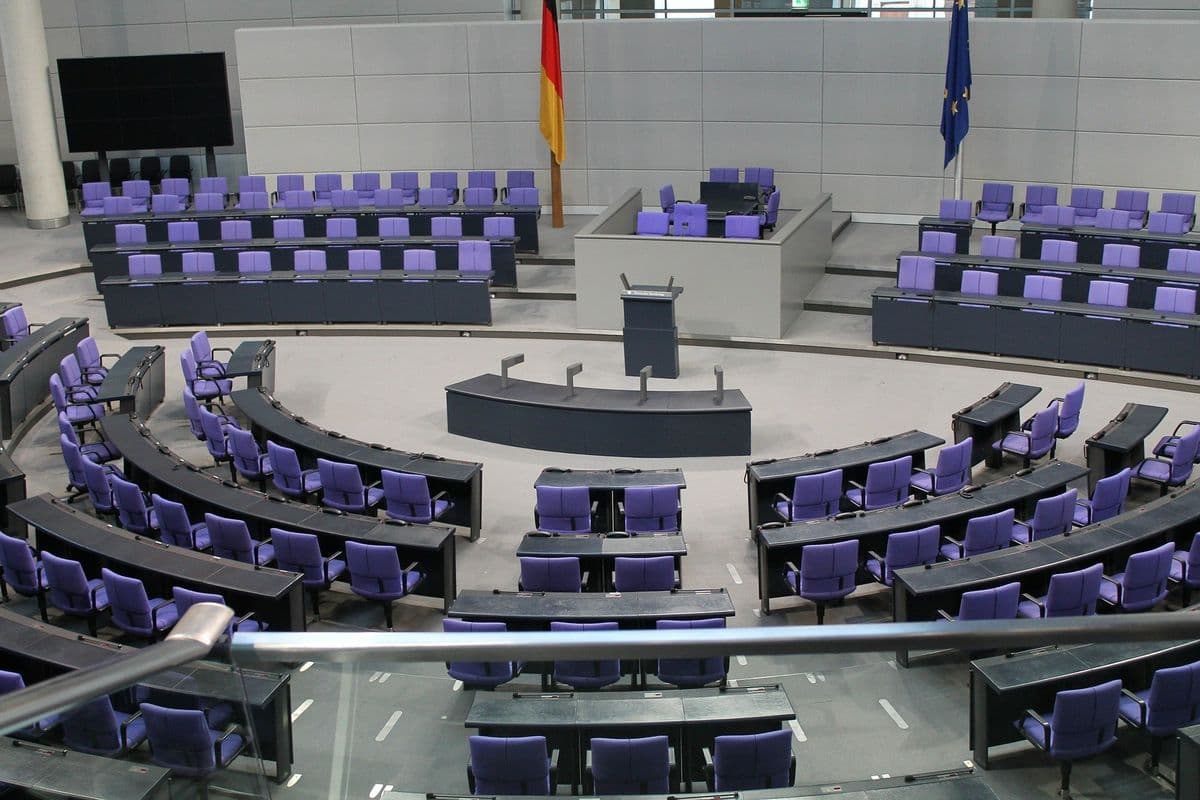
Which order in respect to time (what happens first, second, third, forth) is correct?

Why is the single-member district system with is theme’ the winner takes it all’ problematic?

 Basic knowledge for US presidential election and mass mediaWrite increasingly harder vocabulary questions based on the following text: Former US President Donald Trump is facing unprecedented criminal charges for his attempts to overturn his 2020 election defeat, making him the first president in US history to face criminal charges. The indictment is based on charges of conspiracy to defraud the United States and obstruct official proceedings. Specifically, Trump is accused of spreading false claims about election fraud, pressuring then-Vice President Mike Pence to reject electoral votes and change the election results, and inciting the Capitol riots on January 6, 2021. The indictment suggests that Mike Pence, the former Vice President, provided evidence against Trump. It details private phone calls where Trump repeatedly pressured Pence to block Joe Biden's victory. This development is particularly significant as it represents the third set of criminal charges filed against Trump in 2023, while he is actively campaigning for a return to the White House in the 2024 presidential election. Special Counsel Jack Smith noted that, although Trump is considered innocent until proven guilty, the actions of the mob during the Capitol riots were a direct "assault on democracy," fueled by lies and aimed at obstructing the certification of the presidential election results. This case will be closely watched as it unfolds, given its historical significance and potential implications for Trump's political future. Not only does it mark the first time a former president has faced criminal charges, but it also occurs at a time when Trump is actively seeking to return to political office, adding another layer of complexity to an already unprecedented situation.Write increasingly harder comprehension questions, that look further into higher-order thinking, aimed at Year 6 students based on the following text: Former US President Donald Trump is facing unprecedented criminal charges for his attempts to overturn his 2020 election defeat, making him the first president in US history to face criminal charges. The indictment is based on charges of conspiracy to defraud the United States and obstruct official proceedings. Specifically, Trump is accused of spreading false claims about election fraud, pressuring then-Vice President Mike Pence to reject electoral votes and change the election results, and inciting the Capitol riots on January 6, 2021. The indictment suggests that Mike Pence, the former Vice President, provided evidence against Trump. It details private phone calls where Trump repeatedly pressured Pence to block Joe Biden's victory. This development is particularly significant as it represents the third set of criminal charges filed against Trump in 2023, while he is actively campaigning for a return to the White House in the 2024 presidential election. Special Counsel Jack Smith noted that, although Trump is considered innocent until proven guilty, the actions of the mob during the Capitol riots were a direct "assault on democracy," fueled by lies and aimed at obstructing the certification of the presidential election results. This case will be closely watched as it unfolds, given its historical significance and potential implications for Trump's political future. Not only does it mark the first time a former president has faced criminal charges, but it also occurs at a time when Trump is actively seeking to return to political office, adding another layer of complexity to an already unprecedented situation.History of policing Pre-confederation Mostly informal policing by community residents First police officers Quebec city, mid 17th century Upper Canada, early 19th century Mandate Police conflicts between ethinc groups and employes/labours Maintain moral standards (drunkenness, alcoholism) Apprehend criminals Provincal Police Force Response to disorder resulting form gold strikes in 19th century Replaced by RCMP during 20th century Currently, Ontario,Quebec and parts of Newfoundland have their own provincal police force History of RCMP North-Wesr Mounted Police Founded in 1873 Maintain law and order Ensure orderly settlement in prairies Many problems: desertion, resignation and improper conduct Replaced by Royal Canadain Mounted Police Police Today About 70,000 police officers across Canada 199 police officers per 100,000 population Lower than Scotland (337), England(244), U.S (238) NUmber increased over past decade NUmber of female officers increased 1 out of 5 officers is a women Contemporary Policing Structure of policing Four levels Federal, Provincial, municipal, and First nations Also public transportation police (railway, airport, and transit) Some municipalities have own forces E.g, Peel, Toronoto Others use provincial force detachments or RCMP detachments Royal Candanin Mounted Police Governed by Royal Canadian Mounted Pollcei Act (1985) Broad Range of policing activities, including federal policing and international peacekeppiong Contract Policing Provincial, territorial and municipal level Concerns about local oversight and accountability In but not of communities-difficult to ensure that RCMp detachments are responsive to communities Provincial Police Three forces Ontario Provincial Police Surete du Quebec (SQ) Royal Newfoundland Constabulary (RNC) Other provinces contractually use the RCMP Responsibilities Police rural areas and areas outside municipalities Enforce provincial laws and Criminal Code Regional Police Amalgamated Forces E.g Peel region police and Halton Regional Police Force Provide Police Services to over Half of Ontarians Advantages Cheaper, more servies Disadvantages To centralized, not in touch with community Municipal Police Responsibilites Enforce Criminal Code, Provincal Statues, municipal by laws, some federal statues (e.g drugs) Largest number of officers of any level My be contracted to RCMP or Provincal force Costs are paid by the municipality First Nations Type of policing is negotiated by First Nations Commnity Autonomous reserve based First Nations Officers from RCMP or OPP Responsibilites Enforce Criminal Code, federal and provicanl statues, band bylaws Accountability Reserve based police commission or band council Private Security Services Two main types 1. Private Security Firms 2. Company based, in house security officers No more legal authority than ordinary citizens But can arrest and detain people who commit crimes on private property In Canada, Private security officers outnumber police officer by four to one Parapolice Extension of activities Lack of systems of oversight like transitional police Police Work POlicing The activities of any indivual or organization acting legally on behalf of public or private organizations or persons to maintain security or social order Pluralization of Policing The sharing between public and private security Legislative Framework Carry out tasks within a number of legislative frameworks, define role, powers/responsibilites Canadian charter of rights and freedoms- most impactful on power/actvites of police Provincial and municipal legislation - Status such as motor vehicle administration acts, highway traffic acts, liquor acts and provincial/musincpal police acts Democracy Governance Categories of Policing Recruitment and Training of police officers Police recruitment Recruiting Visible Minorites and Aboriginal People Special initvates and programs for youth, women and visible minorities PEACE (Police Ethnic and Cultureal Exchange) OPPBound (particpate in variety of activate with officer) Toronto POlice recruitment of Somali Officers Edmonton police uniforms that include a hijab Police Training Residential/non-residential academies, centralized and decentralized Physical and academic instruction, socilization into the police occupation Operational field traiing Hands-on application of principles learned in the academy Mentoship form senior officer Working Personality of Police officers Challenges of Police Work Work Enviroment Long hours and shift work Exposure to stressors, especially in high demand environments PTSD and burnout Work Organiztion Harassment of female officers Cumbersome of system of internal redress Summary A number of misconceptions arounds police work, including th emotion that most police work involves crime control A variety of influences on the roles and activities of the police Four levels of policing: federal, provincial, mnicipal and First Nations, each with different responsibilities THE STRATEGIC PLAN OF RICHARD BLAND COLLEGE OF WILLIAM & MARY 2020-2025 “The dogmas of the quiet past are inadequate to the stormy present. The occasion is piled high with difficulty, and we must rise with the occasion. As our case is new, so we must think anew and act anew.” – Abraham Lincoln What is the role of a selective, two-year, residential, liberal arts transfer institution within the higher education landscape of the Commonwealth of Virginia? This is a key question that must be answered to ensure the success of Richard Bland College (RBC) and the constituency that the College serves. The 2020 RBC strategic plan’s primary objective is to answer that very question so that the College, the community and the Commonwealth can engage successfully within this identity and purpose to the benefit of all. RBC has long been identified as the hidden gem of higher education in Virginia. The hidden adjective is based both on its relative obscurity—few are aware of RBC outside the Tri-Cities region—and its rural setting featuring 750+ acres of wetlands, bucolic forest, and the state’s oldest and largest pecan grove. Additionally, on average, a student of Richard Bland College travels a mere 36 miles to campus. This keeps the knowledge of RBC in a tightly focused radius. The gem moniker refers both to the College’s reputation for excellence and the undeniable sensation that the campus often elicits in its students, visitors, faculty and staff, the feeling of a warm and palpable embrace of care, compassion and support. That sensation is where we start. According the State Council of Higher Education for Virginia (SCHEV), 99% of the 11.5 million new jobs created since the great recession require workers to have more than a high-school education. Students with a bachelor’s degree have an earning potential almost double that of people with only a high school education, and yet only 17% of residents in the Petersburg area have a bachelor’s degree, 15% below the national average. The obstacles in the way of education have been exhaustively researched and include financial challenges, academic under-preparedness, low self-esteem, slow college assimilation and immature levels of self-efficacy. To combat this growing problem, Richard Bland College initiated a pilot program to determine the viability of a data-driven approach to improve retention and graduation rates. The program ultimately effected a cultural, organizational and operational shift at RBC, resulting in a personalized model of student support, the Exceptional Student Experience (ESE@RBC). Originally many of the practices that RBC used as the basis of ESE@RBC were adapted from the four key principles found in the American Association of Community Colleges (AACC) Pathways Project: 1) map pathways to student end goals; 2) help students choose and enter a program pathway; 3) keep students on path; and 4) ensure that students are learning. Unfortunately, limited resources made it necessary to skip some primary elements of guided pathways and instead to focus on a specific, high-priority project that was immediately available for implementation, dedicated student support. This strategic framework reimagines the way that RBC serves students, faculty and staff within the context of our existing culture, the principles of guided pathways and a hybrid work-college experience. Rather than thinking of a two-year college as a pipeline to a four-year university, this vision describes a more expansive menu of well-defined pathways to high-demand fields, all radiating from a curriculum constructed around the development of soft skills that define the liberal arts experience: critical thinking, written communication, analytical reasoning, civic engagement and oral communication. Furthermore, the impact of meaningful work is a resonating theme, providing avenues to participate in career-focused internships and jobs that develop important life & work skills, confidence, and character. Richard Bland has tested its entrepreneurial mettle and its capacity for transformation in recent years. The College was among a select few Competency-Based Education sites established by the U.S. Department of Education. We were ahead of the curve using predictive analytics to improve student retention and success rates, and online enrollment now makes up nearly 20 percent of course offerings. It may be counter-intuitive, but these and other deep-level institutional changes still to come will ensure that Richard Bland College remains true to its original mission. We prepare our students for a lifetime of endless potential.US PresidentsUS historyUS Constitution