Tag the questions with any skills you have. Your dashboard will track each student's mastery of each skill.
Give this quiz to my class
Q 1/45
Score 0
The size of a measurement
30
Vector
Scalar
Direction
Magnitude
Q 2/45
Score 0
To speed up, slow down, change direction
30
Accelerate
45 questions
Q.
The size of a measurement
1
30 sec
Q.
To speed up, slow down, change direction
2
30 sec
Q.
A physical quantity with magnitude and direction
3
30 sec
Q.
A physical quantity with magnitude only.
4
30 sec
Q.
The change in position of an object from a point of reference
5
30 sec
Q.
The total path length travelled by an object
6
30 sec
Q.
The amount of matter in an object
7
30 sec
Q.
The force of attraction of the earth on an object
8
30 sec
Q.
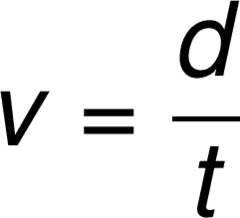
The total distance traveled per time
9
30 sec
Q.
The place occupied by an object is its _____________ .
10
30 sec
Q.
What is the difference between a scalar and a vector?
11
30 sec
Q.
Is 13 m/s a speed or a velocity?
12
30 sec
Q.
Is 50 m/s NE a speed or a velocity?
13
30 sec
Q.
Is distance a scalar or vector?
14
30 sec
Q.
Is displacement a scalar or vector?
15
30 sec
Q.
Is speed a vector or scalar?
16
30 sec
Q.
Is time a vector or a scalar?
17
30 sec
Q.
Which quantity, vector or scalar, can be positive or negative?
18
30 sec
Q.
A fixed point from which coordinates are measured.
19
30 sec
Q.
Vector quantity that locates a unique point in space relative to an origin.
20
30 sec
Q.
The amount of a measurement
21
30 sec
Q.
A method used to recombine component sums or vectors that are perpendicular to one another.
22
30 sec
Q.
When adding vectors, they should be added arrow head of one to the tail of the next. Scale and direction should be maintained.
23
30 sec
Q.
The vector that is created when vectors are added or subtracted...the resulting vector
24
30 sec
Q.
Used in vector resolution to find the adjacent component of a vector
25
30 sec
Q.
Used in vector resolution to find the opposite component of a vector
26
30 sec
Q.
Used in combining component vectors to find the angle (direction) of the resultant vector
27
30 sec
Q.
The process of breaking down a single vector into component vectors that are at right angle to each other.
28
30 sec
Q.
The process of combining similar axial components using simple addition or subtraction. The components must be parallel.
29
30 sec
Q.
An object moving through the air, subject only to the force of gravity
30
30 sec
Q.
The parabolic path of a projectile
31
30 sec
Q.
A device, when released, will launch a sphere horizontally and at the exact same moment, it will drop a ball with a hole in the middle. Which of these will strike the ground first? At what rate will they fall?
32
30 sec
Q.
What are some examples of horizontally launched projectiles?
33
30 sec
Q.
Horizontal and vertical motions are completely __________ of each other
34
30 sec
Q.
If the horizontal and vertical motions are independent of each other, what can the velocity vector of the projectile be separated into?
35
30 sec
Q.
Projectiles *always* maintain a constant ____________ velocity (neglecting air resistance)
36
30 sec
Q.
What is the *only* variable shared by *both* types of motion (horizontal and vertical)
37
30 sec
Q.
What is the vertical velocity at the highest point of a projectile's flight?
38
30 sec
Q.
For a projectile beginning and ending at the same height, the time it takes to rise to its highest point is equal to what?
39
30 sec
Q.
When an object is dropped from a moving vehicle, what is its velocity?
40
30 sec
Q.
When you are working projectile exercises, what must you consider?
41
30 sec
Q.
The slope of a velocity vs. time graph yields the ___________ of a moving object.
42
30 sec
Q.
Only the _____________ component of a projectile accelerates due to gravity.
43
30 sec
Q.
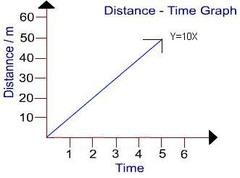
The slope of the line on a distance vs. time graph shows the ____________ of a moving object.
44
30 sec
Q.
What is the difference between speed and velocity?