Loading...


Verbs for actions and movement
Quiz by New Roxy
Customize this quiz to suit your class
Instantly translate to 100+ languages
Tag the questions with any skills you have. Your dashboard will track each student's mastery of each skill.
Give this quiz to my class
WHAT IS IT?
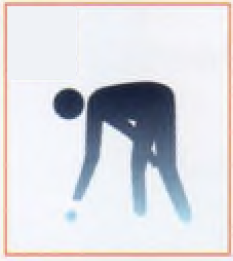
PICK UP
WHAT IS IT?

HANG FROM
WHAT IS IT?

WHAT IS IT?

WHAT IS IT?

WHAT IS IT?

WHAT IS IT?

WHAT IS IT?

WHAT IS IT?

WHAT IS IT?

WHAT IS IT?

WHAT IS IT?
 Here’s your **edited version** of the activity, now focused on **Shirley Jackson’s *“The Lottery”*** and **past and present participles**, while keeping the fun “Great Grammar Magician” game theme: --- ### 🎩 THE GREAT GRAMMAR MAGICIAN: “THE LOTTERY SPELL!” 🍀 It seems like you already know how **past and present participles** can transform simple verbs into more descriptive and expressive words. Now, it’s time to show your magical grammar powers and help the Great Grammar Magician complete her enchanting performance inspired by *“The Lottery”* by Shirley Jackson! --- ### 🌼 **THE LOTTERY SPELL!** **Directions:** The class will be divided into two groups, and each group will work together to help the Great Grammar Magician finish her magical act! Each group will receive **three magic flags** that can be used as advantages during the game: 🟩 **Green Flag** – Use for a clue about the question. 🟨 **Yellow Flag** – Use to look at the question first and decide whether to answer it or choose another one. 🟦 **Blue Flag** – Use to get another chance to answer the same question. The goal is to earn the **highest points** as a group. The first representative to raise their hand gets to choose a question to answer. There will be **six questions**, representing the **six stones** drawn during the “lottery.” Each stone contains a **Magic Spell Card** with a question your group must answer correctly to earn a point. --- ### 🪄 **MAGIC SPELL QUESTIONS** **1. Remembering** **Question:** Who is the author of *“The Lottery”?* **Expected Answer:** Shirley Jackson. --- **2. Understanding** **Question:** What is *“The Lottery”* mainly about? **Expected Answer:** It’s about a small town that follows a cruel tradition of holding a lottery where one person is chosen to be sacrificed. --- **3. Applying** **Question:** Identify a **past or present participle** used in *“The Lottery.”* Explain its function in the sentence. **Expected Answer:** Example: *“The children assembled first, of course.”* — “assembled” is a **past participle** used to describe what the children did before the lottery began. --- **4. Analyzing** **Question:** How does Shirley Jackson use participles to create suspense or describe actions in the story? **Expected Answer:** Participles like “gathered,” “watching,” or “whispered” make the actions more vivid and help build tension in the story. --- **5. Evaluating** **Question:** Do you think the townspeople’s calm behavior (described with participles like “smiling,” “talking,” “laughing”) makes the story more shocking? Why or why not? **Expected Answer:** (Open-ended) Yes, because the ordinary actions make the violent ending more disturbing / No, because it just shows how normal the ritual is to them. --- **6. Creating** **Question:** Write your own short two-line description using **past or present participles** to show tension or fear in a situation like the one in *“The Lottery.”* **Expected Answer:** (Open-ended) Example: *Shaking hands held the paper tight.* *The crowd waited, holding their breath.* --- ### 🪶 **Tie-Breaker Question** **Question:** If you were in *“The Lottery,”* what would you be doing as the black box was brought out? Use at least one participle in your answer. **Expected Answer:** (Open-ended; checks creativity and grammar) Example: *Standing in silence, I would watch the slips being drawn, my heart pounding.* --- Would you like me to make this version **visually formatted for a classroom printout** (e.g., with bold headers, emojis, and clear section boxes)?Vocabulary and Functional Words • School Vocabulary: Naming places in school (e.g., classroom, library), school materials, and various school activities. • Action Words (Verbs): Identifying action words specifically related to studying and learning. • Social Interaction: Learning familiar terms of address for school personnel and using polite expressions to seek help. DESCRIPTIVE TEXT Definition of Descriptive Text Descriptive Text is a text which says what a person or a thing is like. Its purpose is to describe and reveal a particular person, place, or thing.” Generic Structure of Descriptive Text # Identification : Identifies phenomenon (person, place, or thing) that will be described. (berisi tentang identifikasi hal / seorang yang akan dideskripsikan.) # Description : Describes parts, qualities, characteristics, etc (berisi tentang penjelasan / penggambaran tentang hal / seseorang dengan menyebutkan beberapa sifatnya.) The Characteristics / Language Feature of Descriptive Text 1. The use of adjective to clarify the noun, for example: a beautiful beach, a handsome man, the famous place in jepara, etc. 2. Focus on specific participant, has a ertain object , is not common, for example Sadengan Beach, Borobudur Temple,Christiano Ronaldo, etc 3. The use of simple present tense: The sentence pattern used is simple present because it tells the fact of the object described. 4. Action verb : verbs that show an activity( for example ; run, walk, sleep, etc) *BRITISH EDUCATION SCHOOL* *Grade 9 - English Language - Literature* *Chapter 5: The Young Tulip-grower - "The Black Tulip"* * *Section A: Reading Comprehension [12 Marks]* Answer in complete sentences. 2 marks each. 1. Describe Cornelius’s feelings and exact words when he looked at the 3 bulbs. What do they show about his character? 2. Why did Cornelius choose to save the bulbs before reading Craeke’s letter? What does this tell us about his priorities? 3. Explain how Cornelius hid the bulbs from the soldiers. Why was this action risky? 4. Why was Isaac Boxtel watching Cornelius’s house? Was he happy or sad about Cornelius’s arrest? Give evidence. 5. What important information did Isaac learn from Cornelius’s notebook? How did this change his plan? 6. Compare Cornelius and Isaac. Who loves the tulips more? Give one reason for each character. *Section B: Vocabulary in Context [8 Marks]* Choose the best meaning of the underlined word. 1 mark each. 1. Cornelius was *surprised* when Craeke ran in. a) happy b) shocked c) angry d) sleepy 2. He picked up the bulbs *carefully*. a) quickly b) with attention c) loudly d) angrily 3. The judge said Cornelius had papers of a *traitor*. a) hero b) friend c) person who betrays his country d) servant 4. The house was *empty* when Isaac entered. a) full of people b) with no one inside c) very big d) very clean 5. Cornelius thanked God the bulbs were not *damaged*. a) broken b) painted c) lost d) old 6. Isaac looked through his *telescope*. a) book b) tool for seeing far c) gun d) letter 7. Cornelius was not *frightened* of the soldiers. a) afraid b) excited c) hungry d) tired 8. Isaac was *jealous* of Cornelius. a) loved him b) wanted what he had c) helped him d) ignored him *Section C: Grammar - Past Continuous vs Past Simple [6 Marks]* Fill in with correct verb form. 1 mark each. 1. While Cornelius ............at the bulbs, Craeke ran into the room. 2. The servant .........that soldiers were coming to arrest him. 3. Isaac ............Cornelius’s house with his telescope all day. 4. When the judge arrived, Cornelius ....... the bulbs in his pocket. 5. The soldiers .........into the room while Cornelius was talking. 6. Isaac .......... the notebook after he searched all the drawers.[look][say][watch][put][run][find] *D* Who Said, write the speaker 1. "Next year, these bulbs will be black tulips. I am the happiest man!" 2. "Please, read this letter immediately, sir!" 3. "You must give that package to me. It is not yours!" 4. "Good! The soldiers will take Cornelius to The Hague. Then they will kill him." 5. "I cannot wait! He has come from The Hague." 6. "None of these was a black tulip!" *E* write your own answer according to your understanding to the current chapter. 1. If you were Cornelius, would you save the bulbs or read the letter first? Give 2 reasons for your choice. [2 marks] 2. Do you think Isaac is a villain or just ambitious? Explain your opinion with evidence from the chapter. [2 marks] *F* Complete the quotes from the chapter. 1. "I must put these bulbs safely in a ........... 2. "The bulbs are not ............I thank God for that." 3. "Last January, Cornelius De Witt left a package of papers in this ............ 4. "Today I have three small tulip from one large bulb. These bulbs will have flowers in the spring ..................Action for Qazaqstan Modules 1-6, phrasal verbs 1. Which sentence correctly uses the present continuous tense to express a temporary action? A. She works at a bank. B. She is working at a bank for the summer. ✅ C. She worked at a bank last year. D. She has worked at a bank for years. ⸻ 2. Which of the following uses the past continuous tense to describe an interrupted action? A. I was eating dinner when the phone rang. ✅ B. I eat dinner when the phone rings. C. I had eaten dinner before the phone rang. D. I was eat dinner when the phone ringed. ⸻ 3. What is the function of “is/am/are + V.ing” in a sentence? A. To show routine habits B. To describe completed past actions C. To indicate actions in progress at the moment of speaking ✅ D. To express future intentions with certainty ⸻ 4. Which sentence shows incorrect use of the past continuous tense? A. She was singing while I played the piano. ✅ B. They were talking when I arrived. C. I was reading while he was cooking. D. It was raining all night yesterday. (Explanation: A uses mixed tenses incorrectly. It should be: “She was singing while I was playing the piano.”) ⸻ 5. Choose the sentence that uses the present simple tense in a conditional structure. A. If it is raining, we will cancel the trip. ✅ B. If it was raining, we would cancel the trip. C. If it rained, we canceled the trip. D. If it rains, we are canceling the trip. ⸻ 6. Identify the sentence in which the auxiliary verb is incorrectly used. A. He is doing his homework now. B. She was watched a movie last night. ✅ C. They were playing football all afternoon. D. I am going to the store. ⸻ 7. Which sentence best demonstrates the habitual use of the present simple? A. I am jogging every morning. B. I jog every morning. ✅ C. I was jogging every morning. D. I have jogged every morning. ⸻ 8. Choose the best explanation for using “was/were + V.ing”: A. To talk about a permanent state B. To describe future arrangements C. To express a continuous action in the past ✅ D. To indicate hypothetical situationsCreate a vocabulary quiz for the following ten words: Reservation (n): a qualification to an expression of agreement or approval; a doubt. Confine: (v) keep or restrict someone or something within certain limits of (space, scope, quantity, or time). Trumped: beat (someone or something) by saying or doing something better. Dignity: (n) the state or quality of being worthy of honor or respect. Resist: (v) withstand the action or effect of, Allusions (n): are generally regarded as brief but purposeful references, within a literary text, to a person, place, event, or to another work of literature. Congruence (n) agreement or harmony; compatibility. Dubious (adj): hesitating or doubting. Emulate: (verb): match or surpass (a person or achievement), typically by imitation. Vulgar: (adj): lacking sophistication or good taste; unrefined.Got you now 👍 — you don’t want a code, you want ready-made quiz content you can paste into Quizalize so a teacher/class can use it. I’ll generate a proper SSS1 quiz bank (Maths, English, Basic Science) in a clean format. You can copy this into Quizalize “Create Quiz”. 📘 SSS1 QUIZ (READY FOR QUIZALIZE) 🧠 MATHS (10 QUESTIONS) What is 9 × 8? A. 72 B. 64 C. 81 D. 74 Answer: A Solve: 3x = 15 A. 3 B. 5 C. 6 D. 9 Answer: B What is 12²? A. 124 B. 144 C. 132 D. 122 Answer: B Simplify: 18 ÷ 3 A. 3 B. 5 C. 6 D. 9 Answer: C What is the square root of 49? A. 5 B. 6 C. 7 D. 8 Answer: C Find x: x + 7 = 20 A. 11 B. 12 C. 13 D. 14 Answer: C 5 × 5 × 5 = ? A. 125 B. 100 C. 150 D. 75 Answer: A What is 100 ÷ 4? A. 20 B. 25 C. 30 D. 40 Answer: B What is 15 + 17? A. 31 B. 32 C. 33 D. 34 Answer: B What is 10% of 200? A. 10 B. 20 C. 30 D. 40 Answer: B 📘 ENGLISH (10 QUESTIONS) Choose correct spelling A. Recieve B. Receive C. Receve D. Recive Answer: B Opposite of “fast” A. Quick B. Slow C. Sharp D. Rapid Answer: B Synonym of “happy” A. Sad B. Angry C. Joyful D. Tired Answer: C A noun is a name of a… A. Action B. Place/Person/Thing C. Verb D. Adverb Answer: B He ___ to school every day A. go B. going C. goes D. gone Answer: C Plural of child A. Childs B. Childes C. Children D. Childer Answer: C Antonym of “big” A. Large B. Huge C. Small D. Wide Answer: C A verb is a word that shows A. Name B. Action C. Place D. Thing Answer: B She is ___ honest girl A. a B. an C. the D. no article Answer: A Past tense of go A. Goed B. Gone C. Went D. Going Answer: C 🔬 BASIC SCIENCE (10 QUESTIONS) Plants absorb carbon dioxide during A. Respiration B. Photosynthesis C. Digestion D. Movement Answer: B Human breathing organ A. Heart B. Liver C. Lungs D. Kidney Answer: C Water boils at A. 0°C B. 50°C C. 100°C D. 150°C Answer: C Which is a metal? A. Rubber B. Copper C. Wood D. Plastic Answer: B The sun is a A. Planet B. Star C. Moon D. Comet Answer: B Force is measured in A. Joule B. Newton C. Watt D. Kelvin Answer: B Solid → Liquid is called A. Freezing B. Melting C. Evaporation D. Condensation Answer: B Earth revolves around A. Moon B. Mars C. Sun D. Jupiter Answer: C Human blood is pumped by A. Brain B. Heart C. Lungs D. Kidney Answer: B Energy from the sun is called A. Nuclear B. Solar C. Chemical D. Sound Answer: B ⚡ HOW TO USE IN QUIZALIZE Go to Quizalize Click Create Quiz Choose Manual Input Copy each question Paste with options + correct answer Set timer per question (5–10 sec for pressure mode) 🔥 IF YOU WANT NEXT LEVEL I can also: �Turn this into 100-question exam paper �Add hard WAEC/JAMB-level traps Or �simulate inter-house elimination rounds Just say: “upgrade me” 😈