Loading...

Vertebrados e invertebrados
Quiz by Mirian
Customize this quiz to suit your class
Instantly translate to 100+ languages
Tag the questions with any skills you have. Your dashboard will track each student's mastery of each skill.
Give this quiz to my class
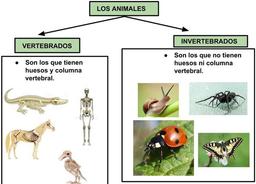
 ANIMALES VERTEBRADOS E INVERTEBRADOSCaracteristicas de animales vertebrados e invertebradosLos animales vertebrados e invertebradosEn la clasificación científica de los seres vivos, los animales (Animalia) o metazoos (Metazoa) constituyen un reino que reúne un amplio grupo de organismos que son eucariotas, heterótrofos, pluricelulares y tisulares (excepto los poríferos). Se caracterizan por su amplia capacidad de movimiento, por no tener cloroplasto (aunque hay excepciones, como en el caso de Elysia chlorotica) ni pared celular, y por su desarrollo embrionario; que atraviesa una fase de blástula y determina un plan corporal fijo (aunque muchas especies pueden sufrir una metamorfosis posterior como los artrópodos). Los animales forman un grupo natural estrechamente emparentado con los hongos (reino Fungi). Animalia es uno de los cinco reinos del dominio Eukaryota, y a él pertenece el ser humano. La parte de la biología que estudia los animales es la zoología. Los filos animales más conocidos aparecen en el registro fósil durante la denominada explosión cámbrica, sucedida en los mares hace unos 542 a 530 millones de años. Los animales se dividen en varios subgrupos, algunos de los cuales son vertebrados: (aves, mamíferos, anfibios, reptiles, peces) e invertebrados: artrópodos (insectos, arácnidos, miriápodos, crustáceos), anélidos (lombrices, sanguijuelas), moluscos (bivalvos, gasterópodos, cefalópodos), poríferos (esponjas), cnidarios (medusas, pólipos, corales), equinodermos (estrellas de mar), nematodos (gusanos cilíndricos), platelmintos (gusanos planos), etc.Animales vertebrados - invertebradosSobre los animales vertebrados y invertebrados para estudiantes de 4 grado Life Processes Identify and define the seven life processes (MRS GREN). Classification Group living organisms based on observed similarities and differences. Classify vertebrates into taxonomic groups based on visible physical characteristics. Construct a dichotomous key to classify vertebrates. Cells Compare the structure of generalised plant and animal cells, and selected microbes (e.g. bacteria, fungi and Amoeba) Distinguish among cell wall, cell membrane, nucleus, cytoplasm, temporary and permanent vacuoles, mitochondrion, chloroplast, endoplasmic reticulum and ribosomes. Relate the structure of organelles to their functions; Identify specialised cells such as blood cells, ciliated epithelial cells, nerve cells, root hair cells, sperm cells and egg cells. Explain the importance of cell specialisation in multicellular organisms; include hierarchy of cells, tissues, organs; organ systems and then organism Diffusion, Osmosis, Active transport and Osmoregulation Explain the processes of diffusion, osmosis and active transport. Identify everyday instances of these processes occurring. Discuss the importance of diffusion, osmosis and active transport in living systems. Nutrition in Plants Describe the process of photosynthesis in green plants; test for end products, starch or reducing sugar (glucose). Relate the structure of the leaf of a flowering plant to its function in photosynthesis; draw and label the external features and the internal structure (cross section) of a leaf as seen in cross section under the light microscope. Nutrition in Humans Discuss the importance of a balanced diet in humans. State components of a balanced diet (carbohydrates, fats, proteins, vitamins and minerals, water and roughage and their roles) along with the results of their deficiency or surplus. Suggest dietary recommendations for treating and preventing named deficiency and physiological diseases (such as those outlined in the manual and your notes). Perform tests to distinguish among food substances - Test for proteins (Biuret), fats (grease spot), starch (iodine), reducing sugars (Benedict’s solution). The Digestive System in Humans Relate the structures of the human alimentary canal to their functions; Draw and label simple diagrams of the alimentary canal and internal structure of a tooth required. Describe mastication and the role of teeth in the mechanical breakdown of food to be included. (Compare types of teeth in humans and compare types of teeth in herbivores and carnivores.) Explain the role and importance of enzymes role of digestive enzymes in the mouth, stomach and pancreatic enzymes in the small intestine. Discuss properties of enzymes. Deduce from tables and graphs the effects of temperature and pH on enzyme activity. Experimental Skills Follow all drawing rules as outlined in the drawing skills checklist posted in the classroom (including calculation of magnification).Vertebrados