Loading...

Warm Up Speed Test
Quiz by ROMELYN DEMATAWARAN
Customize this quiz to suit your class
Instantly translate to 100+ languages
Tag the questions with any skills you have. Your dashboard will track each student's mastery of each skill.
Give this quiz to my class
What's your answer?
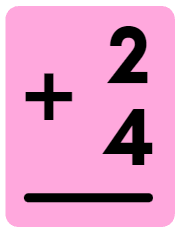
6
*
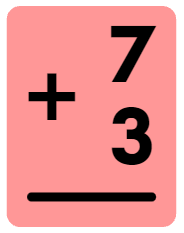
10
What's your answer?

*

*

*

*

*

*

*

*

*

*

*

*

*

*

*

*

*

*

*

 Create a quiz with the following questions and answersConvection is… The rising motion of warm air A large volume of air A boundary between two different air masses The weight of the Earth’s atmosphere over an area What are isobars? Storms with strong winds, heavy rains, lightning, and thunder Lines on a map to show high and low pressure The study of elevation This front is associated with thunderstorms, heavy rain, snow, and cooler temperatures. Warm front Stationary front Cold front Occluded front What is a barometer? A tool used to measure temperature An instrument used to measure wind speed An instrument used to measure humidity An instrument used to measure air pressure What is a tornado? Storms with strong winds, heavy rains, lightning, and thunder Large, rotating tropical weather systems A rapidly spinning column of air that has touched the ground What is topography? The study of elevation Lines on a map to show high and low pressure The condition of the atmosphere at a given place and time What are air masses? Large, rotating tropical weather systems The study of elevation A large volume of air with the same temperature What is transpiration? The process of a liquid’s surface changing into a gas The process of a gas changing into a liquid The movement of water through the soil The process of water vapor being released by plants. What is nitrification? The process bacteria use to convert nitrogen gas into ammonium ions The process of turning ammonium ions into nitrites and nitrates. The uptake of nitrates in the soil by the roots of plants. The process of turning nitrates into nitrogen gas Fun Fact: Carbon makes up ___ of your mass. 30% 18% 50% 6% What are the reactants of photosynthesis? Carbon dioxide and water Glucose and oxygen What are the reactants of cellular respiration? Carbon dioxide and water Glucose and oxygen What is a storm surge? Flooding caused by hurricanes Region of air where the air pressure is low Any product of the condensation of water vapor High pressure is… A region of air where the air pressure is greater than that of the surrounding area A region of air where the air pressure is lower than that of the surrounding area. Low pressure is… A region of air where the air pressure is greater than that of the surrounding area A region of air where the air pressure is lower than that of the surrounding area. What causes global winds? Photosynthesis The process carbon goes through Uneven heating of the Earth What can humans do to reduce carbon emissions? We can use renewable energy (ex. solar power) We can use non-renewable energy (ex. fossil fuels) Carbon can form stable bonds with many elements and and makes up the backbone of major macromolecules: carbohydrates, proteins, lipids, and ___ Nucliec acids Glucose Oxygen Nitrogen What weather is associated with low-pressure systems? Bad weather (ex. Cloudy weather) Good weather (ex. Sunny weather) What is fossilization? The burning of fossil fuels The process where fungi and bacteria decompose dead organisms Dead organisms form fossil fuels over thousands and millions of years What is the first step in the formation of tornadoes? Rising air from the ground pushes up on the swirling air and tips it over A large thunderstorm occurs in a cumulonimbus cloud The funnel grows longer and stretches towards the ground The funnel of swirling air begins to suck up more warm air from the ground What is the difference between thunderstorms and regular storms? Thunderstorms have thunder while regular storms don’t Regular storms have thunder while thunderstorms don’t There is no difference What are hurricanes? Rapidly spinning columns of air touch the ground Large, rotating tropical weather systems Storms with strong winds, heavy rains, lightning, and thunderstorms What is not a hurricane fact? They are the most powerful storms on earth They have an average wind speed of 120-180 km/h They lose their power when they travel over cooler waters or land Storm surges cause the most damages What is the difference between weather and climate? Weather is long-term while climate is short-term Climate is long-term while weather is short-term There is no difference As long as the birth rate of a population exceeds the death rate, the population size will continue to increase. At a steady, positive per capita growth rate, the population will add a larger number of indi- viduals with each generation. So, a population can increase rapidly with even a small growth rate. A pattern of increase in number due to a steady growth rate is called exponential growth. The observa- tion that populations can grow in this pattern is called the exponential (EKS-poh-NEN-shuhl) model of population growth. One way to understand the exponential model is to study a graph of population size over time. A graph of exponential growth makes the characteristic J-shaped curve shown in Figure 19-6. With expo- nential growth, population size grows slowly when it is small, but growth speeds up as individuals join the population. The exponen- tial model leads us to predict that the population size will increase indefinitely and by a greater number with each time period. Applying the Exponential Model A scientific model is useful if it helps to predict or explain pat- terns that can be observed in reality. Indeed, the exponential model matches observed patterns of growth of real populations, but only under certain conditions and for limited periods of time. For example, a population of microorganisms can grow exponen- tially if provided with an abundance of food and space and if waste is removed. Figure 19-7 shows the growth of bacteria in a laboratory. However, the exponential model does not apply to most popu- lations. In natural environments, populations cannot grow indefi- nitely because the resources they depend on become scarce and harmful wastes accumulate. Any factor, such as space, that restrains the growth of a population is called a limiting factor. All populations are ultimately limited by their environment.SPECIES INTERACTIONS Just as populations contain interacting members of a single species, communities contain interacting populations of many species. Many species have specific types of interactions with other species. This chapter introduces the five major types of interactions among species: predation, competition, parasitism, mutualism, and commensalism. These categories are based on whether each species causes any benefit or harm to the other species in a given relationship. PREDATION In predation (pree-DAY-shuhn), an individual of one species, called the predator, eats all or part of an individual of another species, called the prey. Predation is a powerful force in a community. The relationship between predator and prey influences the size of each population and affects where and how each species lives. Examples of predators include carnivores—predators that eat ani- mals—and herbivores—predators that eat plants. Many types of organisms can act as predators or prey. All heterotrophs are either predators or parasites or both. Predator Adaptations Natural selection favors the evolution of predator adaptations for finding, capturing, and consuming prey. For example, rattlesnakes have an acute sense of smell and have heat-sensitive pits located below each nostril. These pits enable a rattlesnake to detect warm- bodied prey, even in the dark. Many snakes use venom to disable or kill their prey. A venomous rat- tlesnake is shown in Figure 20-1. Other predator adaptations include the sticky webs of spiders, the flesh-cutting teeth of wolves and coyotes, the speed of cheetahs, and the striped pat- tern of a tiger’s coat, which provides camouflage in a grassland habitat. Many herbivores have mouthparts suited to cutting and chewing tough vegetation. A predator’s survival depends on its ability to capture food, but a prey’s survival depends on its ability to avoid being captured. Therefore, natural selection also favors adaptations in prey that allow the prey to escape, avoid, or otherwise ward offBroken windows are covered. Floorboards are patched and doors screwed back on. The road that was ruined by German tanks is shovelled and raked smooth. Boot-shaped bruises turn yellow then fade and disappear. Flowers grow and spread across the ugly German footprints stomped into garden beds. The village looks pretty once more. School stops for the summer and everyone is put to work on the kolkhoz, the village farm. Women and big boys begin harvesting the barley crops in the outer fields. The biggest girls milk the cows, morning and night, and keep the barns clean. Old Nikolay mends ploughs, horse harnesses, pitchforks and scythes in his workshop. Anna Pushinka teaches Yelena and her friends how to get the honey from the beehives that are scattered through the orchards. I am in charge of collecting eggs. My friends Olga and Nina help. Olga and Nina are five, a year younger than me. They are twins and look exactly alike, except Nina’s nose is a little bit crooked from when she fell out of bed and squashed it sideways on the floor. The hens, ducks and geese wander free in the summer, so collecting eggs is like a treasure hunt and takes hours. Catching the hens for their daily hugs takes even longer, but I think it’s important because hugs make everyone happy and happy hens lay bigger eggs. Olga says I’m the best hen-hugger in all of Russia. Nina says I’ll be the best cow-hugger, too, when my arms grow longer. But good hugs have nothing to do with the size of your arms. It’s all to do with the size of your heart. When we are done with the hens, Olga, Nina and I can spend the rest of the day doing whatever we like. We climb the apricot trees, chase squirrels, lie in the meadow marvelling at how hot Ushanka’s black fur becomes in the sunshine, make daisy chains and race little boats of bark in the stream. I teach Olga and Nina the alphabet and we use charcoal to write our letters and our names all over the village – on doors and walls and the freshly cut ends of firewood. In between, I practise my knots. In case the German princemonsters return. I slip into Old Nikolay’s workshop and tie knots in the harnesses hanging on the walls. I wander into gardens where the washing is hung out to dry and tie knots in the laces on pants and smocks. I creep up behind Anna Pushinka and tie knots in her apron strings. I find baling twine in the hay shed and tie my own ankles together. I do such a good job of these last knots that I can’t get them undone. I have to jump all the way to Olga and Nina’s house and ask them to cut me free with their mama’s knife. At the end of each day, Ushanka and I run out into the distant barley fields to meet Mama. This is my favourite part of the day, because Mama always shouts, ‘Little Rabbit!’ and smothers my head with kisses. And as we walk home, we sing. Everyone – women, big boys and me. I love to sing. Almost as much as I love to be kissed by Mama. Sometimes one of the boys, Mikhail, has his balalaika with him. He takes the instrument out from beneath the sheaves of barley piled high on the wagon and plays music. We sing about forests and orchards and people who find their true love. As we walk home, arm in arm, my heart fills with happiness and my belly swells with pride that I am allowed to sing along with the big boys. And I can almost forget about the German prince-monsters and their lies about Russia and their big ugly boots. Almost. But today, when Mikhail reaches for his balalaika, I see other things hiding beneath the barley sheaves. Three of the mamas rush forward and cover them up, but it’s too late. I know they are there. I’ve already seen them. Rifles. Lots of rifles. Mikhail hugs his balalaika to his chest and blushes. ‘So play!’ cries Mama, her voice oddly loud and high. ‘Let’s play Sasha’s favourite song, “The Little Birch Tree”.’ So Mikhail plays and everyone sings about the lovely birch tree with its curly leaves and the branches that will be turned into silver flutes. They sing too quickly, too loudly, and as they sing and walk, they cast nervous sideways glances at me. ‘It’s alright,’ I say, when the song comes to an end. ‘I didn’t see the rifles.’ Mama nods and smiles, and I know it was the right thing to say. But I did see the rifles. And I think about Yelena wanting to get lots of guns and dynamite for the Partisans so they can shoot the Germans and blow them into thousands of tiny pieces, and Mama looking as though she agreed, and I know this is what the mamas and the big boys are doing. As well as harvesting, they are helping the Partisans. Three days later, I wake before dawn and I am all alone. Yelena is always here beside me when I wake. But not this morning. I climb down from our bed above the stove. Mama is filling a cloth sack with bread. She ties it closed with a piece of string and hands it to Yelena. ‘Stay out of sight,’ says Mama. ‘And don’t return until after dark.’ ‘Where’s she going?’ I ask. ‘Nowhere,’ snaps Mama. ‘Then why does she need all that bread?’ I ask. ‘There’s nothing left for us.’ Mama baked four loaves last night and she has stuffed them all into the sack. Yelena opens her mouth, but before she can speak, Mama shoves her out the door and sends her on the way to nowhere. Mama turns and stares at me, her blue, blue cornflower eyes wide with worry. ‘I know,’ I say, flopping down on the bench. ‘I didn’t see any bread.’ Mama sits beside me and takes my hand. ‘And . . .?’ she prods, obviously waiting for more. I puzzle for a while, then say, ‘And I don’t have a sister called Yelena.’ Mama laughs, softly and with a little bit of sadness around the edges. ‘Sweet Little Rabbit! You do have a sister called Yelena.’ ‘I do?’ I ask, now confused. ‘I haven’t seen the rifles or the bread, but I have seen Yelena?’ ‘Yes.’ Mama smiles and the magic makes me smile, too. And I am glad that Yelena is real because I love her very much. ‘Yelena is real,’ Mama explains, ‘but she does not carry sacks of bread into the forest for the Partisans.’ ‘Of course not!’ I shout, slapping my forehead. ‘Because there is no bread!’ Mama laughs loudly now, with not a hint of sadness. She hugs me, pressing me against her warm, loving heart, covering my head with kisses. ‘Clever Little Rabbit,’ she murmurs, and then, in barely a whisper, ‘Your papa would be so proud.’ When I wake the next morning, Yelena is sleeping beside me, her mouth open, her braided hair unravelling. Mama is serving kasha to a strange woman seated at our table. I crawl down from above the stove and slide along the bench beside her. I stare at her pants, her tunic, the rope she is using as a belt and her big boots. She’s dressed like a man! And there’s a rifle leaning against the wall near the door. ‘Hello,’ I say. ‘I’m Sasha.’ The woman doesn’t reply. She just shovels down her kasha. I line my four wooden bears along the table in front of her bowl and say, ‘These are my bears: Big Bear, Medium Bear, Little Bear and Even Littler Bear.’ ‘Hello, Sasha. Hello, bears.’ She smiles but she doesn’t tell me her name. ‘Why are you dressed like a man?’ I ask, tugging at the sleeve of her tunic. ‘Because men’s clothes make it easier to run and climb and crawl and shoot,’ she says. ‘You’re a Partisan!’ I gasp. ‘But she’s not real,’ says Mama, placing a bowl of kasha before me. ‘Is the kasha real?’ I ask. Mama laughs. ‘Yes, Little Rabbit.’ I’m glad the food is real, because I’m hungry. But I’m disappointed that the woman is not real. I was going to ask if I could use her rope-belt to tie her ankles together. For practice. But if she’s not real, then the rope and her ankles aren’t either. The woman finishes her kasha, hangs her rifle over her shoulder, kisses Mama on the cheek then slips out the door. I run to the window to watch her leave, but by the time I get there, she’s gone. Vanished. ‘Because she’s not real,’ I whisper. A week later, Mama and I are working in the garden. We sing as we weed between the flowers and pluck caterpillars from the vegetables. Anna Pushinka is picking strawberries in her garden and wanders over. ‘Taste these,’ she says, holding out the basket. Mama reaches in and takes out a fat strawberry and a tiny piece of folded paper. The strawberry goes into her mouth, the paper into her pocket. ‘What’s on the paper?’ I ask. ‘Paper?’ Anna Pushinka replies with a wave of her hand. ‘Goodness, Sasha! Who has money for paper? These are lean times. We must choose between paper for writing and noodles for our soup. And I always choose noodles.’ She chuckles and I know the paper is yet another thing that is not real. That night, Mama slips the paper to Yelena, but she drops it on the floor. I pick it up for her, and I see that there are tiny words and numbers written all over it. I wish I could read better. I’m desperate to know what it says. Or rather, what it doesn’t say, because it’s not real. Later, when Mama has tucked us into our bed above the stove and Ushanka has wrapped herself around the top of my head, I ask Yelena, ‘What’s on the paper?’ ‘What paper?’ says Yelena. ‘The paper that isn’t real,’ I reply. Yelena stares at me, nibbling her lip, then whispers, ‘A message for the Partisans. Stuff about where the Germans have their headquarters and when their trains are travelling and where they store their ammunition.’ ‘Why?’ ‘So the Partisans can blow them up.’ Yelena grabs my arm. ‘But don’t tell anyone. It’s a secret.’ ‘What’s a secret?’ I ask. ‘The message.’ ‘What message?’ I say, my eyes wide. Yelena laughs. ‘Good boy, Sasha.’ My belly swells with pride. I know how to play this game. ‘How are your knots coming along?’ asks Yelena. ‘Good! Yesterday, I crept into the dairy and tied knots in the apron strings of all the girls who were milking and only one of them noticed. Today, I tied Olga’s ankles together with Mama’s embroidery thread and just now, while you were taking a bath, I tied the sleeves of your blouse together in an enormous knot.’ Yelena rolls her eyes, then says, ‘I’ll see if I can find you some rope for practising.’ ‘Practising what?’ I ask. ‘Your knots,’ she says. ‘What knots?’ Yelena, my big sister who is twelve and always serious tHEALTH EDUCATION 3. SPECIFIC OBJECTIVES: Students should able to know about_______ 1. definition of health education 2. aims of health education 3. objectives of health education 4. principles of health education 5. scope of health education 6. planning of health education 7. steps in planning health education 8. levels of health education 9. doctors s responsibility 4. INTRODUCTION: Health education is a term frequently used by health care professional. its aims at individual and community health. Health education is the translation of what is known about health into desirable individual and community behaviour pattern by means of an education process. Definition: “A process aimed at encouraging people to want to be healthy , to know how to stay healthy, to do what they can individually and collectively to maintain health And seek help when needed”. OBJECTIVES - To inform people or disseminate scientific knowledge about prevention of disease and promotion of health - To motivate people to change their habits and lifestyle that are harmful to their health also motivate people to adopt habits and ways of living conducive to healthy living. - To guide the people who need help to adapt and maintain healthy practices and lifestyle by showing proper community resources. --- PRINCIPLES OF HEALTH EDUCATION - Credibility Of Message: It is the degree to which the message to be communicated is perceived as trustworthy by the receiver. - Creating interest among participants: It is a psychological principle that people are unlikely to listen to things that are not of their interest. If a health programme is based on the felt needs, people will participate in the programme willingly. - Motivating the participants: Motivation is like a petrol engine that drives the mental engine. It is the fundamental desire in every person to learn. Motivation is contagious; one motivated person may spread motivation throughout the group. 13. - Enhance comprehension of content: It means health education should be based on the level of understanding, education and literacy of people at whom the teaching is directed. Teaching should be within the mental capacity of the audience. - Ensure reinforcement: Repetition at intervals is necessary to promote learning. Without reinforcement and feedback, students can go back to the pre-awareness stage. - Encourage active participation: Health education should aim at encouraging people to work actively with health workers and others in identifying their own health problems and also in developing solutions. 14. - Learning by doing: Teaching is effective when individuals actively participate in health education. Learning becomes active and quicker if the individuals are made active physically as well as psychologically. - Known to unknown: The people in a community know something and the health educator enlarges this knowledge. If the health educator links new knowledge with the old knowledge, it can enhance learning. - Maintaining good human relations: Sharing of information, ideas and feelings happens most easily between people who have a good relationship. 15. - Setting an example: The health educators should set a good example in the topic they are dealing with as it fosters better understanding. - Regular feedback: Feedback is one of the key concepts of the system approach. The health educator can modify the elements of the system in light of the feedback from his audience. For effective communication, feedback is of paramount importance - Efficient leadership: Leaders are agents of change and they can be made use of in health education work. Psychologists have shown and established that we learn best from people we respect and regard. 16. The essential attributes of a leader are as follows - Understands the needs of the community. - Provides proper guidance. - Takes initiative. - Is receptive to the views and suggestions of people. - Identifies himself with the community. Is selfless, honest, impartial, considerate and sincere. - Is easily accessible to people. 17. SCOPE OF HEALTH EDUCATION 1. Nutrition 2. Hygiene 3. Family health 4. Disease prevention and cantrol 5. Psychological health 6. Prevention of accident 7. Use of health services 8. Human biology 19. - Nutrition: The aim of nutrition education is to guide people to choose optimum and balanced diets, remove prejudices and promote good dietary habits. nutrition education is a major intervention for the prevention of malnutrition, promotion of health and improving the quality of life. 20. - Hygiene: This has two aspects: personal and environmental. Personal: The aim of personal hygiene is to promote standards of personal cleanliness . Environmental: Has two aspects: Domestic and community. All environmental sanitation programmes should include health education 21. - Family health: The family is the first defence as well as the chief reliance for the well-being of its members. One of the main tasks of health education is to promote family self-reliance, especially regarding the family's responsibilities in child bearing, child rearing, self-care and in influencing their children to adopt a healthy lifestyle. 22. - Disease prevention and control: Drugs alone will not solve health problems. Without health education, a person may fall sick again and again from the same disease. Educating the people about the prevention and control of locally endemic diseases is the first of the eight essential activities in primary health care. 23. - Psychological health: Psychological health problem can occur everywhere. There is a tendency to an increase in the prevalence of psychological diseases when there is a change in society from agriculture to an industrial economy and when people move from the warm intimacy of a village. 24. - Prevention of accidents: Accidents are a feature of the complexity of modern life. Accidents can occur in home, road and place of work. The predominant factor in accidents is carelessness that can be tackled by health education. 25. - Use of health services: Many people, particularly in rural areas, do not know what health services are available and many more do not know. There is a communication gap between the public and state health administration in the form of feedback for further improvement of health services. One of the declared aims of health education is to inform people about the health services available in their community. 26. PLANNING FOR HEALTH EDUCATION planning: is the process of making thoughtful and systemic decision about what needs to be done , how it has to be done, by whom And with what sources. 27. Principles of planning health education 1) Focus on actual current needs and context of community: It is important that plans are made with the needs and context of the community in mind. Health education should try to understand what is currently happening in the community one works in. 2) Plan for basic needs and interest of the community: Consider the basic needs and interests of the community. If the local needs and interests are not kept under consideration, the plans may not be effective. 28. 3) Planning with actual beneficiaries of health education: Plan with the people involved in the implementation of an activity. If people are included in planning, they will be more likely to participate and the plan will be more likely to succeed. 4) Identify and use all relevant community resources: It is essential that the health educator identify all the relevant resources that are locally available which could be used for benefit of people receiving the health education. 29. 5) Follow principle of flexibility: Planning should be flexible, not rigid. One should be able to modify the plans when necessary. For example, you would have to change your priorities if a new problem needing an urgent response arose. 6) A realistic plan not hypothetical: The planned activity should be achievable and take into consideration the financial, personal resources available and time constraints. Planning must be realistic; do not plan unachievable activities. 30. Steps in planning health education Planning is a continuous process. It does not just happen at the start of project . Health education must be well planned to actually improve and promote individual, family and community health 31. - Needs assessment: Conducting needs assessment is the first and probably the most important step in any successful planning process. assessment is the process of identifying and understanding the health problems of the community and their possible causes. - Identify priorities: After identifying the needs and resources of the community, the next is to identify their priorities because each community may have several problems but the urgent have to be given top priority in health education. For example: goitre 32. - Set the goals and objectives: In planning the process of health education, setting goals and objectives is the third and most essential step because these goals and objectives serve as consciously thought baseline parameters to be achieved during health education. - Develop strategies: Prior to the implementation of the health education intervention one must plan, develop and evaluate the several alternative strategies to achieve the set goals and objectives of health education because each problem and target community is quite unique. 33. - Implementation: This is the core phase of the health education process which includes carrying out the planned strategies so that the set goals and objectives of health education may be achieved. - Monitor and evaluation: This is the final step of the planning process of health education where continuous monitoring as well as end evaluation is carried out to ensure the degree to which stated goals and objectives have been achieved. 34. LEVELS/APPROACH OF HEALTH EDUCATION 35. INDIVIDUAL LEVEL - Individual Approach: The health education must first create an atmosphere of friendship and allow the individual to talk as much as possible. In this individual teaching we can discuss, argue and persuade the individual to change his behaviour. But by this we can reach to a small population and who come in contact with us. Methods of individual health education 1) Home visit 2) Personal contact/ counselling 3) Personnel letters 36. 1) Home visit: A home visit is one of the best approaches for individual health education because it can become one of the best opportunities for health education with individuals and their families. Home visits are important to understand the real background of families, their living conditions and the environment in which they live. 37. 2) Personal contact/counseling : Personal contacts or counselling (one-to-one communication) is a helping process where one person explicitly and purposefully gives his or her time to assist people explore their situations and act on a solution. After this the counsellor needs to work together with the person to find solutions that are appropriate to their situation. 38. 3) personal letters: Personal letters may also be used for individual health education, where health educators may get an opportunity to dispatch letters or printed education material to the people in a target community. 39. GROUP LEVEL Group health education may be useful way to deliver health education massages in efficient manner. A well organized group permits sharing of experiences and skills so that people are able to learn from each other. 40. Methods of group discussion 1)Lecture method: (Chalk & Talk ) A lecture may be defined as carefully prepared oral presentation of facts organized thoughts and ideas by a qualified person. The group should not be more than 30 and talk should not exceed 15-20 minutes. By using suitable audiovisual aids. 2) Group discussion: A group is an aggregation of people interacting in a face to face situation. It is a very effective method of health communication. 41. 3) Demonstration: A demonstration is a carefully prepared presentation to show how to perform a skill. This procedure is carried out step by step before an audience. 4) Panel discussion: In a panel discussion 4-8 qualified persons talk about the topic. Sit and discuss a given topic in front of a large group/audience. The chairman opens the meeting. Panel comprises of a chair person and 4-8 speakers. After the main aspect of the subject are explored, the audience is invited to take part. 42. 5) Symposium: It is a series of speeches on a selected subject. Each expert person present it briefly and at the end of session the chair person make a comprehensive summary. Audience are allowed to raise question. 6) Workshops : It consists of series of meetings usually 4 or more with emphasis on an individual work, within the group and with the help of consultants and response personnel. 7) Role play: This is a brief acting out of an actual situation for the benefit of the audience for better understanding. 43. 8) Conference and seminars: This programmes are usually held on a regional, state/national level. Where several experts from different disciplines meet to deliberate on a particular theme, to appraise others of latest knowledge and research in a particular field. 9) Open forum: It refers to the public meeting which are held for various purposes in the community, for example: gram sabha 44. COMMUNITY LEVEL It is meant for a defined community and is not only to create awareness but also to help people understand their health problems and needs, find alternatives solutions to their problems and needs , implement them, evaluate and get feedback and accordingly do the needful. For health education at the community level, it is better to approach local leaders who are influential and who have the people’s confidence. These may include local officers such as gramsevak, panchayat sarpanch ,police officer or block development officer etc . 45. HOSPITAL LEVEL 1) Health Education in OPD/Outdoor: The patient and his attendants have to spend a lot of time in the outpatient department for health check-up, treatment, registration, diagnosis, admission procedure etc. This period can be utilised for health education. For this, the following means/devices can be used: - Exhibiting pictures, posters, charts, bulletin board and models in the waiting hall. - Arranging group discussion, slide show, or documentary film in a proper place and on a proper topic. - Giving health education on a personal level in the consulting room. This mainly includes nutrition clinic, family planning clinic, psychiatric clinic etc. 46. - Distributing pamphlets. - Arranging street plays or nukkad naatak in the outpatient department or its neighbourhood. 47. 2) Health Education in wards/ IPD: While taking care of the patients the indoor patients, doctors s have the opportunities to educate them. This period can be fully utilised to give health education to the patients. For this the following methods can be effective: - Conversation with the patient and motivating him for change in his behaviour. - Imparting health education by arranging live demonstration for nutrition, treatment, diagnosis etc. - Providing clinical or bedside teaching. - Providing incidental teaching to patient and his attendants. 48. - Presenting examples. To describe the gains of health education in an individual suffering from the same health education in an individual suffering from the same disease and arranging a meeting between the patient and the cured old patients. Based on the provided sources, here is a comprehensive extraction of the information regarding the water cycle, energy transfer, and Earth's wind systems, organized into key points: The Water Cycle and Its Reservoirs • Definition: The water cycle is the continuous movement of water among various reservoirs on Earth. • Water Reservoirs: These are storage locations for water and include: ◦ Oceans, seas, and lakes. ◦ Rivers, glaciers, soil, and rocks. ◦ The atmosphere and living organisms. • Total Volume: The total amount of water on Earth does not change, even when it changes state, because it is constantly being replaced or recycled through the cycle. Main Processes and Energy Transfer The movement of water through the cycle is driven by energy (thermal energy from the Sun) and force (gravity and wind). • Energy Gain (Absorption): ◦ Melting: Water changes from a solid state (ice) to a liquid state and gains energy. ◦ Evaporation: Liquid water changes into a gas state (water vapor) by gaining thermal energy. ◦ Transpiration: A specialized type of evaporation occurring in plants where water vapor is released through tiny holes in leaves called stomata. Approximately 10% of water vapor in the air comes from transpiration. • Energy Loss (Release): ◦ Condensation: Water vapor (gas) cools down and changes back into liquid water, releasing energy. ◦ Freezing: Liquid water changes into a solid state (ice) and loses energy. • Other Key Steps: ◦ Precipitation: Water falls back to Earth as rain, snow, sleet, or hail (snow pellets). ◦ Runoff: Water flows over Earth's surface into streams, rivers, and eventually larger bodies of water like oceans. ◦ Collection: Rainwater is collected in different water bodies to start the cycle again. Forces Driving Water Movement • Gravity: The main force that pulls water downward. It is responsible for: ◦ Bringing precipitation (rain and snow) from clouds to the surface. ◦ Moving ice in glaciers from higher to lower elevations. ◦ Causing liquid water to flow downhill into rivers and seas. ◦ Leakage: Pulling liquid water down into the ground to reach groundwater reservoirs. • Wind: Another force that affects water movement and transports water to different locations on Earth. Atmospheric Processes • Cloud Formation: Water vapor attaches to particles such as dust or smoke in the air and condenses into tiny droplets. When millions of these droplets join, they become heavy and fall as rain. • Convection: The transfer of heat in liquids and gases. ◦ Warm air/liquid: Becomes less dense, lighter, and rises upward. ◦ Cold air/liquid: Is more dense, heavier, and moves downward to replace the warm fluid. ◦ This process leads to convection currents, which help determine regional climates and drive wind and ocean currents. Solar Radiation and Climate The amount of solar energy reaching Earth differs from place to place, which affects the weather: • Hottest Regions (Equator): Sun rays fall perpendicular (vertical). Heat is concentrated on a small area, making the weather hot. • Moderate Regions: Sun rays fall semi-inclined. Heat is distributed over a larger area, making the weather warm. • Coolest Regions (Poles): Sun rays fall very slanted (inclined). Heat is spread over a very large area, making the weather very cold. Earth's Wind System • Wind Formation: Wind is generated when warm air (heated by the Sun) rises and is replaced by cooler air flowing from nearby areas. • Factors Affecting Wind: The amount of solar radiation and the rotation of Earth determine global wind directions. • Global Wind Cycle: Unequal heating between the equator and the poles generates a constant wind system. Warm air rises at the equator and moves toward the poles, while cold air from the poles moves toward the equator. • Importance: If there were no wind, the equator would become extremely hot, the poles would freeze solid, and many ecosystems would disappear. Practical Examples • Turkey’s Salt Lake: High evaporation in the summer can turn this large lake into a small puddle or dry it up completely. It is a critical site for flamingos, which migrate there to breed and feed on algae in the shallow, warm water.Warm UpWarm-upWarm_Up