Loading...


Weekly Quiz 4 - VPI/Biomaterials
Quiz by Miguel Dorante
Tag the questions with any skills you have. Your dashboard will track each student's mastery of each skill.
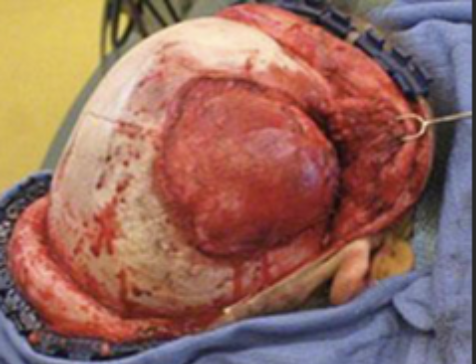
A 3-year-old boy is brought for evaluation of a right frontotemporal cranial defect. A photograph is shown. Which of the following materials is most appropriate for reconstruction?
Autologous bone
Bone morphogenetic protein (BMP)
Calcium phosphate paste
Porous polyethylene
Titanium mesh
For patients with velopharyngeal incompetence, which of the following muscles is used to perform sphincter pharyngoplasty?
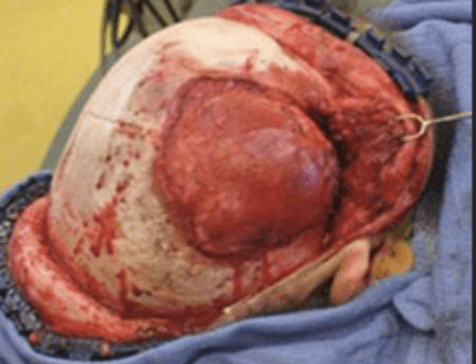
A 3-year-old boy is brought for evaluation of a right frontotemporal cranial defect. A photograph is shown. Which of the following materials is most appropriate for reconstruction?
3-month-old infant with 22q11.2 deletion syndrome is evaluated for an isolated cleft of the soft palate (Veau I). A Furlow palatoplasty is planned at age 9 months. Compared with nonsyndromic patients with the same cleft type, this patient will have a higher postoperative risk for which of the following?
A 3-year-old girl is undergoing tissue expansion of the scalp and forehead for resection of a giant congenital nevus. Which of the following changes is most likely to be observed in the area undergoing expansion?
A 7-year-old girl with a history of cleft lip and palate is brought to the office because of hyponasal speech, which is confirmed by the speech language pathologist. The patient and her family report that people have no trouble understanding her speech. Medical history includes primary cheiloplasty, primary rhinoplasty, primary palatoplasty, and posterior pharyngeal flap. Which of the following is the most appropriate next step in management?