Loading...

What can you say in English
Quiz by Karina Kerstens
Customize this quiz to suit your class
Instantly translate to 100+ languages
Tag the questions with any skills you have. Your dashboard will track each student's mastery of each skill.
Give this quiz to my class
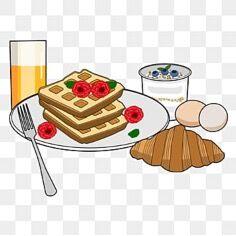
Put in the correct word order: for breakfast/ what/ do you eat/ ?
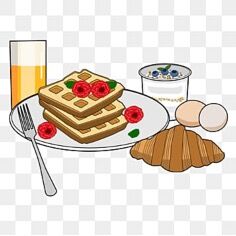
For breakfast you do eat what?
What do you eat for breakfast?
Do you eat what for breakfast?
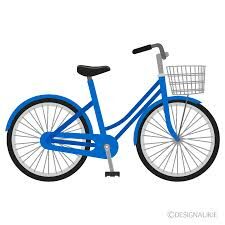
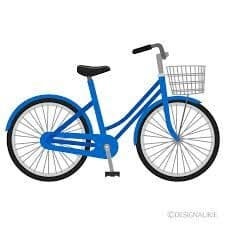
Put in the correct word order: a blue bike/ has got/ Mary’s brother
Put in the correct word order: for breakfast/ what/ do you eat/ ?
Put in the correct word order: a blue bike/ has got/ Mary’s brother
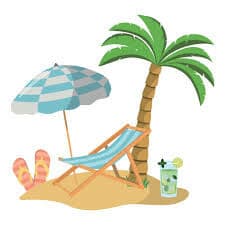
Put in the correct word order: Katie and Max/ going/ on holiday/ are
What is the correct answer? How are you?

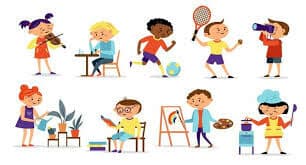
What is the correct answer? What‘s your hobby?
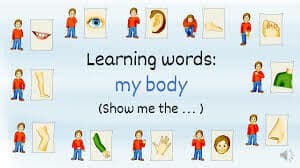
Which parts of the body do you know? What belongs to your head and what to the rest of your body?
Which words belong to which group?
Say in English: Sage, wie du heißt:
Say in English: Sage, wie alt du bist: I‘m … years old.
Say in English: Sage deine Lieblingsfarbe: My favourite …
Say in English: Sage, dass du gerne Eis ist:
Die vier folgenden Wörter werden dir vorgesprochen. Hör genau zu! Sprich sie dann leise nach und streiche das Wort aus, in welchem das „a“ anders als bei den restlichen drei ausgesprochen wird. „Table, name, watch, plane
Guess the last word and write it down.
Guess the word an write it down.
Guess an write it down.
Guess the word and write it down.
 Yaama I'm Jack Evans and you're watching BTN. Here's what's coming up. We uncover the story behind this famous photo, learn about First Nations seasons and find out the history of Book Week. What is Statehood? Reporter: Tatenda Chibika INTRO: But first, the Prime Minister Anthony Albanese has announced that Australia will join other countries in recognising Palestine as an independent state. So, what does that mean? Tatenda found out. Anthony Albanese, Prime Minister: Australia will recognise the state of Palestine. Australia will recognise the right of the Palestinian people to a state of their own. We will work with the international community to make this right a reality. Tatenda Chibika, Reporter: That's the moment our Prime Minister said Australia would recognise Palestine as an independent state at the upcoming United Nations General assembly next month. It's something other countries, including France and Canada, have said they'll be doing too. So, what does that mean exactly? To be considered an independent state under international law a place needs to have its own land or territories with defined borders, it needs to have people who permanently live there, have a working government and it has to be able to talk and make deals with other countries. Once a place meets all those rules, it can ask to be recognised by other independent states and countries. But a big step in becoming an independent state is being fully recognised by the United Nations. To do that you first need to get approval from at least nine members of the UN's Security Council. That's a group of countries responsible for maintaining international peace and security. But even then, that tick of approval can still be blocked by one of the Security Council's five permanent members Russia, China, the UK, the US and France. If the Security Council approves, the decision then goes to the UN's General Assembly where at least two thirds of the UN's 193 members have to agree to make it official. Yeah, it's a pretty complex process which is why we've only seen a handful of countries recognised by the UN in recent years like South Sudan and Montenegro. Others like Kosovo are only 'partially' recognised which means they have some recognition but not enough to become a full member state at the UN. Right now, Palestine is recognised by more than 140 countries — that's more than two thirds of the UN General Assembly. So, why hasn't it become a UN member state yet? Well, it came pretty close last year when 12 members of the Security Council voted in favour of it. VANESSA FRAZIER, AMBASSADOR OF MALTA, APRIL 2024 UNSC PRESIDENT: I shall now put the draft resolution to the vote. But the US, a close ally to Israel, used its special powers to block Palestine from becoming a member state. VANESSA FRAZIER: Those against? At the time, the U.S said Palestine and Israel needed to come to an agreement on their own first. Throughout the years, there have been attempts to figure out a way for both Palestine and Israel to exist peacefully alongside each other but that hasn't happened yet. And now Israel has said that recognising Palestine as an independent state would be rewarding Hamas the group in charge of Gaza which was responsible for the terror attacks on October 7th, 2023. But the Palestinian Authority which governs parts of the West Bank says Hamas won't have a role in any future state of Palestine which will exist peacefully alongside Israel. Australia, like the US, had previously said that it wanted Israel and Palestine to figure out things by themselves first but because of how the war has been going the Australian government is worried that if it continues to wait, there might not be a Palestinian state to recognise. ANTHONY ALBANESE, PRIME MINISTER: There has been too many lives lost, both Israeli's and Palestinians and the world is saying we need a solution to this conflict, we need to end the cycle of violence and the way to do that is to have a two-state solution. News Quiz Russia's President Vladimir Putin stepped foot on American Soil for the first time in a decade to meet with US President Donald Trump. What state did they meet in? Alabama, Alaska or Arizona?It's Alaska. The two leaders met to discuss a way to end the war in Ukraine but weren't able to make any final agreements. DONALD TRUMP, US PRESIDENT: There were many, many points that we agreed on. Most of them, I would say, a couple of big ones, that we haven't quite got there, but we've made some headway. There's no deal until there's a deal. A lot of people criticised the two world leaders for not including Ukraine's president Volodymyr Zelenskyy in the meeting. But that didn't seem to worry Mr Trump who said the meeting was a success and Mr Putin even invited the US President to meet up again in Russia. DONALD TRUMP: We'll see you again very soon. Thank you very much, Vladimir. VLADIMIR PUTIN, RUSSIAN PRESIDENT: Next time in Moscow. DONALD TRUMP: Oh, that's an interesting one. No, no, no. I'll get a little heat on that one. Last week thousands of people marked the 80th anniversary of VJ Day. What does VJ Day commemorate? The victory of Allied forces in Europe, the surrender of Japan and the end of World War II or the dropping of the first atomic bomb? VJ Day or Victory over Japan day commemorates the surrender of Japan and the end of World War II on the 15th of August 1945. Around the world, and here in Australia, people marked the anniversary with ceremonies remembering those who fought in the war. REPORTER: Who will you be remembering today? VETERAN: Oh, a lot of fellows that I knew that never made it home. Scientists in the UK have created toothpaste that includes which of these ingredients? Hair, eye lashes or fingernails? Yeah, they're all a bit random and gross but the answer is hair. According to scientists from King's College in London, hair could be the key to good oral health because it contains a protein called Keratin which they say when mixed with saliva forms a crystal-like protective coating similar to enamel. And Swifties rejoice because Taylor Swift has announced her 12th Studio album. It's called life of a show what? Is it show pony, show girl or show bag? It's Life of a Showgirl and it'll be released October 3rd. Vincent Lingiari Reporter: Joseph Baronio INTRO: Now to this very famous photograph. It was taken 50 years ago and depicts a really significant moment in Australian history. Joe found out about the story behind it. On the 16th of August 1975, this famous photo was taken. It shows the former Prime Minister Gough Whitlam pouring sand into the hand of Aboriginal leader Vincent Lingiari. A simple gesture that symbolised handing the land at Wave Hill in the Northern Territory back to the Gurindji people. But the journey to get there was far from simple. It started back in the 1960s. At the time, Wave Hill was the biggest cattle station in the world, controlled by British landowner Lord Vestey. The Gurindji people, who had lived on the land for generations, worked for Vestey, but they weren't paid fairly, and conditions were tough. NEWS REPORTER: The station's 100 aboriginal stockmen, with their 100 dependents, are camped in the dry bed of the Victoria River with little shade from 90-degree heat, dust and flies. Eventually, Gurindji leader Vincent Lingiari said it was time to act. VINCENT LINGIARI: I said, "What was it before Lord Vestey born and I was born?" It was blackfella country. So, on August 23rd, 1966, Mr Lingiari and his fellow Aboriginal workers went on strike. It became known as the Wave Hill Walk Off. They moved their camp away from the Wave Hill station to a sacred site called Daguragu on Wattie Creek. They wanted to set up their own cattle station, and said they wouldn't move until their land was returned to them. For years, petitions and negotiations went on between the Gurindji people, the NT Administration, and the Australian Government in Canberra. CLAPPERS: 31. 32. 33. DAVID QUINN, ABSCOL: Well, it's basic justice that their land is recognised. PROTESTORS: Equal rights! As the news spread across the country, thousands of Aussies joined the campaign, including the leader of the Labor Party, Gough Whitlam, who made this promise during his 1972 election campaign. GOUGH WHITLAM: We will legislate to give Aborigines land rights. Not just because their case is beyond argument, but because all of us as Australians are diminished, while the Aborigines are denied their rightful place in this nation. Later that year, Gough Whitlam became Prime Minister. (Song From Little Things Big Things Grow, Song by Kev Carmody and Paul Kelly, 1993) From little things big things grow,from little things big things grow… But it wasn't until 1975, 9 years after the Wave Hill Walk Off started, that he followed through with his promise. Eight years went by, eight long years of waiting'Til one day a tall stranger appeared in the landAnd he came with lawyers and he came with great ceremony GOUGH WHITLAM: I solemnly hand to you these deeds as proof in Australian law that these lands belong to the Gurindji people. And through Vincent's fingers poured a handful of sandFrom little things big things grow 50 years on, and The Wave Hill Walk Off is seen as a pivotal moment in Australia's history. It led to significant legal and social changes for First Nations people, which is something many agree is worth celebrating. First Nations Seasons Reporter: Saskia Mortarotti INTRO: Recently, Melbourne's Lord Mayor suggested ditching the four-season calendar that most of us are familiar with and adopting a six-season Wurundjeri calendar instead saying it gives a better description of what the weather's actually like there. Sas found out more about the different seasonal calendars used by First Nations people. SASKIA MORTAROTTI, REPORTER: Right now, in most of the country, it's pretty cold. COLD GIRL: Think of somewhere warm. What? It's 32 degrees in Darwin in the middle of winter? But ah, yeah. There are some places where it's, well, quite warm. Which makes you wonder whether the weather actually matches the seasons. You see, Australia is pretty big, and we have lots of different weather patterns. Which is something First Nations people have tracked for thousands of years with their own seasonal calendars. KARL WINDA TELFER, CULTURAL CREATIVE KANYANYAPILLA: Why have we got four seasons when you know that don't make any sense here. It doesn't relate to the country here. This is Karl Telfer. He's an artist and storyteller who produced the Kuri Kurru exhibition at the Museum of Discovery in Adelaide that explores the 6 different seasons of the Kaurna Meyunna. SASKIA MORTAROTTI: So, how do you know when you're in one of those six seasons? KARL WINDA TELFER: Well, there are stars that rise. So, you know, there are certain stars, like in Parnatti, for example. There's a star called Parna, and we know what that star is. So, that talks to us about, okay, the time now is going to be cold on the ground. First Nations calendars like the Kaurna one don't just tell us what's happening with the weather; they're also used to track when certain plants and animals are around. KARL WINDA TELFER: It teaches you about what plants you can, you know, what you can eat what you can't and all that what is ready certain times a year and fruit everything, bird shows you the right time to eat the fruit, perfect time, if you try and go get them the next week they're gone. Karl says we can also use these calendars to see how the environment has changed over time. KARL WINDA TELFER: Kudlilla is the season we're in now and Kudlilla that talks about like the rain but we're not having enough rain these days, well, these times. And this is due to climate and the climate changing. There are many different First Nations seasonal calendars around the country. Like Ngan'gi calendar from the Northern Territory which has 13 seasons that follow the life cycle of the native spear grass. Or the Wurundjeri Calendar in Victoria which has 6 seasons. And recently, Melbourne's Lord Mayor, Nicholas Reece, said Melbourne, or Naarm, would be better off adopting the Wurundjeri calendar because it's more in tune to what's happening with the weather. Something many, including Karl, think we should be doing right across the country. KARL WINDA TELFER: I'm talking about the English four seasons. So, this is totally different systems that we're talking about and weather patterns and currents and all sorts of different things, because it's the sea country too. So, my question is, well, why do we have that? If that doesn't work, you know? Quiz How many seasons are there in the Tiwi Island Calendar? 1, 2 or 3? It's 3, although they also have 13 minor seasons. Book Week Reporter: Wren Gillett INTRO: This week, kids across Australia have been dressing up as their favourite characters to celebrate Book Week. Wren finds out why Book Week began 80 years ago and why it's still important today for getting young Aussies into reading. STUDENT: I read an hour every night, maybe even two hours some nights. STUDENT: My favourite book series are the Harry Potter series and the Keeper of the Lost City series. STUDENT: Probably Bad Guys and Weirdo. STUDENT: I like the Amulet, I've been reading that. STUDENT: I love reading Dork Diaries and Exploding Endings. Whether it's Fantasy, mystery, history — whatever you're into. Book week is a time to celebrate, well, books. STUDENT: Me and my friends are dressing up as Inside Out. STUDENT: I was thinking SpongeBob. STUDENT: I'm dressing up as Winnie the Pooh and it's just a fun way to express what kind of books you like. And guess what, book week has actually been a thing for many, many years. WREN GILLETT, REPORTER: Once upon a time, in a land not so far away, literacy lovers noticed a problem. The year was 1945. The second World War had just ended, and kids were mainly reading books from overseas, in particular the UK. Because, at the time, there weren't many Aussie authors writing books for children. WREN GILLETT: So, a group of passionate teachers, librarians, booksellers, publishers, and book-loving volunteers, decided to create what we now know as The Children's Book Council of Australia. Familiar logo, right? Together, they launched book week, all in an effort to get Aussie kids' reading more. And it seemed to work. The 1960s saw a boom in Australian children's books being published. REPORTER: How many books do you read a week? STUDENT: Well, it really depends on the week. If there's exams, I might read only one or two. But if there's no exams and if I've got plenty of time, I might read up to five or six. WREN GILLETT: But today, it's a slightly different story. Studies show that less than one in five eight to 18-year-olds are reading in their free time, and that only one in three actually enjoy reading for fun. WREN GILLETT: Why do you reckon we're seeing this trend? STUDENT: People are getting sucked into screens and they're like spending hours just scrolling through TikTok and stuff, and they're getting so attached to it that they don't feel the need to pick up books and read them. Yeah, there's a lot of different things competing for our attention these days, but many think books are still worth our time. PETER HELLIER, AUSSIE COMEDIAN AND AUTHOR: Books are the exact opposite of boring. And if you think they're boring, I'm sorry, but you're wrong. This is Peter Hellier, he's a pretty famous Aussie comedian, actor, and the author behind these books. And he's just released another one called Detective Galileo, about a trail horse who dreams of solving crimes. PETER HELLIER: He joins the police force and quickly finds out that the horses don't actually solve the crimes, it's the police officers who solve the crime. So he promptly gets thrown out of the force and begins his own detective agency, which I'm reliably told is the only detective agency in the world run by a horse. Peter actually started writing books when he was a kid. PETER HELLIER: I started writing when I was six, seven, eight years old. In fact, I started my own publishing company called Better Books. And I would write these books, and then I would get a parent or one of my parents or teachers to type them up. And I would read them in front of the class. And, you see, each has the logo, the Better Books logo, there it is — the famous Better Books logo. WREN GILLETT: You weren't mucking around. PETER HELLIER: There all on all of them. There we go. There we go. Many, Including Peter, say there's plenty to get from a good book. They help us learn new words and phrases, get a better understanding of the world around us, and strengthen our imaginations. PETER HELLIER: Books can take you absolutely anywhere. They can take you to countries that you never dreamed about going. Countries that exist, countries that don't exist. Reading just makes the world a much bigger place. It's why for the past 80 years, schools around the country have been taking part in book week. STUDENT: Reading is a place where you can have your own world just to yourself. STUDENT: It's like watching a movie inside your head, but you can choose how it goes. STUDENT: Picking up a book is a good idea, maybe you should start with something that you're interested with and then you can start exploring from there. Quiz What is the title of the book that took out this year's Book of the year Award for younger readers? It's Laughter is the Best Endingby Maryam Master. Some other winners included I'm not really here by Gary Loneborough which took out book of the year for older readers and best picture book went to The Truck Cat, by Deborah Frenkel. Sport Australia's men's national basketball team — the Boomers — have won their third Asia Cup in a row, with an epically narrow victory over China. COMMENTATOR: It is Australia who are celebrating! China started strong, leading 25-17 at quarter time. But Aussie Xavier Cooks led a fierce comeback, shooting 30 points and collecting nine rebounds, earning him the title of MVP. And there seriously couldn't have been a tighter finish. Just as the final buzzer went off, China missed a shot that would have won them the game, leaving Australia with a 90-89 victory. COMMENTATOR: An unbelievable finish. The 2025 AFLW season kicked off last week, and so did a new trick. Yeah, 19-year-old Ash Centra from Collingwood, pulled out this move in the warm-up before their season-opener to Carlton, and since then, a lot of people have been trying to do it, with some success, kind of? FOOTY PLAYER: No, I'm not doing it on camera. But despite the epic warmup, Carlton did end up beating Collingwood by 24 points. Now, the moves from these athletes in China weren't quite so graceful but give 'em a break, okay, they're robots. For the first time ever, humanoid robots from all over the world, competed in their very own games, which featured, soccer, boxing, running, and ahh, lots of falling over. Lots. Luckily though, they did bring their own cheer squad. Young Rapper Reporter: Rylie INTRO: Finally, we're going to meet another winner of this year's Heywire competition — which asks young people in regional areas to share their stories. Rylie's going to tell us how music helped to transform his life. Check it out. Mum and I were homeless. We lived at a caravan park, in motels and tents around Warrnambool. It wasn't pretty. I'm First Nations, and I remember feeling like, my own country is failing me right now. So, we camped right along here. I remember pitching a tent right here and this was actually around the same time I started to get into music which was a good way for me to have something to look forward to. I was raised by the SoundCloud era, listening to a lot of trap music. When I was in school, I'd rap along to songs by Juice World, then I started to make my own. My first track was recorded on my phone. It was bad but a lot of fun to make. Some kids in my school heard it and shamed me. That put me off music for the next couple of years, until a friend of mine bought a microphone and encouraged me to give it another go. There was something about that mic and the energy of the crew around me that gave me confidence. It lit a fire in me. Over time, I was able to focus my flow. My songs are about escapism, living the life, being a success. I rap about stuff that takes me to a better place in my head. I'm manifesting my future. My stage name is Hundo Milli, it's short for hundreds of millions. Money's not really the end goal; it's more about having the freedom to dream big. Mum taught me to never stop believing. Even when times were tough, she kept pushing for us to get housing and eventually we did. We're some of the lucky ones. Today, I'm in a Melbourne studio recording my next single. I remember living in my tent dreaming about this very moment and now I'm here, doing what I love. Ain't nothing going to stop me. Closer Well, that's all we've got for you today, but we'll be back before you know it. In the meantime, you can head to our website, there's plenty to see and do. You can also catch Newsbreak every weeknight and there's BTN High for all you highschoolers out there. Have an awesome week and I'll see you next time. Bye.Alright, Isti — here’s a longer and more detailed English version of the Isaac Newton text, still written at a level that’s accessible for Grade 4 students, but rich enough in information to meet PISA literacy expectations and EF A2-level vocabulary. I’ve kept sentences short, clear, and with explanations for new concepts so it’s easier for young learners to follow, while still including both famous facts and lesser-known stories. ⸻ Isaac Newton: The Man Who Changed the Way We See the World A Boy from a Small Village Isaac Newton was born on January 4, 1643, in Woolsthorpe, a small village in England. His life was not easy. His father died before he was born. When he was just a few months old, his mother remarried and left him to live with his grandmother. Isaac missed his parents, but he kept himself busy by making things and exploring the world around him. As a child, Isaac liked to build models and machines. He made a small windmill that could turn with the wind. He built a water clock that told the time by dripping water into a container. He even made a sundial — a clock that tells the time by using the shadow of the sun. 💡 Did you know? The sundial marks that Isaac carved as a boy can still be seen today on the wall of his old house. ⸻ School and Curiosity When Newton first went to school, he was not the top student. At first, he did not pay much attention in class. But one day, another boy teased him for not being smart. Newton decided to study hard to prove him wrong. Soon, he became the best in his class. Isaac loved asking questions. He wanted to know how and why things happened. He enjoyed watching the stars at night and thinking about how the world worked. ⸻ The Falling Apple and Gravity One of the most famous stories about Newton is the falling apple. One afternoon, Isaac sat in his mother’s garden and saw an apple drop from a tree. This made him think: “Why does the apple fall straight down? Why doesn’t it fly up into the sky?” From this question, Newton began to think about gravity — an invisible force that pulls objects toward each other. Gravity is what keeps our feet on the ground. It’s also what keeps the Moon moving around the Earth and the planets moving around the Sun. 💡 Fun fact: The apple did not hit Newton’s head. That’s just a story people made up later to make the tale more exciting. ⸻ Newton’s Three Laws of Motion Newton studied movement and wrote three important rules: 1. Objects stay still or keep moving unless something makes them change. • Example: A ball will not roll unless you push it. 2. The bigger the push, the bigger the movement. • Example: If you kick a ball harder, it will go faster and farther. 3. Every action has an equal and opposite reaction. • Example: When you jump off a boat, the boat moves backward as you move forward. These three laws are still used today to understand how cars, rockets, and even roller coasters work. ⸻ Discoveries in Light and Color Newton also studied light. He found that white light is not just one color — it is made of many colors. He used a glass prism to split sunlight into a rainbow. This helped scientists understand how colors work. ⸻ Inventions and New Ideas Newton made a special telescope that used mirrors instead of lenses. This type of telescope made images of planets and stars much clearer. It is still called the Newtonian telescope today. He also worked in mathematics and helped create a new type of math called calculus, which is used to study changes and movement. ⸻ Strange Experiments Newton was so curious that he sometimes tested ideas on himself. Once, he put a thin needle, called a bodkin, beside his eye to see how it would change his vision. It was very dangerous, but luckily he did not go blind. 💡 Did you know? Newton also studied alchemy — an old kind of science where people tried to turn metal into gold. He never succeeded, but it showed how wide his interests were. ⸻ Later Life and Work At the age of 27, Newton became a professor at Cambridge University. He later worked for the Royal Mint, making sure coins were made safely and stopping people from making fake money. He was very strict, and some criminals were sent to prison because of his work. Newton never married. He spent most of his life reading, writing, and doing experiments. ⸻ The End of His Life Isaac Newton died in 1727 at the age of 84. He was buried in Westminster Abbey, a famous place in London where great people of Britain are honored. His work changed the world forever. Even today, scientists, engineers, and students still use Newton’s laws and ideas. 💬 Newton once said: “If I have seen further, it is by standing on the shoulders of giants.” This means we can make new discoveries by learning from the work of others who came before us. give 10 questions to each passage with PISA literacy standard for kid 10 years, 1. Nikola Tesla: The Man Who Dreamed of Lightning Born: July 10, 1856 Died: January 7, 1943 When Nikola Tesla was a boy in Croatia, he saw a flash of lightning and asked his mother, “Can we catch the light?” That question never left him. As he grew older, Tesla became a brilliant inventor, especially fascinated by electricity. He believed in a future where energy could be sent wirelessly through the air—like music through the radio! Tesla invented the alternating current (AC) system, which became the foundation of modern electricity. At the time, Thomas Edison promoted direct current (DC), and the two men had a fierce competition. Many laughed at Tesla's bold ideas, but he never gave up. He dreamed of wireless communication, flying machines, and even free energy for everyone. Though he died alone and poor, today the world honors his vision. Think About It: Why do you think people didn’t believe Tesla at first? What can we learn from Tesla’s courage to dream big? 2. Charles Darwin: The Man Who Studied the World’s Weirdest Creatures Born: February 12, 1809 Died: April 19, 1882 When young Charles Darwin got on a ship called HMS Beagle, he didn’t know he would change science forever. He sailed around the world for five years, collecting plants, animals, and fossils. On the Galápagos Islands, he noticed something curious: finches had different beaks depending on their island. Why? Darwin’s observations led him to write the theory of evolution by natural selection. It explained how animals adapt and survive. But his ideas shocked many people because they seemed to challenge religious beliefs. Despite the controversy, Darwin continued his work. His book On the Origin of Species changed how we see life on Earth. Think About It: Should scientists share their ideas even if they go against what others believe? How did traveling help Darwin make new discoveries? 3. Marie Curie: The Woman Who Glowed in the Dark Born: November 7, 1867 Died: July 4, 1934 Marie Curie was born in Poland at a time when girls were not allowed to study science. But that didn’t stop her. She moved to France, worked day and night, and discovered radioactivity, a powerful energy hidden inside atoms. She and her husband, Pierre Curie, found two new elements: polonium and radium. She became the first woman to win a Nobel Prize, and the only person to win in two different sciences: physics and chemistry. Even when Pierre died in an accident, Marie continued their work. Her discoveries helped doctors treat cancer—but working with radioactive materials also harmed her health. She died from radiation exposure, but her legacy lives on. Think About It: What challenges did Marie Curie face as a woman in science? Why is it important to balance discovery with safety? 4. Galileo Galilei: The Star Watcher Who Defied the Church Born: February 15, 1564 Died: January 8, 1642 Galileo loved looking at the stars. He built one of the first powerful telescopes and made stunning discoveries: mountains on the Moon, moons around Jupiter, and that the Earth orbits the Sun—not the other way around. This idea, called heliocentrism, went against the teachings of the Church. He was put on trial and forced to say he was wrong. But he wasn’t. He spent his last years under house arrest, quietly writing. Today, Galileo is called the father of modern science for daring to question what others blindly believed. Think About It: Why do you think Galileo was punished for telling the truth? Should science always follow evidence, even if it goes against powerful beliefs? 5. Isaac Newton: The Man Who Asked “Why?” When an Apple Fell Born: January 4, 1643 Died: March 31, 1727 One day, an apple fell from a tree, and Isaac Newton began to wonder: Why did it fall down, not sideways or up? This simple question led to his theory of gravity. Newton also invented calculus, described the laws of motion, and changed physics forever. But Newton wasn’t just a genius—he was curious, quiet, and often worked alone. He believed everything in nature followed rules, and it was our job to discover them. Thanks to him, we understand how planets move, how rockets launch, and why you fall when you trip. Think About It: How did Newton’s curiosity lead to great discoveries? Do you think working alone helped or hurt Newton? 6. Ada Lovelace: The First Computer Programmer Before Computers Existed Born: December 10, 1815 Died: November 27, 1852 Ada Lovelace was the daughter of the famous poet Lord Byron, but she didn’t love poetry—she loved numbers! At a time when girls were expected to sew, Ada studied mathematics. She met Charles Babbage, who designed an early computer called the Analytical Engine. Ada imagined the machine could do more than just math—it could create music, art, and even write! She wrote what is now considered the first computer program, long before real computers were built. Think About It: How did Ada imagine something that didn’t exist yet? Why do we call her a pioneer in technology? 7. Albert Einstein: The Man Who Brought Time and Space Together Born: March 14, 1879 Died: April 18, 1955 Albert Einstein wasn’t always a good student. In fact, his teachers thought he was slow. But Einstein thought deeply. He asked big questions like, “What if you could ride a beam of light?” His theories of relativity changed how we see space, time, and gravity. He also warned the world about the dangers of nuclear weapons, even though his ideas helped create them. Einstein believed science should help people, not harm them. With his messy hair, kind smile, and brilliant mind, he remains a symbol of genius. Think About It: Can someone be bad in school but still be brilliant? Should scientists be responsible for how their inventions are used? 8. Pythagoras: The Musician Who Loved Math Born: Around 570 BC Died: Around 495 BC Long ago in ancient Greece, Pythagoras believed the universe followed numbers. He discovered the Pythagorean Theorem, a rule about triangles that helps us build houses, design computers, and navigate space. He also believed that music had math inside it—that certain notes made perfect harmony because of mathematical ratios. Pythagoras started a secret school and taught his students to search for truth through numbers, shapes, and sound. Think About It: Why do you think Pythagoras saw math in everything? How does music relate to math? 9. Rosalind Franklin: The Woman Behind the DNA Discovery Born: July 25, 1920 Died: April 16, 1958 Rosalind Franklin loved looking closely at things. She used a special machine called X-ray crystallography to photograph molecules. One of her greatest photos, called Photo 51, showed the shape of DNA, the molecule that carries life’s instructions. But her work was taken without credit. Two men, Watson and Crick, used her photo to build their famous model of DNA and won the Nobel Prize. Rosalind died young and never knew how important her work became. Think About It: Why is it important to give credit in science? What can we learn from Rosalind’s quiet strength? 10. Carl Linnaeus: The Man Who Gave Names to Everything Born: May 23, 1707 Died: January 10, 1778 Have you ever wondered why a tiger is called Panthera tigris? That’s thanks to Carl Linnaeus, a Swedish scientist who created a way to name and organize every living thing. His system is still used today in biology. Linnaeus loved nature and spent his life collecting plants, animals, and even rocks. He believed that by organizing life, we could better understand it. Thanks to him, we now have a global “dictionary of nature.” Think About It: Why is it important to name and organize living things? How does order help us understand the world?Got you now 👍 — you don’t want a code, you want ready-made quiz content you can paste into Quizalize so a teacher/class can use it. I’ll generate a proper SSS1 quiz bank (Maths, English, Basic Science) in a clean format. You can copy this into Quizalize “Create Quiz”. 📘 SSS1 QUIZ (READY FOR QUIZALIZE) 🧠 MATHS (10 QUESTIONS) What is 9 × 8? A. 72 B. 64 C. 81 D. 74 Answer: A Solve: 3x = 15 A. 3 B. 5 C. 6 D. 9 Answer: B What is 12²? A. 124 B. 144 C. 132 D. 122 Answer: B Simplify: 18 ÷ 3 A. 3 B. 5 C. 6 D. 9 Answer: C What is the square root of 49? A. 5 B. 6 C. 7 D. 8 Answer: C Find x: x + 7 = 20 A. 11 B. 12 C. 13 D. 14 Answer: C 5 × 5 × 5 = ? A. 125 B. 100 C. 150 D. 75 Answer: A What is 100 ÷ 4? A. 20 B. 25 C. 30 D. 40 Answer: B What is 15 + 17? A. 31 B. 32 C. 33 D. 34 Answer: B What is 10% of 200? A. 10 B. 20 C. 30 D. 40 Answer: B 📘 ENGLISH (10 QUESTIONS) Choose correct spelling A. Recieve B. Receive C. Receve D. Recive Answer: B Opposite of “fast” A. Quick B. Slow C. Sharp D. Rapid Answer: B Synonym of “happy” A. Sad B. Angry C. Joyful D. Tired Answer: C A noun is a name of a… A. Action B. Place/Person/Thing C. Verb D. Adverb Answer: B He ___ to school every day A. go B. going C. goes D. gone Answer: C Plural of child A. Childs B. Childes C. Children D. Childer Answer: C Antonym of “big” A. Large B. Huge C. Small D. Wide Answer: C A verb is a word that shows A. Name B. Action C. Place D. Thing Answer: B She is ___ honest girl A. a B. an C. the D. no article Answer: A Past tense of go A. Goed B. Gone C. Went D. Going Answer: C 🔬 BASIC SCIENCE (10 QUESTIONS) Plants absorb carbon dioxide during A. Respiration B. Photosynthesis C. Digestion D. Movement Answer: B Human breathing organ A. Heart B. Liver C. Lungs D. Kidney Answer: C Water boils at A. 0°C B. 50°C C. 100°C D. 150°C Answer: C Which is a metal? A. Rubber B. Copper C. Wood D. Plastic Answer: B The sun is a A. Planet B. Star C. Moon D. Comet Answer: B Force is measured in A. Joule B. Newton C. Watt D. Kelvin Answer: B Solid → Liquid is called A. Freezing B. Melting C. Evaporation D. Condensation Answer: B Earth revolves around A. Moon B. Mars C. Sun D. Jupiter Answer: C Human blood is pumped by A. Brain B. Heart C. Lungs D. Kidney Answer: B Energy from the sun is called A. Nuclear B. Solar C. Chemical D. Sound Answer: B ⚡ HOW TO USE IN QUIZALIZE Go to Quizalize Click Create Quiz Choose Manual Input Copy each question Paste with options + correct answer Set timer per question (5–10 sec for pressure mode) 🔥 IF YOU WANT NEXT LEVEL I can also: �Turn this into 100-question exam paper �Add hard WAEC/JAMB-level traps Or �simulate inter-house elimination rounds Just say: “upgrade me” 😈To the Lakota, and other indigenous people on North America's Great Plains, the bison was an essential part of their culture ( expressed in the quote on the previous page). The bison provided meat for nutrition, a hide for clothing and shelter, bones for tools, and fat for soap. The bison was also central to their religious beliefs. So, when European settlers hunted the bison nearly to extinction, Lakota culture suffered. Culture is central to a society and the identity of its people, as well as its continued existence. Therefore, geographers study culture as a way to understand similarities and differences among societies across the world, and in some cases, to help preserve these societies. Analyzing Culture All of a group's learned behaviors, actions, beliefs, and objects are a part of culture. It is a visible force seen in a group's actions, possessions, and influence on the landscape. For example, in a large city you can see people working in offices, factories, and stores, and living in high-rise apartments or suburban homes. You might observe them attending movies, concerts, or sporting events. Culture is also an invisible force guiding people through shared belief systems, customs, and traditions. Culture is learned, in that it develops through experiences, and not merely transmitted through genetics. For example, many people in the United States have developed a strong sense of competitiveness in school and business, and believe that hard work is a key to success. These types of elements, visible and invisible, are cultural traits. A series of interrelated traits make up a cultural complex, such as the process of steps and acceptable behaviors related to greeting a person in different cultures. A single cultural artifact, such as an automobile, may represent many different values, beliefs, behaviors and traditions and be representative of a cultural complex. Since culture is learned there are many ways that one generation passes its culture to the next. Children and adults learn traits three ways: • imitation, as when learning a language by repeating sounds or behaviors from a person or television • informal instruction, as when a parent reminds a child to say "please" • formal instruction, as when students learn history in school 132 HUMAN GEOGRAPHY: AP" EDITION CULTURAL COMPLEX OF THE AUTOMOBILE The automobile provides much more than just transportation, as it reflects many values that are central to American culture. Origins of Culture The area in which a unique culture or a specific trait develops is a culture hearth. Classical Greece was a culture hearth for democracy more than 2,000 years ago. New York City was a culture hearth for rap music in the 1970s. Geographers study how cultures develop in hearths and diffuse-or spread-to other places. Geographers also study taboos, behaviors heavily discouraged by a culture. For example, many cultures have taboos against eating certain foods, such as pork or insects. What is considered taboo changes over time. In the United States, marriages between Protestants and Catholics were once taboo, but they are not widely opposed now. Traditional, Folk, and Indigenous Cultures With the beginning of the Industrial Revolution in the late 18th century, modern transportation and communication connected people as never before and led to extensive cultural mixing, especially as cities have grown. The world prior to this time was very different; however, remnants of the past are still evident in our modern cultures. Traditional, folk, and indigenous cultures share some important characteristics and are often grouped together, but they do have some subtle differences. Traditional Culture Recently, the meanings of traditional, folk, and indigenous culture have begun to merge, causing geographers to debate when each should be used. Increasingly, the term traditional culture is used to encompass all three cultural designations. All three types share the function of passing down long-held beliefs, values, and practices and are generally resistant to rapid changes in their culture. Folk Culture The beliefs and practices of small, homogenous groups of people, often living in rural areas that are relatively isolated and slow to change, are known as folk cultures. Like all cultures, they demonstrate the diverse ways that people have adapted to a physical environment. For example, people around the world learned to make shelters out of available resources, whether 3.1: INTRODUCTION TO CULTURE 133 it was snow or mud bricks or wood. However, people used similar resources such as wood differently. In Scandinavia, people used trees to build cabins. In the American Midwest, people processed trees into boards, built a frame, and attached the boards to it. Many traits of folk culture continue today. Corn was first grown in Mexico around 10,000 years ago, and it is still grown there today. While many elements of folk culture exist side by side with modern culture, there are people whose societies have changed little, if at all, from long ago. These people practice traditional cultures, those which have not been affected by modern technology or influences. They often live in remote regions, such as some small tribes in the Amazon rainforest, and have scant knowledge of the outside world. As the lines continue blurring between cultural designations, the Amish of Pennsylvania are often referenced as both folk and traditional culture. Indigenous Culture When members of an ethnic group reside in their ancestral lands, and typically possess unique cultural traits, such as speaking their own exclusive language, they are considered an indigenous culture. Some indigenous peoples have been displaced from their native lands, but still practice their indigenous culture. Native Americans in the United States, such as the Navajo, have kept indigenous cultural practices. First Nations of Canada, such as the Inuit, have also retained their indigenous culture. Globalization and Popular Culture As a result of the Industrial Revolution, improvements in transportation and communication have shortened the time required for movement, trade, or other forms of interaction between two places. This development, known as space-time compression (see Topics 1.4 and 3.6), has accelerated culture change around the world. In 1817, a freight shipment from Cincinnati needed 52 days to reach New York City. By 1850, because of canals and railroads, it took half that long. And by 1852, it took only 7 days. Today, an airplane flight takes only a few hours, and digital information takes seconds or less. Similar change has occurred on the global scale. People travel freely across the world in a matter of hours, and communication has advanced to a point where people share information instantaneously across the globe. The increased global interaction has had a profound impact on cultures, from spreading English across the world to instant sharing of news, events and music. Globalization specifically refers to the increased integration of the world economy since the 1970s. The process of intensified interaction among peoples, governments, and companies of different countries around the globe has had profound impacts on culture. The culture of the United States is intertwined with globalization. Through the influence of its corporations, Hollywood movies, and government, the United States exerts widespread influence in other countries. But other countries also shape American culture. For example, in 2019, the National Basketball Association included players from 38 countries or territories. When cultural traits- such as clothing, music, movies, and types of 134 HUMAN GEOGRAPHY: AP. EDITION businesses-spread quickly over a large area and are adopted by various groups, they become part of popular culture. Elements of popular culture often begin in urban areas and diffuse quickly through globalization processes such as the media and Internet. These elements can quickly be adopted worldwide, making them part of global culture. People around the world follow European soccer, Indian Bollywood movies, and Japanese animation known as anime. With people in many nations wearing similar clothes, listening to similar music, and eating similar food, popular cultural traits often promote uniformity in beliefs, values, and the cultural landscape across many places The cultural landscape, also known as the built environment (see Topic 3.2), is the modification of the environment by a group and is a visible reflection of that group's cultural beliefs and values. Traditional Culture to Popular Culture Popular culture emphasizes trying what is new rather than preserving what is traditional. Many people, especially older generations or those who follow a folk culture, openly resist the adoption of popular cultural traits. They do this by preserving traditional languages, religions, values, and foods. While older generations often resist the adoption of popular culture, they seldom are successful in keeping their traditional cultures from changing, especially among the young people of their society. One clash between popular and traditional culture is occurring in Brazil. As the population expands to the interior of the rain forest, many indigenous cultures, like the Yanamamo tribe, have more contact with outside groups. Remaining isolated by the forest is becoming increasingly difficult as many young people from the indigenous cultures become exposed to popular culture and begin to integrate into the larger Brazilian society. As the young people leave their communities, they are more likely to accept popular culture at the expense of their indigenous cultural heritage, which threatens the very existence of their folk culture. Traditional culture typically exhibits horizontal diversity, meaning each traditional culture has its own customs and language that makes it distinct from other culture groups. Yet, people people within each group are usually homogeneous, or very similar to each other. By contrast, popular culture typically exhibits vertical diversity, meaning that modern urban societies are usually heterogeneous, or exhibiting differences, within the society and usually contain numerous multiethnic neighborhoods. However, on a global scale popular cultures are relatively similar with the same type of malls, shops, fast food, and clothing. Urban global culture centers are not identical, yet, global cities often do not have as much horizontal diversity across space as folk cultures. 3.1: INTRODUCTION TO CULTURE 135 COMPARING TRADITIONAL AND POPULAR CULTURE Trait Traditional Culture Popular or Global Culture Society • Rural and isolated location • Urban and connected location • Homogeneous and • Diverse and multiethnic indigenous population population • Most people speak an • Many people speak a global indigenous or ethnic local language such as English or language Arabic • Horizontal diversity • Vertical diversity Social • Emphasis on community and • Emphasis on individualism and Structure conformity making choices • Families live close to each • Dispersed families other • Weakly defined gender roles • Well-defined gender roles Diffusion • Relatively slow and limited • Relatively rapid and extensive • Primarily through relocation • Often hierarchical • Oral traditions and stories • Social media and mass media Buildings and • Materials produced locally, • Materials produced in distant Housing such as stone or grass factories, such as steel or glass • Built by community or owner • Built by a business • Similar style for community • Variety of architectural styles • Different between cultures • Similar between cities • Traditional architecture • Postmodern / contemporary architecture Food • Locally produced • Often imported • Choices limited by tradition • Wide range of choice • Prepared by the family or • Purchased in restaurants community Spatial Focus • Local and regional • National and global Artifacts, Mentifacts, and Sociofacts Whether a cultural attribute is considered traditional, folk, indigenous, or popular in nature, it is valuable to differentiate between elements of culture that can be seen and those that can not. There are artifacts that comprise the material culture, which consists of tangible things, or those that can be experienced by the senses. Art, clothing, food, music, sports, and housing types are all tangible elements of culture. Another element of the study of artifacts is understanding the techniques to use or build a specific artifact. Artifacts can be unique to a particular culture, or can be shared. For example, people of all cultures need to communicate through language, yet there are many groups that possess languages unique to their culture. The ability to read, write and understand the English language is an artifact of importance for much of popular global culture. 136 HUMAN GEOGRAPHY: AP" EDITION Mentifacts comprise a group's nonmaterial culture and consist ofintangible concepts, or those not having a physical presence. Beliefs, values, practices, and aesthetics (pleasing in appearance) determine what a cultural group views as acceptable and desirable. Mentifacts can also be unique or shared. People of many cultures possess an belief in one or many deities, and often the deities are unique to that culture. The belief in a god is a mentifact-the religious building or symbols are artifacts. Cultural groups also possess sociofacts, which are the ways people organize their society and relate to one another. Taken altogether, people tend to see the whole of their culture as greater than the sum of its individual parts. Sociofacts are embodied through families, governments, sports teams, religious organizations, education systems, and other social constructs. As with artifacts and mentifacts, sociofacts may also be unique or similar to other societies. Families are the foundations of most societies, yet what constitutes the structure of a family may vary widely between cultural groups. For example, Western cultures tend to view the nuclear family, consisting of the parents and their children as the basic family unit. By contrast, in many Western African cultures the norm is the extended family, consisting of several generations and other family members such as cousins living under one roof.Can You Say Pterodactyl? There once was a very rare creature called a pterodactyl. She had big, leathery wings. She had a big, bony beak. But her name she could barely speak. Her name was Pterodactyl. The pterodactyl couldn't say "Pterodactyl." The word got caught between her beak and tongue. She would take a big breath. She would scrunch up her beak and blurt, "Patero Whack Datal!" Now, if you can't say your name, it is very hard to meet someone new. One day, as she was flying along. she met a duck. The duck said, "Hi, I'm Duck. Who are you?" She took a deep breath. She scrunched up her beak and said, "Patero Patero-Whack Whack-Datal!" The duck thought she was making a rude noise and flew away. Later that day, she happened upon a small bird in a tree. The little bird chirped. "Hi, I'm Wren. Who are you?" The pterodactyl took a really big breath. This time she was going to get it right. This time she was going to make a friend. Only this time, she said her name louder and worse than before. "Paw Paw-Tero Tero-Wrack Wrack-Tow Tow-Whack Whack-Tile Tile-Tattle!" Even worse, she burped at the same time. She blasted the little bird right off the branch. The pterodactyl was as sad as sad could be. She had been sitting for a time when an owl landed beside her. "Who are you?" he asked. "I'm nobody because I can't pronounce my name," she said. "But you must be somebody," chuckled Owl, "because I know your name." "When you rip something, what do you do?" he asked. "You tear it," she answered. "Good," said Owl. "And you use what to pin a paper to the wall?" "A tack," she answered brightly. "Now make the T in tack a D and set it next to this tree, which is really what?" "Tall!" she laughed. "Now put it all together," he whooed. "Tear Tear-A A-Dack Dack-Tall." "You got it," laughed Owl as he flew away. "I'm an owl and you are a pterodactyl. Tear A Dack Tall!'" From then and thereafter, the pterodactyl had lots of friends. Together they sat on the bending branch and sipped tea. She would murmur, "You are Wren. You are Duck. I am the Tear Tear-A A-Dack Dack-Tall, Pterodactyl!" And she was, and she is to this very day.Stop thief! Thieves are punished differently in different places. In Europe, if you are stolen by somebody, the police usually just make a note. And the thieves are allowed to have lawyers to defend them. So the punishment will be light. In the United Arab Emirates, most local people believe in Islam. They think theft is extremely evil. Thieves may be cut off their hands. In African countries, the punishment of thieves is serious. They may be beaten, chopped off hands, carved on faces, etc. In Japan, people have 'zero tolerance' for stealing. Once a man stole 10 yen, less than I RMB, and he was sentenced to one year in prison. If you see a thief, what can you do? Call the police. Pretend that you know the stolen person and say hello to him. Seek help from the people around you. Record the thief with your phone and send the video to the police.Community Government Introduction. A community is a place where people live, work, and play. A community can be large, like a city, or small, like a town or village. People run their community with a government. The people in the government are part of the community. City Government Leaders. The mayor is the leader of the community. If someone wants to be mayor, he or she runs in an election. When people vote, they make a choice. People vote for a mayor in an election every two or four years. People vote for the person they think will be the best mayor. The person with the most votes becomes mayor. The mayor is in charge of many departments, such as the police department and the fire department. The mayor is usually in charge of the town or city council. The council decides how money is spent in the community. It might spend money to build or fix roads, buildings, and parks. It has meetings for people to talk about ideas for the community. Laws in a Community. The mayor and council also work together to make laws. Laws are important. A community needs laws to keeр people safe and keep the community clean. Some laws say how fast cars can go on the roads. Other laws say people must not throw their trash on the ground. Police officers make sure people follow the laws. They also help people who are in trouble. When people break the laws, they may go to court. In court, a judge or a jury decides whether someone broke the law. A judge is the head of the court. A jury is a group of people from the community. The jury listens to both sides and decides whether someone broke the law. Sometimes there is no jury, and the judge decides. If the judge or jury decides that someone broke the law, the judge decides the punishment. Other Jobs in the Community Other people in the government also help the community. Firefighters put out fires and help people get away from fires. Emergency workers help people who are sick or hurt. They may take people to a hospital. Conclusion. The community government is important. It makes a difference in the lives of people every day. The government gives people in a community a good and safe place to live. People can make a difference in their government, too. They can run in an election. They can vote. They can speak at community meetings. They can also offer to help in parks and other places. What can you do to make a difference?Owls, such as the young snowy owls on the previous page, have for centuries been symbols of both wisdom and mystery. To many cultures their piercing eyes have conveyed a look of intelligence. Their silent flight through darkened landscapes in search of prey has projected an air of power or wonder. For this chapter and this book, owls are an engaging example of a living organism from the world of biology—the study of life. BIOLOGY AND YOU Living in a small town, in the country, or at the edge of the suburbs, one may be lucky enough to hear an owl's hooting. This experience can lead to questions about where the bird lives, what it hunts, and how it finds its prey on dark, moonless nights. Biology, or the study of life, offers an organized and scientific framework for posing and answering such questions about the natural world. Biologists study questions about how living things work, how they interact with the environment, and how they change over time. Biologists study many different kinds of living things ranging from tiny organisms, such as bacteria, to very large organisms, such as elephants. Each day, biologists investigate subjects that affect you and the way you live. For example, biologists determine which foods are healthy. As shown in Figure 1-1, everyone is affected by this impor- tant topic. Biologists also study how much a person should exer- cise and how one can avoid getting sick. Biologists also study what CHARACTERISTICS OF LIFE The world is filled with familiar objects, such as tables, rocks, plants, pets, and automobiles. Which of these objects are living or were once living? What are the criteria for assigning something to the living world or the nonliving world? Biologists have established that living things share seven characteristics of life. These characteristics are organization and the presence of one or more cells, response to a stimulus (plural, stimuli), homeostasis, metabolism, growth and development, reproduction, and change through time. Organization and Cells Organization is the high degree of order within an organism’s internal and external parts and in its interactions with the living world. For example, compare an owl to a rock. The rock has a spe- cific shape, but that shape is usually irregular. Furthermore, differ- ent rocks, even rocks of the same type, are likely to have different shapes and sizes. In contrast, the owl is an amazingly organized individual, as shown in Figure 1-2. Owls of the same species have the same body parts arranged in nearly the same way and interact with the environment in the same way. Copyright © by Holt, Rinehart and Winston. All rights reserved. ORGANISM (Barn Owl) ORGAN (Owl’s Ear) TISSUE (Nervous Tissue Within the Ear) CELL (Nerve Cell) your air, land, and fAll living organisms, whether made up of one cell or many cells, have some degree of organization. A cell is the smallest unit that can perform all life’s processes. Some organisms, such as bacteria, are made up of one cell and are called unicellular (YOON-uh-SEL-yoo-luhr) organisms. Other organisms, such as humans or trees, are made up of multiple cells and are called multicellular (MUHL-ti-SEL-yoo-luhr) organisms. Complex multicellular organisms have the level of orga- nization shown in Figure 1-2. In the highest level, the organism is made up of organ systems, or groups of specialized parts that carry out a certain function in the organism. For example, an owl’s ner- vous system is made up of a brain, sense organs, nerve cells, and other parts that sense and respond to the owl’s surroundings. Organ systems are made up of organs. Organs are structures that carry out specialized jobs within an organ system. An owl’s ear is an organ that allows the owl to hear. All organs are made up of tissues. Tissues are groups of cells that have similar abilities and that allow the organ to function. For example, nervous tissue in the ear allows the ear to detect sound. Tissues are made up of cells. A cell must be covered by a membrane, contain all genetic information necessary for replication, and be able to carry out all cell functions. Within each cell are organelles. Organelles are tiny structures that carry out functions necessary for the cell to stay alive. Organelles contain biological molecules, the chemical compounds that provide physical structure and that bring about movement, energy use, and other cellular functions. All biological molecules are made up of atoms. Atoms are the simplest particle of an ele- ment that retains all the properties of a certain element. Response to Stimuli Another characteristic of life is that an organism can respond to a stimulus—a physical or chemical change in the internal or external environment. For example, an owl dilates its pupils to keep the level of light entering the eye constant. Organisms must be able to respond and react to changes in their environment to stay alive. ORGANELLE (Mitochondrion) BIOLOGICAL MOLECULE (Phospholipid) ATOM (Oxygen) cell from the Latin, cella meaning “small room,” or “hut” Word Roots and Origins www.scilinks.org Topic: Characteristics of Life Keyword: HM60257 mb06se_bios01.qxd 5/18/07 10:37 AM Page 7 8 CHAPTER 1 Homeostasis All living things, from single cells to entire organisms, have mecha- nisms that allow them to maintain stable internal conditions. Without these mechanisms, organisms can die. For example, a cell’s water content is closely controlled by the taking in or releas- ing of water. A cell that takes in too much water will rupture and die. A cell that doesn’t get enough water will also shrivel and die. Homeostasis (HOH-mee-OH-STAY-sis) is the maintenance of a stable level of internal conditions even though environmental conditions are constantly changing. Organisms have regulatory systems that maintain internal conditions, such as temperature, water content, and uptake of nutrients by the cell. In fact, multi- cellular organisms usually have more than one way of maintain- ing important aspects of their internal environment. For example, an owl’s temperature is maintained at about 40°C (104°F). To keep a constant temperature, an owl’s cells burn fuel to produce body heat. In addition, an owl’s feathers can fluff up in cold weather. In this way, they trap an insulating layer of air next to the bird’s body to maintain its body temperature. Metabolism Living organisms use energy to power all the life processes, such as repair, movement, and growth. This energy use depends on metabolism (muh-TAB-uh-LIZ-uhm). Metabolism is the sum of all the chemical reactions that take in and transform energy and materials from the environment. For example, plants, algae, and some bacteria use the sun’s energy to generate sugar molecules during a process called photosynthesis. Some organisms depend on obtaining food energy from other organisms. For instance, an owl’s metabolism allows the owl to extract and modify the chemi- cals trapped in its nightly prey and use them as energy to fuel activities and growth. Growth and Development All living things grow and increase in size. Some nonliving things, such as crystals or icicles, grow by accumulating more of the same material of which they are made. In contrast, the growth of living things results from the division and enlargement of cells. Cell division is the formation of two new cells from an existing cell, as shown in Figure 1-3. In unicellular organisms, the primary change that occurs following cell division is cell enlargement. In multi- cellular life, however, organisms mature through cell division, cell enlargement, and development. Development is the process by which an organism becomes a mature adult. Development involves cell division and cell differen- tiation, or specialization. As a result of development, an adult organism is composed of many cells specialized for different func- tions, such as carrying oxygen in the blood or hearing. In fact, the human body is composed of trillions of specialized cells, all of which originated from a single cell, the fertilized egg. This unicellular organism, Escherichia coli, inhabits the human intestines. E. coli reproduces by means of cell division, during which the original cell splits into two identical offspring cells. FIGURE 1-3 Observing Homeostasis Materials 500 mL beakers (3), wax pen, tap water, thermometer, ice, hot water, goldfish, small dip net, watch or clock with a second hand Procedure 1. Use a wax pen to label three 500 mL beakers as follows: 27°C (80°F), 20°C (68°F), 10°C (50°F). Put 250 mL of tap water in each beaker. Use hot water or ice to adjust the tem- perature of the water in each beaker to match the temperature on the label. 2. Put the goldfish in the beaker of 27°C water. Record the number of times the gills move in 1 minute. 3. Move the goldfish to the beaker of 20°C water. Repeat observations. Move the goldfish to the beaker of 10°C. Repeat observations. Analysis What happens to the rate at which gills move when the temp- erature changes? Why? How do gills help fish maintain homeostasis? Quick Lab mb06se_bios01.qxd 5/18/07 10:37 AM Page 8 THE SCIENCE OF LIFE 9 Reproduction All organisms produce new organisms like themselves in a process called reproduction. Reproduction, unlike other characteristics, is not essential to the survival of an individual organism. However, because no organism lives forever, reproduction is essential for the continuation of a species. Glass frogs, as shown in Figure 1-4, lay many eggs in their lifetime. However, only a few of the frogs’ off- spring reach adulthood and successfully reproduce. During reproduction, organisms transmit hereditary informa- tion to their offspring. Hereditary information is encoded in a large molecule called deoxyribonucleic acid, or DNA. A short segment of DNA that contains the instructions for a single trait of an organism is called a gene. DNA is like a large library. It contains all the books—genes—that the cell will ever need for making all the struc- tures and chemicals necessary for life. Hereditary information is transferred to offspring during two kinds of reproduction. In sexual reproduction, hereditary information recombines from two organisms of the same species. The resulting offspring are similar but not identical to their parents. For example, a male frog’s sperm can fertilize a female’s egg and form a single fer- tilized egg cell. The fertilized egg then develops into a new frog. In asexual reproduction, hereditary information from different organisms is not combined; thus the original organism and the new organism are genetically the same. A bacterium, for example, reproduces asexually when it splits into two identical cells. Change Through Time Although individual organisms experience many changes during their lifetime, their basic genetic characteristics do not change. However, populations of living organisms evolve or change through time. The ability of populations of organisms to change over time is important for survival in a changing world. This factor is also impor- tant in explaining the diversity of life-forms we see on Earth today. 1. How does biology affect a person’s daily life? 2. How does biology affect society? 3. Name the characteristics shared by living things. 4. Summarize the hierarchy of organization found in complex multicellular organisms. 5. What are the different functions of homeostasis and metabolism in living organisms? 6. How does the growth among living and nonliv- ing things differ? 7. Why is reproduction an important characteristic of life? CRITICAL THINKING 8. Applying Information Crystals of salt grow and are highly organized. Why don’t biologists con- sider them to be alive? 9. Analyzing Models When a scientist designs a space probe to detect life on a distant planet, what kinds of things should it measure? 10. Making Comparisons Both cells and organisms share the characteristics of life. How are cells and organismsood supply will be like in the near future.EVOLUTION OF LIFE Individual organisms change during their lifetime, but their basic genetic characteristics do not change. However, populations of liv- ing organisms do change through time, or evolve. Evolution, or descent with modification, is the process in which the inherited characteristics within populations change over generations, such that genetically distinct populations and new species can develop. Evolution as a theme in biology helps us understand how the various branches of the “tree of life” came into existence and have changed over time. It also explains how organisms alive today are related to those that lived in the past. Finally, it helps us understand the mechanisms that underlie the way organisms look and behave. Natural Selection The ability of populations of organisms to change over time is important for survival in a changing world. According to the theory of evolution by natural selection, organisms that have certain favorable traits are better able to survive and reproduce success- fully than organisms that lack these traits. One product of natural selection is the adaptation of organisms to their environment. Adaptations are traits that improve an indi- vidual’s ability to survive and reproduce. For example, rabbits with white fur and short ears in a snowy place, such as the one in Figure 1-7a, may avoid predators and frostbitten ears more often than those with dark fur and long ears. Thus, the next generation of rabbits will have a greater percentage of animals carrying the genes for white fur and short ears. In contrast, the brown, long- eared rabbit, as shown in Figure 1-7b, would survive and reproduce more successfully in a hot desert environment. The survival and reproductive success of organisms with favor- able traits cause a change in populations of organisms over gener- ations. This descent with modification is an important factor in explaining the diversity of organisms we see on Earth today. 1. Name three unifying themes found in biology. 2. How is the unity and diversity in the living world represented? 3. Identify the three domains and the kingdoms found in each domain. 4. How are organisms interdependent? 5. Describe why evolution is important in explain- ing the diversity of life. 6. Distinguish between evolution and natural selection. CRITICAL THINKING 7. Applying Information Assign the various top- pings you put on pizza to the appropriate domains and kingdoms of life. 8. Analyzing Graphics According to the “tree” in Figure 1-5, which of these pairs are more closely related: Archaea:Bacteria or Archaea:Eukarya? 9. Making Hypotheses Fossil evidence shows that bats descended from shrewlike organisms that could not fly. Write a hypothesis for how natural selection might have led to flying bats. SECTION 2 REVIEW (a) This short-eared arctic hare, Lepus arcticus, is hidden from predators and protected from frostbite in a snowy environment. (b) The mottled brown coats of desert rabbits blend in with the dirt and dry grasses, and their long ears help them radiate excess heat and thus avoid overheating. FIGURE 1-7 (a) (b) Copyright © by Holt, Rinehart and Winston. All rights reserved. THE SCIENCE OF LIFE 13 TH E STUDY OF BIOLOGY Curiosity leads us to ask questions about life. Science provides a way of answering such questions about the natural world. Science is a systematic method that involves forming and testing hypotheses. More importantly, science relies on evidence, not beliefs, for drawing conclusions. SCIENCE AS A PROCESS Science is characterized by an organized approach, called the scientific method, to learn how the natural world works. The methods of science are based on two important principles. The first principle is that events in the natural world have natural causes. For example, the ancient Greeks believed that lightning and thunder occurred because a supernatural god Zeus hurled thunderbolts from the heavens. By contrast, a scientist considers lightning and thunder to result from electric charges in the atmos- phere. When trying to solve a puzzle from nature, all scientists, such as the one in Figure 1-8, accept that there is a natural cause to solve that puzzle. A second principle of science is uniformity. Uniformity is the idea that the fundamental laws of nature operate the same way at all places and at all times. For example, scientists assume that the law of gravity works the same way on Mars as it does on Earth. Steps of the Scientific Method Although there is no single method for doing science, scientific studies involve a series of common steps. 1. The process of science begins with an observation. An observation is the act of perceiving a natural occurrence that causes someone to pose a question. 2. One tries to answer the question by forming hypotheses (singular, hypothesis). A hypothesis is a proposed explanation for the way a particular aspect of the natural world functions. 3. A prediction is a statement that forecasts what would happen in a test situation if the hypothesis were true. A prediction is recorded for each hypothesis. 4. An experiment is used to test a hypothesis and its predictions. 5. Once the experiment has been concluded, the data are analyzed and used to draw conclusions. 6. After the data have been analyzed, the data and conclusions are communicated to scientific peers and to the public. This way oth- ers can verify, reject, or modify the researcher’s conclusions. SECTION 3 OBJECTIVES ● Outline the main steps in the scientific method. ● Summarize how observations are used to form hypotheses. ● List the elements of a controlled experiment. ● Describe how scientists use data to draw conclusions. ● Compare a scientific hypothesis and a scientific theory. ● State how communication in science helps prevent dishonesty and bias. VOCABULARY scientific method observation hypothesis prediction experiment control group experimental group independent variable dependent variable theory peer review All researchers, such as the one releasing an owl above, use the scientific method to answer the questions they have about nature. FIGURE 1-8 Copyright © by Holt, Rinehart and Winston. All rights reserved. 14 CHAPTER 1 OBSERVING AND ASKING QUESTIONS The scientific method generally begins with an unexplained observa- tion about nature. For example, people have noticed for thousands of years that owls can catch prey in near total darkness. As shown in steps and of Figure 1-9, an observation may then raise ques- tions. The owl observation raises the question: How does an owl detect prey in the dark? FORMING A HYPOTHESIS After stating a question, a biologist lists possible answers to a sci- entific question—hypotheses. Good hypotheses answer a question and are testable in the natural world. For example, as shown in step Figure 1-9, there are several possible hypotheses for the question of how owls hunt at night: (a) owls hunt by keen vision in the dark; (b) owls hunt by superb hearing; or (c) owls hunt by detecting the prey’s body heat. Predicting To test a hypothesis, scientists make a prediction that logically fol- lows from the hypothesis. A prediction is what is expected to hap- pen if each hypothesis were true. For example, if hypothesis (a) is true, (owls hunt by keen night vision) then one can predict that the owl will pounce only on the mouse in either a light or a dark room. If hypothesis (b) is true (owls hunt by hearing), then one can pre- dict that in a lighted room, the owl will pounce closer to the mouse’s head. But, in a dark room, the owl should pounce closer to a rustling leaf attached to the mouse. Finally, if hypothesis (c) is true (owls hunt by sensing body heat), then an owl would strike only the prey no matter the room conditions, because owls hunt by detecting the prey’s body heat. 3 1 2 Copyright © by Holt, Rinehart and Winston. All rights reserved. A scientific study includes observations, questions, hypotheses, predictions, experiments, data analysis, and conclu- sions. A biologist can use the scientific method to set up an experiment to learn how an owl captures prey at night. FIGURE 1-9 1 OBSERVATION Owls capture prey on dark nights. 2 QUESTION How do owls detect prey on dark nights? 3 HYPOTHESES a) Owls hunt in the dark by vision. b) Owls hunt in the dark by hearing. c) Owls hunt in the dark by sensing body heat. THE SCIENCE OF LIFE 15 Notice that these predictions make it difficult to distinguish be- tween the vision and body heat hypotheses. The reason is that both hypotheses predict that the owl could grab the mouse in a dark room. Also, these three hypotheses do not eliminate all other factors that could influence how the owl finds its prey. However, testing predictions can allow one to begin rejecting hypotheses and thus to get closer to determining the answer(s) to a question. DESIGNING AN EXPERIMENT Biologists often test hypotheses by setting up an experiment. Step in Figure 1-9 outlines an experiment to test the hypotheses about how an owl hunts at night. First, experimenters set up a room with an owl perch high on one side and a small trap door on the other side for releasing mice. Then, they tied a leaf to each mouse’s tail with a string and released each mouse into the room. Next, each mouse ran silently across the room, but the leaf trailed behind, making a rustling noise. During half of the trials, the lights were on. During the other half, the room was dark. Technicians videotaped all the action in the chamber with an infrared light, which owls cannot see. The researchers then viewed the videos and measured the position of the owl’s strike relative to each mouse’s head. Performing the Experiment Many scientists use a controlled experiment to test their hypotheses. A controlled experiment compares an experimental group and a control group and only has one variable. The control group pro- vides a normal standard against which the biologist can compare results of the experimental group. The experimental group is iden- tical to the control group except for one factor, the independent variable. The experimenter manipulates the independent variable, sometimes called the manipulated variable. 4 4 EXPERIMENT 5 DATA COLLECTION AND ANALYSIS Measure and compare the distance from the owl’s strike to the mouse and to the leaf in light and dark. 6 CONCLUSION Data supported the hearing hypothesis: Owls hunt in the dark by hearing. prey Test predictions of the three hypotheses. Control: In the light Experimental: In the dark 1 2 3 4 5 6 7 8 9 10 11 Predicting Results Materials 2 Petri dishes with agar, cellophane tape, wax pen Procedure 1. Open one of the Petri dishes, and streak your finger across the surface of the agar. 2. Replace the lid, and seal it with the tape. Label this Petri dish with your name and a number 1. 3. Seal the second Petri dish with- out removing the lid. Label this Petri dish with your name and the number 2. 4. Write a prediction about what will happen in each dish. Store your dishes as your teacher directs. Record your observations. Follow your teacher’s directions for disposal of your dishes. Analysis Was your prediction accurate? What evidence can you cite to support your prediction? If you did not obtain the results you predicted, would you change your testing method or your prediction? Explain. Evaluate the importance of obtaining a result that does not support your prediction. Quick Lab mb06se_bios03.qxd 5/18/07 10:40 AM Page 15 16 CHAPTER 1 The independent variable in the owl experiment is the presence or absence of light. In the owl experiment, the control group hunts in the light, and the experimental group hunts in the dark. In addi- tion to varying the independent variable, a scientist observes or measures another factor called the dependent variable, or respond- ing variable, because it is affected by the independent variable. In the owl experiment, the dependent variable is distance from the owl’s strike to the mouse’s head. Testing the Experiment Some controlled experiments are conducted “blind.” In other words, the biologist who scores the results is unaware of whether a given subject is part of the experimental or control group. This factor helps eliminate experimenter bias. Experiments should also be repeated, because living systems are variable. Moreover, scien- tists must collect enough data to find meaningful results. COLLECTING AND ANALYZING DATA Most experiments measure a variable—the dependent variable. This measurement provides quantitative data, data measured in numbers. For example, in the experiment above, scientists mea- sured the distance of an owl’s strike from the prey’s head in cen- timeters, as shown in step of Figure 1-9. An event’s duration in milliseconds is also an example of quantitative data. Biologists usually score the results of an experiment by using one of their senses. They might see or hear the results of an experiment. Scientists also extend their senses with a micro- scope for tiny objects or a microphone for soft sounds. In the owl experiment, biologists extended their vision with infrared cameras. Analyzing and Comparing Data After collecting data from a field study or an experiment and then organizing it, biologists then analyze the data. In analyzing data, the goal is to determine whether the data are reliable, and whether they support or fail to support the predictions of the hypothesis. To do so, scientists may use statistics to help determine relation- ships between the variables involved. They can then compare their data with other data that were obtained in other similar studies. It is also important at this time to determine possible sources of error in the experiment just per- formed. Scientists usually display their data in tables or graphs when analyzing it. For the owl study, biologists could have made a bar graph such as the one in Figure 1-10, which shows the average distance from the owl’s strike relative to the mouse’s head or the leaf in the light and in the dark. 5 5 0 10 15 20 25 In the light In the dark Average distance from strike (cm) Distance Between Owl Strike and a Mouse or From a Leaf Attached to Mouse 30 Mouse Leaf Mouse Leaf The data below are hypothetical results that might occur from the described owl experiment.The independent variable is the darkness of the room, and the dependent variable is how far the owl struck from the mouse’s head.The data show that the owl strikes more accurately at the mouse in the light but strikes more accurately at the leaf in the dark. FIGURE 1-10 Copyright © by Holt, Rinehart and Winston. All rights reserved. THE SCIENCE OF LIFE 17 DRAWING CONCLUSIONS Biologists analyze their tables, graphs, and charts to draw conclu- sions about whether or not a hypothesis is supported, as shown in step of Figure 1-9. The hypothetical owl data show that in the light, owls struck with greater accuracy at the mouse than at the leaf, but in the dark, owls struck with greater accuracy at the leaf than the mouse. Thus, the findings support the hearing hypothe- sis, but not the vision hypothesis. An experiment can only disprove, not prove, a hypothesis. For example, one cannot conclude from the results that the hearing hypothesis is proven to be true. Perhaps the owl uses an unknown smell to strike at the mouse. One can only reject the vision hypothe- sis because it did not predict the results of the experiment correctly. Acceptance of a hypothesis is always tentative in science. The scientific community revises its understanding of phenomena, based on new data. Having ruled out one hypothesis, a biologist will devise more tests to try to rule out any remaining hypotheses. Making Inferences Scientists often draw inferences from data gathered during a field study or experiment. An inference (IN-fuhr-uhns) is a conclusion made on the basis of facts and previous knowledge rather than on direct observations. Unlike a hypothesis, an inference is not directly testable. In the owl study, it is inferred that the owl detects prey from a distance rather than by direct touch. Applying Results and Building Models As shown in Figure 1-11, scientists often apply their findings to solve practical problems. They also build models to represent or describe things. For example in 1953, James Watson and Francis Crick used cardboard balls and wire bars to build physical models of atoms in an attempt to understand the structure of DNA. Mathematical models are sets of equations that describe how dif- ferent measurable items interact in a system. The experimenter can adjust variables to better model the real-world data. CONSTRUCTING A THEORY When a set of related hypotheses is confirmed to be true many times, and it can explain a great amount of data, scientists often reclassify it as a theory. Some examples include the quantum the- ory, the cell theory, or the theory of evolution. People commonly use the word “theory” in a different way than scientists use the word. People may say “It’s just a theory” suggesting that an idea is untested, but scientists view a theory as a highly tested, generally accepted principle that explains a vast number of observations and experimental data. 6 Copyright © by Holt, Rinehart and Winston. All rights reserved. Biologists often apply their knowledge of the natural world to practical problems. Studies on the owl’s keen ability to locate sounds in space despite background noise are helping biotechnologists and bioengineers develop better solutions for people with impaired hearing, such as the people shown in this picture. FIGURE 1-11 18 CHAPTER 1 COMMUNICATING IDEAS An essential aspect of scientific research is scientists working together. Scientists often work together in research teams or sim- ply share research results with other scientists. This is done by publishing findings in scientific journals or presenting them at sci- entific meetings, as shown in Figure 1-12. Sharing information allows others working independently to verify findings or to con- tinue work on established results. For example, Roger Payne pub- lished the results of his owl experiments in a journal in 1971. Then, other biologists could repeat it for verification or use it to study the mechanisms introduced by the paper. With the growing impor- tance of science in solving societal issues, it is becoming increas- ingly vital for scientists to be able to communicate with the public at large. Publishing a Paper Scientists submit research papers to scientific journals for publica- tion. A typical research paper has four sections. First, the Introduction poses the problem and hypotheses to be investigated. Next, the Materials and Methods describe how researchers proceeded with the experiment. Third, the Results state the findings the experiment presented, and finally, the Discussion gives the significance of the experiment and future directions the scientists will take. Job Description Forensic biolo- gists are scientists who study biological materials to investigate potential crimes and other legal issues against humans and animals. Forensic scientists have knowledge in areas of biology, such as DNA and blood pattern analysis, and work in private sector and public laboratories. Focus On a Forensic Biologist As a law enforcement forensic specialist for the Texas Parks and Wildlife Department, Beverly Villarreal assists the game warden in investigations of fish and wildlife violations, such as illegal hunting and fishing. Villarreal analyzes blood and tissue samples to identify species of animals such as fish, birds, and reptiles. Her work helps game wardens as they enforce state laws regarding hunting and fishing. Most people think of forensic scientists as the glamorous crime investigators on TV, but according to Villarreal real forensic scientists “spend a great deal of time at a lab bench running analysis after analysis.” Many of the methods used in animal forensics, such as DNA sequenc- ing, are also used in human forensics. Education and Skills • High school—three years of science courses and four years of math courses. • College—bachelor of science in biol- ogy, including course work in zoology and genetics, plus experience in per- forming DNA analyses. • Skills—patience, attention to detail, and ability to use fine tools. Careers in BIOLOGY Forensic Biologist For more about careers, visit go.hrw.com and type in the keyword HM6 Careers. www.scilinks.org Topic: Scientific Investigations Keyword: HM61358 mb06se_bios03.qxd 5/18/07 10:40 AM Page 18 THE SCIENCE OF LIFE 19 1. What two principles make the scientific method a unique process? 2. Define the roles of observations and hypotheses in science. 3. Summarize the parts of a controlled experiment. 4. Summarize how we make conclusions about the results of an experiment. 5. Why is the phrase, “it’s just a theory” misleading? 6. Give another example of a conflict of interest. CRITICAL THINKING 7. Making Hypotheses On a nocturnal owl’s skull, one ear points up, and the other ear points down. Suggest a hypothesis for this observation. 8. Designing Experiments Design an experiment to establish if owls hunt by keen sight or hunt by heat seeking. 9. Calculating Information What was the average distance between the owl’s strike and the mouse if the recorded differences in this experiment were 25, 22, 19, 19, and 15? SECTION 3 REVIEW After scientists submit their papers to a scientific journal, the editors of that journal will send the paper out for peer review. In a peer review, scientists who are experts in the field anonymously read and critique that research paper. They determine if a paper pro- vides enough information so that the experiment can be duplicated and if the author used good experimental controls and reached an accurate conclusion. They also check if the paper is written clearly enough for broad understanding. Careful analysis of each other’s research by fellow scientists is essential to making scientific progress and preventing scientific dishonesty. HONESTY AND BIAS The scientific community depends on both honesty and good sci- ence. While designing new studies, experimenters must be very careful to prevent previous ideas and biases from tainting both the experimental process and the conclusions. Scientists have to keep in mind that they are always trying to disprove their favorite ideas. Scientists repeat experiments to verify previous findings. This allows for science to have a method for self-correction and it also keeps researchers honest and credible to their peers in the field. Conflict of Interest For most scientists, maintaining a good reputation for collecting and presenting valid data is more important than temporary prestige or income. So, scientists try to avoid any potential conflicts of interest. For example, a scientist who owns a biotechnology company and manufactures a drug would not be the best researcher to critically test that drug’s safety and effectiveness. To avoid this potential con- flict of interest, the scientist allows an unaffected party, such as a research group, to test the drug’s effectiveness. The threat of a potential scandal based on misleading data or conclusions is a pow- erful force in science that helps keep scientists honest and fair. Scientists present their experiments in various forms. The scientists above are presenting their work in the form of a poster at a scientific meeting. FIGURE 1-12 Copyright © by Holt, Rinehart and Winston. All rights reserved. The Internet can provide a wealth of scientific information for a report, but the information may not always be credible or accurate. You can use the methods above to check the accuracy and credibility of your sources. SCIENCE TECHNOLOGY SOCIETY SCIENCE ON THE INTERNET: A New Information Age I n the past, students research- ing a science topic would typ- ically begin their research by visiting a library to use printed reference materials, such as encyclopedias. Today, most stu- dents research topics by using a computer and searching for information on the Internet. The Internet can provide students with a wealth of infor- mation. But which Web sites have accurate information, and which Web sites do not? Checking Web Addresses Students should use the Web address, or URL, to establish the Web site’s credibility. Usually, the domain name can suggest who has published the Web site. Web sites can be pub- lished by governmental agen- cies (ends in “dot gov” or .gov), by educational institutions (ends in “dot edu” or .edu), by organizations (ends in “dot org” or .org), or by commercial businesses (ends in “dot com” or .com). Government Web sites are usually reliable. Examples of credible governmental Web sites are the National Institutes of Health (NIH) and the Food and Drug Administration (FDA). University and medical school sites are also reliable sources of information. Many organiza- tions that research and teach the public about specific diseases and conditions can also provide reliable information. Examples of such organizations are the American Cancer Society and the American Heart Association. Evaluating Web Sites The credibility of the author of the Web site should also be checked. Make sure the author is not trying to sell anything and is established in his or her field. For example, a health Web site’s author should be a med- ical professional. It is also important to check the date that the information was posted on the Web to ensure that the information is current. Also, the Web site should provide ref- erences from valid sources, such as scientific journals or govern- ment publications. Finally, the student should always double-check informa- tion between several reliable Web sites. If two or three reliable sites provide the same informa- tion, the student can feel confi- dent in using that information. Web Sites for Students The Internet Connect boxes in this textbook have all been reviewed by professionals at the National Science Teachers Association (NSTA). Students can trust that these sites are reliable sources for science- or health-related topics. REVIEW 1. Which types of Web addresses are the most reliable? 2. List four important features to evaluate when using a Web site for research. 3. Supporting Reasoned Opinions Why do you think a Web site that is advertising a product may not offer accurate information? REVIEW 20 www.scilinks.org Topic: Using the Internet Keyword: HM61589 mb06se_biosts.qxd 5/18/07 10:42 AM Page 20 TOOLS AND TECHNIQUES With proper equipment and good methods, biologists can see, manipulate, and understand the natural world in new ways. Microscopes are one of many useful tools used to unlock nature’s biological secrets. MICROSCOPES AS TOOLS Tools are objects used to improve the performance of a task. Microscopes are tools that extend human vision by making enlarged images of objects. Biologists use microscopes to study organisms, cells, cell parts, and molecules. Microscopes reveal details that otherwise might be difficult or impossible to see. Light Microscopes To see small organisms and cells, biologists typically use a light microscope, such as the one shown in Figure 1-13. A compound light microscope is a microscope that shines light through a spec- imen and has two lenses to magnify an image. To use this micro- scope, one first mounts the specimen to be viewed on a glass slide. The specimen must be thin enough for light to pass through it. For tiny pond organisms, such as the single-celled paramecium, light passing through the organism is not a problem. For thick objects, such as plant stems, biologists must cut thin slices for viewing. There are four major parts of a compound light microscope. For further description of the parts of a micro- scope, see the Appendix. 1. Eyepiece The eyepiece (ocular (AHK-yoo-luhr) lens) magnifies the image, usually 10 times. 2. Objective Lens Light passes through the specimen and then through the objective lens, which is located directly above the specimen. The objective lens enlarges the image of the specimen. Scientists sometimes use stains to make the image easier to see. 3. Stage The stage is a platform that supports a slide holding the specimen. The slide is placed over the opening in the stage of the microscope. 4. Light Source The light source is a light bulb that provides light for viewing the image. It can be either light reflected with a mirror or an incandescent light from a small lamp. SECTION 4 OBJECTIVES ● List the function of each of the major parts of a compound light microscope. ● Compare two kinds of electron microscopes. ● Describe the importance of having the SI system of measurement. ● State some examples of good laboratory practice. VOCABULARY compound light microscope eyepiece (ocular lens) objective lens stage light source magnification nosepiece resolution scanning electron microscope transmission electron microscope metric system base unit Compound light microscopes open the human eye to an interesting world including tiny pond organisms, healthy and diseased cells, and the functioning of cell parts. FIGURE 1-13 Objective lens Eyepiece (ocular lens) Stage Light THE SCIENCE OF LIFE 21 Copyright © by Holt, Rinehart and Winston. All rights reserved. 22 CHAPTER 1 Magnification and Resolution Microscopes vary in powers of magnification and resolution. Magnification is the increase of an object’s apparent size. Revolving the nosepiece, the structure that holds the set of objective lens, rotates these lenses into place above the specimen. In a typical com- pound light microscope, the most powerful objective lens produces an image up to 100 times (100) the specimen’s actual size. The degree of enlargement is called the power of magnification of the lens. The standard ocular lens magnifies a specimen 10 times (10). To compute the power of magnification of a microscope, the power of magnification of the strongest objective lens (in this case, 100) is multiplied by the power of magnification of the ocular lens (10). The result is a total power of magnification of 1000. Resolution (REZ-uh-LOO-shuhn) is the power to show details clearly in an image. The physical properties of light limit the ability of light microscopes to resolve images, as shown in Figure 1-14a. At pow- ers of magnification beyond about 2,000, the image of the speci- men becomes fuzzy. For this reason, scientists use other microscopes to view very small cells