Loading...


What is static electricity?
Quiz by Sarah Fox
Customize this quiz to suit your class
Instantly translate to 100+ languages
Tag the questions with any skills you have. Your dashboard will track each student's mastery of each skill.
Give this quiz to my class
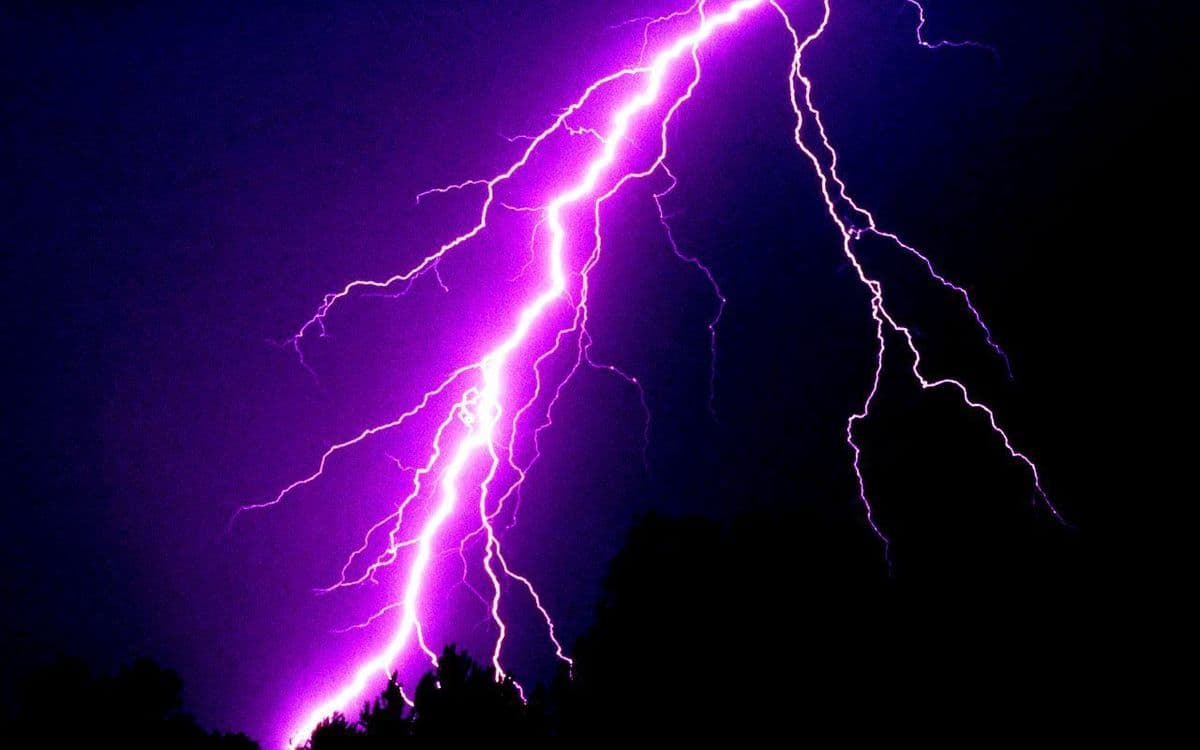
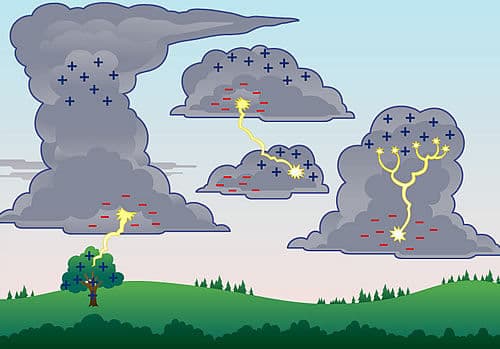

 Positive/Negative/Neutral Objects - How are they different? Positive: has fewer electrons than protons Negative: Has more electrons than protons Neutral: has equal numbers of protons and electrons Laws of Electric Charges - What are they? How are they applied? Like charges repel, opposites charges attract, charged AND neutral objects attract Induced Charge Separation - Explain this process. A shift of the position of electrons when a charged object is brought near it. If the charged object is positive, the electrons will move toward it. If the charged object is negative, the electrons will move away from it. Charging by Friction (What is happening with the charges? - Know electrostatic series examples) Process in which objects made from different materials rub against each other, producing a net static charge on each object. When charged by friction, one material will have a stronger attraction to electrons and will pull the electrons off the other material Charging by Conduction (Be able to explain what the electrons are doing) Charging by contact with a charged object. An object that becomes charged by contact always gets the same type of charge that is on the object that charges it. Grounding (Be able to explain how it happens) A method of removing static charges from an object. Electrons from the ground move up to the charged object. If the object is negative, electrons leave the object. If the object is positive, electrons enter the object. The ground always remains neutral Conductors/Insulators/Semiconductors (Know examples for each and characteristics) Conductor: A material that allows electrons to flow through it easily. GOOD CONDUCTORS: Silver, copper, gold, aluminium, magnesium, iron, usually metals Insulator: A material that prevents electrons from flowing through it. Plastic, wood and glass are examples. To prevent electric shocks, conductive wires are wrapped in insulators. Semiconductors: Have special properties that make them fair conductors, they are the foundation of modern electronics, including radios, computers and telephones. Charging by Induction (How do we induce a PERMANENT charge?) You can permanently charge an object using induction by attaching a conducting wire to the neutral object that goes to the ground Electric Discharge - What causes it? Know everyday examples. How is lightning formed? When two objects that have a charge imbalance are brought close together or come in contact with each other, electrons are transferred rapidly. Electrons move from the object with a more negative charge to the object with the less negative charge. Lightning occurs through an imbalance of charge between clouds and the ground. Negative charge at the bottom of a cloud repels the electrons at the earth's surface which move away, causing the ground to become positively charged Current Electricity: Refers to the electrons that flow in a controlled way through a conductor Forms of Current Electricity - Alternating Current (AC) vs Direct Current (DC) - How do they differ? AC: Electrons move back and forth, alternating their direction. produced in generating stations and is then distributed over long distances ex. Something plugged into a wall outletWhat is a crime A crime is generally defined as an act or omission that is prohibited by criminal law Two critical ingredients of a crime are: 1) the commission of an act (Actus reus) 2) the mental intent to commit the act (Mens rea) A crime occurs when a person Commits an act or fails to commit an act when under a legal responsibility to do so Has the intent or mens rea to commit the act Does not have a legal defence or justification for committing the act and Violates a provision in criminal law The Social construction of crime Important to distinguish between behaviours that may be considered deviant by society and crimes Deviance is behaviour that is contrary to the norms and values of the larger society Crime is behaviour that breaks the law Deviance includes: Criminal behaviour and Wide range of other behaviours not against the law: May be frowned upon by the larger society What is viewed as deviant changes over time Crime includes: Social construction of crime Legal status of behaviours is not determined by behaviour itself but result of social response to the behaviour/persons/groups engaged in it Criminologists often conduct historical analyses to understand how social, economic and political environments may influence legislation Moral entrepreneurs Often play a key role in criminalizing certain activities Individuals, groups or organizations, seek action against certain groups of people/behaviours and bring pressure on legislators to enact criminal statutes The Origins and Application of the Criminal Law Differing perspectives on where criminal laws come from/ applied via the criminal justice system are reflected in two models 1) Value consensus model 2) Conflict Model Value consensus model Behaviours are defined as criminal/punishment imposed, reflect opinions/limits of tolerance Application of law, society reaffirms acceptable behaviours/social cohesion Conflict Model Crime and punishment reflect the power some groups have to influence, formulation/application of criminal law rich/privileged have an advantage in influencing law reform/criminal justice system The Canadian Legal System Is a common law system, with exception of Quebec which has a civil law system (Based on the French Code Napoleon) Common law is law based on custom, tradition, practice and generally unwritten Precedent is a judicial decision may be use as a standard in subsequent similar cases Canadian Courts Canadian courts organised in a hierarchy Supreme court of Canada is the highest court Stare decisis- principle whereby higher courts set precedents that lower courts must follow “To stand by what was decided” Like cases should be treated alike All courts below SSC bound to apply that same ruling in subsequent cases Criminal Law Body of law deals with conduct considered so harmful to society as a whole that it is prohibited by statute and prosecuted and punished by the government Functions of the Criminal Law In Canadian society, Criminal law provides the following functions Acts as a mechanism of social control Defines the parameters of acceptable behaviour Reduces the risk of personal retaliation Assists in general and specific deterrence Prosecutes criminalized behaviour Protects groups interests Principles of Canadian Law The Rule of Law The requirement that governments as well as individuals be subjected to Traced back to the English Magna Carta The essence of the rule of law is that No one person is above the law All persons are bound by the law All are entitled to protection by the law The law should be observed and enforced equally There is a standard to which criminal justice officials must adhere and will be held accountable Criminal Law Vs. Civil (Tort) Law Summary Crime is a social construction and is a reflection of changing time and mores Criminal law is not static and what behaviour legislatively defined as criminal can change overnight There are instances in which controversy arises when the criminal law is applied to issues of ethics, morality and religion The criminal law was identified as one type of public law and the functions of the criminal law were set out The rule of law and the charter of rights and freedoms are two key parts of the foundation of the criminal justice system There are several principles that also provide the foundation for Canadian law The role, principles origins and application of the criminal law were examined and a number of case studies were presented to illustrate the dynamic nature of the criminal law in a diverse society Here is a transcript of a video about Narrative Writing. Generate 25 questions. Intro to Narrative Writing What is Narrative Writing? You today, I want to introduce you to the basics of narrative writing. Narrative writing is writing that tells a story. It can be real or imagined, that is, nonfiction or fiction. It has a beginning, middle, and end. That is, it includes the basic elements of a plot exposition, rising action, conflict, climax, falling action, and resolution. And it's full of interesting details. The author's purpose in writing a narrative is to entertain the reader. There are three main types of narrative writing. The first is a personal narrative when a writer shares a true story from his or her own life. We could also say this type of narrative is autobiographical. The second type of narrative is biographical when a writer shares a true story from another person's life. The third type of narrative is fictional. When a writer tells an invented story, short stories, and novels are fictional narratives. The Process of Writing a Narrative While we could add to this list, there are five important parts of a narrative that I especially want you to remember as you write your own narrative. These parts of a narrative include setting, characters, plot, point of view, and dialogue. The first part of a narrative is the setting , where, and when the narrative takes place. The setting affects both the plot and characters in your narrative, so it's important to spend some time brainstorming where, when, and in what conditions your story takes place. The second part of a narrative is the characters , the people, animals or creatures involved in a story. Remember that your story must have a protagonist, the character facing the problem, and an antagonist the character or force causing the problem. Take some time while planning your narrative to focus on your characters beyond the characters names and roles they play in the story. Think about whether you'd like them to be flat with very few character traits or round with many character traits. Also think about which characters in your story will remain static or unchanged, and which characters will be dynamic, undergoing an important change in your narrative. The third part of a narrative is the plot , the sequence of events in a narrative. Take some time to think carefully through your story's plot. How will it begin and how will it end? What conflicts will your characters encounter? What is the climax or turning point of your story? How will the problems be solved? Creating a storyboard or labeling a plot diagram are both good tools for planning your story's plot. The fourth part of a narrative is the point of view , which is the perspective from which a narrative is told. You can choose to write your narrative in first person, writing a personal narrative from your own point of view, or you can choose a character in a fictional narrative to tell your story. Another option is to write your narrative in the third person point of view, telling the story from the perspective of an unseen narrator that is not a character in the story. Finally, the fifth part of a narrative is dialogue. The words the characters speak in your story dialogue can establish the setting, show characterization, foreshadow events, or advance the action in a narrative. Dialogue brings your narrative to life. It's important to review how to punctuate dialogue, following grammatical rules for using quotation marks, commas, and other N marks such as periods and question marks. As you begin writing your narrative, I'll help you break down each step of the process. But hopefully this introduction gives you a basic understanding of what narrative writing is, and hopefully it sparks some ideas for you to begin planning your own narrative.THE SOAR SYSTEM A solar system is a group of planets and other celestial bodies that revolve around a star. A solar nebula- a vast cloud of gas and dust, mostly hydrogen and helium. How the Solar System Form • COLLAPSE AND SPINNING DISK FORMATION - Gravity pulls material inward. The cloud flattens into a spinning disk due to conservation of angular momentum. • PROTOSTAR FORMATION- (BIRTH OF THE SUN). Material collects at the center, and begun to heat up. When it reaches to 10 million KELVIN, nuclear fusion begins. thus, SUN is born. • PLANETESIMALS AND PROTOPLANETS. Dust and gas in the disk stick together via static and gravitational forces. These form planetesimals, which grow into protoplanets collision and accretion. • PLANET FORMATION. Inner disk: too hot for gas rocky planets form Mercury, Venus, Earth, Mars. • PLANET FORMATION. Outer disk: gas and ice giants. Jupiter, Saturn, Uranus, Neptune • LEFTOVER DEBRIS. Remaining materials forms moon, asteroids, comets and dwarf planets. DIFFERENT HYPOTHESIS IN THE FORMATION OF SOLAR SYSTEM. 1. NEBULAR HYPOTHESIS- The Solar system formed from a rotating cloud of Gas and Dust (solar nebula). As it rotates conservation of angular momentum caused the cloud to flatten into a disk. the Sun formed at the center (DISK) while planets formed from the surrounding materials through acceleration. thus, it explains the coplanar and nearly circular orbit of the planets all planets orbits around the sun on the same flat, disk shaped plane. Proposed by Immanuel Kant in 1755 and Modified by Pierre Simon Laplace in 1756. PROTOPLANET HYPOTHESIS. The Solar system formed from a rotating cloud of Gas and Dust (solar nebula). As it rotates conservation of angular momentum caused the cloud to flatten into a disk. 2. Protoplanet hypothesis. Builds on the nebular model but focuses more on the role of planetesimals which then form into full planets. PROCESS: - Small solid particles stick together through collisions. As collisions takes place, it grows into kilometer-sized planetesimals. Gravitational interactions lead to the formation of planets. Lead to formation of steroids belts and varying planet sizes 3. Encounter hypothesis. States that the sun encountered a rogue star. The encounter led to the removal of hot gas from both stars due to their gravitational interaction. The hot gas then accumulated and formed the planets. The materials from the less dense rogue star formed the other planets, while that from the sun formed the inner planets. 4. TIDAL HYPOTHESIS. (also called the Tidal Theory) is an early scientific idea about how the solar system might have formed. Proposed by James Jeans and Harold Jeffreys. A massive star passed very close to the early Sun. The hot gas then accumulated and formed the planets. The materials from the less dense rogue star formed the other planets, while that from the sun formed the inner planets. Streams of hot gas were drawn out from the Sun in elongated shape. These streams eventually condensed and cooled, forming planets, moons, and other bodies in the solar system. 5. Not accepted theory. Later studies showed the streams of hot gas would disperse too quickly into space instead of condensing into planets. The theory also couldn’t explain the specific orbital patterns and compositions we see today. Modern science favors the Nebular Hypothesis, which explains solar system formation through the collapse of a rotating gas cloud. Earth as the only habitable planet 1. Right Distance from the Sun (The Goldilocks Zone). Not too hot, not too cold — just right for liquid water to exist. 2. Atmosphere with Oxygen. Earth has a mix of gases, especially oxygen, which most living things need to survive. 3. Liquid Water. Earth has oceans, rivers, and rain — water is essential for all life. 4. Magnetic Field. Earth’s magnetic field protects us from harmful solar radiation. 5. Stable Climate. The atmosphere and natural cycles keep temperatures and weather mostly stable over time. 6. Rich Resources. Earth has soil for growing food, minerals, and energy sources that support life and technology. Solar explorations 1. AUGUST 6, 2014. First space craft to orbit a comet (ROSETTA PROBE). Captures the comet photograph. -Comets have coma and tail as it approaches to the sun. 2. JULY 14, 2015. NASA’s New Horizons spacecraft made history by becoming the first spacecraft to fly by Pluto, giving us our first close-up look at the dwarf planet. First time visiting Pluto. Before this, Pluto was just a blurry dot in telescope images. Revealed a surprising world New Horizons showed mountains of ice, smooth plains, and a heart-shaped region called Tombaugh Regio. Changed what we knew. Scientists thought Pluto would be dull and frozen — instead, it turned out to be geologically active and incredibly complex. 3. SEPTEMBER 8, 2016. NASA launched OSIRIS-REx, the first U.S. mission to collect a sample from an asteroid and return it to Earth. Changed what we knew. Scientists thought Pluto would be dull and frozen — instead, it turned out to be geologically active and incredibly complex. OSIRIS-REx stands for: Origins, Spectral Interpretation, Resource Identification, Security–Regolith Explorer It was sent to study the asteroid Bennu, a near-Earth asteroid about 500 meters wide. Mission Goals: Collect a sample of surface material from Bennu Study the asteroid’s omposition, structure, and history. Mission Goals: Help scientists understand the origins of the solar system. Learn more about asteroids that could impact Earth. 4. August 12, 2018: Launch of NASA’s Parker Solar Probe, the first spacecraft to "touch" the Sun by flying through its outer atmosphere, called the corona. Mission Goal: To study the Sun up close and help scientists understand: How the solar wind (a stream of charged particles) is formed. Why the Sun’s corona is hotter than its surface. What causes solar storms that can affect Earth’s satellites and power grids. 5. November 26, 2018: NASA’s Insight Lander Touches Down on Mars. Its mission was focused on studying the interior of the Red Planet (crust, mantle, and core of the planet). Why the Sun’s corona is hotter than its surface. What causes solar storms that can affect Earth’s satellites and power grids 6. November 26, 2018: NASA’s Insight Lander Touches Down on Mars. Its mission was focused on studying the interior of the Red Planet (crust, mantle, and core of the planet) 7. JULY 30, 2020 PERSEVERANCE PROBE. Perseverance rover as part of the Mars 2020 mission aboard an Atlas V-541 rocket This marked a major step in Mars exploration. 8. DECEMBER 25, 2021-JAMES WEBB SPACE TELESCOPE. Investigate exoplanets’ atmospheres for signs of habitability. Observe the first galaxies formed after the Big Bang. Study the formation of stars and planetary systems. Look deeper into the infrared universe than ever before. RESULTS OF EXPLORATION • Evidence of Ancient Life-friendly Environment. • Sedimentary rocks formed in water-rich environments. • Signs of clay and carbonate minerals, which can preserve biosignatures (traces of past life). • Evidence of Ancient Life-friendly Environment. • Sedimentary rocks formed in water-rich environments. • Signs of clay and carbonate minerals, which can preserve biosignatures (traces of past life). • Evidence of Ancient Life-friendly Environment. • Sedimentary rocks formed in water-rich environments. • Signs of clay and carbonate minerals, which can preserve biosignatures (traces of past life).what is ......what isWhat is...What is......?