Loading...


What We Should Know at this Point_C3U1
Quiz by Scott Philipp
Customize this quiz to suit your class
Instantly translate to 100+ languages
Tag the questions with any skills you have. Your dashboard will track each student's mastery of each skill.
Give this quiz to my class
Which of these is not a problem the American colonists had with British rule?
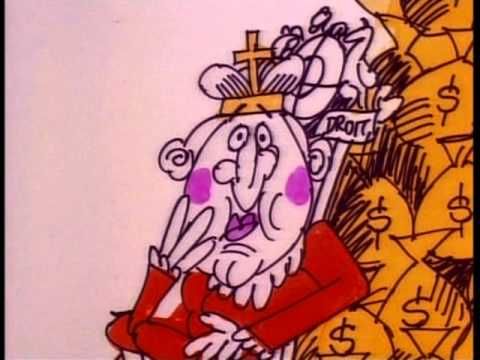
They were expected to pay taxes to the king.
They were protected by the the British military.
They had no representatives in British Parliament.
They could not govern themselves.
How did the colonists finally attempt to solve their problem with British rule?
The colonists threw tea into the Boston Harbor.
The colonists tarred & feathered British tax collectors.
The colonists started a military revolution.
The colonists protested by boycotting British goods.
Which of these is not a problem the American colonists had with British rule?
How did the colonists finally attempt to solve their problem with British rule?
How was the new American government different from that of the British?

Why are rules and laws necessary in a society?

When the new government was created, many peopled feared states would lose their power and _____.

In the United States, this branch of government "carries out" (enforces) the laws.
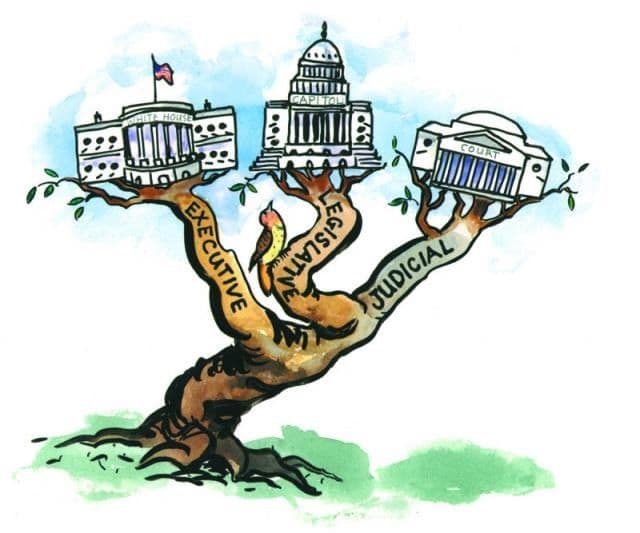
In this chamber of Congress, each state gets two votes (two representatives):

In order to make a change to the U.S. Constitution, _______ of the states must agree.

In the United States, this branch of government "creates" the laws.

The U.S. Constitution establishes that laws passed by Congress are _____ to state laws.

The ________ was the United States' first plan of a government.
Which of these men was the 45th President of the United States?
Which of these is not a problem the American colonists had with British rule?
How did the colonists finally attempt to solve their problem with British rule?
How was the new American government different from that of the British?
Why are rules and laws necessary in a society?
When the new government was created, many peopled feared states would lose their power and _____.
In the United States, this branch of government "carries out" (enforces) the laws.
In this chamber of Congress, each state gets two votes (two representatives):
In order to make a change to the U.S. Constitution, _______ of the states must agree.
In the United States, this branch of government "creates" the laws.
The U.S. Constitution establishes that laws passed by Congress are _____ to state laws.
The ________ was the United States' first plan of a government.
Which of these men was the 43rd President of the United States?
 In this video we take a look at the 0:02 fetch to code 0:03 execute cycle including its effect on 0:06 the various registers we've previously 0:12 [Music] 0:14 discussed a computer is defined Definition 0:17 as an electronic device that takes an 0:20 input 0:22 processes data 0:25 and delivers output 0:29 in this simple example you can see we're 0:31 taking the input 5 0:35 we're multiplying it by 2 that's our 0:37 process 0:39 and we're outputting 10. 0:44 but this could be way more complex for 0:46 example of a game console 0:48 the input could be the buttons you press 0:50 on a controller 0:53 the processes would then be carried out 0:55 by the console itself 0:59 and the output would be some form of 1:01 update to a monitor 1:02 and sound out for a speaker possibly 1:04 vibration feedback through the 1:06 controller 1:10 to process data a computer follows a set 1:13 of instructions 1:14 known as a computer program 1:18 if we take the lid off a typical desktop 1:20 computer we can identify 1:22 two critical components the memory 1:26 that stores the program and the central 1:29 processing unit or processor 1:31 which is under this large fan and 1:33 carries out the instructions 1:37 a computer carries out its function by 1:40 fetching 1:41 instructions decoding them and then 1:43 executing them 1:44 in a continuous repetitive cycle 1:46 billions of times a second 1:48 let's look at each of these stages in a 1:50 little more detail Fetch 1:53 so let's start with the fetch stage the 1:55 very first thing that happens 1:57 is the program counter is checked as it 2:00 holds the address 2:01 of the next instruction to be executed 2:07 the address stored is then copied into 2:09 the memory address register 2:14 the address is then sent along the 2:16 address bus to main memory 2:18 where it waits to receive a signal from 2:21 the control 2:22 bus so it knows what to do 2:27 as we want to read the data that's 2:29 stored in memory address 2:30 0 0 0 0 the control unit sends 2:34 a read signal along the control bus to 2:36 main memory 2:41 now main memory knows the data needs to 2:44 be read 2:45 the content stored in memory address 000 2:49 can be sent along the data bus to the 2:51 memory data register 2:56 now as we're currently in the process of 2:58 fetching an instruction 3:00 the data received by the memory data 3:03 register gets copied 3:04 into the current instruction register 3:11 the instruction effectively has now been 3:14 fetched from memory 3:16 just before we proceed to the decode 3:18 phase we now 3:19 increment the program counter so that 3:22 the address it contains 3:24 points to the address of the next 3:26 instruction which will need to be 3:30 executed 3:32 the instruction now being held in the 3:33 current instruction register 3:35 is ready to be decoded 3:39 now as we mentioned in the previous 3:41 video the instruction is made up of two 3:43 parts 3:44 we have the op code that's what it is we 3:47 need to do 3:50 and we have the operand what are we 3:53 going to do it to 3:55 now the operand could contain the actual 3:57 data 3:58 or indeed it could contain an address of 4:01 where the data is to be found 4:06 by decoding this instruction we can see 4:08 the operation we need 4:10 is a load operation so we need to load 4:14 the contents of memory location0101 4:18 into the cpus accumulator 4:25 in the exam a simple model will be used 4:27 to describe the 4:29 structure of any given instruction 4:32 you're not going to be expected to 4:34 define how an opcode is made up 4:36 but simply to interpret opcodes in the 4:39 given context of an exam 4:40 question in the example here 4:44 you can see there's a total of 16 4:46 different opcodes available 4:48 and this is because we're using four 4:50 bits for our representation 4:56 so now we've fetched the instruction and 4:59 we've decoded it so we know what we need 5:00 to do 5:01 we're finally ready to execute it 5:05 so we now send address 0101 5:08 to the memory dress register 5:13 now we're in the memory address register 5:15 we can finally send the address 5:18 down the address bus to main memory 5:24 this time we want to read the data 5:26 that's stored in memory 5:28 and so the control unit again sends a 5:30 read signal along the control bus 5:36 so main memories now receive an address 5:38 and a read signal 5:40 so the content stored at memory location 5:43 0101 5:44 can now be sent along the data bus back 5:46 to the cpu 5:47 and into the memory data register 5:54 finally the contents of the memory data 5:56 register are copied to the accumulator 5:59 and this is one of a number of general 6:00 purpose registers found in the cpu 6:04 this first instruction is now complete Branching 6:11 so what does this program actually do 6:14 you should be able to work it through 6:16 carefully and figure it out 6:19 we're now pointing instructions zero 6:21 zero zero one in the program counter 6:23 and we're ready to fetch the second 6:25 instruction 6:27 at the end of this video we're gonna 6:29 provide you with the answer 6:34 so let's talk a second about programs 6:37 that branch 6:40 on the left here we have a very simple 6:42 piece of pseudo code 6:44 line zero says first execute this line 6:46 of code 6:47 line 1 now execute this line and then 6:50 line 2 says 6:52 if the age is greater than 18 then 6:56 we're going to execute lines 3 and 4 6:58 otherwise 6:59 we're going to execute lines six and 7:02 seven 7:03 so this program doesn't necessarily 7:05 follow strictly in sequence from line 7:07 zero through to seven there's a chance 7:10 here the program may branch and jump 7:14 around 7:16 so we're going to pretend that this 7:17 program has been loaded into memory 7:20 each line of code on the left here has 7:23 ended up 7:24 as a location in memory now this is not 7:27 strictly how this would happen in this 7:28 one-to-one way 7:29 but for the purpose of example it's 7:31 absolutely fine 7:35 so the program counter starts by 7:37 pointing to memory address zero 7:39 and we fetch the first instruction 7:41 decode it and execute it 7:44 it then updates and tells us the next 7:47 instruction 7:48 is zero zero zero one because remember 7:50 the program counter is being incremented 7:52 so we fetch it decode it and we execute 7:55 line one of our program 7:59 we then fetch line two which in binary 8:01 is one 8:02 zero 8:06 now at this point depending on what 8:10 happens during the execution 8:11 of line two the program may be required 8:15 to fetch line three from memory or 8:18 line five from memory 8:25 so let's look at how this actually works 8:27 because we've said the program counter 8:28 simply gets incremented 8:31 well in the current instruction register 8:33 we have an instruction with the op code 8:36 0 1 1 0. 8:41 now when we look this up in the decode 8:43 unit we discover that this 8:45 code means branch always 8:51 this replaces the value held in the 8:54 program counter 8:56 with the contents of the operand that's 8:58 the second part of the instruction 9:01 from the current instruction register so 9:03 this case 9:04 one zero zero one 9:09 now when the next fetch cycle begins the 9:12 program counter is obviously checked 9:14 and as its contents have been previously 9:16 updated to a new memory location 9:19 and not simply incremented the program 9:22 effectively is able to jump 9:24 around memory 9:28 so having watched this video you should 9:30 be able to answer the following key 9:32 question 9:33 how does a cpu work 9:39 okay so let's um answer the question we 9:41 posed 9:42 earlier what did that program actually 9:48 do 9:50 so this is the first fetch to code 9:53 execute cycle 9:55 and this is the one that we ran through 9:57 in detail earlier 9:58 it effectively loaded the contents of 10:01 the memory 10:02 stored at location location0101 10:05 into the accumulator in other words 10:08 the dna number 3 is moved 10:11 from memory into the cpu 10:18 we then proceed onto the second fetch 10:20 decode execute cycle 10:23 now this one adds the contents of memory 10:27 located at 0 1 1 0 10:30 to the current contents of the 10:32 accumulator 10:34 so in other words the dna number one 10:38 because that's what's stored at address 10:40 zero one one zero 10:43 is added to the number three that was in 10:45 the accumulator 10:46 the results are stored back over the 10:48 accumulator 10:49 so effectively we've done three plus one 10:53 equals four 10:58 the third fetch to code execute cycle 11:00 stores the contents which are in the 11:02 accumulator 11:03 into memory location zero one one one 11:07 and that's because the op code the first 11:09 part of this current instruction 11:10 zero zero one one is the command to 11:13 store when we look it up in the decoder 11:15 unit 11:16 so in other words the result of the 11:17 previous calculation three plus one 11:19 equals four 11:20 is now written back into main memory 11:28 the fourth fetch decode execute cycle 11:30 outputs the contents of the accumulator 11:33 remember they were copied into main 11:34 memory but they're still held in the 11:35 accumulator 11:37 so in this simple abstraction the number 11:40 four is now 11:41 output to the user so they can see the 11:43 result of the calculation 11:49 the fifth and final fetch code execute 11:51 cycle 11:52 brings a halt to the current program 11:58 so this very simple program which has 12:01 five 12:02 fetch decode execute cycles has 12:04 performed the calculation 12:06 three plus one is then stored the result 12:09 in main memory 12:10 and displayed the result four to the 12:12 user 12:13 and in a high-level language this may 12:15 look something very similar to the 12:17 following two lines of code 12:20 sum variable equals num1 plus num2 12:24 print sum to the user 12:27 so you can start to get an appreciation 12:29 here of how the high level code you 12:32 write actually ends up being fetched 12:34 decoded 12:35 and executed inside a processor 12:38 of course your processor is doing 12:40 billions and billions of these 12:42 operations a second 12:43 which when you think about it is really 12:45 very impressive 12:52 [Music] 13:03 you. make 10 questions for a standerd of a levelHi, I'm John Green, this is Crash Course U.S. History, and today, we're going to talk about slavery, which is not funny. 0:06 Yeah, so we put a lei on the eagle to try and cheer you up, but let's face it, this is going to be depressing. 0:10 With slavery, every time you think, like, "Aw, it couldn't have been that bad," it turns out to have been much worse. 0:14 Mr. Green, Mr. Green! But what about – 0:15 Yeah, Me from the Past, I'm going to stop you right there, because you're going to embarrass yourself. Slavery was hugely important to America. 0:20 I mean, it led to a civil war and it also lasted what, at least in U.S. history, counts as a long-ass time, from 1619 to 1865. 0:29 And yes, I know there's a 1200-year-old church in your neighborhood in Denmark, but we're not talking about Denmark! 0:35 But slavery is most important because we still struggle with its legacy. 0:38 So, yes, today's episode will probably not be funny, but it will be important. 0:42 [Theme Music] North & South economic ties 0:51 So the slave-based economy in the South is sometimes characterized as having been separate from the Market Revolution, but that's not really the case. 0:57 Without southern cotton, the North wouldn't have been able to industrialize, at least not as quickly, because cotton textiles were one of the first industrially products. 1:04 And the most important commodity in world trade by the nineteenth century, and 3/4 of the world's cotton came from the American South. 1:11 And speaking of cotton, why has no one mentioned to me that my collar has been half popped this entire episode, like I'm trying to recreate the Flying Nun's hat. 1:18 And although there were increasingly fewer slaves in the North as northern states outlawed slavery, cotton shipments overseas made northern merchants rich. 1:26 Northern bankers financed the purchase of land for plantations. 1:29 Northern insurance companies insured slaves who were, after all, considered property, and very valuable property. 1:35 And in addition to turning cotton into cloth for sale overseas, northern manufacturers sold cloth back to the South, where it was used to clothe the very slaves who had cultivated it. 1:45 But certainly the most prominent effects of the slave-based economy were seen in the South. Slave-based agriculture in the South 1:49 The profitability of slaved-based agriculture, especially King Cotton, meant that the South would remain largely agricultural and rural. 1:56 Slave states were home to a few cities, like St. Louis and Baltimore, but with the exception of New Orleans, 2:00 almost all southern urbanization took place in the upper South, further away from the large cotton plantations. 2:06 And slave-based agriculture was so profitable that it siphoned money away from other economic endeavors. 2:11 Like, there was very little industry in the South. 2:13 It produced only 10% of the nation's manufactured goods. 2:16 And, as most of the capital was being plowed into the purchase of slaves, there was very little room for technological innovation, like, for instance, railroads. 2:23 This lack of industry and railroads would eventually make the South suck at the Civil War, thankfully. 2:27 In short, slavery dominated the South, shaping it both economically and culturally, and slavery wasn't a minor aspect of American society. Popular attitudes concerning slavery 2:35 By 1860, there were four million slaves in the U.S., and in the South, they made up one third of the total population. 2:42 Although in the popular imagination, most plantations were these sprawling affairs with hundreds of slaves, 2:47 in reality, the majority of slaveholders owned five or fewer slaves. 2:51 And, of course, most white people in the South owned no slaves at all, though, if they could afford to, they would sometimes rent slaves to help with their work. 2:57 These were the so-called yeoman farmers who lived self-sufficiently, raised their own food, and purchased very little in the Market Economy. 3:04 They worked the poorest land and, as a result, were mostly pretty poor themselves. 3:08 But even they largely supported slavery, partly, perhaps, for aspirational reasons, and partly because the racism inherent to the system gave even the poorest whites legal and social status. 3:18 And southern intellectuals worked hard to encourage these ideas of white solidarity and to make the case for slavery. 3:23 Many of the founders, a bunch of whom you'll remember, held slaves, saw slavery as a necessary evil. 3:29 Jefferson once wrote, quote, "As it is, we have the wolf by the ear, and we can neither hold him, nor safely let him go. 3:37 Justice is on one scale, and self-preservation in the other." 3:41 The belief that justice and self-preservation couldn't sit on the same side of the scale was really opposed to the American idea, 3:47 and, in the end, it would make the Civil War inevitable. 3:50 But as slavery became more entrenched in these ideas of liberty and political equality were embraced by more people, 3:55 some southerners began to make the case that slavery wasn't just a necessary evil. 3:59 They argued, for instance, that slaves benefited from slavery. 4:03 Because, you know, because their masters fed them and clothed them and took care of them in their old age. 4:07 You still hear this argument today, astonishingly. 4:09 In fact, you'll probably see asshats in the comments saying that in the comments. 4:12 I will remind you, it's not cursing if you are referring to an actual ass. 4:15 This paternalism allowed masters to see themselves as benevolent and to contrast their family-oriented slavery with the cold, mercenary Capitalism of the free-labor North. 4:26 So yeah, in the face of rising criticism of slavery, some southerners began to argue that the institution was actually good for the social order. 4:33 One of the best-known proponents of this view was John C. Calhoun, who, in 1837, said this in a speech on the Senate floor: 4:40 "I hold that, in the present state of civilization, 4:43 where two races of different origin and distinguished by color and other physical differences as well as intellectual, are brought together, 4:51 the relation now existing in the slave-holding states between the two is, instead of an evil, a good. A positive good." 4:59 Now, of course, John C. Calhoun was a fringe politician, and nobody took his views particularly seriously. 5:04 Stan: Well, he was Secretary of State from 1844 to 1845. 5:07 John: Well, I mean, who really cares about the Secretary of State, Stan? 5:10 Danica: Eh, he was also Secretary of War from 1817 to 1825. 5:13 John: All right, but we don't even have a Secretary of War anymore, so... 5:16 Meredith: And he was Vice President from 1825 to 1832. 5:19 John: Oh my god, were we insane?! 5:21 We were, of course, but we justified the insanity with Biblical passages and with the examples of the Greeks and Romans, 5:28 and with outright racism, arguing that black people were inherently inferior to whites. 5:33 And that not to keep them in slavery would upset the natural order of things. 5:37 A worldview popularized millennia ago by my nemesis, Aristotle. God, I hate Aristotle. 5:42 You know what defenders of Aristotle always say? 5:44 "He was the first person to identify dolphins." 5:47 Well, ok, dolphin identifier. 5:50 Yes, that is what he should be remembered for, but he's a terrible philosopher! Lives & experiences of enslaved people 5:53 Here's the truth about slavery: 5:55 It was coerced labor that relied upon intimidation and brutality and dehumanization. 6:00 And this wasn't just a cultural system, it was a legal one. 6:03 I mean, Louisiana law proclaimed that a slave "owes his master... a respect without bounds, and an absolute obedience." 6:09 The signal feature of slaves' lives was work. 6:12 I mean, conditions and tasks varied, but all slaves labored, usually from sunup to sundown, and almost always without any pay. 6:20 Most slaves worked in agriculture on plantations, and conditions were different, depending on which crops are grown. 6:25 Like, slaves on the rice plantations of South Carolina had terrible working conditions, 6:29 but they labored under the task system, which meant that once they had completed their allotted daily work, they would have time to do other things. 6:36 But lest you imagine this is like how we have work and leisure time, bear in mind that they were owned and treated as property. 6:42 On cotton plantations, most slaves worked in gangs, usually under the control of an overseer, or another slave who was called a "driver." 6:49 This was back-breaking work done in the southern sun and humidity, and so it's not surprising that whippings – or the threat of them – were often necessary to get slaves to work. 6:58 It's easy enough to talk about the brutality of slave discipline, but it can be difficult to internalize it. 7:03 Like, you look at these pictures, but because you've seen them over and over again, they don't have the power they once might have. 7:09 The pictures can tell a story about cruelty, but they don't necessarily communicate how arbitrary it all was. 7:14 As, for example, in this story, told by a woman who was a slave as a young girl: 7:18 "[The] overseer... went to my father one morning and said, "Bob, I'm gonna whip you this morning." 7:22 Daddy said, "I ain't done nothing," and he said, "I know it, I'm going to whip you to keep you from doing nothing," 7:28 and he hit him with that cowhide – you know it would cut the blood out of you with every lick if they hit you hard." 7:33 That brutality – the whippings, the brandings, the rape – was real, and it was intentional, because, in order for slavery to function, slaves had to be dehumanized. 7:43 This enabled slaveholders to rationalize what they were doing, and it was hoped to reduce slaves to the animal property that is implied by the term "chattel slavery." 7:51 So the idea was that slaveholders wouldn't think of their slaves as human, and slaves wouldn't think of themselves as human. 7:57 But it didn't work. Let's go to the Thought Bubble. 7:59 Slaves' resistance to their dehumanization took many forms, but the primary way was by forming families. Family, love, & religion of enslaved people 8:05 Family was a refuge for slaves and a source of dignity that masters recognized and sought to stifle. 8:10 A paternalistic slave owner named Bennet H. Barrow wrote in his rules for the Highland Plantation: 8:15 "No rule that I have stated is of more importance than that relating to Negroes marrying outside of the plantation... It creates a feeling of independence." 8:23 Most slaves did marry, usually for life, and, when possible, slaves grew up in two-parent households. 8:28 Single-parent households were common, though, as a result of one parent being sold. 8:32 In the upper South, where the economy was shifting from tobacco to different, less labor-intensive cash crops, the sale of slaves was common. 8:40 Perhaps one-third of slave marriages in states like Virginia were broken up by sale. 8:45 Religion was also an important part of life in slavery. 8:47 While masters wanted their slaves to learn the parts of the Bible that talked about being happy in bondage, 8:52 slave worship tended to focus on the stories of Exodus, where Moses brought the slaves out of bondage, 8:57 or Biblical heroes, who overcame great odds, like Daniel and David. 9:01 And, although most slaves were forbidden to learn to read and write, many did anyway. And some became preachers. 9:07 Slave preachers were often very charismatic leaders, and they roused the suspicion of slave owners, and not without reason. 9:13 Two of the most important slave uprisings in the South were led by preachers. 9:16 Thanks, Thought Bubble. 9:17 Oh, it's time for the Mystery Document? Mystery Document 9:19 We're doing two set pieces in a row? All right. [buzzing noise] [music] 9:24 The rules here are simple. 9:26 I wanted to re-shoot that, but Stan said no. 9:29 I guess the author of the Mystery Document. 9:30 If I am wrong, I get shocked with the shock pen. 9:33 "Since I have been in the Queen's dominions I have been well contented, yes well contented for sure, man is as God intended he should be. 9:40 That is, all are born free and equal. 9:43 This is a wholesome law, not like the southern laws which puts man made in the image of God on level with brutes. 9:49 O, what will become of the people, and where will they stand in the day of judgment. 9:53 Would that the 5th verse of the 3rd chapter of Malachi were written as with a bar of iron, 9:59 and the point of a diamond upon every oppressor's heart that they might repent of this evil, and let the oppressed go free..." 10:06 All right, it's definitely a preacher, because only preachers have read Malachi. 10:10 Probably African American, probably not someone from the South. 10:13 I'm going to guess that it is Richard Allen, the founder of the African Methodist Episcopal Church? 10:18 [buzzing noise] DAAAH, DANG IT! 10:19 It's Joseph Taper, and Stan just pointed out to me that I should have known it was Joseph Taper because it starts out, 10:24 "Since I have been in the Queen's dominions..." 10:27 He was in Canada. He escaped slavery to Canada. The Queen's dominions! 10:31 All right, Canadians, I blame you for this, although, thank you for abolishing slavery decades before we did. 10:36 [electric sounds] AHHH! How people resisted & escaped slavery 10:37 So, the Mystery Document shows one of the primary ways that slaves resisted their oppression: by running away. 10:42 Although some slaves like Joseph Taper escaped for good by running away to northern free states, 10:47 or even to Canada, where they wouldn't have to worry about fugitive slave laws, even more slaves ran away temporarily, hiding out in the woods or the swamps, and eventually returning. 10:55 No one knows exactly how many slaves escaped to freedom, but the best estimate is that a thousand or so a year made the journey northward. 11:01 Most fugitive slaves were young men, but the most famous runaway has been hanging out behind me all day long: Harriet Tubman. 11:07 Harriet Tubman escaped to Philadelphia at the age of 29, and over the course of her life, she made about 20 trips back to Maryland to help friends and relatives make the journey north on the Underground Railroad. 11:17 But a more dramatic form of resistance to slavery was actual, armed rebellion, which was attempted. 11:22 Now, individuals sometimes took matters into their own hands and beat or even killed their white overseers or masters. 11:27 Like Bob, the guy who received the arbitrary beating, responded to it by killing his overseer with a hoe. 11:33 But that said, large-scale slave uprisings were relatively rare. 11:36 The four most famous ones all took place in a 35-year period at the beginning of the 19th century. Slave rebellions 11:41 Gabriel's Rebellion in 1800 – which we've talked about before – was discovered before he was able to carry out his plot. 11:45 Then, in 1811, a group of slaves upriver from New Orleans seized cane, knives, and guns, and marched on the city before militia stopped them. 11:52 And in 1822, Denmark Vesey, a former slave who had purchased his freedom, may have organized a plot to destroy Charleston, South Carolina. 11:59 I say "may have" because the evidence against him is disputed and comes from a trial that was not fair. 12:05 But regardless, the end result of that trial was that he was executed, as were 34 slaves. Nat Turner's Rebellion 12:09 But the most successful slave rebellion, at least in the sense that they actually killed some people, was Nat Turner's in August 1831. 12:15 Turner was a preacher, and with a group of about 80 slaves, he marched from farm to farm in South Hampton County, Virginia, 12:21 killing the inhabitants, most of whom were women and children, because the men were attending a religious revival meeting in North Carolina. 12:27 Turner and 17 other rebels were captured and executed, but not before they struck terror into the hearts of whites all across the American South. 12:34 Virginia's response was to make slavery worse, passing even harsher laws that forbade slaves from preaching, and prohibited teaching them to read. 12:42 Other slave states followed Virginia's lead and, by the 1830s, slavery had grown, if anything, more harsh. 12:47 So, this shows that large-scaled armed resistance was – Django Unchained aside – not just suicidal, but also a threat to loved ones and, really, to all slaves. How enslaved people resisted their oppression & why it matters 12:55 But, it is hugely important to emphasize that slaves did resist their oppression. 12:59 Sometimes this meant taking up arms, but usually it meant more subtle forms of resistance, 13:03 like intentional work slowdowns or sabotaging equipment, or pretending not to understand instructions. 13:08 And, most importantly, in the face of systematic legal and cultural degradation, they re-affirmed their humanity through family and through faith. 13:16 Why is this so important? 13:17 Because too often in America, we still talk about slaves as if they failed to rise up, 13:21 when, in fact, rising up would not have made life better for them or for their families. 13:26 The truth is, sometimes carving out an identity as a human being in a social order that is constantly seeking to dehumanize you, is the most powerful form of resistance. 13:34 Refusing to become the chattel that their masters believed them to be is what made slavery untenable and the Civil War inevitable, so make no mistake, slaves fought back. 13:45 And in the end, they won. I'll see you next week. Credits 13:48 Crash Course is produced and directed by Stan Muller. 13:50 The script supervisor is Meredith Danko. 13:52 Our associate producer is Danica Johnson. 13:54 The show is written by my high school history teacher Raoul Meyer and myself. 13:57 And our graphics team is Thought Cafe. 13:58 Every week, there's a new caption to the Libertage, but today's episode was so sad that we couldn't fit a Libertage in... 14:04 UNTIL NOW! [Libertage Rock Music] 14:08 Suggest Libertage caption in comments, where you can also ask questions about today's video that will be answered by our team of historians. 14:13 Thanks for watching Crash Course, and as we say in my home town, don't forget to be abolitionist.Yaama I'm Jack Evans and you're watching BTN. Here's what's coming up. We uncover the story behind this famous photo, learn about First Nations seasons and find out the history of Book Week. What is Statehood? Reporter: Tatenda Chibika INTRO: But first, the Prime Minister Anthony Albanese has announced that Australia will join other countries in recognising Palestine as an independent state. So, what does that mean? Tatenda found out. Anthony Albanese, Prime Minister: Australia will recognise the state of Palestine. Australia will recognise the right of the Palestinian people to a state of their own. We will work with the international community to make this right a reality. Tatenda Chibika, Reporter: That's the moment our Prime Minister said Australia would recognise Palestine as an independent state at the upcoming United Nations General assembly next month. It's something other countries, including France and Canada, have said they'll be doing too. So, what does that mean exactly? To be considered an independent state under international law a place needs to have its own land or territories with defined borders, it needs to have people who permanently live there, have a working government and it has to be able to talk and make deals with other countries. Once a place meets all those rules, it can ask to be recognised by other independent states and countries. But a big step in becoming an independent state is being fully recognised by the United Nations. To do that you first need to get approval from at least nine members of the UN's Security Council. That's a group of countries responsible for maintaining international peace and security. But even then, that tick of approval can still be blocked by one of the Security Council's five permanent members Russia, China, the UK, the US and France. If the Security Council approves, the decision then goes to the UN's General Assembly where at least two thirds of the UN's 193 members have to agree to make it official. Yeah, it's a pretty complex process which is why we've only seen a handful of countries recognised by the UN in recent years like South Sudan and Montenegro. Others like Kosovo are only 'partially' recognised which means they have some recognition but not enough to become a full member state at the UN. Right now, Palestine is recognised by more than 140 countries — that's more than two thirds of the UN General Assembly. So, why hasn't it become a UN member state yet? Well, it came pretty close last year when 12 members of the Security Council voted in favour of it. VANESSA FRAZIER, AMBASSADOR OF MALTA, APRIL 2024 UNSC PRESIDENT: I shall now put the draft resolution to the vote. But the US, a close ally to Israel, used its special powers to block Palestine from becoming a member state. VANESSA FRAZIER: Those against? At the time, the U.S said Palestine and Israel needed to come to an agreement on their own first. Throughout the years, there have been attempts to figure out a way for both Palestine and Israel to exist peacefully alongside each other but that hasn't happened yet. And now Israel has said that recognising Palestine as an independent state would be rewarding Hamas the group in charge of Gaza which was responsible for the terror attacks on October 7th, 2023. But the Palestinian Authority which governs parts of the West Bank says Hamas won't have a role in any future state of Palestine which will exist peacefully alongside Israel. Australia, like the US, had previously said that it wanted Israel and Palestine to figure out things by themselves first but because of how the war has been going the Australian government is worried that if it continues to wait, there might not be a Palestinian state to recognise. ANTHONY ALBANESE, PRIME MINISTER: There has been too many lives lost, both Israeli's and Palestinians and the world is saying we need a solution to this conflict, we need to end the cycle of violence and the way to do that is to have a two-state solution. News Quiz Russia's President Vladimir Putin stepped foot on American Soil for the first time in a decade to meet with US President Donald Trump. What state did they meet in? Alabama, Alaska or Arizona?It's Alaska. The two leaders met to discuss a way to end the war in Ukraine but weren't able to make any final agreements. DONALD TRUMP, US PRESIDENT: There were many, many points that we agreed on. Most of them, I would say, a couple of big ones, that we haven't quite got there, but we've made some headway. There's no deal until there's a deal. A lot of people criticised the two world leaders for not including Ukraine's president Volodymyr Zelenskyy in the meeting. But that didn't seem to worry Mr Trump who said the meeting was a success and Mr Putin even invited the US President to meet up again in Russia. DONALD TRUMP: We'll see you again very soon. Thank you very much, Vladimir. VLADIMIR PUTIN, RUSSIAN PRESIDENT: Next time in Moscow. DONALD TRUMP: Oh, that's an interesting one. No, no, no. I'll get a little heat on that one. Last week thousands of people marked the 80th anniversary of VJ Day. What does VJ Day commemorate? The victory of Allied forces in Europe, the surrender of Japan and the end of World War II or the dropping of the first atomic bomb? VJ Day or Victory over Japan day commemorates the surrender of Japan and the end of World War II on the 15th of August 1945. Around the world, and here in Australia, people marked the anniversary with ceremonies remembering those who fought in the war. REPORTER: Who will you be remembering today? VETERAN: Oh, a lot of fellows that I knew that never made it home. Scientists in the UK have created toothpaste that includes which of these ingredients? Hair, eye lashes or fingernails? Yeah, they're all a bit random and gross but the answer is hair. According to scientists from King's College in London, hair could be the key to good oral health because it contains a protein called Keratin which they say when mixed with saliva forms a crystal-like protective coating similar to enamel. And Swifties rejoice because Taylor Swift has announced her 12th Studio album. It's called life of a show what? Is it show pony, show girl or show bag? It's Life of a Showgirl and it'll be released October 3rd. Vincent Lingiari Reporter: Joseph Baronio INTRO: Now to this very famous photograph. It was taken 50 years ago and depicts a really significant moment in Australian history. Joe found out about the story behind it. On the 16th of August 1975, this famous photo was taken. It shows the former Prime Minister Gough Whitlam pouring sand into the hand of Aboriginal leader Vincent Lingiari. A simple gesture that symbolised handing the land at Wave Hill in the Northern Territory back to the Gurindji people. But the journey to get there was far from simple. It started back in the 1960s. At the time, Wave Hill was the biggest cattle station in the world, controlled by British landowner Lord Vestey. The Gurindji people, who had lived on the land for generations, worked for Vestey, but they weren't paid fairly, and conditions were tough. NEWS REPORTER: The station's 100 aboriginal stockmen, with their 100 dependents, are camped in the dry bed of the Victoria River with little shade from 90-degree heat, dust and flies. Eventually, Gurindji leader Vincent Lingiari said it was time to act. VINCENT LINGIARI: I said, "What was it before Lord Vestey born and I was born?" It was blackfella country. So, on August 23rd, 1966, Mr Lingiari and his fellow Aboriginal workers went on strike. It became known as the Wave Hill Walk Off. They moved their camp away from the Wave Hill station to a sacred site called Daguragu on Wattie Creek. They wanted to set up their own cattle station, and said they wouldn't move until their land was returned to them. For years, petitions and negotiations went on between the Gurindji people, the NT Administration, and the Australian Government in Canberra. CLAPPERS: 31. 32. 33. DAVID QUINN, ABSCOL: Well, it's basic justice that their land is recognised. PROTESTORS: Equal rights! As the news spread across the country, thousands of Aussies joined the campaign, including the leader of the Labor Party, Gough Whitlam, who made this promise during his 1972 election campaign. GOUGH WHITLAM: We will legislate to give Aborigines land rights. Not just because their case is beyond argument, but because all of us as Australians are diminished, while the Aborigines are denied their rightful place in this nation. Later that year, Gough Whitlam became Prime Minister. (Song From Little Things Big Things Grow, Song by Kev Carmody and Paul Kelly, 1993) From little things big things grow,from little things big things grow… But it wasn't until 1975, 9 years after the Wave Hill Walk Off started, that he followed through with his promise. Eight years went by, eight long years of waiting'Til one day a tall stranger appeared in the landAnd he came with lawyers and he came with great ceremony GOUGH WHITLAM: I solemnly hand to you these deeds as proof in Australian law that these lands belong to the Gurindji people. And through Vincent's fingers poured a handful of sandFrom little things big things grow 50 years on, and The Wave Hill Walk Off is seen as a pivotal moment in Australia's history. It led to significant legal and social changes for First Nations people, which is something many agree is worth celebrating. First Nations Seasons Reporter: Saskia Mortarotti INTRO: Recently, Melbourne's Lord Mayor suggested ditching the four-season calendar that most of us are familiar with and adopting a six-season Wurundjeri calendar instead saying it gives a better description of what the weather's actually like there. Sas found out more about the different seasonal calendars used by First Nations people. SASKIA MORTAROTTI, REPORTER: Right now, in most of the country, it's pretty cold. COLD GIRL: Think of somewhere warm. What? It's 32 degrees in Darwin in the middle of winter? But ah, yeah. There are some places where it's, well, quite warm. Which makes you wonder whether the weather actually matches the seasons. You see, Australia is pretty big, and we have lots of different weather patterns. Which is something First Nations people have tracked for thousands of years with their own seasonal calendars. KARL WINDA TELFER, CULTURAL CREATIVE KANYANYAPILLA: Why have we got four seasons when you know that don't make any sense here. It doesn't relate to the country here. This is Karl Telfer. He's an artist and storyteller who produced the Kuri Kurru exhibition at the Museum of Discovery in Adelaide that explores the 6 different seasons of the Kaurna Meyunna. SASKIA MORTAROTTI: So, how do you know when you're in one of those six seasons? KARL WINDA TELFER: Well, there are stars that rise. So, you know, there are certain stars, like in Parnatti, for example. There's a star called Parna, and we know what that star is. So, that talks to us about, okay, the time now is going to be cold on the ground. First Nations calendars like the Kaurna one don't just tell us what's happening with the weather; they're also used to track when certain plants and animals are around. KARL WINDA TELFER: It teaches you about what plants you can, you know, what you can eat what you can't and all that what is ready certain times a year and fruit everything, bird shows you the right time to eat the fruit, perfect time, if you try and go get them the next week they're gone. Karl says we can also use these calendars to see how the environment has changed over time. KARL WINDA TELFER: Kudlilla is the season we're in now and Kudlilla that talks about like the rain but we're not having enough rain these days, well, these times. And this is due to climate and the climate changing. There are many different First Nations seasonal calendars around the country. Like Ngan'gi calendar from the Northern Territory which has 13 seasons that follow the life cycle of the native spear grass. Or the Wurundjeri Calendar in Victoria which has 6 seasons. And recently, Melbourne's Lord Mayor, Nicholas Reece, said Melbourne, or Naarm, would be better off adopting the Wurundjeri calendar because it's more in tune to what's happening with the weather. Something many, including Karl, think we should be doing right across the country. KARL WINDA TELFER: I'm talking about the English four seasons. So, this is totally different systems that we're talking about and weather patterns and currents and all sorts of different things, because it's the sea country too. So, my question is, well, why do we have that? If that doesn't work, you know? Quiz How many seasons are there in the Tiwi Island Calendar? 1, 2 or 3? It's 3, although they also have 13 minor seasons. Book Week Reporter: Wren Gillett INTRO: This week, kids across Australia have been dressing up as their favourite characters to celebrate Book Week. Wren finds out why Book Week began 80 years ago and why it's still important today for getting young Aussies into reading. STUDENT: I read an hour every night, maybe even two hours some nights. STUDENT: My favourite book series are the Harry Potter series and the Keeper of the Lost City series. STUDENT: Probably Bad Guys and Weirdo. STUDENT: I like the Amulet, I've been reading that. STUDENT: I love reading Dork Diaries and Exploding Endings. Whether it's Fantasy, mystery, history — whatever you're into. Book week is a time to celebrate, well, books. STUDENT: Me and my friends are dressing up as Inside Out. STUDENT: I was thinking SpongeBob. STUDENT: I'm dressing up as Winnie the Pooh and it's just a fun way to express what kind of books you like. And guess what, book week has actually been a thing for many, many years. WREN GILLETT, REPORTER: Once upon a time, in a land not so far away, literacy lovers noticed a problem. The year was 1945. The second World War had just ended, and kids were mainly reading books from overseas, in particular the UK. Because, at the time, there weren't many Aussie authors writing books for children. WREN GILLETT: So, a group of passionate teachers, librarians, booksellers, publishers, and book-loving volunteers, decided to create what we now know as The Children's Book Council of Australia. Familiar logo, right? Together, they launched book week, all in an effort to get Aussie kids' reading more. And it seemed to work. The 1960s saw a boom in Australian children's books being published. REPORTER: How many books do you read a week? STUDENT: Well, it really depends on the week. If there's exams, I might read only one or two. But if there's no exams and if I've got plenty of time, I might read up to five or six. WREN GILLETT: But today, it's a slightly different story. Studies show that less than one in five eight to 18-year-olds are reading in their free time, and that only one in three actually enjoy reading for fun. WREN GILLETT: Why do you reckon we're seeing this trend? STUDENT: People are getting sucked into screens and they're like spending hours just scrolling through TikTok and stuff, and they're getting so attached to it that they don't feel the need to pick up books and read them. Yeah, there's a lot of different things competing for our attention these days, but many think books are still worth our time. PETER HELLIER, AUSSIE COMEDIAN AND AUTHOR: Books are the exact opposite of boring. And if you think they're boring, I'm sorry, but you're wrong. This is Peter Hellier, he's a pretty famous Aussie comedian, actor, and the author behind these books. And he's just released another one called Detective Galileo, about a trail horse who dreams of solving crimes. PETER HELLIER: He joins the police force and quickly finds out that the horses don't actually solve the crimes, it's the police officers who solve the crime. So he promptly gets thrown out of the force and begins his own detective agency, which I'm reliably told is the only detective agency in the world run by a horse. Peter actually started writing books when he was a kid. PETER HELLIER: I started writing when I was six, seven, eight years old. In fact, I started my own publishing company called Better Books. And I would write these books, and then I would get a parent or one of my parents or teachers to type them up. And I would read them in front of the class. And, you see, each has the logo, the Better Books logo, there it is — the famous Better Books logo. WREN GILLETT: You weren't mucking around. PETER HELLIER: There all on all of them. There we go. There we go. Many, Including Peter, say there's plenty to get from a good book. They help us learn new words and phrases, get a better understanding of the world around us, and strengthen our imaginations. PETER HELLIER: Books can take you absolutely anywhere. They can take you to countries that you never dreamed about going. Countries that exist, countries that don't exist. Reading just makes the world a much bigger place. It's why for the past 80 years, schools around the country have been taking part in book week. STUDENT: Reading is a place where you can have your own world just to yourself. STUDENT: It's like watching a movie inside your head, but you can choose how it goes. STUDENT: Picking up a book is a good idea, maybe you should start with something that you're interested with and then you can start exploring from there. Quiz What is the title of the book that took out this year's Book of the year Award for younger readers? It's Laughter is the Best Endingby Maryam Master. Some other winners included I'm not really here by Gary Loneborough which took out book of the year for older readers and best picture book went to The Truck Cat, by Deborah Frenkel. Sport Australia's men's national basketball team — the Boomers — have won their third Asia Cup in a row, with an epically narrow victory over China. COMMENTATOR: It is Australia who are celebrating! China started strong, leading 25-17 at quarter time. But Aussie Xavier Cooks led a fierce comeback, shooting 30 points and collecting nine rebounds, earning him the title of MVP. And there seriously couldn't have been a tighter finish. Just as the final buzzer went off, China missed a shot that would have won them the game, leaving Australia with a 90-89 victory. COMMENTATOR: An unbelievable finish. The 2025 AFLW season kicked off last week, and so did a new trick. Yeah, 19-year-old Ash Centra from Collingwood, pulled out this move in the warm-up before their season-opener to Carlton, and since then, a lot of people have been trying to do it, with some success, kind of? FOOTY PLAYER: No, I'm not doing it on camera. But despite the epic warmup, Carlton did end up beating Collingwood by 24 points. Now, the moves from these athletes in China weren't quite so graceful but give 'em a break, okay, they're robots. For the first time ever, humanoid robots from all over the world, competed in their very own games, which featured, soccer, boxing, running, and ahh, lots of falling over. Lots. Luckily though, they did bring their own cheer squad. Young Rapper Reporter: Rylie INTRO: Finally, we're going to meet another winner of this year's Heywire competition — which asks young people in regional areas to share their stories. Rylie's going to tell us how music helped to transform his life. Check it out. Mum and I were homeless. We lived at a caravan park, in motels and tents around Warrnambool. It wasn't pretty. I'm First Nations, and I remember feeling like, my own country is failing me right now. So, we camped right along here. I remember pitching a tent right here and this was actually around the same time I started to get into music which was a good way for me to have something to look forward to. I was raised by the SoundCloud era, listening to a lot of trap music. When I was in school, I'd rap along to songs by Juice World, then I started to make my own. My first track was recorded on my phone. It was bad but a lot of fun to make. Some kids in my school heard it and shamed me. That put me off music for the next couple of years, until a friend of mine bought a microphone and encouraged me to give it another go. There was something about that mic and the energy of the crew around me that gave me confidence. It lit a fire in me. Over time, I was able to focus my flow. My songs are about escapism, living the life, being a success. I rap about stuff that takes me to a better place in my head. I'm manifesting my future. My stage name is Hundo Milli, it's short for hundreds of millions. Money's not really the end goal; it's more about having the freedom to dream big. Mum taught me to never stop believing. Even when times were tough, she kept pushing for us to get housing and eventually we did. We're some of the lucky ones. Today, I'm in a Melbourne studio recording my next single. I remember living in my tent dreaming about this very moment and now I'm here, doing what I love. Ain't nothing going to stop me. Closer Well, that's all we've got for you today, but we'll be back before you know it. In the meantime, you can head to our website, there's plenty to see and do. You can also catch Newsbreak every weeknight and there's BTN High for all you highschoolers out there. Have an awesome week and I'll see you next time. Bye.“There’s No Such Thing as Sound Science” by By Christie Aschwanden was a lead science writer for FiveThirtyEight. FiveThirtyEight, Science, Dec. 6, 2017 Science is being turned against itself. For decades, its twin ideals of transparency and rigor have been weaponized by those who disagree with results produced by the scientific method. Under the Trump administration, that fight has ramped up again. In a move ostensibly meant to reduce conflicts of interest, Environmental Protection Agency Administrator Scott Pruitt has removed a number of scientists from advisory panels and replaced some of them with representatives from industries that the agency regulates. Like many in the Trump administration, Pruitt has also cast doubt on the reliability of climate science. For instance, in an interview with CNBC, Pruitt said that “measuring with precision human activity on the climate is something very challenging to do.” Similarly, Trump’s pick to head NASA, an agency that oversees a large portion the nation’s climate research, has insisted that research into human influence on climate lacks certainty, and he falsely claimed that “global temperatures stopped rising 10 years ago.” Kathleen Hartnett White, Trump’s nominee to head the White House Council on Environmental Quality, said in a Senate hearing last month that she thinks we “need to have more precise explanations of the human role and the natural role” in climate change. The same entreaties crop up again and again: We need to root out conflicts. We need more precise evidence. What makes these arguments so powerful is that they sound quite similar to the points raised by proponents of a very different call for change that’s coming from within science. This other movement strives to produce more robust, reproducible findings. Despite having dissimilar goals, the two forces espouse principles that look surprisingly alike: Science needs to be transparent. Results and methods should be openly shared so that outside researchers can independently reproduce and validate them. The methods used to collect and analyze data should be rigorous and clear, and conclusions must be supported by evidence. These are the arguments underlying an “open science” reform movement that was created, in part, as a response to a “reproducibility crisis” that has struck some fields of science.1 But they’re also used as talking points by politicians who are working to make it more difficult for the EPA and other federal agencies to use science in their regulatory decision-making, under the guise of basing policy on “sound science.” Science’s virtues are being wielded against it. What distinguishes the two calls for transparency is intent: Whereas the “open science” movement aims to make science more reliable, reproducible and robust, proponents of “sound science” have historically worked to amplify uncertainty, create doubt and undermine scientific discoveries that threaten their interests. “Our criticisms are founded in a confidence in science,” said Steven Goodman, co-director of the Meta-Research Innovation Center at Stanford and a proponent of open science. “That’s a fundamental difference — we’re critiquing science to make it better. Others are critiquing it to devalue the approach itself.” Calls to base public policy on “sound science” seem unassailable if you don’t know the term’s history. The phrase was adopted by the tobacco industry in the 1990s to counteract mounting evidence linking secondhand smoke to cancer. A 1992 Environmental Protection Agency report identified secondhand smoke as a human carcinogen, and Philip Morris responded by launching an initiative to promote what it called “sound science.” In an internal memo, Philip Morris vice president of corporate affairs Ellen Merlo wrote that the program was designed to “discredit the EPA report,” “prevent states and cities, as well as businesses from passing smoking bans” and “proactively” pass legislation to help their cause. The sound science tactic exploits a fundamental feature of the scientific process: Science does not produce absolute certainty. Contrary to how it’s sometimes represented to the public, science is not a magic wand that turns everything it touches to truth. Instead, it’s a process of uncertainty reduction, much like a game of 20 Questions. Any given study can rarely answer more than one question at a time, and each study usually raises a bunch of new questions in the process of answering old ones. “Science is a process rather than an answer,” said psychologist Alison Ledgerwood of the University of California, Davis. Every answer is provisional and subject to change in the face of new evidence. It’s not entirely correct to say that “this study proves this fact,” Ledgerwood said. “We should be talking instead about how science increases or decreases our confidence in something.” The tobacco industry’s brilliant tactic was to turn this baked-in uncertainty against the scientific enterprise itself. While insisting that they merely wanted to ensure that public policy was based on sound science, tobacco companies defined the term in a way that ensured that no science could ever be sound enough. The only sound science was certain science, which is an impossible standard to achieve. “Doubt is our product,” wrote one employee of the Brown & Williamson tobacco company in a 1969 internal memo. The note went on to say that doubt “is the best means of competing with the ‘body of fact’” and “establishing a controversy.” These strategies for undermining inconvenient science were so effective that they’ve served as a sort of playbook for industry interests ever since, said Stanford University science historian Robert Proctor. The sound science push is no longer just Philip Morris sowing doubt about the links between cigarettes and cancer. It’s also a 1998 action plan by the American Petroleum Institute, Chevron and Exxon Mobil to “install uncertainty” about the link between greenhouse gas emissions and climate change. It’s industry-funded groups’ late-1990s effort to question the science the EPA was using to set fine-particle-pollution air-quality standards that the industry didn’t want. And then there was the more recent effort by Dow Chemical to insist on more scientific certainty before banning a pesticide that the EPA’s scientists had deemed risky to children. Now comes a move by the Trump administration’s EPA to repeal a 2015 rule on wetlands protection by disregarding particular studies. (To name just a few examples.) Doubt merchants aren’t pushing for knowledge, they’re practicing what Proctor has dubbed “agnogenesis” — the intentional manufacture of ignorance. This ignorance isn’t simply the absence of knowing something; it’s a lack of comprehension deliberately created by agents who don’t want you to know, Proctor said.2 In the hands of doubt-makers, transparency becomes a rhetorical move. “It’s really difficult as a scientist or policy maker to make a stand against transparency and openness, because well, who would be against it?” said Karen Levy, researcher on information science at Cornell University. But at the same time, “you can couch everything in the language of transparency and it becomes a powerful weapon.” For instance, when the EPA was preparing to set new limits on particulate pollution in the 1990s, industry groups pushed back against the research and demanded access to primary data (including records that researchers had promised participants would remain confidential) and a reanalysis of the evidence. Their calls succeeded and a new analysis was performed. The reanalysis essentially confirmed the original conclusions, but the process of conducting it delayed the implementation of regulations and cost researchers time and money. Delay is a time-tested strategy. “Gridlock is the greatest friend a global warming skeptic has,” said Marc Morano, a prominent critic of global warming research and the executive director of ClimateDepot.com, in the documentary “Merchants of Doubt” (based on the book by the same name). Morano’s site is a project of the Committee for a Constructive Tomorrow, which has received funding from the oil and gas industry. “We’re the negative force. We’re just trying to stop stuff.” Some of these ploys are getting a fresh boost from Congress. The Data Quality Act (also known as the Information Quality Act) was reportedly written by an industry lobbyist and quietly passed as part of an appropriations bill in 2000. The rule mandates that federal agencies ensure the “quality, objectivity, utility, and integrity of information” that they disseminate, though it does little to define what these terms mean. The law also provides a mechanism for citizens and groups to challenge information that they deem inaccurate, including science that they disagree with. “It was passed in this very quiet way with no explicit debate about it — that should tell you a lot about the real goals,” Levy said. But what’s most telling about the Data Quality Act is how it’s been used, Levy said. A 2004 Washington Post analysis found that in the 20 months following its implementation, the act was repeatedly used by industry groups to push back against proposed regulations and bog down the decision-making process. Instead of deploying transparency as a fundamental principle that applies to all science, these interests have used transparency as a weapon to attack very particular findings that they would like to eradicate. Now Congress is considering another way to legislate how science is used. The Honest Act, a bill sponsored by Rep. Lamar Smith of Texas,3 is another example of what Levy calls a “Trojan horse” law that uses the language of transparency as a cover to achieve other political goals. Smith’s legislation would severely limit the kind of evidence the EPA could use for decision-making. Only studies whose raw data and computer codes were publicly available would be allowed for consideration. That might sound perfectly reasonable, and in many cases it is, Goodman said. But sometimes there are good reasons why researchers can’t conform to these rules, like when the data contains confidential or sensitive medical information.4 Critics, which include more than a dozen scientific organizations, argue that, in practice, the rules would prevent many studies from being considered in EPA reviews.5 It might seem like an easy task to sort good science from bad, but in reality it’s not so simple. “There’s a misplaced idea that we can definitively distinguish the good from the not-good science, but it’s all a matter of degree,” said Brian Nosek, executive director of the Center for Open Science. “There is no perfect study.” Requiring regulators to wait until they have (nonexistent) perfect evidence is essentially “a way of saying, ‘We don’t want to use evidence for our decision-making,’” Nosek said. Most scientific controversies aren’t about science at all, and once the sides are drawn, more data is unlikely to bring opponents into agreement. Michael Carolan, who researches the sociology of technology and scientific knowledge at Colorado State University, wrote in a 2008 paper about why objective knowledge is not enough to resolve environmental controversies. “While these controversies may appear on the surface to rest on disputed questions of fact, beneath often reside differing positions of value; values that can give shape to differing understandings of what ‘the facts’ are.” What’s needed in these cases isn’t more or better science, but mechanisms to bring those hidden values to the forefront of the discussion so that they can be debated transparently. “As long as we continue down this unabashedly naive road about what science is, and what it is capable of doing, we will continue to fail to reach any sort of meaningful consensus on these matters,” Carolan writes. The dispute over tobacco was never about the science of cigarettes’ link to cancer. It was about whether companies have the right to sell dangerous products and, if so, what obligations they have to the consumers who purchased them. Similarly, the debate over climate change isn’t about whether our planet is heating, but about how much responsibility each country and person bears for stopping it. While researching her book “Merchants of Doubt,” science historian Naomi Oreskes found that some of the same people who were defending the tobacco industry as scientific experts were also receiving industry money to deny the role of human activity in global warming. What these issues had in common, she realized, was that they all involved the need for government action. “None of this is about the science. All of this is a political debate about the role of government,” she said in the documentary. These controversies are really about values, not scientific facts, and acknowledging that would allow us to have more truthful and productive debates. What would that look like in practice? Instead of cherry-picking evidence to support a particular view (and insisting that the science points to a desired action), the various sides could lay out the values they are using to assess the evidence. For instance, in Europe, many decisions are guided by the precautionary principle — a system that values caution in the face of uncertainty and says that when the risks are unclear, it should be up to industries to show that their products and processes are not harmful, rather than requiring the government to prove that they are harmful before they can be regulated. By contrast, U.S. agencies tend to wait for strong evidence of harm before issuing regulations. Both approaches have critics, but the difference between them comes down to priorities: Is it better to exercise caution at the risk of burdening companies and perhaps the economy, or is it more important to avoid potential economic downsides even if it means that sometimes a harmful product or industrial process goes unregulated? In other words, under what circumstances do we agree to act on a risk? How certain do we need to be that the risk is real, and how many people would need to be at risk, and how costly is it to reduce that risk? Those are moral questions, not scientific ones, and openly discussing and identifying these kinds of judgment calls would lead to a more honest debate. Science matters, and we need to do it as rigorously as possible. But science can’t tell us how risky is too risky to allow products like cigarettes or potentially harmful pesticides to be sold — those are value judgements that only humans can make.The following days are a jumble of gunfire, digging, gobbled food, soldiers running in and out of the forest in small groups, distant explosions, stray shells, bandaged heads and unexpected lulls. On the very first day, before dawn, I am ordered into one of the newly dug trenches. I huddle there, squeezing my magic buttons and singing songs to the dog. When the fighting stops, the dog disappears, but a new companion takes his place. A strange little soldier crawls along the trench toward me. ‘Private Sasha!’ he cries. ‘I’ve been looking for you all day long!’ He’s old, like a grandfather, a dedushka. He has a black patch over one eye, a tape measure around his neck and a row of pins threaded into his sleeve. Hanging from his belt is the most enormous pair of scissors I have ever seen and I wonder if he uses them as a weapon. He doesn’t tell me his name, so in my head he becomes Dedushka. Dedushka squats, cups his hand to his ear, peers over the top of the trench and smiles. ‘It’s safe to be upright . . . for now.’ He helps me to my feet, dusts me off and commands me to stand as tall and straight as I can. Then he measures me. Everything from head to toe – even my toes! He writes numbers in a little notebook, strings his tape measure back around his neck, salutes and hurries away. It’s all very strange, and I wonder if Dedushka has been bumped on the head during the battle and is now a little bit muddled. I should have given him a hug before he left. I chase after him but stop when I’m hit by a shovelful of flying dirt. Sleepy Bear is digging a cave! ‘Are you going to hibernate?’ I ask. Sleepy Bear chuckles. ‘No, although that would be wonderful! I could do with a lo-o-o-ong sleep.’ He sighs and closes his eyes. He doesn’t open them again and I realise that he has gone to sleep. Standing up! I shake his arm, and he opens his eyes and keeps talking. ‘No, I’m not hibernating. I’m digging a little nook where I can sleep and eat. I’ll hang up my raincape as a door that can open and close so it feels just like a real home . . . except for the lice . . . and the bad smells . . . and the bombs that make the walls shake and crumble.’ He points further along the trench to where other soldiers are digging. ‘We’re all making little houses in the ground.’ ‘Like rabbits and moles,’ I say. Sleepy Bear chuckles. ‘Yes! And soldiers who need to hide from German bullets and bombs.’ He stops digging to roll a cigarette. ‘Should I be making a house?’ I ask. ‘I want to hide from German bullets and bombs, too.’ Sleepy Bear flops to the ground, lights his cigarette, closes his eyes and takes a deep puff. I wait for him to answer, but, instead, he begins to snore! I poke him in the side. He snorts and he murmurs, ‘I think someone has already built you a house, Sasha. Keep going along this beautiful village street and you are sure to find it.’ He falls asleep once more. I kiss his dusty cheek and whisper, ‘Thank you, Sleepy Bear.’ A little way along, I see Cook in a cloud of smoke. He has lit a fire, right here in the middle of the trench, and is stirring a cauldron full of kasha. He squats as he stirs. ‘What are you doing?’ I ask. ‘Cooking supper, of course!’ he cries. ‘But why are you doing it here?’ Cook points his spoon at the ground above the trenches. ‘Because if I do it up there, my pot will be filled with holes from German bullets and all of the kasha will leak out onto the ground. It’s bad enough that our supplies can’t get through German lines and there’s nothing to cook but buckwheat for kasha. But if we lost the kasha, too . . .’ ‘Hungry soldiers,’ I say. Cook nods. ‘And grumpy!’ ‘Like Boris!’ I gasp. ‘Even worse,’ warns Cook. I picture the kasha pot full of bullet holes. And then I realise that if the kasha pot were full of holes, then Cook would be, too. I wrap my arms around Cook’s neck and say, ‘I think this is a very good place for cooking our supper.’ I kiss his smoky cheek and run along. At the end of the trench, I find the biggest hole of all. It’s wide and deep and as busy as a beehive in a blossom tree. Above, a group of soldiers is rolling logs into place for a roof, while below, typewriters rattle and pencils scratch and papers flutter and voices crackle out of five different radios. Their words tangle together to tell a strange wartime fairy tale about German guns and a loving father called Stalin and a Red Army regiment that is lost in the deep, dark forest and a wicked beast called Hitler and a delivery of vegetables that was hit by a bomb and blown into a million tiny pieces too small even to make soup. In the middle of it all, wrestling with a rumpled map, his rifle still slung over his shoulder, is Major Scruff. ‘Major Scruff!’ I run and jump into his arms. ‘Is this our new home?’ ‘Yes, Sasha. I suppose it is.’ ‘Is it safe from German bullets and bombs?’ I ask. He stares at me. ‘Were you scared in the trenches today, Sasha?’ ‘No,’ I reply. ‘I had magic buttons and a dog and some songs to sing. Were you scared in the forest, Major Scruff?’ ‘Yes,’ he says. ‘Poor Major Scruff!’ I press my hand against his cheek. The dark, rough stubble is grubby with grit and his eyelids are taking a long time to open after every blink. ‘You need a shave and a nap!’ I scold. He chuckles. ‘I am too tired to shave and too busy to nap.’ I scrunch my nose while I consider his problem. ‘I know!’ I cry. ‘You nap and I will shave your whiskers. That will be two jobs tumbled into one!’ And so that’s what we do. Major Scruff slumps into a chair and snoozes while I lather his face with soapy water and shave his whiskers. The soap suds travel from his face, up into his hair and down the front of his uniform, and I have to shave his jaw and chin three times because I keep missing bits, but I finally get it all done. I am just wiping his cheeks dry when the dog appears. He licks my hand, then stretches up and licks soap suds from Major Scruff’s ear. Major Scruff wakes with a start. He feels his newly shaved face and cries, ‘Wonderful, Sasha! I feel smooth, clean, rested and ready for action.’ He ruffles my hair. ‘We must do this again tomorrow. Although next time, you might wake me with a gentle shake of the shoulder instead of licking my ear.’ What is an official invitation letter? The companies write a letter of invitation-business when they host business visitors from abroad or from the same region or country. The business visitors can be investors; potential buyers may be conference visitors, business partners, employees of any company, or mere individuals who come for training at the company’s facilities. If a company is inviting any visitor, a representative of that company must write the letter. Also, the firms must have some specific people who would sign the invitation letters. These letters are very much precise, only containing the necessary information. The invitation letter should state the name of the business organization they represent and their relationship to the host (e.g., distributor, regional sales reps, etc.). The letter should articulate the planned dates of travel, and must be formatted professionally. What is a personal invitation letter? A Personal invitation letter is a letter one writes to invite people to a party or a social gathering at a very personal level. It is a formal request asking for the person’s presence at the event that is going to take place. All the relevant details regarding the event like the reason, date, time and venue and the dress code, if any, must be provided in the invitation letters. This will keep the guests informed, and they will feel happy to attend the event. The style and tone of the letter would depend upon the relationship between the sender and receiver. Through the letter, you should be able to make the receiver feel that you highly value his/her presence at the party or the event. A personal invitation letter can be written to invite a person to a birthday party, wedding, conference, meeting, dinner, etc. Before writing the letter, make sure you have a list of people whom you would like to invite to the party or the event. How to Write an Invitation Letter Writing an invitation letter becomes easy and swift once you get through the tips and the format of the invitation letter provided below. Usually block, semi-block or a modified block format is used for official invitation letters. The important aspects of any invitation letters are date, time, salutations and closing. For more advice refer to the tips provided. Tips for Invitation Letter Writing ● Organize the Matter – Before you draft an invitation letter ensure that you have all the required material. This material refers to a list of the people to be invited, sequential order of the events, timings of the events, special guest, official documents, photocopies and any other required item. Some items may also need to be attached along with the letter, keep them alongside. Refer to these as and when required. All the relevant documents will help you in drafting the letter. ● Drafting – You don’t just write a letter straightway and post it. It has to be reviewed and finalized. One of these processes is drafting. Drafting ensures that your mistakes and their rectification aren’t passed on to the invitation itself. Make all the mistakes in the draft itself. Drafting an invitation letter is important as sometimes we may make mistakes that we are not able to see but they are visible to others. One may require a draft to be approved by seniors before it is finalized. A second opinion from a friend or peer etc. may be required as well to determine certain things. ● Politeness – You don’t need to be told that you have to use polite language while writing an invitation letter, why would you be rude when sending an invitation? True, but you have to remind yourself of certain manners and etiquettes required of an invitation. Your invitation is your initiative, not the recipients so you need to be gracious. Always begin the letter with a welcome note instead of straightforward information of the invitation. Words of respect and gratitude are symbols of courtesy and politeness, always expressing your gratitude in the beginning and the end of the letter. ● Positive Tone – The gesture of welcome and gratitude themselves are positive points of an invitation letter. Apart from these, gestures of appreciation and anticipation are other positive points which can persuade a guest to attend the event. When you show your appreciation and anticipation towards the recipient through your words, it is an acknowledgement of his importance and thereby a positive approach. Towards this effect two tenses are used within the invitation letter, the present and the future. The present tense conveys information about the event and the future tense conveys an anticipated presence of the guest. ● Offer Assistance – An invitation being the responsibility of the sender, the assistance to the recipient by default becomes a responsibility of the host. The more facilities you provide the better the chances of someone’s attendance. You can offer pick up and drop services, accommodation, meals, provide them contact numbers in case you are not present at the venue and other required assistance. Relevant facts like date, time and venue of the event in the beginning itself is itself assisting. These assistances encourage a positive response from the invitees. ● Special Instructions – Some occasions require special instructions for the guests. These instructions can be: 1. Dress code 2. Road or route map 3. Purpose of the occasion – birthday, honor, anniversary etc. 4. Return gift 5. Response or confirmation to the invitation 6. Attire and items required for the guest to bring 7. No eatables allowed 8. Entrance only by invitation 9. 2 people per pass 10. No weapons allowed ● Length of the Matter – A simple invitation letter will only contain only the relevant facts. A simple invitation letter features an introduction which allows the sender to introduce themselves and or the organization they represent. A simple background of the individual or company is enough. Though invitations are meant to be concise and straightforward, it isn’t necessary. You can vary the length as per your need and requirement. Wedding and party invitation letters are not lengthy as compared to visit and certain personal invitation letters. ● Using Letterhead – As a rule official Invitation letters require a letterhead. Letterhead represents the sender and its inclusion is authority established. If you have a pre printed letterhead then use that. Personal Invitation letters don’t require letterheads and one can use it as per one’s desire. ● Gesture of Appreciation – Next, the appreciation for the guest to attend an activity or event must be shown. This can be completed with a formal note, stating that you look forward to seeing the individual at the event. ● Don’t forget the Enclosure – Some requests require certain documents to be attached; these can be the photocopies of documents like agreements, hard copies of email received, earlier correspondence, receipts, warranty etc. Keep original copies of all your letters, faxes, e-mails, and other related documents. ● Closing the Letter – Start the letter with Gratitude and end it with the same. It is a professional and social courtesy. At the end of your last paragraph is written, a complimentary close of the likes of ‘Sincerely’, ‘Thank you’, ‘Truly’ is essential. Close the letter by restating your appreciation and gratitude. ● Proofreading – Check for - awkward phrases, grammatical errors, incomplete sentences and spelling mistakes. Fix them with appropriate punctuation and remove dull or lifeless sentences and replace them with clever phrasing, poetry or a themed approach. This is the final step; the draft will be reviewed and revised before it acquires a proper form. Read it aloud to yourself to figure out mistakes which are missed out in writing. ● Inform in Advance – Invitation letters need to be sent in advance. Try to send the invitation letter two weeks or more in advance. The recipient needs to know in advance so that they can adjust their schedules, book tickets or make other arrangements which are essential.The story of The Resurrection of Jesus is very amazing. Resurrection: meaning Jesus rising from the dead. Jesus is alive again. Jesus proved to the people that He is the “Son of God”. Would you like to know the amazing story? Let’s read on! Jesus is Alive! After Jesus died a man named Joseph from Arimathea put Jesus in His tomb. Before Joseph left, he and some men rolled a large heavy stone in front of the tomb. Mary and Mary Magdalene made spices and oils as a sign of respect to Jesus, and went very early to the tomb on the third day to go see Jesus' body. As they were just about at the tomb the earth suddenly shook and an angel came down from heaven. He easily rolled away the stone at the entrance of the tomb and sat on top of it. The women looked at each other and rubbed their eyes, they couldn't believe what they had seen. The angel was so bright, almost as bright as lightning. His clothes were as white as snow. There had been guards watching the tomb so no one would steal Jesus' body. When they saw the angel they fell over and they couldn't move or speak because they were so afraid. Christian Living Education 2 SEIBO COLLEGE 5 Then the angel said to the women, "Do not be afraid. I know you are looking for Jesus who has died. But He isn't here; He has risen just as He said He would! Come and see for yourself, the tomb is empty." The women were confused. How could this happen? They were sure Jesus had died, and now He was alive? They looked in the tomb and the cloths Jesus was wrapped in were lying on the ground, and the tomb was empty. Then the angel spoke again, "If you want to find Jesus He's on his way to Galilee." So the women hurried away. They had been so sad that Jesus was dead and now they were so excited He was alive! They just knew they had to find Jesus, and they had to tell the disciples the good news. As they were running down the path they turned a corner, and there was Jesus. "Greetings," He said. The ladies fell at His feet and worshiped him. Then Jesus said to them, "Do not be afraid. Go and tell my disciples to come to Galilee, which is where they will see me." The disciples came to Galilee, and had heard by this time that Jesus was alive. They were sitting around talking about it, when Jesus walked into the room and said to them, "Peace be with you." The disciples immediately stopped talking. Even though they had heard Christian Living Education 2 SEIBO COLLEGE 6 He was alive, they were shocked to see Him standing there with them. Jesus said to them, "Why do you look at me like you've just seen a ghost? Why don't you believe what you're seeing? Look at the scars in my hands and feet. It is really me! Touch me and see, I am not a ghost but a real person." The disciples’ mouths were open in amazement because they still didn't know what to think. They were so full of joy, and yet it was so impossible. Jesus understood what they were thinking, so He said, "This is what I told you would happen, that everything must happen that has already been written in the Bible." Then Jesus told them, "You have seen these things that have happened, so stay in the city and soon I am going to give you what God has promised you, the Holy Spirit. Jesus had one more person to see. His name was Thomas, and he was one of the disciples that weren’t there when Jesus met with them. Thomas had also heard that Jesus was alive, but would not believe until he saw Jesus with his own eyes. A week later when Thomas finally saw Jesus, Jesus said to him, "Put your finger here; see my hands. Stop doubting and believe." But Jesus continued, "Because you have seen me, you have believed; but it is more amazing for those who don't see me, and believe anyway." Christian Living Education 2 SEIBO COLLEGE 7 Jesus is actually talking to us when He said this. If you believe in Him, without seeing Him He thinks you're very special! That is exactly what faith is, believing in God even though you can't see Him. When we become Christians Jesus automatically gives us the Holy Spirit to live inside of us. The Holy Spirit makes us know when we have done something wrong. We might feel sick to our stomach, or just get a bad feeling, that is the Holy Spirit reminding us that we are doing something wrong, or that we need to stop and say sorry and ask for forgiveness for what we've done. Do you know what we celebrate during Easter Sunday? We celebrate the rising of Jesus from the dead. We celebrate because Jesus shared His new life with us. Through His rising from the dead, we are saved. We also have new life. What do you think we should do with our new life? How can we thank Jesus for sharing His new life with us? Of course, we should do good deeds. When we say good deeds, it is anything that we do that is good. It doesn’t matter how big or small as long as it is good. It would make Jesus very happy if we stop our bad ways and change for the better Think before you act online Sometimes what we post on our favourite social networks have consequences we didn't expect. One weekend, 20-year-old James Miller posted on his Facebook page that his job was soooo boring. When he got to work on Monday his boss told him to clear his desk and get out. He gave him a letter, too. It said: 'After reading your comments on Facebook about our company, we understand you are not happy with your work. We think it is better for you to look for something that you will find more interesting." A few years ago, a girl's birthday party turned into a nightmare. Fifteen-year-old Cathy posted an invitation to her birthday party online. She posted her address, too. When her parents got back from the cinema that evening, they couldn't believe their eyes. There were 500 people at the party, and some of them were smashing windows, breaking potted plants and making a total mess of the house. Most teens think they know everything about social media, and that things like this could never happen to them. A study shows that last year alone, more than three million young people worldwide got into trouble because of their online activities. Here are some important tips. None of them can guarantee 100% Internet security, but all of them will help you to be safer online. RULE 1: Share with care! Not everyone will like what you write on Facebook or Twitter. Think before you post something. You can never completely control who sees your profile, your texts, your pictures, or your videos. Before clicking 'post', everyone should ask themselves two questions: 'How will I feel if my family or teachers see this?' and 'How might this post be bad for me in three, five or ten years from now?" RULE 2: Be polite when you write! Imagine someone is unfriendly in real life. You don't like it, right? Well, the same is true of online communication. Politeness matters, and anyone can be polite. No one likes it when you 'shout' in your messages. DON'T USE ALL CAPITALS!!!!!!!! If you feel angry or frustrated while you're writing a message, wait a bit. Read it again later and then send it. RULE 3: Protect and respect! Don't share your passwords with anyone. Don't post your home or email address online. Beware of 'cyberbullying' - don't forward rumours about other people, and don't say negative things about them. If you get messages like that or see them online, talk to an adult you know.