Loading...


Who's who in Pride and Prejudice
Quiz by Tien An Thuy
Customize this quiz to suit your class
Instantly translate to 100+ languages
Tag the questions with any skills you have. Your dashboard will track each student's mastery of each skill.
Give this quiz to my class
She is the main character of the novel, her personality sets her apart from her sisters. She is alert and she is also understanding. She has a tendency to make quick judgements, but at the same time she's a very affectionate person.
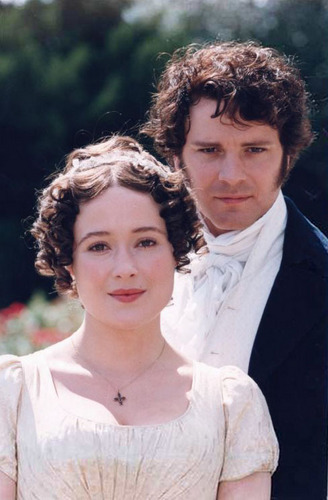
Elizabeth Bennet
Jane Bennet
Lydia Bennet
She is the eldest Bennet daughter and is considered gorgeous by all. Her seeming indifference to Mr. Bingley initially drives him away from her, but in the end, the two are married.
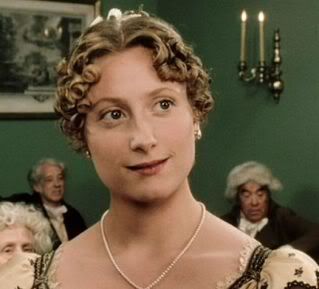
Mary Bennet
Jane Bennet
Elizabeth Bennet
She is the main character of the novel, her personality sets her apart from her sisters. She is alert and she is also understanding. She has a tendency to make quick judgements, but at the same time she's a very affectionate person.

She is the eldest Bennet daughter and is considered gorgeous by all. Her seeming indifference to Mr. Bingley initially drives him away from her, but in the end, the two are married.

He is the master of Longbourn. He has a sarcastic humour. He likes ridiculing his wife and daughters, and no one seems to understand him, except Elizabeth. He finds his wife and the three young daughters silly but believes the two eldest ones sensible.

She is the most comical protagonist of the whole novel. She has a low level of education. Her only target in life is to marry her daughters to rich men. She's a materialistic type of person and her ignorance guides to complete flops.

He is initially condemned proud in the novel, and indeed his behaviour toward others seems snobbish. In fact, he is a formal and very cultured man. He looks down on the Bennets but is attracted by Elizabeth. After her refusal, he takes her reproofs to heart and tries to change.

She is the youngest Bennet daughter, and is described as silly and untamed.

She is the sister of Mr. Bingley

He is the cousin of Mr. Bennet, and will inherit Longbourn at Mr. Bennet's death. When Elizabeth turns down his proposal, he marries Charlotte Lucas.

He is a liar and in debt. When he runs off with Lydia, he must be paid to marry her.

She is Mr. Darcy's aunt and the patroness of Mr. Collins. She is quite proud and does not let any other characters forget their inferior rank.

 The Revolt of the Northern Earls (1569) Most people in the North remained loyal to the Catholic noble families who controlled the north and their Catholic faith. When Elizabeth came to power, she promoted ‘new men’ (Protestants) from the gentry and the powerful Catholic nobles lost their power and influence. This led them to organise the most serious rebellion of Elizabeth’s reign in 1569. Why did the Northern Earl’s revolt? The Earls had lost their power when Elizabeth became Queen (and wanted it back). They wanted Catholicism restored in England (and felt that ordinary Catholics would support it). Elizabeth was refusing to marry or to name an heir, causing uncertainty about England’s future. Mary Queen of Scots (if freed from prison) could replace Elizabeth and solve all these problems Who were the key players in the Revolt? Earl of Northumberland • A Catholic who had held an important position under Mary I. • He lost a lot of influence under Elizabeth (as she favoured Protestant gentry) • Elizabeth also took the rights to a valuable copper mine found on his lands Earl of Westmorland • From a rich Catholic family in the north Also the Duke of Norfolk’s brother in law Duke of Norfolk • England’s most senior Protestant noble, but he had very close links to old northern Catholic families, & was sympathetic to them & greedy for power. • He hated William Cecil & Robert Dudley, Earl of Leicester (Elizabeth’s favourite) who were Protestant and from the gentry • He planned to marry Mary QS, but later backed down and urged the earls to call off the rebellion. Mary also supported the plan to marry him What role did religion play? (7/10 – but only because it was linked to power) • Most northerners held onto their Catholic beliefs & although Elizabeth didn’t persecute them, they knew that she wanted their religion to gradually die out, so they supported the revolt. • In 1561 Elizabeth hired a strict Protestant as archbishop of Durham to promote Protestantism in the north, but he was unpopular & turned many northerners against the Protestant religion. What role did politics/power play? (9/10 – this was the most important cause of the revolt) • The Northern Earls lost a lot of their power/influence (even jobs/money under Elizabeth) • Northumberland was jealous of new Protestant families being given top jobs in the North • William Cecil & Robert Dudley were not from ancient noble families, but were very close to the Queen, so the northern Earls resented them getting top jobs in her Government • Elizabeth also confiscated large areas of land & the profits from their copper mines • It is possible, that had Elizabeth allowed the Catholic Northern Earls to keep their jobs, money and influence at court, they may have ‘tolerated’ her as a Protestant Queen (greedy/selfish). What role did Mary Queen of Scots and the Succession play? • Elizabeth was refusing to name an heir and it was becoming clear that she would not marry • If Mary Queen of Scots married the Duke of Norfolk, England would have an heir and England would be Catholic again. The country would be stable without people competing for power. • However, some of Elizabeth’s courtiers got worried that it might not work and that it might lead to charges of treason (punishable by death) • So by September 1569, Robert Dudley (Earl of Leicester) decided to tell Elizabeth about the plot. By this time it was much more serious than simply marrying Norfolk to Mary. • Mary QS had secretly asked Spain to send troops to help the rebellion & overthrow Elizabeth Plan for the Revolt of the Northern Earls (1569) • The Earls of Northumberland & Westmorland will raise rebel troops from their lands in the north and take control of Durham. • The rebels will then march south towards London to join with the Duke of Norfolk • 1000s of Spanish troops will land in England to support the rebel forces • The Duke of Norfolk & rebel forces will seize control of Government & overthrow Elizabeth • Mary Queen of Scots is to be freed, ready to marry the Duke of Norfolk Key Events of the Revolt • Once Elizabeth knew of the plot, Norfolk was arrested and sent to the Tower of London • The Northern Earls were worried they would be executed for their involvement and in a desperate attempt to avoid punishment, pushed ahead with the revolt • They raised an army of ordinary Catholics and took control of Durham cathedral • Catholic mass was celebrated across the north for 2 weeks. • They then headed south, to try and free Mary • Mary QSs was moved south to Coventry on the orders of Elizabeth, so she couldn’t escape • The rebellion failed as Spanish troops never arrived • Elizabeth’s friend (Earl of Sussex) had raised an army of 7,000 men to defend her throne. Results: • The rebellion was a serious threat to Elizabeth • She executed 450 rebels in the north • Northumberland was executed in 1572 & his head was put on a spike on the city gate • The Privy Council called for the Duke of Norfolk’s execution too, but Elizabeth released him. • Mary Queen of Scots was kept in prison for the next 14 years. • The failed plot also led the Pope to take action against Elizabeth • In 1570 he excommunicated Elizabeth from the Catholic Church • He also issued a Papal Bull (order) calling on all loyal Catholics to overthrow her hoping it would encourage another rebellion. • In 1571 Elizabeth called parliament to pass an Act making it treason to claim that she was not the rightful Queen and to bring in/print papal bulls in England. The Significance of the Revolt of the Northern Earls • It was the first and most serious rebellion by English Catholics against Elizabeth • Treason laws were made much harsher • It ended the influence of the powerful Catholic Earls in the North • It led to harsher treatment of Catholics, e.g. 1572 Elizabeth sent the Earl of Huntingdon (strict Protestant) to the north to carry out laws against Catholics (and suppress Catholicism). • Although Elizabeth’s brutal revenge on the rebels show how serious a threat it was, most Catholics in the north stayed loyal, but the Pope’s Papal Bull now put their loyalty in doubt There was little support for the revolt among the rest of the Catholic nobility and ordinary people. When faced with a choice between Elizabeth and their religion, most Catholics chose to support the Queen. 1569, was the last time English Catholics tried to remove Elizabeth by force. The future plots against her were always uncovered by Cecil & Walsingham, before they had a chance to get any public support. Despite this, the Northern Revolt & Papal Bull changed Elizabeth’s attitude towards Catholics who were now seen as potential traitors. From 1570, Elizabeth became less tolerant of recusants (people refusing to attend her church) & took increasingly tough measures against Catholics. The Ridolfi, Throckmorton & Babington plots • In the 1870s-80s, there were 3 Catholic plots to assassinate Elizabeth & replace her with Mary. • The plots were supported by France, Spain, the Pope and some Catholic nobles. • They reinforced the form Mary & from Catholics at home and abroad. Also the threat from Spain. The Ridolfi Plot (1571) • Ridolfi was an Italian banker living in England and a spy for the Pope. • He organised a plot to murder Eliz, marry Mary QS to the Duke of Norfolk & make her Queen. • The Pope & King Philip supported the plot & Philip told the Duke of Alba in the Netherlands to prepare 10,000 troops (but to only invade AFTER the English had overthrown Elizabeth). • The plot failed because Sir William Cecil intercepted coded letters & Norfolk was executed. • Mary was kept under closer watch. • Ridolfi was abroad when the plot was discovered and never returned to England. 1574: Catholic Priests and Priest Holes • From 1574 Catholic priests were smuggled into England to keep the religion alive. • They stayed with rich Catholic families, so Catholic families were kept under surveillance. • Catholic homes were raided – to find ‘priest holes’ where Catholic priests were hiding. • Catholic priests who were found could be hung, drawn and quartered (although not all were) • In 1581, Parliament also passed 2 new tougher laws against Catholics: • Recusants would be fined £20 (which would bankrupt most families) • Trying to convert people to Catholicism was now treason (punishable by death) The Throckmorton Plot (1583) • It aimed to assassinate Elizabeth and replace her with Mary. The French Duke of Guise (Mary’s cousin) would invade England with an army, funded by King Philip (Pope also supported it). • An Englishman, Throckmorton carried messages between Mary & Catholic plotters abroad. • Sir Walsingham (Secretary of State) uncovered the plot after his agents found the plans for the plot in Throckmorton’s house. Throckmorton confessed under torture and was executed. Significance: • The plots showed that Mary’s presence in England posed a serious threat • It also showed that France & Spain were a serious threat (& could invade) • Throckmorton’s papers showed a list of Catholic supporters in England, so the threat from English Catholics was also real • 1,000s of Catholics were imprisoned or kept under surveillance/house arrest • In 1585 another Act was passed to make helping Catholic priests punishable by death. • The Bond of Association was signed by the English nobles & gentry & forced them to promise to execute anyone who tried to overthrow the Queen. Weaknesses of the Plots The plots lacked public support & were uncovered by informers & spies before they had the chance to work King Philip was reluctant to destroy his alliance with Elizabeth (France was still a bigger rival) so is support for the plots was half-hearted, he rarely followed through on his promises to help the plotters or send an army The Babington Plot (1586) In 1586, Walsingham used his spy network to PROVE that Mary supported the Babington plot. His evidence persuaded Elizabeth to put Mary on trial & execute her for treason. • This was a plot to murder Elizabeth and put Mary on the throne • France would invade England with 60,000 men and Spain would also send an army • Babington was passing coded letters between Mary & her supporters in England & Europe. • But all of her letters were being intercepted and read by Walsingham. • Walsingham used his spies to follow every stage of the plot & had the letters decoded • One of Mary’s letters approved plans to murder the Queen and free Mary from prison • They also contained the names of 6 Catholics who planned to kill Elizabeth • They were arrested, hung, drawn and quartered for treason. • Mary had been implicated in plots before, but Elizabeth was always reluctant to execute her • But the proof found by Walsingham finally persuaded her to put Mary on trial • In October 1586, Mary was found guilty & was sentenced to death • But Elizabeth still hesitated, and did not sign the death warrant until February 1587. Significance 1) This plot was very significant because by 1585 England was effectively at war with Spain since Elizabeth had sent her army to help the Dutch Protestants fight the Spanish 2) This meant that Elizabeth’ situation was more dangerous than during previous plots. 3) Elizabeth’s government also became more determined to crush Catholicism 4) 1000s of recusants were arrested & 31 priests were executed 5) Mary’s execution removed the Catholic threat at home 6) English Catholics had no one to rally around, & lost hope of overthrowing Elizabeth 7) But Mary’s death increased the threat of a foreign invasion as England was at war with Spain and King Philip had been preparing an attack on England since 1585 8) Mary’s death made Philip even more determined to invade, Mary had left her claim to the English throne to King Philip upon her death Why was Mary Queen of Scots finally executed? 1 • A new Act in 1585 stated that in the event of Elizabeth’s assassination, Mary could be executed as long as she had been proved guilty & Walsingham had provided hard proof. 2 • Another reason was that by 1587, it was clear that Philip was planning to invade England • There were rumours that Spanish ships had landed in Wales & that Mary had escaped. This convinced Elizabeth that Mary had to be executed if she wanted to keep her throne. Walsingham’s Spy Network: • Walsingham (Secretary of State from 1573) had a network of spies all over England & abroad. He had spies in every English town, some were normal people paid to spy on neighbours. • He also had agents and spies in Spain, France, Germany and Italy • He hired mathematicians to crack written codes and people to open/seal letters secretly • He also pressured captured Catholic priests to spy on others for him in return for a pardon. • He used double agents to infiltrate Catholic networks - to help him discover traitors • But he only used torture against Catholic priests caught in England in the most serious cases • But 130 priests and 60 of their supporters were still executed during Elizabeth’s reign. Why did Relations with Spain get worse (1569-1588) • England had tried to stay on good terms with Spain, because Eliz wanted to avoid an expensive war that could lead to her being overthrown (English Catholics could support it) • But by the 1570s, Elizabeth wanted to have an empire of her own. • She also needed to make more money to defend her country and throne (by improving trade) • This religious, political and economic rivalry led to growing tensions between England & Spain Political and Religious Rivalry 1) Land abroad, gave countries wealth/power. By the 1580s, Eliz wanted an empire to rival Spain’s (especially as Spain had supported the Catholic plots against Eliz – even if it was half-hearted) 2) Religion was another cause of conflict. Philip opposed Elizabeth’s religious settlement 1559 3) Luckily for Elizabeth, in the 1550s Spain & France were competing to be the greatest European power and both wanted England as an ally against the other. 4) But from 1567, Spanish ships were sailing to the Netherlands with money for the Alba’s army 5) This alarmed English Protestants and Elizabeth’s Privy Council who put more and more pressure on her to send an army to help the Dutch Protestant rebels (in the Netherlands). Economic (commercial) Rivalry: The New World, privateers and Sir Francis Drake • Under Elizabeth, English merchants wanted to make big profits in the New World (Americas). • However, trading in the New World was difficult because of Spain’s power 1) Spain controlled most of the New World where there were huge profits to be made and anyone who wanted to trade there needed a licence from Spain (which it would not give): 2) But the Americas had valuable crops like tobacco, sugar, and also silver and gold 3) Elizabeth secretly encouraged privateers to trade illegally & raid Spanish ports & ships 4) At first Elizabeth denied responsibility for their actions, which delaye war with Spain Sir Francis Drake: Elizabeth sends Drake to rob Spanish colonies and ships (which infuriates Spain) 1) Spain’s support for the Ridolfi plot (1571) made her more willing to support Drake • In 1572 Eliz hired Drake to sail to the New World & steal £40,000 of Spanish silver • In 1577 she sent Drake back again with a secret mission to rob Spain’s colonies/ships • Drake brought back £400,000 of Spanish treasure & claimed an area of California in Elizabeth’s name (New Albion). He gave a lot of this money to Elizabeth • He boosted England’s finances at a time of growing concern over Spain’s threat • He became famous as the first Englishman to circumnavigate the globe. • Eliz knighted Drake as a reward, which infuriated Philip (as he saw Drake as a pirate) • Drake’s actions & his claim to California made it clear that England did not accept Spain’s domination of the New World. Elizabeth’s Support for the Dutch Rebels led to War with Spain (1585-88) • By the 1580s, tension between England & Spain had reached boiling point • At first, Eliz refused to send her army to help the Dutch rebels, because she wanted to avoid a war with Spain. So she tried to get the Spanish to leave the Netherlands in other INDIRECT ways: 1) By allowing Drake (& other English privateers) to attack and rob Spanish ships and colonies 2) By encouraging others (the French heir/mercenaries) to fight the Spanish in the Netherlands • In the 1570s, Elizabeth promised to marry the heir to the French throne (the Duke of Alencon) so that he would take an army to fight the Spanish in the Netherlands The Spanish Fury (1576) and the Pacification of Ghent (1576) • By 1576, the Spanish Govt in the Netherlands was bankrupt (the war was expensive) • After months without pay, Spain’s soldiers violently robbed Dutch towns in the “Spanish Fury” Spanish troops rebelling and robbing cities in the Netherlands in 1576. This united the Dutch Protestants & Catholics against Spain. They drew up the ‘Pacification of Ghent’ (demanding that): • Spanish troops leave the Netherlands • Spain allows the Dutch to rule themselves • The persecution of Dutch Protestants stops What did Elizabeth do? • Elizabeth sent £100,000 to help the Dutch rebels • In 1577 King Philip’s brother, Don Juan agreed to the rebels demands (but this was a trick) as just 6 months later Philip sent an even bigger army to attack the Dutch. • Elizabeth then hired a mercenary army of 6000 English & Scottish volunteers to help the Dutch. • But her plan backfired because the mercenaries destroyed Dutch Catholic churches, which caused the Catholics to make peace with Spain. • In 1578, her Privy Council urged Eliz to send her official army to help the Dutch, but she refused. The Dutch were disappointed & turned to France for help. The French Duke of Alencon arrived with an army to fight the Spanish, but by 1579 Spain had taken control again. • In 1580 Spain got even stronger after Philip won control of Portugal & its empire. • So Elizabeth gave the Duke of Alencon £70,000 to help him fight the Spanish • In 1582, Alencon took his army the Netherlands but failed to defeat Spain. • Elizabeth’s foreign policy in the Netherlands had failed & she had only managed to annoy Spain 1585: Why did Eliz finally decide to send her army to the Netherlands? (she lost her 2 main allies) • 1584 the Duke of Alencon died (so he could no longer fight the Spanish in the Netherlands) • 1 month later, William of Orange, the leader of the Dutch Protestant rebels was assassinated. • In 1585, Spain signed the Treaty of Joinville with France, agreeing to stamp out Protestantism in France/Europe meaning France & Spain were now allies against Protestantism • Elizabeth now felt she had no choice but to send her official army to the Netherlands • She signed the Treaty of Nonsuch with the Dutch rebels which promised them military help 1585: Robert Dudley’s campaign in the Netherlands was unsuccessful She sent 7,400 man army to the Netherlands led by Dudley. But he accepted the title of ‘Governor General’. Eliz was angry as it suggested that she had deposed King Philip so she told Dudley to resign this position. His army was defeated by the bigger Spanish Army as Eliz had not provided him with enough money to win. In 1587 Dudley resigned and returned to England. At the same time, Eliz had sent Drake to raid Spanish colonies in the New World to disrupt King Philip’s flow of money. Philip was furious and told the Pope he planned to invade England at the end of 1585. Drake singes the King of Spain’s beard 1587 • In 1587 Elizabeth ordered Drake to attack Spain’s most important port Cadiz • He destroyed 30 ships in 3 days – known as the ‘Singeing of the King of Spain’s Beard’ • He also stole lots of wood, meaning the Armada did not have quality barrels for food/water • Drake’s disruption delayed the Armada by a year (& meant that its food rotted in 1588). • This bought England more time to prepare for war. The Spanish Armada (1588) The Plan • By 1588, the Spanish Armada was ready to invade England • It had 130 ships with 8000 sailors & 18,000 soldiers • The Duke of Medina Sidonia would lead the Armada, but he had little experience at sea and didn’t want the job • The Armada would collect Parma’s army from France & sail to England under the protection of the Armada’s warships • Parma would march to London to depose Elizabeth & impose a Catholic government in England. 1) The Armada reached the English Channel The Armada set out in May 1588, but was delayed for a few weeks by bad weather In July the Armada was near England & signal fires were lit to warn Elizabeth English ships set sail to meet the Armada The Armada sailed up the channel in a crescent (half moon) formation, to use the large armed galleons to protect the weaker supply and army ships The English navy carried out a few minor raids, but did not inflict much damage Only 2 Spanish ships were lost (by accident) 2) The English attack the Spanish at Calais (with fire ships) and at Gravelines The Armada sailed up the English channel & anchored at Calais to wait for Parma’s army But Parma’s men didn't reach the coast in time (news had reached them too late) At midnight, the English sent 8 fireships into the Spanish ships causing panic They cut their anchors, broke formation & headed for the open sea (without Parma) The Spanish ships sailed to Gravelines, but bad weather stopped them returning to Calais The English attacked and the battle lasted many hours (5 Spanish ships were sunk) The rest were forced to sail away from France towards Scotland The English ships followed them to make sure they didn’t come back to collect Parma’s army 3) The Armada’s Journey back to Spain around Ireland was a disaster The Spanish called off the attack and returned to Spain around Scotland & Ireland Bad storms sank many ships and wrecked more on the Irish coast Many sailors died from starvation & disease – less than half the men made it back to Spain How did England defeat the Spanish Armada? !) Faster Ships • Years before the battle, England had started building smaller, faster ships (galleons) that could fire canon balls quicker & further than Spanish ships • Spanish ships were huge and slow to change direction. 2) Bad Planning & Communication (Spanish) • Philip’s plan to join with the Duke of Parma’s army in France was risky. • Parma had lots of small ships which took 48 hours to load, man and set sail. • It took too long (a week) for word to reach Parma that Medina was in the English Channel, by which time Medina had set sail to Calais. • Parma was not ready to set sail & the English were already ready to attack (leaving Medina with very little back up when anchored in France). 2) English Tactics were more effective • Spanish ships aimed to come alongside the English ones, jump on board & fight the enemy. But the English ships were faster & kept a safe distance. • They chased the Armada down the Channel, with heavy cannon fire, which forced the Spanish to arrive in France before Parma’s army was ready • As the Armada was waiting, the English sent fireships into the Spanish fleet. • This caused the Armada to panic, cut their anchors & sail away to the north • When the Spanish ships regrouped, the English attacked them in the Battle of Gravelines & the Armada was forced to sail north, chased by faster ships. 5) Bad Weather • Strong winds made it impossible for the Armada to return & pick up Parma’s army and storms wrecked or sunk Spanish ships as they tried to return home along the Scottish-Irish coasts. 2) Spanish Supplies • The Armada was not well supplied with food/weapons. Drake’s attack on Cadiz port in 1587 had destroyed food barrels. Delays in setting sail meant that by the time the English attacked the Armada it had been at sea for 10 weeks and had rotting food. 1000s died from starvation/disease. The consequences of the English victory? • Victory over the Spanish Armada gave Elizabeth a great propaganda victory • A new portrait was made, and a medal was made to commemorate her victory, it said “God blew and they were scattered”. • Elizabeth claimed that God was on the side of Protestantism • This led to a feeling of English pride and encouraged the Dutch rebels to renew their fight against the Spanish • The defeat of the Armada showed the strength of the English navy and gave England the confidence to trade and explore more widely at sea • Although Philip did not give up and continued the war for the rest of Elizabeth’s reign, the defeat had cost Spain dearly, both financially and in terms of its power • The Armada marked the start of a long decline in Spain’s power and fortunes. • English ships were sent on voyages of discovery and set up valuable new trade routes • By the end of Elizabeth’s reign, the navy was also trying to set up a new colony in Virginia • The English victory boosted Elizabeth’s popularity & strengthened the Protestant causeIn our classroom, we believe in teamwork and responsibility. That's why we have different classroom jobs that students can take on to help make our learning environment run smoothly. Each job comes with specific tasks and responsibilities, and it is important for the students to understand the requirements and expectations for each role. Let's take a closer look at the different classroom jobs available to our sixth-grade students: 1. Teacher's Assistant: The Teacher's Assistant plays a crucial role in our classroom. Their main responsibility is to remind the teacher of important tasks that need to be done throughout the day. This includes taking attendance, passing out papers to go home, and any other "do not forget" tasks that the teacher might need help with. The Teacher's Assistant needs to be organized, responsible, and reliable. 2. Supplies Monitor: The Supplies Monitor is responsible for ensuring that all classroom supplies are put away neatly. This includes making sure that pencils, pens, markers, and other materials are returned to their designated places after each use. The Supplies Monitor needs to be attentive to detail and have good organizational skills. 3. Technology Assistant: With our use of technology in the classroom, the Technology Assistant plays a vital role. They help students and guest teachers who might not be tech-savvy with chromebooks and other devices. The Technology Assistant should be comfortable with technology, patient, and willing to help others. 4. Room Monitor: The Room Monitor is in charge of checking desks and floors before lunch dismissal. They make sure that everything is clean and organized before we leave the classroom. The Room Monitor needs to be responsible, observant, and take pride in maintaining a tidy learning environment. 5. Line Leader: The Line Leader has the important task of leading the class and setting the pace when we transition from one place to another. They need to walk in a straight line, follow instructions, and be a positive role model for their peers. The Line Leader should be reliable, responsible, and demonstrate good leadership skills. 6. Messenger: The Messenger is responsible for taking things to the office or picking up items that the teacher needs. They need to be trustworthy, reliable, and able to follow instructions. The Messenger should also have good time management skills to ensure tasks are completed promptly. 7. Host/Hostess: When visitors come to our classroom and need assistance while the teacher is busy, the Host/Hostess is there to help. They greet visitors, provide directions, and offer any necessary support. The Host/Hostess should have good communication skills, be friendly, and approachable. 8. Guest Teacher Guide: In the event of a guest teacher, this student will help them take attendance and assist the teacher with anything they need help with. The Guest Teacher Guide needs to be responsible, reliable, and have good communication skills. They should also be respectful and supportive of the guest teacher. 9. Researcher: During whole-class discussions, if there is a question or topic that needs further exploration, the Researcher steps in. They use the internet to look up information and provide additional insights. The Researcher should have good research skills, be able to navigate online resources, and share accurate information with the class. 10. Secretary: The Secretary takes down notes when directed in the class notebook and collects any papers for absent students, placing them in their designated file. They need to be organized, attentive, and have good handwriting. It is important to note that all of these roles come with certain requirements. To be considered for any of these jobs, you must be punctual and have good attendance. This means arriving to school and class on time every day. Additionally, honesty and reliability are crucial traits for anyone taking on these responsibilities. By working together and taking on these classroom jobs, we can create an environment that is conducive to learning, organized, and supportive. Each of these roles plays a vital part in our classroom community, and we appreciate the efforts of all students who take on these responsibilities. Let's make our classroom a place where everyone feels valued and can thrive! “On this night, we share a roof protecting us from fleets of inequity. Our unification promises a better tomorrow. Those larger than myself, sitting on their marble thrones, sipping blood from cups composed of human skin and singing songs of so-called virtue, grow weaker each moment. Their caravans are revolting. There is hope yet. There is progress! Though tonight may mark a countdown, it is still a celebration. Look at all we have done, not just for Trials but for Palatium Infra as a whole. In four years, when I’m no longer Sovereignty, the Spoiled Purity and his people will continue to strive. So drink! Smoke! Crush up those exotic plants and snort them! We will not falter, weaken, or wane. Our influence is expanding, and somebody new opens their eyes every day. Even the Silbys of Aculeus have reached alarming potentials despite their embittered minds. So long as you relish in tonight, dance, and pray to your “dead” Gods, our revolution shall rise beyond the bounds of class, and when I’m only a commoner, we shall rise again beyond our brainwashed adversaries! Cheers, my people. Cheers!” Followers raised their cups. Some clinked theirs together. Others stood still and screamed breathlessly in agreement. I smiled with courtesy, then stepped off my platform. My voice still rang across the cellar. Speeches before were grander. Those displays were supposed to be emptying, and yet this one left me bloated, swollen tight. I watched as they popped the corks of their bottles and chanted in the name of Purity. Maybe the quality of my words wasn’t what mattered to them anyway, so long as I screamed loud enough. There’s no merit in attacking your people, a voice corrected me. “That’s right,” I said aloud. “Knox, my-my Sovereign!” squealed a nearby devotee, jittering as he stuffed his face with catered pastries. He was one I’d never seen before or had failed to remember. “Look what I’ve found! It’s wine, and not the shoddy Infran kind, either. Earth-made with good fruit! I don’t know how anyone managed to get their hands on this. Maybe some space travel mischief.” He giggled and held up a small glass bottle. “How neat.” “I want you to have it, Sir.” I nodded my head. “Yes, of course. Thank you.” Backing off into the midst of rowdy disciples, I clutched the bottle. What a waste of grapes. It could have been jam instead. Earthly food had a superior taste, ripe with delicate intricacies and nostalgia, but Palatium Infra had mastered the art of alcohol. Why waste your time with a drunkenness so sad and sickening? The booze of trash. Not many more followers approached me. The barren peroration must have upset them. My hands itched to submerge into my suit pockets, and my legs stood suddenly numb, wobbling. Four more years until I’m nothing. But tonight, you are nothing. “Shut up,” I told myself. Tightly packed together in the corner of the dwelling sat the Sibyls. A mound of writhing fabric and tones of skin made up their unified silhouette. I snapped the strap of the nearest gown, balancing on my hands and knees, waving the bottle before them. In their almost rodent nature, narrow noses prodded my way. Their dresses wrinkled and fell to their ankles. Knees dropped, and eyes widened. Many grumbled at me like hungry she-beasts. Those newer ones with faded curtains for hair, sunken eyes, and dirtied nails looked, hid their face, then sobbed. I imagined them in a pack together, fighting wildly against the Spoiled Purity in their rat decorum–biting down with square teeth laced with rabies. “I’ve got you all something,” I said. “Go back off to your pedestal and yap some more. We don’t want it.” A woman rose from the pile and spat. “You don’t even know what it is yet. It's Earth hooch, or more likely a near-flawless replica. I figured you girls would also like a chance to enjoy yourselves tonight.” “Your playmates have been harassing us since the moment you hung the banners and opened the cellar door.” The youngest, with a striking cyan mop upon her head, uncoiled from the mass. What was she now? 20, 21? We celebrated a birthday recently, I thought as she spun around me. “I remember something about a promise. Multiple promises, actually. Are you trying to bribe us into just shutting up and taking it? Because if another sticky, 40-year-old, Earth-born virgin gropes my shoulder, I’m going to have an aneurysm!” the girl continued. “Why not an Infran follower? Do you like it when they touch you?” I returned her accusing tone. “I’m sorry, sweet prophets, that you feel I’ve neglected my duties. I’ll keep a better eye out. Remember, you can always just holler if somebody is bothering you. And Anwen, friend, if I’ve ever tried to bribe you with anything, it was certainly the hair dye. I mean, look at you! Such handsomeness!” I exclaimed. The other Siblys began to encircle her, uttering compliments or even announcements of their envy. Anwen disappeared in a wink with flushed cheeks back into the mound. “I’ll just leave this here.” Smiling, I set down the bottle. ** “141, 143. . .” I counted each step as I trekked the staircase. There was no doubt I lost track somewhere. The ledges kept spawning under my feet, infinitely multiplying until I wasn’t moving at all–swallowing me up in a whirlpool of stone. My tie still hung around my neck, and my blazer remained tied around my hips as a skirt. Streaks of red dribbled off from the cavity in my chest. It was a gorgeous marking, sensual to my fingertips as I traced its edges. Purity, oh, Purity. Purity and his wings of burnt skin. Purity and his many faces. Purity the spoiled. Purity the mutilated. The Silbys did not bother waiting for me. On bare feet, they stormed up the stairs to their room. A trail of red, though in paint unlike mine, streamed after them. None looked remotely near me as they squeaked and gossiped intangibly. I saved them, those Infran broads, enlightened them. As much as they liked to deny it, spit at me, and bask in the thought of their victimhood, in this home, they stood empowered. You’ve done well, my thoughts affirmed, though in the manner of an insincere commentator rather than a hype man. Teeth grace in tile violin goes laundry paper when. It dissolved into an intruding drivel. I rubbed my head and sniveled. “Do you need help, Knox?” called a Silby. Fattened by my coddling, her shadow fell upon me from the doorway steps ahead. I attempted counting again. There must’ve been at least another hundred between me and her. “I’m hallucinating some,” I said, breathing deeply to suppress a burp as I struggled to recall her name. Two syllables. Typically Latin, though sometimes English. Drops of slobber leaked from my mouth. “I’m hallucinating some, Tybal. Do you like your name, Tybal? I would have named you something better. Ty-Tyballinia. No, we’d have to eliminate the ‘ball’ aspect. It sounds too crude.” “One foot in front of the other,” she said. So I walked. Mess greeted me at the doorway. Dirtied culinary obscured the dark wooden countertops, and the sink lay running. I approached the kitchen table, sat, and set my face down upon its cool wooden surface. Assaulting my nose was the smell of neglected flowers, like soil mixed with the kind of sweet cough medicine that would have left me gagging as a child. Open windows whispered songs of the twilight hour through the vessels of busy trolleys and shooting guns. My mouth strained to vomit, but there was nothing in my stomach to regurgitate except the petals of Stulto’s bloom, which came out effortlessly in little sputters. Teetering, I stood up and brushed disgorged plant parts off the tabletop. “Love,” I said as I slogged up yet another staircase. “Are you awake?” She said she’d wait. Somebody’s gotten her. No, she always misses movie night. That sleepyhead, I assured myself. There was a stirring amidst the manor’s cloak of dusk. Portraits of myself, my wife, and my daughter turned to face me as the hallway lights flickered, escaping their quartz frames to penetrate my ears with nonsense. The taxidermied heads of Infran creatures bared their teeth. I stopped to stare at my favorite, an adabactor with daunting spiked tusks poking out from its forehead. Its nose remained black and sharp, and its eyes wide with malice. “Where is my Spes, Adaba-boy? Is she sleepy?” There’s someone in the house. The sounds of the stirring rose along with my blood pressure. Footsteps orbited around me, drawing near and far and then near again, little dancers in the dark. The carpet immersed me in its mass of purples and blues, leaving my skin stained indigo and my vision abstracted. I toiled to reach the master bedroom across the aisle as it stretched out to me with bright lights and celestial howling, like a dove struggling in a pool of oil. Never again with Stulto’s bloom. Never again on what was already a bad night. My hand brushed the doorknob, and the high abruptly faded into only a persistent hum-buzz twirling around my brain. The portraits returned to their typical depression–Spes posing with her ax, Ari’s school photo, and myself in the cap I wore when addressing the military with the Verbis emblem embroidered in its center. All lifeless shots. Who were they for when they captured not the subject’s essence but only some fragment of their identity? They used to feel personal, not advertisements of some supposed characters. Servants, babysitters, and likewise civilian guests, I reminded myself, mustn’t forget whose home they’re in. Yet my body moved independently, taking Ari’s from its hook and laying it backward against the wall to hide her distant grin and tamed posture. It was time for new pictures. Sweet ones, real ones; time was ticking. I approached my own when the stirring began again. Groans and squeals erupted from the vents as if someone had set a pen of pigs loose in my crawlspace. No, not the crawlspace, my bedroom door. I turned the ruby knob. Underneath a blanket wrestled my two squealing piglets, their skins melting together beneath the layer of duvet. Fishnet leggings and manicured nails outstretched and scraped at the sheet beneath them. One raised its head, a salmon-colored man with sweat running down his forehead. Through the crack in the door, we met eyes, his Infran Dr. Sesuss nose flaring its narrow nostrils. No mark of the Spoiled Purity existed carved onto his naked body. My chest felt tight. I stepped back. I was suffocating. Spes emerged from the linens, her hair flowing down her back and her dark skin glistening in front of the bedroom window. She giggled and held the man, the blanket falling and revealing inches of her body I had not seen in months. “Darling,” whispered the rosy-faced man, “look.” He was unfathomably ugly and grotesquely young, with beady, lifeless pupils that dilated when he faced me. The excess flesh on his face sagged while he bit down on his thin lips. My wife faced me, gasped, and strained to cover herself. Suddenly, I was a stranger. A small child who had walked into his parents having sex. I unfurled the door completely. “Get out of my house,” I said. The man stayed in place. “Get out of my house,” I repeated. “Knox,” Spes began. Tears ran down her round cheeks. “Shut up!” I turned to the man, picking up a marble trophy from on top of my dresser. “Get out of my house! I’ll kill you!” “Knox!” Spes sobbed. “God damn it! I hate you! You barely look at me. Every day, there’s less passion. God, God, God, I don’t want to fuck a dead man!” she screamed, “You get out! Get! Get!” My hands wrapped tighter around the statue. That pig of a man was attached to her at the side, his face equipped with a scowl that challenged mine. He thought I was weak; frail like a decaying dementia-ridden senior. I imagined his skull bashed in, his scowl gone, and the feist and confidence in his face beaten into numbness. A new portrait was in order of such brutality, him as a splintered slab of wood, rashed and beaten, a carcass licking my boot. The churning in my brain had come back. Every wall shook. Clock faces came to life and rang in alarm. Indescribable noises caressed my eardrum before breaking into sorrowful weeps. Was it my own? I stared at Spes in motionless frenzy, clenched my teeth, and screamed like a siren. Passionless. What a lie! An excuse, more like. One that erased all my ventures, reducing me to a nobody. But I was not a nobody. I thought of my sect, my campaigns, my endurance through the political brutality of my empty hive-mind world–even my collection of literature, maps, and artifacts. I thought of daring nights alone with Spes when we were young, ravaging each other, two sardonic eggheads suddenly overcome with desire. The veins in my neck throbbed as I gasped for air. It was all I had. I threw the figurine at the man’s head. Eye shut, I heard the thud. A million singing voices of victory flooded out of the cracks in the floorboard. Proving myself a man to the woman I loved in a display of fervent violence was passion. I strained my ears for his cries, though I did not look yet. There had to be a pause, a moment of relief, where I stood tall as a skyscraper and seemingly fought to stay contained in front of my wife and her wounded, quivering paramour. Frantic footsteps rushed off the bed and past my side. I turned and grappled against myself to seize my wife’s shoulder. “Spes!” My eyelids lifted. Escaping was the man with that same numb expression in which I had imagined him. “You’re insane,” he said. I swiveled back towards the bed. With her curly locks flowing over her breasts and her limbs bent at her sides, Spes sat limp pressed against the headboard, her forehead bludgeoned and the statue resting on her stomach. Lips pursed and sweet, my Renaissance beauty reclined there in the guise of a squashed bug. But she was not dead. The desk ornament I flung was only the size of my shoe. Spes, that dramatist, may have been slightly hurt but was far from dead. She only wanted me to think she was to observe me at my most distraught, like a leech feeding on misery. “Get up.” Staggering toward the bed, I said. “You wanted passion? I showed you passion. ‘Shoved it right into your head. Of course, we both know who that gesture was meant for. . .” I fumbled to find my wit. Cold skin met my hands as I stroked her face, unable to resist checking her pulse, even though she was not dead. “I love you, Spes,” I said. Rain pelted against a nearby window. “Spes, please. Please.” No vibration answered my plea. I lifted my hand, sitting next to her now. Tears did not come. There was not any blood on the trophy, but when I picked it up, it felt to be now only a cruel instrument. It depicted a younger me in white marble, with my glasses and collared shirt being the only things painted. Both were in pink. It was a favorable color. I scrambled from the bed to vomit pure digestive bile on the rug. My stomach heaved. I ran my nails along every piece of myself I saw, a dog chasing my tail. As I slammed myself against walls and convulsed, my own heart grew ever louder in my chest. “Dad? I heard–” Ari’s slippered feet hammered across the floor. “Mom? Mom?” I kept my eyes on the storm. Silence fell. “She-She isn’t—your—.” Gasps interrupted every syllable she spoke. “You’re a murderer. Bad. Like they said,” she breathed, “ You beat her!” The words became mush, alphabet soup. Ari ran back down the hall. “My-My mom is dead. . . .Yes. . . Manor of the Trials Sovereignty. . .Ari Sorkin. . . I’m afraid he’s going to hurt me,” she said, presumably over the phone. It was all too fast. I crawled onto the windowsill, opened the glass, and let myself plummet into the alley below. Gusts of wind howled. The lack of motion or sensation informed me I had passed and again lived. Another Palatium Infra, another strange planet in which the celestial endowed rotting men with the opportunity to inhabit. Was this it? Was it all just an impossible limbo of galactic traveling? My surroundings were overwhelmingly gray, an abyss of clouds. Perhaps I had now met the real coming world, and my family and old friends lived here, ready to rush to my sides, lift me up, and jump for joy. Spes would be there. She would be enraged, but at least she’d be there. You are a bad man. You are a bad man. My eyelashes fluttered. There was a tugging sensation in my leg. The fog was wavering along with my ascendance. “No,” I yearned, trying to grip the clouds and stick them in place. “Stay with me.” But the peace was fleeting. I felt the cement under me and the moist garments clinging to my figure. My leg burned. Carefully, I craned my neck, only to observe the promenade as my surroundings. The most underwhelming of filth and danger, individually Infran. Forever my coming world. What a fool I was, having forgotten my blessing. Those idiot Gods could not tell the difference between assassination and self-infliction; a faulty insurance plan. The urge to cry at last set over me, and so I sat and wailed hot salvia into my palm, shielding my mouth to muffle the noise. Thunder echoed my hushed howling. Raindrops turned to pebbles. Under the ambiance of the stormy night, I could have sworn I heard troops stomping, guns cocking, and the chanting of my name. They had all been waiting for this. Billboards came to life, and I could only sit and spectate as the scenery flashed red. I inhaled fear and sobriety through runny nostrils. “Trials Sovereign Vsevolod “Knox” Sorkin is currently at large for the suspected homicide of Spes Sorkin, breaking the first term of the Sovereignty Charter. We now instruct you to report any sightings of the Earth-born, caucasian, roughly 195 centimeters tall, brown-haired, and brown-eyed man to your local Guard post. One can identify the suspected convict specifically by an occult tattoo of Purity’s Coronet on his lower back. No attempted execution or elongated punishment will take place until our Guards conduct an autopsy proving his guilt, per Life’s 1238 commandment. We cannot be sure when or if the Gods will revoke his blessing. Remember, when Gods frown upon strife, opt for a peaceful life. We permit all grieving festivities until Cagidus 4th. Good year!” towering buildings sang out in broadcast, repeating that same convoluted message quicker the instant it ended. Sometimes, the announcer spoke in Latin for the Infran children, other times in Chinese, Hindi, or Spanish to cater to those of irrelevant tongues. You aren’t a bad man. You are a stupid boy. Puddles sloshed. Somebody was approaching. I didn’t dare waste any remaining energy avoiding the Guards and their prodding blades. How did that phrase go? You dug your grave. Now lie in it. And so I embraced the cement. “Knox?” said the Guard. No, her tone was too sincere, and no authority would proceed in such a manner. There wasn’t confirmation on whether or not I was armed, and it wasn’t as if she could shoot me first. She was a partygoer, having just left from the cellar’s backdoor. I shooed her away with my hand. She hovered, and I discerned her shadow hesitating over my body. A man could not rot in peace. “Come on, get up! They’re after you!” Hands reached around my torso, struggling to handle my weight as they urged me onto my feet. That leg, the burning one, my right, trembled and bent unnaturally upon impact with the ground. The partygoer slung my arm over her shoulder, balancing me. My eyes caught a glimpse of a cyan mop. “Anwen?” I rasped, “hu-who let you out?” Keys jangled in her hands–my keys. “I escaped,” she said casually, coercing me to walk beside her. “Quicken your pace. I just heard somebody on your front porch. ‘You see that compost bin down the alley? We’re gonna burrow right down into the depth of that. If they open it and uncover us, I’ll be on top, and I can hide you and act like I’m just a homeless amica trying to take a nap.” With a tightening grip, she led me like livestock to the stinking crate. “I don’t understand, Anwen,” I said. “They’re going to torture and kill you, stupid. You know they’ve been wanting to, and you just handed the opportunity to them!” “I understand that.” It was becoming increasingly challenging to hide the fragility emerging in my voice. “You said you were escaping. Why stop and help your captor?” “What else could I do? Leave you there?” Attempts to shove my wounded body inside its mass of discarded fruits and vegetables began. She yanked down upon my head and submerged me in the fertilizer sea. The evidence grows indisputable, I thought as I stared at the abruptly humane Infran girl, diving in after me, that I belong here. “Damn me to hell! I’ve killed her! My love is dead!” an uncontrollable cry leaped from my mouth. “Shut up! Soon you’ll be, too, if you don’t quiet down.” The actual noise of the Guards darted past us: disorientated marching, guns clanking against each other, cluttered belts rattling, the Latin squawking. One paused to open the bin’s lid, though only rummaged through the surface layer of peat before carrying on. “What are they talking about? I struggle with my Latin,” I whispered. “The search, mainly.” Aggression remained firey in Anwen’s clenched jaw. Though she sat on top of me, there was a monumental distance between our rain-soaked forms. I curled up into a ball, ducked my head between my knees, and dreamt of Spes, ignoring the stench of spoiled food rising from every crevice of my dwelling. The next coming world was due to adopt me again as I forced sleep. I prayed for a canyon of fluffy haze, where I waltzed with pale memories but found nothing but the petrifying stillness of my mind. Killed and ran. Violent as a Guard just to prove a point and watch it backfire. Why would any heaven want to welcome me? I clung to the picture of Spes in my head like it was the last ember of an extinguished flame. “Did you mean to kill her?” Anwen interrogated. “Someone like you would immutably believe yes.” “And who is someone like me? You can’t even treat me like a person for a moment, can you?” grating drama decorated her words. “You know my opinions. I have not seen much of your or your breed’s faces besides that of cruelty and ignorance.” I retorted. “I just saved you! Does that make me cruel and ignorant?” “It makes you an idiot, which is another word for somebody ignorant.” “And why am I an idiot?” She asked. “Because you helping me does no good. Thank you anyhow. Now, do yourself a favor and scram.” As she bent her leg in anticipation, preparing to strike me on the forehead, I sensed an invisible withdrawal widening the gap between us. “You never answered my question,” Anwen took me by the end of my tattered tie suddenly and started her game of shepherd and sheep over again, pulling me back up to the crate’s exit. It appeared as a shining light at the end of a maze of rubbish and mold. “No. Of course not. Spes was my everything,” I sniffled. “I knew it. You couldn’t even bring yourself to hit us, let alone murder your wife. The girls and I always figured you were sensitive.” My heart rate quickened. Today was one of humbling and misery–one to pray a hail spike would fall from the sky as sharp as a needle, pierce into my eyelid, and lobotomize me. I wished I could have merely died or hit my head hard enough not to have to deal with it all. No, I wished I was Anwen with her snarky, careless glow and lack of depth in her eyes. As we emerged from the compost bin together, I fantasized about strangling her until her face turned purple, her weakening spirit no longer categorizing me as “sensitive”, but the thought could only remind me of wielding that trophy and the microscopic traces of my wife’s tender skin tainting it, which turned my guts inside out. “That’s why I think you could use a little help,” Anwen said, “It seems like you can’t walk, either. Your leg is all twisted up.” She undid one of her trim pigtails and handed me the band. “Take off your tie and put up your hair. ‘Will make you less recognizable. Then swallow your pride and stick with me.”Comprehension Test: Superbook – Revelation Theme: Forgiveness, Salvation, and God’s Victory 🔹 Remembering (Items 1–4) What mistake did Chris make at the beginning of the episode? A. He lied to his parents B. He started a fire accidentally C. He broke a valuable item D. He skipped school Answer: B Who are the three main characters in the episode? A. Peter, Mary, and John B. Chris, Joy, and Gizmo C. David, Sarah, and Eli D. Paul, Ruth, and Micah Answer: B Where does Superbook transport the children? A. To the Garden of Eden B. To the time of Jesus’ birth C. To the end times D. To the Exodus Answer: C Who receives visions in heaven during the episode? A. Moses B. Apostle Paul C. Apostle John D. King Solomon Answer: C 🔹 Understanding (Items 5–8) Why does Chris believe his mistake is unforgivable? A. He was punished severely B. He hurt someone intentionally C. He fears the consequences are too great D. He doesn’t understand forgiveness Answer: C What does the descent of the New Jerusalem symbolize? A. The end of all prophecy B. The beginning of war C. Eternal life and God’s promise D. The destruction of the earth Answer: C What lesson does Chris learn from his father? A. That mistakes are permanent B. That forgiveness is earned C. That God’s mercy is unconditional D. That punishment is necessary Answer: C What theme is emphasized throughout the episode? A. Justice and revenge B. Power and control C. Forgiveness and salvation D. Wealth and prosperity Answer: C 🔹 Applying (Items 9–12) If a student feels guilty for a mistake, what lesson from the episode could help them? A. Avoid responsibility B. Seek revenge C. Trust in God’s forgiveness D. Hide the truth Answer: C How might Joy’s experience in heaven help her understand God’s plan? A. She sees the consequences of sin B. She learns about ancient history C. She witnesses God’s ultimate victory D. She meets famous prophets Answer: C What action could reflect the message of salvation in daily life? A. Ignoring others’ mistakes B. Offering forgiveness to someone who hurt you C. Avoiding difficult conversations D. Seeking personal gain Answer: B How could Gizmo’s role support the group’s understanding of Revelation? A. By distracting them with jokes B. By translating the visions C. By guiding them through spiritual truths D. By fixing technical problems Answer: C 🔹 Analyzing (Items 13–16) What contrast is shown between Chris’s fear and the final message of the episode? A. Fear leads to punishment; forgiveness leads to peace B. Fear is stronger than faith C. Mistakes are never forgiven D. God ignores human emotions Answer: A Why is the battle between angels and Satan significant? A. It shows the power of war B. It represents the struggle for heaven C. It symbolizes the victory of good over evil D. It predicts future disasters Answer: C What does the episode suggest about the nature of sin? A. It is always punished B. It can be forgiven through God’s mercy C. It is inherited D. It defines a person’s worth Answer: B How do Chris’s emotions evolve throughout the episode? A. From joy to anger B. From guilt to hope C. From confusion to pride D. From fear to rebellion Answer: B 🔹 Evaluating (Items 17–18) Do you agree that no sin is too great for God’s forgiveness? Why might this be important for viewers? A. Yes, it teaches hope and redemption B. No, some sins are unforgivable C. Yes, but only for believers D. No, forgiveness must be earned Answer: A How effective is the use of apocalyptic imagery in teaching moral lessons? A. It confuses young viewers B. It dramatizes the message of salvation C. It distracts from the core message D. It promotes fear Answer: B 🔹 Creating (Items 19–20) If you were to write a reflection based on this episode, what theme would you focus on? A. The importance of punishment B. The beauty of heaven C. The power of forgiveness D. The fear of judgment Answer: C What title would best capture the message of the episode? A. “The Fire Within” B. “Mercy Wins” C. “The End of Days” D. “Judgment and Justice” Answer: BBroken windows are covered. Floorboards are patched and doors screwed back on. The road that was ruined by German tanks is shovelled and raked smooth. Boot-shaped bruises turn yellow then fade and disappear. Flowers grow and spread across the ugly German footprints stomped into garden beds. The village looks pretty once more. School stops for the summer and everyone is put to work on the kolkhoz, the village farm. Women and big boys begin harvesting the barley crops in the outer fields. The biggest girls milk the cows, morning and night, and keep the barns clean. Old Nikolay mends ploughs, horse harnesses, pitchforks and scythes in his workshop. Anna Pushinka teaches Yelena and her friends how to get the honey from the beehives that are scattered through the orchards. I am in charge of collecting eggs. My friends Olga and Nina help. Olga and Nina are five, a year younger than me. They are twins and look exactly alike, except Nina’s nose is a little bit crooked from when she fell out of bed and squashed it sideways on the floor. The hens, ducks and geese wander free in the summer, so collecting eggs is like a treasure hunt and takes hours. Catching the hens for their daily hugs takes even longer, but I think it’s important because hugs make everyone happy and happy hens lay bigger eggs. Olga says I’m the best hen-hugger in all of Russia. Nina says I’ll be the best cow-hugger, too, when my arms grow longer. But good hugs have nothing to do with the size of your arms. It’s all to do with the size of your heart. When we are done with the hens, Olga, Nina and I can spend the rest of the day doing whatever we like. We climb the apricot trees, chase squirrels, lie in the meadow marvelling at how hot Ushanka’s black fur becomes in the sunshine, make daisy chains and race little boats of bark in the stream. I teach Olga and Nina the alphabet and we use charcoal to write our letters and our names all over the village – on doors and walls and the freshly cut ends of firewood. In between, I practise my knots. In case the German princemonsters return. I slip into Old Nikolay’s workshop and tie knots in the harnesses hanging on the walls. I wander into gardens where the washing is hung out to dry and tie knots in the laces on pants and smocks. I creep up behind Anna Pushinka and tie knots in her apron strings. I find baling twine in the hay shed and tie my own ankles together. I do such a good job of these last knots that I can’t get them undone. I have to jump all the way to Olga and Nina’s house and ask them to cut me free with their mama’s knife. At the end of each day, Ushanka and I run out into the distant barley fields to meet Mama. This is my favourite part of the day, because Mama always shouts, ‘Little Rabbit!’ and smothers my head with kisses. And as we walk home, we sing. Everyone – women, big boys and me. I love to sing. Almost as much as I love to be kissed by Mama. Sometimes one of the boys, Mikhail, has his balalaika with him. He takes the instrument out from beneath the sheaves of barley piled high on the wagon and plays music. We sing about forests and orchards and people who find their true love. As we walk home, arm in arm, my heart fills with happiness and my belly swells with pride that I am allowed to sing along with the big boys. And I can almost forget about the German prince-monsters and their lies about Russia and their big ugly boots. Almost. But today, when Mikhail reaches for his balalaika, I see other things hiding beneath the barley sheaves. Three of the mamas rush forward and cover them up, but it’s too late. I know they are there. I’ve already seen them. Rifles. Lots of rifles. Mikhail hugs his balalaika to his chest and blushes. ‘So play!’ cries Mama, her voice oddly loud and high. ‘Let’s play Sasha’s favourite song, “The Little Birch Tree”.’ So Mikhail plays and everyone sings about the lovely birch tree with its curly leaves and the branches that will be turned into silver flutes. They sing too quickly, too loudly, and as they sing and walk, they cast nervous sideways glances at me. ‘It’s alright,’ I say, when the song comes to an end. ‘I didn’t see the rifles.’ Mama nods and smiles, and I know it was the right thing to say. But I did see the rifles. And I think about Yelena wanting to get lots of guns and dynamite for the Partisans so they can shoot the Germans and blow them into thousands of tiny pieces, and Mama looking as though she agreed, and I know this is what the mamas and the big boys are doing. As well as harvesting, they are helping the Partisans. Three days later, I wake before dawn and I am all alone. Yelena is always here beside me when I wake. But not this morning. I climb down from our bed above the stove. Mama is filling a cloth sack with bread. She ties it closed with a piece of string and hands it to Yelena. ‘Stay out of sight,’ says Mama. ‘And don’t return until after dark.’ ‘Where’s she going?’ I ask. ‘Nowhere,’ snaps Mama. ‘Then why does she need all that bread?’ I ask. ‘There’s nothing left for us.’ Mama baked four loaves last night and she has stuffed them all into the sack. Yelena opens her mouth, but before she can speak, Mama shoves her out the door and sends her on the way to nowhere. Mama turns and stares at me, her blue, blue cornflower eyes wide with worry. ‘I know,’ I say, flopping down on the bench. ‘I didn’t see any bread.’ Mama sits beside me and takes my hand. ‘And . . .?’ she prods, obviously waiting for more. I puzzle for a while, then say, ‘And I don’t have a sister called Yelena.’ Mama laughs, softly and with a little bit of sadness around the edges. ‘Sweet Little Rabbit! You do have a sister called Yelena.’ ‘I do?’ I ask, now confused. ‘I haven’t seen the rifles or the bread, but I have seen Yelena?’ ‘Yes.’ Mama smiles and the magic makes me smile, too. And I am glad that Yelena is real because I love her very much. ‘Yelena is real,’ Mama explains, ‘but she does not carry sacks of bread into the forest for the Partisans.’ ‘Of course not!’ I shout, slapping my forehead. ‘Because there is no bread!’ Mama laughs loudly now, with not a hint of sadness. She hugs me, pressing me against her warm, loving heart, covering my head with kisses. ‘Clever Little Rabbit,’ she murmurs, and then, in barely a whisper, ‘Your papa would be so proud.’ When I wake the next morning, Yelena is sleeping beside me, her mouth open, her braided hair unravelling. Mama is serving kasha to a strange woman seated at our table. I crawl down from above the stove and slide along the bench beside her. I stare at her pants, her tunic, the rope she is using as a belt and her big boots. She’s dressed like a man! And there’s a rifle leaning against the wall near the door. ‘Hello,’ I say. ‘I’m Sasha.’ The woman doesn’t reply. She just shovels down her kasha. I line my four wooden bears along the table in front of her bowl and say, ‘These are my bears: Big Bear, Medium Bear, Little Bear and Even Littler Bear.’ ‘Hello, Sasha. Hello, bears.’ She smiles but she doesn’t tell me her name. ‘Why are you dressed like a man?’ I ask, tugging at the sleeve of her tunic. ‘Because men’s clothes make it easier to run and climb and crawl and shoot,’ she says. ‘You’re a Partisan!’ I gasp. ‘But she’s not real,’ says Mama, placing a bowl of kasha before me. ‘Is the kasha real?’ I ask. Mama laughs. ‘Yes, Little Rabbit.’ I’m glad the food is real, because I’m hungry. But I’m disappointed that the woman is not real. I was going to ask if I could use her rope-belt to tie her ankles together. For practice. But if she’s not real, then the rope and her ankles aren’t either. The woman finishes her kasha, hangs her rifle over her shoulder, kisses Mama on the cheek then slips out the door. I run to the window to watch her leave, but by the time I get there, she’s gone. Vanished. ‘Because she’s not real,’ I whisper. A week later, Mama and I are working in the garden. We sing as we weed between the flowers and pluck caterpillars from the vegetables. Anna Pushinka is picking strawberries in her garden and wanders over. ‘Taste these,’ she says, holding out the basket. Mama reaches in and takes out a fat strawberry and a tiny piece of folded paper. The strawberry goes into her mouth, the paper into her pocket. ‘What’s on the paper?’ I ask. ‘Paper?’ Anna Pushinka replies with a wave of her hand. ‘Goodness, Sasha! Who has money for paper? These are lean times. We must choose between paper for writing and noodles for our soup. And I always choose noodles.’ She chuckles and I know the paper is yet another thing that is not real. That night, Mama slips the paper to Yelena, but she drops it on the floor. I pick it up for her, and I see that there are tiny words and numbers written all over it. I wish I could read better. I’m desperate to know what it says. Or rather, what it doesn’t say, because it’s not real. Later, when Mama has tucked us into our bed above the stove and Ushanka has wrapped herself around the top of my head, I ask Yelena, ‘What’s on the paper?’ ‘What paper?’ says Yelena. ‘The paper that isn’t real,’ I reply. Yelena stares at me, nibbling her lip, then whispers, ‘A message for the Partisans. Stuff about where the Germans have their headquarters and when their trains are travelling and where they store their ammunition.’ ‘Why?’ ‘So the Partisans can blow them up.’ Yelena grabs my arm. ‘But don’t tell anyone. It’s a secret.’ ‘What’s a secret?’ I ask. ‘The message.’ ‘What message?’ I say, my eyes wide. Yelena laughs. ‘Good boy, Sasha.’ My belly swells with pride. I know how to play this game. ‘How are your knots coming along?’ asks Yelena. ‘Good! Yesterday, I crept into the dairy and tied knots in the apron strings of all the girls who were milking and only one of them noticed. Today, I tied Olga’s ankles together with Mama’s embroidery thread and just now, while you were taking a bath, I tied the sleeves of your blouse together in an enormous knot.’ Yelena rolls her eyes, then says, ‘I’ll see if I can find you some rope for practising.’ ‘Practising what?’ I ask. ‘Your knots,’ she says. ‘What knots?’ Yelena, my big sister who is twelve and always serious tGrace Hopper (1906-1992): An American computer scientist and U.S. Navy rear admiral. She was a pioneer in computer programming and developed the first compiler for a computer programming language, laying the groundwork for cobol. Garrett Augustus Morgan Sr. (1877-1963): An African American inventor who patented the traffic signal and the safety hood, a precursor to the modern gas mask. Hedy Lamarr (1914-2000): An Austrian-American actress and inventor who co-invented an early technique for spread spectrum communications, a key to modern wifi and bluetooth technology. Otis Boykin (1920-1982): An African American inventor who patented over 25 electronic devices, including a control unit for the pacemaker that is widely used today. Stephanie Kwolek (1923-2014): An American chemist who invented the synthetic fiber Kevlar, which is used in bulletproof vests and other protective equipment. Gladys West (b. 1930): An African American mathematician who played a crucial role in the development of the GPS technology we use today. Shirley Ann Jackson (b. 1946): An African American physicist who was the first African American woman to receive a doctorate at MIT and her work laid the foundations for the touch-tone telephone, caller ID, and call waiting. Tu Youyou (b. 1930): A Chinese pharmaceutical chemist who discovered artemisinin, a drug therapy that has significantly reduced the mortality rates for malaria, for which she was awarded the Nobel Prize in Physiology or Medicine in 2015. Chien-Shiung Wu (1912-1997): A Chinese-American physicist who made significant contributions to the Manhattan Project and disproved the hypothetical law of conservation of parity, for which her male colleagues received the Nobel Prize (she did not). Mária Telkes (1900-1995): A Hungarian-American biophysicist and architect dubbed the "Sun Queen" for her pioneering work in solar energy, including the development of the first solar-powered house. Percy Lavon Julian (1899-1975): An African American chemist and pioneer in the chemical synthesis of medicinal drugs from plants. Charles Ginsburg (1925-1992): An American engineer who led the team that developed the first commercial videotape recorder. Philo Farnsworth (1906-1971): An American inventor who developed an electronic television system and made major contributions to early television technology. María Montoya Martínez (1887-1980): A Native American (Tewa) potter from San Ildefonso Pueblo, New Mexico, who helped revive the traditional black-on-black pottery style and is considered one of the most influential Pueblo potters of the 20th century. Satya Nadella (b. 1967): An Indian-American business executive who has been the chief executive officer of Microsoft since 2014, overseeing the company's transformation into a cloud computing powerhouse. Junko Tabei (1939-2016): A Japanese mountaineer who in 1975 became the first woman to reach the summit of Mount Everest, and the first woman to ascend the Seven Summits, climbing the highest peaks on each continent. Mildred Dresselhaus (1930-2017): An American physicist and engineer, known as the "Queen of Carbon Science," who made groundbreaking contributions to the study of carbon materials like graphite and carbon nanotubes. Ellen Ochoa (b. 1958): An American engineer and former astronaut. In 1993, she became the first Hispanic woman to go to space when she flew on the Space Shuttle Discovery. Françoise Barré-Sinoussi (b. 1947): A French virologist who co-discovered HIV as the cause of AIDS, for which she was awarded the Nobel Prize in Physiology or Medicine in 2008. Esther Lederberg (1922-2006): An American microbiologist who made significant contributions to genetics and microbiology, including the discovery of the bacterial virus lambda, but whose work was often overshadowed by her husband's Nobel Prize-winning accomplishments.Make a vocabulary quiz with below.Crisis: a very difficult situation or emergency; “Investors are worried that continuing problems in the stock market might lead to another financial crisis.” Short-staffed: not having enough employees or workers; “We laid off dozens of employees to save money, but now we’re short-staffed and can’t fill orders quickly.” To drive someone nuts: to make someone upset or annoyed; “The autocorrect feature on my mobile phone really drives me nuts.” To arise: to happen or start to develop, especially for problems or situations; “Problems arose for the developers when local residents voted against construction of the new shopping mall.” To moan: to complain about something, especially in a way that bothers other people; “Every Monday morning my colleagues moan about having to come to the office so early.” Optimism: the feeling or belief that good things will happen; “Analysts are expressing optimism that the real estate market will bounce back quickly.” Pessimism: the tendancy or belief that the worst will happen. “Now is not the time for pessimism, we need to believe we can do this or we will fail.” Hurdle: a problem that must be overcome or dealt with in order to reach a goal or do something; “Lack of capital is a major hurdle for many young entrepreneurs with good business ideas.” © 2013 All rights reserved: www.businessenglishpod.com 2 To give up: to stop trying to do or achieve something; “After being rejected by over a dozen universities, Roger gave up on his plans to study for an MBA.” To keep your eye on the prize: to stay motivated and focused on your final goal or reward; “Okay folks, I know things have been really busy, but let’s keep our eye on the prize and we’ll get this done before Christmas.” Down the road: in the future; “Sales our good in our retail outlets, but 10 years down the road we’re going to have to be more competitive in the online market.” To overcome: to deal with a problem successfully; “You are going to have to overcome your lack of confidence if you want to be a good salesman.” Decisiveness: having the ability to make decisions and act firmly. “Decisiveness is a quality we look for in new managers.” Bumpy: we can use “bumpy” to describe a road or process that has many problems; “We had a pretty bumpy start-up phase, but we finally managed to turn a profit in our fifth year of operations.” To display: to show a feeling, emotion, or characteristic; “David displayed tremendous preparation and diplomacy during the negotiations.” On the fence: someone who is “on the fence” is having difficulty making a decision or taking a position; “While the executives support expansion wholeheartedly, the shareholders are still on the fence about it.” All-in: in poker, if you are “all-in” you put all your money on one bet, but we can use this expression more generally to say you are completely committed to something, especially a plan; “This sounds like a good idea, but before I go all-in I need to know more about the project partners.” To have what it takes: to have the ability or intelligence to do something; “I thought I’d enjoy law, but after a few years as a junior lawyer I realized I don’t really have what it takes.What do an ancient Greek philosopher and a 19th century Quaker have in common with Nobel Prize-winning scientists? Although they are separated over 2,400 years of history, each of them contributed to answering the eternal question: what is stuff made of? It was around 440 BCE that Democritus first proposed that everything in the world was made up of tiny particles surrounded by empty space. And he even speculated that they vary in size and shape depending on the substance they compose. He called these particles "atomos," Greek for indivisible. His ideas were opposed by the more popular philosophers of his day. Aristotle, for instance, disagreed completely, stating instead that matter was made of four elements: earth, wind, water and fire, and most later scientists followed suit. Atoms would remain all but forgotten until 1808, when a Quaker teacher named John Dalton sought to challenge Aristotelian theory. Whereas Democritus's atomism had been purely theoretical, Dalton showed that common substances always broke down into the same elements in the same proportions. He concluded that the various compounds were combinations of atoms of different elements, each of a particular size and mass that could neither be created nor destroyed. Though he received many honors for his work, as a Quaker, Dalton lived modestly until the end of his days. Atomic theory was now accepted by the scientific community, but the next major advancement would not come until nearly a century later with the physicist J.J. Thompson's 1897 discovery of the electron. In what we might call the chocolate chip cookie model of the atom, he showed atoms as uniformly packed spheres of positive matter filled with negatively charged electrons. Thompson won a Nobel Prize in 1906 for his electron discovery, but his model of the atom didn't stick around long. This was because he happened to have some pretty smart students, including a certain Ernest Rutherford, who would become known as the father of the nuclear age. While studying the effects of X-rays on gases, Rutherford decided to investigate atoms more closely by shooting small, positively charged alpha particles at a sheet of gold foil. Under Thompson's model, the atom's thinly dispersed positive charge would not be enough to deflect the particles in any one place. The effect would have been like a bunch of tennis balls punching through a thin paper screen. But while most of the particles did pass through, some bounced right back, suggesting that the foil was more like a thick net with a very large mesh. Rutherford concluded that atoms consisted largely of empty space with just a few electrons, while most of the mass was concentrated in the center, which he termed the nucleus. The alpha particles passed through the gaps but bounced back from the dense, positively charged nucleus. But the atomic theory wasn't complete just yet. In 1913, another of Thompson's students by the name of Niels Bohr expanded on Rutherford's nuclear model. Drawing on earlier work by Max Planck and Albert Einstein he stipulated that electrons orbit the nucleus at fixed energies and distances, able to jump from one level to another, but not to exist in the space between. Bohr's planetary model took center stage, but soon, it too encountered some complications. Experiments had shown that rather than simply being discrete particles, electrons simultaneously behaved like waves, not being confined to a particular point in space. And in formulating his famous uncertainty principle, Werner Heisenberg showed it was impossible to determine both the exact position and speed of electrons as they moved around an atom. The idea that electrons cannot be pinpointed but exist within a range of possible locations gave rise to the current quantum model of the atom, a fascinating theory with a whole new set of complexities whose implications have yet to be fully grasped. Even though our understanding of atoms keeps changing, the basic fact of atoms remains, so let's celebrate the triumph of atomic theory with some fireworks. As electrons circling an atom shift between energy levels, they absorb or release energy in the form of specific wavelengths of light, resulting in all the marvelous colors we see. And we can imagine Democritus watching from somewhere, satisfied that over two millennia later, he turned out to have been right all along.