Loading...

World Capital Challenge
Quiz by Paro Behari
Customize this quiz to suit your class
Instantly translate to 100+ languages
Tag the questions with any skills you have. Your dashboard will track each student's mastery of each skill.
What is the capital of France ?
Paris
Spain
Tokyo is the capital of Japan.
What is the capital of France ?
Tokyo is the capital of Japan.
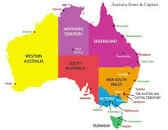
What is the capital of Australia?
Arrange the following capitals in alphabetical order:
Arrange the following capitals in alphabetical order:
Match the country with its capital:
Arrange the following capitals in alphabetical order:
Give this quiz to my class
 Chapter One: Management Today The challenges of working in the new economy recognize: 1.1 Working Today Talent Talented people- What they know, what they learn and what they can achive The source of organisational performance Develop skills and improve What is intellectual capital The combined brain power and shared knowledge of an organization's employees TO orginzations: Intellectual capital resents a strategic asset as human creativity, insight and decision making can be converted into superior performance To individuals: Intellectual capital is a personal asset, one to be nurtured and continually updated Things evolve, make sure we keep updated Intellectual capital: The package on intellect skills and capabilities that set us apart making us valable to potential employers Maintaining your talent: There is no escaping the fact that your career success will require a lot of initiative, self awareness and continuous learning Technology Tech is in our everyday lives Latest developments Smart phone, smart apparel, smart cars, smart homes We struggle to keep up with social media ana staying connected with messaging, full of email and voicemail What happenings as younger workers advance into management Flexibility Work ethic It is critical to build and maintain a high Tech IQ! What is Tech IQ: The ability to use current technologies at work and in your personal life, combined with the commitment to keep yourself updated as technology continues to evolve Intellectual capi5la is a combination of: Commitment x Competency = Intellectual capital How to make the world a better place Globalisation The worldwide interdependence of resources flows, product markets and business competition Under the influence, government leaders worry and about the competitiveness of nations just as corporate leaders worry about business competitiveness Emerging markets will power global growth over the next 20 years. By 2025 overall global consumption is forecast to reach $62 trillion, twice its 2013 level and fully half of this increase will come from the emerging world Consequence: Going to fast in uses resources, inflation, corporate greed It's cheaper to have things made in different countries (wages are low and going down) Shamrock organization 1 leaf - full time employees- standard career paths 2 leaf - “freelancers” 3 leaf - Part times without benefits (first to lose their jobs when employers face economic difficulties) The rising of emerging markets Now account for 60% of all low and medium technology manufacturing worldwide Total value add in high tech manufacturing from a low 26% in the 1970s to 48% at present China strategy to upgrade its industries and move the manufacturing value ching by prioritising 10 sectors Information technology, robotic, aerospace, maritime equipment, modern railway equipment, alternative energy vehicles, power equipment, agriculture equipment, advanced materials, biopharma and medical products Ethics A code of moral principa;s that sets standards for conduct that is “good” and “right” as well as “bad” and “wrong” Enron company huge corruption even in elections same thing happened with The Mechanism 1.2 - Organizations Organizational Purpose An orgnizations is a collection of people working together to achieve a common purpose Unique social phenomenon that enables its members to perform tasks far beyond the reach of individual accomplishment (synergy) The broad purpose of any orginzation is to provide goods or services of value to customers and clients A clear sense of purpose tied to: Quality of products and services Customer satisfaction Social responsibility Can be an important source of organisational strength and performance advantage All organisations are open systems (Systems that interact with its environment for renewal and growth) Organizations as systems All organizations are open systems that interact with their environment Continual process of obtaining resource inputs-people, information, resources and capital- and transforming them into outputs in the form of finished goods and services for customers One simple way to assess the impact of any organisation is to ask the question: How is the world different because it existed Value Creation: Organisations create value when they use resources well to produce good products and take care of their customers One simple way to assess the impact of any organization is to ask the questions: How is the world different because it existed? The 3 Ps of organizational performance Profit - is the decision economically sound? People - Does the decision treat people with respect and dignity? Planet - Is the decision good for the environment? Productivity: An overall measure of the quantity and quality of work performance with recourse utilisation taken into account Performance effectiveness: An output measure of task or goal accomplishment Performance efficiency: An input measure of the resource costs associated with goal accomplishment. Workplace changes that impact management Focus on valuing human capital Demise of “Command and control” Emphasis on teamwork Pre-eminence of technology New workforce expectations Importance of networking Concern for sustainability 1.3 Managers Importance of human resources and manger People are not ‘costs to be controlled’ High performing organizations treat people as valuable strategic assets Three takeaways 1. Give leaders broad authority 2. Encourage them to think like CEO 3. Challenge strong performers ealy with big opportunities Direct support, supervise and help activate the work efforts of others The people who managers help are the ones whose contributions represent the real work of the organisation Types of managers Line managers are responsible for work activities that directly affect organization’s output Staff managers use technical expertise to advise and support the efforts of line workers Functional managers are responsible for a single area of activity Quality of work life (QWL) An indicator of the overall quality of human experiences in the workplace QWL Indicators Respect Fair pay Safe working conditions Opportunities to learn and use new skills Room to grow and progress in a career Protection of individuals rights The organization as an upside-down pyramid A manager’s job is to support worker’s efforts The best managers are known for helping and supporting Customers at the top served by worker who are supported by managers 1.4 The management Process Managers achieve high performance for their organizations by best utilizing its humans and material resources Management is the process of planning, organizing, leading and controlling the use of resources to accomplish performance goals All managers are responsible for the four functions The functions are carried on continually Characteristics of managerial work Long hours Intense pace Fragmented and varied tasks Many communication media Filled with interpersonal relationships Managerial agendas and networks Agenda setting Develops action priorities for accomplishing goals and plans Networking Process of building and maintaining positive relationships with people who can help advance agendas Social Capital Capacity to attract support and help from others Learning The change in a behaviour that results from experience Lifelong learning The process of continuously learning from daily experiences and opportunities The challenges of working in the new economy recognize: 1.1 Working Today Talent Talented people- What they know, what they learn and what they can achive The source of organisational performance Develop skills and improve What is intellectual capital The combined brain power and shared knowledge of an organization's employees TO orginzations: Intellectual capital resents a strategic asset as human creativity, insight and decision making can be converted into superior performance To individuals: Intellectual capital is a personal asset, one to be nurtured and continually updated Things evolve, make sure we keep updated Intellectual capital: The package on intellect skills and capabilities that set us apart making us valable to potential employers Maintaining your talent: There is no escaping the fact that your career success will require a lot of initiative, self awareness and continuous learning Technology Tech is in our everyday lives Latest developments Smart phone, smart apparel, smart cars, smart homes We struggle to keep up with social media ana staying connected with messaging, full of email and voicemail What happenings as younger workers advance into management Flexibility Work ethic It is critical to build and maintain a high Tech IQ! What is Tech IQ: The ability to use current technologies at work and in your personal life, combined with the commitment to keep yourself updated as technology continues to evolve Intellectual capi5la is a combination of: Commitment x Competency = Intellectual capital How to make the world a better place Globalisation The worldwide interdependence of resources flows, product markets and business competition Under the influence, government leaders worry and about the competitiveness of nations just as corporate leaders worry about business competitiveness Emerging markets will power global growth over the next 20 years. By 2025 overall global consumption is forecast to reach $62 trillion, twice its 2013 level and fully half of this increase will come from the emerging world Consequence: Going to fast in uses resources, inflation, corporate greed It's cheaper to have things made in different countries (wages are low and going down) Shamrock organization 1 leaf - full time employees- standard career paths 2 leaf - “freelancers” 3 leaf - Part times without benefits (first to lose their jobs when employers face economic difficulties) The rising of emerging markets Now account for 60% of all low and medium technology manufacturing worldwide Total value add in high tech manufacturing from a low 26% in the 1970s to 48% at present China strategy to upgrade its industries and move the manufacturing value ching by prioritising 10 sectors Information technology, robotic, aerospace, maritime equipment, modern railway equipment, alternative energy vehicles, power equipment, agriculture equipment, advanced materials, biopharma and medical products Ethics A code of moral principa;s that sets standards for conduct that is “good” and “right” as well as “bad” and “wrong” Enron company huge corruption even in elections same thing happened with The Mechanism 1.2 - Organizations Organizational Purpose An orgnizations is a collection of people working together to achieve a common purpose Unique social phenomenon that enables its members to perform tasks far beyond the reach of individual accomplishment (synergy) The broad purpose of any orginzation is to provide goods or services of value to customers and clients A clear sense of purpose tied to: Quality of products and services Customer satisfaction Social responsibility Can be an important source of organisational strength and performance advantage All organisations are open systems (Systems that interact with its environment for renewal and growth) Organizations as systems All organizations are open systems that interact with their environment Continual process of obtaining resource inputs-people, information, resources and capital- and transforming them into outputs in the form of finished goods and services for customers One simple way to assess the impact of any organisation is to ask the question: How is the world different because it existed Michal Porter - Value Chain Value Creation: Organisations create value when they use resources well to produce good products and take care of their customers One simple way to assess the impact of any organization is to ask the questions: How is the world different because it existed? Triple Bottom Line The 3 Ps of organizational performance Profit - is the decision economically sound? People - Does the decision treat people with respect and dignity? Planet - Is the decision good for the environment? Organizational Performance Productivity: An overall measure of the quantity and quality of work performance with recourse utilisation taken into account Performance effectiveness: An output measure of task or goal accomplishment Performance efficiency: An input measure of the resource costs associated with goal accomplishment. Workplace changes that impact management Focus on valuing human capital Demise of “Command and control” Emphasis on teamwork Pre-eminence of technology New workforce expectations Importance of networking Concern for sustainability 1.3 Managers Importance of human resources and manger People are not ‘costs to be controlled’ High performing organizations treat people as valuable strategic assets Three takeaways 1. Give leaders broad authority 2. Encourage them to think like CEO 3. Challenge strong performers easily with big opportunities Direct support, supervise and help activate the work efforts of others The people who managers help are the ones whose contributions represent the real work of the organisation Levels of management Types of managers Line managers are responsible for work activities that directly affect organization’s output Staff managers use technical expertise to advise and support the efforts of line workers Functional managers are responsible for a single area of activity Quality of work life (QWL) An indicator of the overall quality of human experiences in the workplace QWL Indicators Respect Fair pay Safe working conditions Opportunities to learn and use new skills Room to grow and progress in a career Protection of individuals rights The organization as an upside-down pyramid A manager’s job is to support worker’s efforts The best managers are known for helping and supporting Customers at the top served by worker who are supported by managers 1.4 The management Process Managers achieve high performance for their organizations by best utilizing its humans and material resources Management is the process of planning, organizing, leading and controlling the use of resources to accomplish performance goals All managers are responsible for the four functions The functions are carried on continually Four functions: Planning,organizing, leading and controlling Mintzberg’s 10 Managerial Roles Characteristics of managerial work Long hours Intense pace Fragmented and varied tasks Many communication media Filled with interpersonal relationships Managerial agendas and networks Agenda setting Develops action priorities for accomplishing goals and plans Networking Process of building and maintaining positive relationships with people who can help advance agendas Social Capital Capacity to attract support and help from others Learning The change in a behaviour that results from experience Lifelong learning The process of continuously learning from daily experiences and opportunities Katz’ Essential Managerial Skills Management and Globalization Global Management Why companies go global How companies for global Global Business environments Global Business Types of global business Pros and cons of global businesses Ethnic Challenges for global business Culture and Global Diversity Cultural intelligence Silent language of culture Tight and loose cultures Values and national cultures Global Management Learning Are management theories universal? Intercultural competencies Global learning goals Key concepts of the challenges of globalisation: Global economy Resources, markets and competition are worldwide in scope Internationalisation The process of increasing involvement in international operations Globalization/Deglobalization Glob- the growing interdependence among elements in the global economy The worldwide interdependence of resource flows, product markets and business competition World 3.0 Different views: World flat vs. round Distance is a metaphor that represents the degree of dissimilarities between countries Balancing cooperation in the global Global Management Global management - managing things in different countries Managing business and organizations with interests in more than one country What do we expect from global Managers Knowing how to adapt Knowing the language Global Manager Is culturally aware and informed on international affairs International Business Conducting for-profit transactions of goods and services across national boundaries International Motive Why do firms internatioalize their activities Cheaper labour Labour tax Natural resources Enrolments to do business Clientele Exclusive materials Personal benefits: Taxes Reasons why businesses go global Customers Suppluers Capital During (1993) - 4 motive 1. Market seeking 2. Efficiency Seeking 3. Resource seeking 4. Strategic Asset Seeking Cuervo Cazurra, Narula and un (2015) - 4 motive s Internationalization Motives A company may also explore the opportunities in different markets in order to take advantage and in some cases extend the product life cycle What is a Market Entry Strategy Involves the sale of goods or services to foreign markets but do not require expensive investments Franchising Exporting and importing Involve the sale of goods or services to foreign markets but do Types of market entry strategies Global sourcing Exporting Importing Licensing agreement Franchising Types of Foreign Direct Investment (FDI) strategies: Joint venture Strategic alliance Owned Subsidiary (sometimes called WOS) How to go abroad What conditions will affect the decisions of firms on how to internationalize their activities? During (1978)- Eclectic paradigm OLI model OLI- Ownership, Location and Internalization Advantages Ownership advantages Resources owned by the organization that can be transferred across locations include trademarks, production techniques and processes, managerial skills and other resources not available to the competitors Location Advantages Represent the implications of choosing to produce or to perform activities in a specific location (country or region) Internalization Advantages: The ability to internalize or to incorporate activities that add value to its business Evolution of Concepts- New Elements Although economic factors are certainly important to explain the formation, growth and expansion of firms within and across national borders, they are not sufficient to explain the additional complexity when a firm decides to expand its activities across national borders Economic factors Investigate the economic elements that affect the internationalization of firms Behavioural Elements Explaining the additional challenges (and perhaps opportunities) a firm faces in foreign host countries when compared to indigenous (local) firms Behavioural theories Johanson and Wiedersheim-Paul (1975) and Johanson and Vahlne (1977) Included the psychic Distance concept (beckerman,1956) to explain the internationalization behaviour of firms The Uppsala internationalization model Psychic distance is: the sum of factors preventing the flow of infomatio from and to the market Psychic Distance is a broad concept that includes several elements such as: language, culture, political systems, level of education, level of industrial development Firms behave in a “Risk Averse” manner It means that when the perceived risk goes down, the firm increase its commitment to the foreign market \ The Haier Group Data Strategy Big DATA and Small DATA The use of small data to satisfy individual customers’ needs, however, the book mentions a huge cultural shock at the plant in Camden, south caroline Ex: top down, hard hat colors and hierarchy Culutral Differnces can have a huge impact on the internationalization of firms Kogut and Singh (1988)- Cultural Distance Index First statsical study on the implication of ciltiral distance to the selection of entry mode When investigating in culturally distant countries, foreign firms can choose to partner with foreign firms in order to gain local knowledge and share the risk associated to the investment (higher commitment = higher risk) How Companies Go Global Global sourcing The process of purchasing materials or services around teh world for local use Exporting Selling locally made products in foreign markets Importing Buying foreign made products and selling them domestically Exports correspond to what percentage of Candain GDP What countries are the major trending partners of Canada Management and Globalization How Companies Go Global Licensing Agreement One firm pays a fee for rights to make or sell another company’s products What are the potential risks associated to licesning The case of new balance in China Franchising A fee is paid for the rights to use another firms name, branding and methods Insourcing Insourcing: refers to local job creation that results from foreign direct investment Types of insourcing Joint ventures: operate in a foreign country through co-ownership by foreign and local partners Strategic alliances: A partnership in which foreign and domestic firms share resources and knowledge for mutual gains Foreign subsidiaries: local operation completely owned by a foreign firm Criteria for choosing a joint venture partner: Familiarity with your firm’s major business String local workforce Values its customers Future expansion possibilities Strong local market for partner’s own products Good Profit potential Sound financial standing Global business environments Legal and poliical systems Trade agreements and trade barriers Regional economic alliances Legal and political systems Differing laws and practices regards Business ownership Negotiation and implementation of contracts Foreign currency exchange Protection of intellectual property rights Counterfeit merchandise Political risk Potential loss in value of foreign investment due to instability and political changes in the host country Political risk analysis (expertise/experience) Forecast political disruptions that threaten the value of a foreign investment Changes in the rules of the game Brexit US Trade Wars-mexico-China Other examples Bolivia, Venezuela, China De-globalization The process of weakening interdependence among nations Trade Agreements and trade Barriers World trade organization Most favourd nation status Tariffs Nontariss barriers (quotes, restrictions, etc.) Protectionism Regional Economic Alliances USMCA (replacment for the NAFTA-North American Free trade Agreement) EU- European Union APEC- Aisa Pacific Economic Copperation ASEAN - Association of Southeast Asian Nationas SADC - Southern Africa Development Community MERCOSUR- Chapter 5- Global Management and Cultural Diversity (part 2) Review Types of global business Global corporation MNE (multinational enterprise) or MNC (multinational corporation) with extensive business operations in more than one foreign country Transnational corporation A global corporation that operates worldwide on borderless basis Some host country complaints about MNCs Host Country companits about MNCs: Excessive profits Interference with local government Domination of local economy Interference with local government Hiring the best local talent Limited technology transfer Disrespect for local customers Examples - War in Ukraine Disruption in global -value chains and increased pressure and interference of MNCs with local government Fertilizer imports in Brazil (one of the major producers of agricultural commodities) We must consider the triple bottom line and the impact in society, the environment and the economy $2.5 billion invest in potash mine in Brazill What about Globalization gap Large multinationals adn industrilizednaitons gaining disporoportinonally form globalization Globalization gap: Large multinational and industrialized nations gaining disproportionally from Globalization Some MNC complaints about host countries MNC Complaints about host countries: Profiit limitations Laws and regulations Overpirce resources Exploitative rules Foreign exchange restriction Failure to uphold contracts Mutual benefits for host countries and multinational companies Mutual benefits for host country and global corporation of MNC: Shared growth opportunities Shared income opportunities Shared learning opportunities Share development opportunities Develop projects together What are some of the ethical challenges for global business Ethincal challenges for global business Child labour Employmnet of children for worl otherwise done by adults Sweatshops Employment of workers at very low wages for long hours in poor working conditions Ex: Nike bad labour prices Unsafe working conditions Corruption Illegal practices that further one’s business interests Corrupiotn of froeign public officials Act makes it illegal for Candain firms and their representatives to engage in corrupt practices overseas Bribes to foreign officials Excessive commissions Non-monetary gifts Sweatshops Conflict materials What is culture Culture : The shared set of beliefs, values, and patterns of behvaiourr common to a group of people Food preferences Values and traditions Language and beliefs Religion Art music Life style Hofstede defines culture as: “The collectiv programing of teh mind distinguishing the members of one group or category of people from others” What is culture shock Culture Shock: Confusion and discoumfert a person experiences in an unfaamiliar culture Stages to adjusting to a new culture Confusion Small vitorires The honeymoon Irritation and anger Reality Cultural Intelligence The ability to adapt and adjust to new cultures What is Ethnocentrism Tendency to consider one’s own culture as superior others Slinet languages of culture Contect Low context High context Space Proxemics Ex: personal space Time Monochronic Polychronic High and low contexts cultures Edward T.Hall (1959) Def: Part of a discourse that surround a word or passage and can throw on its meaning Low context cultures Emphizes communication via spoken or written words Countries like United States, Canada and Germany High context cultures Rely on nonverbal and situational cues as well as on spoken or written works Thailand Malaysia Time Monochronic cultures People tend to do one thing at a time Canda Polychronic cultures Time is used to accomplish many different things at once Egypt Space Proxemics Study of how people use space to communicate In North American people value “personal space’ Many Latin and Asian cultures expect much less personal space Tight and Loose Cultures Cultural tightness-looseness Tight = Strength of norms that govern social behvaviour Japan, Korea, Malaysia Loose = tolerance for any deviation from norms Australia, Brazil, Hungary Values and national cultures (Hofstede) Power distance Uncertainty avoidance Individalism-collectivism Masculinity-femininty Time Orientation Indulgence vs. Restraint Comparative management How management pratices systematically differ among countries and /or cultures Intercultural competencies Skills and personal characteristics that help us be successful in cross cultural situations Global Managers (know how to adapt) Need to successfully apply management functions across interantional boundaries Global Learning goals Not universal Engage critical thinking Look everywhere for new management ideas Always consider culture President Xi Jinping, who is also general secretary of the Communist Party of China Central Committee and chairman of the Central Military Commission, visits Luoyang Bearing Group Co on Monday afternoon during his inspection of Luoyang, Henan province. During the visit, Xi called for continuous efforts to make the manufacturing industry even stronger to advance Chinese modernization. YAN YAN/XINHUA President Xi Jinping has stressed the importance of keeping businesses, employment, the market and expectations stable in the face of a complex international environment, saying that China will respond to various uncertainties with the certainty of its high-quality development. Xi, who is also general secretary of the Communist Party of China Central Committee and chairman of the Central Military Commission, made the remarks on Tuesday as he wrapped up a two-day fact-finding trip to Central China's Henan province. Speaking to provincial Party and government officials at a work briefing on Tuesday in Zhengzhou, the provincial capital, Xi said that high-quality development is essential to Chinese modernization. Faced with the complex external environment, it is necessary to firm up confidence, unwaveringly manage China's own affairs well, and steadfastly expand high-level opening-up, he said. He also urged Henan, one of the country's economic powerhouses, to further consolidate the foundation of its real economy, and promote the development of new quality productive forces suited to local conditions and led by technological innovation, in order to enhance the capacity of its modern industrial system to support high-quality development. When visiting Luoyang Bearing Group Co in the city of Luoyang on Monday, Xi said: "China has always adhered to the path of developing the real economy. From the past reliance on imported matches, soap and iron, to now becoming the world's largest manufacturing country with the most complete industrial categories, we have taken the right path." As a traditional manufacturing enterprise specializing in bearings, Luoyang Bearing Group's products are widely used in fields such as aerospace, construction machinery, wind power generation, rail transit, port machinery and ships. After learning about the company's efforts to accelerate the development of advanced manufacturing, Xi said that China must continue to strengthen the manufacturing sector, adhere to the principles of building self-reliance and strength, and master core technologies in key fields. "The hope is placed on you," he told the on-site workers. He also called for efforts to strengthen collaboration between industries, universities and research institutes, and cultivate a large number of high-quality talent. Despite internal challenges and increasing external shocks, China's manufacturing industry has withstood pressure and maintained stable growth. In April, the manufacturing sector saw its value-added output climb 6.6 percent year-on-year, with that of equipment manufacturing and high-tech manufacturing up 9.8 percent and 10 percent, respectively, according to data released by the National Bureau of Statistics on Monday. Advanced manufacturing is the high ground in global industrial competition and the main battlefield for technological innovation. Xi has repeatedly emphasized the need to upgrade the country's modernized industrial system, supported by advanced manufacturing. In a resolution adopted at the third plenary session of the 20th CPC Central Committee in July last year, it was clearly stated that China will move faster to advance new industrialization, promote the growth and expansion of advanced manufacturing clusters, and make the manufacturing sector higher-end, smarter and more eco-friendly. On Monday, Xi also visited the White Horse Temple, the first Buddhist temple in China, and the Longmen Grottoes, a UNESCO World Heritage site. Contact the writers at mojingxi@chinadaily.com.cnTHE BATTLE OF THE PHILIPPINE SEA Occured in the Philippine Sea and Marinas The battle engaged the bulk of thepagan American forces, and prevented the Japanese from reinforcing, their fleet in the •Marianas. •A month after, the Japanese LOST THEIR 4 best aircraft carriers in the Battle of Midway, an island northwest of Pearl "Harbor. 1. The Batle of the Philipine Sea lasted just one day June 19- June 20 1944 3. is also called the "Marianas Turkey Shoot” The Battle of the Coral Sea The Coral Sea is Between New Guinea and Australia The Japanese Were Trying to Attack Australia! The U.S. Navy and the Japanese Navy Fought! Nobody Won! U.S. Was Able to STOP the Attack on Australia! (Victory!) The American fleet defeated the Japanese. American planes bombarded Japanese installation in Manila from the air. Air strikes were also carried out in the Visayas. Battle of Okinawa: Battle Details The attack on Okinawa took heavy toll on both sides of the fighting... The Americans lost 7,373 men killed and 32,056 wounded on land. At sea, the Americans lost 5,000 killed and 4,600 wounded. The Japanese lost 107,000 killed and 7,400 men taken prisoner. The Japanese may have lost another 20,000 dead as a result of American tactics whereby Japanese troops were incinerated where they fought. The Americans also lost 36 ships. 368 ships were also damaged. 763 aircraft were destroyed. The Japanese lost 16 ships sunk and over 4,000 aircraft were lost. battle facts -the japanese launched fierce kamikaze attacks l-arge amouunts of civillian deaths -japanese soldiers using civilians as human shields Americans ended with more triumphs in the battles like in: General MacArthur and the Allies next turned to the Island of Iwo Jima The island was critical to the Allies as a base for an attack on Japan It was called the most heavily defended spot on earth Allied and Japanese forces suffered heavy casualties IWO JIMA American soldiers plant the flag ol the Island of Iwo Jima after their victory Battle of Leyte Gulf "Second Battle of the Philippine Sea". Time: October 23 - 26, 1944 during WW. Location: Leyte Gulf in Philippines (East coast), Philippine islands of Leyte, Samar, and Luzon. Largest naval battle in WWII. Leyte was secured and was liberated from the hands of the Japanese Americans decided to launch their attack in Leyte since the weak side of the Japanese fleet was in Visayas. Heavy bombing at the Leyte beaches cleared the way for the landing in Palo, Leyte. Leading the American troops were General Douglas MacArthur and President Osmeña, who took over after the death of President Quezon in Saranak Lake in New York. the battle for the liberation of manila The commonwealth government capital was transferred from tacloban to Manila. Manila once again became the seat of the national leadership. ON july 4, 1945, general macarthur announced the total liberation of the Philippines • The Commonwealth government capital was transferred from Tacloban to Manila. Manila once again became the seat of the national leadership. On July 4, 1945, General MacArthur announced the total liberation of the Philippines. Americans surprised the Japanese with the landing of troops in Lingayen Gulf in Pangasinan. • The Filipino guerillas had already cleared the area and neutralized many of the Japanese forces. The first target was the UST, which was used by the Japanese as a camp for civilian prisoners of war, and they were able to free them. • More than 1000 POWs from Bataan and Corregidor were also freed from the Bilibid Prisons. • The battle of Manila was recorded as the fiercest urban fighting in the entire Pacific War. WATERLOO DAILY COURIER-NEWSPAPER “PEACE! WAR ENDS; JAPANESE ACCEPT ALLIED TERMS. ON EMPEROR" On August 6, due to persistent refusal of Japan to yield, another atomic bomb was dropped in the shipbuilding city of Nagasaki. On August 15, V-J Day (Victory in Japan), Emperor Hirohito finally admitted defeat and on September 3, 1945 the document of surrender was signed on board of the U.S. battleship Missouri in Tokyo Bay. With the liberation of the Philippines, the Americar troops moved on to finally end the war in Asia. The Japanese cities of Tokyo, Osaka, Nagoya and Kure were bombed. In July 26, the allies demanded surrender but the Japanese continued to hold on to their belief that surrender is a dishonor. Atomic bomb was dropped on the populous city of Hiroshima, 60% of the city was destroyed. It was estimated that there were more than 80 000 people died on the spot and more than 37 000 suffered severe injuries. Today, the HIROSHIMA SHRINE serves as a reminder of th horrors of war and the need to preserve PEACE in the world. THE POSTWAR PHILIPPINE COMMONWEALTH-• Philippine Commonwealth resumed. Osmeña was confronted with a war - ravaged country with no financial resources for PROBLEMS • Poverty • Destruction of Properties • Unemployment • Price Increase • Hoarding • Graft and Corruption HINDRANCES -Rehabilitation of INDUSTRIES COULD NOT BE DONE BECAUSE OF LACK OF FUND -RAILWAYS WERE DESTROYED THAT LED TO SLOW PRODUCTION AND TRANSPORTATION SOLUTION -PCAU (Philippine Civil Affairs Unit) was established by MacArthur to provide emergency relief in areas liberated by the Americans. - It organized food distribution centers. CHALLENGES TO INDEPENDENCE • On April 30, 1946, the Philippine the US President. BIASED AGREEMENTS: Rehabilitation or the Tydings Act of 1946, passed by the US Congress, was approved by Commission • This Act created the US Philippine War Damage The Act also provided for the transfer of $100,000,000 surplus property of the United States to the Philippines. The Philippine Armed Forces received large quantities of valuable military equipment and supplies. BIASED AGREEMENTS: • The United States Congress offered $800 million for post World War Il rebuilding funds if the Bell Trade Act was ratified by the Philippine Congress Parity rights granting U.S. citizens and corporations rights to Philippine natural resources equal to (in parity with) those of Philippine citizens The Philippines used to celebrate its Independence Day on July 4, and not June 12, by virtue of the Truman Proclamation in 1946. In the early 1960s, however, the Philippine Historical Association lobbied to bring back June 12 as our Independence Day. In 1962, President Diosdado Macapagal issued a proclamation to make the change official. DECLARATION OF PHILIPPINE INDEPENDENCE • On July 4, 1946, the Americans granted independence to the Philippines.Economic integration Population and GDP of ASEAN Countries Population and GDP of ASEAN CountriesThe countries of ASEAN vary widely in population size and income level, yet nonetheless have achieved a high level of economic integration. ASEAN is considered to be one the developing world’s most successful regional economic cooperation zones. Unlike its primary counterparts in the developed world, the European Union (EU) and the United States–Mexico–Canada Agreement (USMCA), ASEAN has followed a more gradual and flexible approach to integration, accommodating the diversity of its member states. ASEAN has prioritized trade liberalization, sustainable development, and attracting foreign investment over deepening political integration or adopting a common currency. ASEAN’s economic integration efforts began with the creation of the ASEAN Free Trade Area (AFTA) in 1992, which successfully reduced tariffs between ASEAN’s first six members (Brunei, Indonesia, Malaysia, the Philippines, Singapore, and Thailand) to 0–5 percent by 2002. Vietnam, Laos, Myanmar, and Cambodia were required to sign the AFTA agreement upon joining ASEAN. Today tariffs between ASEAN countries are close to zero. In 2007 the ASEAN Economic Community Blueprint was signed in Singapore with the goal of achieving four objectives by 2015: (1) create a single market and production base, (2) become a highly competitive economic region, (3) promote equitable economic development within the region, and (4) fully integrate the region into the global economy. The AEC was implemented in 2015, although approximately 20 percent of measures toward achieving a single market remain in progress and have been deferred to a new deadline of 2025. The ASEAN-Japan Comprehensive Economic Partnership (AJCEP) was implemented in 2008, and the ASEAN-China Free Trade Agreement (ACFTA) was implemented in 2010. In 2020 ASEAN joined Australia, China, Japan, New Zealand, and South Korea in signing the Regional Comprehensive Economic Partnership (RCEP), the largest trade agreement in history. Get Unlimited Access Try Britannica Premium for free and discover more. Significant challenges remain for ASEAN’s economic integration, including pervasive nontariff barriers, restrictive investment measures, and vast disparities in GDP per capita. Domestic issues such as political instability and corruption in member states exacerbate these challenges. The COVID-19 pandemic created severe economic disruption in sectors such as industrial production and tourism; nonetheless, ASEAN coordinated a regional response to align economic recovery strategies and maintain open trade routes. Ultimately, ASEAN has demonstrated an exemplary and ongoing commitment to strengthening cooperation and integration and maximizing the region’s economic potential.World capital cities with flagsWorld County's Capital and Currency Test