Loading...


Year 1 Reasoning
Quiz by Ashleigh Bignall
Customize this quiz to suit your class
Instantly translate to 100+ languages
Tag the questions with any skills you have. Your dashboard will track each student's mastery of each skill.
Give this quiz to my class
Is this true or false?
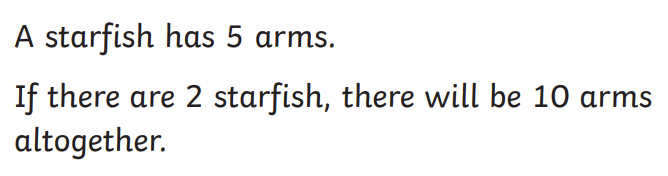
Is this true or false?
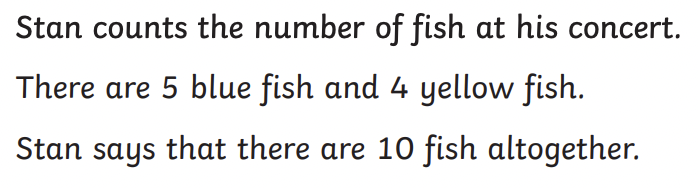
Is this true or false?
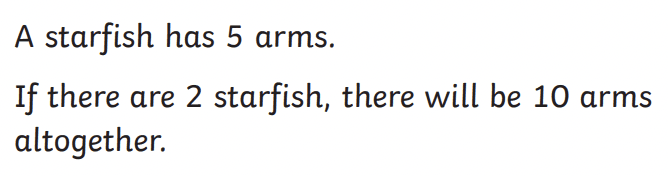
Is this true or false?
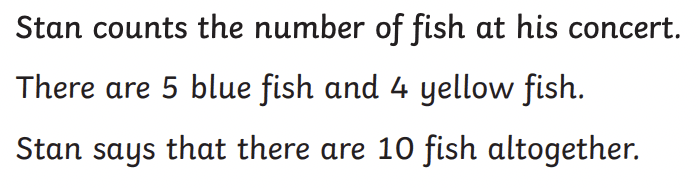
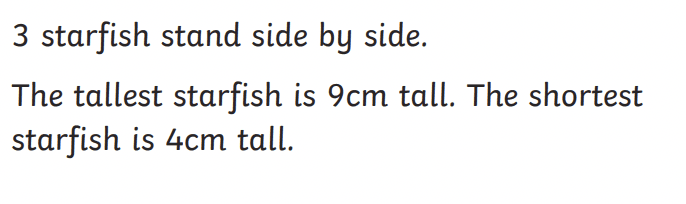
How tall could the other starfish be?
(whole numbers only)
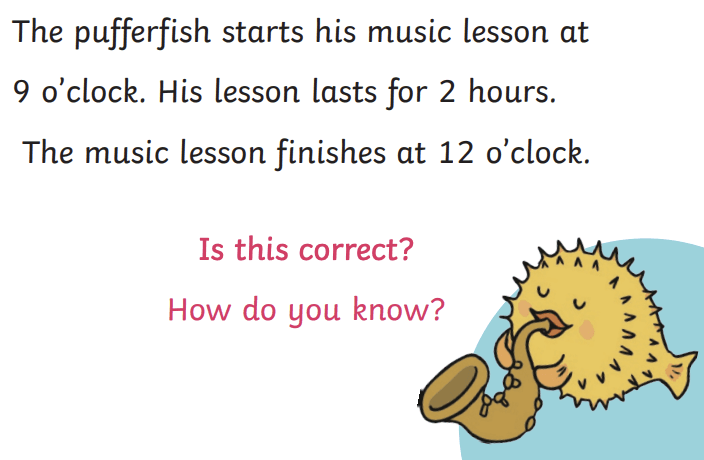
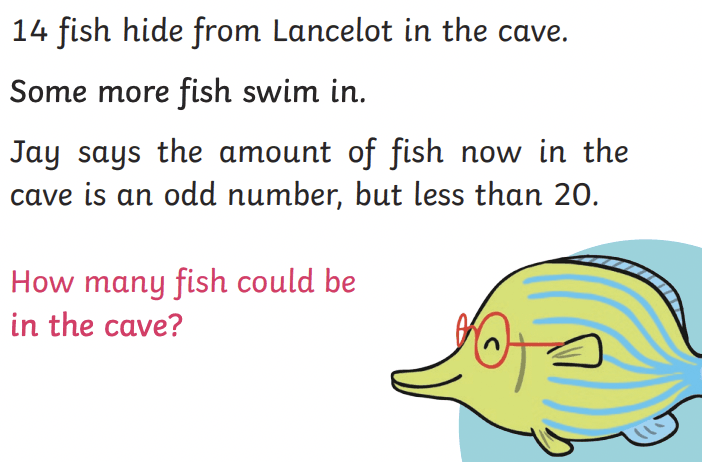
Is this true or false?
What is Jay's number?
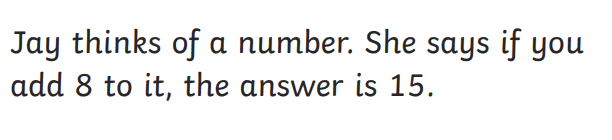
Choose the calculation that shows this.
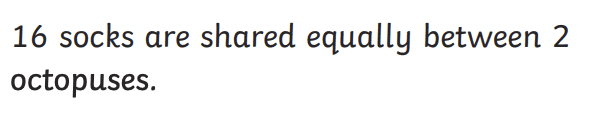
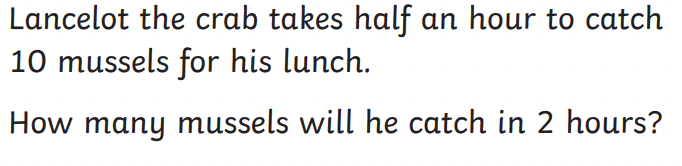
Can you type the answer?
Type the answer.
 THE STRATEGIC PLAN OF RICHARD BLAND COLLEGE OF WILLIAM & MARY 2020-2025 “The dogmas of the quiet past are inadequate to the stormy present. The occasion is piled high with difficulty, and we must rise with the occasion. As our case is new, so we must think anew and act anew.” – Abraham Lincoln What is the role of a selective, two-year, residential, liberal arts transfer institution within the higher education landscape of the Commonwealth of Virginia? This is a key question that must be answered to ensure the success of Richard Bland College (RBC) and the constituency that the College serves. The 2020 RBC strategic plan’s primary objective is to answer that very question so that the College, the community and the Commonwealth can engage successfully within this identity and purpose to the benefit of all. RBC has long been identified as the hidden gem of higher education in Virginia. The hidden adjective is based both on its relative obscurity—few are aware of RBC outside the Tri-Cities region—and its rural setting featuring 750+ acres of wetlands, bucolic forest, and the state’s oldest and largest pecan grove. Additionally, on average, a student of Richard Bland College travels a mere 36 miles to campus. This keeps the knowledge of RBC in a tightly focused radius. The gem moniker refers both to the College’s reputation for excellence and the undeniable sensation that the campus often elicits in its students, visitors, faculty and staff, the feeling of a warm and palpable embrace of care, compassion and support. That sensation is where we start. According the State Council of Higher Education for Virginia (SCHEV), 99% of the 11.5 million new jobs created since the great recession require workers to have more than a high-school education. Students with a bachelor’s degree have an earning potential almost double that of people with only a high school education, and yet only 17% of residents in the Petersburg area have a bachelor’s degree, 15% below the national average. The obstacles in the way of education have been exhaustively researched and include financial challenges, academic under-preparedness, low self-esteem, slow college assimilation and immature levels of self-efficacy. To combat this growing problem, Richard Bland College initiated a pilot program to determine the viability of a data-driven approach to improve retention and graduation rates. The program ultimately effected a cultural, organizational and operational shift at RBC, resulting in a personalized model of student support, the Exceptional Student Experience (ESE@RBC). Originally many of the practices that RBC used as the basis of ESE@RBC were adapted from the four key principles found in the American Association of Community Colleges (AACC) Pathways Project: 1) map pathways to student end goals; 2) help students choose and enter a program pathway; 3) keep students on path; and 4) ensure that students are learning. Unfortunately, limited resources made it necessary to skip some primary elements of guided pathways and instead to focus on a specific, high-priority project that was immediately available for implementation, dedicated student support. This strategic framework reimagines the way that RBC serves students, faculty and staff within the context of our existing culture, the principles of guided pathways and a hybrid work-college experience. Rather than thinking of a two-year college as a pipeline to a four-year university, this vision describes a more expansive menu of well-defined pathways to high-demand fields, all radiating from a curriculum constructed around the development of soft skills that define the liberal arts experience: critical thinking, written communication, analytical reasoning, civic engagement and oral communication. Furthermore, the impact of meaningful work is a resonating theme, providing avenues to participate in career-focused internships and jobs that develop important life & work skills, confidence, and character. Richard Bland has tested its entrepreneurial mettle and its capacity for transformation in recent years. The College was among a select few Competency-Based Education sites established by the U.S. Department of Education. We were ahead of the curve using predictive analytics to improve student retention and success rates, and online enrollment now makes up nearly 20 percent of course offerings. It may be counter-intuitive, but these and other deep-level institutional changes still to come will ensure that Richard Bland College remains true to its original mission. We prepare our students for a lifetime of endless potential.New Trends in Agriculture Extension approaches Extension has been, and still is, under attack from a wide spectrum of politicians and economists over its cost and financing. As a result, Extension Systems have had to make changes, by restating the system’s mission, developing a new vision for the future, and formulating plans for the necessary transition to achieve the desired change. 1. Privatization of Agricultural Extension Service Privatization: Process of funding and delivering the extension services by private individual or organization is called Private Extension. Concept: Privatization of extension refers to services rendered in rural area & allied aspects of extension personnel working in private agencies or organization for which farmers are expected to pay a fee & it can be viewed as supplementary or alternative to public extension services (Sarvanan & Shivalinge 1980). Privatization approaches ➢ Share cropping system ➢ Village extension contract system ➢ Public extension through private delivery ➢ Service for vouchers Strengths of Private Extension System ➢ More demand - driven rather than supply – driven ➢ High quality of services in terms of satisfying information needs of clientele, trained manpower, sustained finances and resource allocation ➢ Provides for an information mix and choices available to farmers ➢ Enhanced efficiency of staff ➢ Assure continuous supply and quality agricultural products ➢ More effective because farmer can select an adviser who is the best able to help ➢ Healthy competition among service provider will lead to better quality and lower costs for service Weakness of Private Extension System ➢ Concentrate on area having favorable physical environment ➢ More face-to-face contacts (person oriented) ➢ Increased dependence of farmers and hence exploitation ➢ No education role ➢ Deprivation of small farmers ➢ Hamper the free flow of information 2. Cyber Extension or e-extension Concepts Cyber space: it is the imaginary or virtual space of computers connected with each other on Networks, across the Globe. Cyber extension: it means 'using the power of online networks, computer communications and digital interactive multimedia to facilitate dissemination of agriculture technology. Cyber Extension thus can be defined as the extension over cyber space. Important tools of cyber extension E-Mail, Telnet, File Transfer Protocol (FTP), Gopher, Archie and World Wide Web (WWW) Strengths of Cyber Extension ➢ Access to the astounding information and continuously available ➢ Information rich and instantaneously available of information ➢ Interactive communication ➢ The information is available from any point on the globe ➢ Communication is dynamic ➢ Cut steps from traditional process ➢ Save money, time and effort ➢ Multiplicity of purpose Issues and Concerns of Cyber Extension ➢ Lack of Reliable Telecom Infrastructure in Rural Areas ➢ Erratic or no Power Supply ➢ Lack of ICT Trained manpower (willing to serve) in Rural Areas ➢ Lack of content (locally relevant and in local languages) ➢ Lack of Information Services to Rural Clientele ➢ Low Purchasing power of the Rural communities ➢ Lack of Holistic Approaches ➢ Issues of Sustainability Application of cyber extension ➢ Village information shops Dr. M.S. SwaminathanResearch Foundation, Chennai ➢ Information villagers MANAGE in Ranga Reddy District in Andhra pradesh ➢ Gyandoot net initiative of District Dhar, Madhya Pradesh. ➢ Warna wired village of National Informatics Center (NIC) in Kolhapur- Sangli Districts of Maharashtra 3. Market-Led-Extension (MLE) Concepts Market: A congregation of prospective buyers & sellers with a common motive of trading a particular commodity. Extension: It is the spreading/reaching out to the mass Market-led-extension: Agriculture & economics coupled with extension is the perfect blend for reaching at the door steps of common man with the help of technology. Dimensions of market-led extension ➢ Marketing mix: A planned mix of the controllable elements of a product's marketing plan commonly termed as 4Ps: product, price, place, and promotion. These four elements are adjusted until the right combination is found that serves the needs of the product's customers, while generating optimum income. ➢ Marketing plan: A marketing plan is a comprehensive document that outlines a business and marketing efforts for the coming year. It describes business activities involved in accomplishing specific marketing objectives within a set time frame. A marketing plan also includes a description of the current marketing position of a business, a discussion of the target market and a description of the marketing mix that a business will use to achieve their marketing goals. ➢ Market Intelligence: It is the information relevant to a company’s markets, gathered and analyzed specifically for the purpose of accurate and confident decision making. Market intelligence includes the process of gathering data from the company’s external environment, whereas the business intelligence process is primarily based on internal recorded events – such as sales, shipments and purchases. ➢ Market oriented production ➢ Use of Technology Strengths of market-led extension ➢ SWOT analysis of the market ➢ Organization of Farmers’ Interest Groups (FIGs) ➢ Enhancing the interactive and communication skills of the farmers ➢ Establishing marketing and agro-processing linkages ➢ Advice on product planning ➢ Educating the farming community ➢ Direct marketing ➢ Acquiring complete market intelligence ➢ Publication of agricultural market information Production of video films of success stories ➢ Challenges to market-led extension ➢ Gigantic size of extension system ➢ Information technology Diverse conditions ➢ Market intelligence ➢ Reforms in agricultural extension system Government Initiatives ➢ Central warehousing Corporation-1965 ➢ MSP by Commission for Agricultural Cost and Price (CACP) ➢ Food Corporation of India ➢ Then some others as: Cotton Corporation of India (CCI), Jute Corporation of India (JCI), National Dairy Development Board (NDDB), Agriculture and Processed food Export Development Authority (APEDA) etc. 4. Farmer--Led-Extension (FLE) Farmer--led-extension is defined as 'the provision of training by farmers to farmers, often through the creation of a structure of farmer promoters and farmer trainers' (Scarborough et al., 1997). Philosophy and principles ➢ Farmers and local institutions (e.g. producer organizations or village leaders) should play a key role in selecting farmer-trainers and monitoring and evaluating them. This helps make the programmes more accountable to the community or groups that they serve. ➢ Farmer-trainers are ‘of the community’; they communicate in local languages and are more sensitive to local cultures, mannerisms, farming practices, and farmers’ needs. ➢ Farmer-trainers should be selected on the basis of their skills and interest in sharing information, not just on their farming expertise. ➢ Farmer-trainers need strong linkages with and support from development agents (whether government, non-government organization (NGO), or private), the people who train and backstop them. Farmer-trainers generally serve as a complement to existing extension systems, rather than being a substitute for them. ➢ Facilitating organizations and local institutions need to be proactive in ensuring that women as well as men become farmer-trainers. ➢ Simple and appropriate reference materials should be made available to the farmer trainers. Essential Elements of Farmer--led-extension ➢ The group ➢ The Field ➢ The Facilitator ➢ The curriculum ➢ Programme leader ➢ Financing Special features of Farmer--led-extension ➢ All learning is field based & it is primary venue for learning ➢ FLE group learning constantly over the experimentation period ➢ FLE promotes healthy decisions & quality decisions ➢ Farmers conduct their own field studies with comparisons or treatments ➢ Facilitates Farmer-to-Farmer communication ➢ Field staff serve as facilitators ➢ FLE is a unique way to educate farmers ➢ It is an effective platform for sharing of experiences and collectively solving agriculture related problems. 5. Expert system Expert system is an intelligent computer program that uses knowledge and inferences procedures to solve problems (Daniel Hunt, 1986). Objectives of developing expert system ➢ To enhance the performance of agricultural extension personnel and farmer ➢ To make farming more efficient and profitable ➢ To reduce the time required in solving the problems ➢ To maintain the expert system by continuously upgrading the database Advantages of expert system ➢ Solves critical problems by making logical deductions without taking much time ➢ It combines experimental and conventional knowledge with the reasoning skills of specialists ➢ To enhance the performance of average worker to the level of an expert Limitations of expert system ➢ Expensive computer program ➢ Mostly developed not in regional languages ➢ Requires AC power and internet connection all the time ➢ Complex software requires computer skilled personnel Modules of expert system in agriculture ➢ COMAX: Integrated crop management in cotton ➢ SOYEX: Soybean oil extraction expert system ➢ PLANT/ds: Diagnosis of soybean diseases ➢ MAIZE: Maize expert system for field crop management ➢ SEMAGI: Weed control decision making in sunflowers ➢ Rice Crop Doctor: Developed by National Institute of Agricultural Extension Management (MANAGE) Difference between conventional and expert system of extension Conventional Extension ➢ Universal approachability of same information is a problem ➢ Information is given whatever is available without considering needs and resources ➢ No Cost benefit analysis ➢ Information flow depends on availability of agent ➢ Require users to draw their own conclusion from facts Expert System of Extension ➢ Universal approachability of same information is possible ➢ Information is chosen based on their needs and resources ➢ Cost benefit analysis ➢ Information through Cyber Cafe at any place at any time ➢ Conclusion is drawn based on the decision given by the expert Why and How Managers Plan Importance of planning The planing process Benefits of planning Planning and time management Types of PLans used by managers Long term and short term plans Strageic and tactical plans Operational plans Planning Tools and Techiqunes Forecasting Contrigency planning Scenario planning Benchmaking Use of staff planners Implementing Plans to Achive Results Goal setting Goal management Goal alignment Participation and involvement Planning Def: The process of setting objectives and determining how best to accomplish them Planning at Eaton Corporation “Making the hard decision before events force them upon you, an anticipating the future needs of the market before the demand asset itself Objectives and goals Identifity the specific results or desired outcomes that one intends to achieve Plan Def: A statement of action steps to be taken in order to accomplish the objectives (goals) Steps in the planning process: Define your objectives Determine where you stand vis-a-vis objectives Develpo premises reagrdsing future conditions Analyze alternatives and make a plan Implement the plan and evaluate results What are the benefits of planning Improves focus and flexibility Imporves action orteitation Imporves coordination and control Imporves time management Time Managment Personal time management tips Do say “no” to request that distract you form what you should be doing Dont get bogged down inn details that can be addressed later Do screen telephone calls, emails and meeting request Dont let drop in visitors, text messaging use up your time Do prioritize your important and urgent work Dont become calendar bound by letting other control your schedule Do follow priorities; do most important and urgent work first Some 77% of mangers in one survey said that digital age has increased th number of decisions they have to make 43% said there was less time available to make these decisions Types of plans used by Managers What is teh time horizon Long term vs Short term Long term Look three or more years into teh future Short term plans Typically cover one year or less However: the increasing environmental complexity and dynamism of recent years has severely tested the concept of “long-term” planning Plans are subject to frequent revisions Most executives would likely agree that these complexities adn uncertainties challenge how er actually go about planning and how far ahead we can really plan At the very least we can conclude that there is a lot less permanency to long term plans today and that tey are subject to frequent revision Managment reaeracher Eillot Jaques believes tha people vary in their capability to think with different time horizons Types of Plans used by Managers (3 of 5) Strategic plans Set broad, comprehensive and linger term action directions for teh entire organization or major division Vision Clarifies purpose of the organization and what it hopes to be on the future Typical plans Specify how the organizations resources are used to implement strategy Tactical plans in business often take the form of functional plans Functional plans Incidate how different component within the organiztion will help accompnlish the overall strategy Production plans Finacial plans Facilites Plans Logisitc plans Marketing plans Human Resource Plans Operation plans Describe short-term activities to implement strategic plans Policies: Are standing plans that communicate guidelines for decisions Ex: Policies on office romances: The media is quick to report when a top executive or public figures runs into trouble over an office affair. Are there ant policies on office romances? Employer polices on office raltioshiis vary. One survey find teh following: 24% prohibit relationships among employees in the same department 13% prohibit relationships among employees who have the smae supervisor 80% prohibit relationships between supervisors and subordinates 5% have no restrictions on office romances Procedures: Are rules that describe actions to be taken in specific situations Budgets: are single use plans that commit resources to projects or activities Zero based budgets: allocate resources as if each budget were brand new There is no guarantee that any past funding will be renwer. All propsales, old and new, must compete for available funds at teh start of each new budget cycle Forcasting Attempts to predict the future Qualitaive forecasting uses expert opinions Quantitative forecasting uses mathematical models and statiscal aanylsis of historical data dna surveys Contingency planning Identify alternative course of action to take when things go wrong Anticipate changing conditions Contain trigger points to indicate when to activate plan (or a specific course of action) Scenario planning A long term version of contingency planning Identifying alternative future scenarios Plans made for each future scenario Increases organizations flexibility and preparation for future shocks Benchmarking Use of external and internal comparisons to better evaluate current performance Adopting best practices: things people adn organization do that lead to superior performance Staff Planners Experts who assist in all steps of the planning process They help bring focus and expertise to a wide variety of planning tasks Important: Communication between staff planers landline managers is essential for teh success of teh planning process Goal Setting - Always set SMART goal The solution: Goal Aligment Between Team Leader and Team Member Jonintly plan: Set objectives, set standards, choose actions Individually acy: Perform tasks (member), provide support (leader) Jointly control: Review results, discuss implications, renew cycle x4 Collective effort and commitment Participatroy planning Includes in all planning steps that people who will be affected by the plans adn askedd to help implement them Unloacks motivational potential of goal setting Management by objective (MBO) promotes participation Participation increases understanding and acceptance of plan and commitment to success Participatory planning - Number of people involved in teh decision making process Amazon is intensely focused on what it does. It believes in creating tight single-threaded teams, also known as “2 pizza team.” Data and Decision Making What are some of the important competencies managers must have today? Delegate Marketing and technology Manager must have Technological competency Ability to understand new technologies and to use them to their best advantage Information competency Ability to locate, gather, organize and display information for decision-making and problem solving Analytical competency Ability to evaluate and analyze information to make actual decisions and solve real problems What is the difference between Data and Information Data Raw facts and observation Information Data made useful and meaningful for decision-making Important concepts Big data Exists in huge quantities and is difficult to process without sophisticated mathematical and analytical techniques Data production today Bernard Marr is an internationally best-selling author. He helps organizations improve their business performance, use data more intelligently Data mining The process of analyzing data to produce useful information for decision-makers Management Analytics The systematic evaluation and analysis of data to make informed decision Information drives management Bad Data Refers to information that can be erroneous, misleading, and without general formatting The challenge: Can er use the data that is available in the “Big Data” Needs to be valid Can not trust everything out there Being ethical Look at the trends Data is structured and unstructured Data BIg Data = Structured + Unstructured Information Drive Management decision making What are the characteristics of useful information Easy to access If its credible Accurate Characteristics of useful information: Timely High quality Complete Relevant Understandable What about bad data It's not credible Miss information If it is not structured/ organized Bias based on opinions Confusing If its updated Bad data Refers to information that can be erroneous miss What are some examples of Management information system Business intelligence -BI Information systems to extract and report data in organized ways that are useful to decision-makers Executive dashboards Visually update and display key performance metrics (or Key Performance Indicators -KPIs) and information on a real-time basis Information needs in organization External Environment Information exchanges with the external environment Gather intelligence information Provide public information Information needs within the organizations (internal Enviroement) Information exchange within the organization Facilitate decision making Facilitate problem-solving Managers as information processors Continually gather, share and receive information Now as much electronic as it is face-to-face Always on, always connected How many people telecommute at least once a week 70% of people globally work remotely at least once a week, Work at home after covid 19 our forecast Our best estimate it that 25-30% of the workforce will be working form home multiple days a week by the end of 2021 As of 2023, 12.7% of full time employees work from home, while 28.2% work a hybrid model Managers as problem solvers Problem-solving The process of identifying a discrepancy between actual and desired performance and taking action to resolve it Ishikawa Fishbone diagram To identify the cause of problems Decision A choice among possible alternative courses of action Performance threat Something is wrong or has the potential to go wrong Performance opportunity The situation offers the chance for a better future if the right steps are taken Problem-solving approaches or style - from textbook Problem avoiders Inactive in information gathering and solving problems Problem seekers Proactive in anticipation of problems and opportunities and taking appropriate action to gain an advantage Problem solvers Reactive in gathering information and solving problem Managers - can approach problems in a systematic or intuitive manner Systematic thinking approaches problem in rational, step-by-step and analytical fashion Intuitive thinking approaches problems in a flexible and spontaneous fashion Multidimensional thinking- applies both intuitive and systematic thinking Managers face structured and unstructured problems Structure problems Are ones that are familiar, straight forward, and clear with respect to information needs Program decisions apply solutions that are readily available from past experiences to solve structured problems Know how to solve them Familiar Know what we are dealing with Unstructured problems Are ones that are full of ambiguities and information deficiencies Nonprogrammed decisions apply a specific solution to meet the demands of a unique problem Commonly faced by higher-level management Crisis decision making A crisis involves an unexpected problem that can lead to disaster if not resolved quickly and appropriately Ruled for crisis management Figure out what is going on Remember that speed matters Remember that slow counts, too Respect the danger of the unfamiliar Value the skeptic Be ready to “fight fire with fire” Managers make decisions with various amounts of information Certain environment Offers complete information on possible action alternatives and their consequences Risk environment Lacks complete information but offers probabilities of the likely outcomes for possible action alternatives Uncertain environment Lacks so much information that it is difficult to assign probabilities to the likely outcomes of alternative Ex: Certain and uncertain environments: The worldwide Governance Indicators for over 200 countries, comparing distinct environments (Canada-Brazil) Step 1-Identify and define the problem Focuses on information gathering information processing and deliberation Decision objectives should be established What are some common mistakes in definding problems? Common mistakes in defining problems Defining the problem too broadly or too narrowly Focusing on symptoms instead of causes Choosing the wrong problem to deal with Step 2- Generate and Evaluate Alternative Courses of Action Potential solutions are formulated and more information is gathered, data are analyzed, the advantages and disadvantages of alternative solutions are identified Common mistakes: Abandoning the search for alternatives too quickly Step 3- Decide on a preferred course of Action Two different approaches Behavioural model leads to satisficing decisions Classical model les to optimising decisions Behavioural Model Rationality is bounded because: There are limits our thinks capacity Available information (incomplete) Time constraints Step 4-Implement the decision Involves taking action to make sure the solution decided upon becomes a reality Managers need to have the willingness and ability to implement action plans Problems: Lack of participation error should be avoided Step 5 - Evaluate Results Involves comparing actual and desired results The positive and negative consequences of the chosen course of action should be examined If actual results fall short desire results, the manager returns to earlier steps in the decision-making process At all steps, check ethical reasoning Ask these spotlight questions Utility Does teh decision satisfy all constituents or stakeholders Rights Does the description respect the rights and duties of everyone? Justice Is the decision consistent with the canons of justice Caring Is the decision consistent with my responsibilities to care? Issues in decision-making How do errors happen? Heuristics: are strategies for simplifying decision-making Availability Bias: Bases a decision on recent information or events Representativeness bias: Bases a decision on similarity to other situations Anchoring and Adjustment Bias: Bases a decision on incremental adjustment from a prior decision point Framing error: Tring to solve a problem in the context perceived, positive or negative Confirmation Error: Focusing on information that confirms a decision already made Escalating commitment: Continuing a course of action even though it is not working Creative Decision making Creativity is the generation of a novel idea or unique approach that solves a problem or crafts an opportunity Big C: Creativity occurs when extraordinary things are done by exceptional people Little C: Creativity occurs when average people come up with unique ways to deal with daily events and situations The three types of situational creativity drivers Chapter review What are objectives and goals? The specific results or desired outcomes What are the 5 characteristics of great (SMART) goals? Forecasting - Attempts Qualitative forecasting uses options Quantitative forecasting uses mathematical models and statistical analysis of historical data and surveys Scenarios-Oracle’s crystal ball combines qualitative and quantitative methodsYear 1Year 1 Arithmetic Test 1Year 1 French Test Year 1 woordjes chapter 2, lesson 2, meerkeuzeYear 1 Present simple