Loading...

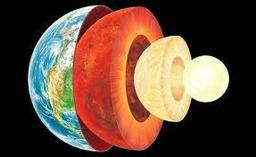
01 ESS [8.ESS.1]: The composition and properties of Earth’s interior are identified by the behavior of seismic waves
Quiz by Casey Dunham
Tag the questions with any skills you have. Your dashboard will track each student's mastery of each skill.
A scientific model is a representation of a system which provides information but is different from the real thing. This column of liquids is a model of Earth’s layers.
Select two characteristics of Earth’s layers that are represented by this column of liquids.

A scientific model is a representation of a system which provides information but is different from the real thing. This column of liquids is a model of Earth’s layers.
Select two characteristics of Earth’s layers that are represented by this column of liquids.

How do seismic waves from earthquakes provide evidence about the nature of Earth’s interior?
Different elements are more likely to be present in each layer of Earth. Move the elements to the chart to show if they are more likely to be found in Earth’s core or crust.
About when did planetary differentiation take place on Earth?
Move the labels of the layers of Earth to arrange them from most dense (#1) to least dense (#5).
Radioactive decay in Earth’s core is a major energy source for which geologic process?
On the diagram, which of the region of Earth with the lowest density?
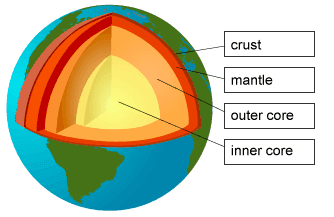
Why is the crust is the least dense layer of Earth?
Thermal energy drives convection currents inside Earth. Select three processes that have supplied thermal energy to drive this process.
There are two types of seismic waves: s-waves and p-waves. While p-waves are able to travel through solids and liquids, s-waves are only able to travel through solids. The picture shows seismic waves generated at position X traveling through the interior of Earth. Select the letter(s) that indicate the area(s) that would NOT experience s-waves generated from X.
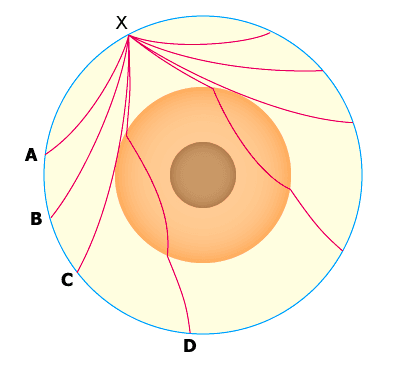
Which two statements give the best reason for why area D would not experience S-Waves
