The nervous and endocrine systems interact to control and coordinate the body’s responses to changes in the environment, and to regulate growth, development, and reproduction. Hormones are chemicals produced by the endocrine system; hormones regulate many body functions.
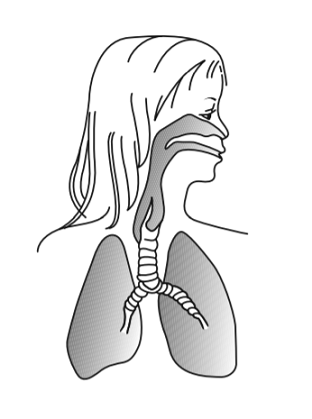
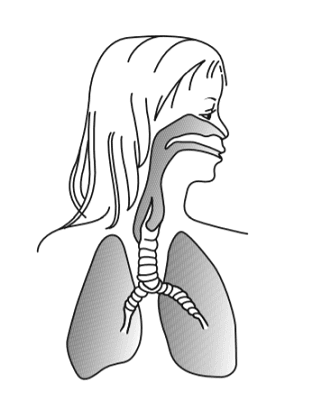
During respiration, cells use oxygen to release the energy stored in food. The respi- ratory system supplies oxygen and removes carbon dioxide (gas exchange).
Each gene carries a single unit of information. A single inherited trait of an individ- ual can be determined by one pair or by many pairs of genes. A human cell contains thousands of different genes.
Photosynthesis is carried on by green plants and other organisms containing chlorophyll. In this process, the Sun’s energy is converted into and stored as chemical energy in the form of a sugar. The quantity of sugar molecules increases in green plants during photosynthesis in the presence of sunlight.
Track each student's skills and progress in your Mastery dashboards
Give this quiz to my class
Q 1/8
Score 0
Which human organ system produces most of the hormones that regulate body functions?
60
endocrine
nervous
digestive
muscular
Q 2/8
Score 0
The diagram below shows a human organ system.
Which human organ system is shown?
60
circulatory
digestive
nervous
respiratory
8 questions
Q.
Which human organ system produces most of the hormones that regulate body functions?
1
60 sec
LE1.2h
Q.
The diagram below shows a human organ system.
Which human organ system is shown?
2
60 sec
LE1.2d
Q.
In living things, traits are passed on from one generation to the next by the transfer of
3
60 sec
LE2.1a
Q.
A structure that carries a single unit of hereditary
information is a
4
60 sec
LE2.1b
Q.
Which process involves choosing certain organisms to reproduce with one another in order to pass on specific, desirable traits to their offspring?
5
60 sec
LE3.1c
Q.
During which process do cells use oxygen to release stored energy?
6
60 sec
LE1.2d
Q.
The basic life functions of an organism are carried on by