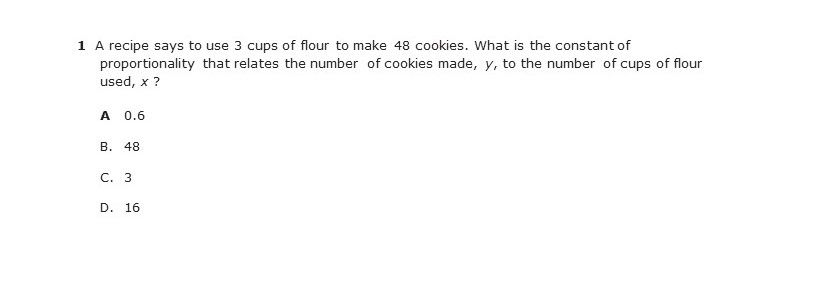
determine the constant of proportionality (k = y/x) within mathematical and real-world problems
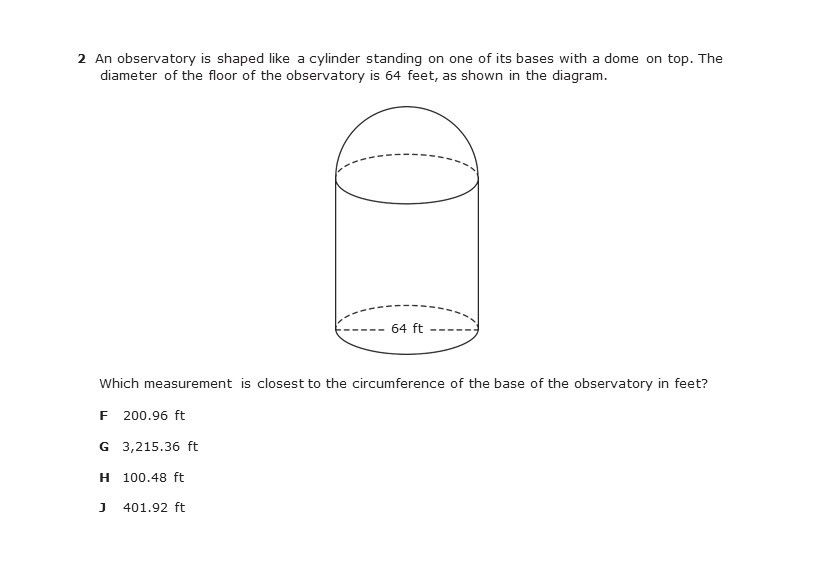
determine the circumference and area of circles
determine experimental and theoretical probabilities related to simple and compound events using data and sample spaces
generalize the critical attributes of similarity, including ratios within and between similar shapes
represent constant rates of change in mathematical and real-world problems given pictorial, tabular, verbal, numeric, graphical, and algebraic representations, including d = rt
solve problems using data represented in bar graphs, dot plots, and circle graphs, including part-to-whole and part-to-part comparisons and equivalents
model and solve one-variable, two-step equations and inequalities
represent sample spaces for simple and compound events using lists and tree diagrams
solve problems involving ratios, rates, and percents, including multi-step problems involving percent increase and percent decrease, and financial literacy problems
solve problems involving the volume of rectangular prisms, triangular prisms, rectangular pyramids, and triangular pyramids
represent linear relationships using verbal descriptions, tables, graphs, and equations that simplify to the form y = mx + b
write and solve equations using geometry concepts, including the sum of the angles in a triangle, and angle relationships
compare two groups of numeric data using comparative dot plots or box plots by comparing their shapes, centers, and spreads
solve mathematical and real-world problems involving similar shape and scale drawings
apply and extend previous understandings of operations to solve problems using addition, subtraction, multiplication, and division of rational numbers
convert between measurement systems, including the use of proportions and the use of unit rates
represent solutions for one-variable, two-step equations and inequalities on number lines
solve problems using qualitative and quantitative predictions and comparisons from simple experiments
calculate the sales tax for a given purchase and calculate income tax for earned wages
describe π as the ratio of the circumference of a circle to its diameter
create and organize a financial assets and liabilities record and construct a net worth statement
add, subtract, multiply, and divide rational numbers fluently
write a corresponding real-world problem given a one-variable, two-step equation or inequality
determine the area of composite figures containing combinations of rectangles, squares, parallelograms, trapezoids, triangles, semicircles, and quarter circles
extend previous knowledge of sets and subsets using a visual representation to describe relationships between sets of rational numbers
determine if the given value(s) make(s) one-variable, two-step equations and inequalities true
Track each student's skills and progress in your Mastery dashboards