Loading...


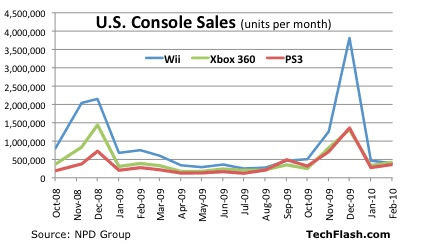
3.5 Reading Broken Line Graphs
Quiz by math enhancement
Customize this quiz to suit your class
Instantly translate to 100+ languages
Tag the questions with any skills you have. Your dashboard will track each student's mastery of each skill.
Give this quiz to my class
 *BRITISH EDUCATION SCHOOL* *Grade 9 - English Language - Literature* *Chapter 5: The Young Tulip-grower - "The Black Tulip"* * *Section A: Reading Comprehension [12 Marks]* Answer in complete sentences. 2 marks each. 1. Describe Cornelius’s feelings and exact words when he looked at the 3 bulbs. What do they show about his character? 2. Why did Cornelius choose to save the bulbs before reading Craeke’s letter? What does this tell us about his priorities? 3. Explain how Cornelius hid the bulbs from the soldiers. Why was this action risky? 4. Why was Isaac Boxtel watching Cornelius’s house? Was he happy or sad about Cornelius’s arrest? Give evidence. 5. What important information did Isaac learn from Cornelius’s notebook? How did this change his plan? 6. Compare Cornelius and Isaac. Who loves the tulips more? Give one reason for each character. *Section B: Vocabulary in Context [8 Marks]* Choose the best meaning of the underlined word. 1 mark each. 1. Cornelius was *surprised* when Craeke ran in. a) happy b) shocked c) angry d) sleepy 2. He picked up the bulbs *carefully*. a) quickly b) with attention c) loudly d) angrily 3. The judge said Cornelius had papers of a *traitor*. a) hero b) friend c) person who betrays his country d) servant 4. The house was *empty* when Isaac entered. a) full of people b) with no one inside c) very big d) very clean 5. Cornelius thanked God the bulbs were not *damaged*. a) broken b) painted c) lost d) old 6. Isaac looked through his *telescope*. a) book b) tool for seeing far c) gun d) letter 7. Cornelius was not *frightened* of the soldiers. a) afraid b) excited c) hungry d) tired 8. Isaac was *jealous* of Cornelius. a) loved him b) wanted what he had c) helped him d) ignored him *Section C: Grammar - Past Continuous vs Past Simple [6 Marks]* Fill in with correct verb form. 1 mark each. 1. While Cornelius ............at the bulbs, Craeke ran into the room. 2. The servant .........that soldiers were coming to arrest him. 3. Isaac ............Cornelius’s house with his telescope all day. 4. When the judge arrived, Cornelius ....... the bulbs in his pocket. 5. The soldiers .........into the room while Cornelius was talking. 6. Isaac .......... the notebook after he searched all the drawers.[look][say][watch][put][run][find] *D* Who Said, write the speaker 1. "Next year, these bulbs will be black tulips. I am the happiest man!" 2. "Please, read this letter immediately, sir!" 3. "You must give that package to me. It is not yours!" 4. "Good! The soldiers will take Cornelius to The Hague. Then they will kill him." 5. "I cannot wait! He has come from The Hague." 6. "None of these was a black tulip!" *E* write your own answer according to your understanding to the current chapter. 1. If you were Cornelius, would you save the bulbs or read the letter first? Give 2 reasons for your choice. [2 marks] 2. Do you think Isaac is a villain or just ambitious? Explain your opinion with evidence from the chapter. [2 marks] *F* Complete the quotes from the chapter. 1. "I must put these bulbs safely in a ........... 2. "The bulbs are not ............I thank God for that." 3. "Last January, Cornelius De Witt left a package of papers in this ............ 4. "Today I have three small tulip from one large bulb. These bulbs will have flowers in the spring ..................Reading Passage: The Anatomy of a Kill Chain In the lexicon of modern warfare, the term "kill chain" describes the end-to-end process of a military attack, from the initial identification of a target to its eventual destruction and the subsequent evaluation of the strike's effectiveness. Conceptually, the kill chain is a structural model used to understand and optimize the speed and precision of military operations. The fundamental principle of this model is that an attack functions as a sequence of interdependent stages; if any single link in the chain is broken, the entire operation fails. For strategic planners, this creates a dual objective: to accelerate one's own kill chain while simultaneously finding ways to disrupt the adversary's. Strategic Concept: The Kinetic Model (F2T2EA) The traditional military kill chain is often summarized by the acronym F2T2EA, representing a continuous cycle of find, fix, track, target, engage, and assess. The kinetic kill chain begins with Find, the reconnaissance phase where intelligence assets identify a potential target within a theater of operations. Once found, the process moves to Fix, which involves pinning down the target's specific location and ensuring it can be distinguished from friendly forces or non-combatants. Track follows, maintaining a persistent watch on the target's movements to prevent its escape. In the Target phase, commanders select the appropriate weapon system and verify the legality and strategic value of the strike. Engage is the kinetic moment—the actual deployment of ordnance against the objective. Finally, Assess involves battle damage assessment (BDA) to determine if the desired effects were achieved or if further engagement is required. This model emphasizes "compressing the sensor-to-shooter timeline," meaning the faster a military can move through these steps, the more lethal it becomes. The Evolution: The Cyber Kill Chain® As warfare expanded into the digital domain, Lockheed Martin adapted the kinetic model into the Cyber Kill Chain. This framework assists defenders in identifying and stopping Advanced Persistent Threats (APTs). Unlike a physical missile, a cyberattack often unfolds over weeks or months, but the sequential logic remains the same. The model consists of seven distinct stages: Stage Description of Attacker Activity 1. Reconnaissance The harvesting of information. Attackers research targets via social media, public records, and technical scanning to find vulnerabilities. 2. Weaponization Coupling a remote access trojan with an exploit into a deliverable payload (e.g., a malicious PDF or Microsoft Office document). 3. Delivery Transmission of the weapon to the target environment. Common vectors include email attachments, malicious websites, or USB drives. 4. Exploitation The weapon triggers. The code executes on the victim's system, typically by taking advantage of a software or operating system vulnerability. 5. Installation The attacker installs a persistent backdoor or malware on the victim's system, allowing them to maintain access even after a reboot. 6. Command & Control (C2) The compromised system opens a communication channel back to the attacker's server, allowing the intruder to give manual instructions. 7. Actions on Objective The final stage where the attacker achieves their goal, such as data exfiltration, encryption for ransom, or destruction of critical infrastructure. Strategic Implications for Defense The strategic value of the Cyber Kill Chain lies in its ability to provide a roadmap for "proactive defense." By understanding the sequence, security professionals can implement controls at every stage. For instance, robust email filtering can break the chain at the Delivery stage, while endpoint detection can stop the Installation phase. Crucially, the earlier a defender breaks the chain, the lower the cost of mitigation and the lower the risk of damage. If an attacker is stopped during Reconnaissance, they have gained nothing. If they are stopped during Actions on Objective, the damage may already be catastrophic. In both kinetic and cyber environments, the goal is the same: to create a "defensive depth" that makes the cost of a successful attack prohibitively high for the adversary.Focus 3 Unit 5 Reading 1 VocabularyTest 5 - Reading - Section 3Reflect Level 5 Reading and Writing Unit 3NCSCOS Grade 5 ELA / Reading - Skill: 5.RI.3 ENGLISH DOWNLOAD C1 UNIT 3.5 RELOAD 3 AND WORKBOOK READINGGrade 5 - Lesson 3 - Reading "Basketball"