Loading...


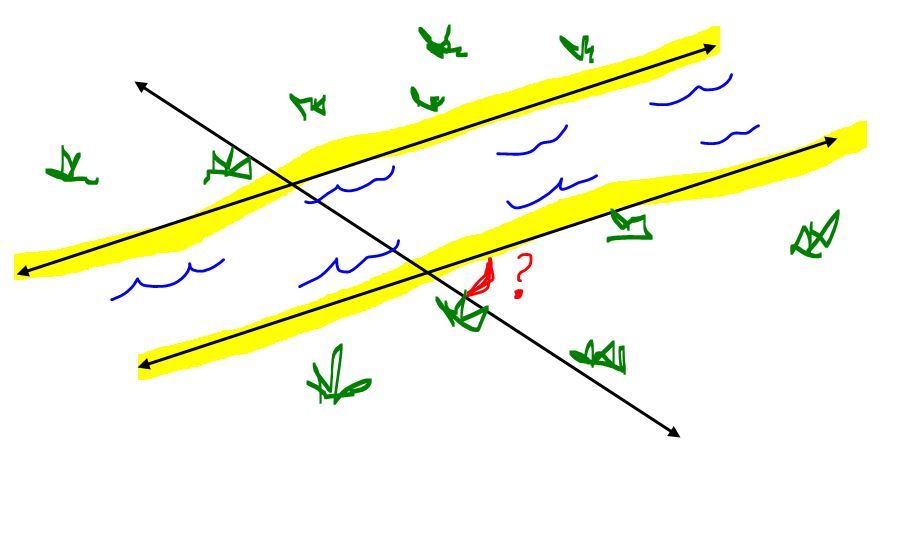
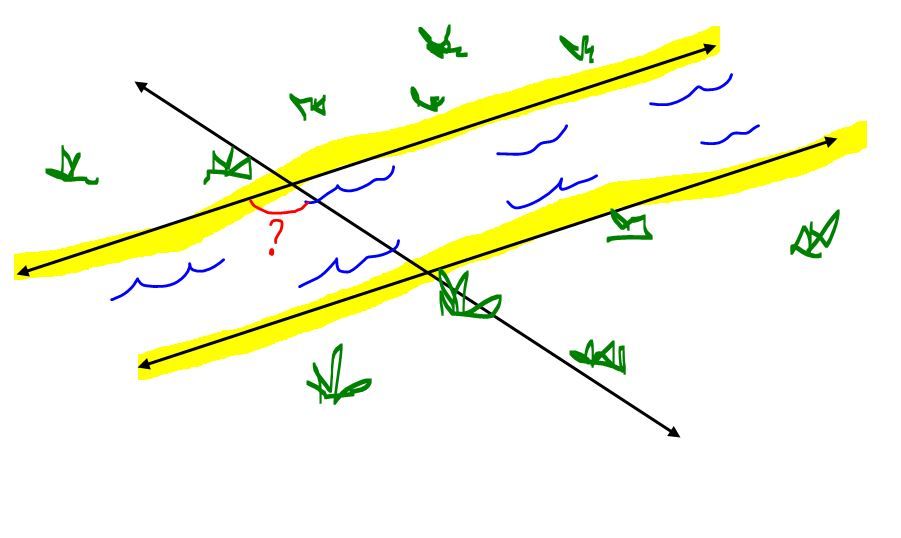
5.3.3. Angles formed with Parallel Lines and Transversal
Quiz by Sarah Pfeiffer
Customize this quiz to suit your class
Instantly translate to 100+ languages
Tag the questions with any skills you have. Your dashboard will track each student's mastery of each skill.
Give this quiz to my class


 7.2.1 Critical Angle 1. The critical angle is the angle of incidence at which the refracted ray: A. Bends toward the normal B. Bends away from the normal C. Travels along the boundary D. Is totally reflected Answer: C 7.2.2 Snell’s Law & Critical Angle 2. Which formula correctly represents the critical angle c when light travels from medium 1 to medium 2? A. n1cosc=n2 B. n2sinc=n1 C. n1sinc=n2 D. n1sinc=n2sin90∘ Answer: D 7.2.3 Total Internal Reflection 3. Total internal reflection occurs only when: A. Light travels from air to glass B. Angle of incidence is less than the critical angle C. Light travels from a denser to a rarer medium D. Refractive index of the second medium is greater Answer: C 4. Which condition is not required for total internal reflection? A. Light must travel from a denser medium B. Angle of incidence must exceed the critical angle C. Refractive index of second medium must be lower D. Light must strike at 90° Answer: D 7.2.4 Ray Diagrams & Angle Calculations 5. A ray in water (n = 1.33) hits the surface at 40°. Critical angle = 48.8°. What happens? A. Refraction only B. Total internal reflection C. No refraction D. Light stops Answer: A 7.2.5 Snell’s Law in Glass Blocks & Prisms 6. A ray enters glass (n = 1.5) from air at 30°. Which statement is correct? A. It bends away from the normal B. It bends toward the normal C. It travels straight D. It undergoes total internal reflection Answer: B 7. In a prism, the deviation of light occurs mainly because: A. Light slows down in glass B. Light speeds up in glass C. Light reflects internally D. Light cannot pass through glass Answer: A 7.2.6 Mirages 8. A mirage appears on a hot road because: A. Light reflects off the sky B. Light refracts through layers of air with different densities C. Light undergoes dispersion D. Light travels in straight lines only Answer: B 7.2.7 Dispersion Through a Prism 9. Dispersion occurs because: A. All colors refract equally B. Different wavelengths refract differently C. The prism reflects light D. White light cannot be refracted Answer: B 7.2.8 Rainbow Formation 10. A rainbow is formed due to: A. Refraction only B. Total internal reflection only C. Dispersion only D. Refraction + TIR + dispersion Answer: D 7.2.9 Optical Fibers 11. Optical fibers work mainly due to: A. Refraction B. Diffraction C. Total internal reflection D. Dispersion Answer: C 12. Which is an advantage of optical fibers? A. High signal loss B. Immune to electromagnetic interference C. Very heavy D. Slow data transmission Answer: B5.3.2 Angles5.3 Angles of Triangles5.1.3 Angles好的,根據您提供的表格 [NEW SOURCE],以下是表格中例句的中文意思: * **1. all** * **全部的**:**All** my friends were here with me. (我所有的朋友當時都在這裡。) * **全部**:**All** of us enjoyed the movie. (我們所有人都很喜歡這部電影。) * **都**:He got **all** wet. (他全身都濕透了。) * **2. along** * **沿著**:We walked **along** the river yesterday evening. (我們昨天傍晚沿著河邊散步。) * **帶……一起**:When my mother goes out, she takes my little brother **along**. (我媽媽外出時,會帶著我的小弟弟一起去。) * **3. angle** * **觀點**:We should look at the problems from different **angles**. (我們應該從不同的觀點來看待這些問題。) * **角度**:The picture is hanging at an **angle** of 45°. (這張畫以 45 度的角度懸掛著。) * **4. answer** * **答案**:Do you know the **answer** to the question? (你知道這個問題的答案嗎?) * **回答;回應**:Could you **answer** the phone for me? (你可以幫我接一下電話嗎?) * **5. back** * **後面**:She wrote her cellphone number down on the **back** of the paper. (她把她的手機號碼寫在紙的背面。) * **後面的**:Open the **back** door, please. (請打開後面的門。) * **回原處**:It’s time to go **back** home. (該回家了。) * **6. bat** * **蝙蝠**:Did you ever see a **bat** flying quickly in the sky at night? (你曾經看過蝙蝠在夜空中快速飛行嗎?) * **球棒**:Swing the **bat** higher. (把球棒揮高一點。) * **擊**:It’s your turn to **bat**. (輪到你打擊了。) * **7. bite** * **一口的量**:Jane took a **bite** of the guava. (珍咬了一口芭樂。) * **咬**:The dog **bit** the woman’s leg. (那隻狗咬了那個女人的腿。) * **8. book** * **書**:I’ve just started reading a **book** by Stephen King. (我剛開始讀一本史蒂芬·金的書。) * **預訂;預約**:They **booked** two seats at the theater. (他們在劇院預訂了兩個座位。) * **9. block** * **街區**:Nancy and I live on the same **block**. (南希和我住在同一個街區。) * **阻擋**:Those heavy boxes **blocked** my way to the restroom. (那些沉重的箱子擋住了我去洗手間的路。) * **10. bow** * **蝴蝶結**:David chose a gray **bow** tie to go with his black suit. (大衛選擇了一個灰色蝴蝶領結來搭配他的黑色西裝。) * **鞠躬**:The actor **bowed** to everyone before he left the stage. (那位演員在離開舞台前向大家鞠躬。) * **11. break** * **暫停;休息**:I’m tired. Can we take a **break**? (我累了。我們可以休息一下嗎?) * **分解**:These plastic forks are hard to **break** down. (這些塑膠叉子很難分解。) * **打破**:The glass is very expensive. Don’t **break** it. (這個玻璃很貴。不要打破它。) * **12. bright** * **晴朗的**:It’s a **bright** morning. Why not take a walk along the river? (這是個晴朗的早晨。何不沿著河邊散步呢?) * **明亮的**:The room isn’t **bright** enough. Let’s not read here. (這個房間不夠明亮。我們不要在這裡閱讀。) * **13. call** * **打電話**:I got a **call** from my old friend last night. (我昨晚接到我老朋友的電話。) * **打電話**:Tina **called** me last night. We talked a lot about music. (蒂娜昨晚打電話給我。我們聊了很多關於音樂的事。) * **呼喊**:Listen! Is that a **call** for help? (聽!那是求救的呼喊嗎?) * **呼喊**:Why did you **call** my name then? (那你當時為什麼喊我的名字?) * **14. camp** * **營隊**:Patrick joined a science **camp** this summer. (派屈克今年夏天參加了一個科學營隊。) * **露營**:They **camped** by the river yesterday. (他們昨天在河邊露營。) * **15. case** * **箱;盒**:The kids drank the whole **case** of Coke. (孩子們喝掉了一整箱可樂。) * **實例;情況**:The number of new **cases** of Covid-19 is growing. (新冠肺炎的新增病例數正在增加。) * **16. catch** * **接球**:Nice **catch**! My good dog. (接得好!我的好狗狗。) * **罹患(病)**:My head hurts. I may **catch** a cold. (我頭痛。我可能感冒了。) * **抓住**:I didn’t **catch** the ball. (我沒有接到那個球。) * **17. change** * **零錢;找零**:I think you’ve given me the wrong **change**. (我想你找錯錢了。) * **改變;交換**:The leaves **change** (in color) from green to red in the fall. (秋天時,樹葉的顏色從綠色變成紅色。) * **18. clean** * **打掃;清理**:Tom **cleans** the toilet once a week. (湯姆一週打掃一次馬桶。) * **乾淨的**:The water isn’t **clean**. Don’t drink it. (這水不乾淨。不要喝。) * **19. close** * **關;闔**:**Close** your books, students. Let’s have a pop quiz. (同學們,把你們的書闔上。我們要進行隨堂測驗。) * **靠近地**:Jane sat **close** to her husband at the party. (在派對上,珍緊挨著她的丈夫坐著。) * **20. cold** * **感冒**:I had a **cold** a week ago. (我一個星期前感冒了。) * **寒冷的**:It was **cold** last night. (昨晚很冷。) Q1. A teacher designs a lesson where students compute real-life percentages such as discounts and savings. 👉 A student calculates 15% of 200 to determine savings in a purchase. What is the correct result? A. 20 B. 25 C. 30 D. 35 Q2. In a classroom activity, learners compare numbers to find the highest common factor for grouping materials evenly. 👉 What is the GCF of 24 and 36? A. 6 B. 8 C. 12 D. 18 📘 FRACTIONS, DECIMALS, AND POWERS Q3. A learner converts fractions into percentages for data interpretation. 👉 What is 3/4 expressed as a percentage? A. 50% B. 60% C. 75% D. 80% Q4. A student models exponential growth using repeated multiplication. 👉 What is the value of 252^525? A. 25 B. 30 C. 32 D. 64 📘 ALGEBRA (EQUATIONS AND EXPRESSIONS) Q5. A teacher guides students to solve equations that represent real-life situations. 👉 Solve: 2x+8=202x + 8 = 202x+8=20 A. x = 4 B. x = 6 C. x = 8 D. x = 10 Q6. Students simplify expressions to understand relationships between quantities. 👉 Simplify: 3(x+4)−2x3(x + 4) - 2x3(x+4)−2x A. x + 12 B. x + 4 C. 5x + 4 D. 5x + 12 📘 FUNCTIONS AND GRAPHING Q7. A student analyzes a linear equation to determine its rate of change. 👉 What is the slope of y=3x−5y = 3x - 5y=3x−5? A. -5 B. -3 C. 3 D. 5 Q8. A learner evaluates functions to predict outcomes. 👉 If f(x)=2x+3f(x) = 2x + 3f(x)=2x+3, what is f(4)f(4)f(4)? A. 7 B. 9 C. 11 D. 14 📘 GEOMETRY Q9. Students explore geometric shapes and their properties through visual models. 👉 What is the sum of interior angles of a triangle? A. 90° B. 180° C. 270° D. 360° Q10. A student calculates the area of a classroom table with dimensions 8 cm by 5 cm. 👉 What is the area? A. 26 sq cm B. 30 sq cm C. 40 sq cm D. 48 sq cm 📘 MEASUREMENT AND FIGURES Q11. A learner determines the volume of a cube used in a science experiment. 👉 What is the volume of a cube with side 4 cm? A. 16 cubic cm B. 32 cubic cm C. 48 cubic cm D. 64 cubic cm Q12. Students identify shapes used in design projects. 👉 How many sides does a hexagon have? A. 5 B. 6 C. 7 D. 8 📘 STATISTICS AND PROBABILITY Q13. A teacher helps students interpret data sets using measures of central tendency. 👉 What is the mean of 4, 6, 8, 10, 12? A. 6 B. 8 C. 10 D. 12 Q14. A class experiment involves flipping a fair coin. 👉 What is the probability of getting heads? A. 1/4 B. 1/3 C. 1/2 D. 2/3 📘 WORD PROBLEMS (APPLICATION) Q15. A car travels 180 km in 3 hours during a learning task on speed. 👉 What is its average speed? A. 45 km/h B. 60 km/h C. 75 km/h D. 90 km/h Q16. Students analyze work efficiency in a project. 👉 If 5 workers complete a task in 12 days, how long will 10 workers take? A. 3 days B. 6 days C. 8 days D. 12 days Q17. A student solves a problem involving ratios in a classroom population. 👉 If the ratio of boys to girls is 3:2 and there are 30 students, how many boys are there? A. 12 B. 15 C. 18 D. 20 Q18. A learner determines the duration of a scheduled trip. 👉 A journey starts at 8:30 AM and ends at 11:15 AM. How long is the trip? A. 2 hrs 15 mins B. 2 hrs 30 mins C. 2 hrs 45 mins D. 3 hrs 15 mins Q19. A student computes simple interest for financial literacy. 👉 What is the simple interest on ₱1000 at 5% for 2 years? A. ₱50 B. ₱75 C. ₱100 D. ₱150 Q20. A learner solves a perimeter problem involving a rectangle. 👉 A rectangle has a length of 12 cm and perimeter of 34 cm. What is the width? A. 5 cm B. 7 cm C. 10 cm D. 11 cm ✅ ANSWER KEY (BASED ON YOUR REVIEWER) (All verified from your uploaded file) [ilide.info...002acd4e5a | PDF] QAnswer1C2C3C4C5B6A7C8C9B10C11D12B13B14C15B16B17C18C19C20ARotations In a doubles game, the players have to take turns hitting the ball with their partner. After each shot, a player has to move out so that the partner can get into the best position for the next shot. It is very important that both players establish an effective rotation pattern and alternative rotation patterns. 1. Circular Rotations (Figure 16.1) Each player moves in a circular way behind the partner after each shot and should be ready to move up and hit. Both players move the same way and two left-handed or right-handed aggressive players can use this movement. 125 16.1 circular rotations 2. Up and Down Rotations (Figure 16.2) Each player moves toward table in a diagonal way to return a shot then back up the same way. One left-handed and one right-handed pair use this rotation. 16.2 up and down rotations 3. T-Rotations (Figure 16.3) The front person moves sideways and the back person moves back and forth. Mostly pairs of one fast style player (front) and one loop style player (back), or one close-table offensive player (front) and one slice style player (back) use this rotation. 16.3 “T” rotations 4. Triangle Rotations (Figure 16.4) Each player using this rotation pattern moves to sides to return shot, then step back to the middle for the next shot in a triangle way. It is used often to return angles shots to sides and it is similar to the circular rotation. 126 16.4 triangle rotations Teamwork and Strategies 1. Establish a good rotation and movement patterns. 2. Create chances for your partner when returning a shot or serve. 3. Cover your partner's weaknesses. 4. Attack the weaker opponent. 5. Hit to the opponent who just finished the shot and is moving away. 6. Use your best serves and shots in games to ensure your best play and reduce mistakes. 7. Change serves and shots to keep opponents guessing what the next motion will be. 8. Change speed, power, lines and placement of the shots and serves to avoid opponents adapting to them. 9. Combine spin and flat serves to force opponent make more mistakes. 10. Attack opponents’ weaknesses. 11. Avoid the strength of opponent. For example, hit to the backhand if opponent is strong at forehand, or use more short chop shots if opponent is very aggressive. 12. Hit to the openings, weak side, and an opponent's body.The cytoskeleton is a network of thin tubes and filaments that crisscrosses the cytosol. The tubes and filaments give shape to the cell from the inside in the same way that tent poles support the shape of a tent. The cytoskeleton also acts as a system of internal tracks, shown in Figure 4-18, on which items move around inside the cell. The cytoskeleton’s functions are based on several struc- tural elements. Three of these are microtubules, microfilaments, and intermediate filaments, shown and described in Table 4-2. Microtubules Microtubules are hollow tubes made of a protein called tubulin. Each tubulin molecule consists of two slightly different subunits. Microtubules radiate outward from a central point called the centrosome near the nucleus. Microtubules hold organelles in place, maintain a cell’s shape, and act as tracks that guide organelles and molecules as they move within the cell. Microfilaments Finer than microtubules, microfilaments are long threads of the beadlike protein actin and are linked end to end and wrapped around each other like two strands of a rope. Microfilaments con- tribute to cell movement, including the crawling of white blood cells and the contraction of muscle cells. Intermediate Filaments Intermediate filaments are rods that anchor the nucleus and some other organelles to their places in the cell. They maintain the inter- nal shape of the nucleus. Hair-follicle cells produce large quantities of intermediate filament proteins. These proteins make up most of the hair shaft. 84 CHAPTER 4 TABLE 4-2 The Structure of the Cytoskeleton Property Microtubules Microfilaments Intermediate filaments Structure hollow tubes made of two strands of intertwined protein fibers coiled into coiled protein protein cables Protein subunits tubulin, with two subunits: å actin one of several types of and ∫ tubulin fibrous proteins Main function maintenance of cell shape; cell maintenance and changing of maintenance of cell shape; motility (in cilia and flagella); cell shape; muscle contraction; anchor nucleus and other chromosome movement; movement of cytoplasm; cell organelles; maintenance of organelle movement motility; cell division shape of nucleus Shape Microtubules provide a path for organelles and molecules as they move throughout the cell. FIGURE 4-18 Microtubules Nucleus Endoplasmic reticulum Mitochondrion Ribosomes Copyright © by Holt, Rinehart and Winston. All rights reserved. Copyright © by Holt, Rinehart and Winston. All rights reserved. CELL STRUCTURE AND FUNCTION 85 1. Explain how the fluid mosaic model describes the plasma membrane. 2. List three cellular functions that occur in the nucleus. 3. Describe the organelles that are found in a eukaryotic cell. 4. Identify two characteristics that make mitochon- dria different from other organelles. 5. Contrast three types of cytoskeletal fibers. CRITICAL THINKING 6. Relating Concepts If a cell has a high energy requirement, would you expect the cell to have many mitochondria or few mitochondria? Why? 7. Analyzing Information How do scientists think that mitochondria originated? Why? 8. Analyzing Statements It is not completely accurate to say that organelles are floating freely in the cytosol. Why not? SECTION 3 REVIEW During cell division, centrioles organize microtubules that pull the chromosomes (orange) apart. The centrioles are at the center of rays of microtubules, which have been stained green with a fluorescent dye. FIGURE 4-20 Cilia and Flagella Cilia (SIL-ee-uh) and flagella (fluh-JEL-uh) are hairlike structures that extend from the surface of the cell, where they assist in movement. Cilia are short and are present in large numbers on certain cells, whereas flagella are longer and are far less numerous on the cells where they occur. Cilia and flagella have a membrane on their outer surface and an internal structure of nine pairs of micro- tubules around two central tubules, as Figure 4-19 shows. Cilia on cells in the inner ear vibrate and help detect sound. Cilia cover the surfaces of many protists and “row” the protists through water like thousands of oars. On other protists, cilia sweep water and food particles into a mouthlike opening. Many kinds of protists use flagella to propel themselves, as do human sperm cells. Centrioles Centrioles consist of two short cylinders of microtubules at right angles to each other and are situated in the cytoplasm near the nuclear envelope. Centrioles occur in animal cells, where they organize the microtubules of the cytoskeleton during cell division, as shown in Figure 4-20. Plant cells lack centrioles. Basal bodies have the same structure that centrioles do. Basal bodies are found at the base of cilia and flagella and appear to organize the devel- opment of cilia and flagella.