Loading...

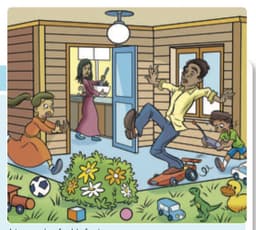
A strange Car Accident
Quiz by Mrs shahar
Customize this quiz to suit your class
Instantly translate to 100+ languages
Tag the questions with any skills you have. Your dashboard will track each student's mastery of each skill.
The children were in the yard.

Dad didn`t see the toy car.
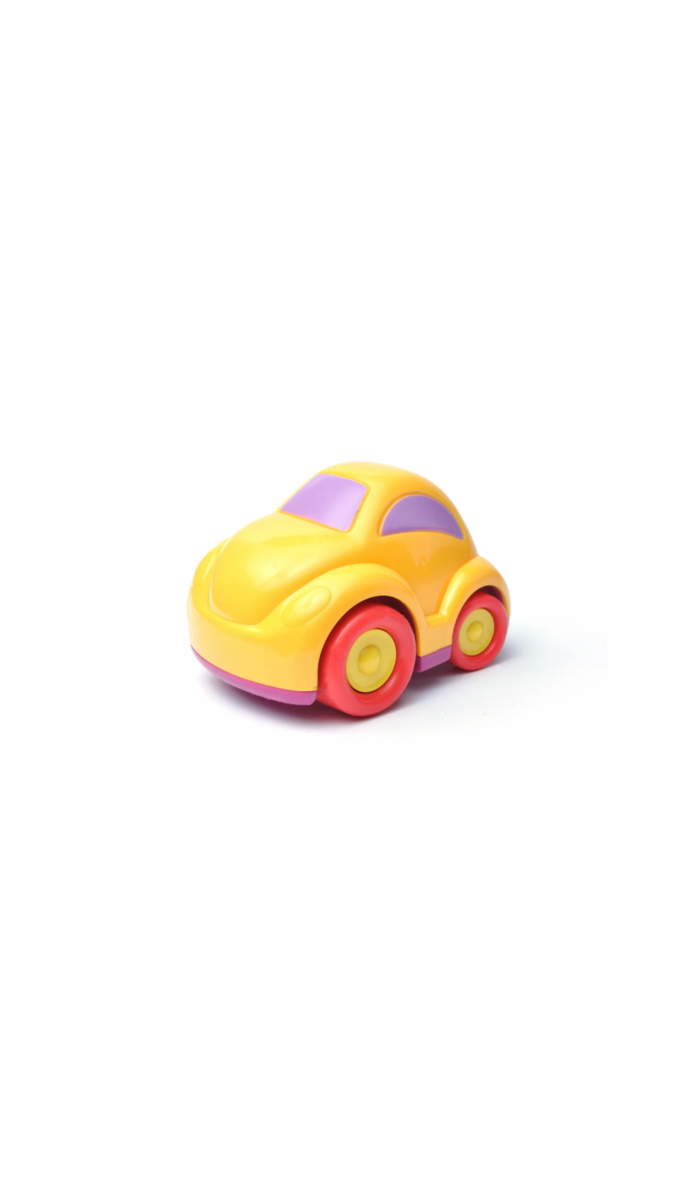
The children were in the yard.

Dad didn`t see the toy car.
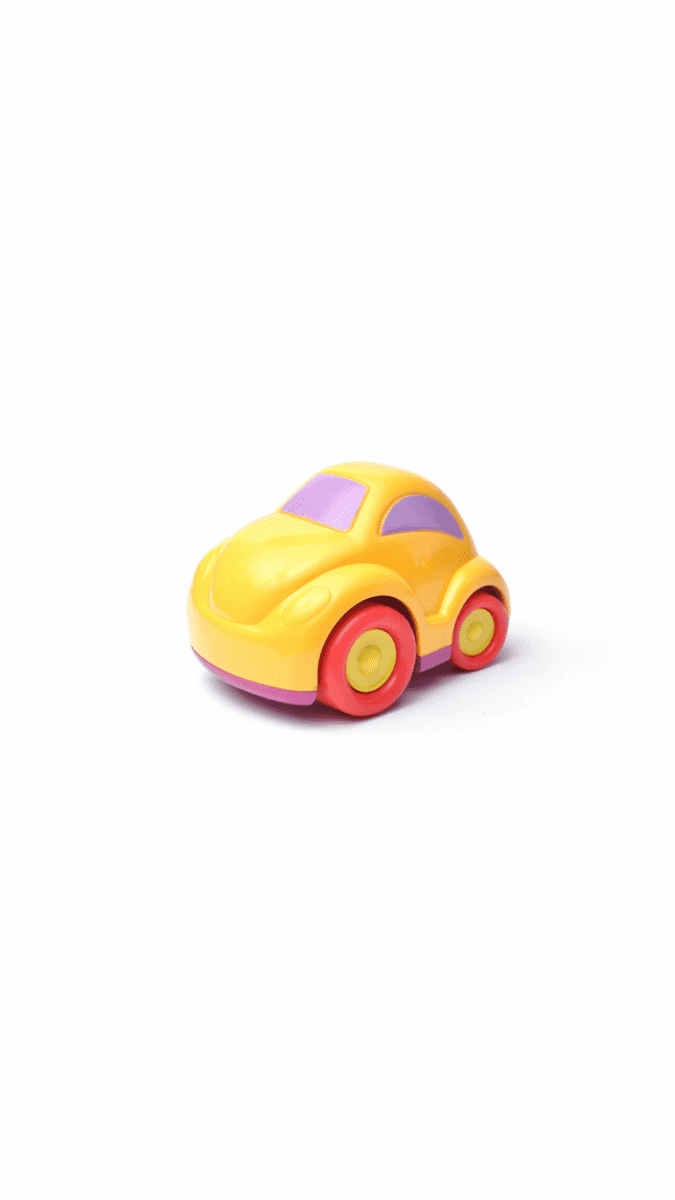
Alex stopped his toy car.

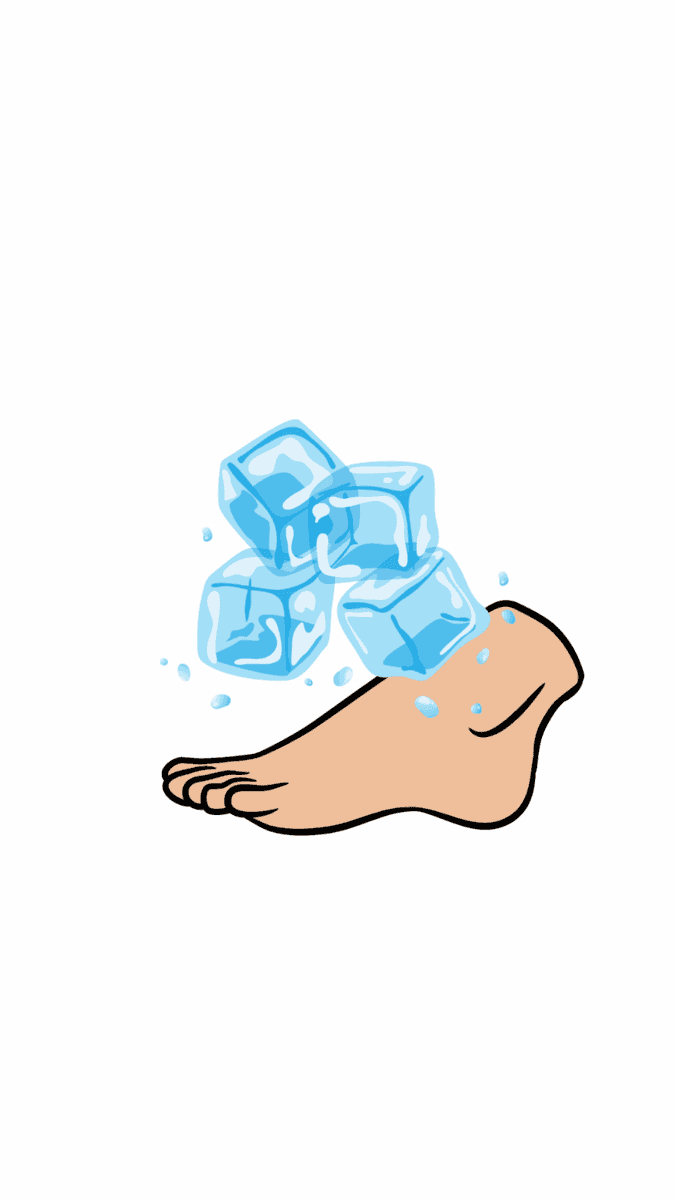
The children got ice for dad.

Dad needed the ice for his foot.
Mom was angry with dad.

Give this quiz to my class
 Taxi! Captain Ben Fawcett has bought an unusual taxi and has begun a new service. The 'taxi' is a small Swiss aeroplane called a 'Pilatus Porter'. This wonderful plane can carry seven passengers. The most surprising thing about it, however, is that it can land anywhere: on snow, water, or even on a ploughed field. Captain Fawcett's first passenger was a doctor who flew from Birmingham to a lonely village in the Welsh mountains. Since then, Captain Fawcett has flown passengers to many unusual places. Once he landed on the roof of a block of flats and on another occasion, he landed in a deserted car park. Captain Fawcett has just refused a strange request from a businessman. The man wanted to fly to Rockall, a lonely island in the Atlantic Ocean, but Captain Fawcett did not take him because the trip was too dangerous.A strange dream: practice with key soundsA Strange Conversation17 A Strange DreamChapter 1: A strange dinnerThe following days are a jumble of gunfire, digging, gobbled food, soldiers running in and out of the forest in small groups, distant explosions, stray shells, bandaged heads and unexpected lulls. On the very first day, before dawn, I am ordered into one of the newly dug trenches. I huddle there, squeezing my magic buttons and singing songs to the dog. When the fighting stops, the dog disappears, but a new companion takes his place. A strange little soldier crawls along the trench toward me. ‘Private Sasha!’ he cries. ‘I’ve been looking for you all day long!’ He’s old, like a grandfather, a dedushka. He has a black patch over one eye, a tape measure around his neck and a row of pins threaded into his sleeve. Hanging from his belt is the most enormous pair of scissors I have ever seen and I wonder if he uses them as a weapon. He doesn’t tell me his name, so in my head he becomes Dedushka. Dedushka squats, cups his hand to his ear, peers over the top of the trench and smiles. ‘It’s safe to be upright . . . for now.’ He helps me to my feet, dusts me off and commands me to stand as tall and straight as I can. Then he measures me. Everything from head to toe – even my toes! He writes numbers in a little notebook, strings his tape measure back around his neck, salutes and hurries away. It’s all very strange, and I wonder if Dedushka has been bumped on the head during the battle and is now a little bit muddled. I should have given him a hug before he left. I chase after him but stop when I’m hit by a shovelful of flying dirt. Sleepy Bear is digging a cave! ‘Are you going to hibernate?’ I ask. Sleepy Bear chuckles. ‘No, although that would be wonderful! I could do with a lo-o-o-ong sleep.’ He sighs and closes his eyes. He doesn’t open them again and I realise that he has gone to sleep. Standing up! I shake his arm, and he opens his eyes and keeps talking. ‘No, I’m not hibernating. I’m digging a little nook where I can sleep and eat. I’ll hang up my raincape as a door that can open and close so it feels just like a real home . . . except for the lice . . . and the bad smells . . . and the bombs that make the walls shake and crumble.’ He points further along the trench to where other soldiers are digging. ‘We’re all making little houses in the ground.’ ‘Like rabbits and moles,’ I say. Sleepy Bear chuckles. ‘Yes! And soldiers who need to hide from German bullets and bombs.’ He stops digging to roll a cigarette. ‘Should I be making a house?’ I ask. ‘I want to hide from German bullets and bombs, too.’ Sleepy Bear flops to the ground, lights his cigarette, closes his eyes and takes a deep puff. I wait for him to answer, but, instead, he begins to snore! I poke him in the side. He snorts and he murmurs, ‘I think someone has already built you a house, Sasha. Keep going along this beautiful village street and you are sure to find it.’ He falls asleep once more. I kiss his dusty cheek and whisper, ‘Thank you, Sleepy Bear.’ A little way along, I see Cook in a cloud of smoke. He has lit a fire, right here in the middle of the trench, and is stirring a cauldron full of kasha. He squats as he stirs. ‘What are you doing?’ I ask. ‘Cooking supper, of course!’ he cries. ‘But why are you doing it here?’ Cook points his spoon at the ground above the trenches. ‘Because if I do it up there, my pot will be filled with holes from German bullets and all of the kasha will leak out onto the ground. It’s bad enough that our supplies can’t get through German lines and there’s nothing to cook but buckwheat for kasha. But if we lost the kasha, too . . .’ ‘Hungry soldiers,’ I say. Cook nods. ‘And grumpy!’ ‘Like Boris!’ I gasp. ‘Even worse,’ warns Cook. I picture the kasha pot full of bullet holes. And then I realise that if the kasha pot were full of holes, then Cook would be, too. I wrap my arms around Cook’s neck and say, ‘I think this is a very good place for cooking our supper.’ I kiss his smoky cheek and run along. At the end of the trench, I find the biggest hole of all. It’s wide and deep and as busy as a beehive in a blossom tree. Above, a group of soldiers is rolling logs into place for a roof, while below, typewriters rattle and pencils scratch and papers flutter and voices crackle out of five different radios. Their words tangle together to tell a strange wartime fairy tale about German guns and a loving father called Stalin and a Red Army regiment that is lost in the deep, dark forest and a wicked beast called Hitler and a delivery of vegetables that was hit by a bomb and blown into a million tiny pieces too small even to make soup. In the middle of it all, wrestling with a rumpled map, his rifle still slung over his shoulder, is Major Scruff. ‘Major Scruff!’ I run and jump into his arms. ‘Is this our new home?’ ‘Yes, Sasha. I suppose it is.’ ‘Is it safe from German bullets and bombs?’ I ask. He stares at me. ‘Were you scared in the trenches today, Sasha?’ ‘No,’ I reply. ‘I had magic buttons and a dog and some songs to sing. Were you scared in the forest, Major Scruff?’ ‘Yes,’ he says. ‘Poor Major Scruff!’ I press my hand against his cheek. The dark, rough stubble is grubby with grit and his eyelids are taking a long time to open after every blink. ‘You need a shave and a nap!’ I scold. He chuckles. ‘I am too tired to shave and too busy to nap.’ I scrunch my nose while I consider his problem. ‘I know!’ I cry. ‘You nap and I will shave your whiskers. That will be two jobs tumbled into one!’ And so that’s what we do. Major Scruff slumps into a chair and snoozes while I lather his face with soapy water and shave his whiskers. The soap suds travel from his face, up into his hair and down the front of his uniform, and I have to shave his jaw and chin three times because I keep missing bits, but I finally get it all done. I am just wiping his cheeks dry when the dog appears. He licks my hand, then stretches up and licks soap suds from Major Scruff’s ear. Major Scruff wakes with a start. He feels his newly shaved face and cries, ‘Wonderful, Sasha! I feel smooth, clean, rested and ready for action.’ He ruffles my hair. ‘We must do this again tomorrow. Although next time, you might wake me with a gentle shake of the shoulder instead of licking my ear.’Memory Adventure: From Learning to Forgetting Imagine Alex is preparing for a school science fair. Storing Memories (2.5) Alex studies a science experiment. The semantic memory (facts and knowledge, like “water boils at 100°C”) is stored in the brain, while episodic memory (personal experiences, like “I mixed vinegar and baking soda yesterday”) records the event. The hippocampus (the brain’s “save button”) helps transfer these memories into long-term memory. During sleep, memory consolidation (making memories stable and long-lasting) happens, and Alex vividly remembers the fun surprise when the mixture fizzes—a flashbulb memory (emotionally strong, vivid memory). Alex also learns the skill of carefully pouring liquids, a procedural memory stored in the basal ganglia, and how to react when the mixture splashes, a conditioned response stored in the cerebellum. Emotions make the memory even stronger, thanks to the amygdala. Retrieving Memories (2.6) The next day, Alex goes to the science fair. Seeing the experiment table triggers priming (unconscious memory activation—seeing the table makes Alex remember steps). Being in the same classroom helps context-dependent memory (better recall in the same place as learning). Alex is also in the same excited mood as while practicing, so mood-congruent memory helps remember details of the experiment. When listing the steps, Alex remembers the first step clearly and the last step best, thanks to the serial position effect. Using strategies like quizzing himself earlier (testing effect) and spacing study sessions (spacing effect) improves retrieval. Forgetting & Memory Errors (2.7) During the fair, Alex tries to remember an old trick learned last year, but some details are fuzzy. This is retroactive interference (new memories block old ones). At the same time, old steps from last year sometimes confuse him, an example of proactive interference (old memories block new info). Alex’s friend jokingly says he added glitter to the experiment last week. Alex later misremembers seeing glitter—this is the misinformation effect. He even forgets where he first learned the correct steps, a case of source amnesia, and feels a strange sense of déjà vu when looking at a similar experiment table. Unfortunately, Alex’s cousin has anterograde amnesia (cannot form new memories) and can only remember things from before last year, while his neighbor has retrograde amnesia (loses past memories) and cannot recall last week’s fair prep. Luckily, Alex’s strong study habits, sleep, and emotional engagement helped protect his memories from being forgotten too quickly.Princess Julian and Sutan Rumandung Long ago, there lived a king named Tuanku Raja Kecik. He wished to find a husband for his beloved granddaughter, Princess Julian. Therefore, he held a big party, inviting all young men in the kingdom . One night before the royal party, Princess Julian had a strange dream. In the dream, she met a young man named Sutan Rumandung. She believed deep in her heart that this man would be her future husband. Day after day, the party went on, but no one named Sutan Rumandung appeared. On the very last day, a ship arrived at the harbor, led by a young, handsome captain. Hearing the news, the king’s soldiers brought the young captain to the palace. In that moment, Princess Julian saw him, she realized that he was the same man from her dream. And it was true — the young man introduced himself as Sutan Rumandung. Knowing this, the king’s family was overjoyed, and soon the two were engaged. Before leaving to continue his voyage, Sutan Rumandung made a promise: if he married another woman, he would sink with his ship. Princess Julian also made a promise: if she married another man, she would turn into a white siamang. Days turned into months, and months into years. For two years, Princess Julian waited, but no message ever came. In the third year, another grand ship docked at the harbor. The captain was handsome and noble, and slowly, Princess Julian’s heart turned toward him. He too fell in love with her, and they decided to marry. On the wedding day, when the priest asked her for her answer, Princess Julian suddenly screamed — a cry like a siamang’s. Before everyone’s eyes, her body changed into a white siamang. The king could only watch, knowing the curse of her broken promise had come true. Not long after, the villagers found the white siamang lifeless in a tree. Soon came the news: Sutan Rumandung had died, his ship sinking into the sea. He, too, had broken his promise. And so ended the tragic tale of two lovers who betrayed each other.