Loading...


Animals and their babies
Quiz by 馬瑜君
Customize this quiz to suit your class
Instantly translate to 100+ languages
Tag the questions with any skills you have. Your dashboard will track each student's mastery of each skill.
Give this quiz to my class
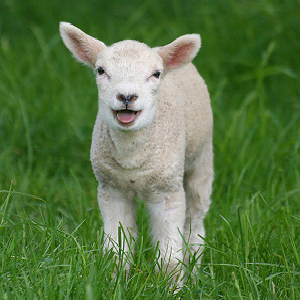



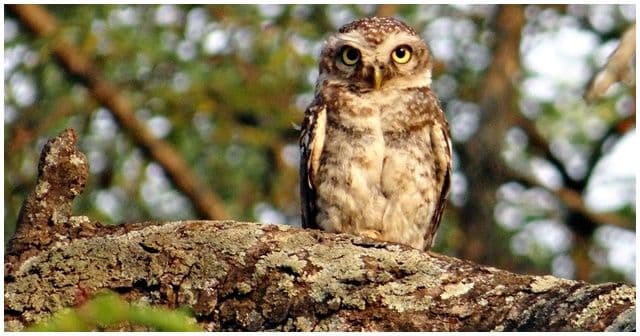
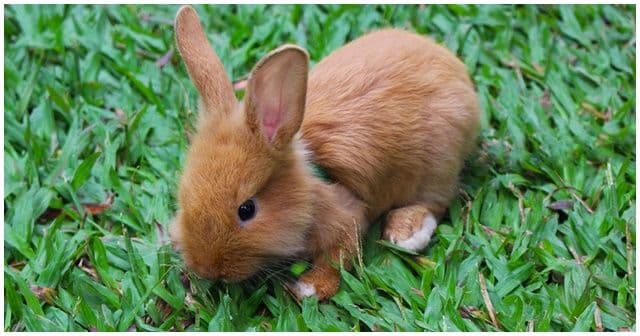

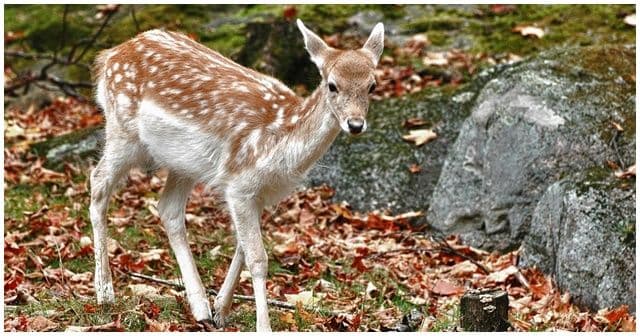
 Farm Animals and Their BabiesWhere’s the Joey? What's a Joey? A joey is a baby marsupial (mar-SOO-pee-ul). A marsupial is an unusual type of animal. Its babies are carried in a pouch, or pocket, on the mother's belly. As it grows, the little joey stays hidden inside the pouch. Safe inside, the tiny joey drinks milk and grows while it is carried around. Even after it can walk, the joey may still ride in mom's pouch. There are over three hundred types of marsupials. Most of them live in Australia (aw-STRAYL-yuh) and eat plants. Let's look at a few kinds of marsupials and their joeys. A Jumping Joey This joey stays in its mother's pouch for eight months while it grows very tall. Its feet and tail grow very long. too. Can you guess what it is? It's a red kangaroo! A red kangaroo is the largest marsupial. It can stand over six feet tall and weigh 200 lbs (91 kg). It can jump 30 feet (9 m) with each leap! A Joey That Lives in a Tree When grown, this little joey will look like a furry teddy bear with big ears. It will live most of its life sitting in trees and eating leaves. Can you guess what it is? It's a koala! A koala lives, eats, and sleeps in eucalyptus (yoo-kuh-LIP-tus) trees. It is happy just to sit anp eat lots of leaves every day. A koala usually only walks around at night. Joey the Screamer This marsupial mom might carry three or four noisy joeys in her pouch at one time. Her little joeys can scream very loudly. What are they? They are Tasmanian devils! The Tasmanian devil gets its name from its loud screams, sharp teeth, bad smell, and wild look. It is a meat-eater, and lives only on the island of Tasmania (taz-MAY-nee-uh). Protecting the Marsupials Most marsupials eat plants, and many, like the koala, live quietly in forests. When those forests are cut down, their homes, food, and safety are lost. Other marsupials have lost their sources of food to herds of grazing cows or growing cities. Marsupials Are Special Animals Most marsupials and their joeys live in only one place on Earth. We need to protect their special habitats and food sources-so we will always know where the joeys are.Animals, Animals There are many kinds of animals. The elk is in the deer family. Male elk have large antlers. Elk are excellent swimmers and can run very fast. Giraffes are very tall with long necks. Giraffes have spots all over their bodies and short horns on their heads. Giraffes live in savannas and open woodlands. Elephants are the largest land animals alive today. Elephants have long trunks and ivory tusks. They live in grasslands and forests. Snow leopards live on cold mountains. They have thick fur to stay warm. They hunt wild goats, sheep, and other animals. This camel has a long winter coat. When it is well fed, its humps stand up. The humps fall to one side if the camel has not eaten. Camels live in both hot and cold deserts. The fox is in the dog family. It lives in a burrow. Foxes eat small animals, insects, fruits, and eggs. Unlike dogs, foxes like to hunt alone. The zebra is in the horse family. Zebras have white and black stripes and live in grasslands. Their manes stand straight up on their necks. The great gray kangaroo carries its babies in its pouch. It uses its strong back legs to hop. Kangaroos eat grass and other plants. The hippopotamus spends most of its time in water. It has almost no hair and eats grass and water plants. Its eyes and nostrils stick out so that it can see and breathe when underwater. Polar bears live in cold places. They have thick fur. They eat seals, walruses, small mammals, birds, and fish. There are many kinds of animals.Number Twelve Number Twelve Is Everywhere! We use the number twelve to help us do things every day. It helps us to count things, measure length, and tell time. Did you ever wonder why a year has twelve months? A ruler has twelve inches? A clock has twelve hours? How We Learned to Count. Long ago, people needed an easy way to count things. How many goats did they have? How many bricks did they need? They didn't have pencils, but they always had their fingers. How could their fingers help them count things? Your hand has four fingers and one thumb. Fingers bend into three parts. All of your finger parts add up to-twelve! To learn how people counted, use the thumb of your other hand. Count the parts of each finger. One, two, three, four, five, six. Using their fingers, people could count their farm animals. They might count six chickens, three sheep, and three goats. They had twelve animals! When their animals had babies, it was easy to count them, too. Using both hands, people could count to twenty-four. Twenty-four is two twelves! A Ruler Is Twelve Thumbs Long Fingers, and the number twelve, were also used to find length. An inch was the width of an adult man's thumb. A foot was twelve thumbs long. Soon, people cut twelve marks for thumb widths on a stick. It was easy to carry the stick. That stick was the first kind of twelve-inch ruler! Twelve Hours in a Day People used the number twelve to divide their days into parts, or hours, that they could count. In daylight, they watched the shadow of a stick or a sundial to know what hour it was. Twelve things are also called a dozen. We buy a dozen pencils in a box. We buy a dozen doughnuts or a dozen eggs. The number twelve helps us to do a dozen things every day! Whose Tracks Are These? Animal Visitors. How do we know whether an animal has visited a place? One way we know is because it may leave tracks, or marks in the soil. Tracks show where the animal's body has touched the ground. Let's find out who has visited us today! Large Animals. A large animal that likes honey made these tracks. This animal is a good climber. It has strong claws for digging up plants, and it eats animals, too. Can you guess who it is? A black bear made these tracks. Black bears sleep all winter and wake up hungry in the spring. A large animal with hooves made these tracks. This animal can eat ten pounds of leaves, bark, and twigs each day. Can you guess who it is? A deer made these tracks. Male deer grow antlers in the spring and shed them in late winter. Baby deer have spots that disappear when they grow up. A large, strong cat made these tracks. This hunter runs fast and jumps far. It eats other animals, such as deer. birds, and rabbits. Can you guess who it is? A mountain lion made these tracks. Adult mountain lions live alone most of the time. Babies must learn to hunt before they can leave their mothers. Small Animals. A smart bird made these tracks. It has a curved beak and sharp claws. It hunts at night and eats many kinds of animals. Can you guess who it is? An owl made these tracks. It has large yellow eyes and can see well in the dark. It makes a noise called a hoot. A small animal made these tracks. Its tail made the line between the footprints. This animal must run very fast to escape being eaten. Can you guess who it is? A mouse made these tracks. Mice are food for owls, snakes, and other animals. But this one got away! Many Kinds of Tracks. Each kind of animal has its own special tracks. Look for tracks when you are in nature. Have fun finding out who has been visiting!Some Arctic Dinos Lived in Herds
By Sid Perkins
Just as interesting, however, is how this was discovered. Scientists didn’t look at a single fossil bone.
Instead, they analyzed a large number of preserved footprints on a mountainside located toward the
southern end of central Alaska.
Anthony Fiorillo works at the Perot Museum of Nature and Science in Dallas, Texas. As a vertebrate
paleontologist, he studies the fossils of creatures with backbones. In 2007, he was part of a research
team exploring Denali National Park. “We rounded the corner and there they were,” he recalls.
Thousands of footprints had been preserved in stone. “It was amazing.”
Dinosaurs died out more than 65 million years ago (not
counting birds, their modern-day relatives). So, it’s a bit
surprising that scientists know so much about these
ancient creatures. Now, a new study reveals that a certain
type of duckbilled dinosaur lived in the Arctic year-round.
These animals also traveled in herds that included many
age groups, they find. The creatures even appear to have
gone through a “teenage growth spurt.”
Those tracks pepper a steep patch of exposed rock about twice as
long as a football field and up to 60 meters (roughly 200 feet) wide.
They sit at least 160 kilometers (100 miles) north of the Gulf of Alaska.
Between 69 million and 72 million years ago, that now-rocky material
was muddy sediment on a floodplain near a seacoast, Fiorillo explains.
The hadrosaurs walked across the squishy mud. Later, the footprints
they left turned to stone.
Previous studies suggested adult duckbills took care of their young,
says Fiorillo. The new evidence that these dinosaurs truly traveled in
herds with multiple age groups confirms that parents cared for their
young well beyond the time they left the nest, his team concludes. The
researchers published their findings June 30 in Geology.
© Science News for Students
Thousands of tracks cover this
rocky mountainside in Alaska’s
Denali National Park. They
provide a wealth of information
about the size, age and lifestyle
of certain dinosaurs.
COURTESY OF PEROT MUSEUM OF
NATURE AND SCIENCE
EVIDENCE FOR HERDS O F DINOSAURS
Small meat-eating dinosaurs called theropods had left behind a few of the tracks that Fiorillo’s team
found in Denali. Birds had left some others. But the vast majority came from creatures called
hadrosaurs. These large plant-eating duckbilled dinosaurs had been quite common during the
Cretaceous Period. That helps explain one of their nicknames: “cattle of the Cretaceous.”
For the new study, the researchers focused only on the hadrosaur tracks. More than half of the
footprints were preserved so well that they had clear impressions of the skin on the dinosaurs’ feet.
Most tracks had a similar level of preservation. That suggests all were probably left within a short
period. Other fossils in the nearby rocks, including insect burrows, suggest these hadrosaurs had left
their footprints during the summer. These are trace fossils — evidence of ancient life other than a
preserved carcass or bone.
At the time these dinosaurs lived, Fiorillio says, the average temperature in the warmest months was
between 10° and 12° Celsius (50° and 54° Fahrenheit). That’s about what conditions are like today
along the border between Canada and the lower 48 U.S. states, he notes.
The team measured a large sample of the duckbills’ footprints. They fell into four distinct size ranges.
The largest tracks, presumably made by adults, measured about 64 centimeters (25 inches) across. The
smallest tracks, 8 centimeters (3 inches) wide, were likely left by young duckbills. They would have
been no more than a year old. Tracks of two other size groups were probably made by juveniles and
near-adults.
These data suggest the community of hadrosaurs included four different age groups.
© Science News for Students
A hadrosaur footprint made
roughly 70 million years ago. For
scale, the long blue bar at right is
10 centimeters long; each small
blue or white bar measures 1
centimeter.
COURTESY OF PEROT MUSEUM OF NATURE
AND SCIENCE
© Science News for Students
THESE DINOSAURS DIDN’T MIGRATE
About 84 percent of the tracks sampled for the new study had been left by older hadrosaurs — adults or
near-adults. Roughly 13 percent came from the youngest members of the herd. And a mere 3 percent
came from herd members considered to be juveniles, says Fiorillo. The rarity of tracks by these tweens
suggests that the young of this species had a rapid growth spurt. If true, they would have spent relatively
little time at this vulnerable size — and therefore left very few tracks.
“What’s really neat is how many small tracks there are,” notes Anthony Martin. An ichnologist — or
expert in trace fossils — he works at Emory University in Atlanta, Ga.
Other scientists had analyzed fossil bones from duckbills. These studies had hinted that the equivalent of
adolescent hadrosaurs would have experienced growth spurts. But the new findings are “the best
evidence that I’ve seen,” says Eric Snively. He’s a vertebrate paleontologist at the University of Wisconsin-
La Crosse. “This is a great study,” he adds, “and further evidence that juvenile hadrosaurs grew up in an
eye-blink.”
Also previously, researchers had proposed that Arctic dinosaurs migrated farther south for the winter.
That’s because even if the region was much warmer than it is today, nights in the high Arctic would have
been 24 hours long. So, with no sunshine for several months, Alaska would have had long periods of very
bleak, chilly weather.
But finding juveniles in the herd
strongly suggests that these
dinosaurs remained in the Arctic all
year. That’s because adolescents and
preadolescents wouldn’t have had
the strength or stamina to make
those long treks, Fiorillo maintains.
Field work is often harsh. Paleontologists studying the dinosaur
footprints here on an Alaskan mountainside sometimes worked
in cold and fog.
COURTESY OF PEROT MUSEUM OF NATURE AND SCIENCE
© Science News for Students
The presence of very young dinosaurs might have been expected, he notes: If this were a nesting region,
the babies would have hatched sometime just before summer. And remember, that’s when these tracks
were left. But that wouldn’t explain the juveniles, he says.
The team’s findings “suggest that these dinosaurs were overwintering in Alaska somehow,” says Snively.
At the time, the average temperature in the region remained above freezing even during the winter, he
notes. But, he adds, “this study raises interesting issues about how the dinosaurs could live in the region
when it was pretty dark for several months at a time.”Animal and their babiesAnimal Dads Some animal dads don't help much. These dads don't help at all! Other animal dads are great! Which animal dads are those? This dad guards and cares for his chicks. He helps them all by himself for almost two years. This dad cleans bugs from his babies' fur. He helps feed them. He carries them, too. This dad holds eggs in his mouth. He helps them stay safe until they are born. This dad eats food and spits it back up. Then he feeds it to his pups. Yum! He helps his pups grow strong. This dad carries tadpoles on his back. He helps them reach water. This dad holds an egg on his feet. He helps keep it warm in the cold. This dad holds thousands of eggs in his pouch. He helps them grow and hatch. These dads help out with their young, too!
Farm Animals and Their BabiesWhere’s the Joey? What's a Joey? A joey is a baby marsupial (mar-SOO-pee-ul). A marsupial is an unusual type of animal. Its babies are carried in a pouch, or pocket, on the mother's belly. As it grows, the little joey stays hidden inside the pouch. Safe inside, the tiny joey drinks milk and grows while it is carried around. Even after it can walk, the joey may still ride in mom's pouch. There are over three hundred types of marsupials. Most of them live in Australia (aw-STRAYL-yuh) and eat plants. Let's look at a few kinds of marsupials and their joeys. A Jumping Joey This joey stays in its mother's pouch for eight months while it grows very tall. Its feet and tail grow very long. too. Can you guess what it is? It's a red kangaroo! A red kangaroo is the largest marsupial. It can stand over six feet tall and weigh 200 lbs (91 kg). It can jump 30 feet (9 m) with each leap! A Joey That Lives in a Tree When grown, this little joey will look like a furry teddy bear with big ears. It will live most of its life sitting in trees and eating leaves. Can you guess what it is? It's a koala! A koala lives, eats, and sleeps in eucalyptus (yoo-kuh-LIP-tus) trees. It is happy just to sit anp eat lots of leaves every day. A koala usually only walks around at night. Joey the Screamer This marsupial mom might carry three or four noisy joeys in her pouch at one time. Her little joeys can scream very loudly. What are they? They are Tasmanian devils! The Tasmanian devil gets its name from its loud screams, sharp teeth, bad smell, and wild look. It is a meat-eater, and lives only on the island of Tasmania (taz-MAY-nee-uh). Protecting the Marsupials Most marsupials eat plants, and many, like the koala, live quietly in forests. When those forests are cut down, their homes, food, and safety are lost. Other marsupials have lost their sources of food to herds of grazing cows or growing cities. Marsupials Are Special Animals Most marsupials and their joeys live in only one place on Earth. We need to protect their special habitats and food sources-so we will always know where the joeys are.Animals, Animals There are many kinds of animals. The elk is in the deer family. Male elk have large antlers. Elk are excellent swimmers and can run very fast. Giraffes are very tall with long necks. Giraffes have spots all over their bodies and short horns on their heads. Giraffes live in savannas and open woodlands. Elephants are the largest land animals alive today. Elephants have long trunks and ivory tusks. They live in grasslands and forests. Snow leopards live on cold mountains. They have thick fur to stay warm. They hunt wild goats, sheep, and other animals. This camel has a long winter coat. When it is well fed, its humps stand up. The humps fall to one side if the camel has not eaten. Camels live in both hot and cold deserts. The fox is in the dog family. It lives in a burrow. Foxes eat small animals, insects, fruits, and eggs. Unlike dogs, foxes like to hunt alone. The zebra is in the horse family. Zebras have white and black stripes and live in grasslands. Their manes stand straight up on their necks. The great gray kangaroo carries its babies in its pouch. It uses its strong back legs to hop. Kangaroos eat grass and other plants. The hippopotamus spends most of its time in water. It has almost no hair and eats grass and water plants. Its eyes and nostrils stick out so that it can see and breathe when underwater. Polar bears live in cold places. They have thick fur. They eat seals, walruses, small mammals, birds, and fish. There are many kinds of animals.Number Twelve Number Twelve Is Everywhere! We use the number twelve to help us do things every day. It helps us to count things, measure length, and tell time. Did you ever wonder why a year has twelve months? A ruler has twelve inches? A clock has twelve hours? How We Learned to Count. Long ago, people needed an easy way to count things. How many goats did they have? How many bricks did they need? They didn't have pencils, but they always had their fingers. How could their fingers help them count things? Your hand has four fingers and one thumb. Fingers bend into three parts. All of your finger parts add up to-twelve! To learn how people counted, use the thumb of your other hand. Count the parts of each finger. One, two, three, four, five, six. Using their fingers, people could count their farm animals. They might count six chickens, three sheep, and three goats. They had twelve animals! When their animals had babies, it was easy to count them, too. Using both hands, people could count to twenty-four. Twenty-four is two twelves! A Ruler Is Twelve Thumbs Long Fingers, and the number twelve, were also used to find length. An inch was the width of an adult man's thumb. A foot was twelve thumbs long. Soon, people cut twelve marks for thumb widths on a stick. It was easy to carry the stick. That stick was the first kind of twelve-inch ruler! Twelve Hours in a Day People used the number twelve to divide their days into parts, or hours, that they could count. In daylight, they watched the shadow of a stick or a sundial to know what hour it was. Twelve things are also called a dozen. We buy a dozen pencils in a box. We buy a dozen doughnuts or a dozen eggs. The number twelve helps us to do a dozen things every day! Whose Tracks Are These? Animal Visitors. How do we know whether an animal has visited a place? One way we know is because it may leave tracks, or marks in the soil. Tracks show where the animal's body has touched the ground. Let's find out who has visited us today! Large Animals. A large animal that likes honey made these tracks. This animal is a good climber. It has strong claws for digging up plants, and it eats animals, too. Can you guess who it is? A black bear made these tracks. Black bears sleep all winter and wake up hungry in the spring. A large animal with hooves made these tracks. This animal can eat ten pounds of leaves, bark, and twigs each day. Can you guess who it is? A deer made these tracks. Male deer grow antlers in the spring and shed them in late winter. Baby deer have spots that disappear when they grow up. A large, strong cat made these tracks. This hunter runs fast and jumps far. It eats other animals, such as deer. birds, and rabbits. Can you guess who it is? A mountain lion made these tracks. Adult mountain lions live alone most of the time. Babies must learn to hunt before they can leave their mothers. Small Animals. A smart bird made these tracks. It has a curved beak and sharp claws. It hunts at night and eats many kinds of animals. Can you guess who it is? An owl made these tracks. It has large yellow eyes and can see well in the dark. It makes a noise called a hoot. A small animal made these tracks. Its tail made the line between the footprints. This animal must run very fast to escape being eaten. Can you guess who it is? A mouse made these tracks. Mice are food for owls, snakes, and other animals. But this one got away! Many Kinds of Tracks. Each kind of animal has its own special tracks. Look for tracks when you are in nature. Have fun finding out who has been visiting!Some Arctic Dinos Lived in Herds
By Sid Perkins
Just as interesting, however, is how this was discovered. Scientists didn’t look at a single fossil bone.
Instead, they analyzed a large number of preserved footprints on a mountainside located toward the
southern end of central Alaska.
Anthony Fiorillo works at the Perot Museum of Nature and Science in Dallas, Texas. As a vertebrate
paleontologist, he studies the fossils of creatures with backbones. In 2007, he was part of a research
team exploring Denali National Park. “We rounded the corner and there they were,” he recalls.
Thousands of footprints had been preserved in stone. “It was amazing.”
Dinosaurs died out more than 65 million years ago (not
counting birds, their modern-day relatives). So, it’s a bit
surprising that scientists know so much about these
ancient creatures. Now, a new study reveals that a certain
type of duckbilled dinosaur lived in the Arctic year-round.
These animals also traveled in herds that included many
age groups, they find. The creatures even appear to have
gone through a “teenage growth spurt.”
Those tracks pepper a steep patch of exposed rock about twice as
long as a football field and up to 60 meters (roughly 200 feet) wide.
They sit at least 160 kilometers (100 miles) north of the Gulf of Alaska.
Between 69 million and 72 million years ago, that now-rocky material
was muddy sediment on a floodplain near a seacoast, Fiorillo explains.
The hadrosaurs walked across the squishy mud. Later, the footprints
they left turned to stone.
Previous studies suggested adult duckbills took care of their young,
says Fiorillo. The new evidence that these dinosaurs truly traveled in
herds with multiple age groups confirms that parents cared for their
young well beyond the time they left the nest, his team concludes. The
researchers published their findings June 30 in Geology.
© Science News for Students
Thousands of tracks cover this
rocky mountainside in Alaska’s
Denali National Park. They
provide a wealth of information
about the size, age and lifestyle
of certain dinosaurs.
COURTESY OF PEROT MUSEUM OF
NATURE AND SCIENCE
EVIDENCE FOR HERDS O F DINOSAURS
Small meat-eating dinosaurs called theropods had left behind a few of the tracks that Fiorillo’s team
found in Denali. Birds had left some others. But the vast majority came from creatures called
hadrosaurs. These large plant-eating duckbilled dinosaurs had been quite common during the
Cretaceous Period. That helps explain one of their nicknames: “cattle of the Cretaceous.”
For the new study, the researchers focused only on the hadrosaur tracks. More than half of the
footprints were preserved so well that they had clear impressions of the skin on the dinosaurs’ feet.
Most tracks had a similar level of preservation. That suggests all were probably left within a short
period. Other fossils in the nearby rocks, including insect burrows, suggest these hadrosaurs had left
their footprints during the summer. These are trace fossils — evidence of ancient life other than a
preserved carcass or bone.
At the time these dinosaurs lived, Fiorillio says, the average temperature in the warmest months was
between 10° and 12° Celsius (50° and 54° Fahrenheit). That’s about what conditions are like today
along the border between Canada and the lower 48 U.S. states, he notes.
The team measured a large sample of the duckbills’ footprints. They fell into four distinct size ranges.
The largest tracks, presumably made by adults, measured about 64 centimeters (25 inches) across. The
smallest tracks, 8 centimeters (3 inches) wide, were likely left by young duckbills. They would have
been no more than a year old. Tracks of two other size groups were probably made by juveniles and
near-adults.
These data suggest the community of hadrosaurs included four different age groups.
© Science News for Students
A hadrosaur footprint made
roughly 70 million years ago. For
scale, the long blue bar at right is
10 centimeters long; each small
blue or white bar measures 1
centimeter.
COURTESY OF PEROT MUSEUM OF NATURE
AND SCIENCE
© Science News for Students
THESE DINOSAURS DIDN’T MIGRATE
About 84 percent of the tracks sampled for the new study had been left by older hadrosaurs — adults or
near-adults. Roughly 13 percent came from the youngest members of the herd. And a mere 3 percent
came from herd members considered to be juveniles, says Fiorillo. The rarity of tracks by these tweens
suggests that the young of this species had a rapid growth spurt. If true, they would have spent relatively
little time at this vulnerable size — and therefore left very few tracks.
“What’s really neat is how many small tracks there are,” notes Anthony Martin. An ichnologist — or
expert in trace fossils — he works at Emory University in Atlanta, Ga.
Other scientists had analyzed fossil bones from duckbills. These studies had hinted that the equivalent of
adolescent hadrosaurs would have experienced growth spurts. But the new findings are “the best
evidence that I’ve seen,” says Eric Snively. He’s a vertebrate paleontologist at the University of Wisconsin-
La Crosse. “This is a great study,” he adds, “and further evidence that juvenile hadrosaurs grew up in an
eye-blink.”
Also previously, researchers had proposed that Arctic dinosaurs migrated farther south for the winter.
That’s because even if the region was much warmer than it is today, nights in the high Arctic would have
been 24 hours long. So, with no sunshine for several months, Alaska would have had long periods of very
bleak, chilly weather.
But finding juveniles in the herd
strongly suggests that these
dinosaurs remained in the Arctic all
year. That’s because adolescents and
preadolescents wouldn’t have had
the strength or stamina to make
those long treks, Fiorillo maintains.
Field work is often harsh. Paleontologists studying the dinosaur
footprints here on an Alaskan mountainside sometimes worked
in cold and fog.
COURTESY OF PEROT MUSEUM OF NATURE AND SCIENCE
© Science News for Students
The presence of very young dinosaurs might have been expected, he notes: If this were a nesting region,
the babies would have hatched sometime just before summer. And remember, that’s when these tracks
were left. But that wouldn’t explain the juveniles, he says.
The team’s findings “suggest that these dinosaurs were overwintering in Alaska somehow,” says Snively.
At the time, the average temperature in the region remained above freezing even during the winter, he
notes. But, he adds, “this study raises interesting issues about how the dinosaurs could live in the region
when it was pretty dark for several months at a time.”Animal and their babiesAnimal Dads Some animal dads don't help much. These dads don't help at all! Other animal dads are great! Which animal dads are those? This dad guards and cares for his chicks. He helps them all by himself for almost two years. This dad cleans bugs from his babies' fur. He helps feed them. He carries them, too. This dad holds eggs in his mouth. He helps them stay safe until they are born. This dad eats food and spits it back up. Then he feeds it to his pups. Yum! He helps his pups grow strong. This dad carries tadpoles on his back. He helps them reach water. This dad holds an egg on his feet. He helps keep it warm in the cold. This dad holds thousands of eggs in his pouch. He helps them grow and hatch. These dads help out with their young, too!