Loading...


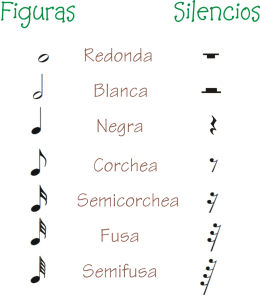
AS FIGURAS MUSICAIS ( 4º )
Quiz by Loreto Vázquez Rodríguez
Customize this quiz to suit your class
Instantly translate to 100+ languages
Tag the questions with any skills you have. Your dashboard will track each student's mastery of each skill.
Give this quiz to my class


 Understanding Volume as an Attribute of Solid Figures - Starter QuizQ1. A teacher designs a lesson where students compute real-life percentages such as discounts and savings. 👉 A student calculates 15% of 200 to determine savings in a purchase. What is the correct result? A. 20 B. 25 C. 30 D. 35 Q2. In a classroom activity, learners compare numbers to find the highest common factor for grouping materials evenly. 👉 What is the GCF of 24 and 36? A. 6 B. 8 C. 12 D. 18 📘 FRACTIONS, DECIMALS, AND POWERS Q3. A learner converts fractions into percentages for data interpretation. 👉 What is 3/4 expressed as a percentage? A. 50% B. 60% C. 75% D. 80% Q4. A student models exponential growth using repeated multiplication. 👉 What is the value of 252^525? A. 25 B. 30 C. 32 D. 64 📘 ALGEBRA (EQUATIONS AND EXPRESSIONS) Q5. A teacher guides students to solve equations that represent real-life situations. 👉 Solve: 2x+8=202x + 8 = 202x+8=20 A. x = 4 B. x = 6 C. x = 8 D. x = 10 Q6. Students simplify expressions to understand relationships between quantities. 👉 Simplify: 3(x+4)−2x3(x + 4) - 2x3(x+4)−2x A. x + 12 B. x + 4 C. 5x + 4 D. 5x + 12 📘 FUNCTIONS AND GRAPHING Q7. A student analyzes a linear equation to determine its rate of change. 👉 What is the slope of y=3x−5y = 3x - 5y=3x−5? A. -5 B. -3 C. 3 D. 5 Q8. A learner evaluates functions to predict outcomes. 👉 If f(x)=2x+3f(x) = 2x + 3f(x)=2x+3, what is f(4)f(4)f(4)? A. 7 B. 9 C. 11 D. 14 📘 GEOMETRY Q9. Students explore geometric shapes and their properties through visual models. 👉 What is the sum of interior angles of a triangle? A. 90° B. 180° C. 270° D. 360° Q10. A student calculates the area of a classroom table with dimensions 8 cm by 5 cm. 👉 What is the area? A. 26 sq cm B. 30 sq cm C. 40 sq cm D. 48 sq cm 📘 MEASUREMENT AND FIGURES Q11. A learner determines the volume of a cube used in a science experiment. 👉 What is the volume of a cube with side 4 cm? A. 16 cubic cm B. 32 cubic cm C. 48 cubic cm D. 64 cubic cm Q12. Students identify shapes used in design projects. 👉 How many sides does a hexagon have? A. 5 B. 6 C. 7 D. 8 📘 STATISTICS AND PROBABILITY Q13. A teacher helps students interpret data sets using measures of central tendency. 👉 What is the mean of 4, 6, 8, 10, 12? A. 6 B. 8 C. 10 D. 12 Q14. A class experiment involves flipping a fair coin. 👉 What is the probability of getting heads? A. 1/4 B. 1/3 C. 1/2 D. 2/3 📘 WORD PROBLEMS (APPLICATION) Q15. A car travels 180 km in 3 hours during a learning task on speed. 👉 What is its average speed? A. 45 km/h B. 60 km/h C. 75 km/h D. 90 km/h Q16. Students analyze work efficiency in a project. 👉 If 5 workers complete a task in 12 days, how long will 10 workers take? A. 3 days B. 6 days C. 8 days D. 12 days Q17. A student solves a problem involving ratios in a classroom population. 👉 If the ratio of boys to girls is 3:2 and there are 30 students, how many boys are there? A. 12 B. 15 C. 18 D. 20 Q18. A learner determines the duration of a scheduled trip. 👉 A journey starts at 8:30 AM and ends at 11:15 AM. How long is the trip? A. 2 hrs 15 mins B. 2 hrs 30 mins C. 2 hrs 45 mins D. 3 hrs 15 mins Q19. A student computes simple interest for financial literacy. 👉 What is the simple interest on ₱1000 at 5% for 2 years? A. ₱50 B. ₱75 C. ₱100 D. ₱150 Q20. A learner solves a perimeter problem involving a rectangle. 👉 A rectangle has a length of 12 cm and perimeter of 34 cm. What is the width? A. 5 cm B. 7 cm C. 10 cm D. 11 cm ✅ ANSWER KEY (BASED ON YOUR REVIEWER) (All verified from your uploaded file) [ilide.info...002acd4e5a | PDF] QAnswer1C2C3C4C5B6A7C8C9B10C11D12B13B14C15B16B17C18C19C20AGot a presentation to make? Easy enough. Think of this as an opportunity to convince someone to see your point of view. One effective way to do that is by using data. Data is facts, numbers, and figures used to report the results of the research. Using data can be helpful to explain complex subjects. Here's how to do it. Research your topic to find data to support your presentation. Step 2. Be sure that any facts or figures you use are from reliable sources, like government, university, and scientific websites or trusted news outlets. You have to be careful. There is a lot of fake information floating around. Step 3. Take the time to edit your data so you're only using what's important and relevant to your topic. Reciting a long list of facts and numbers can put your audience to sleep. Step 4. Remember your data has to tell a story. Choose the right words and phrases to describe your findings. Reports indicate a sharp decrease in costs. Step 5. Take your facts and numbers and turn them into something exciting. This chart shows we had a boom in exports. Almost any data can be used to create colorful and eye-catching graphics and charts. In this graph, you can see a dramatic increase. Which makes it more memorable and 100% more entertaining to watch. Thank you.Source B: A Strong Army R. R. Wertz (2017) Qin Mausoleum and Terra Cotta Army, Exploring Chinese History - website The terra cotta figures were buried with the first Emperor of Qin (Qin Shi Huang) in 210 - 209 BCE. Consequently, they are also sometimes referred to as "Qin's Army." All 8,099 soldiers are unique and distinguishable with different height and facial features. The soldiers are modelled after selected soldiers from the time period who were considered to be the finest of China. The figures are in several poses including standing infantry and kneeling archers as well as charioteers with horses. There are three separate pits, which represent three different sections of the army. The largest pit, and most famous, holds the infantry. The second pit contains the cavalry, and the third contains the officers. A fourth pit, which was planned but never built, is thought to be the supply unit. What is the topic of my paragraph?Now, there are some guidelines in terms of proper place of hanging pictures. The right places in which to hang pictures are as follows: 1. Religious pictures, family photograph, pictures of popular basketball players , actors or actresses should be hanged in bedroom. 2. Beauties of nature, flowers and landscape are suitable in the living room. Where to hang pictures? Home Economics and Livelihood Education 7 Seibo College 114 3. The Last Supper, fruits and other foods are suitable in the dinning room. Hanging pictures is important in home furnishing because it enhances the look of the room, it accentuates a certain focal point in the wall, it displays a certain art work and it gives cheerfulness at home. Mounting is the technique used to secure a photograph to a display board. There are several different methods and materials to choose from when mounting a photograph. Following will guidelines will help you to mount pictures. Pictures look best when properly mounted. Factors to consider in mounting pictures: 1. Choose the correct picture frame for your artwork. Choosing the wrong frame can reduce the look of your picture. 2. There should be a space between your picture and the mat, to preserve the picture better. 3. Picture should be firmly supported and secured up by the mount. 4. The mount should contribute to the picture’s appearance and not to draw attention away from it. How to mount pictures? Why is it important to hang pictures? Home Economics and Livelihood Education 7 Seibo College 115 There are different shapes and figures by which pictures are represented. Familiarize yourself with the following figures presented below, so that groupings and accentuating will be easier. It’s time to be creative! Study the different pictures with different shapes. Give a little time and effort add a dash of your creative imagination, before you knew it, you have made an attractive wall decoration.What is Historical Fiction? Historical fiction is stories set in the past. Yes, it sounds like a paradox or contradiction, but historical means factual elements and fiction means not real. However, there are things that we must pay attention to as people studying this genre. Historical fiction seeks to recreate the appearance of a time past, reconstructing characters, events, movements, ways of life, and the spirit of a bygone day. The time period--and its portrayal--is at the core of the story. Historical Fiction is written with a careful balance of research and creativity, they transport readers to another time and place—which can be real, imagined, or a combination of both. Many historical novels tell stories that involve actual historical figures or historical events within historical settings, though other elements such as persons or events might be fabricated. Historical fiction often presents actual events from the point of view of fictional people living in that time period. In some historical fiction, famous events appear from points of view not recorded in history, with fictional characters either observing or actively participating in these actual events. Historical figures are also often shown dealing with these events while depicting them in a way that has not been previously recorded. Other times, a historical event is used to complement a story's narrative, occurring in the background while characters deal with situations (personal or otherwise) wholly unrelated to that historical event. Sometimes, the names of people and places have been in some way altered. Historical fiction depicts settings that tend be real and drawn from history, and often contains actual historical persons, but the main characters tend to be fictional. Writers of stories in this genre, while penning fiction, attempt to capture the manners and social conditions of the persons or time(s) presented in the story, with due attention paid to period detail and fidelity. Historical fiction is found in books, magazines, art, television programming, film, theater, video games and other media. Writers of this genre are given artistic license in regard to presentation and subject matter, so long as it does not deviate in significant ways from established history. NOTE: When author’s include elements from one time period in another time period this is called Anachronism. For example, if one of the knights of the Round Table wore a wristwatch or a character during the Civil Rights era made a call using a cell phone.Create multiple choice questions using the following information: In November, Mrs. Baker has Holling read The Tempest. Despite his preconceptions, Holling is captivated by all the "good stuff" in the play, especially the cussing, which he decides to learn by heart. He figures that Mrs. Baker could not have read the play herself; if she had, she certainly would not have let him have it. Holling is amazed when he discovers that his teacher not only has read the play, but she knows the bad parts as well. Mrs. Baker gives Holling a one-hundred-and-fifty question test on The Tempest, and assigns him to read the play again, telling him "there is a lot more to (it) than a list of colorful curses." The deadline set by Holling's classmates for him to bring them cream puffs arrives, but although Holling's father's company has won the Baker's Sporting Emporium contract, he refuses to extend an advance on his son's allowance. Desperate, Holling goes to Goldman's Best Bakery, offering to work for the money he lacks to buy the cream puffs. Coincidentally, Mr. Goldman, who is active in Long Island's Shakespeare Company, needs a boy to perform in their upcoming Extravaganza, and because of his work with Mrs. Baker, Holling fits the bill. Mr. Goldman gives Holling the required number of cream puffs in exchange, but sadly, while the students are at recess, Caliban and Sycorax, the escaped rats who inhabit the classroom walls and ceiling, come out and decimate the treats. Somehow, the disaster is blamed on Holling; he must clean up the mess, and his classmates decree that he still owes them cream puffs. The next Wednesday, Holling brings five cream puffs to school, which is all he can afford. In addition to facing his classmates' ire, he has to deal with the fact that, in the Shakespeare Company Holiday Extravaganza, he must play the part of Ariel, who is a fairy, and wear yellow tights with white feathers on an unmentionable part of his anatomy; "not a good thing for a boy from Camillo Junior High." To Holling's surprise, just when things are at their darkest, Mrs. Baker comes through for him, bringing cream puffs for the students on his behalf. That afternoon, Mrs. Baker and Holling discuss The Tempest, and whether or not Caliban, the "monster," deserves a happy ending. Holling argues that, as the antagonist, he does not, but Mrs. Baker muses whether Shakespeare might have shown, even in a monster, the capacity of humankind to use defeat to grow. Mrs. Bigio stumbles into the classroom at this point, emitting sounds of indescribable sadness; she has just learned that her husband has been killed in a futile reconnaissance mission in Vietnam. Two nights after his funeral, the Catholic Relief Agency, which houses Vietnamese refugees, including Holling's classmate Mai Thi, is the target of a hate crime. Holling reflects that Shakespeare, with his happy endings for nearly everyone in The Tempest, is wrong. He says, "sometimes, there isn't a Prospero to make everything fine...and...the quality of mercy is strained." In December, Camillo Junior High is awash in "signs of the season." Mrs. Baker, however, does not share the holiday spirit, but Holling is too absorbed with his problems with the Shakespeare Holiday Extravaganza to wonder why. As always, Holling seeks help from his family, but to no avail; his mother comments insipidly that his embarrassing costume is cute, his father tells him to wear it to please Mr. Goldman, who might one day need an architect, and his sister warns him that if news of his role gets to the high school, no one better find out they are related. The only thing that prevents December from being a total disaster is Mrs. Baker's announcement that Mickey Mantle will be signing autographs at the Baker Sporting Emporium. Unfortunately, Mrs. Baker also tells the class about Holling and the Shakespeare Extravaganza, and encourages the students to attend both events. Holling's classmates are intensely curious about his role as Ariel, whom he euphemistically describes as "a warrior." Mr. Goldman tells Mrs. Baker that Holling needs "some practice on interpretation", and she practices with him, playing the part of Prospero. Mrs. Baker is a terrific reader, and when she and Holling rehearse the part where Prospero releases Ariel from bondage, Holling is inspired, realizing what it means to be free "to create his own happy ending." On the night of the performance, Mrs. Baker, Mrs. Bigio, Danny Hupfer and his parents, Meryl Lee, and Mai Thi are in the audience to support Holling, unlike his own parents, who do not want to miss the Bing Crosby Christmas Special on television. Holling executes his part with such passion that his classmates are moved to tears, and do not even notice what he is wearing. When the show is over, Holling, finding the dressing room locked, rushes outside, still in costume, where his father is supposed to be waiting to take him to Baker's Sporting Emporium to see Mickey Mantle. Typically, his father is not there, and Holling, frantic, flags down a bus and begs the driver to take him to the Emporium. The driver takes pity on him and complies, getting him to the Emporium just in time, but when Holling approaches Mickey Mantle for an autograph, the famous player looks derisively at his costume and snaps rudely, "I don't sign baseballs for kids in yellow tights." Danny Hupfer witnesses this snub, and loyally returns his own autographed baseball to Mickey Mantle, saying, "I guess I don't need this after all." Holling and Danny leave together in silence, smarting because "when gods die, they die hard." During the days remaining until holiday break, Mrs. Bigio is especially cantankerous; her cafeteria cooking is unappetizing at best, and her comments to the students are impatient and unkind. Holling, remembering Mrs. Bigio's sadness when she received the news of her husband's death, does not complain, but he is bewildered at the sheer desolation he witnesses when Mrs. Bigio bitterly tells Mai Thi that she "shouldn't even be here...a queen in a refugee home while American boys are sitting in swamps on Christmas Day." After school on the last day before break, Mrs. Baker gives Holling, Danny Hupfer, and Doug Swieteck each a new baseball and mitt, and sends them to the gym, where, to their delight, they meet Joe Pepitone and Horace Clark in their Yankee uniforms, and receive tickets to Opening Day at the Stadium. Mrs. Baker's family knows what happened with Mickey Mantle, and wants to make it up to the boys. The next day, President Johnson declares a Christmas ceasefire in Vietnam, and the holiday season begins in earnest.Create 5 questions with 4 multiple choices A, B, C and D of the following text Understanding a text may require constant practice and good technique. One of the techniques is using an advanced organizer. Examples of advanced organizers include metaphors, analogies, flowchart, graphs, tables, illustrations, or even pictures. Understanding is synonymous to interpreting. When you interpret an advance organizer, you need to draw relationships of data, thus, forming a certain message or meaning out of the relationship drawn. It is vital for any advance organizer to use appropriate figures or symbols to stand for a certain data or idea. Just like writing like a short story, poem or song, it is important to label it with a title that usually bears the main idea in the whole graphic presentation. Using an advance organizer is like transferring what you have understood from the text with much lesser word used. As a result, you are summing up the bulk of information written in long sentences and paragraphs, synthesizing it into more important concepts or ideas in what you are reading.