Tag the questions with any skills you have. Your dashboard will track each student's mastery of each skill.
Give this quiz to my class
Q 1/65
Score 0
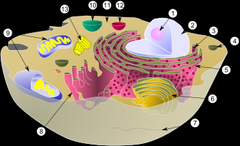
A part of a cell that has a special function
30
Organelle
Q 2/65
Score 0
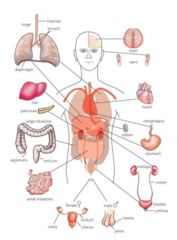
A structure that contains different types of tissue working together to perform the same function
30
Organ
65 questions
Q.
A part of a cell that has a special function
1
30 sec
Q.
A structure that contains different types of tissue working together to perform the same function
2
30 sec
Q.
Similar cells that group together to perform the same function
3
30 sec
Q.
Composed of two or more different organs that work together to provide a common function.
4
30 sec
Q.
An individual form of life; a body made up of organs, organelles, or other parts that work together to carry on the various processes of life.
5
30 sec
Q.
Controls the activities of the eukaryotic cell
6
30 sec
Q.
Site of cellular respiration in all cells and releases energy form food
7
30 sec
Q.
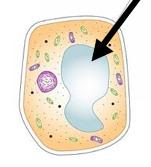
Storage areas in all cells and is usually larger in plant cells
8
30 sec
Q.
Rigid support outside a plant cell
9
30 sec
Q.
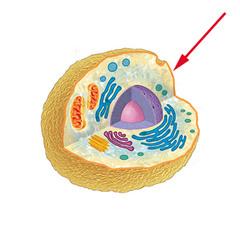
Surrounds all cells & lets materials in and out of the cell, protects the cell, and holds the cell together
10
30 sec
Q.
Jelly-like material inside all cells
11
30 sec
Q.
Site of photosynthesis in plant cells
12
30 sec
Q.
Arrangement of parts or of organs in a cell or body
13
30 sec
Q.
The appropriate action of any special organ or part
14
30 sec
Q.
Any of a large group of organic compounds occurring in foods and living tissues and including sugars, starch, and cellulose. Contains C,H, & O
15
30 sec
Q.
Any of a large class of chemical compounds in which one or more atoms of carbon are covalently linked to atoms of other elements
16
30 sec
Q.
Each of more than 100 substances that cannot be chemcially interconverted or broken down into simpler substances and are primary constiuents of matter - Carbon, Hydrogen, Oxygen, Nitrogen, Phosphorus, & Sulfur are found in all living things
17
30 sec
Q.
A group of atoms bonded together, representing the smallest fundamental unit of a chemical compound that can take part in a chemical reaction
18
30 sec
Q.
The smallest particle of a substance that can exist by itself or be combined with other atoms to form a molecule
19
30 sec
Q.
A single-celled living organism that lacks a nucleus and membrane-bound organelles
20
30 sec
Q.
A living organism whose cell or cells contain nuclei and membrane-bound organelles
21
30 sec
Q.
Non-living, infective agent composed of nucleic acids surrounded by a protein coat
22
30 sec
Q.
A system of molecules that form structures that perform all the functions of life
23
30 sec
Q.
movement of particles across a membrane from an area of lower concentration to an area of higher concentration; requires energy (ATP)
24
30 sec
Q.
The movement of particles from an area of high concentration to an area of low concentration.
25
30 sec
Q.
regulation of an organism's internal environment to maintain conditions needed for life
26
30 sec
Q.
diffusion of water from an area of higher concentration to an area of lower concentration
27
30 sec
Q.
the movement of substances across a cell membrane without the use of energy by the cell
28
30 sec
Q.
movement of particles across a membrane from an area of lower concentration to an area of higher concentration; requires energy (ATP)
29
30 sec
Q.
The movement of particles from an area of high concentration to an area of low concentration.
30
30 sec
Q.
regulation of an organism's internal environment to maintain conditions needed for life
31
30 sec
Q.
diffusion of water from an area of higher concentration to an area of lower concentration
32
30 sec
Q.
the movement of substances across a cell membrane without the use of energy by the cell
33
30 sec
Q.
Process that releases energy by breaking down glucose and other food molecules in the presence of oxygen
34
30 sec
Q.
A type of protein that speeds up a chemical reaction in a living thing
35
30 sec
Q.
process by which plants and some other organisms use light energy to convert water and carbon dioxide into oxygen and high-energy carbohydrates such as sugars and starches
36
30 sec
Q.
The reactant on which an enzyme works.
37
30 sec
Q.
Different forms of a gene
38
30 sec
Q.
the process by which a cell becomes specialized for a specific structure or function.
39
30 sec
Q.
the study of environmental influences on gene expression that occur without a DNA change
40
30 sec
Q.
A segment of DNA on a chromosome that codes for a specific trait
41
30 sec
Q.
process by which a gene produces its product and the product carries out its function
42
30 sec
Q.
The scientific study of heredity
43
30 sec
Q.
genetic makeup of an organism
44
30 sec
Q.
Cell division that produces reproductive cells in sexually reproducing organisms
45
30 sec
Q.
An organism's physical appearance, or visible traits.
46
30 sec
Q.
A chart that shows all the possible combinations of alleles that can result from a genetic cross
47
30 sec
Q.
any malignant growth or tumor caused by abnormal and uncontrolled cell division
48
30 sec
Q.
series of events that cells go through as they grow and divide
49
30 sec
Q.
A complex molecule containing the genetic information that makes up the chromosomes.
50
30 sec
Q.
The process in which DNA makes a duplicate copy of itself.
51
30 sec
Q.
cell division in which the nucleus divides into nuclei containing the same number of chromosomes
52
30 sec
Q.
monomers of proteins
53
30 sec
Q.
A specific sequence of three adjacent bases on a strand of DNA or RNA that provides genetic code information for a particular amino acid
54
30 sec
Q.
A type of RNA, synthesized from DNA, that attaches to ribosomes in the cytoplasm and specifies the primary structure of a protein.
55
30 sec
Q.
A change in a gene or chromosome.
56
30 sec
Q.
a group of organic molecules that includes DNA and RNA, which store and transmit genetic information used for protein synthesis
57
30 sec
Q.
A building block of DNA, consisting of a five-carbon sugar covalently bonded to a nitrogenous base and a phosphate group.
58
30 sec
Q.
the formation of proteins by using information contained in DNA and carried by mRNA
59
30 sec
Q.
a group of organic molecules that perform many functions throughout organisms including providing structure and facilitating chemical reactions (enzymes)
60
30 sec
Q.
type of RNA that combines with proteins to form ribosomes
61
30 sec
Q.
complex molecule made up of ribosomal RNA (rRNA) subunits and proteins; it serves as the site of protein synthesis (translation) where amino acids are linked together to build proteins as specified by the messenger RNA (mRNA)
62
30 sec
Q.
process of copying DNA into mRNA in gene expression
63
30 sec
Q.
non-coding strands of RNA that carry amino acids to protein-building ribosomes
64
30 sec
Q.
process by which mRNA is used to synthesize proteins