Construct an explanation of how cell structures and organelles (including nucleus, cytoplasm, cell membrane, cell wall, chloroplasts, lysosome, Golgi, endoplasmic reticulum, vacuoles, ribosomes, and mitochondria) interact as a system to maintain homeostasis.
Plan and carry out investigations to determine the role of cellular transport (e.g., active, passive, and osmosis) in maintaining homeostasis.
Track each student's skills and progress in your Mastery dashboards
Give this quiz to my class
Q 1/34
Score 0
Control center of the cell containing DNA and RNA and responsible for growth and reproduction
30
Nucleus
Q 2/34
Score 0
A jellylike fluid inside the cell in which the organelles are suspended
30
Cytoplasm
34 questions
Q.
Control center of the cell containing DNA and RNA and responsible for growth and reproduction
1
30 sec
SB1a
Q.
A jellylike fluid inside the cell in which the organelles are suspended
2
30 sec
SB1a
Q.
phospholipid bilayer that surrounds all cells and regulates what enters and leaves the cell
3
30 sec
SB1a
Q.
A rigid layer of nonliving material that surrounds the cells of plants
4
30 sec
SB1a
Q.
An organelle found in plant and algae cells where photosynthesis occurs
5
30 sec
SB1a
Q.
cell organelle filled with enzymes needed to break down certain materials in the cell- CLEAN UP
6
30 sec
SB1a
Q.
stack of membranes in the cell that modifies, sorts, and packages proteins from the endoplasmic reticulum
7
30 sec
SB1a
Q.
A system of membranes that is found in a cell's cytoplasm and that assists in the production, processing, and transport of proteins and in the production of lipids.
8
30 sec
SB1a
Q.
Cell organelle that stores materials such as water, salts, proteins, and carbohydrates
9
30 sec
SB1a
Q.
site of protein synthesis/ making proteins
10
30 sec
SB1a
Q.
Powerhouse of the cell, organelle that is the site of ATP (energy) production
11
30 sec
SB1a
Q.
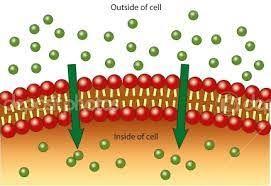
substance can cross membrane without any input of energy
12
30 sec
SB1d
Q.
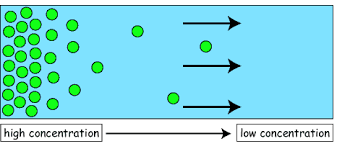
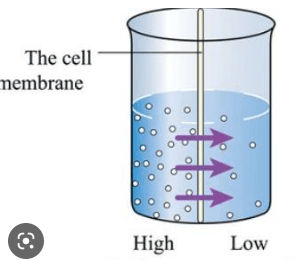
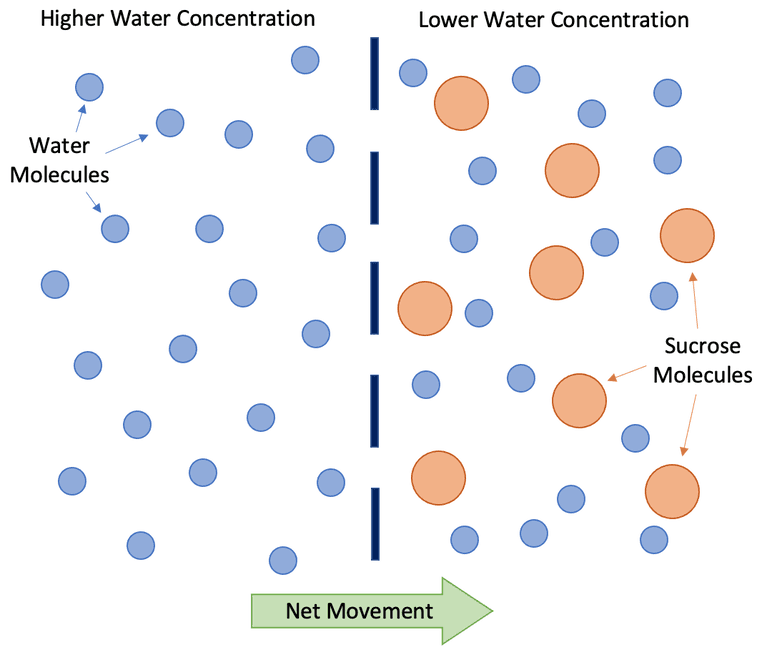
(passive) movement of molecules from an area of high concentration to low, most simple
13
30 sec
SB1d
Q.
difference in concentration on molecules across a distance
14
30 sec
SB1d
Q.
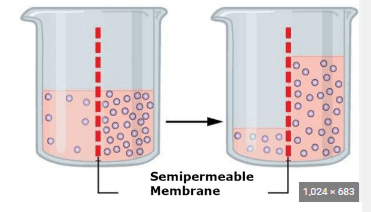
(passive) water molecules diffuse from high to low concentration
15
30 sec
SB1d
Q.
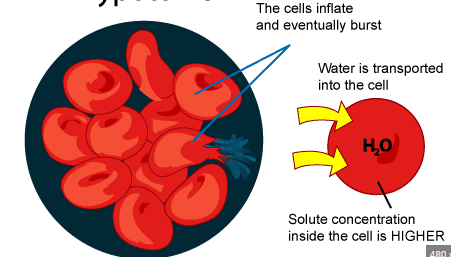
solution concentrate is lower than inside cell
16
30 sec
SB1d
Q.
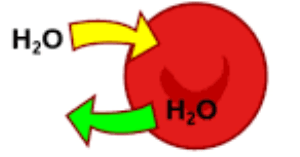
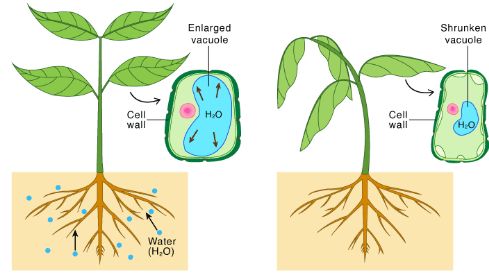
What is represented in the image?
17
30 sec
SB1d
Q.
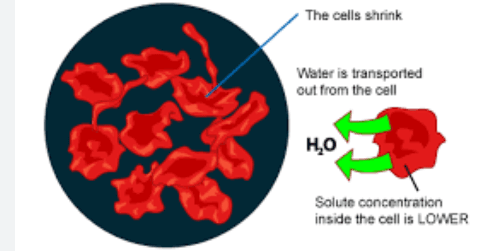
solution concentrate is higher than inside cell
18
30 sec
SB1d
Q.
solution inside and outside of cell are equal
19
30 sec
SB1d
Q.
pressure exerted on cell wall
20
30 sec
SB1d
Q.
(passive) help from transport proteins to carry substance through cell membrane along concentration gradient
21
30 sec
SB1d
Q.
move materials from low to high concentration but require energy
22
30 sec
SB1d
Q.
(active) cell membrane surround particle and incloses it in vesicle to bring into cell in bulk; cell "eating" by forming vacuole and digesting food
23
30 sec
SB1d
Q.
(active) bulky material exits cell
24
30 sec
SB1d
Q.
Concentration of a substance is equal throughout a space
25
30 sec
SB1d
Q.
the ability to move water into or out of the cell by osmosis
26
30 sec
SB1d
Q.
A type of endocytosis in which a cell engulfs large particles or whole cells
27
30 sec
SB1d
Q.
A type of endocytosis in which the cell takes in the fluids along with dissolved small molecules.
28
30 sec
SB1d
Q.
its ability to differentiate between different types of molecules, only allowing some molecules through while blocking others.
29
30 sec
SB1a
Q.
This happens when a cell shrinks inside its cell wall while the cell wall remains intact.
30
30 sec
SB1d
Q.
to release or get rid of material
31
30 sec
Q.
Cell bursting.
32
30 sec
SB1d
Q.
to burst or break open
33
30 sec
SB1d
Q.
relatively constant internal physical and chemical conditions that organisms maintain