Tag the questions with any skills you have. Your dashboard will track each student's mastery of each skill.
Give this quiz to my class
Q 1/40
Score 0
Each family on the periodic table has its own characteristic properties based on the number of
20
valence electrons
neutrons
protons
ions
Q 2/40
Score 0
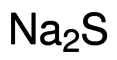
What is the name for this compound?
20
magnesium sulfide
sodium sulfate
sodium fluoride
sodium sulfide
40 questions
Q.
Each family on the periodic table has its own characteristic properties based on the number of
1
20 sec
Q.
What is the name for this compound?
2
20 sec
Q.
When can an ionic compound conduct an electrical current the best?
3
20 sec
Q.
In a covalent bond, the electrons are
4
20 sec
Q.
Which is a property shared by most covalent bonds?
5
20 sec
Q.
When an atom loses an electron, it becomes a
6
20 sec
Q.
Ionic bonds form between two ions that have
7
20 sec
Q.
Ions that are made of more than two elements are called
8
20 sec
Q.
Which is most likely to form a negative ion?
9
20 sec
Q.
Which of the following is the correct name for this compound?
10
20 sec
Q.
Which of the following is the correct name for this compound?
11
20 sec
Q.
Compared to ionic compounds, covalent compounds generally have
12
20 sec
Q.
In an endothermic reaction, energy is
13
20 sec
Q.
In an exothermic reaction, energy is
14
20 sec
Q.
Which of the following is NOT a physical property?
15
20 sec
Q.
New substances formed as a result of a chemical reaction are called
16
20 sec
Q.
Substances at the beginning of a chemical reaction are called
17
20 sec
Q.
In a balanced chemical equation,
18
20 sec
Q.
When balancing this equation, what would be the coefficient for Al on the reactant side?
19
20 sec
Q.
A chemical change occurs when
20
20 sec
Q.
In a chemical reaction, the total mass of the reactants is
21
20 sec
Q.
A log burned and became a pile of ashes. The mass of the ashes was less than the mass of the log before it burned. What can you conclude based on the law of conservation of mass.
22
20 sec
Q.
If a chemical reaction in a closed system ends having a product mass of 90 grams, what was the mass of the reactants to start the chemical reaction?
23
20 sec
Q.
In a(n) ______________, dots around an element's symbol indicate the number of valence electrons in an atom.
24
20 sec
Q.
Atoms tend to be stable and nonreactive if they have _______ valence electrons.
25
20 sec
Q.
Within each ______ in the periodic table, elements have similar properties because they have the same number of valence electrons.
26
20 sec
Q.
Negative ions form when atoms ______ electrons.
27
20 sec
Q.
A(n) ______ is an atom or group of atoms that has an electric charge.
28
20 sec
Q.
When an atom gains a valence electron, it becomes a(n) _______ ion.
29
20 sec
Q.
Covalent bonds usually form when a nonmetal combines with a(n)
30
20 sec
Q.
Ionic bonds usually form when a nonmetal combines with a(n)
31
20 sec
Q.
In a(n) ________, one atom pulls on the shared electrons more than the other atom.
32
20 sec
Q.
Any change that alters a substance without changing it into a new substance is a(n) ______ change.
33
20 sec
Q.
The principle that states that matter is neither created nor destroyed during a chemical reaction is called the law of
34
20 sec
Q.
The law of conservation of mass was first demonstrated by the French chemist
35
20 sec
Q.
The little number at the bottom right of the element symbol that tells you how many atoms are present in a formula is called the ______.
36
20 sec
Q.
The large number in front of a formula that tells you how many molecules you have.
37
20 sec
Q.
How many protons does a Carbon atom have?
38
20 sec
Q.
How many valence electrons does a Carbon atom have?
39
20 sec
Q.
How many more electrons does the Carbon atom need to be stable?