
CHEM - Atoms & Periodic Table
Quiz by Brooke Hughes
Feel free to use or edit a copy
includes Teacher and Student dashboards
Measure skillsfrom any curriculum
Tag the questions with any skills you have. Your dashboard will track each student's mastery of each skill.
- edit the questions
- save a copy for later
- start a class game
- automatically assign follow-up activities based on students’ scores
- assign as homework
- share a link with colleagues
- print as a bubble sheet
- Q1
Which statement accurately describes a NEUTRAL atom of the element?
An Aluminum atom contains 27 electrons and 27 protons in the nucleus.
A Scandium atom contains 45 electrons in the electron cloud and 21 neutrons in the nucleus.
A zinc atom contains 30 protons in the nucleus and 30 electrons in the electron cloud.
An Indium atom contains 115 protons in the nucleus and 49 neutrons in the electron cloud.
45s - Q2
Which of the groups below has the Electron Dot Diagram shown in the image?
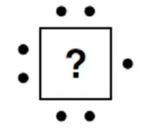
Halogens
Alkaline Earth Metals
Alkali Metals
Noble Gases
45s - Q3
How does a nickel atom form an ion with a +3 charge?
Loses 3 electrons
Gains 3 protons
Gains 3 electrons
Loses 3 protons
30s - Q4
Read the information below. Based on the properties, what element is being described.
1) I am a representative element.
2) I have 8 valence electrons.
3) I have 3 energy levels.
4) I am an inert gas.
Argon
Chlorine
Oxygen
Phosphorus
45s - Q5
Which of the following pairs of elements have similar chemical and physical properties?
oxygen and fluorine
sodium and potassium
lithium and helium
sodium and chlorine
45s - Q6
Which of the following elements is a Transition Metal?
nickel
sodium
cesium
magnesium
45s - Q7
Which statement about the nucleus of an atom is INCORRECT?
It contains the protons and neutrons.
It contains most of the volume of an atom.
It is very dense.
It is positively charged.
30s - Q8
Calculate the average atomic mass of an element using the mass and percent abundances below. Round answer to correct number of significant figures based on the givens. Enter number only! No unit!
Isotope #1 = 95.00% = 31.972 amu
Isotope #2 = 0.76% = 32.971 amu
Isotope #3 = 4.22% = 33.967 amu
Users enter free textType an Answer120s - Q9
Which statement describes the distribution of charge in an atom?
A positively charged nucleus is surrounded by one or more negatively charged electrons.
A neutral nucleus is surrounded by one or more negatively charged electrons.
A neutral charged nucleus is surrounded by one or more positively charged electrons.
A positively charged nucleus is surrounded by one or more positively charged electrons.
45s - Q10
Four students were asked to name the parts of an atom that determine the atom's identity and chemical properties. The students' responses are shown in the table below. Which student's responses are correct?
Student 4
Student 2
Student 3
Student 1
45s - Q11
How many protons, neutrons, and electrons are present in a neutral atom of Hafnium-178?
178 protons, 250 neutrons, 72 electrons
72 protons, 178 neutrons, 106 electrons
106 protons, 72 neutrons, 106 electrons
72 protons, 106 neutrons, 72 electrons
45s - Q12
Which pair of isotopic symbols represent isotopes?
30s - Q13
Use the isotopic symbol to determine the number of protons, neutrons, and electrons. Use the periodic table to locate the atomic number.
16 protons, 14 electrons, and 17 neutrons
17 protons, 17 electrons, and 33 neutrons
16 protons, 18 electrons, and 17 neutrons
33 protons, 18 electrons, and 16 neutrons
45s - Q14
In Ernest Rutherford's experiment, positively charged alpha particles were scattered by a thin gold foil. Which of the following is a conclusion that resulted from this experiment?
The atom is a dense solid and is indivisible.
The mass is conserved when atoms react chemically.
The nucleus is negatively charged.
The nucleus is very small and the atom is mostly empty space.
30s - Q15
Which elements have the SAME number of NEUTRONS?
30s