Loading...


Colonial Regions
Quiz by Kelsey Rector
Customize this quiz to suit your class
Instantly translate to 100+ languages
Tag the questions with any skills you have. Your dashboard will track each student's mastery of each skill.
Give this quiz to my class
Which group came to Pennsylvania for religious freedom?
Pilgrims
Baptists
Quakers
Puritans
Which region is colored in pink?
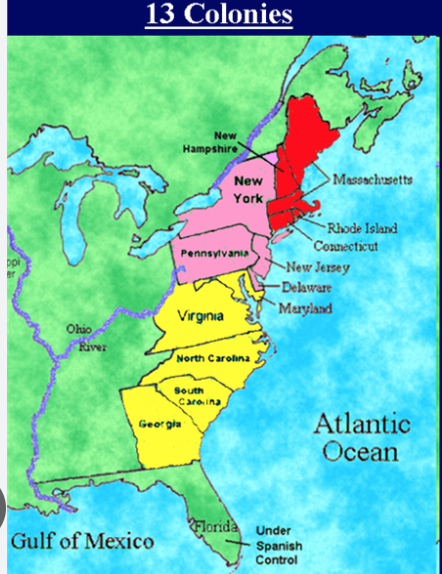
New England
Middle
Southern
Which group came to Pennsylvania for religious freedom?
Which region is colored in pink?
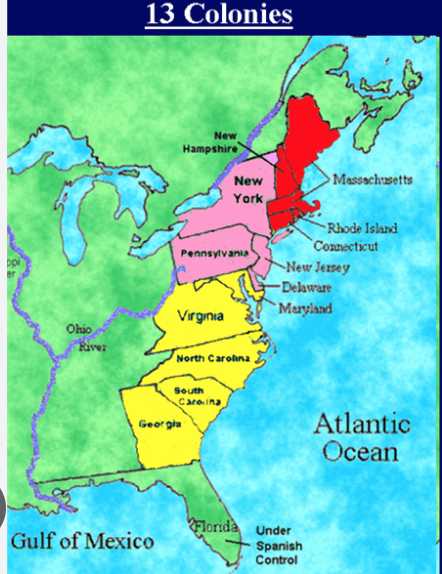
Which region is colored in red?
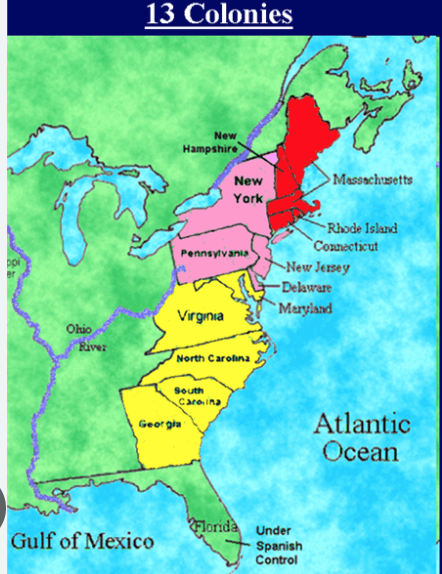
Which region is colored in yellow?
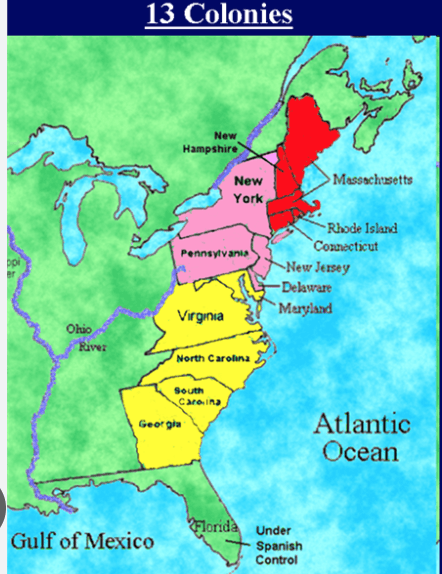
Which colonial region was known as the "Bread Basket"
Which region was NOT suitable for growing cash crops?
Which colonial region used The House of Burgesses for their government meetings?
In which colonial region was the Mayflower Compact signed?
What was a cash crop?
Comparing Colonial Regions with Maslow2.1 - Three Colonial RegionsEconomies of the Colonial Regions (TEKS CHECK)Physical and Human Geography of the Colonial Regions Cluster Check Colonial Period Early colonial settlements were similar in that each developed near the coastline. EX) Jamestown (1607) Plymouth (1620) New England Colonies- the New England Colonies developed initially as religious outposts by various subjugated groups. Influenced by good harbors, abundant forests, rocky soil, and a short growing season. Geographic factors influenced the economy of New England by promoting the growth of trade and manufacturing. Developed villages with town-hall meetings. Had small farms and commercial fishing. American Indians were viewed by the Puritans as needing to be saved from their sinful ways since they were not Christians. In the early years of English colonization, Puritans did not openly embrace the American Indians but relied on them for help in the difficult early years for survival. As the English population increased, so did the conflict with natives of the area. A series of bloody wars (King Philip’s War and the Pequot Wars) during the colonial period between the Puritans and the American Indians of New England Southern Colonies- The climate (long growing season), rich soil, and deep rivers of the southeastern U.S. had a major impact on the history of the U.S. before 1860 because the region provided agricultural products that were processed in the North and in Europe. Developed plantations (large farms that used slave labor) because of fertile land and a long growing season. Relations with American Indians in the Southern Colonies began somewhat as a peaceful coexistence. As more English colonists began to arrive and encroach further into native lands, the relationship became more violent. Mid Atlantic (Middle Colonies)- were created from the previous Dutch New Netherland colony and had good harbors and river systems that shaped their development. The Hudson and Delaware Rivers provided highways to the interior of North America. Furs acquired from American Indians through trade for European goods were transported toward the coast along swift rivers. Later, the region’s farmers were able to use the rivers to ship wheat and other agricultural goods to markets in other colonies and Europe. The rivers also provided colonists access to manufactured goods imported from European markets. Harbors in cities such as Philadelphia and New York City allowed the Mid-Atlantic Colonies to grow into major commercial hubs for all of England’s American colonies. Ship building was common in the mid Atlantic colonies. The natives (American Indians) who resided there were typically relied upon for trade with the English and not the target of war, as was often the case in the other English colonial regions. Pennsylvania, in particular, treated the American Indians with more respect as evidenced by William Penn’s insistence on compensating the natives for their lanColonial america regions quizThree colonial geogrphic regionsPeople of Southeast Asia By the late 20th century, Southeast Asia’s population (including Indonesia and the Philippines) was approaching a half billion, or about one-twelfth of the world’s total. This population, however, was unevenly distributed within the region. By far the nation with the largest population was Indonesia, with about two-fifths of the regional total; in contrast, Brunei’s population was only a tiny fraction of that. Nearly half of the regional population was accounted for by the mainland states, with Vietnam and Thailand being the most populous. Settlement patterns Southeast Asia is predominantly rural: three-fourths of the people live in nonurban areas. Moreover, population is heavily clustered in fertile river valleys and especially in delta areas, such as those of the Mekong and Irrawaddy rivers. Historical, cultural, and environmental influences also have affected the settlement patterns. Java and other core areas such as the Bangkok (Thailand), Hanoi, and Manila metropolitan areas contain high population densities. While the rate of urbanization in Southeast Asia is relatively low compared with those of other developing regions, it is increasing rapidly. Singapore is unique in that it is essentially totally urban. In addition, the Philippines has a much higher than average level of urbanization, in part because of its Spanish and American colonial history. The largest cities—Jakarta (Indonesia), Bangkok, and Manila—are among the world’s most populous. The growth of cities of all sizes is being fueled primarily by natural increase, but rural-urban migration also is a significant contributor. Rural dwellers continue to be attracted by the promise of employment and other opportunities, but for many migrants the informal (undocumented) economic sector in these large cities is the only hope for some form of employment. Settlement patterns in rural areas tend to be associated with agricultural practices. Shifting cultivation is still common in some parts of the region (notably the remote interior areas of Myanmar, Vietnam, and the island of Borneo), although the amount of land so utilized is gradually shrinking. The village is the unit of settlement and often functions collectively, and typically it is moved from time to time. By contrast, wet-rice cultivation, the dominant form of agriculture in Southeast Asia, is sedentary and results in relatively large rural agglomerations with well-developed village life and customs. Dry and upland farming often produces scattered homesteads. Population resettlement to provide agricultural employment and access to land is important in some Southeast Asian countries, notably Indonesia, Malaysia, and Vietnam. By far the largest program has been conducted in Indonesia, where more than four million people have been voluntarily resettled from Java and Bali to the less populated islands. Despite considerable success, the program has been plagued by such problems as improper site selection, environmental deterioration, migrant adjustment, land conflicts, and inadequate financing. A program in Malaysia also has been quite successful, in part because it has set much smaller resettlement targets and has been better funded. Vietnamese development policy also has utilized the resettlement of people in an effort to revitalize areas outside the major population centres.