
Common Law Inglaterra
Quiz by NANCY SUSANA HERNANDEZ CHAVEZ
Customize this quiz to suit your class
Instantly translate to 100+ languages
Tag the questions with any skills you have. Your dashboard will track each student's mastery of each skill.
Give this quiz to my class
Cuenta con un sistema jurídico separado para Inglaterra y Gales, otro para Escocia y un tercero para Irlanda del Norte.

Islas Británicas.
Reino Unido de la Gran Bretaña e Irlanda del Norte.
Inglaterra.
Irlanda.
Surgió en Inglaterra en la Edad Media con la creación de los Tribunales Reales.

Conquista Normanda.
Common Law.
Neorromanismo
Estados tribales.
Cuenta con un sistema jurídico separado para Inglaterra y Gales, otro para Escocia y un tercero para Irlanda del Norte.

Surgió en Inglaterra en la Edad Media con la creación de los Tribunales Reales.

Al desaparecer la dominación romana, Inglaterra fue invadida por:
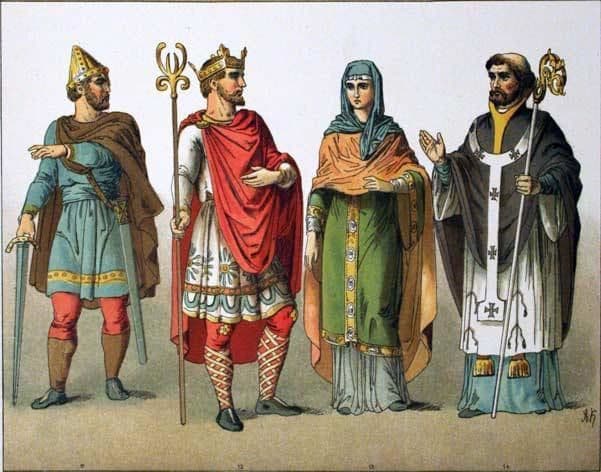
Heredero de la tradición francesa ignoraba las costumbres y el idioma del pueblo inglés y gobernó junto a la Curia Regis

Aplicaban los Juicios de Dios donde se empleaban las costumbres locales, sometiéndose a medios de prueba arcaicos.
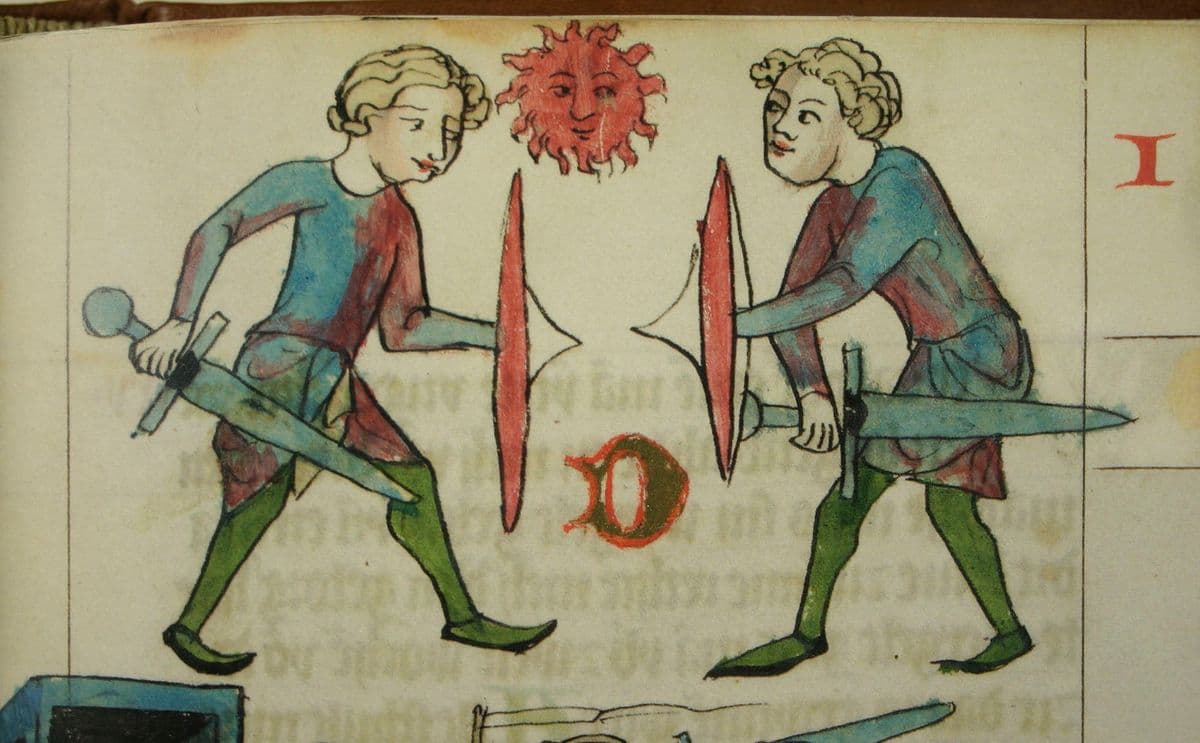
Fue obligado a firmar la Carta Magna (1215) para limitar su poder.

El Sistema Jurídico Ingles cuenta con una Constitución escrita.

Monarca absolutista, separó al Estado de la iglesia católica y creo la actual estructura del Parlamento Inglés.

Declaró que el oficio del Rey era inútil y oneroso. Logró concentrar el poder en Consejo de Estado hasta su muerte.

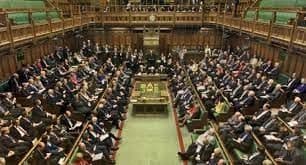
El parlamento ingles esta conformado de la siguiente forma:
Elemento que surge cuando ya no se podía obtener justicia de los Tribunales Reales por determinados asuntos.


Common Law: Key dates in legal history
Common Law en Estados Unidos
Introduction to English Common Law: Week 4 Statutes
What is a crime A crime is generally defined as an act or omission that is prohibited by criminal law Two critical ingredients of a crime are: 1) the commission of an act (Actus reus) 2) the mental intent to commit the act (Mens rea) A crime occurs when a person Commits an act or fails to commit an act when under a legal responsibility to do so Has the intent or mens rea to commit the act Does not have a legal defence or justification for committing the act and Violates a provision in criminal law The Social construction of crime Important to distinguish between behaviours that may be considered deviant by society and crimes Deviance is behaviour that is contrary to the norms and values of the larger society Crime is behaviour that breaks the law Deviance includes: Criminal behaviour and Wide range of other behaviours not against the law: May be frowned upon by the larger society What is viewed as deviant changes over time Crime includes: Social construction of crime Legal status of behaviours is not determined by behaviour itself but result of social response to the behaviour/persons/groups engaged in it Criminologists often conduct historical analyses to understand how social, economic and political environments may influence legislation Moral entrepreneurs Often play a key role in criminalizing certain activities Individuals, groups or organizations, seek action against certain groups of people/behaviours and bring pressure on legislators to enact criminal statutes The Origins and Application of the Criminal Law Differing perspectives on where criminal laws come from/ applied via the criminal justice system are reflected in two models 1) Value consensus model 2) Conflict Model Value consensus model Behaviours are defined as criminal/punishment imposed, reflect opinions/limits of tolerance Application of law, society reaffirms acceptable behaviours/social cohesion Conflict Model Crime and punishment reflect the power some groups have to influence, formulation/application of criminal law rich/privileged have an advantage in influencing law reform/criminal justice system The Canadian Legal System Is a common law system, with exception of Quebec which has a civil law system (Based on the French Code Napoleon) Common law is law based on custom, tradition, practice and generally unwritten Precedent is a judicial decision may be use as a standard in subsequent similar cases Canadian Courts Canadian courts organised in a hierarchy Supreme court of Canada is the highest court Stare decisis- principle whereby higher courts set precedents that lower courts must follow “To stand by what was decided” Like cases should be treated alike All courts below SSC bound to apply that same ruling in subsequent cases Criminal Law Body of law deals with conduct considered so harmful to society as a whole that it is prohibited by statute and prosecuted and punished by the government Functions of the Criminal Law In Canadian society, Criminal law provides the following functions Acts as a mechanism of social control Defines the parameters of acceptable behaviour Reduces the risk of personal retaliation Assists in general and specific deterrence Prosecutes criminalized behaviour Protects groups interests Principles of Canadian Law The Rule of Law The requirement that governments as well as individuals be subjected to Traced back to the English Magna Carta The essence of the rule of law is that No one person is above the law All persons are bound by the law All are entitled to protection by the law The law should be observed and enforced equally There is a standard to which criminal justice officials must adhere and will be held accountable Criminal Law Vs. Civil (Tort) Law Summary Crime is a social construction and is a reflection of changing time and mores Criminal law is not static and what behaviour legislatively defined as criminal can change overnight There are instances in which controversy arises when the criminal law is applied to issues of ethics, morality and religion The criminal law was identified as one type of public law and the functions of the criminal law were set out The rule of law and the charter of rights and freedoms are two key parts of the foundation of the criminal justice system There are several principles that also provide the foundation for Canadian law The role, principles origins and application of the criminal law were examined and a number of case studies were presented to illustrate the dynamic nature of the criminal law in a diverse society
Explain how the distributive law applies to multiplication expressions with a common factor
Explain how the distributive law applies to division expressions with a common divisor
Extradition (International law), Political Offence Exception, The Political Offense Exception (POE) serves as a critical safeguard in international extradition law, allowing a requested state to refuse the surrender of a fugitive if their alleged crime is of a "political character." These offenses are categorized into two types: **pure political offenses**, such as treason or espionage, which target the state's political organization without harming individuals; and **relative political offenses**, which are common crimes like robbery committed with a political motive. To distinguish between these, courts apply various judicial tests. For instance, the **Political Incidence Test** (established in *In re Castioni*) focuses on whether the act was incidental to a political disturbance, while the **Swiss Proportionality Test** weighs the political end against the criminal means used, denying the exception if the harm caused is disproportionate. In the context of **state succession**, the application of extradition treaties depends largely on the underlying legal theory adopted by the new sovereign. Under **Universal Succession**, the new state inherits all prior treaties and obligations, ensuring legal continuity. Conversely, the **Clean Slate (Tabula Rasa) Theory**, often seen in decolonization, suggests that new states are not bound by the predecessor’s treaties, potentially creating "safe havens" for fugitives until new agreements are reached. Practical examples include the **Dissolution of the USSR**, where Russia acted as the "continuator" state inheriting treaties, and the **Partition of India and Pakistan**, where a devolution agreement ensured that colonial-era treaties remained in effect. Despite its protective intent, the POE faces **modern erosion** to ensure that heinous acts do not go unpunished. Specific limitations, such as the **Attentat Clause**, explicitly exclude the assassination of a head of state from being considered a political offense. Similarly, modern treaties and conventions (like the *Meunier* ruling) exclude **terrorism**, hijacking, and crimes against humanity from the exception, viewing these acts as attacks on the general social order rather than legitimate political dissent. This evolution reflects a growing international consensus that the gravity of certain crimes—such as those seen in the **Rainbow Warrior case study**—far outweighs any claimed political motivation, shifting the legal focus toward human rights and the prevention of torture.
Musical Texture Texture Musical texture is the element of music that analyzes musical layers in terms of number and function. The most basic texture is called monophonic. Oh mama, I'm in fear for my life from the long arm of the law. Monophonic texture has only one layer, a melody. With monophony, it doesn't matter how many instruments and or voices are present if they are all singing or playing the same thing at the same time. It also doesn't matter if the voices or instruments are on the exact same frequency, or if they are singing in octaves. An octave is the distance between two musical pitches that sound almost the same, but one is higher and one is lower. It also doesn't matter if drums are present or not. In most cases, drums, the rhythmic layer, are neither melody nor harmony, and therefore are generally not considered when determining texture type. Too much monophony can be boring, so most music has another kind of layer, harmony. When a melody is supported by a harmony, the texture is homophonic. No one may ever know the feelings inside my mind. All the lines I ever write are running out of time. One layer grabs your attention, and the other layer is just hanging out in the background. Most popular music is homophonic. Notice how there was only one instrument in the previous example, a piano, but there were two different things happening on that instrument, a melody, and a harmony. What if a piece of music has multiple independent layers happening at the same time, and you're not sure which one is the melody? This is called polyphony. Polyphony can occur if you take the same melody but start it at staggered intervals. This is called a round. ♪ The last texture is called heterophony. Heterophony is relatively rare in Western music but is very common in non-Western music. It occurs when there are two or more versions of the same melody happening at the same time. Usually, one of the melody lines has more notes than the other, a kind of musical decoration, and or a slightly different rhythmic pattern. Songs will often use a variety of textures to keep the piece interesting. Come on, I need you, I swear, at this moment, you need everything. Come on, I need you, I swear, at this moment, you need everything. Start trying to identify the musical textures in your favorite music.