Loading...


Costa Rica Provinces
Quiz by José Daniel López Morera
Customize this quiz to suit your class
Instantly translate to 100+ languages
Tag the questions with any skills you have. Your dashboard will track each student's mastery of each skill.
What is this Costa Rica province?
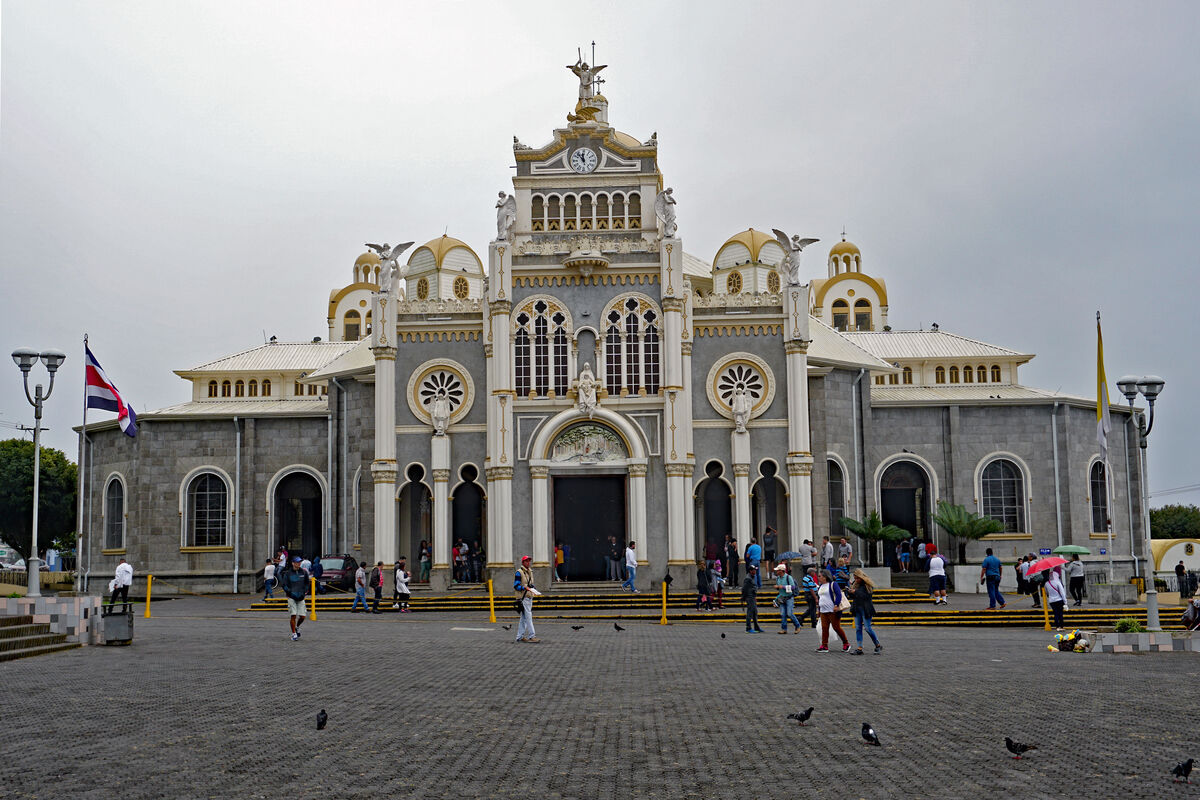
Cartago
San José
Alajuela
What is this Costa Rica province?
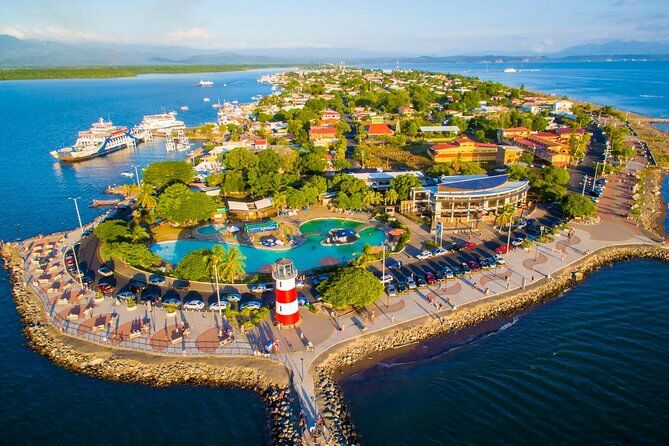
Limon
Heredia
Puntarenas
What is this Costa Rica province?

What is this Costa Rica province?
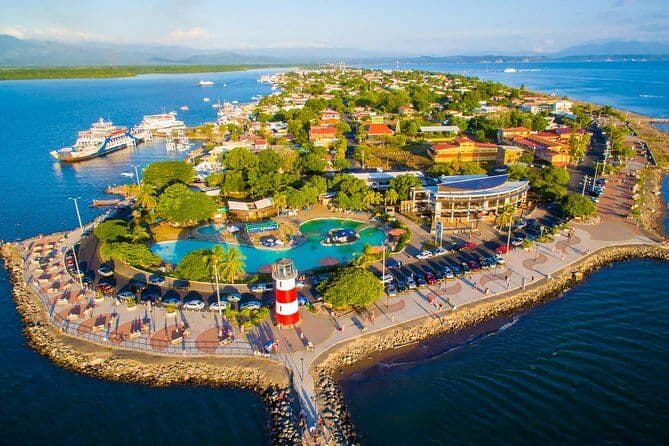
What is this Costa Rica province?

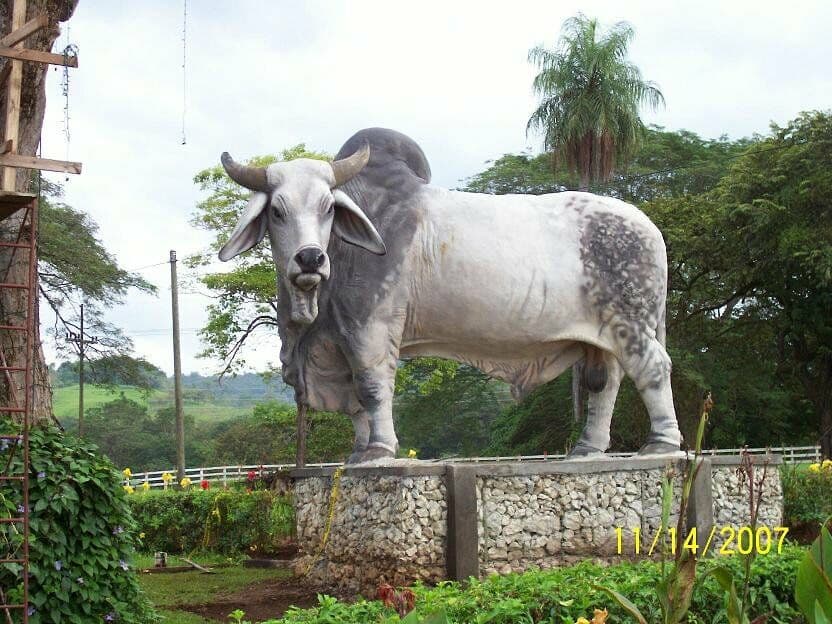
What is this Costa Rica province?
Give this quiz to my class
Honduras is a Central American nation bordered by Nicaragua, Guatemala, and El Salvador. The Caribbean Sea forms its northern coastline. The Pacific Ocean borders a small southern strip of land. Almanaque Nombre oficial: República de Honduras Área total: 112.090 km2 Población: 9.038.741 Ciudad capital: Tegucigalpa Moneda: lempira Lenguas: español, dialectos amerindios Early History Explorer Christopher Columbus came to Honduras in 1502 on his fourth trip to the New World. As was the case in North America, Honduras, in Central America, had been home to many native indigenous groups including the Sumu and Lenca. Some estimates suggest an indigenous population of up to 2,000,000 before the Europeans arrived. Among these indigenous groups were the Maya. Their civilization spread from the Yucatán area of Mexico to Honduras’ ancient city of Copán. Spain’s conquest of Honduras began in 1525, but it was not easy. It took until 1539 to fully conquer it. There were conflicts with the native population, who were forced into labor. Many died from disease and abuse. Others were enslaved and sent to the Caribbean islands. In addition, there were pirate attacks and in-fighting among the Spaniards. Phawat/Shutterstock Gold and silver deposits were discovered in Honduras in the 1530s, attracting more settlers. By the mid-16th century, mining was an important industry, mainly in the towns of Gracias and Comayagua. More native labor was needed, taking its toll on the dwindling indigenous population. As a solution, enslaved Africans were introduced in the 1540s. This was well before 1619, when enslaved Africans first arrived in Jamestown in the American colonies. The 17th century was filled with conflicts, primarily between the Spanish and the British. Britain wanted to establish colonies on the Caribbean coast of Honduras. They eventually seized the coast with help from the native Sambo and Miskito peoples. However, Spain later regained control. Independence In the early 1800s in Honduras, resentment toward Spain grew. One reason was that Honduras was subject to more taxes to help pay for conflicts that were happening between Spain and France. Other Spanish colonies were also increasingly resentful toward Spain. In 1776 in North America, the 13 colonies banded together to declare their independence from Britain. Similarly, Honduras joined other Central American provinces. Together, they declared independence from Spain on September 15, 1821. Honduras briefly became a part of Mexico, but in 1823, it became independent from Mexico. It then joined the United Provinces of Central America. This included other former Spanish colonies: Costa Rica, El Salvador, Guatemala, and Nicaragua. But the federation did not last, partially due to divisions in political beliefs. In 1838, Honduras declared its independence from the federation. By the early 1900s, the United States had economic interests in Honduras. American fruit corporations like the Standard Fruit Company and United Fruit Company began investing in Honduras to export bananas. To protect American investments, the United States became more involved in Honduras’ political affairs. When Nicaragua appeared to threaten the stability in Honduras, US President Taft sent forces to Honduras to protect American interests. The Great Depression caused economic havoc in the United States and elsewhere. In Honduras, this meant economic problems and political turmoil. During this time, General Tiburcio Carías Andino was elected president, in 1932. He worked to strengthen the military and pay off Honduran debt. Yet he also worked to gather and maintain his own power. He changed the constitution so that he could extend his term in office as president until 1949. His advanced age and pressure from the United States forced him to allow free elections in 1948. General Francisco Morazán In 1823, Honduras joined the United Provinces of Central America. In 1830, Tegucigalpa-born General José Francisco Morazán was elected president of the federation. He remained president until just before the federation disbanded in 1840. aalezk/Shutterstock Morazán favored liberal policies and the reduced power of the church. Morazán was a self-educated man. He recognized the importance of education and the need for schools in Honduras. He believed that girls and boys should have an equal opportunity for education. During his presidency, he tried to make improvements in education. He opened schools that were free to attend. In addition to improving education, he established a system of trial by jury. It was based on the Livingston Code, created in Louisiana. This was a set of reforms to the system of legal punishment. Today, Honduras celebrates the Day of the Honduran Soldier on October 3, Morazán’s birthday. This holiday honors Morazán for his fight for democracy, liberalism, and the nation. Modern Honduras The last half of the 20th century was a political rollercoaster. There were various coups (government takeovers), conflicts, and changing leaders. Starting in 1963, Honduras was primarily led by military governments. This continued for almost 20 years. In 1969, Honduras fought a four-day war with El Salvador. The conflict was over immigration and the shared border. Though the war was brief, the two nations didn’t sign a peace treaty until 1980. With the election of president Roberto Suazo Córdova in 1981, Honduras returned to a civilian government. In the 1980s Honduras was tangled in conflicts of Nicaragua and El Salvador, partly because of the United States. Nicaraguan Contras, who wanted to overthrow the Sandinista government in Nicaragua, were using US-approved bases in Honduras. The United States was also running training camps in Honduras for Salvadoran forces facing their own civil war. This sparked anti-American protests and a desire to reduce the US presence in Honduras. Over the next few decades, Honduras continued to experience political instability. In 2009, President Manuel Zelaya was removed from power by a military coup. People were upset because he called for a referendum to change the constitution. The international community condemned this coup. As a result, Honduras cut diplomatic ties with several countries. In 2010, the United States recognized President Porfirio Lobo Sosa as a democratically elected leader. He was followed by Juan Orlando Hernández in 2014. However, protests in 2015 called for his resignation over claims of campaign fraud. In 2017, Orlando Hernández was re-elected in a disputed election.Multiple choice quiz on this reading: By 1900, the United States had claimed its place as a world power through the Spanish-American War. As the new century began, the country governed subject territories in Puerto Rico, Hawaii, Guam, the Wake Islands, and the Philippines. U.S. troops also occupied Cuba. U.S. businesses reached beyond the country's borders. During the first decade of the new century, the Coca-Cola Company, Quaker Oats, AT&T, the Standard Oil Company, Du Pont, General Electric, and Ford Motor Company seized the opportunity for international sales. After finding international markets, they built factories abroad, taking advantage of lower labor costs in foreign countries. Then they asked for U.S. protection of their investments and interests. Foreign countries invested heavily in Central America. U.S. investors focused on banana plantations and mining, as well as railroads, with little money in government bonds. By 1913, U.S. investments in Central America totaled about $93 million. British investment in Central America peaked at about $115 million in 1913. About $75 million of that total represented railroad holdings, mostly in Costa Rica and Guatemala. The other $40 million was in government bonds, which were worth little or nothing. The Roosevelt Corollary to the Monroe Doctrine From its earliest days, the United States claimed a special interest in the Western Hemisphere. The Monroe Doctrine, issued in 1823, warned European powers to keep their hands off Latin America. In 1902, Britain, Germany, and Italy mounted a naval blockade of Venezuela. They wanted to force the government to repay its debts. All the countries involved eventually agreed to settle the matter by arbitration. The United States stood back and did nothing, but U.S. citizens were clearly uneasy with the appearance of European military forces in "their" hemisphere. In 1904, President Theodore Roosevelt issued a corollary to the Monroe Doctrine, saying that the United States would act as a police officer to keep order in the region. He intended both to keep European military forces out of the hemisphere and to protect U.S. and European investors, exerting whatever pressure or control on Latin American governments that might be necessary to these ends. In 1905, the Dominican Republic owed $40 million in debts to European lenders. In order to prevent the European nations from using military force to collect their debts, Roosevelt used U.S. power. The United States basically took over collection of Dominican customs taxes, declared that $20 million of the debt was unjustified, and began repayment of the rest. Building a Canal The United States needed a canal through Central America, in order to save shipping time and costs. Colombia had the best location for a canal, and the United States negotiated a deal. It would pay Colombia $10 million for a three-mile-wide strip of land and would make annual rental payments of $250,000 yearly, beginning in 1912. Colombia's Senate turned down the deal, and Roosevelt exploded in rage, calling its members "foolish and homicidal corruptionists." Roosevelt considered seizing the land for the canal by military force but soon found an easier way. The province of Panama seceded from Colombia. A U.S. gunship stood off shore, protecting the Panamanian rebels. They formed a new republic under the protection of the United States. The new country of Panama and the United States agreed on a canal treaty within days. The new treaty had similar terms except that the Canal Zone would be five miles wide, instead of three, and the United States would guarantee and maintain the independence of Panama. Revolutions While Roosevelt welcomed the revolution that separated Panama from Colombia, he opposed most other revolutionary activity. So did his successors in office, William Howard Taft and Woodrow Wilson. The U.S. presidents sent troops to put down revolutions in Nicaragua and Haiti, using U.S. military forces to set up new governments in those countries and maintaining military occupations for years. U.S. military interventions were frequent throughout the hemisphere. Dollar Diplomacy President Taft preferred using "dollar diplomacy" to control Latin American countries. In Honduras, for example, U.S.-based banana companies virtually ran the government. Taft supported expanded U.S. investment in South and Central American countries, the Caribbean, and the Far East. He ordered Secretary of State Philander Chase Knox to protect U.S. investments, sending in military troops if necessary. On the World Stage As a world power, the United States did not limit its involvement to the Western Hemisphere. In 1905, President Roosevelt brought Russia and Japan to the negotiating table to end their war over control of Korea and Manchuria. Roosevelt agreed to Japanese annexation of Korea in return for Japan giving up any claim to China, Hawaii, and the Philippines. Roosevelt won the Nobel Peace Prize for settling this dispute. In 1906, Roosevelt's negotiating powers were tested again. This time, he mediated a dispute between the Alliance powers—Germany, Austria-Hungary, and Italy—with the Entente—France, Russia, and Britain—over control of Morocco. The United States backed France and ended the dispute. No longer an upstart, the United States had taken its place as a world power alongside its former colonial ruler.Costa RicaCosta Rica y la Enfermería en el Mundo InterdisciplinarCosta Rica Article Fill inCosta Rica ELA.7.R.C1.4Costa Rica and England cultureCosta Rica: información básica