Loading...


Crosscheck #2 RoadType (2nd Day)
Quiz by Mark Lester Diacos
Tag the questions with any skills you have. Your dashboard will track each student's mastery of each skill.
A ____________ is placed between your lane and the oncoming lane, preventing vehicles from crossing into oncoming traffic. This type of separation enhances road safety by clearly dividing directions of travel and minimizing the risk of head-on collisions. Common examples include concrete barriers, guardrails, and raised medians.
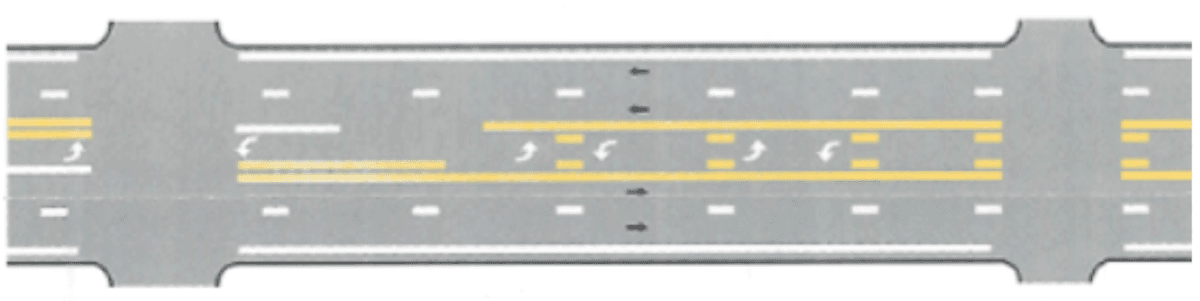
A ________________ is placed between your lane and the oncoming lane, serving as a visual boundary to discourage vehicles from crossing into oncoming traffic. While it does not provide physical protection, it still plays a crucial role in guiding drivers and maintaining lane discipline. This type of separation is commonly seen as solid or double yellow lines on roads.
This refers to the total count of marked or clearly defined lanes available for vehicle travel in one direction on a road segment. This includes all lanes that are drivable by general traffic, such as through lanes, turn lanes, and auxiliary lanes. It excludes shoulders, parking lanes, and any lanes designated for non-vehicular use.
This separate vehicles traveling in the same direction this is indicated by painted lines, commonly referred to as lane markings or lane marks. These markings define the boundaries of individual lanes and help guide traffic flow.
This refers to the clear boundary that distinguishes the drivable road from areas that are not part of the roadway, such as sidewalks, grass, or barriers. This separation acts as the border of the road and can be indicated by a painted line, a curb, a grass strip, or any physical structure that clearly defines the edge.
Do we consider Street Parking as a separation from road edge?
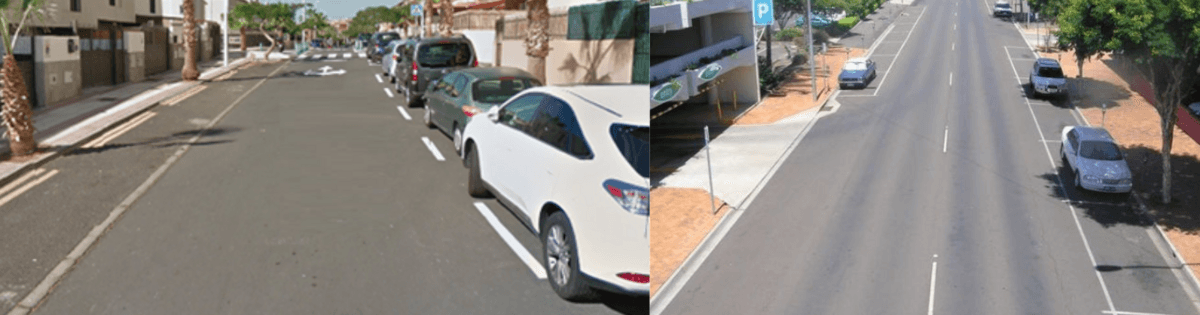
This is where two or more roads intersect, allowing vehicles to change direction or continue along different paths. These junctions come in various forms, such as intersections or roundabouts, and often include traffic control devices to manage vehicle flow and ensure safety.
This is a secondary lane that provides support to the main traffic lanes. It is typically used to assist with specific traffic movements, such as merging, diverging, weaving, or accessing ramps. These lanes complement the primary flow of traffic by improving safety and efficiency on the road.
When we encounter a physical separator, it may lead to a change in the RART classification—especially if the current RART is defined by a painted separator. In such cases, we measure the length of the physical separator. How many meters should a physical separator be for us to consider it?
if the DPs have different RART values, we will apply the one with the highest priority based on the RART hierarchy. In this case if RART2, RART 3 and RART 4 is going to enter a roundabout what RART should we use?
How should a parking space or area be tagged in Map Marker?
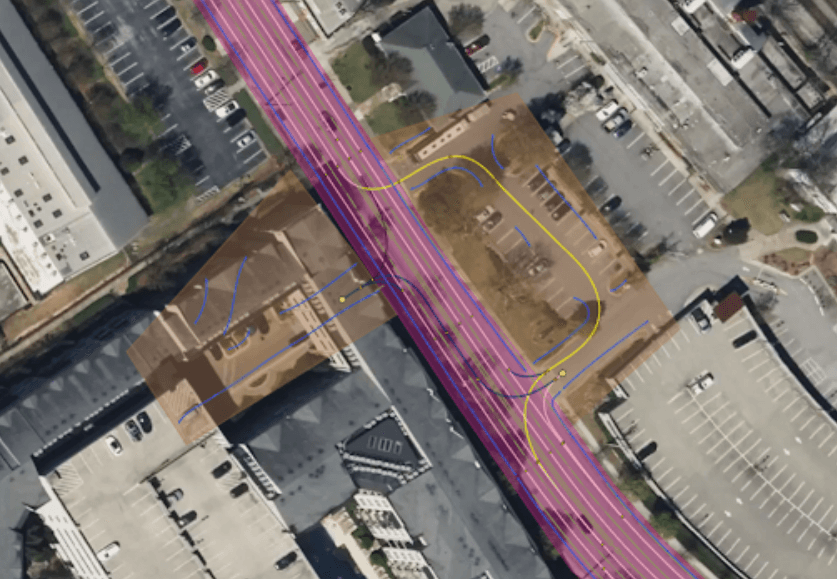
When dealing with a multi-lane road where all splines are moving in the same direction and there is no oncoming lane and no physical separator, how should we tag the RART?
What RART should we use if we encounter a scenario when a one way road with no separation from on coming and no lane markings?
This RART has a bi-directional road with oncoming traffic and no separation lane markings.
In a Highway to Highway scenario what messurement we need from before and after when changing RART?
How should we handle RART tagging when encountering a RAMP with changing lane numbers?
Do we consider suicide lane as a painted separator?