Loading...


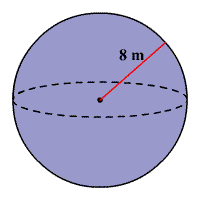
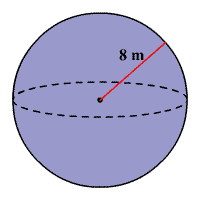
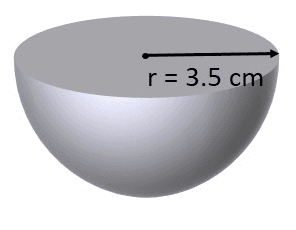
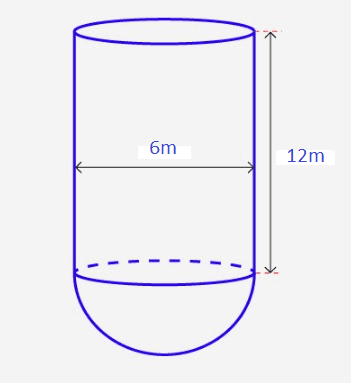
F.3 2.2 Sphere
Quiz by math enhancement
Customize this quiz to suit your class
Instantly translate to 100+ languages
Tag the questions with any skills you have. Your dashboard will track each student's mastery of each skill.
Give this quiz to my class

 Electrostatics The section of CBSE Class 12 Physics electrostatic potential and capacitance notes mainly deals with the in-depth analysis of electromagnetic phenomena when they are not performing any movements. Additionally, it is divided into ten further sub-topics to study the companion processes of reaching the state. These are - 1. Electric charge In this section of Physics ch 2 Class 12 notes, you get to learn about the basic features of electric charge and its expression in Physics. Along with its basics, the sections help to understand the full potential of charge. Different aspects of Charge included in Class 12 Physics Chapter 2 notes are - Definition Type: Positive and Negative Charge Unit and dimensional formula Point Charge Properties of Charge Comparison of Charge and Mass Methods of Charging Electroscope 2. Coulomb's Law Force is created when charges of opposite signs attract each other, and they repulse if the signs are the same. Coulomb's law tries to define this phenomenon through a mathematical formula, explicitly mentioned in Physics Class 12 notes Chapter 2. Moreover, there is key information about the variation of the constant k and its effect on a medium. Coulomb's law's vector form and the principle of superimposition are also explained in ch 2 Physics Class 12 notes. (Image will be uploaded soon) 3. Electric Field As stated in Class 12 Physics Chapter 2 notes, every positively or negatively charged particle has their respective electric fields. It feels a force at the time of interaction which might be attraction or repulsion. As it arises from electric charge, it is crucial to know about its different parts like - Electric field intensity Relation between electric force and electric field Super imposition of electric field Point charge Continuous charge distributions Properties of Electric Field Lines Motion of Charged Particles in an Electric field Learning more about the electric field from electric potential and capacitance notes Class 12 helps a student to get a grasp of upcoming chapters. 4. Electric Potential Energy When energy helps a charge to move from an electric field, it is known as the Electric Potential Energy. This section of electrostatic chapter Class 12 notes requires a student to study the Electron volt (eV), and the potential energy that an n number of charges can hold. 5. Electric Potential This section of Class 12 Physics Chapter 2 notes focuses on in-depth learning of Electric Potential or Voltage. Basically, it defines the potential movement of energy. 6. Relation between Electric Field and Potential Apart from knowing more about the relationship between the two values, Physics Class 12 Chapter 2 notes also discuss equipotential surfaces. 7. Electric Dipole Essentially, 'Dipoles' are two opposite points of charge represented with q and –q, with their distance between each other being 2a. Electric Dipoles are crucial in your study of Physics Class 12 Chapter 2 notes to learn more about electric fields and their potential. Additionally, Class 12 Physics Chapter 2 notes focus on the influence of electric dipoles on a uniform electric field mainly through Force and Torque, Work, and Potential Energy. In the last part of Electrostatics, further focus is on using the formulas to their fullest potential. It includes subsections of Electric Field, Electric Potential Energy, Electric Potential, and Electric Dipole. In the notes for electrostatic potential and capacitance, you will find proper solutions accompanied by clear and crisp diagrams for better understanding. 8. Gauss's Law Apart from just discussing the Gauss's Law, in Physics Class 12 ch 2 notes there is a thorough explanation of its properties and applications. The Gauss' Law states that net electric flux passing through a hypothetical closed surface is equal to the net electric charge present within the same closed surface. Being a broad part of the whole chapter, you may need to spend a little more time on it. Moving forward, it starts discussing the properties of conductors in relation to Gauss's Law. The Class 12 Physics notes Chapter 2 perfectly defines the journey to Gauss' Law from Coulomb's Law. Here is the Gauss's Law present in the Class 12 Physics ch 2 notes, (image will be uploaded soon) 9. Capacitors There is a dedicated section about Capacitors in the Class 12 Physics Chapter 2 notes elucidating its functions and importance as storage of potential electric energy. After explaining the structure of a capacitor, it points out the different types, parallel plate, spherical and cylindrical. The section of Chapter 2 notes of Physics Class 12 is further divided into subheads like: Properties of an ideal battery Grouping of capacitors Simple circuits (Series and Parallel) Dielectric Van de Graaff generator Combination of drops Charge distribution method Wheatstone Bridge-based circuit Extended Wheatstone Bridge Infinite network of capacitors Redistribution of charge between two capacitors Vedantu prepares the Class 12 Physics Chapter 2 notes with help from subject matter experts. In the PDF, you get a comprehensive idea of the topic along with potential answers to the most asked questions. Furthermore, the detailed explanation on each section and subsections are written in a simple language allows a student to ace their exams with wholesome knowledge. These Physics Chapter 2 Class 12 notes are going to be one of the best supplementary study materials besides a student’s textbooks. Visit the Vedantu website or download the app to get your hands on all important notes! Important Questions A charge of 4 × 10⁻⁸C is uniformly distributed on the surface of a spherical conductor, having a radius of 15 cm. Determine the electric field just outside this sphere at a point that is 15 cm from the centre of this sphere. Determine the capacitance given that the distance between the two plates has been reduced by half and the parallel plate capacitor holds a capacitance of 20 pF (where 1pF = 10-12 F) having air between the two plates. What will be the total capacitance of a combination where three capacitors, each having a capacitance of 20 pF, are connected in series. A square having a side of 10 cm has a 500 µC charge at its centre. Determine the work done to move a charge of 10 µC between two points that are diagonally opposite each other on the square. At an equatorial point, what will be the electrostatic potential because of an electric dipole? Calculate the work done to move a test charge, q, through a length of 1 cm along the equatorial axis of an electric dipole? Polarisation A capacitor has its plates enclosed in a medium that can be filled by insulating substances. A net dipole moment is then induced by an electric field in the dielectric. This event causes the field in an opposite direction. Equipotential Surface An equipotential surface is a type of surface where the potential always has a constant value. If considered as a point charge, the concentric spheres that are centred at a particular area of this charge are basically equipotential surfaces. Advantages of Vedantu's Revision Notes: A Comprehensive Resource for Effective Learning There are several reasons why one may refer to Vedantu's revision notes for studying a subject like Electrostatic Potential and Capacitance. Here are some key points: Comprehensive Coverage: Vedantu's revision notes provide a comprehensive coverage of the entire topic, ensuring that all important concepts and subtopics are included. Concise and Organized: The notes are designed to be concise, focusing on the key points and core ideas. They are organized in a structured manner, making it easy for students to navigate and revise the content. Simplified Explanation: The revision notes offer simplified explanations of complex concepts, making them more accessible and easier to understand. This helps students grasp the material more effectively. Key Formulas and Equations: The notes highlight the key formulas and equations relevant to the topic, ensuring that students have a clear understanding of the mathematical aspects of Electrostatic Potential and Capacitance. Examples and Illustrations: Vedantu's revision notes often include examples and illustrations that help clarify concepts and provide practical applications, enabling students to better relate theory to real-world scenarios. Quick Recap: The revision notes serve as a quick recap of the important points, allowing students to review the material efficiently before exams or assessments. Exam-Oriented Approach: Vedantu's revision notes are designed with an exam-oriented approach, focusing on the topics and concepts that are frequently asked in examinations. This helps students prepare effectively and increase their chances of scoring well. Accessible Anytime: Vedantu's revision notes are easily accessible online, allowing students to study at their convenience and revise the material anytime, anywhere.Understanding Quantum Theory of Electrons in Atoms The goal of this section is to understand the electron orbitals (location of electrons in atoms), their different energies, and other properties. The use of quantum theory provides the best understanding to these topics. This knowledge is a precursor to chemical bonding. As was described previously, electrons in atoms can exist only on discrete energy levels but not between them. It is said that the energy of an electron in an atom is quantized, that is, it can be equal only to certain specific values and can jump from one energy level to another but not transition smoothly or stay between these levels. The energy levels are labeled with an n value, where n = 1, 2, 3, …. Generally speaking, the energy of an electron in an atom is greater for greater values of n. This number, n, is referred to as the principal quantum number. The principal quantum number defines the location of the energy level. It is essentially the same concept as the n in the Bohr atom description. Another name for the principal quantum number is the shell number. The shells of an atom can be thought of concentric circles radiating out from the nucleus. The electrons that belong to a specific shell are most likely to be found within the corresponding circular area. The further we proceed from the nucleus, the higher the shell number, and so the higher the energy level (Figure 9.4.1). The positively charged protons in the nucleus stabilize the electronic orbitals by electrostatic attraction between the positive charges of the protons and the negative charges of the electrons. So the further away the electron is from the nucleus, the greater the energy it has. This quantum mechanical model for where electrons reside in an atom can be used to look at electronic transitions, the events when an electron moves from one energy level to another. If the transition is to a higher energy level, energy is absorbed, and the energy change has a positive value. To obtain the amount of energy necessary for the transition to a higher energy level, a photon is absorbed by the atom. A transition to a lower energy level involves a release of energy, and the energy change is negative. This process is accompanied by emission of a photon by the atom. The following equation summarizes these relationships and is based on the hydrogen atom: The values nf and ni are the final and initial energy states of the electron. The principal quantum number is one of three quantum numbers used to characterize an orbital. An atomic orbital, which is distinct from an orbit, is a general region in an atom within which an electron is most probable to reside. The quantum mechanical model specifies the probability of finding an electron in the three-dimensional space around the nucleus and is based on solutions of the Schrödinger equation. In addition, the principal quantum number defines the energy of an electron in a hydrogen or hydrogen-like atom or an ion (an atom or an ion with only one electron) and the general region in which discrete energy levels of electrons in a multi-electron atoms and ions are located. Another quantum number is l, the angular momentum quantum number. It is an integer that defines the shape of the orbital, and takes on the values, l = 0, 1, 2, …, n – 1. This means that an orbital with n = 1 can have only one value of l, l = 0, whereas n = 2 permits l = 0 and l = 1, and so on. The principal quantum number defines the general size and energy of the orbital. The l value specifies the shape of the orbital. Orbitals with the same value of l form a subshell. In addition, the greater the angular momentum quantum number, the greater is the angular momentum of an electron at this orbital. Orbitals with l = 0 are called s orbitals (or the s subshells). The value l = 1 corresponds to the p orbitals. For a given n, p orbitals constitute a p subshell (e.g., 3p if n = 3). The orbitals with l = 2 are called the d orbitals, followed by the f-, g-, and h-orbitals for l = 3, 4, 5, and there are higher values we will not consider. There are certain distances from the nucleus at which the probability density of finding an electron located at a particular orbital is zero. In other words, the value of the wavefunction ψ is zero at this distance for this orbital. Such a value of radius r is called a radial node. The number of radial nodes in an orbital is n – l – 1. Consider the examples in Figure 9.4.2. The orbitals depicted are of the s type, thus l = 0 for all of them. It can be seen from the graphs of the probability densities that there are 1 – 0 – 1 = 0 places where the density is zero (nodes) for 1s (n = 1), 2 – 0 – 1 = 1 node for 2s, and 3 – 0 – 1 = 2 nodes for the 3s orbitals. The s subshell electron density distribution is spherical and the p subshell has a dumbbell shape. The d and f orbitals are more complex. These shapes represent the three-dimensional regions within which the electron is likely to be found. Principal quantum number (n) & Orbital angular momentum (l): The Orbital Subshell: https://youtu.be/ms7WR149fAY If an electron has an angular momentum (l ≠ 0), then this vector can point in different directions. In addition, the z component of the angular momentum can have more than one value. This means that if a magnetic field is applied in the z direction, orbitals with different values of the z component of the angular momentum will have different energies resulting from interacting with the field. The magnetic quantum number, called ml, specifies the z component of the angular momentum for a particular orbital. For example, for an s orbital, l = 0, and the only value of ml is zero. For p orbitals, l = 1, and ml can be equal to –1, 0, or +1. Generally speaking, ml can be equal to –l, –(l – 1), …, –1, 0, +1, …, (l – 1), l. The total number of possible orbitals with the same value of l (a subshell) is 2l + 1. Thus, there is one s-orbital for ml = 0, there are three p-orbitals for ml = 1, five d-orbitals for ml = 2, seven f-orbitals for ml = 3, and so forth. The principal quantum number defines the general value of the electronic energy. The angular momentum quantum number determines the shape of the orbital. And the magnetic quantum number specifies orientation of the orbital in space, as can be seen in Figure 9.4.3. Figure 9.4.4 illustrates the energy levels for various orbitals. The number before the orbital name (such as 2s, 3p, and so forth) stands for the principal quantum number, n. The letter in the orbital name defines the subshell with a specific angular momentum quantum number l = 0 for s orbitals, 1 for p orbitals, 2 for d orbitals. Finally, there are more than one possible orbitals for l ≥ 1, each corresponding to a specific value of ml. In the case of a hydrogen atom or a one-electron ion (such as He+, Li2+, and so on), energies of all the orbitals with the same n are the same. This is called a degeneracy, and the energy levels for the same principal quantum number, n, are called degenerate energy levels. However, in atoms with more than one electron, this degeneracy is eliminated by the electron–electron interactions, and orbitals that belong to different subshells have different energies. Orbitals within the same subshell (for example ns, np, nd, nf, such as 2p, 3s) are still degenerate and have the same energy. While the three quantum numbers discussed in the previous paragraphs work well for describing electron orbitals, some experiments showed that they were not sufficient to explain all observed results. It was demonstrated in the 1920s that when hydrogen-line spectra are examined at extremely high resolution, some lines are actually not single peaks but, rather, pairs of closely spaced lines. This is the so-called fine structure of the spectrum, and it implies that there are additional small differences in energies of electrons even when they are located in the same orbital. These observations led Samuel Goudsmit and George Uhlenbeck to propose that electrons have a fourth quantum number. They called this the spin quantum number, or ms. The other three quantum numbers, n, l, and ml, are properties of specific atomic orbitals that also define in what part of the space an electron is most likely to be located. Orbitals are a result of solving the Schrödinger equation for electrons in atoms. The electron spin is a different kind of property. It is a completely quantum phenomenon with no analogues in the classical realm. In addition, it cannot be derived from solving the Schrödinger equation and is not related to the normal spatial coordinates (such as the Cartesian x, y, and z). Electron spin describes an intrinsic electron “rotation” or “spinning.” Each electron acts as a tiny magnet or a tiny rotating object with an angular momentum, even though this rotation cannot be observed in terms of the spatial coordinates. The magnitude of the overall electron spin can only have one value, and an electron can only “spin” in one of two quantized states. One is termed the α state, with the z component of the spin being in the positive direction of the z axis. This corresponds to the spin quantum number ms=12. The other is called the β state, with the z component of the spin being negative and ms=−12. Any electron, regardless of the atomic orbital it is located in, can only have one of those two values of the spin quantum number. The energies of electrons having ms=−12 and ms=12 are different if an external magnetic field is applied. Figure 9.4.5 illustrates this phenomenon. An electron acts like a tiny magnet. Its moment is directed up (in the positive direction of the z axis) for the 12 spin quantum number and down (in the negative z direction) for the spin quantum number of −12. A magnet has a lower energy if its magnetic moment is aligned with the external magnetic field (the left electron) and a higher energy for the magnetic moment being opposite to the applied field. This is why an electron with ms=12 has a slightly lower energy in an external field in the positive z direction, and an electron with ms=−12 has a slightly higher energy in the same field. This is true even for an electron occupying the same orbital in an atom. A spectral line corresponding to a transition for electrons from the same orbital but with different spin quantum numbers has two possible values of energy; thus, the line in the spectrum will show a fine structure splitting. The Pauli Exclusion Principle An electron in an atom is completely described by four quantum numbers: n, l, ml, and ms. The first three quantum numbers define the orbital and the fourth quantum number describes the intrinsic electron property called spin. An Austrian physicist Wolfgang Pauli formulated a general principle that gives the last piece of information that we need to understand the general behavior of electrons in atoms. The Pauli exclusion principle can be formulated as follows: No two electrons in the same atom can have exactly the same set of all the four quantum numbers. What this means is that electrons can share the same orbital (the same set of the quantum numbers n, l, and ml), but only if their spin quantum numbers ms have different values. Since the spin quantum number can only have two values (±12), no more than two electrons can occupy the same orbital (and if two electrons are located in the same orbital, they must have opposite spins). Therefore, any atomic orbital can be populated by only zero, one, or two electrons. The properties and meaning of the quantum numbers of electrons in atoms are briefly Panimula Natuklasan mo na ba kung paanong ginawa o nilikha ng Diyos ang daigdig? Ayon sa Genesis 1:1 “Nang pasimula ay nilikha ng Diyos ang langit at lupa.” Napakapalad natin dahil isa rin tayo sa nilikha Niya. Nakasama pa tayo sa isang paraiso na ngayo’y ating ginagalawan. Sa modyul na ito malalaman mo kung anong mga bagay pa ang nilikha ng Diyos na may kinalaman sa ating tinitirhan, ang mundo o daigdig? Mga dapat tandaan at layunin Handa ka na bang tuklasin ang ating daigdig? Kung handa ka na ihanda mo na ang iyong mapa o globo kung mayroon man. Ang Layunin mo sa modyul na ito ay ang mga sumusunod: • Nailalarawan ang daigdig bilang planeta ng solar system • Nailalarawan ang daigdig sa mga tao • Natatalakay at napapahalagahan : a. Bahaging Lupa b. Bahaging Tubig c. Bahaging Hangin • Natatalakay ang katangian ng globo bilang modelo ng mundo at ang mapa bilang patag na representasyon ng mundo • Naipapakita ang pakikiisa sa pag-aalaga at pagliligtas sa daigdig Pangunahing Pagsusulit Panuto: Isulat kung tama o mali. _________1. Ang daigdig ay planeta ng mga tao. _________2. Ang mapa ang sinasabing modelo ng mundo. _________3. Binubuo ng tatlong panlabas na bahagi ang ating daigdig. _________4. Pangatlo sa pinakamalapit sa araw ang ating mundo. _________5. Ang ating daigdig ay binubuo ng 75% na bahaging tubig at 25% na bahaging lupa. Nilalaman Noong unang panahon may iba’t ibang paniniwala ang mga tao sa daigdig. Inakala ng mga unang tao na ang mundo ay isang malawak na kapatagan at ang dulo ay walang hanggan. Sinasabi na ang daigdig ay isang hugis pabilog na batong lumulutang sa kalawakan. Bahagi ito ng tinatawag na solar system – isang kaayusan ng mga bagay na planetaryo sa kalawakan na ang nakapangunguna ay ang araw. Ang daigdig ay isang planeta na may tunay na hugis na oblate spheroid. Pangatlo sa pinakamalapit sa araw, na may layong 148,800,000 kilometro. Ang globo ang modelo ng mundo o daigdig samantalang ang mapa ay ang patag na representasyon ng mundo. Isang kartograper ang gumawa ng mapa. Makikita rito ang lawak ng isang lugar, direksyon mula sa iba’t ibang lugar, hugis ng lugar sa mundo at ang iskala mula sa lahat ng punto ng mapa. Ano ba ang iskala? Ito’y tawag sa paraan ng pagpapakita ng tunay na sukat ng mga lugar sa mapa na tinutumbasan ng mas maliit na sukat. ( Larawan ng Globo) Malinaw na makikita sa globo ang mga anyong tubig at anyong lupa, gayundin ang mga bahaging mabundok at bahaging patag. Binubuo ang mundo ng 75% na katubigan at 25% na kalupaan. Ang ating daigdig ay binubuo ng tatlong panlabas na bahagi: ang bahaging lupa, ang bahaging tubig at bahaging atmospera o hangin. Ang Bahaging Lupa ( Larawan) Ang bahaging lupa ay ang solidong bahagi na binubuo ng bato at lupa. Binubuo ito ng halos isang – kapat (1/4) o dalawampu’t limang porsyento ng mundo ay binubuo ng kalupaan. Ang malawak na lupa o malalaking tipak ng lupa ay tinatawag na kontinente o lupalop. Mayroon pitong kontinente ang ating mundo. Ang asya ang pinakamalaki na sinusundan ng Aprika, Hilagang Amerika, Timog Amerika, Europa, Antarctica at Australya. Mapapansin mo na maraming mga bansa ang nakapaloob sa bawat kontinente at karamihan sa mga ito ay magkakadikit. Pansinin mo ang kontinenteng Timog at Hilagang Amerika at ang mga kontinenteng Europa, Aprika, at Asya. Itanong mo sa iyong pasiliteytor kung saan ang sakop nito o hangganan ng bawat isa. Ang Bahaging Tubig ( Larawan ng tubig) Nakikita mo ba ang mga bahagi ng tubig sa globo o mapa? Mapapansin mo ang kulay asul sa mapa at globo na nagpapakita na ang mga ito ay binubuo ng bahagi ng tubig. Tinatayang tatlong kapat (3/4) o pitumpu’t limang porsiyento ng panlabas na bahagi ng mundo ay katubigan. Ang ating daigdig ay binubuo ng malalaking bahagi ng katubigan nan tinatawag na karagatan. Mayroon apat na karagatan ang daigdig. Ito ay ang karagatang Pasipiko, ang pinakamalaking karagatan, sinusundan ng Atlantiko, Indian at Artiko. Maari mo rin tingnan sa globo o mapa ang mga karagatang nabanggit at kung saan bansa at kontinente ito malapit. Ang Bahaging Atmospera o Hangin ( Larawan ) Naranasan mo na bang magpalipad ng saranggola? Ano ba ang dahilan kung bakit ito tumataas? Marahil alam mo na ang dahilan? TAMA! Ito’y dahil sa hangin na nagpapalipad at nagpapataas sa saranggola para ito’y tumayog. Ang bahaging bumabalot sa mundo ay ang atmospera. Samantala ang nakakapasong init ng araw o ultra violet rays ay pinipigilan ng mga makakapal na gas o ulap sa atmospera ng mundo ay tinatawag na ozone layer. Sinasala nito ang nakapipinsalang matinding sikat ng araw na pumapasok sa daigdig. Unti- unti na rin itong nabubutas dahil sa mga kemikal na CFC’s ( Chloroflouro Carbons), sprays, usok na galing sa pabrika at sasakyan. Ngayong alam na natin ang kahalagahan ng hangin sa ating kapaligiran pumunta naman tayo sa . . . ( Larawan ng sapin ng hangin) ANG ANIM NA SAPIN NG HANGIN: A. TROPOSPERA Dito nabubuo ang lagay ng panahon sa mundo. Kung ikaw ay nagpapalipad ng saranggola, sa tropospera ito lumilipad at ang hangin na iyong hinihinga ay nasa tropospera. B. ISTRATOSPERA Dito sa sapin na ito matatagpuan ang ozone layer. At karamihan sa mga eroplano ay dito nagpapalipad dahil hindi gaanong mapanganib dito. C. MESOSPERA Dito sa sapin na ito mayroon pinakamalakas na hangin. At karamihan sa mga batong bumabagsak sa kalawakan ay madali agad nag- aapoy at nasusunog kapag ito’y dumaan na sa hanging mesospera. D. TERMOSPERA Ang sapin ng hangin na sobrang lapit sa ultraviolet rays ng araw, sobrang init at umaabot ang init sa kabuuang 600 C. E. EKSOSPERA Ang pinakamalayong sapin sa ating himpapawid. Ito ang sapin na kung saan ay mahirap ng maabot. F. IONOSPERA Kung paano nagkakaroon ng signal ang iyong cellphone at malinaw ang naririnig ninyo sa radyo at sa telebisyon, Ionospera ang dahilan. F.3 2.3 Similar Plane Figures and Similar SolidsPSSA Grade 4 Math - M04.A-F.3.1.2 F.2 3.1 Organisation of DataF.2 3.3 Cumulative Frequency Polygons and CurvesRIGHT ON 3 2.3 2D/F