Loading...


Festivals Around the World
Quiz by Nawal Yousuf
Customize this quiz to suit your class
Instantly translate to 100+ languages
Tag the questions with any skills you have. Your dashboard will track each student's mastery of each skill.
Give this quiz to my class
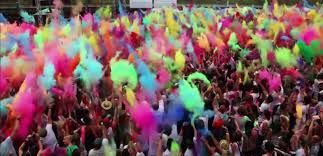
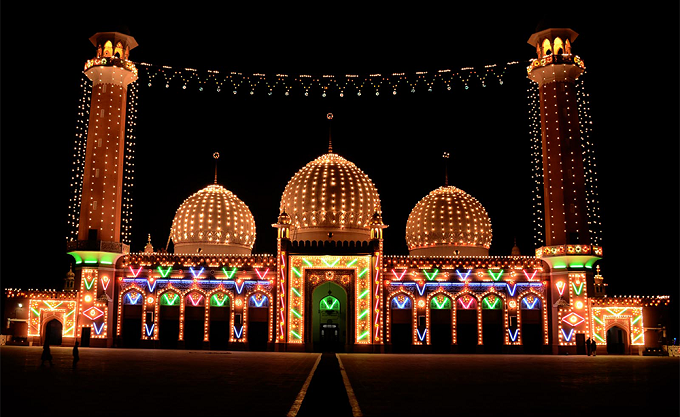
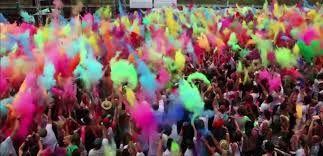






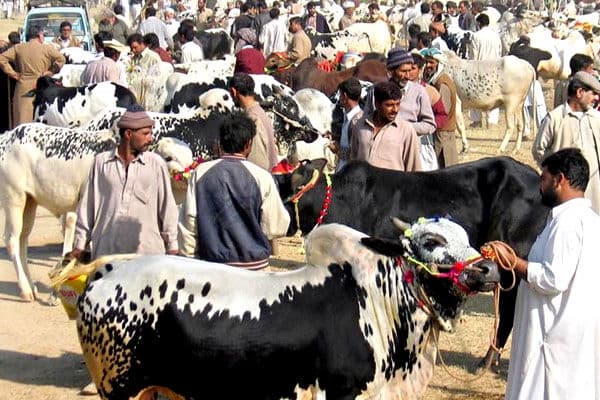

 Festivals Around the World -- Sky High PlusMusic festivals around the worldIndia Where Is It? India is a country in Asia. Much of it is surrounded by water. To the south and west is the Arabian Sea. To the south and east is the Bay of Bengal. The capital of India is New Delhi (DEL-ee). It is part of the much larger city of Delhi. More than twenty million people live in Delhi and New Delhi. People. More than one billion people live in India. Only China has more people than India. Most Indian people live in the countryside. The cities do not have as many people. They are very crowded, though. Around half of the people in India make their living from growing food. They grow crops or raise sheep, goats, and chickens for meat. They do not raise cows for meat. Most Indians are Hindu. Hurting a cow is against the Hindu religion. Land. India has many mountains and different kinds of flat land. The mountains are in the north. They are the highest in the world. Rich land covers the north of India. It was formed long ago as rivers flooded over and over. In the west is the dry desert. In the south is raised, flat land. This land takes up more than half of India. In May or June every year, winds bring a large amount of rain. This is called the monsoon season. Most of India's rain falls during this season. Celebrations People in India celebrate many special days. Diwali (dih-WAH-lee) lasts for five days. During this festival, people light small candles. They shoot firecrackers and give sweets to family and friends. Holi (HOH-lee) is a spring Hindu festival. During Holi, people celebrate the end of winter. They throw colored water and powder on each other. Animals. Many kinds of animals live in India. It is the only country in the world with both lions and tigers. Elephants live in the flat lands and forests. The mountains are home to bears, foxes, sheep, and wild goats. India is also home to the world's largest mangrove forest. Here, tigers swim with sea turtles, sharks, and crocodiles. Conclusion. India is a country of many people. People farm its rich soil to feed the nation. Its mountains and forests are home to many animals. Which part of India would you like to see?Ideas for more sustainable cities In 2020. over 56% of the world s population lived in urbon arcos. Cities are becoming more and more popular. But why isn't rural life as attractive as city life? The main reasons include work. lifestyle education and Sea th in cities there ore more fun things to see and do, like art galleries, concert hails and sports stadiums, There are a so better hospitals, transport na anueners However, as cities become more overcrowded, they get more polluted. For this reason, urban residents want to make their cities more sustainable. But how? Here are five ways: 1 New York's Central Pork is an island of green in a forest of skyscrapers. City parks like these provide people with a peaceful ploce to connect with nature. and o quiet area for exercise. 2 The moming and evering tush hours lare the busest times in the city. When people commute* to and from work or school, they need frequent, fast public transport, like trams and underground troins. Transport should also be as cheap as possible - and accessible to those with less mobility, like older people or wheelchair users. 3 Cities need pleasant places for people to meet and so shopping. So they should have more pedestr on zones, like in Copenhagen, Denmark, Copenhagen has the world's longest pedestrion street. It's almost 3.2 km long! Pedeston aones encourage ' people to go shopping on foot, instead of driving to shopping malls. 4 1 kes are often the quickest and most susta nable. way to get around, but mony city streets are frenetic and dangerous. Sa susto nable cities have cycle paths, as well as public bikes ond e scooters. They alto have hybrid buses and lots of car charging points. 55 Cities need to encourage residents to care about the environment, with fun ecological exhibitions" and events. The Supertree Gardens in Singapore are amazing, ver fal botanic gardens. They are 50 metres high and the /se solor energy. Eco-festivols - lIke Terroformo in Milan, Italy, and the Secret Solstice in Reykjavik, Iceland - use solar and geothermol energy. They're some of the most sustoinable festiois in the wortdAre you feeling adventurous? Then spread your wings and travel km southeast of Taiwan, where you'll discover a part of the country unlike any other. Known as Lanyu* or Orchid Island, this tiny drop of earth in the Pacific* is home to the Tao*, Taiwan's only ocean-dependent indigenous* tribe. The Tao people are the people of the "alibangbang*," or flying fish, one of Mother Nature's greatest gifts. The annual flying fish season is at the heart of Tao culture and comes with many traditions and taboos. Spanning around eight months of the year, the flying fish season involves multiple customs and rituals. A special religious ceremony, usually held in February, marks the beginning of this important period and ensures a prosperous and plentiful season. Tao boat captains head to the beach with elaborate costumes on. There, they pray and make sacrifices to appeal to the flying fish spirits to bless their tribe, and to the gods for good fortune and courage on the dangerous seas. Although local fishers can catch flying fish between March and June, they are restricted to capturing only those found in shallow waters. During this period, netting* any deep-sea or coral reef fish is not permitted. If the fishers didn't follow this rule, various species would not have the time needed to recover their numbers, and harmony with nature would be lost. At the end of June, the annual sea harvest concludes with another ceremony to express gratitude and respect for nature's endless* cycles. After the ceremony, flying fish can no longer be caught. Therefore, from July onward*, only dried and stored alibangbang can be eaten. Furthermore, after the Mid-Autumn Festival*, even these dried fish must no longer be consumed. This custom seems to have been engraved in the locals’ hearts* and is believed to prevent ill luck and guarantee abundance in seasons to come. Just as the locals are concluding their scaly* harvest for the year, scores of tourists begin arriving on Lanyu for the summer season. To make sure you don't feel like a fish out of water, here are some basic guidelines to help you enjoy your stay while respecting local traditions. First, it is considered a taboo to touch or photograph the Tao fishing boats without permission since it would bring bad luck. Also, you should never enter locals’ private gardens uninvited* to view or sample drying fish. Additionally, avoid asking about future fishing trips, as locals believe that the gods may be angered and that the harvest may be spoiled as a consequence. Finally, as a sign of respect for the local community and environment, don't snorkel* or dive in the island's traditional fishing waters during the flying fish season. Such activities can disturb the local ecosystem. The customs and taboos mentioned above reflect the importance of preserving and cherishing natural resources and local culture. The ancient wisdom of Lanyu’s Tao inhabitants thus appears to give us much to learn about living in harmony with this planet. Everyone is, after all, in the same boat under nature's wing.Festivals Festivals of India Festivals in pakistan