Design a simple experimental investigation that tests the effect of force on an object
Track each student's skills and progress in your Mastery dashboards
Give this quiz to my class
Q 1/10
Score 0
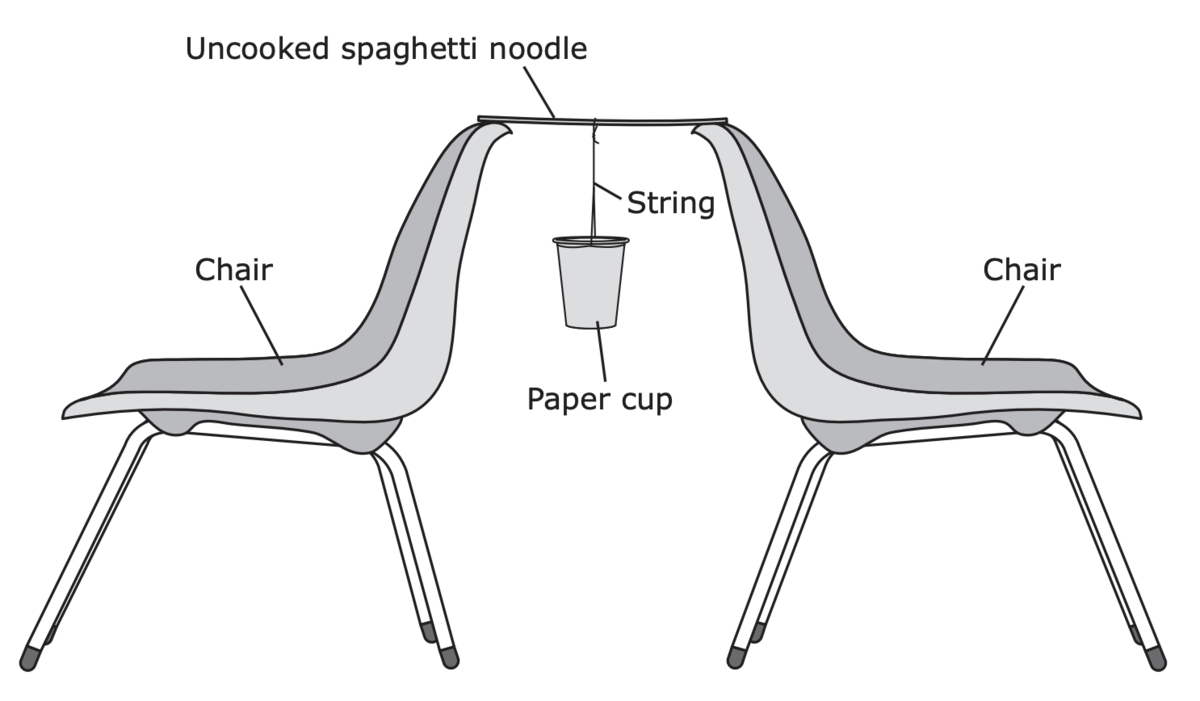
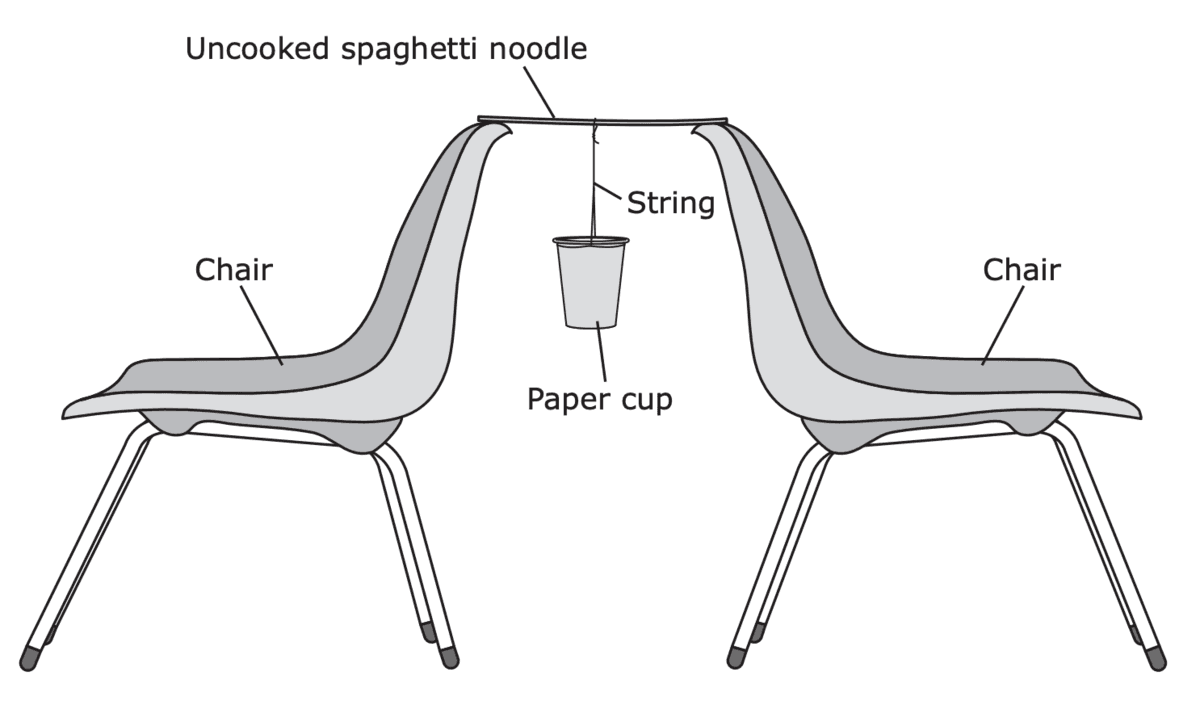
A student conducts the investigation shown in the diagram. In this experiment a paper cup hangs from a string tied to a single uncooked spaghetti noodle. The student measures and records the mass of a penny. The student then adds pennies to the paper cup one at a time.
Which question is the student most likely trying to answer with this investigation?
60
How much force will it take to break the spaghetti noodle?
How long should the string that holds the paper cup be in order to support the greatest mass of pennies?
How many spaghetti noodles will it take to hold up the mass of a penny?
How does the distance between the two chairs affect the amount of force it takes for the spaghetti noodle to break?
Q 2/10
Score 0
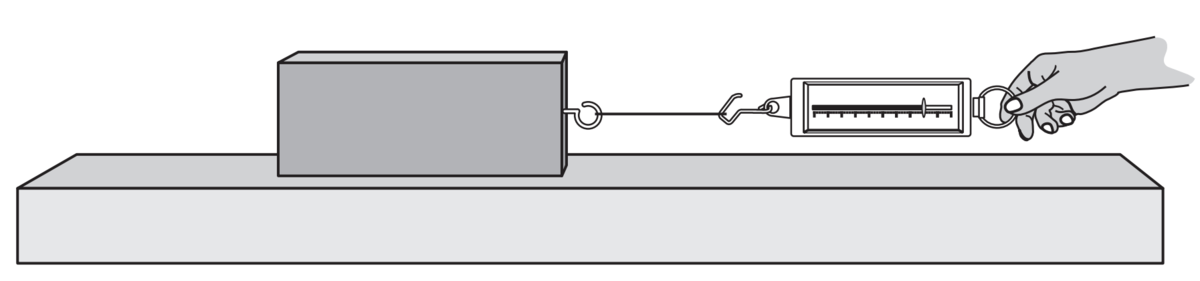
Students design an experiment to determine how much force is needed to move blocks of wood of different masses slowly across a lab table.
Which procedure should students include in their design?
30
Conduct five trials, pulling a different side of each block each time
Conduct five trials, using a different scale to pull each block of wood
Conduct five trials, using a different table for each trial
Conduct five trials, pulling each block of wood in the same way for each trial
10 questions
Q.
A student conducts the investigation shown in the diagram. In this experiment a paper cup hangs from a string tied to a single uncooked spaghetti noodle. The student measures and records the mass of a penny. The student then adds pennies to the paper cup one at a time.
Which question is the student most likely trying to answer with this investigation?
1
60 sec
5.6d
Q.
Students design an experiment to determine how much force is needed to move blocks of wood of different masses slowly across a lab table.
Which procedure should students include in their design?
2
30 sec
5.6d
Q.
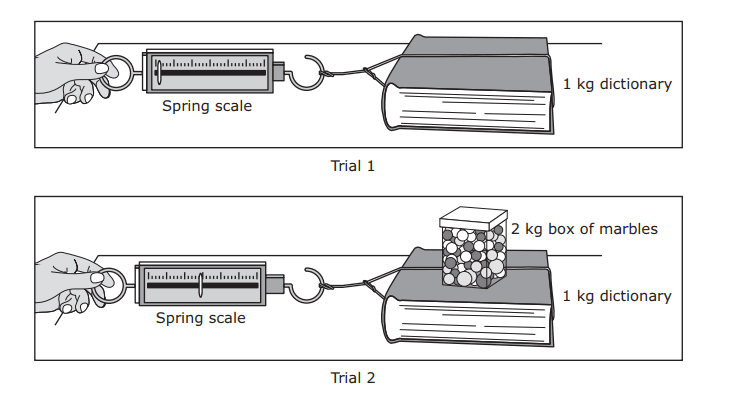
The diagrams show two trials of an experiment in which a spring scale was used to measure force. This experiment can be used to determine —
3
30 sec
5.6d
Q.
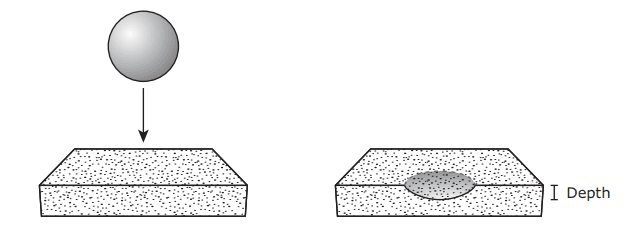
Students drop the same heavy ball onto identical blocks of soft clay from different heights. For each height they measure the depth of the dent the ball makes in the clay. Why is the depth of the dent different in each trial?
4
30 sec
5.6d
Q.
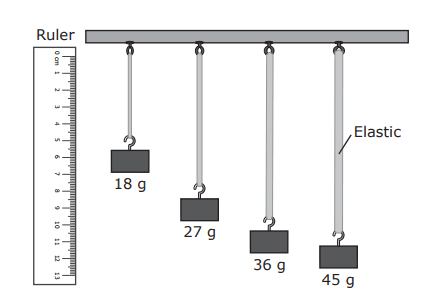
A student designs an experiment to test the effect of the width of a piece of elastic on the elastic’s ability to stretch. The student selects four pieces of elastic with different widths but the same length. The student then attaches blocks with different masses to the pieces of elastic. The results of the student’s experiment are shown below. What should the student do to improve this experiment?
5
30 sec
5.6d
Q.
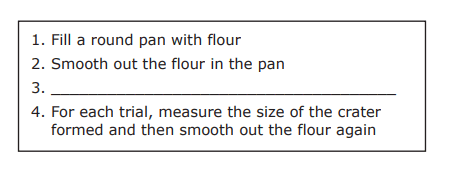
A student observes that the craters on the moon are different sizes. The student designs an experiment to study the formation of craters. The materials for the experiment are marbles and a pan of flour. The student makes a hypothesis that the size of the craters made on the surface of the flour will depend on the height from which the marble is dropped. Some of the steps in the student’s experiment are described below. Which of these is most likely Step 3 in the student’s experiment?
6
30 sec
5.6d
Q.
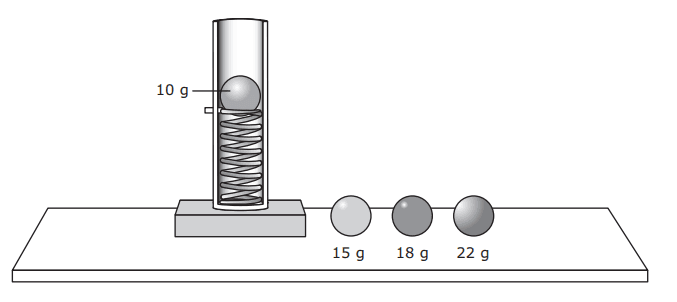
A student designs an experiment to test the force of a spring using a spring launcher and four spheres with the same diameter but with different masses. What other piece of equipment would be most useful for this experiment?
7
30 sec
5.6d
Q.
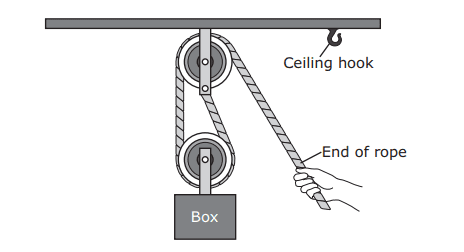
The picture below shows a pulley system that can be used to lift a box. Which of these should a person do to lift the box?
8
30 sec
Q.
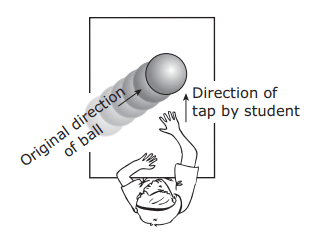
The diagram below shows a view of a ball from above a table. The ball is rolling across the table. A student lightly taps the rolling ball in the direction shown below. In which direction does the ball most likely move after the student taps the ball?
9
30 sec
Q.
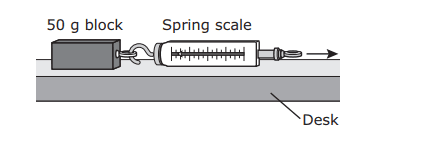
A student uses a spring scale to pull a 50-gram block horizontally across a wood desk. Then the student pulls the block the same distance across surfaces of carpet, sandpaper, and glass. Which question is this investigation most likely designed to answer?