Loading...


Fourth Quarter Science 7
Quiz by Francisca Flores
Tag the questions with any skills you have. Your dashboard will track each student's mastery of each skill.
What do you call the fault plane that is inclined at an angle greater than 45 degrees from the horizontal and the hanging wall moves upward relative to the footwall?
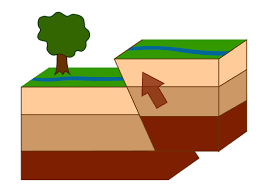
reverse fault
abnormal fault
strike-slip fault
normal fault
What do you call the fault plane that is inclined at an angle greater than 45 degrees from the horizontal and the hanging wall moves upward relative to the footwall?
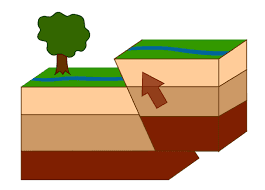
What is the measure of the “size" or amplitude of the seismic waves generated by an earthquake source and recorded by seismographs (instrument that makes a record of seismic waves caused by an earthquake explosion or other Earth-shaking phenomenon)?
The vibration generated by an earthquake, explosion, or similar energetic source and propagated within the earth or along its surface is called what?
Which of the following best describes the epicenter of an earthquake?
How does earthquake intensity differ from earthquake magnitude?
What role does the focus of an earthquake play in determining its effects on the Earth's surface?
USTMINA - is a series of ocean waves that sends surges of water sometimes reaching heights of over100 feet (30.5 meters) onto land.
DYBO VEWAS- These move into the Earth's core at a greater frequency than surface waves.
TIONDAINUN - is the result of tsunami traveling a long distance inland and is a horizontal measurement of the path of the tsunami.
Which among the types of waves can cause the most damage and why?
