Tag the questions with any skills you have. Your dashboard will track each student's mastery of each skill.
Give this quiz to my class
Q 1/18
Score 0
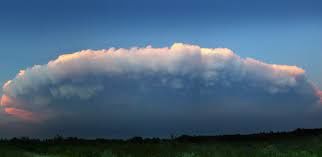
What type of cloud is most associated with thunderstorms?
30
cumulonimbus
stratus
cumulus
cirrus
Q 2/18
Score 0
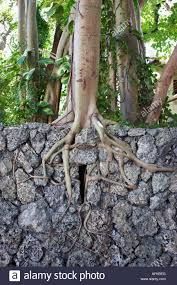
Many rocks contain gaps or cracks. In the diagram, notice the relationship between the rock and the plant. Which statement describes what will happen to the rock and the plant over time?
30
The plant will be buried in the crack.
The plant will grow and the crack will get bigger.
The rock will stop the plant from growing bigger.
The rock will crush the plant.
18 questions
Q.
What type of cloud is most associated with thunderstorms?
1
30 sec
Q.
Many rocks contain gaps or cracks. In the diagram, notice the relationship between the rock and the plant. Which statement describes what will happen to the rock and the plant over time?
2
30 sec
Q.
The pictures show a flowering plant and a nonflowering plant. Compare the plants. Which of the following statements is true about both plants?
3
30 sec
Q.
Frances planted a seedling in a cup of soil and watered it. Next, she carefully put the cup on its side. How will the stem of the seedling grow?
4
30 sec
Q.
Ethan is investigating a snail’s response to stimuli. He put the following substances on each corner of a paper towel: syrup, lemon juice, vinegar and water. Then he put a snail in the center of the paper towel to see how it would respond. Which observation is evidence of the snail’s response to stimuli?
5
30 sec
Q.
In the fall, a ground squirrel will store the energy from food as a thick layer of fat. What is most likely the reason for this adaptation?
6
30 sec
Q.
Colbie completed an experiment to test how sunlight affects the growth of grass. She used two pots of grass. She placed Pot 1 in full sun. She covered Pot 2 with plastic so that it would receive no sunlight. Colbie drew the diagram below to show the two pots of grass after two weeks. Which of the following is the best way Colbie can record this observation?
7
30 sec
Q.
Human organs sometimes have similar functions to plant structures. For example, the human skeleton provides structure and support for the body. The following picture shows the basic structures of a plant. Which labeled plant structure is most similar in function to the human skeleton?
8
30 sec
Q.
In science class, Tyrone, Tessa, Scott, and Juanita are each given 20 milliliters (mL) of a solution of sugar dissolved in water and are asked to separate the sugar from the water. They each have different ideas for separating the solution. Which student chose the best method?
9
30 sec
Q.
Janice found two sea shells when she went to the beach. They appear to be almost the same size, but they have different shapes. How could she determine if their volume is the same?
10
30 sec
Q.
When a radio is turned on, what energy transformation occurs?
11
30 sec
Q.
During a storm, the power goes out at Rick’s house. His mother strikes a match to light a candle. As the match burns, it gives off light energy. What other form of energy does the burning match give off?
12
30 sec
Q.
Many power plants use coal as the fuel for generating electricity. The illustration shows one kind of power plant that uses coal to produce electrical power. Which kind of energy conversion occurs in the generator?
13
30 sec
Q.
In space, there are many different objects. The picture shows a group of stars, gas, and dust that an astronomer would see with a telescope. How would an astronomer classify this object?
14
30 sec
Q.
While looking at the sky one night, Tom saw a streak of light across the sky. Tom’s father told him the light was produced by a small chunk of rock passing through Earth’s atmosphere. Which of the following terms best describes what Tom saw?
15
30 sec
Q.
There are many objects in our solar system, but only eight of them are planets. What do all planets have in common?
16
30 sec
Q.
The planets in our solar system are separated by the asteroid belt into two groups, the inner and outer planets. Which characteristic below is true for all the outer planets, but not the inner planets?
17
30 sec
Q.
Mia pointed a flashlight straight ahead. The light traveled forward. Then it suddenly raveled straight back at Mia. Which of the following objects did the light most likely strike?